Your complete 2026 guide to Japan's top festivals month by month — dates, locations, and insider tips for every season.
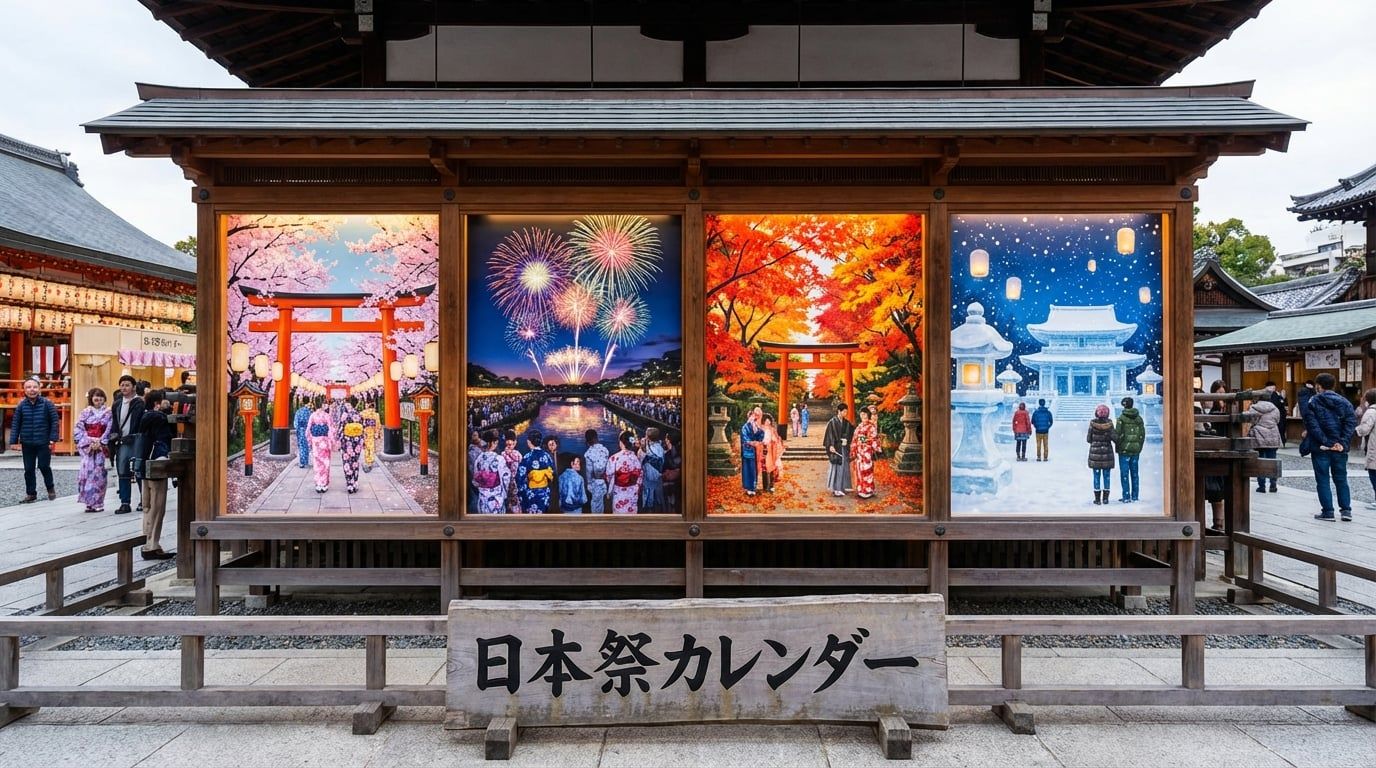 Image for illustrative purposes only.
Japan runs on festivals. Every season, every region, every neighborhood has its own matsuri -- a word that loosely translates to "festival" but really means something closer to "the moment an entire community comes alive." Thundering drums, towering floats, dancing in the streets, and food stalls stretching as far as you can see. If you are planning a trip to Japan in 2026, this calendar will help you land in exactly the right place at the right time.
And 2026 is a particularly good year to visit. The energy from Expo 2025 in Osaka is still rippling across the country, international flights are at full capacity again, and Japan's tourism infrastructure has never been more welcoming. Whether you time your trip around one headline festival or stumble into a local celebration you never knew existed, matsuri season is the fastest way to see Japan at its most genuine.
Here is your month-by-month guide to the best festivals across Japan. Click any festival below to jump to the details.
2026 Quick Calendar
| Month | Top Festival | Location | Dates |
|---|---|---|---|
| Jan | Toka Ebisu | Osaka | Jan 9-11 |
| Feb | Sapporo Snow Festival | Sapporo | Feb 4-11 |
| Mar | Omizutori | Nara | Mar 1-14 |
| Apr | Takayama Spring Festival | Takayama | Apr 14-15 |
| May | Sanja Matsuri | Tokyo | 3rd weekend |
| Jun | Hydrangea festivals | Nationwide | All month |
| Jul | Gion Matsuri / Tenjin Matsuri | Kyoto / Osaka | Jul 1-31 / Jul 24-25 |
| Aug | Nebuta Matsuri / Awa Odori | Aomori / Tokushima | Aug 2-7 / Aug 12-15 |
| Sep | Kishiwada Danjiri | Osaka | Sep 19-20 |
| Oct | Jidai Matsuri | Kyoto | Oct 22 |
| Nov | Shichi-Go-San | Nationwide | Nov 15 |
| Dec | Chichibu Night Festival | Chichibu | Dec 2-3 |
January: New Year Energy
The year begins with hatsumode -- the first shrine visit of the new year -- and the energy carries straight into festival season.
Toka Ebisu (Osaka, January 9-11) is the one to watch. Hundreds of thousands of visitors pack into Imamiya Ebisu Shrine to pray for business success and good fortune. The atmosphere is electric: vendors line the streets selling lucky bamboo branches decorated with gold coins and sea bream ornaments. It is loud, crowded, and deeply fun. If you are in the Osaka area, do not miss it.
- Where: Imamiya Ebisu Shrine, Namba area
- Access: 5 min walk from Imamiya-Ebisu Station (Nankai Line)
February: Snow and Fire
Sapporo Snow Festival (Sapporo, February 4-11) is Japan's most famous winter event. Giant ice sculptures -- some the size of buildings -- fill Odori Park and the Susukino entertainment district. Evening illuminations transform the snow into something otherworldly. The festival draws around two million visitors, so book accommodation early. For a deeper look, check our Sapporo Snow Festival guide.
- Where: Odori Park, Susukino, Tsudome (3 venues)
- Access: Odori Station (Namboku / Tozai Line)
- Tip: Weekday mornings are significantly less crowded than weekends
March: Ancient Rituals
Omizutori (Nara, March 1-14) is one of Japan's oldest ceremonies, held continuously at Todai-ji Temple for over 1,270 years. The climax comes on March 12-13 when monks carry enormous flaming torches along the balcony of Nigatsu-do Hall, sending showers of sparks into the night sky. Locals believe that being showered by these sparks brings good luck for the year. It is genuinely awe-inspiring.
- Where: Todai-ji Temple, Nigatsu-do Hall, Nara
- Access: 30 min walk from Kintetsu Nara Station, or take a bus to Todai-ji
- Tip: Arrive 2-3 hours early on March 12 for the grand finale -- crowds are serious
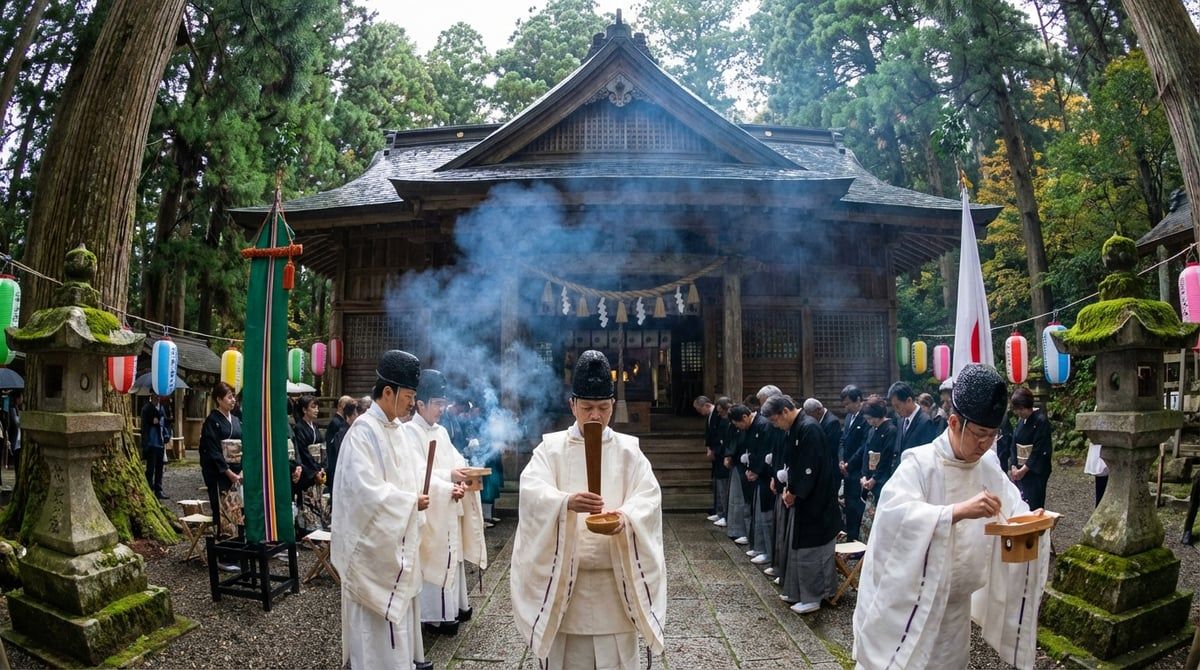 Image for illustrative purposes only.
April: Cherry Blossoms and Mountain Floats
April belongs to cherry blossoms, and every park, riverbank, and castle ruin in the country becomes an open-air celebration. But for something truly special, head to the mountains.
Takayama Spring Festival (Takayama, April 14-15) parades ornate wooden floats through the narrow streets of this beautifully preserved Edo-era town. The floats -- called yatai -- are designated Important Cultural Properties, decorated with intricate carvings and mechanical puppets called karakuri that perform short dramas. The evening procession with lantern-lit floats is unforgettable.
- Where: Takayama, Gifu Prefecture (around Hie Shrine)
- Access: JR Takayama Line from Nagoya (about 2.5 hours)
- Tip: The town is small, so lodging fills months in advance
May: Tokyo's Grand Processions
May is packed with headline festivals in the capital. Check our Tokyo festivals 2026 guide for the full picture.
Sanja Matsuri (Tokyo, 3rd weekend of May) is Tokyo's wildest festival. Over a hundred portable shrines called mikoshi are carried through the streets of Asakusa by teams of chanting, sweating bearers. The energy is raw and physical -- nothing polite or restrained about it. Around 1.5 million spectators fill the narrow streets around Senso-ji Temple.
Aoi Matsuri (Kyoto, May 15) offers the polar opposite: a serene, elegant imperial procession of 500 people in Heian-period costumes winding from the Imperial Palace to Shimogamo and Kamigami Shrines. One of Kyoto's three great festivals.
A note on Kanda Matsuri: This famous Tokyo festival holds its grand procession only in odd-numbered years, so the next full-scale event is 2027. However, smaller shrine events and neighborhood celebrations still take place in 2026.
- Sanja Matsuri access: Asakusa Station (Ginza Line / Tobu Skytree Line)
- Aoi Matsuri access: Imadegawa Station (Karasuma Line) for the start
June: A Quieter Interlude
June is rainy season (tsuyu), and the festival calendar slows down. But this is actually a lovely time to visit. Hydrangea festivals pop up at temples across the country -- Meigetsuin Temple in Kamakura and Mimurotoji Temple near Kyoto are standouts. Fewer tourists, lower prices, and the rain makes everything impossibly green.
July: The Blockbuster Month
July is arguably Japan's greatest festival month. Three of the country's most spectacular celebrations overlap, and if you can only visit Japan once, this might be the month to do it. See our full guide to Japan's July festivals.
Gion Matsuri (Kyoto, July 1-31) is Japan's most famous festival, spanning the entire month. The highlight is the Yamaboko Junko float procession on July 17 and 24, when massive wooden floats -- some over 25 meters tall and weighing 12 tons -- are pulled through Kyoto's downtown streets. The yoiyama evenings on July 14-16 are magical: lantern-lit floats, street food stalls, and the entire city dressed in yukata. Read our complete Gion Matsuri guide for details.
Tenjin Matsuri (Osaka, July 24-25) is one of Japan's top three festivals and Osaka's crown jewel. A boat procession of over 100 vessels lights up the Okawa River, capped by a massive fireworks display. The land procession on July 25 features 3,000 participants in period costumes. Our Tenjin Matsuri guide has everything you need.
Hakata Yamakasa (Fukuoka, July 1-15) culminates in an early-morning race on July 15 where teams of men in traditional fundoshi (loincloths) sprint through the streets carrying one-ton decorated floats. The oiyama race starts at 4:59 AM sharp -- set your alarm.
- Gion Matsuri access: Karasuma-Oike or Shijo Station (Kyoto subway)
- Tenjin Matsuri access: Osaka-Tenmangu Station or Minami-morimachi Station
- Hakata Yamakasa access: Hakata Station (Fukuoka)
August: The Festival Explosion
August is when Japan's summer festival season reaches full intensity. Obon -- the Buddhist festival honoring ancestral spirits -- means the entire country is in celebration mode. Dive into our August festivals guide for the complete rundown.
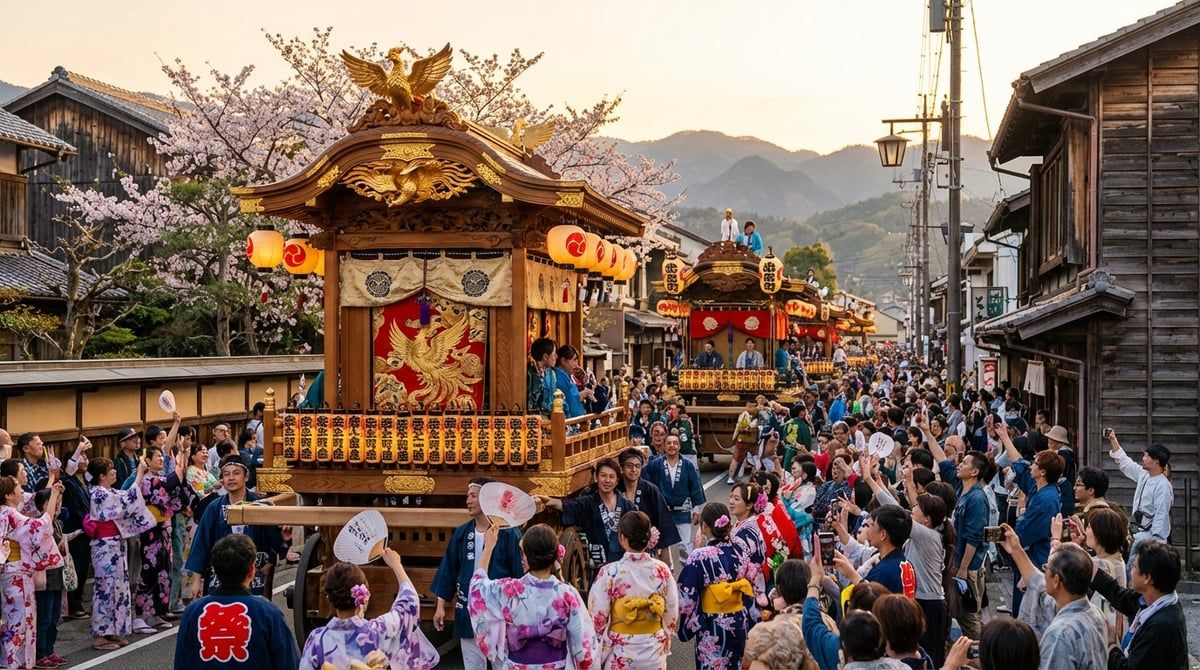 Image for illustrative purposes only.
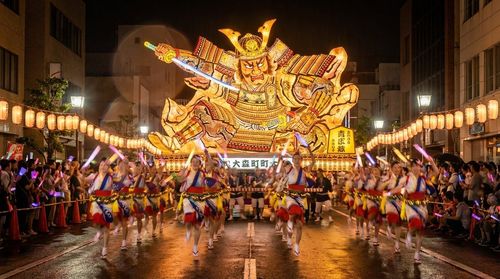
Nebuta Matsuri (Aomori, August 2-7) features enormous illuminated floats depicting fierce warriors and mythical creatures, paraded through the streets while dancers called haneto leap and chant around them. It is an absolute spectacle -- one of those festivals that photographs cannot do justice. See our Nebuta guide.
Sendai Tanabata (Sendai, August 6-8) transforms the city's shopping arcades into a canopy of thousands of colorful paper streamers. It is based on the tanabata legend of two star-crossed celestial lovers who can only meet once a year. Our Tanabata guide explains the traditions.
Awa Odori (Tokushima, August 12-15) is Japan's largest dance festival. The saying goes: "The dancers are fools, the watchers are fools, so you might as well dance." Over a million visitors come to watch (and join) the hypnotic bon odori processions. More in our Awa Odori guide.
- Nebuta access: Aomori Station (JR Tohoku/Hokkaido Shinkansen to Shin-Aomori, then local)
- Sendai Tanabata access: Sendai Station (Tohoku Shinkansen from Tokyo, about 1.5 hours)
- Awa Odori access: Tokushima Station (bus from Kansai or flight from Tokyo)
September: Dangerous Beauty
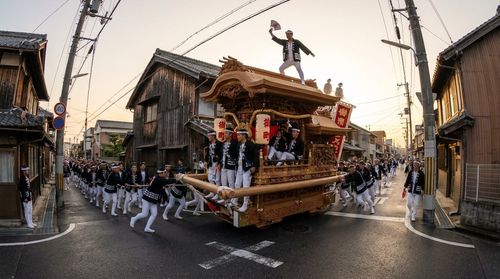
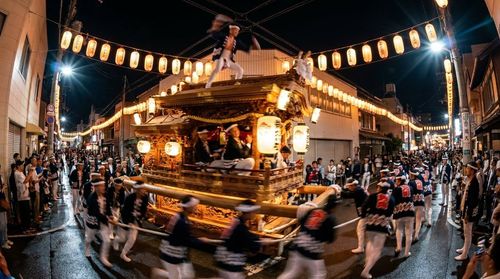
Kishiwada Danjiri Matsuri (Osaka, September 19-20) is Japan's most adrenaline-pumping festival. Massive wooden floats weighing four tons are pulled through narrow streets at full sprint, with teams of men riding on top performing acrobatic turns at intersections. It is genuinely dangerous and absolutely thrilling. If you are exploring Osaka's festivals in 2026, this is a must-see — our complete Kishiwada Danjiri guide has the dates and viewing corners, and the September 2026 festival guide sets it against Silver Week and the harvest moon.
- Where: Kishiwada, south of Osaka
- Access: Kishiwada Station (Nankai Line, about 25 min from Namba)
October: Autumn Elegance
Takayama Autumn Festival (Takayama, October 9-10) mirrors the spring edition but with autumn foliage as the backdrop. The fall festival centers around Sakurayama Hachimangu Shrine and features different floats than the spring event.
Jidai Matsuri (Kyoto, October 22) is a living history lesson: a procession of 2,000 people dressed in costumes representing every era of Kyoto's 1,200-year history, from the Heian period to the Meiji Restoration. It is one of Kyoto's three great festivals.
- Jidai Matsuri access: Starts at Kyoto Imperial Palace, ends at Heian Shrine
November: Quiet Celebrations
November trades noise for beauty. Koyo -- autumn leaf viewing -- draws visitors to temples and mountain trails across the country. Meanwhile, Shichi-Go-San (November 15) brings adorable scenes to shrines everywhere as families celebrate children aged three, five, and seven in traditional kimono. It is not a single event but a nationwide tradition -- visit any major shrine in mid-November and you will see it.
December: Fire in the Night
Chichibu Night Festival (Chichibu, December 2-3) is one of Japan's three great float festivals and a spectacular way to close the year. Massive illuminated floats are hauled up a steep hill while fireworks light up the winter sky above. The combination of fire, cold night air, and thundering drums is unforgettable.
- Where: Chichibu, Saitama Prefecture
- Access: Seibu-Chichibu Station (Seibu Line from Ikebukuro, about 80 min)
- Tip: Return trains fill fast -- consider booking limited express seats in advance
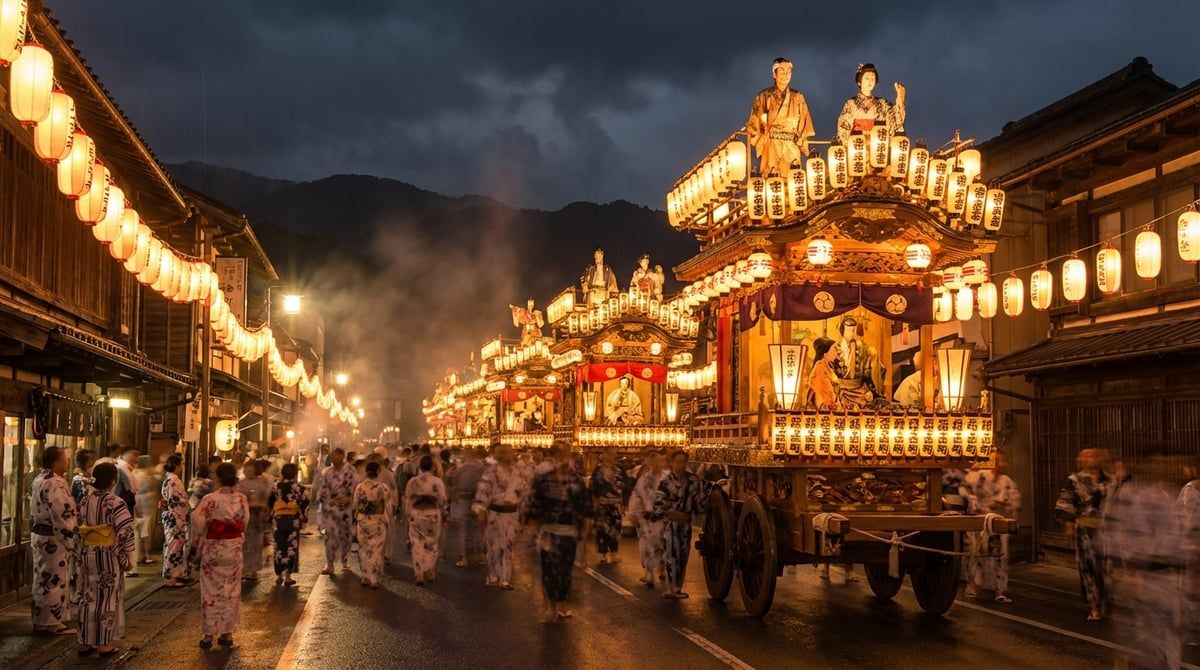 Image for illustrative purposes only.
Best Festivals by Region: Quick Picks
| Region | Top Pick | When |
|---|---|---|
| Kanto (Tokyo) | Sanja Matsuri | May |
| Kansai (Osaka/Kyoto) | Gion Matsuri / Tenjin Matsuri | July |
| Tohoku (North) | Nebuta Matsuri | August |
| Hokkaido | Sapporo Snow Festival | February |
| Shikoku | Awa Odori | August |
| Kyushu | Hakata Yamakasa | July |
| Chubu | Takayama Spring Festival | April |
Planning Tips for 2026
Book early for the big ones. Accommodation near Gion Matsuri, Nebuta, and Sapporo Snow Festival sells out months ahead. Takayama is a small town and fills even faster.
Check exact dates. Some festivals follow the lunar calendar or shift by a day or two each year. The dates in this guide are confirmed for 2026 where possible, but always verify with official tourism sites before booking flights.
Learn a few words. "Matsuri" (festival), "mikoshi" (portable shrine), "yatai" (festival food stall or float depending on context), and "yukata" (light cotton kimono for summer) will come up constantly.
Embrace the crowd. Japan's biggest festivals are packed. That is part of the experience. Wear comfortable shoes, carry a small towel for sweat, bring cash for food stalls, and let yourself be swept along. The best moments at any matsuri are the unplanned ones -- a stranger handing you a cold beer, a child's face lit by lanterns, the thunderclap of a taiko drum you feel in your chest.
Japan is a country that celebrates with serious intention. Every matsuri, from a tiny neighborhood shrine festival to a million-person spectacle, carries centuries of meaning. In 2026, there is a festival waiting for you no matter when you visit. The only question is which one.
Frequently Asked Questions
What are the biggest festivals in Japan in 2026?
The top festivals in 2026 are Gion Matsuri (Kyoto, July), Nebuta Matsuri (Aomori, August), Tenjin Matsuri (Osaka, July), Sapporo Snow Festival (February), and Awa Odori (Tokushima, August). Each draws hundreds of thousands of visitors.
When is the best time to visit Japan for festivals?
July and August have the most festivals, including natsu matsuri (summer festivals), fireworks (hanabi taikai), and Obon celebrations. But every month has major events — cherry blossom festivals in spring, fire festivals in autumn, and snow festivals in winter.
Do I need tickets for Japanese festivals?
Most matsuri are free and open to all. Some paid seating areas exist for popular fireworks festivals and parades. Arrive early for the best spots at free events like Gion Matsuri's Yamaboko parade.
What should I wear to a Japanese festival?
A yukata (light cotton kimono) is the traditional choice for summer festivals and you can rent them near most major events. Otherwise, wear comfortable shoes and light clothing. Bring a small towel and cash for food stalls.
What is a natsu matsuri?
Natsu matsuri means "summer festival" in Japanese. It refers to the hundreds of festivals held across Japan from late June through August, including neighborhood shrine festivals, bon odori dances, and large city-wide celebrations.
Explore More Festival Guides
Continue your Japan festival journey with these related guides:
- Japan Festivals Guide: 10 Must-See Matsuri That Will Take Your Breath Away
- Japan Festival Calendar: Dates & Schedule for Every Major Matsuri
- Summer Festivals in Japan: The Ultimate Guide to Natsu Matsuri
- Tokyo Festivals 2026: Every Major Matsuri in Japan's Capital
- Spring Festivals in Japan: Cherry Blossoms & Shrine Parades
- Fireworks Festivals in Japan: Best Hanabi Taikai
- Night Festivals in Japan: Lanterns, Fire & Fireworks After Dark