Japan Fireworks Festivals 2026: Best Hanabi Taikai Dates, Locations & Tips
July 15, 2026
Top fireworks festivals in Japan 2026 — Sumida, Tenjin Matsuri, Lake Biwa & more. Dates, best viewing spots, and tips for hanabi taikai season.
Image for illustrative purposes only.
Summer in Japan means hanabi taikai — fireworks festivals that draw millions of spectators to riverbanks, lakeshores, and coastlines across the country. These are not casual backyard displays. Japanese fireworks are an art form, with pyrotechnic artists competing to create the most intricate, perfectly timed explosions of color. Here are the best hanabi taikai to experience.
Planning for 2026? For confirmed dates, ticket info, and viewing tips, see our Japan Fireworks 2026 calendar — and if you're basing in Osaka, the Osaka Fireworks 2026 guide.
What Makes Hanabi Taikai Special
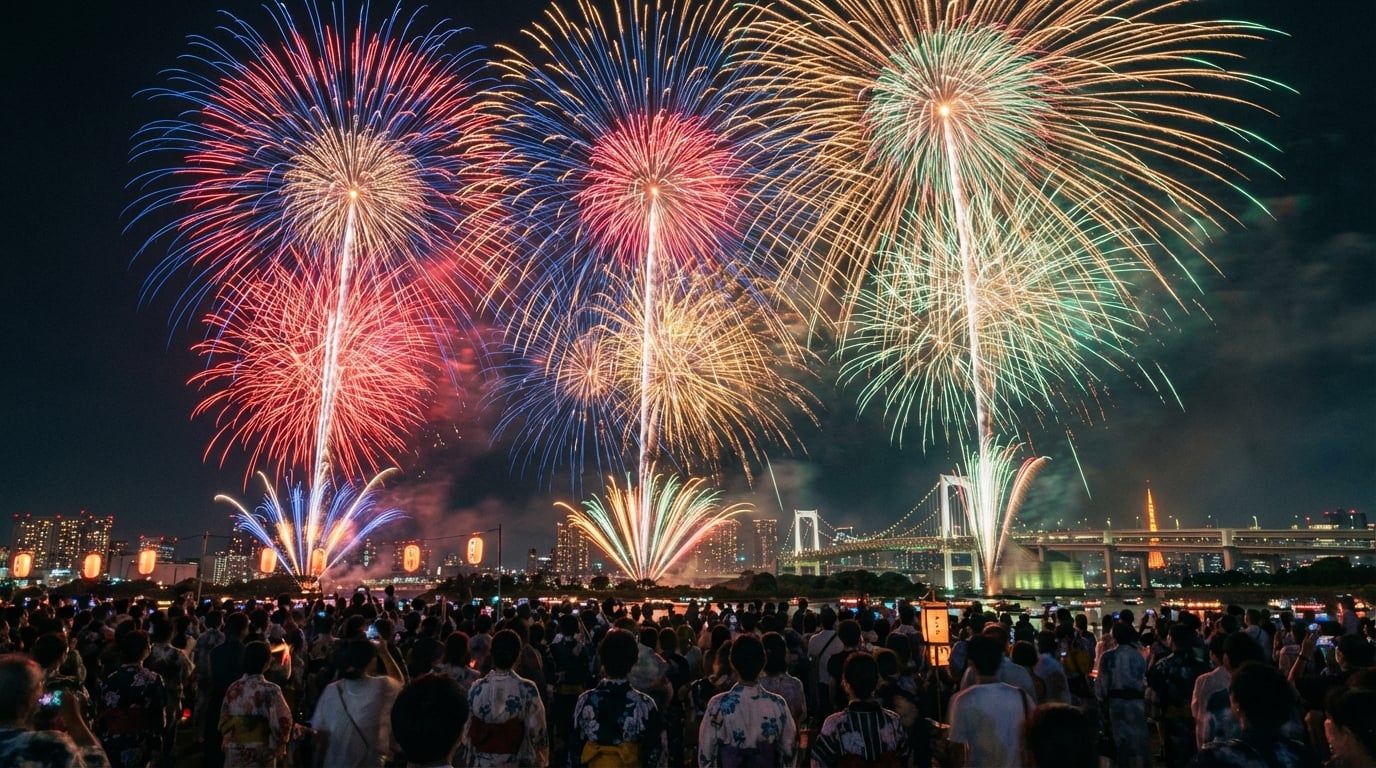
Japanese fireworks culture runs deep. Spectators arrive hours early, spreading blue tarps to reserve viewing spots. Friends and families picnic on the ground in yukata, eating festival food and drinking cold beer while waiting for the show. When the first firework launches, the crowd calls out "tamaya!" — an old cheer for the fireworks makers. It is a communal experience unlike anything in Western fireworks culture.
Sumidagawa Fireworks — Tokyo (Late July)
Tokyo's signature fireworks event has roots dating to 1733. Around 20,000 fireworks are launched from two sites along the Sumida River, with different pyrotechnic companies competing for the best display. Over a million spectators line the riverbanks. The combination of massive fireworks, Tokyo Skytree looming in the background, and the festive riverside atmosphere makes this the quintessential Tokyo summer experience. Arrive by early afternoon to secure a decent spot.
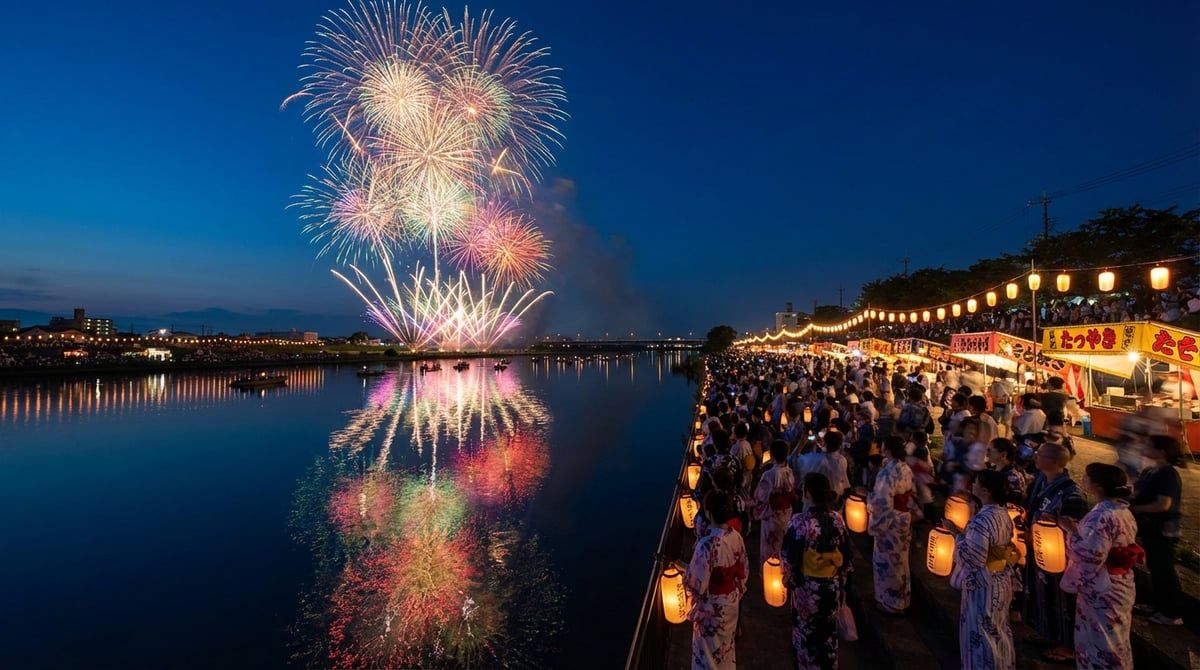 Image for illustrative purposes only.
Omagari Fireworks — Akita (Last Saturday of August)
This is the competition. Omagari's National Fireworks Competition is where Japan's top pyrotechnic artists showcase their finest work, judged on creativity, timing, and beauty. The displays here are a level above — intricate multi-act compositions set to music, with effects you will not see anywhere else. Around 800,000 people descend on this small city for one night. Getting there requires planning, but fireworks enthusiasts consider Omagari the best in Japan.
Tenjin Matsuri Fireworks — Osaka (July 25)
The fireworks at Osaka's great Tenjin Matsuri are launched over the Okawa River while a procession of illuminated boats passes below. The combination of fireworks overhead and fire-lit boats on the water creates a layered spectacle. The riverbanks fill with food stalls and spectators. As one of Japan's top three festivals, Tenjin Matsuri delivers fireworks as part of a much larger celebration.
Lake Biwa Fireworks — Shiga (August)
Around 10,000 fireworks launched over Japan's largest lake create perfect reflections on the calm water surface. The wide-open setting means excellent visibility from many angles. Otsu's lakefront parks fill quickly, but the surrounding hillsides offer elevated views. The mirror effect of fireworks doubled on the lake is stunning and unique among hanabi taikai.
Nagaoka Festival Fireworks — Niigata (August 2-3)
Nagaoka's fireworks are famous for their sheer scale. The "Phoenix" firework — a massive multi-minute display launched across a 2-kilometer stretch of the Shinano River — was created to honor the city's recovery from wartime bombing and a devastating 2004 earthquake. The emotional weight behind the display, combined with its enormous scope, makes Nagaoka deeply moving. The "Sanshaku-dama" (three-foot shells) that burst into enormous chrysanthemum patterns are a Nagaoka specialty.
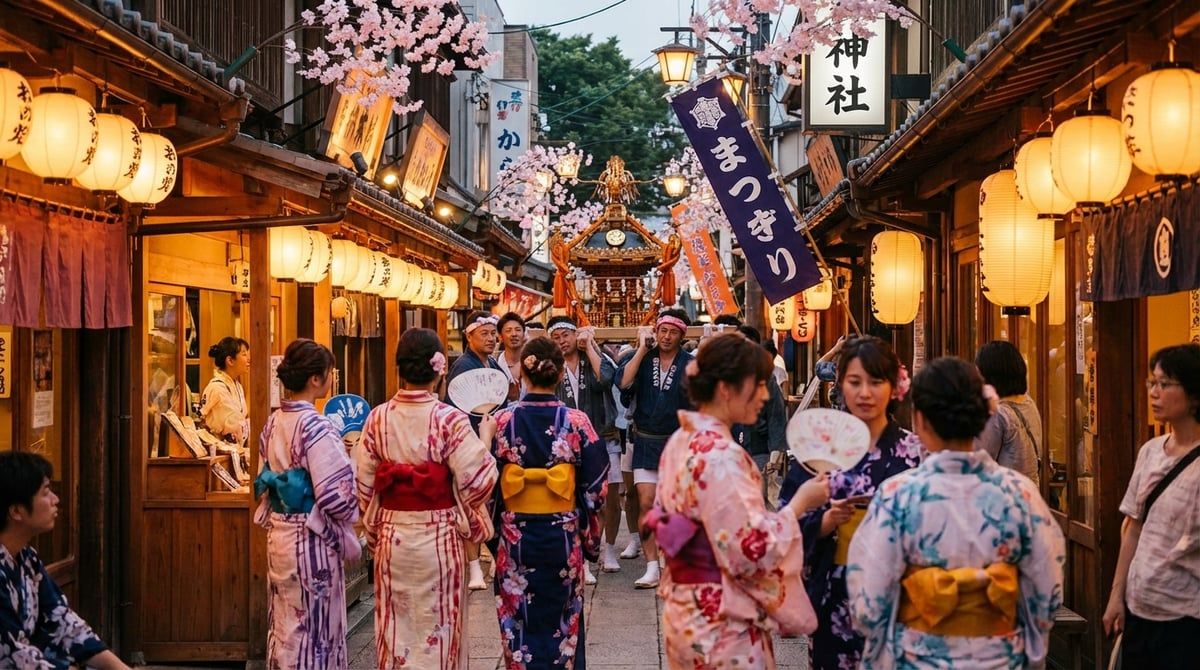 Image for illustrative purposes only.
Edogawa Fireworks — Tokyo (August)
With around 14,000 fireworks, this is one of Tokyo's largest displays. Launched along the Edogawa River on the Tokyo-Chiba border, the opening sequence sends hundreds of fireworks skyward simultaneously in a wall of light. The riverbank setting provides generous open space, making it less crushingly crowded than Sumidagawa. Many consider the opening five seconds of Edogawa the single most impressive moment in Tokyo's fireworks season.
Chichibu Night Festival — Saitama (December 2-3)
Winter fireworks are rare in Japan, which makes Chichibu's display special. The fireworks complement the float procession rather than standing alone, bursting overhead as massive illuminated floats are hauled up a steep hill. Cold December air means crisp visibility, and the combination of pyrotechnics with one of Japan's great float festivals creates something no summer hanabi taikai can replicate.
Lake Kawaguchiko Fireworks — Yamanashi (August)
Fireworks with Mount Fuji as a backdrop. On clear nights, the silhouette of Fuji frames the explosions over the lake, creating the most iconic composition in Japanese fireworks photography. The lakeside setting is more relaxed than big-city events, and the surrounding onsen towns make it easy to pair fireworks with a hot spring stay.
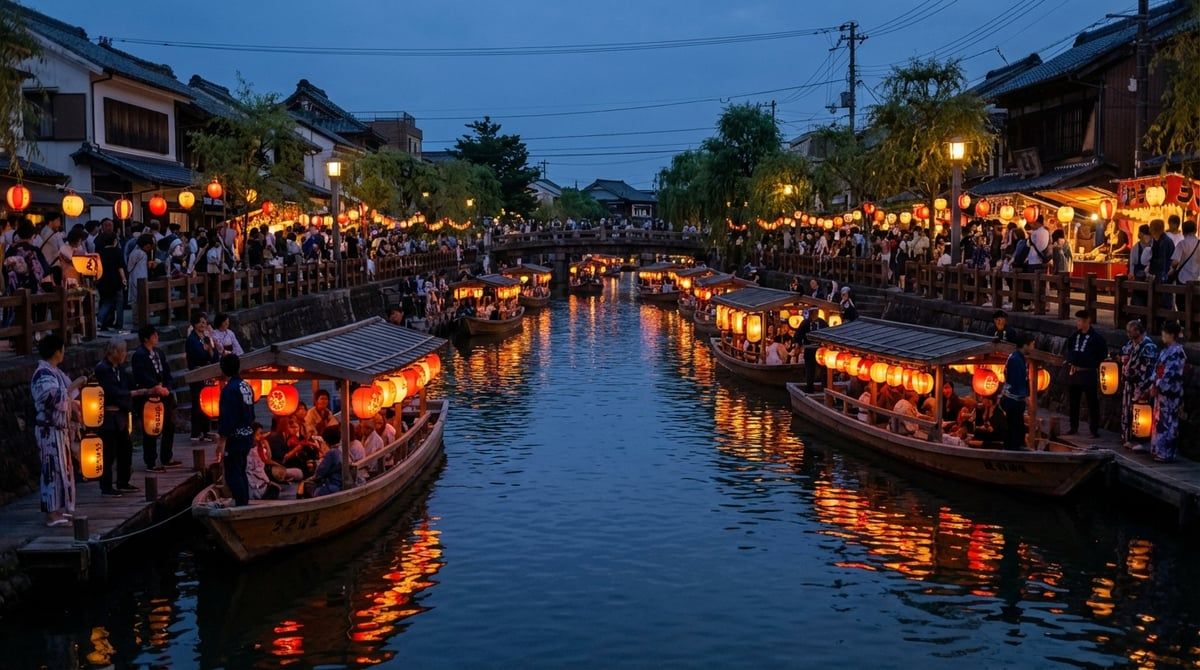 Image for illustrative purposes only.
Hanabi Taikai Survival Tips
- Claim your spot early. Serious spectators arrive 4-6 hours before showtime with blue tarps and picnic supplies.
- Wear yukata. It is the tradition, and many shops near festival sites offer affordable rentals.
- Bring food and drinks. Festival stalls will have long lines. A pre-packed bento and cold drinks on your tarp is the local move.
- Plan your exit. Train stations after major hanabi taikai are extremely crowded. Wait 30-60 minutes after the finale, or book nearby accommodation.
- Check cancellations. Rain or strong wind can postpone events. Most major hanabi taikai have rain dates.
Hanabi taikai are the heartbeat of Japanese summer. The combination of artistry, tradition, and communal joy makes them worth building a trip around.
Frequently Asked Questions
What are hanabi taikai?
Hanabi taikai are Japanese fireworks festivals, considered an art form with pyrotechnic artists creating intricate, perfectly timed explosions of color. They are a quintessential summer experience, drawing millions of spectators across the country.
When is the best time to see fireworks in Japan?
The best time to see most hanabi taikai in Japan is during the summer months, primarily July and August. However, a few unique festivals, like the Chichibu Night Festival, offer winter fireworks in December.
What are some of the most famous fireworks festivals in Japan?
Some of Japan's most famous fireworks festivals include Tokyo's Sumidagawa and Edogawa Fireworks, the competitive Omagari Fireworks in Akita, and the large-scale Nagaoka Festival Fireworks in Niigata. Osaka's Tenjin Matsuri also features a significant fireworks display.
What should I know before attending a Japanese fireworks festival?
It's recommended to claim your viewing spot several hours early, often with a blue tarp, and consider wearing a traditional yukata. Bring your own food and drinks to avoid long lines, and plan your exit strategy as train stations get extremely crowded after the event.
Are there any fireworks festivals in Japan during winter?
Yes, the Chichibu Night Festival in Saitama, held on December 2-3, is a notable exception for winter fireworks in Japan. The cold December air provides crisp visibility, complementing the festival's illuminated float procession.