Japanese Spring Festivals 2026: Cherry Blossoms, Shrine Parades & Matsuri Guide
May 4, 2026
The best Japanese spring festivals in 2026 — Aoi Matsuri, Sanja Matsuri, Takayama Matsuri, hanami parties, and more. Dates, tips & what to expect.
Image for illustrative purposes only.
Spring in Japan is nothing short of magical. As cherry blossoms sweep across the country from late March through May, communities come alive with some of the oldest and most spectacular festivals in the world. Whether you are watching an imperial procession wind through Kyoto's ancient streets or joining thousands of revelers carrying portable shrines through Tokyo, spring matsuri season offers unforgettable experiences you simply cannot find anywhere else.
Here is your guide to the best spring festivals across Japan — when they happen, what makes each one special, and how to experience them.
March: Early Spring Awakening
Hina Matsuri (Girls' Day) — March 3, Nationwide
Spring begins gently with Hina Matsuri, also known as Dolls' Day. Families with daughters display elaborate tiered platforms of ornamental dolls dressed in Heian-period court costumes. While this is primarily a home celebration, several towns host public displays worth visiting. Katsuura in Chiba prefecture lines its stone steps with 1,800 dolls, creating one of the most photographed scenes of early spring. Restaurants serve chirashi-zushi (scattered sushi) and hina-arare (pastel rice crackers) throughout the season.
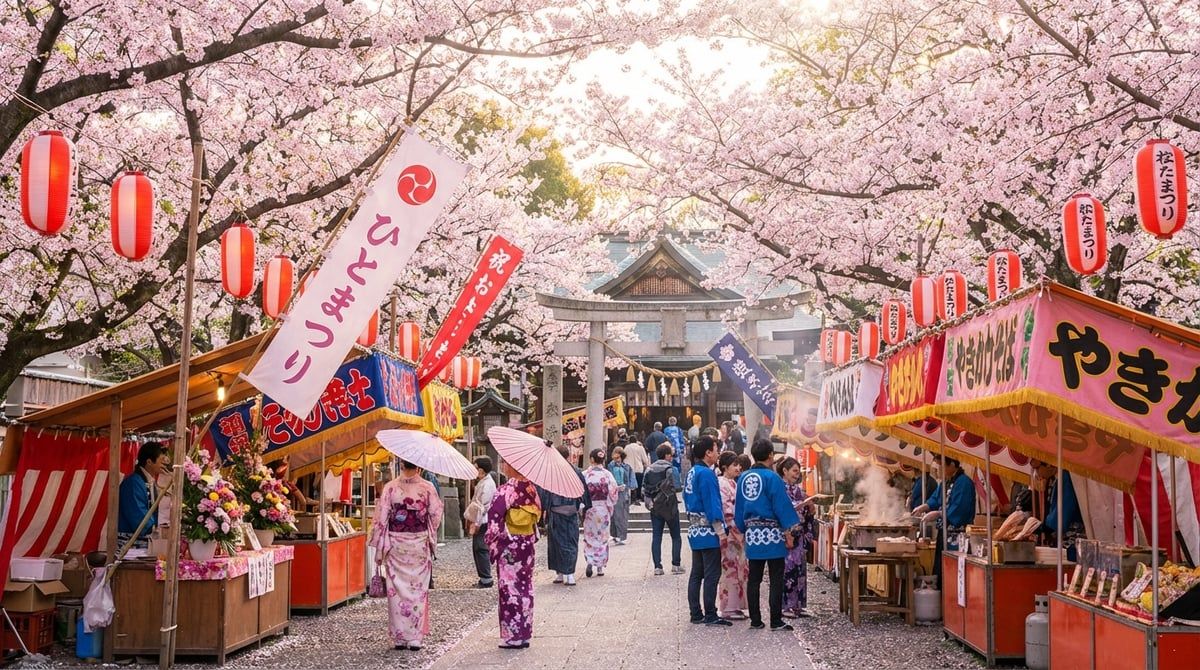 Image for illustrative purposes only.
Omizutori — March 1-14, Todai-ji Temple, Nara
One of Japan's most ancient rituals, Omizutori has been performed without interruption for over 1,270 years at Todai-ji's Nigatsu-do hall. Monks carry enormous flaming torches along the wooden balcony, sending showers of sparks into the darkness below. The climax comes on March 12, when the largest torches are used and sacred water is drawn from a well beneath the hall — a ceremony believed to cleanse the sins of the people and welcome spring. Arrive early, as crowds gather hours before the torches are lit.
April: Cherry Blossoms and Bold Celebrations
Hanami Season — Late March to Mid-April
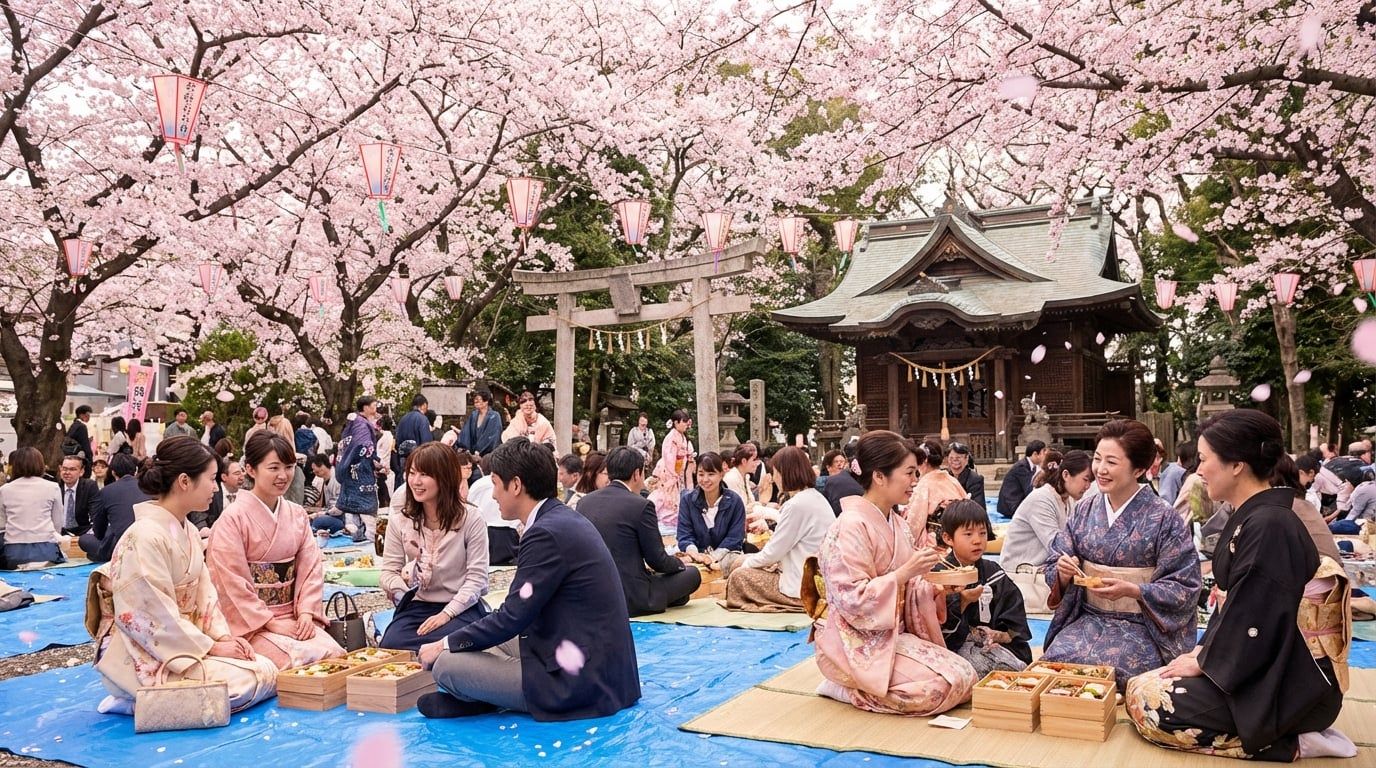
While not a single festival, hanami (cherry blossom viewing) is Japan's most beloved spring tradition. Parks, riverbanks, and castle grounds fill with picnickers spreading blue tarps beneath clouds of pink and white blossoms. Popular spots include Ueno Park and Meguro River in Tokyo, Maruyama Park in Kyoto, and Osaka's cherry blossom destinations. The season moves north with the "sakura front," so timing depends on your destination — typically late March in Kyushu and Kansai, early April in Tokyo, and late April in Tohoku.
Takayama Spring Festival — April 14-15, Gifu
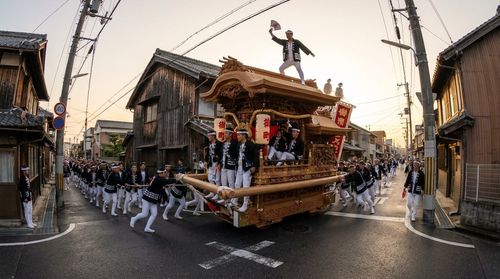
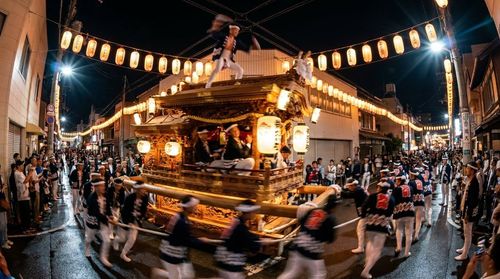
Takayama's spring festival at Hie Shrine is considered one of Japan's three most beautiful float festivals. Twelve elaborately decorated yatai (festival floats), some dating back to the 17th century, are paraded through the old town's narrow streets. Several floats feature karakuri — mechanical puppet performances powered by strings and springs that are genuinely mesmerizing. At night, the floats are illuminated by hundreds of lanterns, creating a scene straight out of a woodblock print.
Kanamara Matsuri — First Sunday of April, Kawasaki
If you want something completely different, this one delivers. Kawasaki's Kanamara Matsuri (Festival of the Steel Phallus) is bold, funny, and surprisingly historic — rooted in prayers for fertility, safe childbirth, and protection from disease. Today it doubles as a major fundraiser for HIV research. The parade features unmistakable floats, and the atmosphere is joyful and welcoming. It draws a huge international crowd, so arrive by mid-morning to claim a good viewing spot.
May: The Grand Finales
Kanda Matsuri — Mid-May (Odd Years), Tokyo
Held in odd-numbered years, Kanda Matsuri is one of Tokyo's three great festivals. The main procession on Saturday features hundreds of participants in Heian-period costumes, portable shrines (mikoshi), and floats winding from Kanda Myojin Shrine through the Akihabara and Nihonbashi neighborhoods. On Sunday, over 100 mikoshi from surrounding neighborhoods converge on the shrine in a spectacular display of community energy. Even in even years, smaller events are held at the shrine.
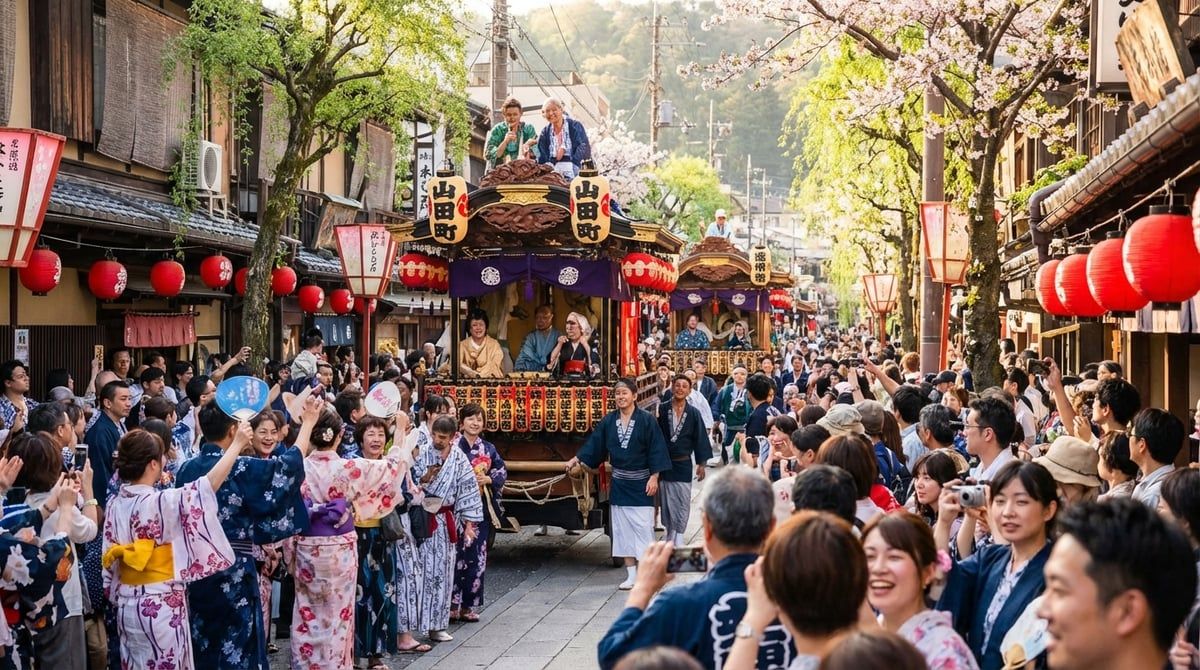 Image for illustrative purposes only.
Aoi Matsuri — May 15, Kyoto
Dating back over 1,400 years, Aoi Matsuri is Kyoto's oldest annual festival and one of its three great celebrations. A procession of over 500 people dressed in full Heian-period aristocratic costume walks from the Imperial Palace to Shimogamo Shrine and then onward to Kamigamo Shrine. Ox-drawn carts, horses, and elaborately dressed court ladies create a living picture of ancient Japan. The name comes from the hollyhock (aoi) leaves used to decorate the participants — believed to protect against natural disasters.
Sanja Matsuri — Third Weekend of May, Tokyo
Sanja Matsuri at Asakusa's Senso-ji area is Tokyo at its most electric. Over the three-day weekend, roughly 100 mikoshi are carried through the streets by teams of chanting, swaying bearers. The energy is intense — this is not a calm procession but a physical, emotional, and deeply communal experience. On the final Sunday, three sacred mikoshi from Asakusa Shrine make their way through the neighborhood, and the crowds become enormous. If you visit only one Tokyo festival, make it this one.
Practical Tips for Spring Festival Season
Getting around: Trains are your best friend. Major festivals are well-served by public transport, but expect packed stations. IC cards (Suica/PASMO) save time at gates.
Accommodation: Book early — especially during Golden Week (April 29 to May 5), when domestic travel peaks and hotel prices surge across the country.
What to bring: Comfortable walking shoes are essential. A light rain jacket is wise, as spring weather can be unpredictable. Bring cash — most festival food stalls do not accept cards.
Festival food: Every matsuri has yatai (food stalls) selling yakitori, takoyaki, yakisoba, candied strawberries, and much more. Eating while walking through a festival is half the experience.
Etiquette: Follow the crowd's lead. When a mikoshi passes, step aside and give the bearers space. Photography is generally welcome, but be respectful during ritual moments at shrines.
Plan Your Spring Festival Trip
Spring is arguably the best time to visit Japan. The weather is mild, the blossoms are breathtaking, and the festival calendar is packed. Check our complete Japan festival calendar to align your trip dates with the celebrations that interest you most, and browse our 2026 festival guide for the latest schedule updates. Whether you are drawn to ancient Kyoto rituals or the raw energy of Tokyo's street festivals, spring in Japan will not disappoint.
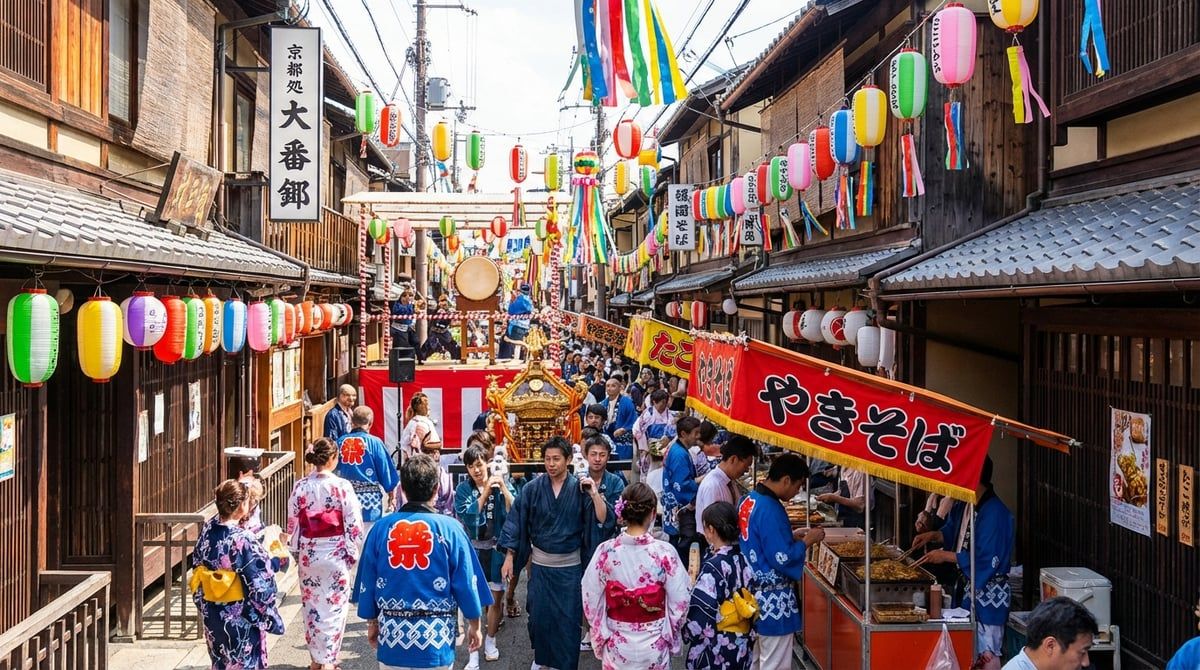 Image for illustrative purposes only.
Frequently Asked Questions
When is the best time to experience spring festivals in Japan?
Spring festival season in Japan generally runs from late March through May, coinciding with the cherry blossom bloom. This period offers mild weather and a packed calendar of celebrations across the country.
What are some must-see spring festivals outside of Tokyo and Kyoto?
Beyond Tokyo and Kyoto, consider the ancient Omizutori at Todai-ji Temple in Nara, performed for over 1,270 years. The Takayama Spring Festival in Gifu is renowned for its beautiful floats, and Kawasaki hosts the unique Kanamara Matsuri.
What is hanami and when does it typically occur in Japan?
Hanami, or cherry blossom viewing, is Japan's most beloved spring tradition, involving picnics under blooming trees. The season moves north with the "sakura front," typically from late March in Kyushu and Kansai, early April in Tokyo, to late April in Tohoku.
What practical tips should I know for visiting spring festivals?
Book accommodation early, especially during Golden Week
Explore More Festival Guides
Continue your Japan festival journey with these related guides: