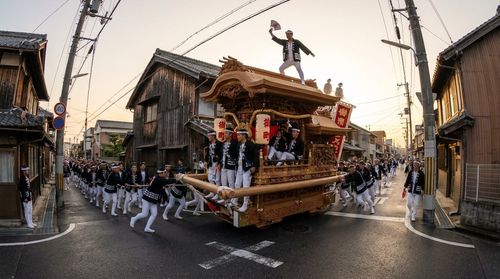
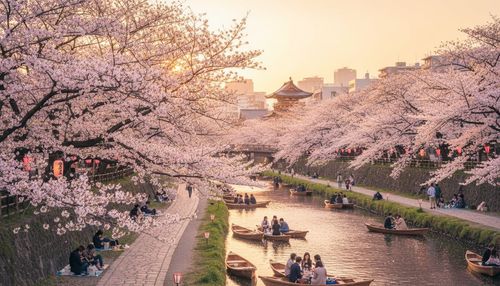
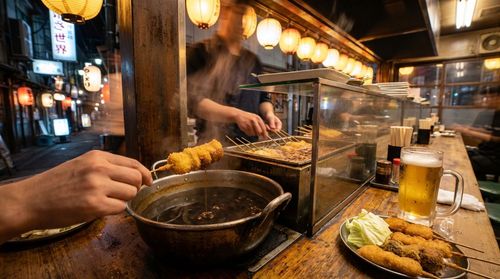
Everything you need for Gion Matsuri 2026 — parade dates, Yoiyama tips, viewing spots, and the 1,150-year history behind Kyoto's greatest festival.
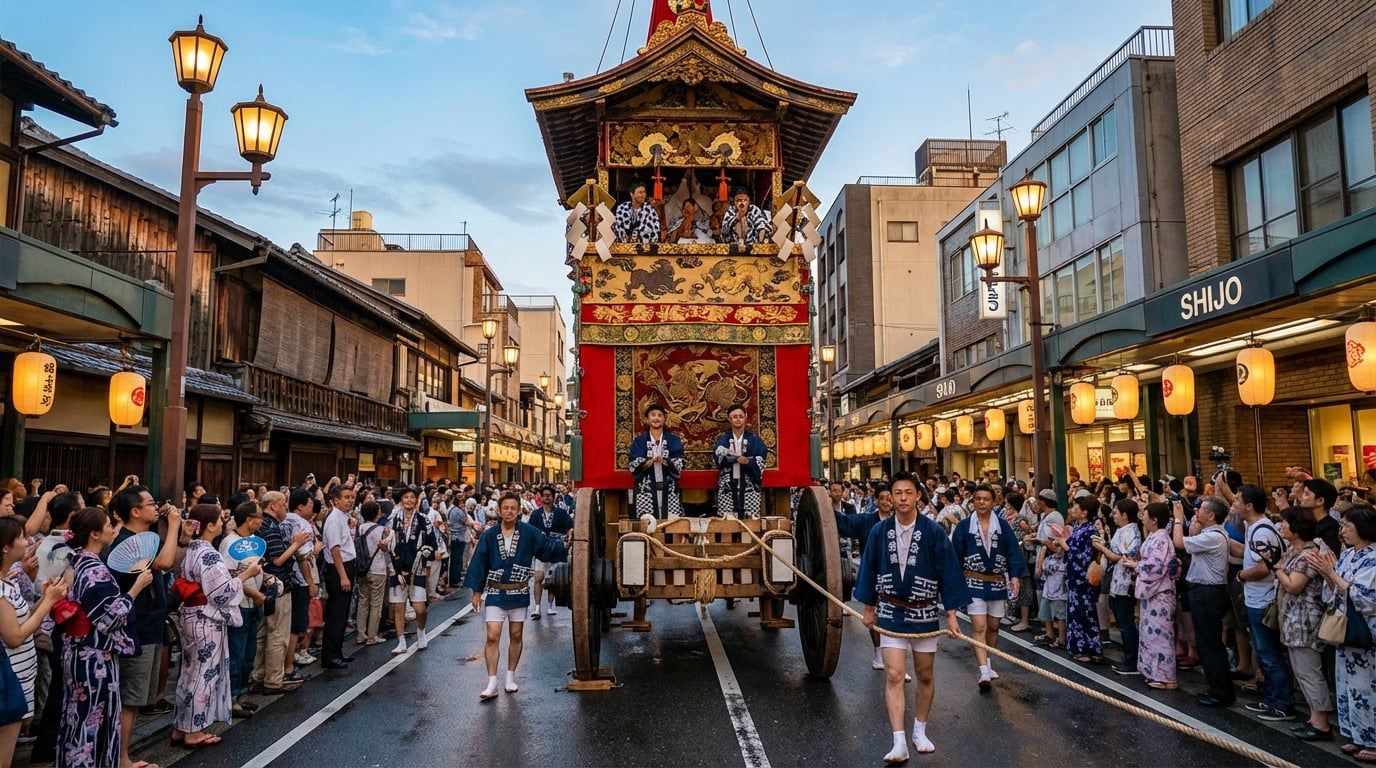 Image for illustrative purposes only.
The air is thick and warm, the kind of July humidity that clings to your skin and makes the cold beer in your hand feel like a small miracle. You're standing on Shijo-dori in central Kyoto, shoulder to shoulder with thousands of people, and yet there is nowhere else you would rather be. Towering above the crowd, a yamaboko float rises three stories high, draped in centuries-old tapestries from as far away as Persia and Belgium. Paper lanterns glow amber along its wooden frame, swaying gently as if breathing. And then you hear it — the hypnotic kon-kon-chiki-chin of Gion-bayashi music drifting from the musicians perched inside the float, a melody that has echoed through these same streets for over a thousand years.
This is Gion Matsuri. Japan's most celebrated festival, a full month of ritual, spectacle, and living history that transforms Kyoto every July. If you have ever wanted to witness a tradition so old it predates the founding of most European nations, this is the one.
A Festival Born from Plague and Prayer
Gion Matsuri traces its origins to the year 869 AD, when a devastating plague swept through Kyoto — then the imperial capital known as Heian-kyo. The emperor ordered 66 halberds, one for each province of Japan, to be erected at Shinsen-en garden as an offering to the deity of Yasaka Shrine (then called Gion-sha). The people paraded through the streets, carrying portable shrines and praying for the pestilence to end. It worked — or so the story goes — and the ritual was repeated whenever disease struck the city.
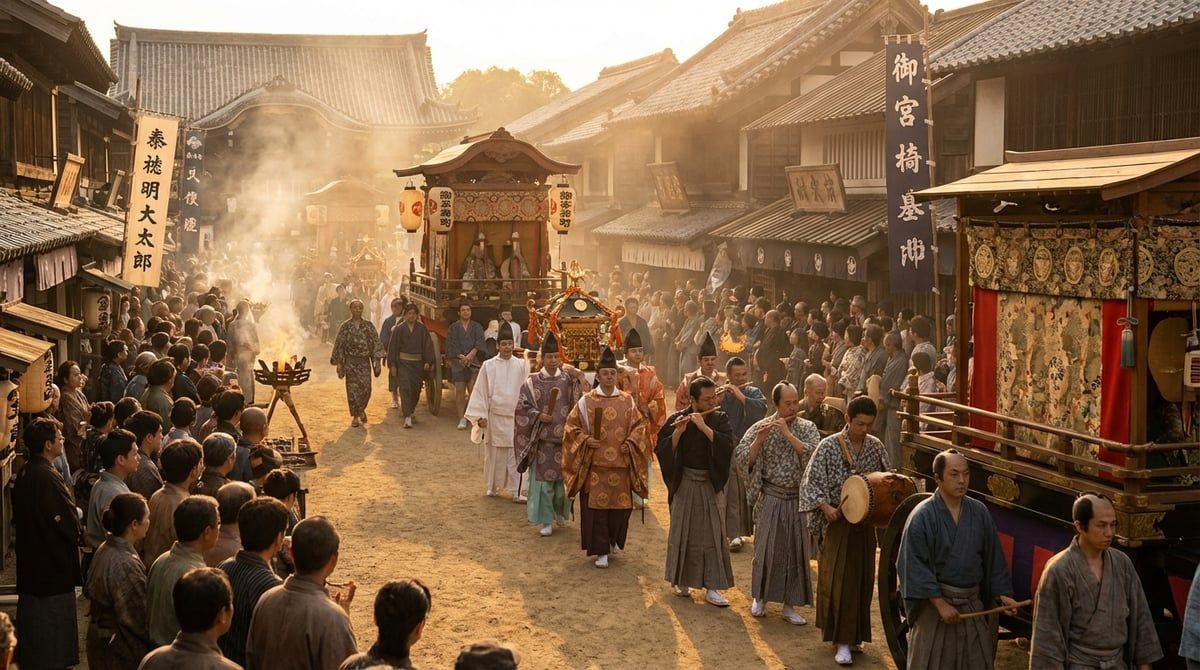 Image for illustrative purposes only.
By the 10th century, Gion Matsuri had become an annual event. Over the following centuries, Kyoto's wealthy merchant class poured their fortunes into building ever more elaborate floats, decorating them with treasures acquired through international trade. The festival survived wars, fires, and even a 33-year hiatus during the Onin War of the 15th century. Each time, the people of Kyoto rebuilt their floats and resumed the procession.
In 2009, UNESCO inscribed Gion Matsuri's yamaboko float tradition as an Intangible Cultural Heritage of Humanity. Today, the festival stands as one of the longest continuously celebrated events in human history — over 1,150 years and counting.
The Festival Calendar: What Happens Each Week
Gion Matsuri spans the entire month of July, and understanding its rhythm will help you plan the perfect visit. Here is what unfolds week by week.
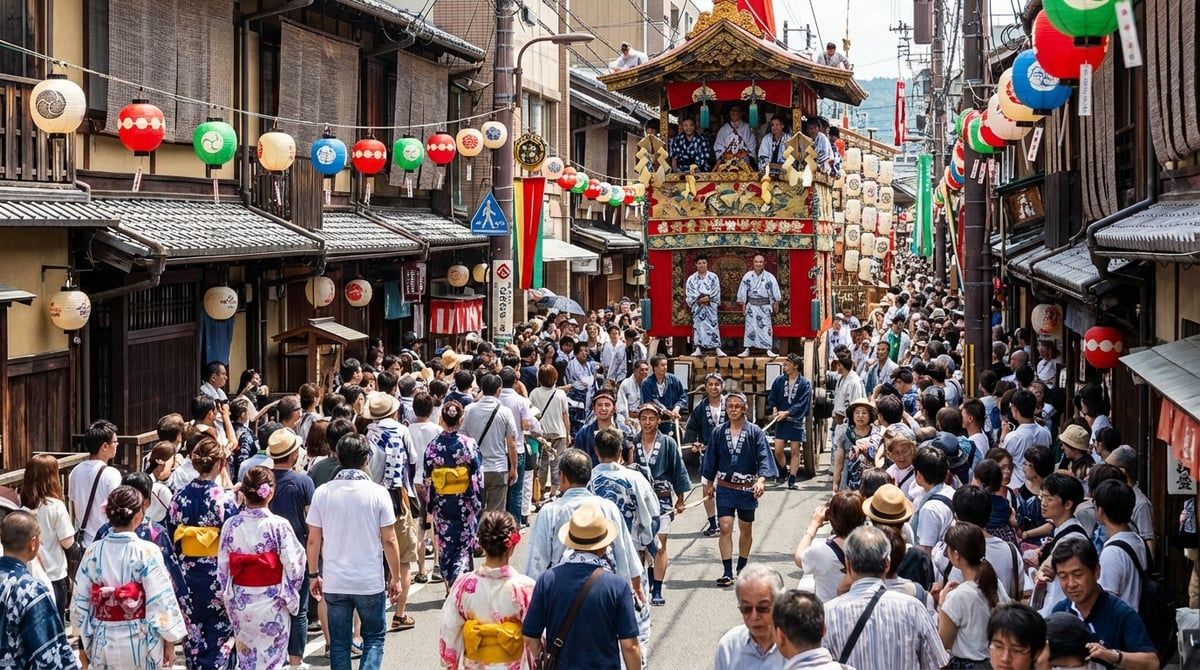 Image for illustrative purposes only.
July 1-9: Opening Rituals (Kippuiri)
The festival begins quietly. On July 1, a formal ceremony called Kippuiri marks the official start, and the men chosen to ride atop the main float begin a week of ritual purification. Sacred rope (shimenawa) is strung across the entrance to the Naginata Boko float's neighborhood. For most visitors, this week offers a glimpse of preparation — materials being hauled through narrow streets, the first sounds of musicians practicing behind closed doors.
July 10-14: Float Construction (Yamaboko Tatei)
This is when the magic of engineering meets tradition. The massive yamaboko floats are assembled in the streets without using a single nail. Instead, builders lash the wooden frames together with rope in a technique called nawagurami, passed down through generations. Watching craftsmen climb the skeletal frames and bind joints with practiced precision is mesmerizing. The floats take shape over several days, and by July 13-14, the neighborhoods begin draping them in their ornate tapestries. You can walk freely among the floats during this period, getting close enough to touch the ancient wood and admire textile details that are impossible to see during the crowded parades.
July 14-16: Yoiyama — The Enchanted Evenings
If you can only experience one part of Gion Matsuri, make it Yoiyama. On these three evenings (called Yoiyama, Yoiyoiyama, and Yoiyoiyoiyama, counting backward from the parade), the streets of central Kyoto transform into a festival wonderland. Paper lanterns — hundreds of them — illuminate the completed floats from within, casting a warm golden glow against the darkening sky. The narrow machiya townhouses of the float neighborhoods open their sliding doors and display family heirlooms — folding screens, hanging scrolls, and treasures that are only shown to the public during this week each year. This tradition is called Byobu Matsuri (Screen Festival), and walking past these open homes feels like stepping into a living museum.
Street food stalls line the closed-off avenues. The scent of yakitori smoke mingles with sweet kakigori shaved ice and the savory snap of takoyaki. Children in colorful yukata dart between adult legs. Musicians play atop the lantern-lit floats, and their ancient melodies float above the din of the crowd. The atmosphere is electric and timeless all at once. July 15 and 16 typically draw the largest crowds, with some estimates exceeding 400,000 people on a single evening.
July 17: Saki Matsuri Parade — The Main Event
This is the grand procession, and the image most people associate with Gion Matsuri. Starting at 9:00 AM, 23 yamaboko floats process along a set route through central Kyoto — east along Shijo-dori, north on Kawaramachi-dori, and west on Oike-dori. The procession takes roughly three hours.
The highlight moment is called tsujimawashi — the turning of the massive floats at street intersections. Because the floats have no steering mechanism and weigh up to 12 tons, teams of men must lay down bamboo strips soaked in water, then pull ropes to slide the float's wheels sideways in a dramatic, creaking 90-degree turn. The crowd holds its breath every time. When the turn completes, applause erupts.
Leading the procession is always the Naginata Boko, atop which a young boy chosen as the divine messenger (chigo) cuts a sacred rope with a sword to symbolically open the way. This boy has spent the preceding week in ritual purification, his feet never touching the ground outside the float.
July 21-23: Ato Yoiyama — The Quieter Encore
The second half of the festival mirrors the first with its own set of evening celebrations. Ato Yoiyama draws significantly fewer people than its mid-July counterpart, making it an excellent choice if you prefer a more relaxed experience while still enjoying the lantern-lit floats and street food atmosphere.
July 24: Ato Matsuri Parade — The Connoisseur's Choice
The second and final procession features 11 floats, including the magnificent Ofune Boko (a float shaped like a ship) and the crowd-favorite Kuronushi Yama. With roughly a third of the floats and a fraction of the spectators, the Ato Matsuri parade offers better views, easier movement, and a more intimate experience. Many Kyoto locals actually prefer this parade. The route runs in reverse compared to July 17 — west on Oike-dori, south on Kawaramachi-dori, east on Shijo-dori.
The Yamaboko Floats: Moving Masterpieces
The floats of Gion Matsuri are divided into two types. Hoko are the colossal wheeled floats, reaching up to 25 meters tall and weighing as much as 12 tons, carrying musicians and pulling crews of dozens. Yama are smaller, portable shrine-like structures carried on the shoulders of teams of men.
What makes the yamaboko truly extraordinary is what decorates them. Over the centuries, Kyoto merchants used their international trade connections to acquire textiles from around the world. Today, you will find 16th-century Flemish tapestries depicting scenes from the Trojan War alongside Chinese and Indian silks, Persian rugs, and Japanese embroidery of staggering intricacy — all mounted on the same float. These floats are sometimes called "mobile museums," and for good reason. Several individual tapestries are designated Important Cultural Properties of Japan.
Each of the 34 floats belongs to a specific neighborhood (cho) in central Kyoto, and the residents of that neighborhood are responsible for its preservation, storage, and annual assembly. This community stewardship, unbroken for centuries, is the heart of what UNESCO recognized.
Insider Tips for First-Time Visitors
Get a chimaki amulet. Each float neighborhood sells its own chimaki — a bundle of bamboo-leaf-wrapped rice offerings that serves as a protective charm for the coming year. They are beautiful, unique to each float, and make a meaningful souvenir. The most popular chimaki (from Naginata Boko) sell out fast, so arrive early during Yoiyama evenings.
Choose your parade viewing spot wisely. The intersection of Shijo and Kawaramachi is where tsujimawashi turns happen, but it is unbearably crowded. For a better experience, position yourself along Oike-dori between Kawaramachi and Shinmachi — the crowds thin considerably, and you can see the floats approaching from a distance. Arrive at least 90 minutes before the 9:00 AM start on parade day.
Consider reserved seating. Paid viewing seats along the parade route cost from around 3,500 yen and guarantee a clear sightline. They sell out weeks in advance through the Kyoto City Tourism Association, so book early if this matters to you.
Wear yukata. Renting a yukata (summer kimono) is easy in Kyoto, with many shops near Shijo offering same-day rentals. Wearing one to Yoiyama makes the experience feel immeasurably more special, and you will blend in beautifully — locals dress up for this.
Attend Ato Matsuri if crowds worry you. The July 24 parade and its preceding Yoiyama evenings offer nearly the same spectacle with dramatically fewer people. It is genuinely the better experience for photography, for children, and for anyone who wants to linger.
Explore the side streets. During Yoiyama, the main avenues are packed, but the narrow alleys between float neighborhoods are where you find the real charm — small izakaya with their doors flung open, elderly residents sharing stories about their float, and quiet moments of beauty away from the main crush.
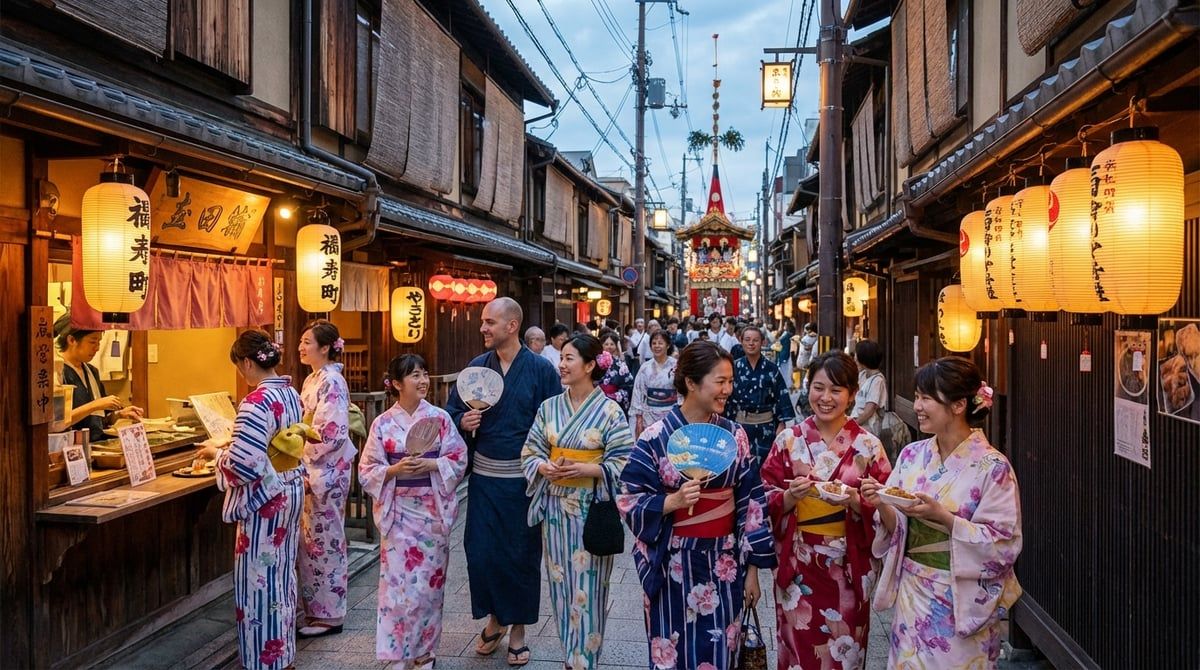 Image for illustrative purposes only.
Practical Information
Dates: July 1-31, 2026. Key dates are July 14-17 (Saki Matsuri) and July 21-24 (Ato Matsuri).
Location: Central Kyoto, primarily the Shijo-Karasuma to Shijo-Kawaramachi corridor and surrounding neighborhoods.
Access: Take the Kyoto Municipal Subway Karasuma Line to Shijo Station, or the Hankyu Kyoto Line to Kawaramachi Station. Both exits place you in the center of the action. From Osaka, the Hankyu Limited Express reaches Kawaramachi in about 45 minutes.
Cost: Attending the festival is completely free. Reserved parade seating costs from 3,500 yen. Budget generously for street food and chimaki souvenirs.
What to Bring: A hand towel (tenugui) for sweat, a portable fan, plenty of water, and a waterproof bag for sudden summer downpours. Comfortable shoes are essential — you will walk for hours on hot asphalt.
Accommodation: Kyoto hotels book up months in advance for mid-July. If availability is tight, consider staying in Osaka (35-45 minutes by train) and making day trips. You will also dodge some of the peak Kyoto pricing.
Food: Yoiyama street stalls offer everything from yaki-tomorokoshi (grilled corn) to hamo (pike conger, a Kyoto summer delicacy). For a sit-down meal, book a restaurant along Pontocho or Kiyamachi well in advance.
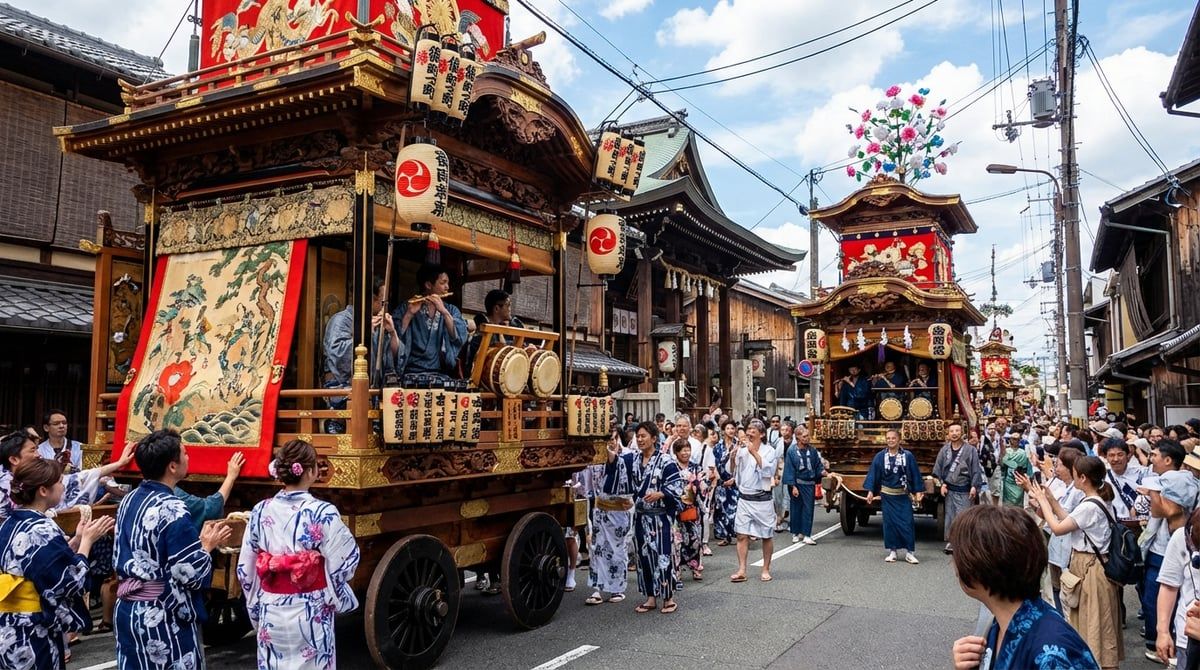 Image for illustrative purposes only.
A Thousand Years of Summer Nights
There is a moment during Yoiyama, usually around 9 PM when the lanterns are fully glowing and the crowd has settled into its rhythm, when you suddenly understand what makes Gion Matsuri different from any other festival on earth. It is not just the scale, though the scale is staggering. It is the continuity. The float in front of you was built by the ancestors of the people standing next to you. The melody drifting from above was composed when Europe was still deep in the Middle Ages. The prayer at its heart — for safety, for health, for the community to endure another year — is the same prayer that was whispered in 869 AD when this whole magnificent tradition began.
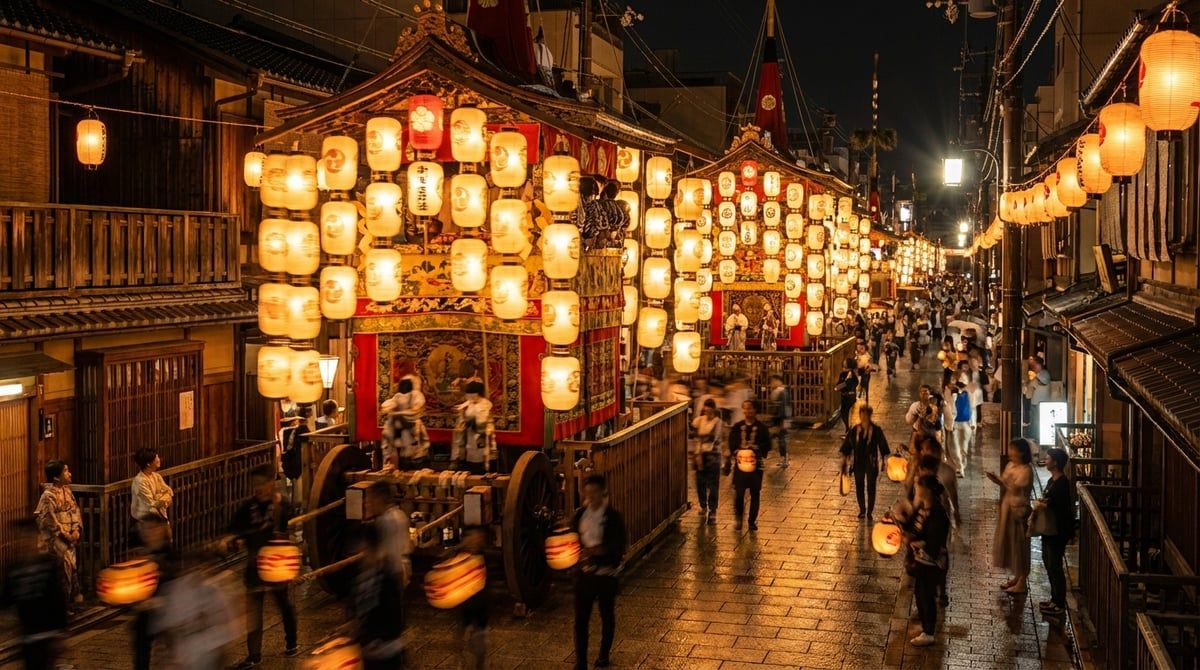 Image for illustrative purposes only.
Gion Matsuri is not a performance staged for tourists. It is a living act of devotion, renewed every July by the neighborhoods of Kyoto because they believe, as their grandparents believed, that this is what keeps the city whole. To witness it is a privilege. To stand in that warm July night, hearing the kon-kon-chiki-chin rise above the lantern glow, is to touch something genuinely ancient and genuinely alive.
Gion Matsuri is one of Japan's Three Great Festivals. Planning your summer trip? Check our Japan Festivals 2026 calendar, our guide to Summer Festivals in Japan, and our complete Kyoto Festivals 2026 guide. For tips on etiquette, what to wear, and what to bring, see our Japan Festival Tips. You can also browse the full Japan Festival Calendar to plan around multiple events.
Getting There and Practical Info
From Tokyo
Take the Tokaido Shinkansen (Nozomi: 2h15min, Hikari: 2h40min). Get off at Kyoto Station, then take the subway Karasuma Line to Shijo Station (3 min, $2.20). The festival area is a 5-minute walk east.
From Osaka
JR Special Rapid from Osaka Station to Kyoto Station (29 min, covered by JR Pass). Or take the Hankyu Line from Umeda to Kawaramachi Station (43 min, $4) -- this drops you right in the festival zone.
Budget Quick Guide
| Item | Cost |
|---|---|
| Shinkansen Tokyo-Kyoto (one way) | $120 / free with JR Pass |
| Guesthouse per night (festival week) | $50-100 |
| Reserved parade seating | $30-50 |
| Street food dinner at Yoiyama | $15-25 |
| Yukata rental | $25-40 |
What to Book in Advance
- Accommodation: Book 3-6 months ahead for Jul 14-17. Hotels near Shijo sell out first.
- JR Pass: Order online before your trip if visiting multiple cities.
- Paid seating: Available through Kyoto City Tourism Association website (opens late May).
What Real Travelers Say
Gion Matsuri is Japan's most famous festival with deep historical roots dating back to 869, spanning the entire month of July. Visitors consistently praise it as an extraordinary cultural experience, with the July 17th Yamaboko Junko procession featuring spectacular 80-foot tall wheeled floats being the absolute highlight that draws travelers from around the world.
Visitor Tips:
- Plan your visit around July 17th for the Yamaboko Junko procession, the most breathtaking event of the festival
- Book accommodations well in advance as Gion Matsuri accommodation is a popular search topic among travelers
- Consider timing your Kyoto trip to coincide with the festival month of July for the full experience
- Explore the Gion district during the festival to experience both the main events and hidden gems in the geisha district
Best Moments According to Visitors:
- Yamaboko Junko procession on July 17th featuring 80-foot tall wheeled floats
- Experiencing the historic atmosphere of Kyoto during the festival month
- Exploring the Gion geisha district atmosphere during festival celebrations
Heads Up:
- Expect significant crowds during the festival, particularly around main events like Yamaboko Junko
Crowd Level: Gion Matsuri attracts substantial crowds as Japan's most famous festival, making advance planning and strategic timing essential for the best experience.
Frequently Asked Questions
When is Gion Matsuri held?
Gion Matsuri is held throughout the entire month of July each year in Kyoto, Japan.
What are the main highlights of Gion Matsuri?
Key highlights include the float construction (Yamaboko Tatei) from July 10-14, the enchanted Yoiyama evenings from July 14-16, and the two grand parades: Saki Matsuri on July 17 and Ato Matsuri on July 24.
What is Yoiyama?
Yoiyama refers to the three enchanted evenings (July 14-16) leading up to the Saki Matsuri parade, where lantern-lit floats are displayed, machiya townhouses open to show family heirlooms (Byobu Matsuri), and street food stalls create a vibrant atmosphere.
What are the yamaboko floats?
Yamaboko floats are the elaborate, towering structures central to Gion Matsuri, divided into colossal wheeled Hoko and smaller, portable Yama. They are meticulously assembled without nails and adorned with centuries-old tapestries and treasures from around the world.
What is the difference between the Saki Matsuri and Ato Matsuri parades?
The Saki Matsuri parade on July 17 is the main event featuring 23 floats and drawing massive
Where to Stay: Osaka as Your Base Camp
Kyoto accommodation during Gion Matsuri — especially around Yoiyama (July 16) and the Yamaboko Junko (July 17) — books out months ahead and prices spike. A savvy alternative is to base yourself in Osaka. From Osaka's Tennoji it's about 45 minutes to Kyoto by JR — head up for the festival in the morning and return to a calmer Osaka at night. Staying in Osaka also lets you string together Tenjin Matsuri and Osaka Fireworks 2026 in the same summer trip. See the Tennoji Area Guide for details.
Explore More Festival Guides
Continue your Japan festival journey with these related guides:
- Japan Festival Itinerary 2026: 10-Day Summer Trip Planner
- Japan Festivals Guide: 10 Must-See Matsuri That Will Take Your Breath Away
- Kyoto Festivals 2026: Gion Matsuri, Aoi Matsuri and Every Major Event
- Japan Festivals in July 2026: Gion Matsuri, Tenjin Matsuri and More
- Tenjin Matsuri Guide: Osaka's Spectacular River Festival and Fireworks
- Japan Fireworks 2026: The Definitive Hanabi Taikai Calendar
Staying in Tennoji?
If you're planning to explore Tennoji, these neighborhood stays let you experience the area like a local.
Explore the Tennoji Area Guide
Discover more things to do, local food spots, and insider tips for Tennoji.