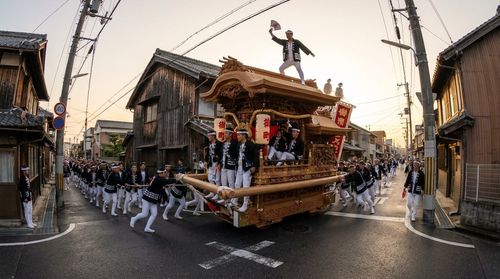
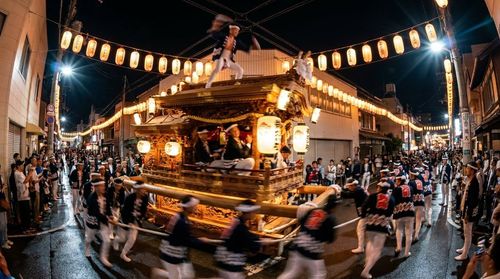
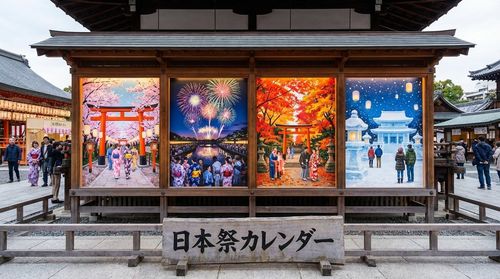
August is Japan's biggest festival month — Nebuta, Tanabata, Awa Odori, and Obon celebrations fill the country with energy.
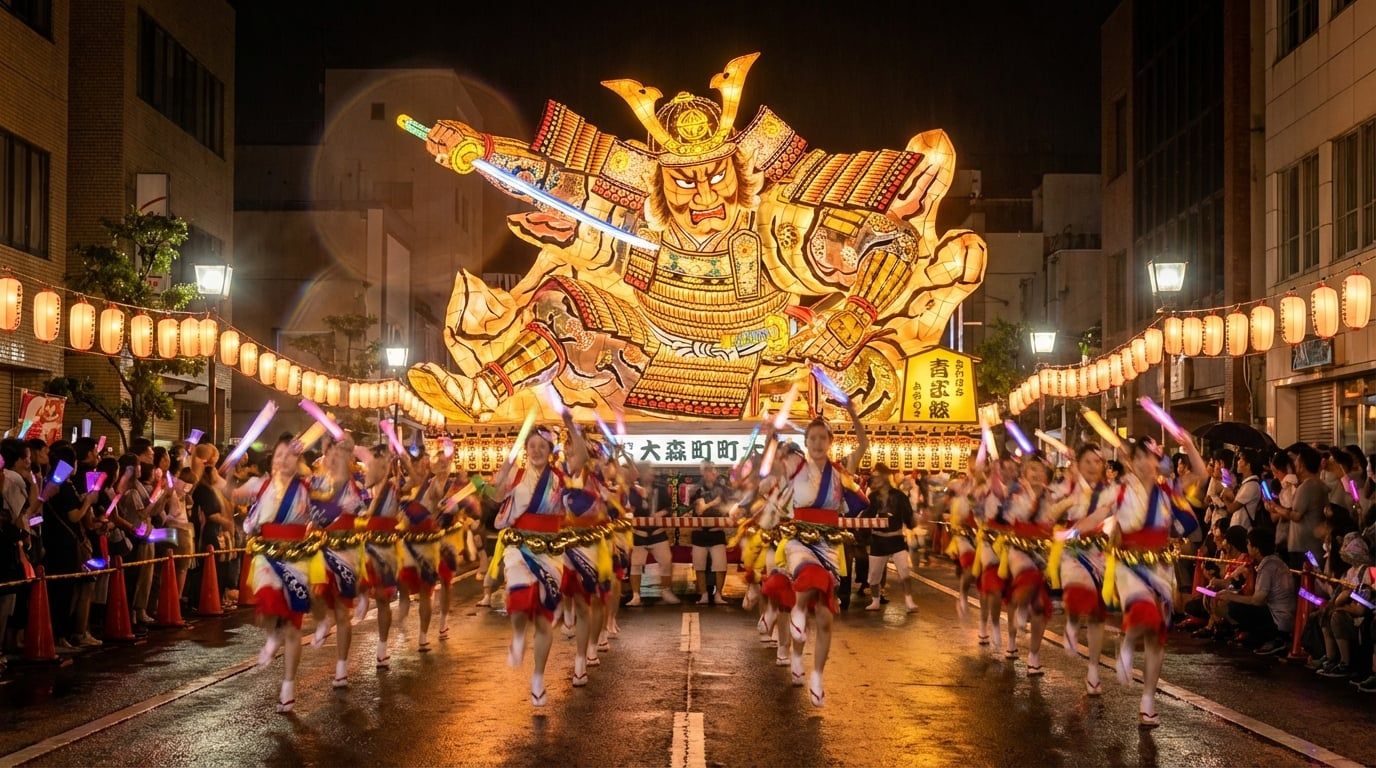 Image for illustrative purposes only.
August is when Japan turns the summer heat into pure celebration. From giant illuminated floats parading through Aomori to hypnotic dance circles in Tokushima, this single month packs more festivals than most countries see in a year. If you are planning a summer trip to Japan, August is the month that delivers unforgettable memories at every turn.
August Festival Calendar at a Glance
| Dates | Festival | Location |
|---|---|---|
| Aug 2-7 | Nebuta Matsuri | Aomori |
| Aug 6-8 | Sendai Tanabata | Miyagi |
| Aug 9-12 | Yosakoi Matsuri | Kochi |
| Aug 12-15 | Awa Odori | Tokushima |
| Aug 13-15 | Obon | Nationwide |
| Mid-August | Eisa Festival | Okinawa |
| Last Saturday | Omagari Fireworks | Akita |
For a broader overview of celebrations throughout the year, see our complete Japan festivals guide.
Nebuta Matsuri — Aomori (August 2-7)
The Nebuta Matsuri is one of Japan's most visually stunning festivals. Enormous illuminated floats depicting warriors and mythological figures are hauled through the streets of Aomori City while thousands of dancers called "haneto" leap and chant "rassera, rassera" around them. Anyone can join the dance by renting or buying a haneto costume — it is one of the rare major festivals where spectators become participants on the spot.
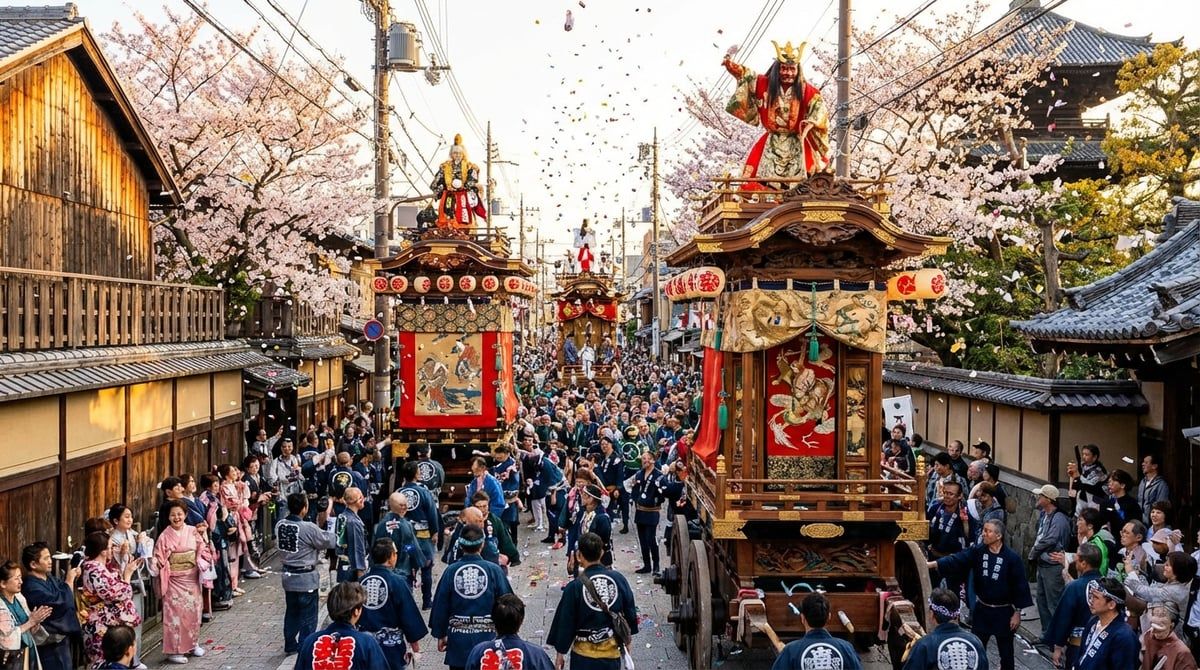 Image for illustrative purposes only.
Getting there: Aomori Station is accessible via the Tohoku Shinkansen to Shin-Aomori (about 3.5 hours from Tokyo), then a short local train ride.
Sendai Tanabata — Miyagi (August 6-8)
Sendai transforms its main shopping arcades into tunnels of color during the Tanabata festival. Thousands of handcrafted streamers — some stretching over three meters long — hang from bamboo poles, each made by local shopkeepers competing for the most beautiful display. The festival traces its roots to the star-crossed lovers Orihime and Hikoboshi, who according to legend can only meet once a year on the seventh day of the seventh month.
Getting there: Sendai Station is roughly 90 minutes from Tokyo by Tohoku Shinkansen.
Yosakoi Matsuri — Kochi (August 9-12)
Yosakoi brings together over 20,000 dancers in teams that blend traditional Japanese movement with modern choreography, costumes, and music. Each team creates its own routine, so the energy shifts from block to block — one moment you will see a team in vivid samurai-inspired outfits, the next a crew dancing to rock-infused arrangements. The festival started in 1954 as a post-war morale booster and has since inspired Yosakoi events across the country.
Getting there: Kochi is best reached by domestic flight from Tokyo or Osaka, or via JR limited express from Okayama.
Awa Odori — Tokushima (August 12-15)
The Awa Odori is Japan's largest dance festival, drawing over a million visitors to Tokushima. The signature two-beat rhythm is impossible to resist — a famous local saying goes, "It is a fool who dances and a fool who watches, so you might as well dance." Organized dance troupes called "ren" perform through the streets, but open-participation circles welcome anyone brave enough to shuffle along.
Getting there: Tokushima is accessible by bus from Osaka (about 2.5 hours) or by flight from Tokyo.
Obon — Nationwide (August 13-15)
Obon is not a single event but an entire season of remembrance woven into daily life. Families return to their hometowns to honor ancestors, temples host Bon Odori community dances in the evenings, and rivers and coastlines glow with toro nagashi — lanterns set afloat to guide spirits back to the other world. While Obon is observed across the country, Kyoto's Gozan no Okuribi (the "Daimonji" bonfires on August 16) and Nagasaki's lively Shoro Nagashi procession are among the most dramatic expressions.
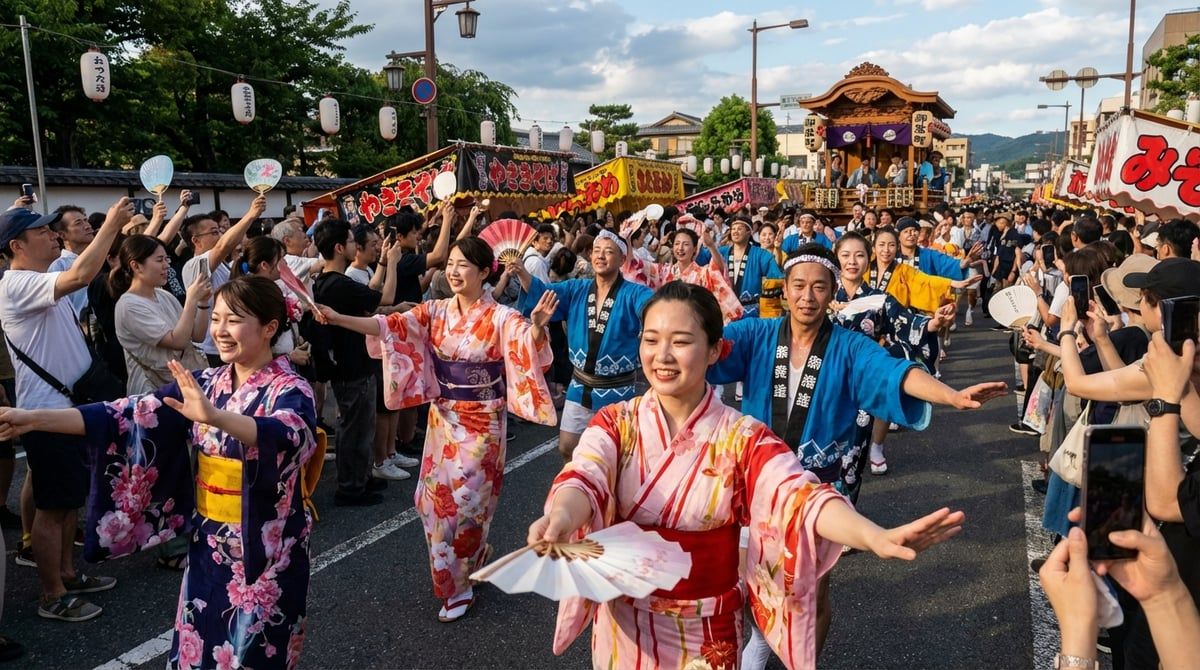 Image for illustrative purposes only.
Note: Obon is peak domestic travel season. Book transport and accommodation well in advance.
Eisa Festival — Okinawa (Mid-August)
Eisa is Okinawa's answer to Bon Odori, but with a distinctly tropical character. Young performers pound large taiko drums while dancing through neighborhoods, accompanied by the three-stringed sanshin and powerful vocal chanting. The energy is raw and communal — performances happen in parks, parking lots, and main streets across the islands, with the largest gatherings in Okinawa City typically held over a weekend in mid-August.
Getting there: Fly into Naha Airport; Okinawa City is about 45 minutes north by car or bus.
Omagari Fireworks — Akita (Last Saturday of August)
The Omagari National Fireworks Competition is widely considered the most prestigious hanabi event in Japan. Top pyrotechnicians from across the country compete with elaborate artistic displays set to music, launched over the Omono River. The grand finale — a massive coordinated barrage called the "Wide Star Mine" — lights the entire sky. Arrive early, as the riverbanks fill hours before the show begins.
Getting there: Omagari Station is about 3.5 hours from Tokyo via Akita Shinkansen.
Chasing fireworks? August is the peak of Japan's hanabi season. Get the nationwide schedule in our Japan Fireworks 2026 calendar, and if you are staying in Kansai (Osaka/Kyoto), the Osaka Fireworks 2026 guide covers the Yodogawa and PL displays.
Surviving the August Heat
August temperatures regularly exceed 35 degrees Celsius with high humidity. A few practical tips will help you enjoy the festivals without wilting:
 Image for illustrative purposes only.
- Hydrate constantly. Vending machines and convenience stores are everywhere — sports drinks like Pocari Sweat help replace electrolytes.
- Carry a hand towel and portable fan. You will see locals doing the same.
- Wear light, breathable clothing. A yukata (light cotton robe) is both comfortable and perfectly appropriate at summer festivals.
- Take breaks in air-conditioned spaces. Duck into a konbini or shopping mall when you need to cool down.
Planning Tips
August festivals are peak season, so preparation matters. Book shinkansen tickets and hotels as early as possible — popular routes sell out weeks ahead. Consider a Japan Rail Pass if you plan to hit multiple festivals across different regions. For more detailed advice on what to bring and how to navigate the crowds, check our Japan festival tips and our 2026 festival calendar. Staying on into autumn? Japan festivals in September 2026 covers Silver Week (September 19-23), Kishiwada Danjiri and the harvest moon.
August in Japan is loud, hot, and absolutely alive. Whether you are chanting alongside glowing floats in Aomori or watching lanterns drift downriver during Obon, these festivals offer something no guidebook can fully capture — the feeling of a whole country celebrating together.
Frequently Asked Questions
What are the major festivals happening in Japan in August 2026?
Key festivals include Nebuta Matsuri in Aomori, Sendai Tanabata, Yosakoi Matsuri in Kochi, Awa Odori in Tokushima, the nationwide Obon, Okinawa's Eisa Festival, and the Omagari Fireworks in Akita. These events span from early to late August.
Can visitors participate in the Nebuta Matsuri in Aomori?
Yes, the Nebuta Matsuri is one of the rare major festivals where spectators can become participants. Anyone can join the dance by renting or buying a "haneto" costume.
What is Obon and when is it celebrated in Japan?
Obon is a nationwide season of remembrance, typically observed from August 13-15, where families honor ancestors. It involves community dances (Bon Odori) and setting lanterns afloat (toro nagashi) to guide spirits.
How can I cope with the heat during August festivals in Japan?
To stay comfortable, hydrate constantly with water or sports drinks, carry a hand towel and portable fan, and wear light, breathable clothing like a yukata. Taking breaks in air-conditioned spaces is also recommended.
What is the Awa Odori festival?
The Awa Odori is Japan's largest dance festival, held in Tokushima, known for its signature two-beat rhythm. Organized dance troupes called "ren" perform, and open-participation circles welcome anyone to join.
Where to Stay: Base Yourself in Osaka for a Kansai August
August's headline festivals are spread across the country — Aomori, Tokushima, Akita — but if you build your trip around Kansai, the calculus changes. Kyoto's Gozan no Okuribi (the Daimonji bonfires on August 16), Osaka's Yodogawa fireworks, and Obon observances give the region plenty of its own summer spectacle. For that itinerary, base yourself in Osaka's Tennoji district: as the city's main rail hub it puts you within about 20 minutes of most Osaka venues, roughly 45 minutes from Kyoto by JR, and within easy reach of USJ and Kansai Airport — so you can catch Kyoto in the morning and retreat to a quieter Osaka at night. See the Tennoji Area Guide for what to do and where to stay.
Explore More Festival Guides
Continue your Japan festival journey with these related guides:
- Japan Festivals Guide: 10 Must-See Matsuri That Will Take Your Breath Away
- Summer Festivals in Japan: The Ultimate Guide to Natsu Matsuri
- Nebuta Festival Guide: Join Aomori's Explosive Lantern Parade
- Awa Odori Guide: How to Join Japan's Biggest Dance Festival
- Japan Fireworks 2026: The Definitive Hanabi Taikai Calendar