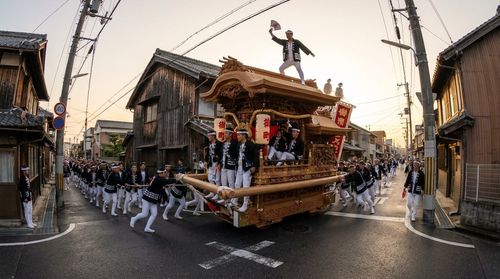
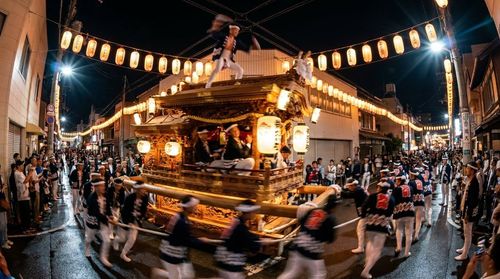
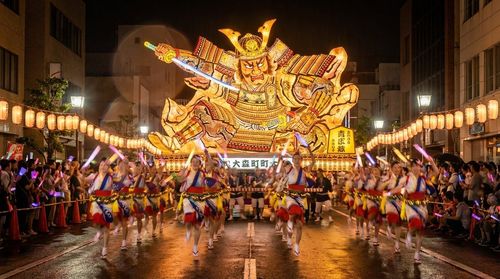
Japan's summer explodes with festivals — from Gion Matsuri's ancient floats to Nebuta's glowing giants. Your guide to the best natsu matsuri.
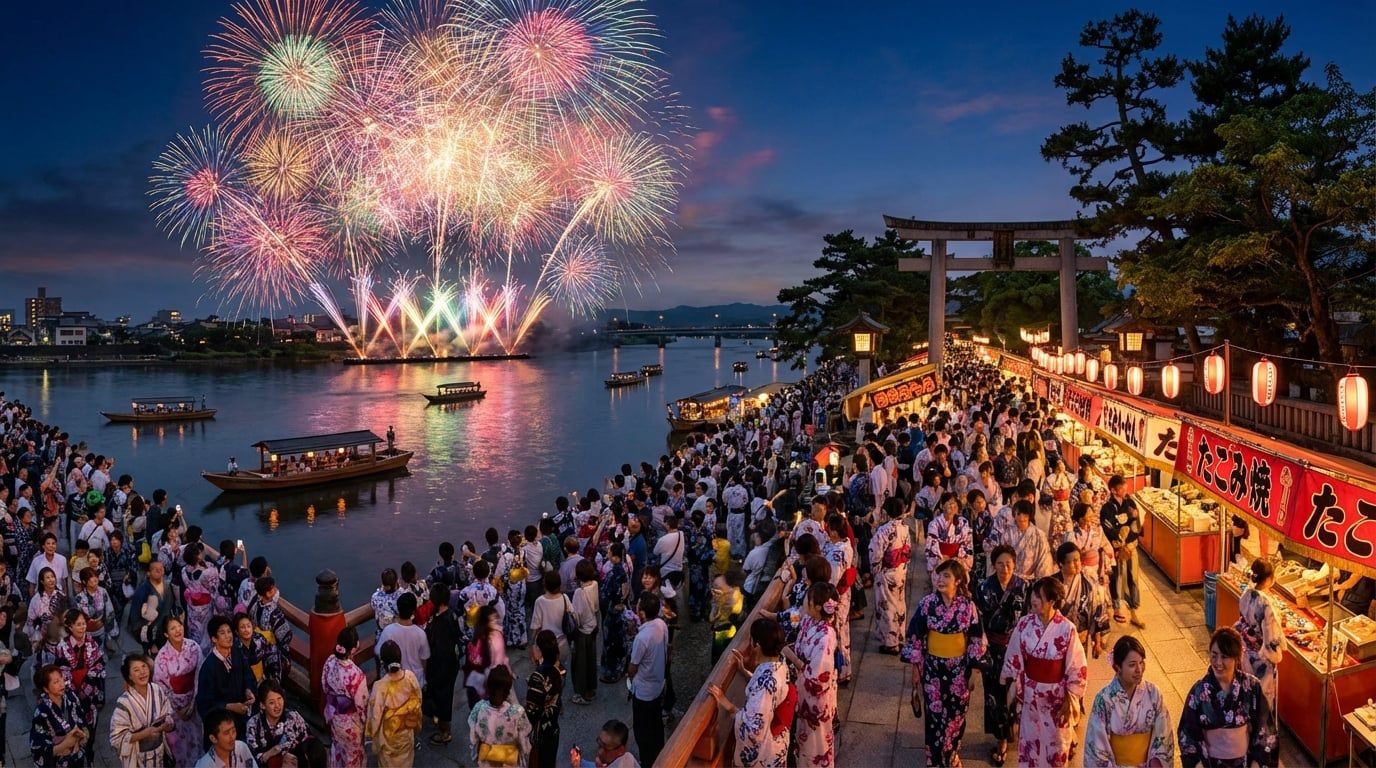 Image for illustrative purposes only.
When the humidity rises and cicadas fill the air, Japan transforms into one enormous celebration. From July through mid-August, hundreds of festivals — collectively known as natsu matsuri (summer festivals) — sweep across the country, filling streets with drumbeats, lantern light, and the irresistible smell of grilled yakitori. If you have ever wondered when Japan feels most alive, the answer is summer.
This guide covers the festivals you absolutely cannot miss. For a broader overview of festivals throughout the year, check out our complete Japan festivals guide.
Why Summer Is Peak Festival Season
Summer festivals in Japan are rooted in centuries of tradition. Many originated as rituals to ward off disease and pray for good harvests during the sweltering months. Others are tied to Obon, the Buddhist observance honoring ancestral spirits. Over time, these solemn rites evolved into the vibrant, music-filled celebrations travelers experience today.
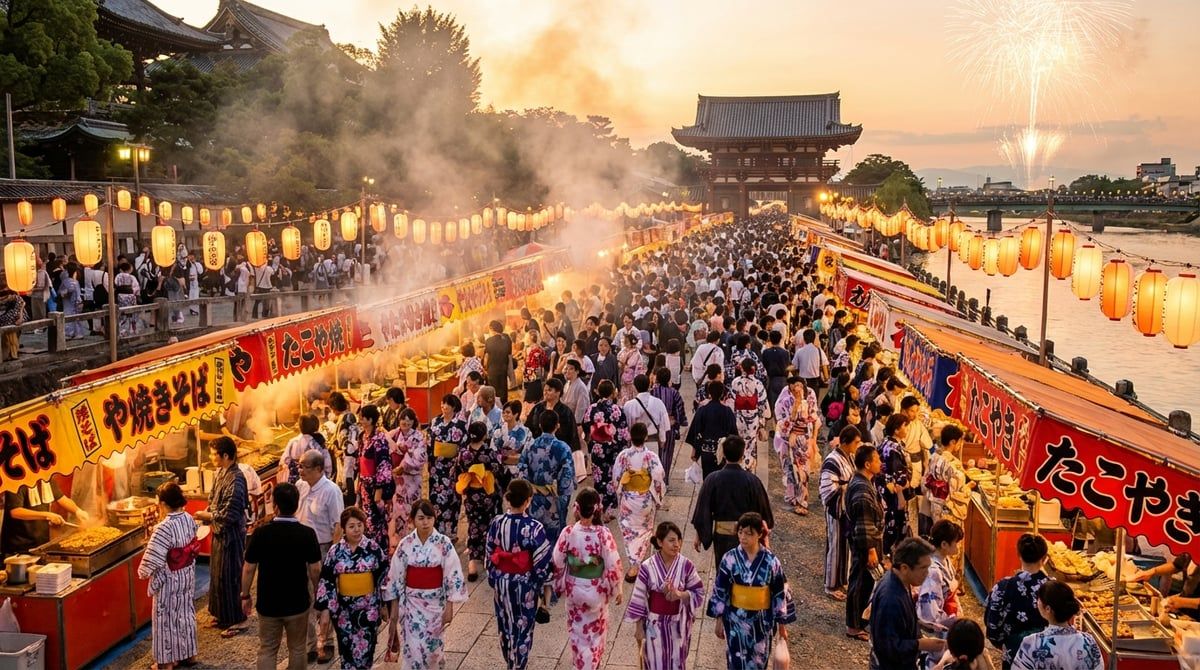 Image for illustrative purposes only.
The practical result: between early July and mid-August, barely a week passes without a major festival happening somewhere in Japan. Planning a trip during this window virtually guarantees you will walk straight into one.
The Top Summer Festivals
Gion Matsuri — Kyoto (July 1-31)
Japan's most famous festival spans the entire month of July, but the highlights are the massive yamaboko floats that parade through central Kyoto on July 17 and 24. The evenings leading up to the processions, called Yoiyama, are arguably even more magical — streets close to traffic, lanterns glow on the towering floats, and the atmosphere feels like stepping back into the Edo period. Read our Gion Matsuri complete guide for parade routes and viewing tips.
Tenjin Matsuri — Osaka (July 24-25)
Osaka's signature festival and one of Japan's three great festivals, Tenjin Matsuri centers on a spectacular river procession. On the evening of July 25, dozens of boats glide along the Okawa River while fireworks explode overhead, reflecting off the water in brilliant color. The combination of fire, water, and thousands of lanterns creates one of the most photogenic nights in all of Japan. Our Tenjin Matsuri guide has everything you need to secure a good spot.
Hakata Yamakasa — Fukuoka (July 1-15)
If you want raw energy, Hakata Yamakasa delivers. The festival culminates on the morning of July 15 with Oiyama, where teams of men sprint through the streets of Fukuoka carrying one-ton floats on their shoulders, racing against the clock starting at 4:59 AM. It is intense, loud, and over in minutes — a pure adrenaline rush that has repeated every summer for over 770 years.
Nebuta Matsuri — Aomori (August 2-7)
Giant illuminated floats depicting warriors, gods, and mythical creatures parade through downtown Aomori each evening, accompanied by dancers shouting "Rassera! Rassera!" The floats, some over five meters tall, glow from within and look almost otherworldly after dark. On the final night, the floats are loaded onto boats and floated across Aomori Bay alongside fireworks. Dive deeper in our Nebuta Festival guide.
Sendai Tanabata — Sendai (August 6-8)
Based on the star festival legend of two celestial lovers separated by the Milky Way, Sendai Tanabata fills the city's shopping arcades with thousands of elaborate streamers and paper decorations in every color imaginable. It is gentler and more contemplative than many summer festivals, making it a wonderful contrast if your trip also includes louder events. See our Tanabata festival guide for the full story behind the tradition.
Awa Odori — Tokushima (August 12-15)
"You're a fool if you dance, and a fool if you watch — so you might as well dance!" That famous saying captures the spirit of Awa Odori, the largest dance festival in Japan. Over one million visitors descend on Tokushima to watch — and join — troupes performing the distinctive Awa Odori dance through the streets. The rhythm is infectious, and spectators are actively encouraged to participate. Our Awa Odori guide covers how to join in.
Sumidagawa Fireworks — Tokyo (Late July)
Tokyo's oldest and most beloved fireworks festival lights up the sky above the Sumida River with roughly 20,000 fireworks over 90 minutes. Held on the last Saturday of July, it draws close to a million spectators. Arrive early — very early — to claim a spot along the riverbanks. For more hanabi events, browse our fireworks festivals in Japan roundup.
Obon Festivals — Nationwide (Mid-August)
Obon is not a single event but a season. Around August 13-16, communities across Japan hold bon odori — circle dances performed around a central tower to welcome ancestral spirits. You will find bon odori in every neighborhood, from tiny rural villages to central Tokyo parks. The dances are simple enough for anyone to join, and they offer one of the most authentic, local festival experiences available to visitors.
What to Expect at a Japanese Summer Festival
Heat and humidity. Japanese summers are famously hot. Temperatures regularly exceed 35°C (95°F) with heavy humidity. Drink water constantly, carry a hand towel, and take breaks in shaded areas.
Yukata everywhere. Summer festivals are one of the best occasions to wear a yukata, the lightweight cotton kimono. Many rental shops near festival areas offer full yukata dressing services, and wearing one instantly makes you part of the scene.
Festival food stalls (yatai). No matsuri is complete without rows of food stalls selling takoyaki, yakisoba, kakigori (shaved ice), grilled corn, and chocolate bananas. Half the fun is eating your way from one end of the stalls to the other.
Crowds. Major festivals attract enormous crowds. Popular events like Gion Matsuri or Sumidagawa Fireworks can feel overwhelming. Patience and early arrival are your best tools.
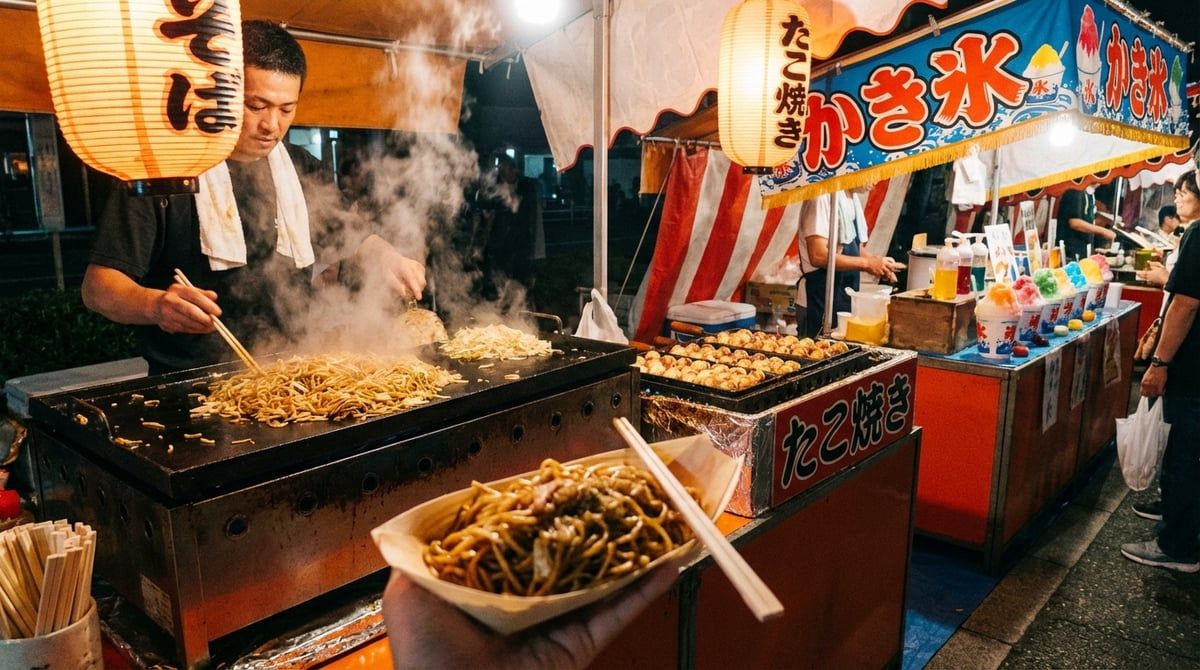 Image for illustrative purposes only.
Planning Tips
Book accommodation early. Hotels near major festivals sell out months in advance, especially in smaller cities like Aomori and Tokushima. Reserve as soon as your dates are confirmed.
Check exact dates each year. While most festivals follow consistent schedules, some shift slightly. Always verify current-year dates on official tourism websites before finalizing plans.
Combine festivals strategically. Tenjin Matsuri (July 24-25) and the tail end of Gion Matsuri overlap nicely for a Kyoto-Osaka double header. Nebuta, Sendai Tanabata, and Awa Odori happen in the first half of August and can be linked with a Tohoku-Shikoku route.
Build in flexibility. Fireworks festivals and outdoor events can be postponed due to typhoons. Having a backup day or alternative plan saves disappointment.
For month-by-month planning, see our guides to July festivals and August festivals, plus our practical festival tips guide for what to bring and how to navigate the crowds.
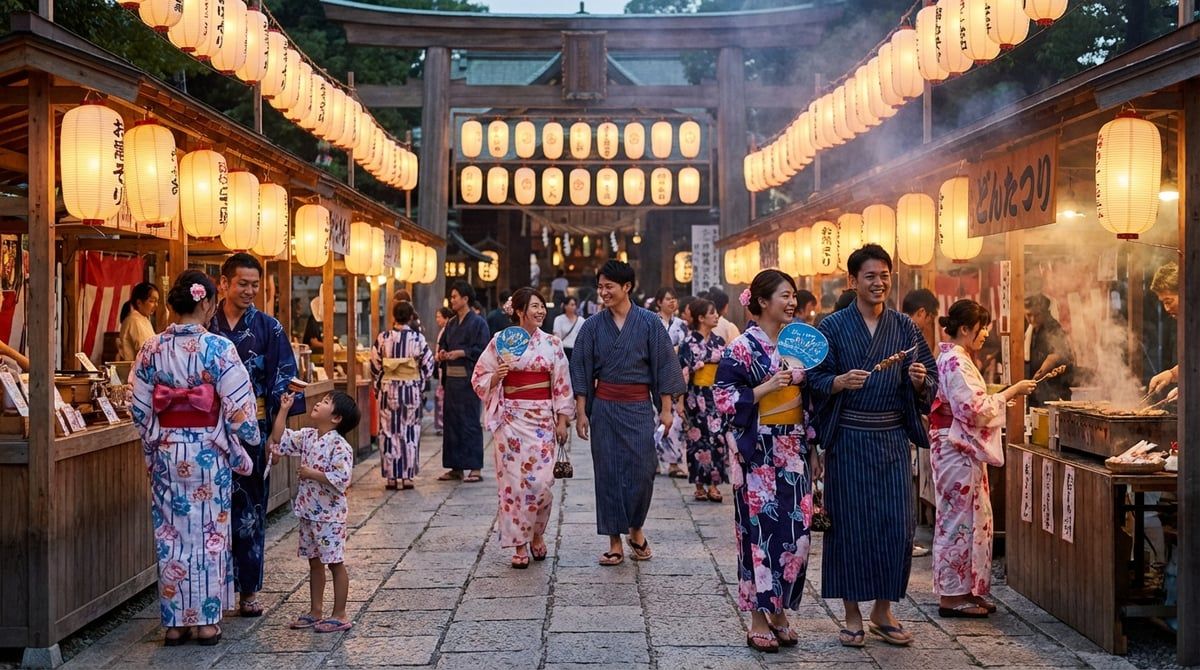 Image for illustrative purposes only.
Japan's summer festivals are loud, hot, and unforgettable. Pick one — or string several together — and you will discover a side of Japan that no temple visit or bullet train ride can match.
Frequently Asked Questions
What is a natsu matsuri?
Natsu matsuri (夏祭り) literally means "summer festival" in Japanese. The term covers everything from massive city-wide celebrations like Gion Matsuri to intimate neighborhood shrine festivals. Most feature mikoshi (portable shrines), bon odori dancing, taiko drumming, and yatai food stalls.
When is natsu matsuri season in Japan?
Natsu matsuri season runs from late June through August, peaking in mid-July to mid-August. The biggest events are Gion Matsuri (July 1-31), Tenjin Matsuri (July 24-25), Nebuta Matsuri (August 2-7), and Awa Odori (August 12-15).
What food should I try at a Japanese summer festival?
Festival food stalls (yatai) serve yakisoba (fried noodles), takoyaki (octopus balls), yakitori (grilled chicken skewers), kakigori (shaved ice), ramune soda, and chocolate-covered bananas. Bring cash — most stalls don't accept cards.
Explore More Festival Guides
Continue your Japan festival journey with these related guides:
- Japan Festivals Guide: 10 Must-See Matsuri That Will Take Your Breath Away
- Japan Festivals in August 2026: Nebuta, Tanabata, Awa Odori and More
- Japan Festivals in July 2026: Gion Matsuri, Tenjin Matsuri and More
- Gion Matsuri Complete Guide: Kyoto's 1,150-Year Festival You Can't Miss
- Japan Festival Food Guide: What to Eat at a Matsuri
- Tenjin Matsuri 2026: Dates, Fireworks & Complete Guide
- Japan Fireworks 2026: The Definitive Hanabi Taikai Calendar