Essential tips for attending Japanese festivals — from yukata etiquette to surviving summer crowds and must-try street food.
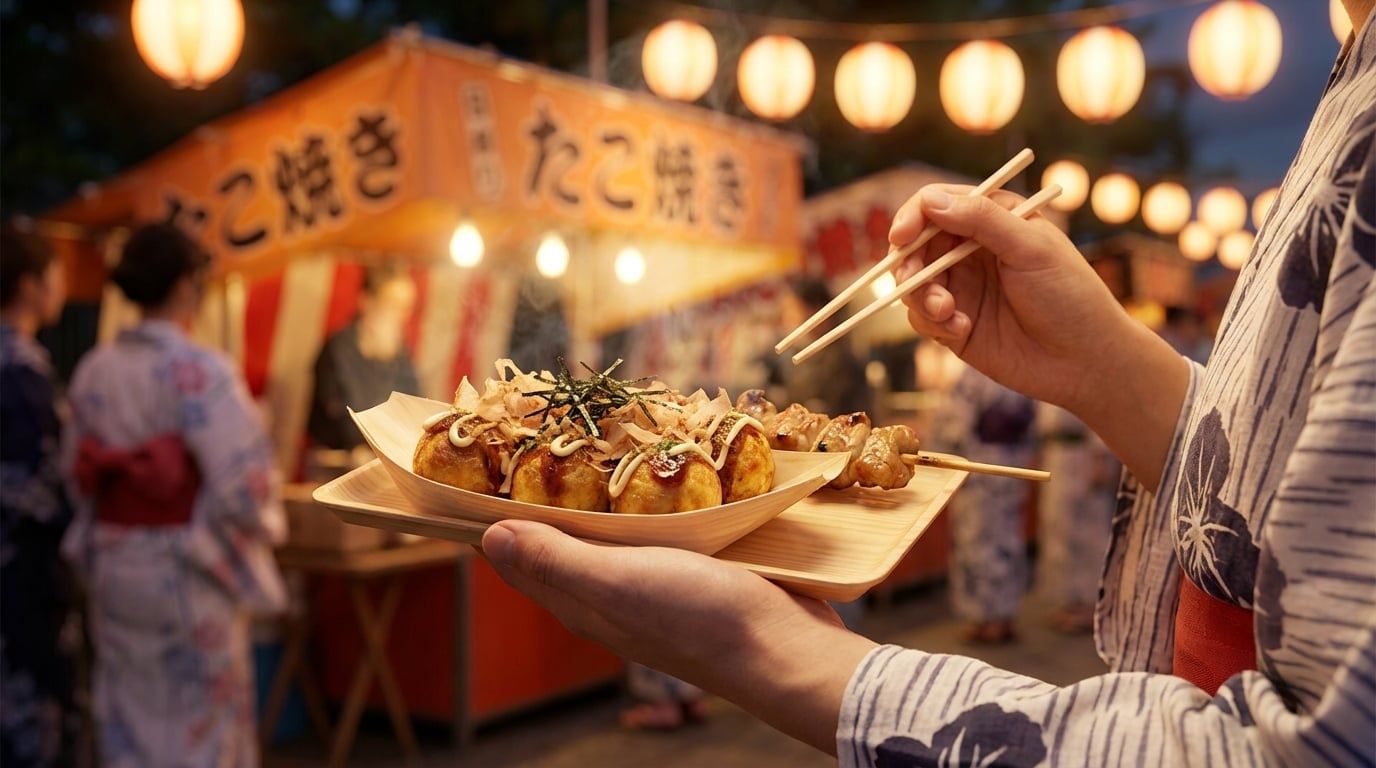 Image for illustrative purposes only.
Japanese festivals — matsuri — are loud, beautiful, chaotic, and completely unlike anything you have experienced back home. Thousands of people packed into narrow streets, the smell of grilled squid mixing with incense, floats towering overhead while crowds chant in unison. It is extraordinary. It can also be overwhelming if you walk in unprepared.
I have attended dozens of festivals across Japan, from massive events like Gion Matsuri in Kyoto to tiny neighborhood shrine celebrations. Here is everything I wish someone had told me before my first one. For a broader overview of Japan's festival culture, check out our complete guide to Japanese festivals.
What to Wear
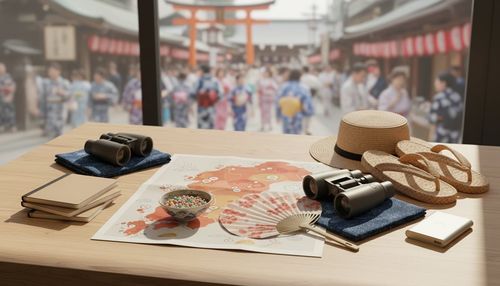
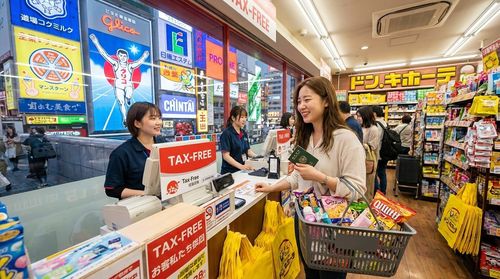
Yukata is the go-to festival outfit, and wearing one is half the fun. A yukata is a lightweight cotton kimono worn in summer. You do not need to own one — rental shops near major festival areas charge around 3,000 to 5,000 yen and will dress you properly, since tying an obi (sash) correctly takes practice. Department stores like Don Quijote sell affordable yukata sets starting at 2,000 yen if you want your own. One critical rule: the left side always overlaps on top. Right-over-left is how the deceased are dressed.
Beyond yukata, prioritize comfortable shoes. You will walk 10 or more kilometers at any decent-sized festival, much of it standing in place. Sneakers beat sandals every time, though traditional geta (wooden sandals) look great with yukata if you have broken them in beforehand.
For spring and autumn festivals, bring layers. Temperatures swing wildly between sunny afternoons and chilly evenings. Winter festivals like Sapporo Snow Festival demand serious cold-weather gear — thermal base layers, insulated jacket, and hand warmers.
Rain gear is non-negotiable for summer festivals. July and August overlap with typhoon season, and sudden downpours are normal. A compact folding umbrella and a light waterproof jacket will save your evening. Skip the full-size umbrella — there is no room to open one in a dense crowd.
Festival Etiquette
Japanese festivals have unwritten rules that locals follow instinctively. Knowing them will make your experience smoother and earn you quiet nods of approval from the people around you.
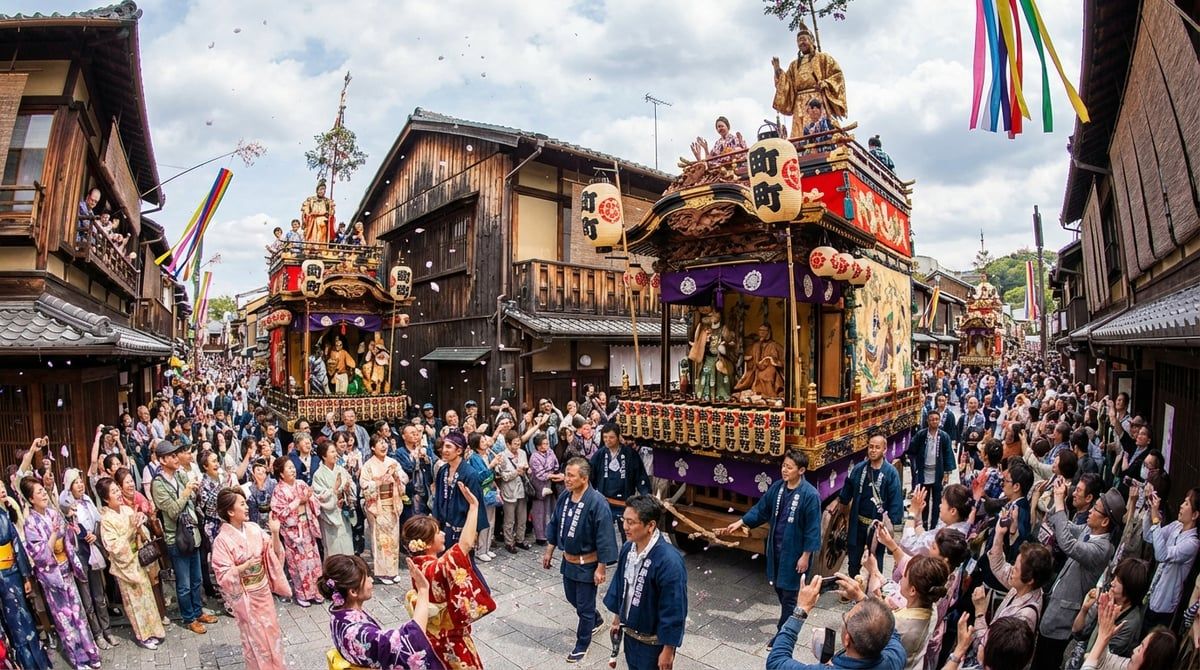 Image for illustrative purposes only.
Follow the crowd flow. Major festivals enforce one-way walking systems on busy streets. Arrows and staff guide the direction. Fighting the current is not just rude — it is physically impossible at peak times.
Carry your trash. This is the single most important rule. Most festival areas have zero public trash bins. Bring a small plastic bag and take everything with you until you find a disposal point, usually near station exits. Locals do this automatically.
Respect sacred elements. When a mikoshi (portable shrine) passes, step aside and let it through. The carriers are performing a religious act, not putting on a show. Same goes for roped-off shrine areas and ritual spaces — look, but do not cross barriers.
Join the energy. Unlike some cultural experiences where tourists are expected to be quiet observers, festivals reward participation. When the crowd chants "wasshoi, wasshoi!" during a mikoshi procession, join in. Clap when others clap. Dance when a bon odori circle forms. Nobody will judge your technique.
Do not block photo spots. Take your shot and move. Planting yourself in a prime viewing spot for twenty minutes while hundreds of people wait behind you is the fastest way to annoy everyone around you.
Festival Food: The Yatai Guide
Street food stalls — yatai — are a core part of any matsuri. You could spend an entire evening just eating. For a deep dive, see our festival food guide.
Must-try items: Yakisoba (fried noodles) is the undisputed festival staple — salty, savory, and quick to eat. Takoyaki (octopus balls) are molten inside, so let them cool or you will burn your mouth. Kakigori (shaved ice) is essential in summer heat — go for the syrup flavors, not the condensed milk. Yakitori (grilled chicken skewers) and okonomiyaki (savory pancake) are filling and cheap. Ringo ame (candy apples) are the classic festival treat, shiny red and almost too pretty to eat.
How yatai work: Walk up, order, pay, and step aside while your food is prepared. There are no seats. You eat standing or walking. Most stalls display plastic food models or photos with prices, so language is rarely a barrier.
Bring cash. While Japan has modernized payment systems in cities, festival stalls overwhelmingly run on cash. Have at least 3,000 to 5,000 yen in small bills and coins before you arrive. ATMs near festival areas may have long lines or run out.
Surviving the Crowds
Big festivals draw hundreds of thousands of people in a single evening. Major events in 2026 will be packed — plan accordingly.
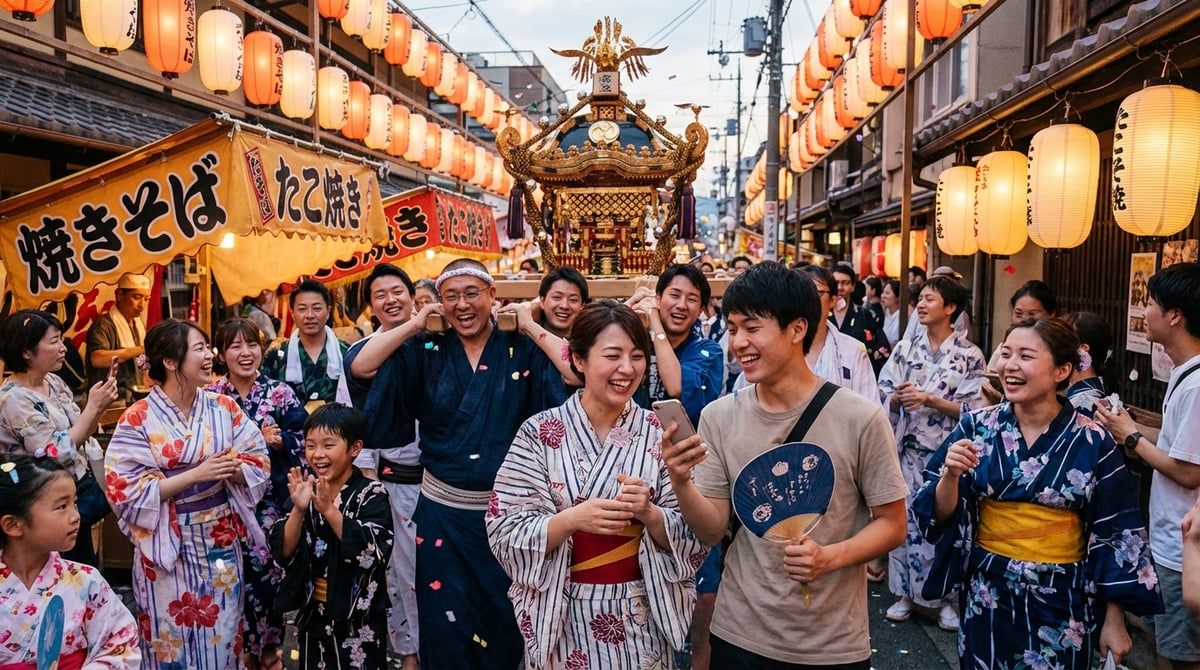 Image for illustrative purposes only.
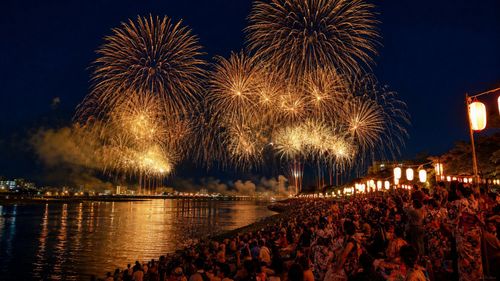
Arrive early. For premier viewing spots at events like fireworks displays or parade routes, arrive two hours or more before the main event starts. Locals lay down blue tarps hours in advance. Late arrivals see the backs of other people's heads.
Know your escape routes. Before diving into the crowd, note where the nearest train station exits are and which side streets lead away from the main area. When a festival ends, everyone floods toward the same station simultaneously. Having an alternate route saves thirty minutes of shuffling.
Hydration is survival. Summer festivals regularly hit 35 degrees Celsius with brutal humidity. Drink water constantly, not just when you feel thirsty. Convenience stores near festival areas sell frozen water bottles — grab two. A portable neck fan and a small towel (tenugui) for wiping sweat are essentials, not luxuries. Heatstroke sends people to the hospital at every major summer festival.
Designate a meeting point. Phone signals often collapse in dense festival crowds. Agree on a physical meeting point with your group — a specific store entrance, statue, or landmark — and a time, in case you get separated.
Photography Tips
Festival photography is rewarding but technically challenging. The best moments happen during golden hour and after dark, when lanterns and floats are lit. That warm glow is what makes festival photos unforgettable.
Raise your ISO. Festival lighting is dim and uneven. Expect to shoot at ISO 1600 or higher. A fast lens (f/1.8 or wider) helps enormously. Phone cameras handle low light better than they used to, but night mode introduces blur if subjects are moving.
Ask before shooting faces. Wide crowd shots are fine. Zooming in on a specific person, especially children, without permission is not. A smile, a gesture toward your camera, and a nod of thanks go a long way. Many performers and participants are happy to pose if you ask.
Capture the food. Yatai at night, lit by bare bulbs and steam, are some of the most photogenic subjects at any festival. The cooks do not mind.
Getting Around
Trains run late during major festivals. Rail companies extend service hours for big events — sometimes by an hour or more. Check the specific festival's official site or the train operator's announcements for last-train times. Do not assume the regular schedule applies.
IC cards are essential. Load up your ICOCA, Suica, or PASMO card before heading to the festival. You do not want to be standing in a ticket machine line with ten thousand other people at midnight. These cards also work at convenience stores for last-minute supplies.
Book accommodation early. Hotels near major festival areas spike in price and sell out months ahead. For events listed on the Japan festival calendar, book three months or more in advance. Staying slightly outside the festival zone and taking a train in is often cheaper and less stressful.
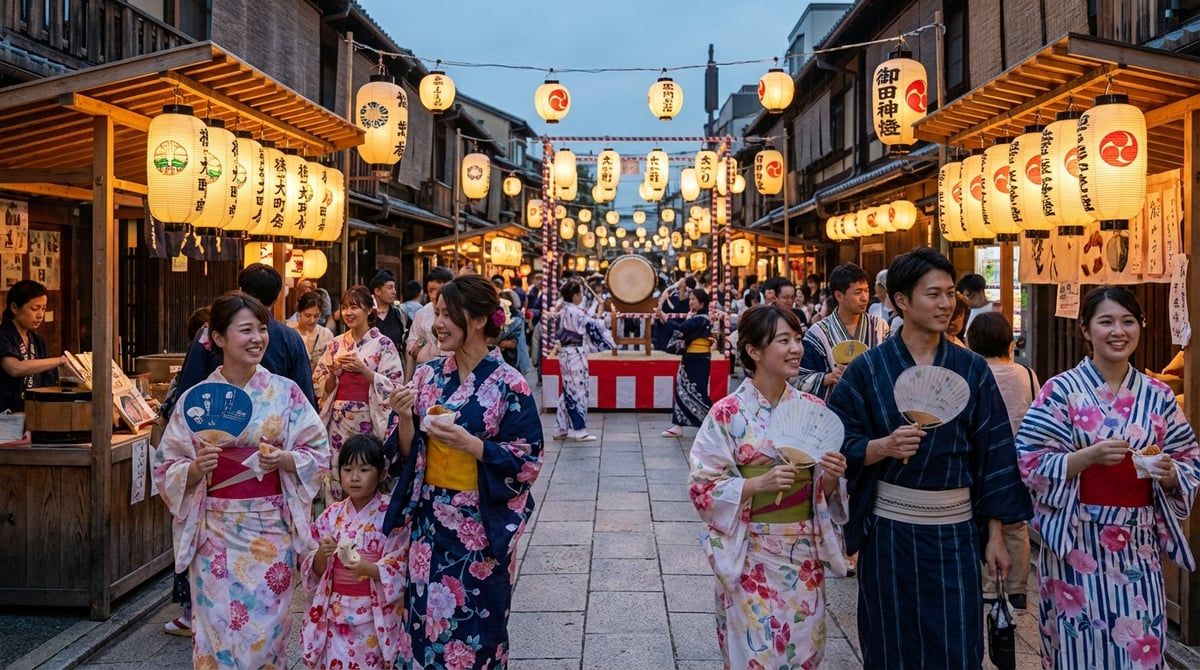 Image for illustrative purposes only.
The Bottom Line
Festivals are the single best way to experience Japan beyond the tourist surface. The combination of tradition, food, energy, and community is unlike anything else. Go with comfortable shoes, a pocket full of coins, and an empty stomach. Learn to say "wasshoi" and you will fit right in.
Ready to find your first festival? Browse our guide to joining a Japanese festival for step-by-step advice on picking the right event and making the most of it.
Frequently Asked Questions
What should I wear to a Japanese festival?
The traditional yukata, a lightweight cotton kimono, is a popular choice and can be rented or purchased. Beyond that, comfortable shoes are crucial for walking, and layers are advised for spring and autumn, while rain gear is essential for summer festivals.
What kind of food can I expect at a Japanese festival?
You'll find numerous street food stalls, called yatai, offering staples like yakisoba, takoyaki, kakigori, yakitori, and okonomiyaki. Food is ordered, paid for with cash, and typically eaten standing or walking.
What are some important etiquette tips for Japanese festivals?
Always follow the crowd flow, carry your trash with you as public bins are scarce, and respect sacred elements like mikoshi by stepping aside. Joining in chants like "wasshoi" and not blocking photo spots are also appreciated.
How can I best navigate and survive the crowds at a Japanese festival?
Arrive early for good viewing spots and know your escape routes from train stations to avoid post-festival congestion. Staying constantly hydrated, especially in summer, and designating a meeting point with your group are also crucial.
Do I need cash for festival food and activities?
Yes, festival food stalls (yatai) overwhelmingly operate on
Explore More Festival Guides
Continue your Japan festival journey with these related guides: