Tokusatsu in Japan: Where to Visit Ultraman, Kamen Rider & Super Sentai Spots
June 26, 2026
Discover museums, studios, and themed experiences dedicated to Japan's live-action special effects heroes — perfect for fans and curious newcomers.
Japan has given the world anime, manga, and video games. But there is another creative tradition that has shaped generations of fans across Asia and beyond: tokusatsu. These live-action productions — filled with giant monsters, costumed heroes, and hand-crafted miniature cities — are woven into the fabric of Japanese pop culture. If you want to explore where these heroes come from, Japan has a surprising number of museums, studios, and dedicated spots worth your time.
This guide covers the best places to visit, what to expect when you get there, and everything you need to plan your trip.
What Is Tokusatsu?
The word "tokusatsu" (特撮) literally means "special filming" or "special effects." It refers to any live-action film or television production that relies heavily on practical effects — miniature sets, physical costumes, pyrotechnics, and in-camera tricks.
The genre is most closely associated with three major franchises:
- Ultra Series (ウルトラシリーズ): Giant silver heroes defending Earth from enormous monsters, produced by Tsuburaya Productions since 1966.
- Kamen Rider (仮面ライダー): Motorcycle-riding masked heroes fighting secret organizations, created by manga legend Shotaro Ishinomori in 1971.
- Super Sentai (スーパー戦隊): Color-coded teams of heroes who combine their giant robots — the inspiration behind Power Rangers — running continuously since 1975.
These are family-friendly action shows, but adults who grew up watching them feel a genuine emotional connection to the genre. Walking into a tokusatsu museum is less like visiting an exhibit and more like stepping into a childhood memory.
1. Tsuburaya Productions Museum & M78 Shop (Tokyo)
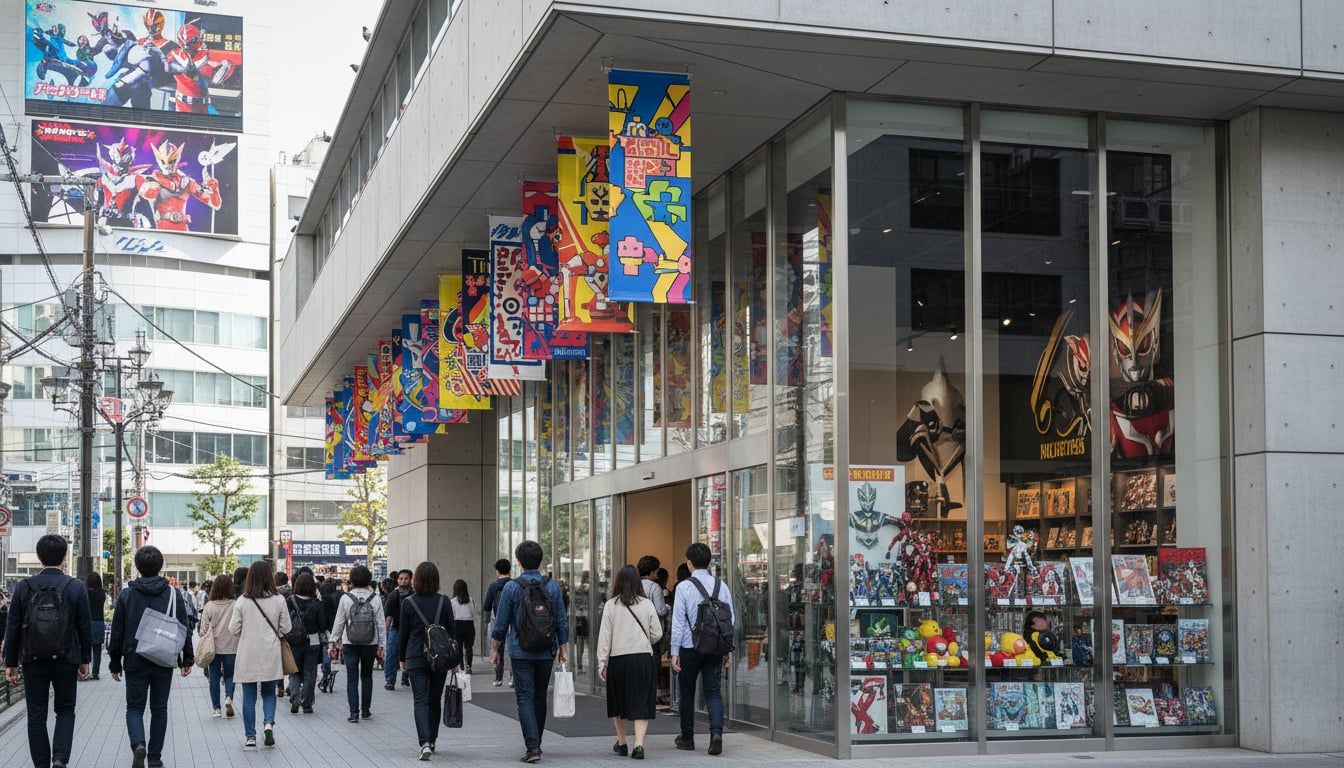
Tsuburaya Productions, the studio behind the entire Ultra Series, is based in Nobeoka and Tokyo. In Shibuya, the company operates the M78 Shop — a retail space packed with Ultraman merchandise, limited-edition figures, and collectibles you will not find anywhere else. It is a relatively compact shop, but the quality and rarity of items on offer make it a must-stop for any Ultraman fan.
For a deeper dive, the Tsuburaya Museum (located in Sagamihara, Kanagawa Prefecture) is an immersive experience dedicated to the history and craft of Ultraman production. You will find original monster suits, historical production materials, and hands-on display areas. The museum does a particularly good job of explaining how miniatures and practical effects work — even visitors with no prior knowledge of the franchise come away genuinely impressed.
Getting there: The M78 Shop in Shibuya is easily accessible by train (Shibuya Station, multiple lines). For the Sagamihara museum, take the Odakyu Line to Sagamihara and allow about 40 minutes from central Tokyo.
Costs: M78 Shop is free to enter (shopping optional). Museum admission is approximately ¥1,000 for adults, ¥600 for children.
Best for: All ages. Children love the monster suits; adults enjoy the production history.
2. Ultraman Road, Sukagawa City (Fukushima)
Sukagawa City in Fukushima Prefecture has a unique claim in tokusatsu history: it is the hometown of Eiji Tsuburaya, the visual effects master who founded Tsuburaya Productions and invented the techniques that made Godzilla and Ultraman possible.
The city has embraced this heritage enthusiastically. Sukagin (the Sukagawa City Tokusatsu Museum) sits in the center of town and documents Tsuburaya's life and legacy through original materials, scale models, and interactive exhibits. Outside, the streets around the museum feature large Ultraman statues and public art installations — locals call the area the "Ultraman Road."
Walking through Sukagawa on a clear day feels surprisingly heartwarming. The city is genuinely proud of its connection to tokusatsu history, and that pride shows in how the exhibits and public spaces are presented.
Getting there: Take the Tohoku Shinkansen to Koriyama Station, then a local train or taxi to Sukagawa (approximately 20 minutes). The city is easy to pair with a broader Fukushima itinerary.
Costs: Museum admission approximately ¥800 for adults, ¥400 for children.
Best for: Fans who want the full pilgrimage experience; also great for families with older children.
3. Toei Kyoto Studio Park (Kyoto)
If one location captures the live production world of tokusatsu most vividly, it is Toei Kyoto Studio Park (東映太秦映画村), located in the Uzumasa district of Kyoto.
Toei is the studio behind Kamen Rider and Super Sentai, and this working studio complex is open to visitors. The park combines a traditional Edo-period film set (used for samurai dramas) with dedicated tokusatsu attractions, and the combination is genuinely unique.
Highlights include:
- Hero shows: Live stage performances featuring full-costumed Kamen Rider and Super Sentai characters, performed multiple times daily. These are high-energy, stunt-heavy shows that adults enjoy as much as children.
- Transformation experience booths: Interactive booths where visitors can go through a costumed "henshin" (transformation) experience and have professional photos taken. This is one of the most popular activities in the park.
- Monster and suit exhibits: A rotating selection of original production costumes and props from active Toei productions.
- Filming location access: Parts of the studio are still actively used for production. On lucky days, you might glimpse a crew at work.
The park is family-friendly but absolutely not just for children. Fans of all ages visit specifically for the tokusatsu attractions.
Getting there: Take the JR Sagano Line to Hanazono Station or the Keifuku Randen Line to Uzumasa Eigamura Station. About 20 minutes from Kyoto Station.
Costs: Adults approximately ¥2,400, children ¥1,200. Hero shows are included in admission. Some premium experiences (transformation photos) cost extra.
Best for: Families, cosplay fans, anyone wanting a hands-on experience rather than a passive museum visit.
4. Ishinomori Manga Museum (Miyagi)
Shotaro Ishinomori is one of the most prolific manga artists in history — a creator who shaped tokusatsu just as much as he shaped manga. He created Kamen Rider, Cyborg 009, and the original concept for Super Sentai, among dozens of other works.
The Ishinomori Manga Museum (石ノ森萬画館) in Ishinomaki, Miyagi Prefecture, is housed in a striking circular building on a small island in the Kyukitakami River. The architecture alone is worth the visit — the building is designed to resemble a futuristic base, and it stands out dramatically against the surrounding city.
Inside, the exhibits cover Ishinomori's entire creative output, with significant space dedicated to Kamen Rider's origins. You will find original manuscripts, concept art, early production materials, and a thoughtful narrative about how the franchise was developed. The museum also addresses the community recovery story of Ishinomaki following the 2011 Great East Japan Earthquake, which gives the visit unexpected emotional depth.
Getting there: Take the Senseki Line from Sendai to Ishinomaki Station (approximately 1 hour), then walk or take a taxi to the museum (about 10 minutes on foot).
Costs: Adults approximately ¥900, children ¥350.
Best for: Manga and tokusatsu fans interested in creative history; travelers already visiting the Tohoku region.
5. Bandai Hobby Center (Shizuoka)
If you've ever assembled a Gunpla model kit or owned a Kamen Rider DX belt, a significant portion of that product was likely made in Shizuoka. The city is the manufacturing capital of Japan's hobby model industry, and Bandai's Hobby Center (バンダイホビーセンター) is its spiritual home.
While not a public theme park, Bandai operates visitor programs and a shop attached to the facility that gives a real sense of the scale of production. You can see the facility from outside and visit the adjacent shop, which carries products including tokusatsu role-play toys and figures. For fans of collectibles and production craft, the Shizuoka hobby district more broadly — which includes the Tamiya headquarters nearby — is a satisfying half-day excursion.
Getting there: Take the Tokaido Shinkansen to Shizuoka Station. The Bandai Hobby Center is accessible by taxi or local bus (approximately 15 minutes from the station).
Best for: Collectors, hobbyists, and anyone curious about how Japan's toy industry works.
6. Themed Dining and Pop-Up Experiences (Tokyo)
Tokyo regularly hosts collaboration cafes and themed dining experiences tied to active tokusatsu series. These pop-ups appear in Akihabara, Harajuku, and Shibuya, and the menus are designed around specific characters and motifs — themed drinks, decorated plates, and limited merchandise available only at the event.
The Animate Cafe chain (with locations in Akihabara and Ikebukuro) frequently runs tokusatsu collaborations. The Kamen Rider Gear pop-up events, held periodically in Tokyo, feature transformation belt displays, merchandise, and themed food that go beyond what you find in ordinary shops.
Checking upcoming events before your trip is worthwhile. Japanese fan communities and the official Toei event calendar are the best sources. Most events run for 2–4 weeks, and weekday visits are significantly less crowded than weekends.
Practical Tips for Your Visit
Best time to go: Most museums are open year-round. Toei Kyoto Studio Park is especially lively on weekends when hero shows run at full schedule. Summer school holidays (late July to August) bring larger crowds but also special events.
Language: Major attractions have English signage and some English-language staff, particularly Toei Kyoto Studio Park. Smaller regional museums may be Japanese-only — Google Translate's camera function handles most signs well.
Merchandise: Budget extra. The specialty shops at these venues stock items not available in general retail. Ultraman figures from the Tsuburaya Museum shop, for example, are produced in limited quantities.
Combining locations: Tokyo → Shizuoka → Kyoto makes a logical Shinkansen route that covers the M78 Shop, Bandai area, and Toei Studio in one trip. Adding Ishinomaki requires a separate Tohoku leg but pairs well with a Sendai or Matsushima visit.
FAQ
Do I need to be a fan already to enjoy these places? Not at all. The museums do a good job of explaining the history and craft for newcomers. Toei Kyoto Studio Park in particular is engaging even for visitors who have never watched a single episode — the live shows are entertaining on their own terms.
Are these places suitable for young children? Yes. The live hero shows at Toei Kyoto Studio Park are genuinely designed for families, and many of the exhibits at tokusatsu museums are interactive and accessible for children. The Ishinomori Museum has a slightly more academic tone but is still family-friendly.
Is tokusatsu merchandise available outside these specific museums? General merchandise (DX transformation belts, standard figure lines) is widely available at Yodobashi Camera, Bic Camera, and toy shops across Japan. However, museum-exclusive and limited-edition items are only sold at the locations described above.
How much time should I budget for each location? The M78 Shop requires about 30–60 minutes. Regional museums (Sukagawa, Ishinomaki) are best enjoyed over 2–3 hours. Toei Kyoto Studio Park warrants a half-day visit, especially if you catch multiple hero shows.
Frequently Asked Questions
What is tokusatsu?
Tokusatsu (特撮) literally means "special filming" or "special effects" and refers to live-action productions that heavily use practical effects like miniature sets, physical costumes, and pyrotechnics. It is most closely associated with the Ultra Series, Kamen Rider, and Super Sentai franchises.
Where can I visit Ultraman-themed spots in Japan?
You can visit the Tsuburaya Productions M78 Shop in Shibuya, Tokyo, or the Tsuburaya Museum in Sagamihara, Kanagawa Prefecture, for merchandise and production history. Sukagawa City in Fukushima, Eiji Tsuburaya's hometown, also features the Sukagin museum and "Ultraman Road" with statues.
Are there places to experience Kamen Rider and Super Sentai in Japan?
Yes, Toei Kyoto Studio Park in Kyoto is a working studio complex with live stage performances, transformation experience booths, and rotating exhibits of costumes and props from Kamen Rider and Super Sentai. The Ishinomori Manga Museum in Ishinomaki, Miyagi, also covers the origins of Kamen Rider.
Are tokusatsu attractions suitable for families with children?
Yes, most tokusatsu attractions are family-friendly. Places like the Tsuburaya Museum and Toei Kyoto Studio Park are highlighted as great for all ages, with children enjoying monster suits and live shows, while adults appreciate the production history.
What can I do at Toei Kyoto Studio Park?
At Toei Kyoto
Explore More
Tokusatsu is one thread in a much larger fabric of Japanese pop culture. These related guides will help you plan a well-rounded trip:
- Japan's Best Anime Museums and Studios — From Studio Ghibli to Osamu Tezuka, explore the museums behind Japan's most iconic animated worlds.
- The Akihabara Otaku Guide — Navigate Tokyo's legendary electronics and fandom district, including the best shops for tokusatsu merchandise.
- Japan Anime Pilgrimage Guide — How to plan a seichi junrei (sacred site pilgrimage) trip to real-world locations featured in your favorite Japanese productions.