Manga café overnight in Tokyo costs $14 vs $150 for a hotel. Here's the chain-by-chain playbook, kiosk walkthrough, and last-train rescue plan.
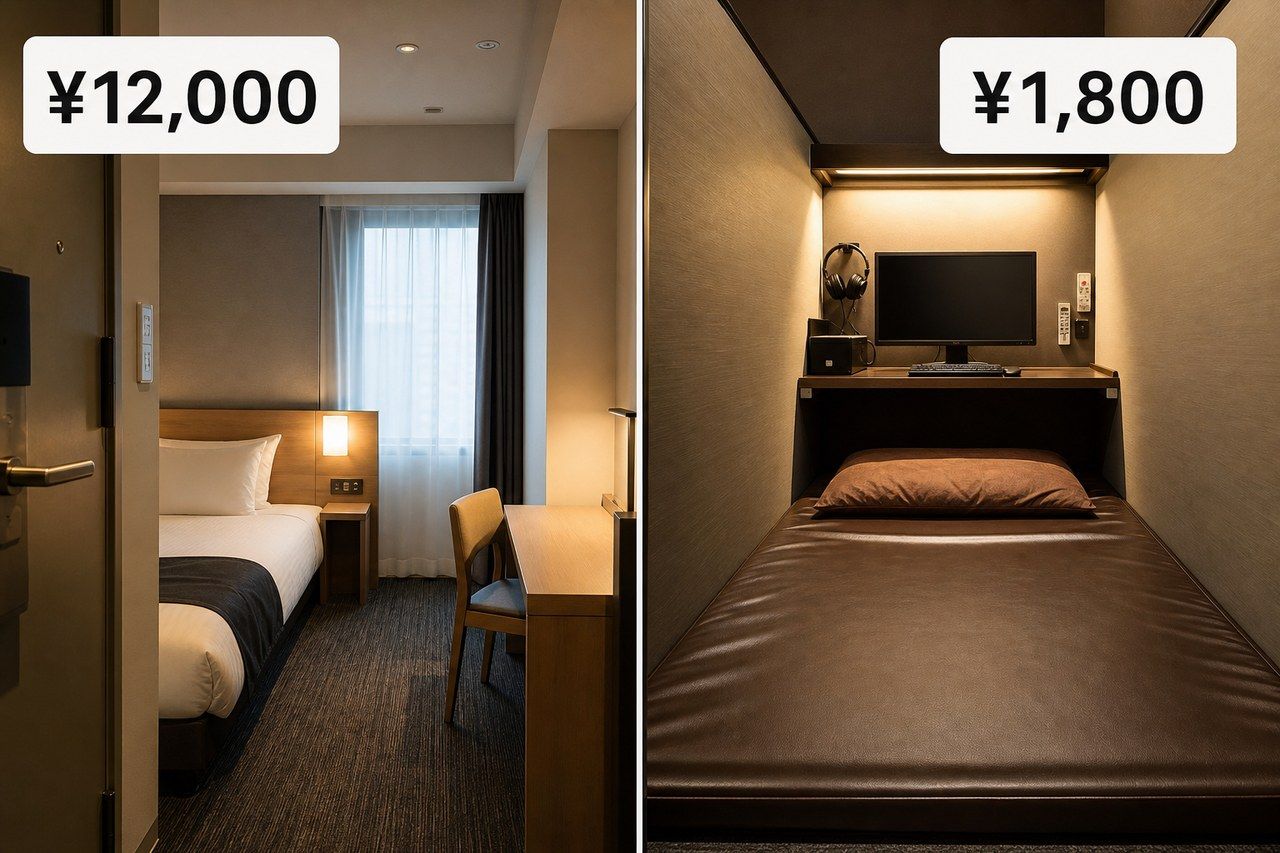 Image for illustrative purposes only.
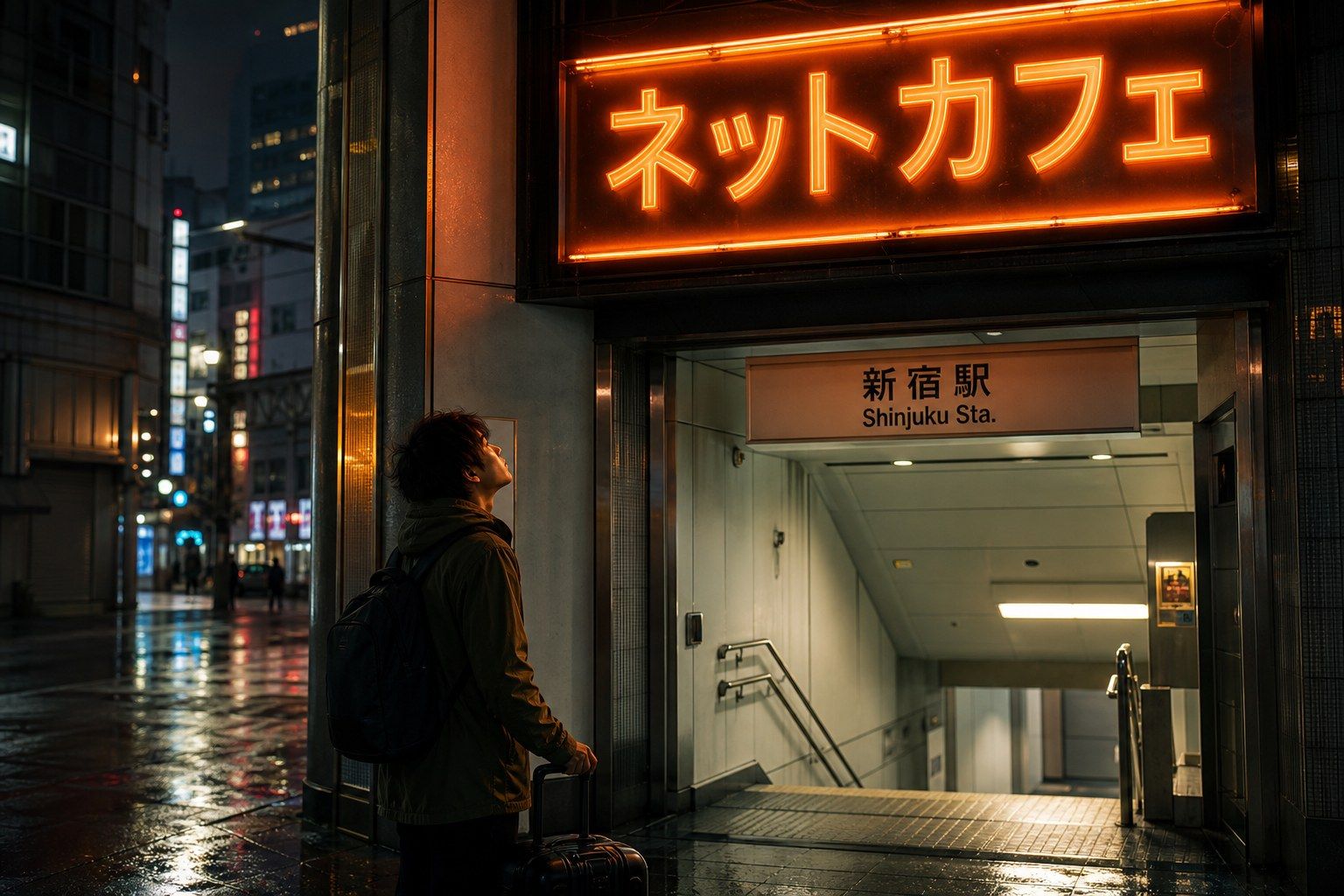
It's 1:14 AM in Shinjuku. The last Yamanote line just pulled away. Your hotel is 40 minutes away by taxi and the meter will read about ¥9,000 by the time you get there. Above your head, three floors up, a fluorescent sign hums in orange katakana you can't read — and inside it, a Japanese salaryman is paying ¥2,000 (about $14) to sleep until the trains restart at 5 AM.
That sign says netto kafe (ネットカフェ). And the gap between what you're about to pay and what he's paying is the most underrated manga café travel hack in Japan.
[COUNTRY-NOTE-US: Emphasize "$14" conversion in opening — ¥1,500-2,500 at current weak-yen rate] [COUNTRY-NOTE-KO: 한국 PC방 1박 ≈ 25,000원 vs 도쿄 만화카페 ≈ 20,000원 — 가격 비교로 즉시 공감대 형성]
Wait — People Actually Sleep in These Places?
Yes, and not just budget-stranded backpackers. Manga kissa (漫画喫茶, manga-kissa) and net cafés are a parallel hotel system that runs on the upper floors of every major Japanese station. They're 24-hour, fully air-conditioned, staffed, well-lit, and structurally nothing like the open-row internet cafés you remember from 2008. (For the broader cultural picture — anime libraries, daytime use, gaming chains — see our full primer on Japanese manga cafés.)
What you're actually renting is a private booth — a small door or curtain closes behind you, a reclining chair or flat mat waits inside, free drinks and soft-serve ice cream flow all night, and 30,000 manga volumes line the walls outside. The internet is included but it's not the product. The booth is.
A "night pack" (ナイトパック) — typically a 6 to 12-hour overnight block starting around midnight — runs:
- ¥1,500–¥2,500 at Manboo (cheapest)
- ¥2,000–¥3,000 at Media Cafe Popeye (biggest network)
- ¥2,500–¥3,500 at Gran Cyber Cafe Bagus (premium — blurs into capsule-hotel territory)
For context: a Tokyo capsule hotel is ¥3,000–¥5,000. A business hotel is ¥8,000–¥15,000. A late-night Tokyo taxi to a suburban hotel can easily clear ¥10,000.
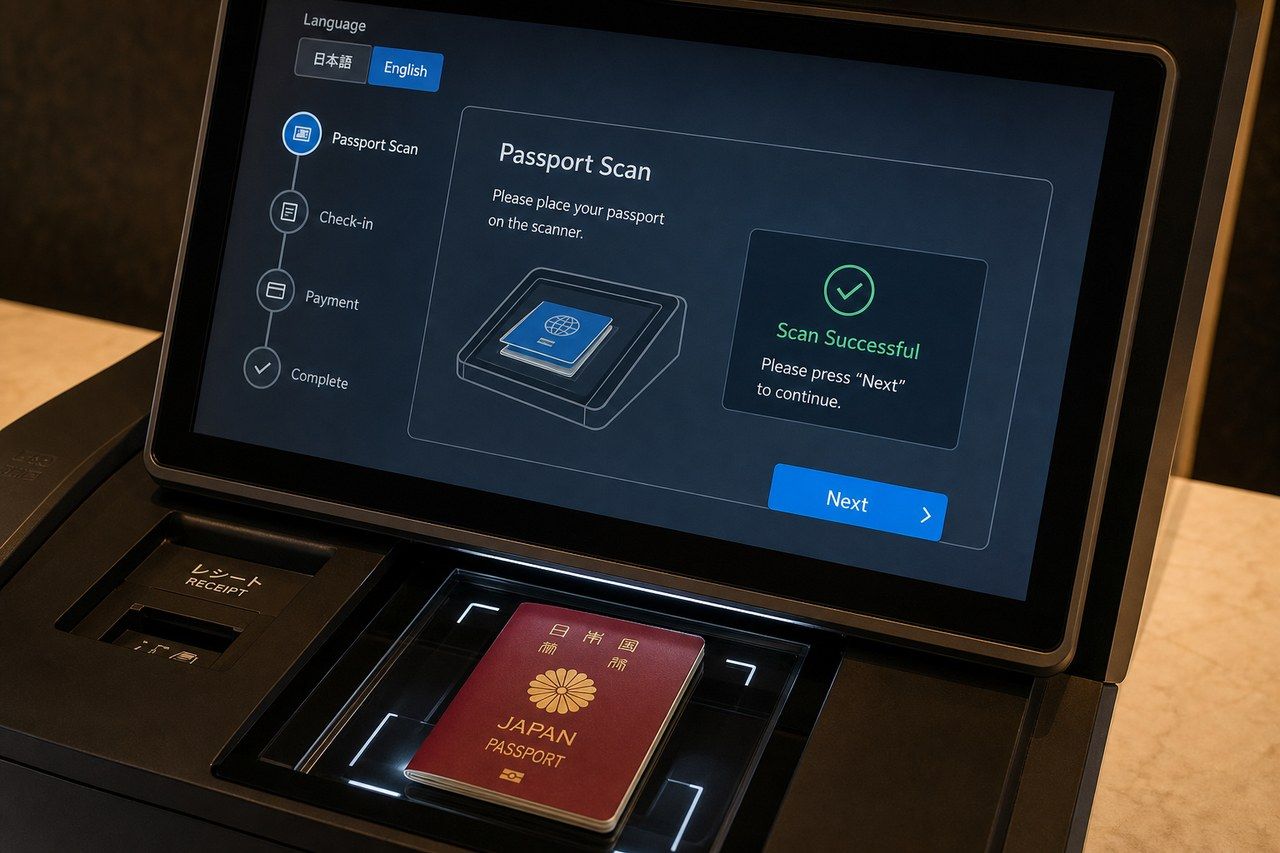 Image for illustrative purposes only.
Why Hasn't Anyone Told Me About This?
Three reasons, all of them favoring you once you know.
The signs are in Japanese. Net café branding is dense kanji and katakana — 漫画喫茶, ネットカフェ, 完全個室 — and Google Maps in English often labels them generically as "internet café," which sounds, frankly, like a 2007 problem.
Check-in kiosks are Japanese-only. Most major chains shifted to self-service touch-panel registration during the pandemic. The icons are intuitive but there's rarely an English language toggle, so tourists freeze at the screen and assume the place isn't for them.
They don't list on Booking.com or Agoda. Manga cafés are deliberately walk-in only. There's no reservation system, no OTA listing, no English landing page. They exist outside the tourist-discoverability bubble entirely.
[COUNTRY-NOTE-VI: "Không cần biết tiếng Nhật — chỉ cần làm theo các bước sau" — emphasize language-barrier-free walkthrough]
What Most Tourists Don't Know
The smell of fresh coffee from a vending machine. The soft click of a booth latch sliding closed. A salaryman two booths down breathing slowly in sleep while you bite into a free 3 AM soft-serve cone. That's what's actually inside.
Here are the things no general guide tells you:
Bring your passport — no photocopies. Tokyo's anti-crime ordinance legally requires photo ID for every overnight stay. For foreigners, that means a physical passport. A photo on your phone, a printed copy, or an expired passport will not work. Branches turn tourists away over this nightly. Japan also legally requires foreigners to carry their passport at all times (the fine reaches ¥100,000), so you should have it anyway.
Ask for a "flat booth" (フラットマット / furatto matto) — not a reclining seat. This is the single biggest mistake tourists make. Walk-ins get assigned a default reclining chair if they don't specify, and reclining chairs are an okay nap but a brutal full night. The flat booth gives you a padded mat the length of your body. Same price tier. Just say "furatto matto, onegaishimasu" ("flat mat, please").
Showers usually cost extra. Kaikatsu Club includes them free. Manboo and many Media Cafe Popeye branches charge ¥100–¥300, plus another ¥100 for a towel. Ask before you check in if it matters to you. And shower before 5 AM — the first-train rush turns the shower queue into a real wait.
Avoid random side-street branches in Kabukicho/Dogenzaka. Some side-street locations cater to overnight adult-content browsing and aren't comfortable for travelers. Stick to the major chains' station-front branches — Kaikatsu Club, Media Cafe Popeye, Manboo — directly above or beside the JR/Metro station. The neighborhood matters more than the brand.
Multi-night stays don't work. Most chains enforce a per-session cap (typically 12 hours), and you have to check out, leave the building, and re-enter to start a new session. Net cafés are an emergency tool and a budget-night curiosity, not a hotel substitute for your whole trip.
How Do I Actually Check In When the Kiosk Is in Japanese?
<!-- missing content_03 -->Here's the flow at most major chains, in order:
- Press the screen to start. There's almost always a "新規登録" (new registration) button — that's you, first-timer.
- Scan your passport on the small glass plate. The kiosk auto-fills name and ID number.
- Pick your booth type. The icons are visual: a chair shape = reclining seat; a horizontal rectangle = flat booth; a door icon = private room. Tap the horizontal rectangle.
- Pick your time package. Look for "ナイトパック" (night pack) — usually 6, 8, or 12 hours. The price for each is shown beside it.
- Pay (mostly cash, sometimes IC card like SUICA, occasionally credit card at premium chains).
- Receipt prints with your booth number — for example "B-12." Find it down the hallway.
Total time: about three minutes once you've done it once. Staff will help if you wave them over — every chain has someone on duty 24/7.
[COUNTRY-NOTE-KO: 결제 수단 — 현금 우선, IC카드(SUICA) 일부 가능, 한국 신용카드(JCB·VISA)는 大手 체인만] [COUNTRY-NOTE-ZH: 支付方式 — 现金优先, IC卡部分可, 支付宝/WeChat几乎不可]
Is It Safe? (And What About Solo Female Travelers?)
Statistically, far safer than wandering Shibuya at 3 AM looking for a taxi. Cafés are staffed all night, every entry is passport-logged, doors have inside latches, and noise levels are library-quiet. The cultural rule is don't disturb anyone — and Japan enforces it socially with remarkable consistency.
For solo female travelers specifically: some Manboo, Gran Cyber Cafe Bagus, and select Kaikatsu Club branches have ladies-only floors — gender-segregated zones with their own entrance, shower, and staffed front desk. Ask for "ladies floor" or 「レディースフロア」 at check-in. If it isn't available at that branch, the booking system will tell you. This is a category most tourists don't realize exists.
[COUNTRY-NOTE-US: solo female safety — ladies-only floors + 24/7 staffed = statistically safer than walking Shibuya at 3 AM]
The Quieter Reality Behind the Booth
There's a layer to this story that deserves honest mention. A 2018 Tokyo Metropolitan survey found about 15,000 people sleeping in the city's net cafés on any given night — and roughly 4,000 of them effectively had no other home. They're called netto kafe nanmin (net café refugees), and nationally the number sits somewhere between 100,000 and 300,000. Japan's official homeless count is just 2,591 (as of January 2025) partly because this population isn't outside; they're indoors, in booths, working day jobs, and structurally invisible.
The same booth that's a tourist's quirky overnight is, for someone else in the building, the only roof they have this month. Mentioning it isn't to diminish the experience — it's to use the room with a little more awareness of what it means in this country.
The "Last Train Just Left" 10-Minute Playbook
If you're reading this stranded right now:
- Open Google Maps — search "ネットカフェ" or "manga cafe." Filter by "Open now."
- Pick a chain branch within 500m of the station you're at. Kaikatsu Club is the safest first pick — most beginner-friendly, free showers, English-friendlier staff.
- Walk straight to the kiosk with your passport in hand. If you need water, snacks, or a phone charger, the konbini next door is open too.
- Choose flat booth + night pack (フラットマット + ナイトパック).
- Set an alarm for 04:30 so you can shower before the rush.
- First train at ~5:00 AM (Japan time) — you're back at your hotel by 5:45.
Total cost: ¥1,500–¥2,500. Total stress: zero, once you've done it once.
Recommended Manga Café Branches in Tokyo and Osaka
| City | Area | Chain | Why |
|---|---|---|---|
| Tokyo | Shinjuku East Exit | Kaikatsu Club | Beginner-friendly, free showers |
| Tokyo | Shibuya Center-gai | Media Cafe Popeye | Big, reliable, near station |
| Tokyo | Ueno Station | Manboo | Cheapest, ladies floor |
| Tokyo | Akihabara | Gran Cyber Cafe Bagus | Premium tier, massage chair |
| Osaka | Umeda (Hankyu side) | Kaikatsu Club | Easy walk from station |
| Osaka | Namba | Media Cafe Popeye | Central, late-night Dotonbori backup |
| Osaka | Tennoji | Kaikatsu Club, Media Cafe Popeye | Quiet, dense cluster around JR station |
Practical Info
| Item | Details |
|---|---|
| Price (night pack) | ¥1,500–¥3,500 (≈ $10–$23) |
| Hours | 24/7, year-round |
| ID required | Passport (no photocopies) |
| Payment | Cash preferred, some chains accept SUICA/credit card |
| Booth types | Open seat / reclining / flat booth (recommended for sleeping) / private room |
| Shower | ¥0–¥300 + ¥100 towel rental |
| Luggage | Carry-on only (no storage; book a coin locker for big bags) |
| Wi-Fi | Free, fast |
| Best for | Missed-last-train emergencies, budget single nights, late-arrival airport nights |
| Not for | Multi-night stays, couples, families, large luggage |
Quick Japanese Cheat Sheet
- ナイトパック (naito pakku) — night pack
- フラットマット (furatto matto) — flat mat / flat booth
- シャワー付き (shawā tsuki) — with shower
- 完全禁煙 (kanzen kin'en) — fully non-smoking
- 女性専用 (josei sen'yō) — ladies only
- 個室 (koshitsu) — private room
Manga Café Overnight: The Bottom Line
The most useful piece of Japan travel knowledge is rarely a temple or a restaurant — it's the boring, glowing sign above the station that nobody told you was a hotel. Now you know: when the trains stop, the city has a quiet second bedroom three floors up, and it costs less than your dinner did. (Add this to your broader Japan budget travel playbook and you've cut your sleeping costs by 80% for the nights it counts.)
Use it as the emergency tool it's meant to be. And if after one night in a flat booth you decide you'd like a real room, a real bed, and a kitchen to make morning coffee in — Osaka offers Tennoji as your Osaka base: a calm, central neighborhood with that exact setup, surrounded by the same 24-hour safety net for the nights things run long.
[COUNTRY-NOTE-KO: 마무리 STAY-CTA 직전 — 텐노지 베이스 + 야간 외출 시 만화카페 백업 한국 여행자 스타일]
Frequently Asked Questions
How much does it cost to sleep in a manga café in Tokyo?
A "night pack" (6–12 hours) costs ¥1,500–¥2,500 at standard chains like Manboo and Media Cafe Popeye, and ¥2,500–¥3,500 at premium chains like Gran Cyber Cafe Bagus. That's roughly $10–$23 USD at current rates.
Can foreigners stay overnight in a Japanese manga café?
Yes. You only need a valid passport for check-in (no photocopies — Tokyo's anti-crime ordinance requires the physical document). All major chains accept foreign tourists.
Is it safe to sleep in a manga café as a solo female traveler?
Yes. Cafés are staffed 24/7 and well-lit, and major chains like Manboo and Gran Cyber Cafe Bagus offer ladies-only floors with separate entrances and showers. Ask for the "ladies floor" (レディースフロア) at check-in.
What should I do if I miss the last train in Tokyo?
Open Google Maps, search "ネットカフェ" or "manga cafe," pick a chain branch within 500m of the station, walk in with your passport, request a flat booth (フラットマット) and a night pack (ナイトパック). Total cost: ¥1,500–¥2,500. First train resumes around 5 AM.
Do manga cafés in Japan have showers?
Most do. Kaikatsu Club includes showers free of charge. Manboo and Media Cafe Popeye typically charge ¥100–¥300 plus ¥100 for a towel. Confirm at check-in.
Can I store my luggage in a manga café?
No — booths are 1.0–1.5 sqm and there's no separate luggage storage. Bring carry-on only, or use a coin locker at the station first for larger bags.
Manga café vs capsule hotel — which is better for tourists?
Manga cafés are cheaper (¥1,500–¥3,500 vs ¥3,000–¥5,000) and always walk-in available, but capsule hotels offer real beds, proper bathrooms, and a more hotel-like experience. Use a manga café for emergencies or single budget nights; book a capsule hotel for a planned overnight where comfort matters more — see our full capsule hotel guide for chains and booking tips.