Tennoji Area Guide: Osaka's Best-Kept Neighborhood for First-Time Visitors
May 4, 2026
Skip the Dotonbori crowds. Tennoji has Japan's oldest temple, tallest tower, 100-yen kushikatsu, and Osaka's most authentic local food scene.
Image for illustrative purposes only.
Here's something most Osaka itineraries get wrong: they send you straight to Dotonbori. You stand shoulder-to-shoulder with thousands of other visitors, pay inflated prices for takoyaki, take the same Glico Running Man photo, and leave thinking you've "done" Osaka. Meanwhile, two subway stops south, there's a neighborhood where Japan's oldest state-built temple and Japan's tallest building sit fifteen minutes apart on foot -- where kushikatsu costs 100 yen a stick and the standing bars are packed with locals, not tour groups.
That neighborhood is Tennoji. And it's where Osaka actually lives.
Abeno Harukas: Japan's Tallest Building, Right Next to the Station
Step out of JR Tennoji Station and look up. That glittering tower rising 300 meters above the rooftops? That's Abeno Harukas -- Japan's tallest building, directly connected to the station. No shuttle bus. No long walk. You literally ride an escalator from the station concourse into the tower's base.
The Harukas 300 observatory on floors 58 through 60 delivers a full 360-degree panorama of the Osaka cityscape stretching to the horizon. On clear days, you can see Awaji Island and the distant ridgeline of Mount Koya. The best move is arriving thirty to sixty minutes before sunset -- you'll watch the city transition from golden afternoon light to a sea of twinkling lights below, the sky shifting through shades of amber and deep violet above. The glass walls reach from floor to ceiling, and for a moment, the hum of the city below feels impossibly far away.
Hours: 9:00-22:00 (last entry 21:30) | Admission: 2,000 yen (adults), 1,200 yen (ages 12-17), 700 yen (ages 6-11)
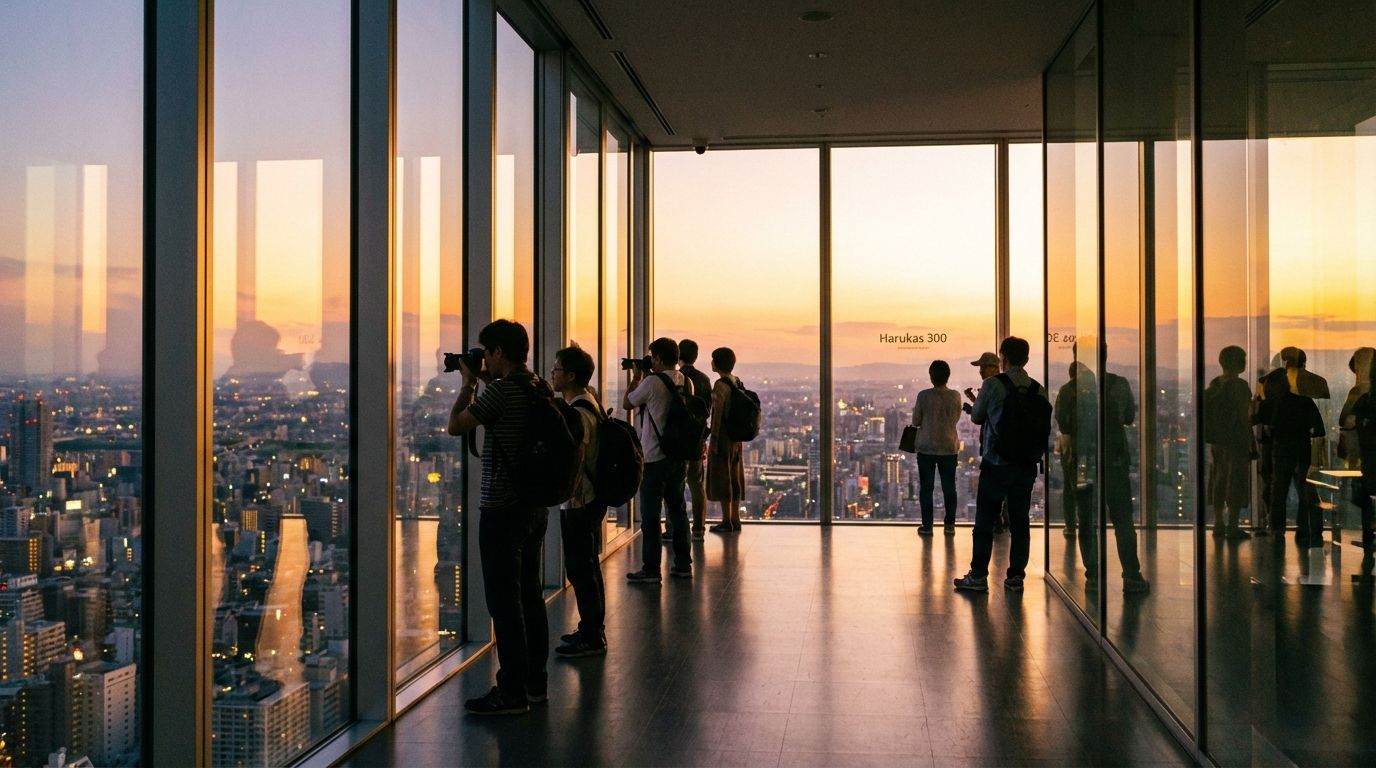 Image for illustrative purposes only.
Shitennoji: Walking Through 1,400 Years of History
A ten-minute walk north from Tennoji Station brings you to Shitennoji, founded in 593 AD by Prince Shotoku. To put that in perspective: this temple was already standing for nine centuries before Columbus crossed the Atlantic. It is the oldest state-built Buddhist temple in Japan, and the grounds carry a weight of history that you can almost feel in the cool stone beneath your feet. For the full story of this remarkable temple -- from Prince Shotoku's battlefield vow to the Paradise Garden's spiritual symbolism -- see our deep guide to Shitennoji Temple.
Yes, the current buildings are concrete reconstructions following the original Shitennoji-style layout -- the originals burned multiple times over the centuries. But they faithfully replicate the oldest temple configuration in the country. The five-story pagoda is climbable from the inside, each level revealing a different view of the surrounding gardens and rooftops. Behind the main hall, the Gokurakujodo Garden (Paradise Garden) is modeled after Amida Buddha's Western Paradise: a serene pond ringed by sculpted greenery, where the only sound is water trickling over moss-covered stone.
If you time it right, the flea market on the 21st and 22nd of each month fills the temple grounds with roughly 300 stalls selling antiques, handmade crafts, and street food. It's a wonderful, unhurried way to experience the temple alongside Osaka locals.
Hours: 8:30-16:00 (Oct-Mar), 8:30-16:30 (Apr-Sep) | Admission: Inner precinct 300 yen, Paradise Garden 300 yen; outer grounds free | Access: 10-min walk from Tennoji Station; or 5-min walk from Shitennoji-mae-Yuhigaoka Station (Tanimachi Line)
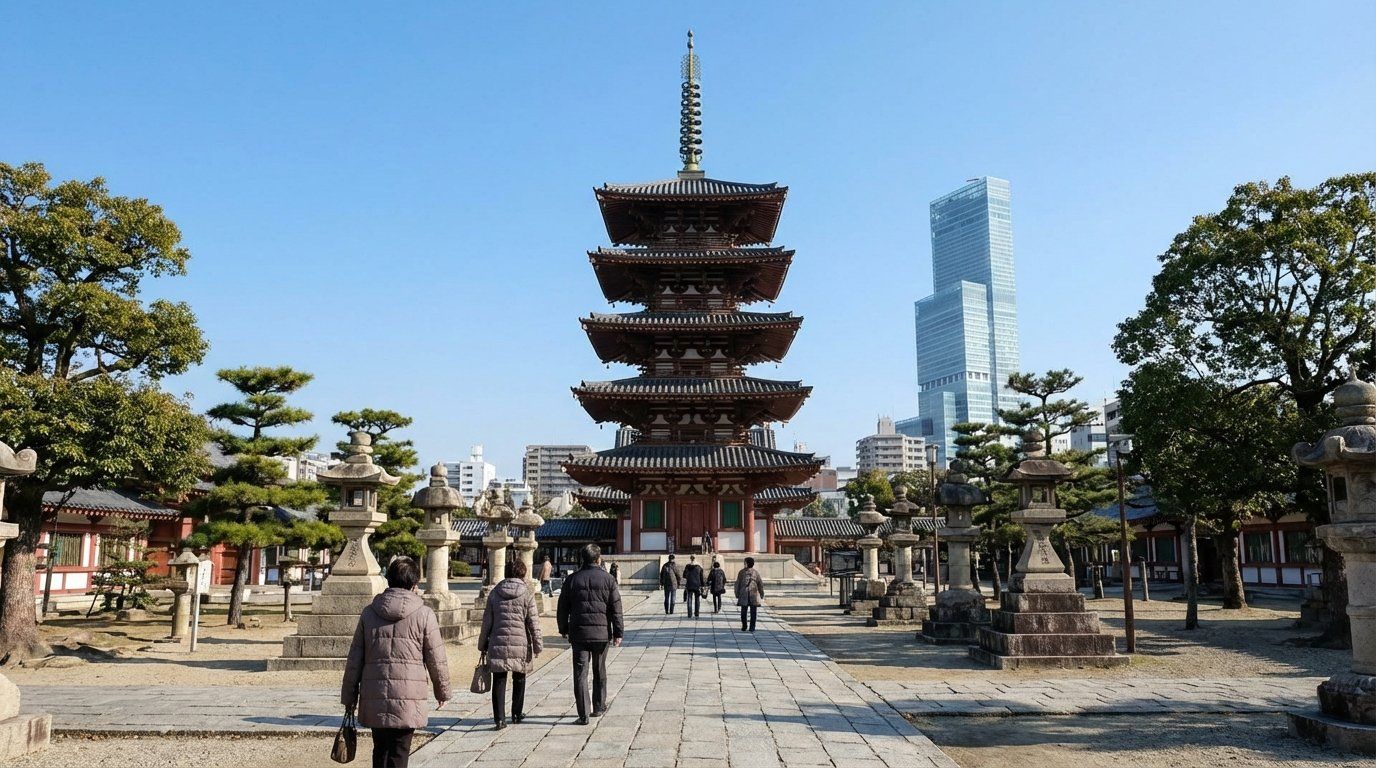 Image for illustrative purposes only.
Shinsekai: Time Travel to Showa-Era Osaka
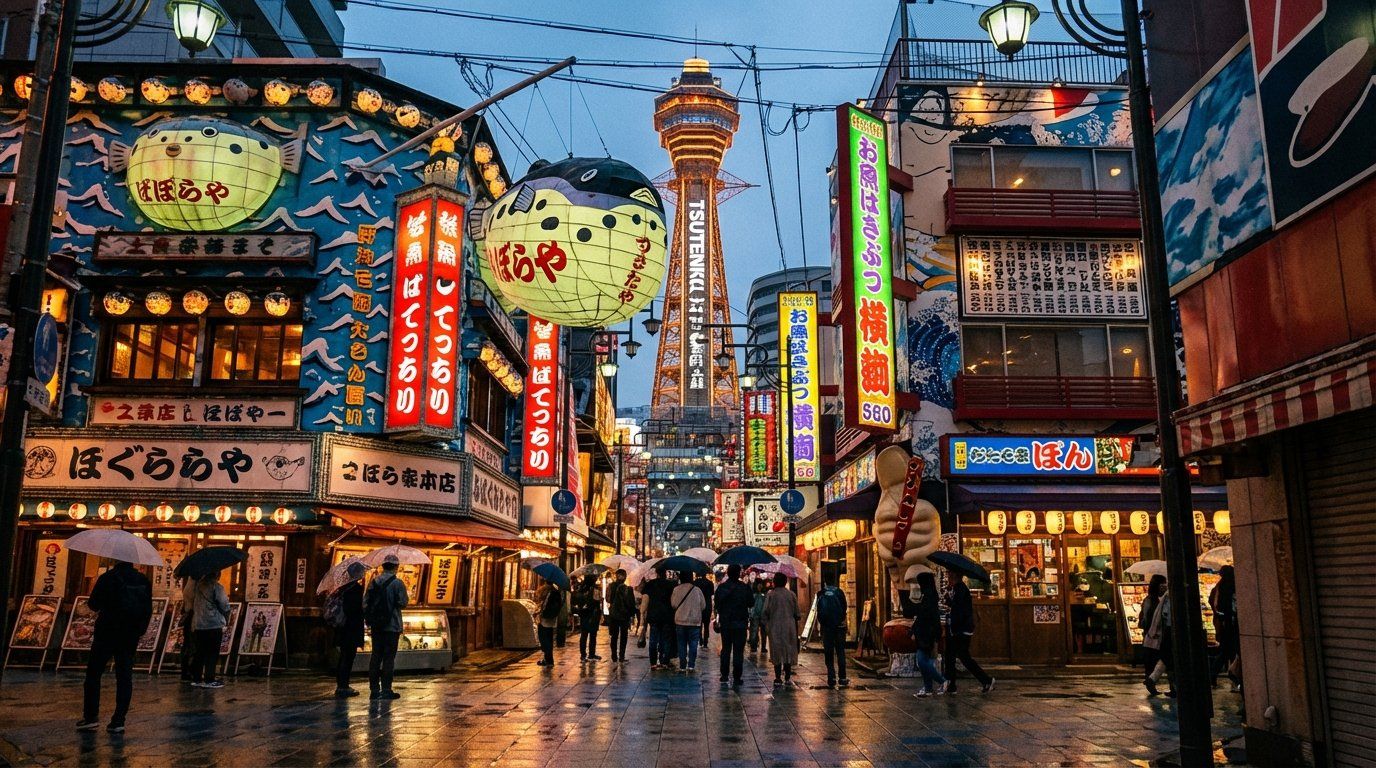
If Shitennoji takes you back centuries, Shinsekai takes you back decades. Walking into this entertainment district feels like stepping through a portal into 1950s Japan. Giant neon puffer fish lanterns hang over the street. Hand-painted movie posters cover the walls of the old Kokusai Theater building. Vintage arcades filled with Showa-era games line the alleys, their electronic melodies spilling out into the street.
At the heart of it all stands Tsutenkaku Tower, a 103-meter symbol of the district first built in 1912 and rebuilt in 1956. It's charming and atmospheric, though be honest with yourself -- if views are what you're after, Harukas is right across the park. Tsutenkaku is about the vibe, the history, and the neon-lit energy of the neighborhood at its feet.
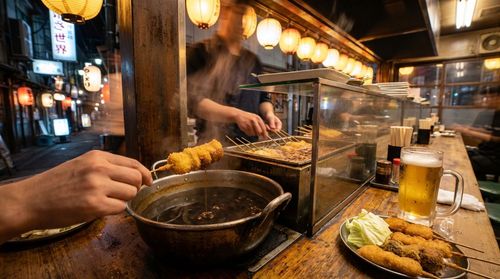
The real draw here is kushikatsu -- deep-fried skewered everything. Pork, shrimp, lotus root, cheese, even entire cloves of garlic, each coated in crispy panko and fried golden. Kushikatsu culture was born right here in Shinsekai, and prices still reflect its working-class roots: 80 to 150 yen per skewer. A full meal of ten or twelve sticks with a cold beer runs about 1,500 to 2,000 yen. Kushikatsu is just one piece of Osaka's legendary street food scene -- but it might be the most addictive.
One iron rule: no double-dipping in the communal sauce. You dip once. That's it. The angry-faced Daruma mascot staring down at you from every restaurant wall is not just decoration -- he's a reminder. If you need more sauce, use the provided cabbage leaves to scoop it onto your plate. Break this rule and you will hear about it.
Kushikatsu Daruma is the most famous spot and has English menus. For a more local experience, Yaekatsu has been serving regulars since 1947.
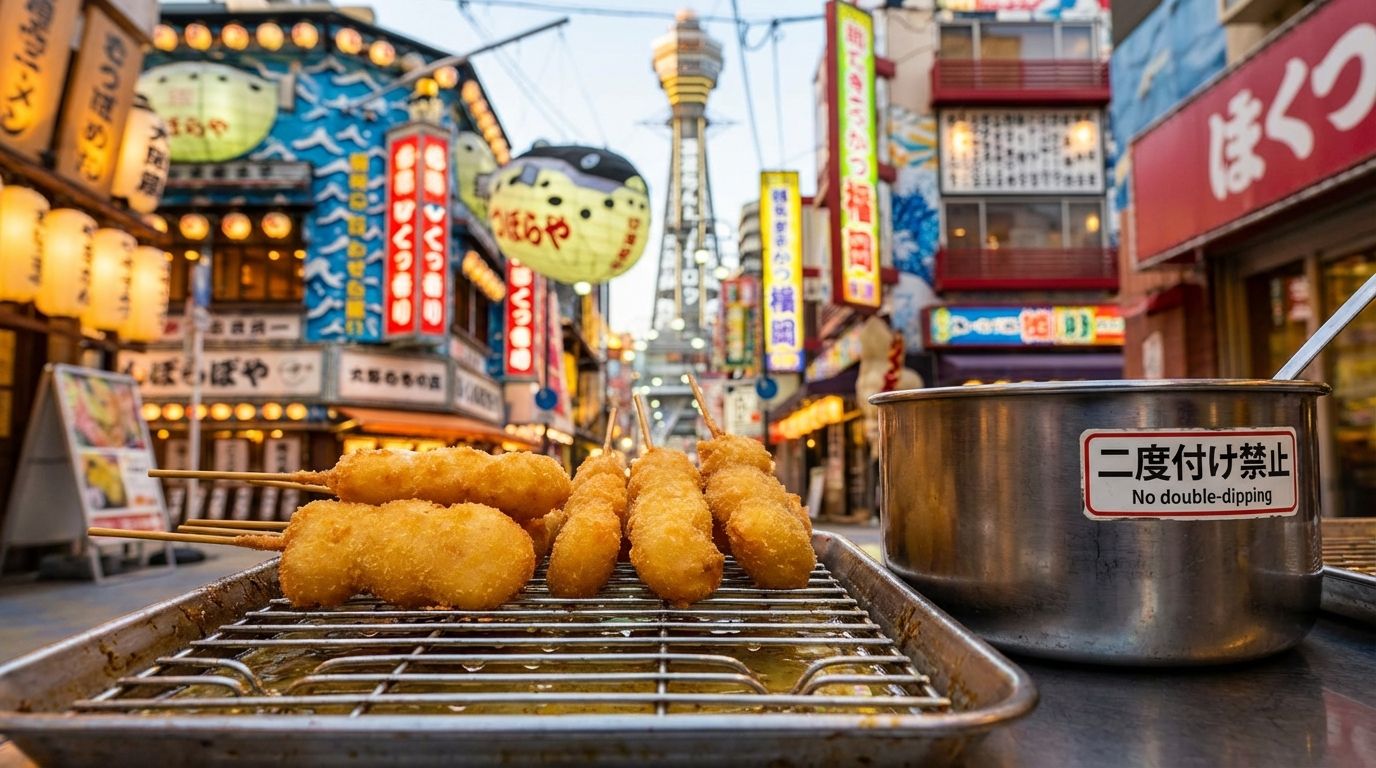 Image for illustrative purposes only.
Isshinji Temple: The Bone Buddha
Tucked between Tennoji Station and Shitennoji, five minutes on foot from the station, sits one of the most genuinely unusual temples in all of Japan. Since 1887, Isshinji Temple has been collecting the cremated remains of the deceased and, every ten years, molding them into a new Buddha statue -- called Okotsu Butsu. Over two million people's ashes have been incorporated into these figures.
It sounds eerie, but standing before them feels unexpectedly peaceful. The statues have a soft, pale quality unlike any stone or bronze Buddha you've seen before. The air carries the faint scent of incense, and the stillness inside the hall has a gravity that draws visitors into quiet reflection. Combined with the temple's striking modern gate -- designed by the current head priest, who is also an architect -- Isshinji delivers the kind of quiet, thought-provoking experience that stays with you long after you leave.
Hours: 9:00-16:00 | Admission: Free | Access: 5-min walk south from Tennoji Station
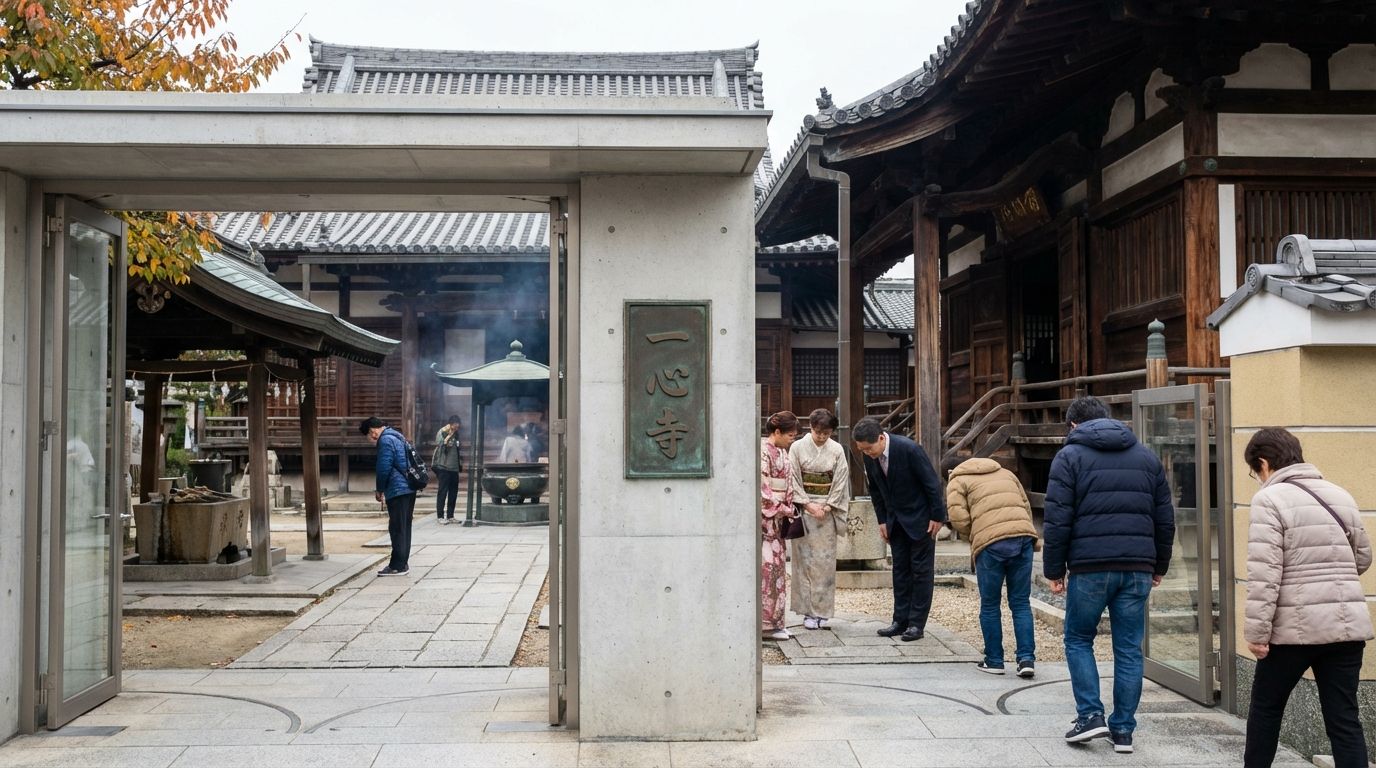 Image for illustrative purposes only.
Ura-Tennoji: The Standing-Bar District Locals Love
Here's where the "real Osaka" promise fully delivers. Three minutes from JR Tennoji Station's north exit, the narrow lanes of Ura-Tennoji hide a cluster of standing bars and tiny izakayas that grew out of a post-war black market. Exposed wires string between buildings. Faded retro signage hangs above doorways barely wide enough for two people. The air carries the salty-sweet scent of grilled yakitori and the sound of laughter from salarymen unwinding after work.
Drinks start at 300 yen. Food from 200 yen. Taneyoshi is the one locals talk about -- a 300-item menu that includes exotic options you won't find anywhere else. Sakatoke is where you go when budget is king. Stand Sonoda draws a steady crowd for its reliable comfort food. No tourist bus has ever parked outside any of these places.
A word of warning: most establishments here are cash only, menus are in Japanese, and English is rarely spoken. But if you're willing to point at what the person next to you is eating and smile, you'll do just fine. This is the kind of place where a little vulnerability earns you a warm welcome.
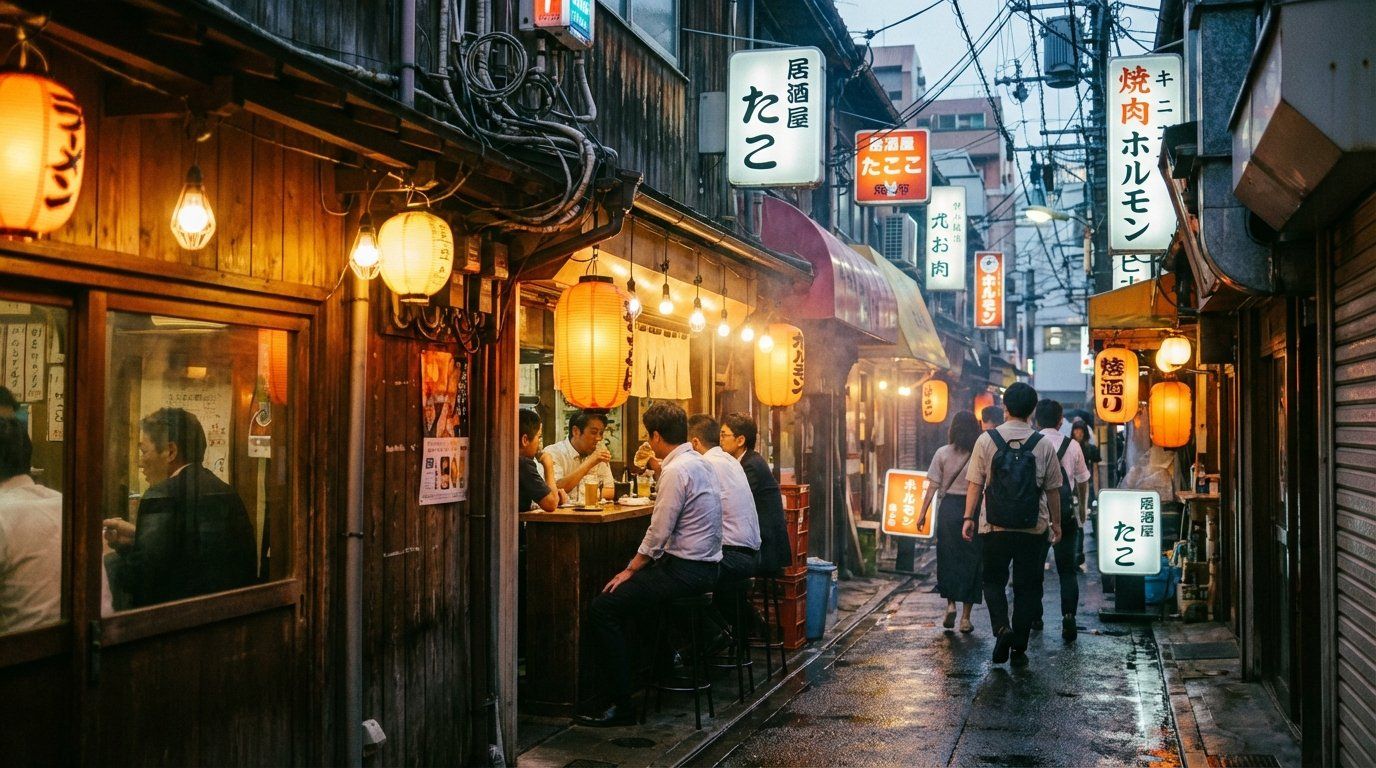 Image for illustrative purposes only.
Keitakuen Garden: The Hidden Escape
After all that neon and fried food, you might want a moment of stillness. Keitakuen Garden is hiding in plain sight inside Tennoji Park, its entrance tucked behind the Osaka City Museum of Fine Arts -- which is exactly why most visitors walk right past it.
Step through the gate and the city noise fades. A traditional Japanese garden unfolds around a central pond, its surface reflecting sculpted pines and arching stone bridges. In spring, cherry blossoms frame the water's edge. In autumn, the maples burn crimson and gold. Even in winter, the spare beauty of bare branches against the water has a meditative calm that feels worlds away from the Shinsekai streets just a few minutes south.
Hours: 9:30-17:00 (closed Mondays) | Admission: 150 yen | Access: 6-min walk from Tennoji Station Exit 19; look for the entrance behind the Museum of Fine Arts
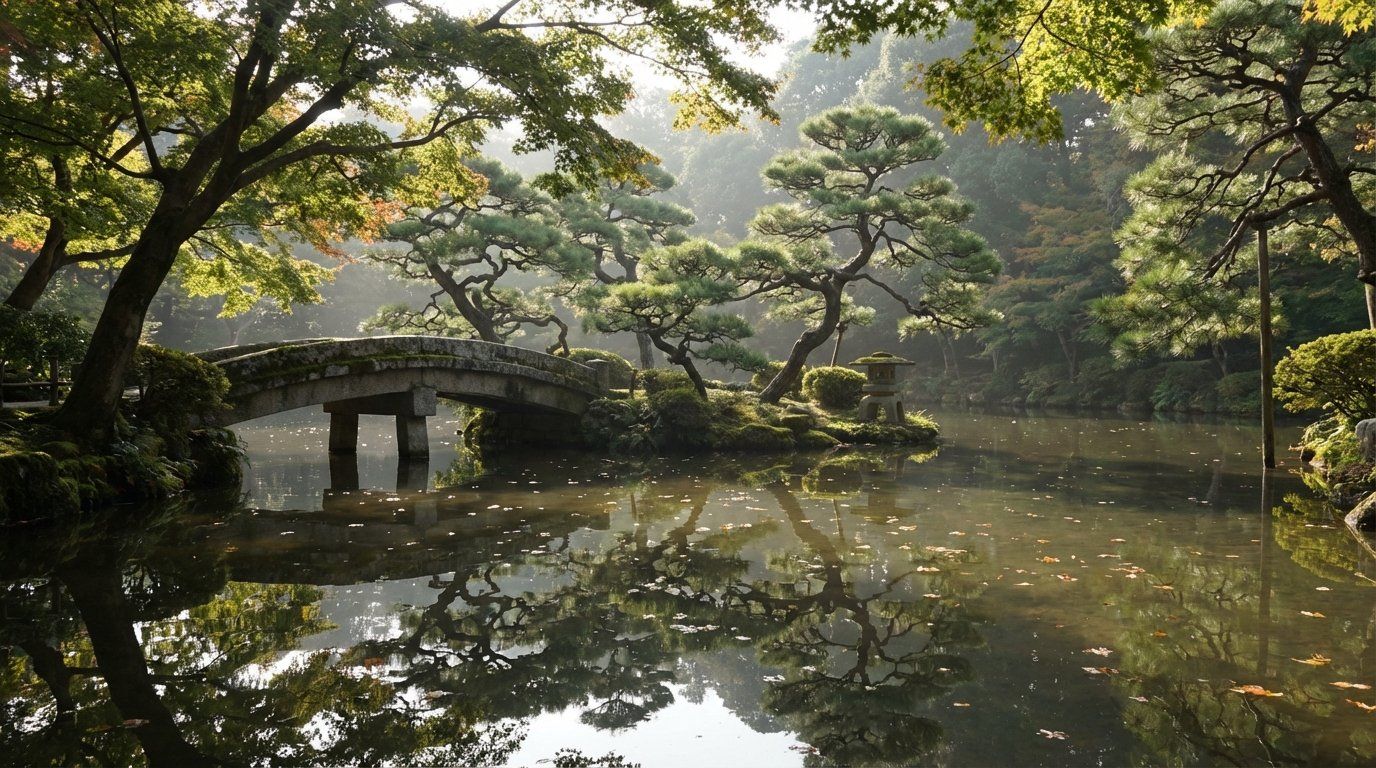 Image for illustrative purposes only.
What Most Tourists Don't Know
Tennoji Station is a maze -- use the Central Exit. The station connects JR, two subway lines, Kintetsu Railway, and the Hankai tram across multiple levels with four separate ticket gates. Forum posts regularly mention spending ten to fifteen minutes lost between platforms. Save yourself the headache: aim for the JR Central Exit, then follow overhead signage. For direct Shinsekai access, use Dobutsuen-mae Station Exit 1 instead.
Bring cash. Seriously. The establishments that make Tennoji special -- the kushikatsu shops on Jan Jan Yokocho, the standing bars of Ura-Tennoji -- predominantly accept cash only. No credit cards, no IC cards. Withdraw 5,000 to 10,000 yen before you head in. 7-Eleven ATMs near the station accept international cards.
Shinsekai is safe, but know the boundaries. The main tourist area around Tsutenkaku is well-lit and busy until late evening. The outdated "dangerous" reputation applies to side streets west of the main area after dark, near the Nishinari/Kamagasaki district border. Stick to the neon-lit streets and you'll have no problems.
Jan Jan Yokocho is where kushikatsu was born. This 180-meter alley stretching from Dobutsuen-mae Station toward Tsutenkaku is named after the twanging sound of shamisen music that once filled it. Today it's a string of hole-in-the-wall eateries specializing in kushikatsu, dote-yaki (beef sinew simmered in miso), and cheap beer. It's busiest from 5 PM onward, but many spots open before noon.
Your Tennoji Walking Route
Here's a suggested route that connects everything in a logical half-day to full-day loop:
Morning: Start at Shitennoji Temple (opens 8:30). Explore the inner precinct and Paradise Garden at your own pace. Allow 45-60 minutes.
Mid-morning: Walk five minutes south to Isshinji Temple for the Bone Buddha. Free entry, twenty minutes is enough.
Late morning: Continue south into Tennoji Park. Find the hidden entrance to Keitakuen Garden behind the Museum of Fine Arts. A quiet thirty-minute break.
Lunch: Head to Shinsekai via Tennoji Park's south side. Hit Jan Jan Yokocho or Kushikatsu Daruma for a kushikatsu lunch. Budget 45-60 minutes for eating and wandering.
Afternoon: Explore Shinsekai's retro arcades and neon streets. Tsutenkaku Tower if you're curious (700 yen, expect queues). Stroll the backstreets.
Sunset: Walk back to Abeno Harukas (10 minutes from Shinsekai). Arrive 30-60 minutes before sunset for the observatory. Watch the city light up from 300 meters.
Evening: Descend and head to Ura-Tennoji for standing-bar hopping. Three or four tiny bars, a few hundred yen per drink, and the most authentic Osaka evening you'll have all trip.
Practical Information
| Detail | Info |
|---|---|
| Getting There | JR Tennoji Station (Osaka Loop Line), Tennoji Station (Midosuji/Tanimachi Lines), Kintetsu Osaka Abenobashi Station |
| From Namba | 5 min by JR or Midosuji Line (180-240 yen) |
| From Umeda/Osaka | 15 min by JR or Midosuji Line (240-290 yen) |
| From Kansai Airport | ~50 min via JR Haruka limited express or Nankai + subway |
| Time Needed | Half day (4-5 hours) for highlights; full day (7-8 hours) for the complete route |
| Budget | 3,000-5,000 yen for entry fees, lunch, and drinks |
| Payment | Cash essential for Shinsekai and Ura-Tennoji; cards accepted at Abeno Harukas and chain stores |
| Best Time | Arrive morning for temples, stay through sunset for Harukas, end with evening bars |
Wrapping Up
Tennoji doesn't shout for your attention the way Dotonbori does. There are no giant mechanical crabs, no towering LED screens, no tour guides waving flags through the crowd. What there is, instead, is a neighborhood that trusts you to discover it at your own pace -- a 1,400-year-old temple where monks still chant at dawn, a retro food district where the same families have been frying kushikatsu for three generations, a hidden garden that most visitors never find, and a skyline view from 300 meters that somehow feels like a secret even though it's the tallest building in the country.
Tennoji's central location also makes it a natural base for exploring southern Osaka -- Namba and Dotonbori are just five minutes away by train, and the Shinsekai energy keeps going well into the evening. If you're planning to stay in this area, the neighborhood around Shitennoji and Tennoji Station puts you within walking distance of everything in this guide, with easy train access to the rest of Osaka. Whether you're passing through for an afternoon or settling in for a longer stay, this is a neighborhood that rewards wandering, rewards curiosity, and rewards the kind of traveler who's willing to skip the obvious and find something better.
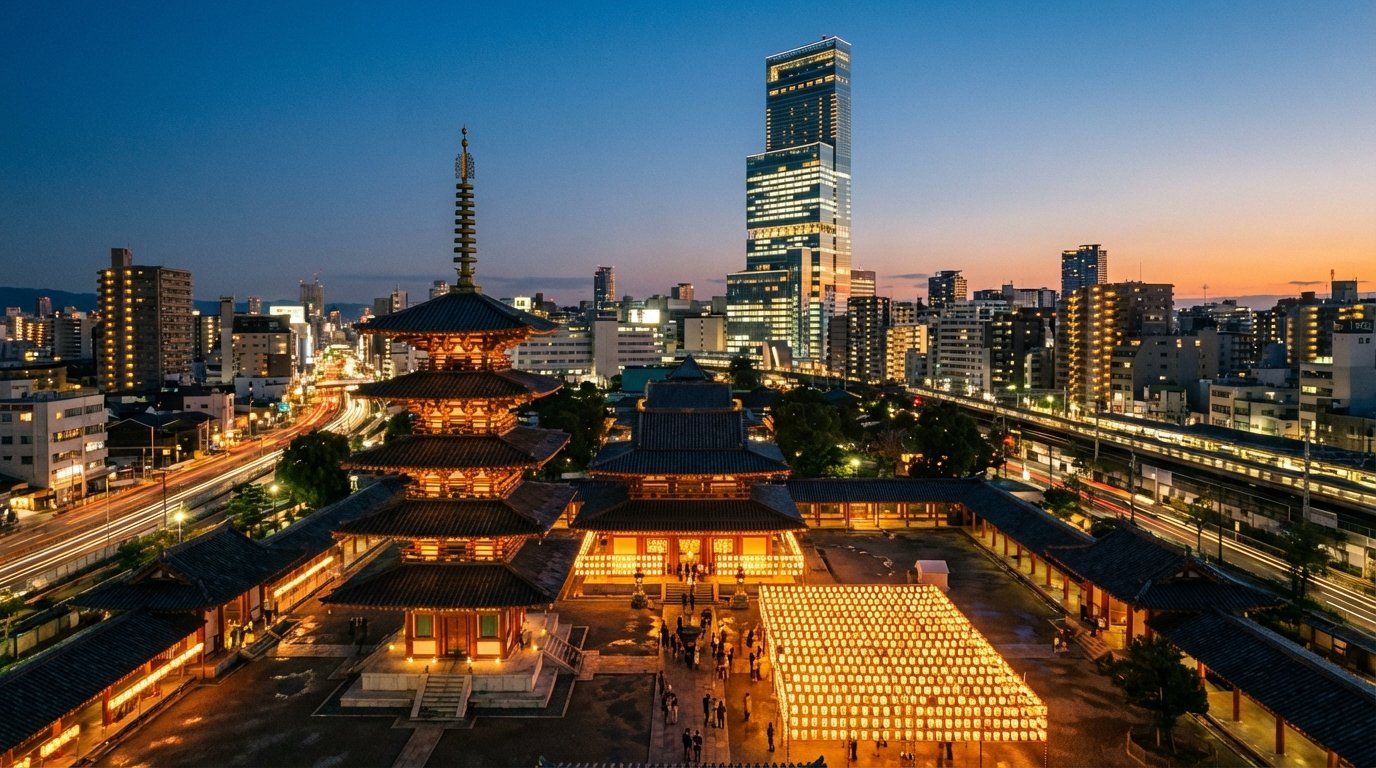 Image for illustrative purposes only.
Frequently Asked Questions
Why should I visit Tennoji instead of Dotonbori?
Tennoji offers a more authentic Osaka experience with fewer crowds, featuring Japan's oldest state-built temple and tallest building, along with local standing bars and affordable kushikatsu. It's where Osaka "actually lives," according to the article.
What is Abeno Harukas and what can I do there?
Abeno Harukas is Japan's tallest building, standing 300 meters tall and directly connected to JR Tennoji Station. You can visit the Harukas 300 observatory on floors 58-60 for a full 360-degree panorama of the Osaka cityscape, especially beautiful at sunset.
What is the significance of Shitennoji Temple?
Shitennoji Temple, founded in 593 AD by Prince Shotoku, is Japan's oldest state-built Buddhist temple. Visitors can explore its five-story pagoda, the serene Gokurakujodo Garden, and a monthly flea market on the 21st and 22nd.
What food is Shinsekai famous for, and what's the rule for eating it?
Shinsekai is renowned for kushikatsu, deep-fried skewered items that originated in the district. The most important rule when eating kushikatsu is to never double-dip in the communal sauce; use a cabbage leaf if you need more.
What makes Isshinji Temple unique?
Isshinji Temple is unique for its Okotsu Butsu, Buddha statues molded from the cremated remains of over two million people. The temple also features a striking modern gate designed by its current head priest.
Where can I find local standing bars in Tennoji?
The narrow lanes of Ura-Tennoji, located three minutes from JR Tennoji Station's north exit, hide a cluster of standing bars and tiny izakayas. This district offers an authentic local experience with affordable drinks and food.
Staying in Tennoji?
If you're planning to explore Tennoji, these neighborhood stays let you experience the area like a local.
Explore the Tennoji Area Guide
Discover more things to do, local food spots, and insider tips for Tennoji.
Spots in This Article
MAZE CAFE SHINSEKAI
5.0Maze Cafe Shinsekai stands out as a destination-worthy breakfast spot in Tennoji that consistently impresses with thoughtfully prepared coffee and elevated cafe cuisine—think perfectly executed avocado toast and latte art that photographs beautifully. The space cultivates a genuinely welcoming atmosphere with staff who are knowledgeable about their craft and attentive without being intrusive, making it equally appealing for solo travelers seeking a calm refuge or families wanting quality time. This is the rare cafe that justifies visiting multiple times during a Osaka trip rather than being a one-off stop.
ラーメン 醤すけ心斎橋店 Ramen SHOSUKE Shinsaibashi
5.0This Shinsaibashi ramen shop delivers authentic, handcrafted bowls that consistently exceed expectations—many visitors report it rivals or surpasses Osaka's more hyped establishments. The standout draw is the silky, meticulously prepared broth paired with fresh noodles, with both shoyu and shio variations earning praise. Staff hospitality is genuinely warm and accommodating to non-Japanese speakers, making it an accessible introduction to serious ramen culture for first-time visitors.
ホルモン居酒屋 やまつ 新世界 shinsekai
4.9This newly-opened horseradish offal izakaya near Tsutenkaku delivers premium-quality grilled offal at remarkably affordable prices—a rare combination that explains its near-universal acclaim. The signature dish, kiku-abura (organ meat), showcases pristine sourcing and careful preparation that far exceeds typical izakaya standards. The no-frills Shinsekai atmosphere and personable ownership create an authentic eating experience where casual drop-ins and repeat visitors feel equally welcome.
Osaka Halal Ramen Wagyutei
4.9This newly opened halal ramen specialist in Tennoji stands out as one of Osaka's rare dedicated halal ramen destinations, offering authentic broth-based ramen without compromise on quality. The owner and staff actively engage with international visitors and speak English, making it exceptionally accessible for foreign tourists unfamiliar with Japanese dining customs. Generous portions at reasonable prices, combined with an genuinely welcoming atmosphere where staff adapt the dining experience (like adjusting air conditioning), create an experience that feels personal rather than transactional.