Japan tax-free shopping system overhauls Nov 1, 2026. Korean tourist's complete guide — old rules, new rules, 7 common mistakes, and how to stack 17% off.
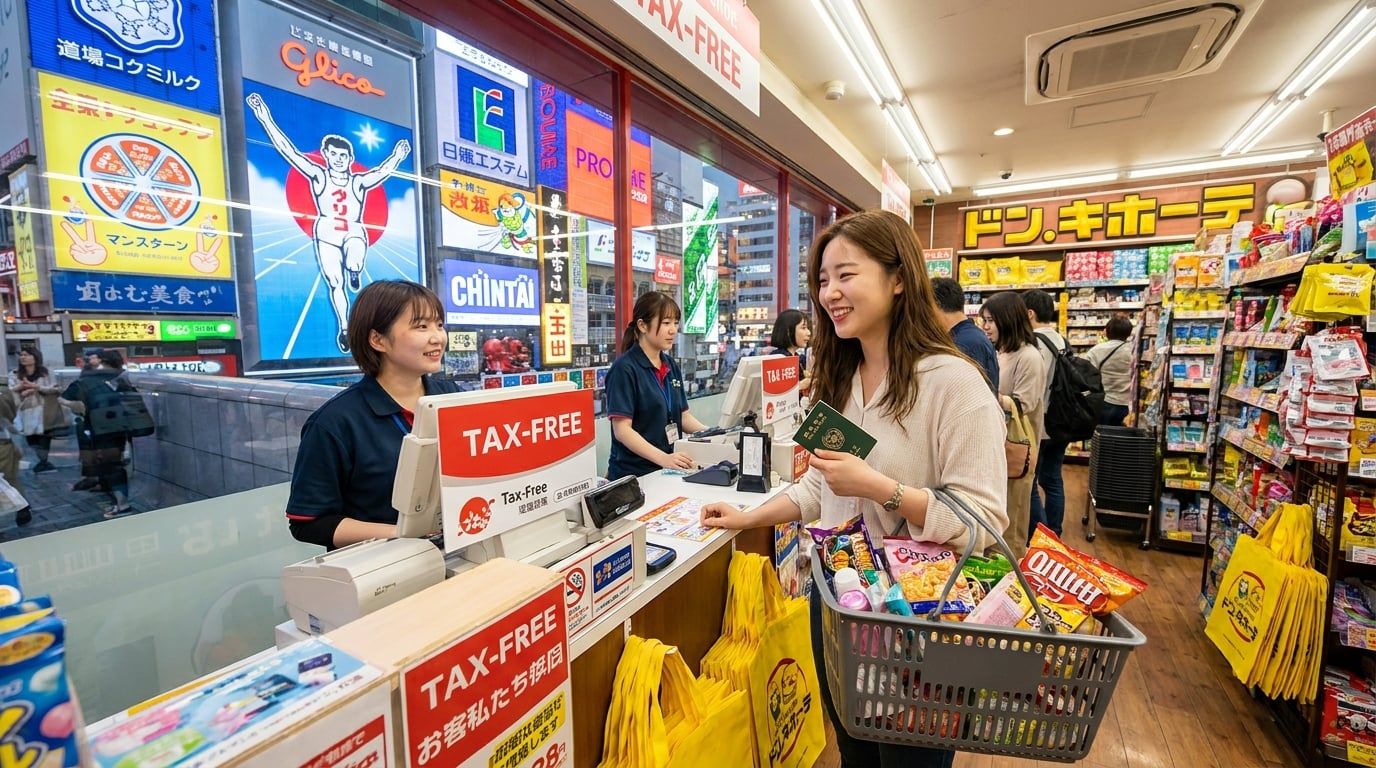 Image for illustrative purposes only.
⚠️ Time-Sensitive Notice (June 2026): Japan's tax-free shopping system is changing fundamentally on November 1, 2026. If your trip is before that date, the current rules apply (instant discount at the register). If you travel on or after November 1, you'll pay the tax first and get refunded at the airport. This guide covers both systems — check your travel date and read the relevant section.
In March 2026 alone, 795,600 Korean travelers visited Japan — making Korea the country's #1 inbound market. And yet, on Korean travel forums and Naver cafes, the same question keeps popping up: "Why couldn't I get the tax refund?"
The truth is, Japan's tax-free shopping system is one of the most generous in Asia — a flat 10% off any qualifying purchase over ¥5,000 — but it's also riddled with small rules that catch even experienced shoppers off guard. The good news: once you understand the system, you can stack discounts up to 17% off at stores like Don Quijote. The bad news: you've got less than five months before the rules flip entirely.
Let's walk through it together — what works now, what changes on November 1, and the seven mistakes Korean tourists make most often.
What Exactly Changes on November 1, 2026?
This is the biggest tax-free reform Japan has done in a decade. The shift moves Japan from a store-side instant-discount system to an airport-side refund system — similar to how the EU and Korea already handle VAT refunds.
Here's a side-by-side comparison:
| Rule | Current System (until Oct 31, 2026) | New System (from Nov 1, 2026) |
|---|---|---|
| Where you pay the tax | Not charged at register | Paid at register, refunded at airport |
| How you receive the discount | Instant 10% off | Refunded 1–4 weeks after departure |
| Sealed bag rule (consumables) | Must stay sealed until you leave Japan | Removed |
| Categories | Consumables vs General Goods (split) | Merged into one category |
| ¥500,000 daily cap on consumables | Applies | Removed |
| Departure deadline | 30 days from purchase | 90 days from purchase |
| Refund payment method | N/A (instant discount) | Credit card or digital wallet — no cash |
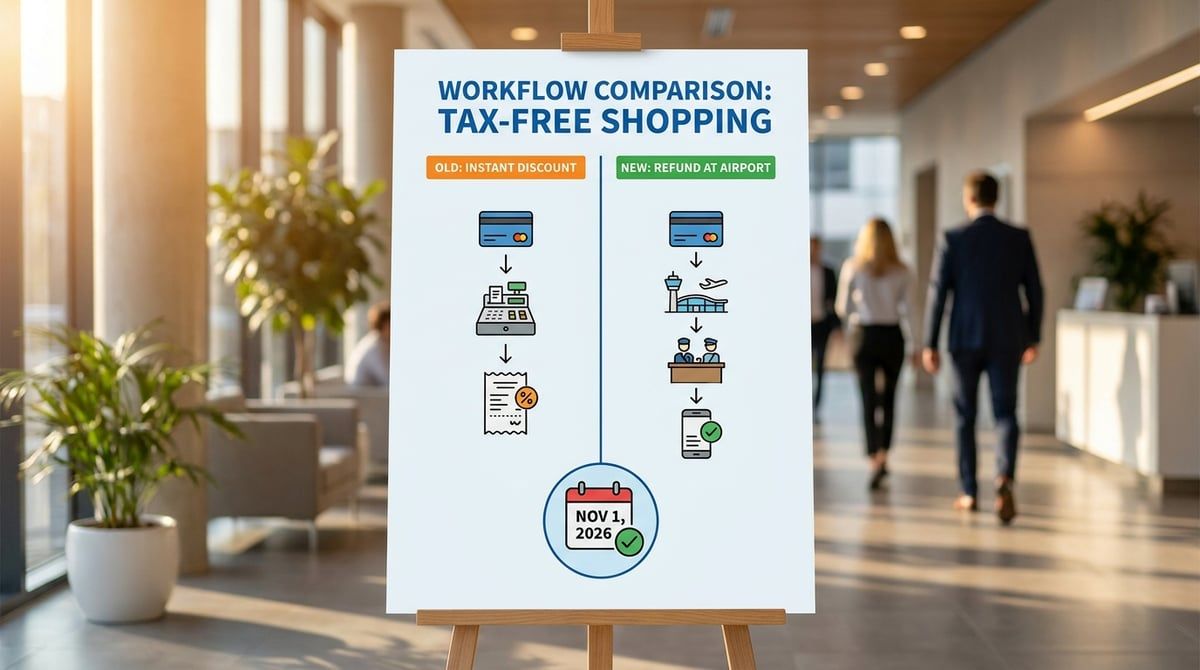 Image for illustrative purposes only.
The single most important takeaway: starting November 1, you'll need to arrive at the airport 3–4 hours before your flight, not the usual 2 hours, to handle refund kiosks and customs inspection. And since refunds go to your credit card and digital wallet refunds, the cashflow hit lasts 1–2 weeks (credit card) or up to 4 weeks (bank transfer).
How the ¥5,000 Minimum Actually Works
The headline rule is simple: spend ¥5,000 or more (pre-tax) at a single store on a single day, show your passport, and the 10% consumption tax is waived. But three details trip up nearly everyone.
First, ¥5,000 is pre-tax. That means the price tag total needs to read ¥5,000 — but the post-tax sticker you see may show closer to ¥5,500. Always confirm with staff whether the displayed price includes tax (税込, zeikomi) or excludes it (税抜, zeinuki).
Second, "one store" means one store. You cannot combine receipts from a drugstore and a convenience store, even if they're next door. The exception: large department stores like Takashimaya or Daimaru, where a unified tax-free counter on one floor can combine purchases from multiple sub-shops inside the building.
Third, until October 31, 2026, consumables and general goods are counted separately (consumables = food, cosmetics, medicine; general goods = electronics, clothing, watches). ¥3,000 in cosmetics + ¥3,000 in clothing = ¥6,000 total, but neither category clears the ¥5,000 floor — so no tax-free. After November 1, the categories merge, and that ¥6,000 will qualify.
What Most Tourists Don't Know
These are the gotchas you won't find in the typical guide:
1. The automated immigration gate trap. If you used an e-Passport automated gate at Narita, Haneda, or Kansai (KIX), your passport may not have a physical entry stamp — and no stamp means no tax-free shopping. If you're planning to shop tax-free, queue at a manned counter instead and politely ask for the stamp. It takes 30 extra seconds at immigration to save you the entire 10%.
2. Don't open the sealed bag. Until October 31, 2026, consumables (cosmetics, food, medicine) are placed in a clear sealed bag with a "Do Not Open Until You Leave Japan" sticker. If you tear it open at your hotel to repack your suitcase — even just to check what's inside — customs at the airport may charge you the 10% tax back. The seal must stay intact until after immigration on your way home.
3. Photocopies of your passport don't work. The original physical passport is required, every single time. Screenshots of the photo page are not accepted either. Carry your passport with you on shopping days.
4. As of April 1, 2025, shipped goods no longer qualify. You cannot ship tax-free purchases home from Japan and keep the exemption. Everything must physically leave with you in your luggage.
5. The credit card name must match your passport. If you're paying with a family member's card or your card has a romanized name that differs from your passport's spelling, the staff may refuse the tax exemption.
6. Same-store, same-day stacking is allowed. Bought ¥3,000 in cosmetics in the morning? Come back at night for ¥3,000 more, show the receipts together, and many stores will combine them into one ¥6,000 tax-free transaction.
7. Visit Japan Web's QR feature is being phased out. Pre-Nov 2026, you can register your passport once and show a QR code at participating stores. After November 1, with the airport-refund system, this feature becomes redundant for refund purposes. Useful now, less useful later.
Where Should You Shop? Store-by-Store Strategy
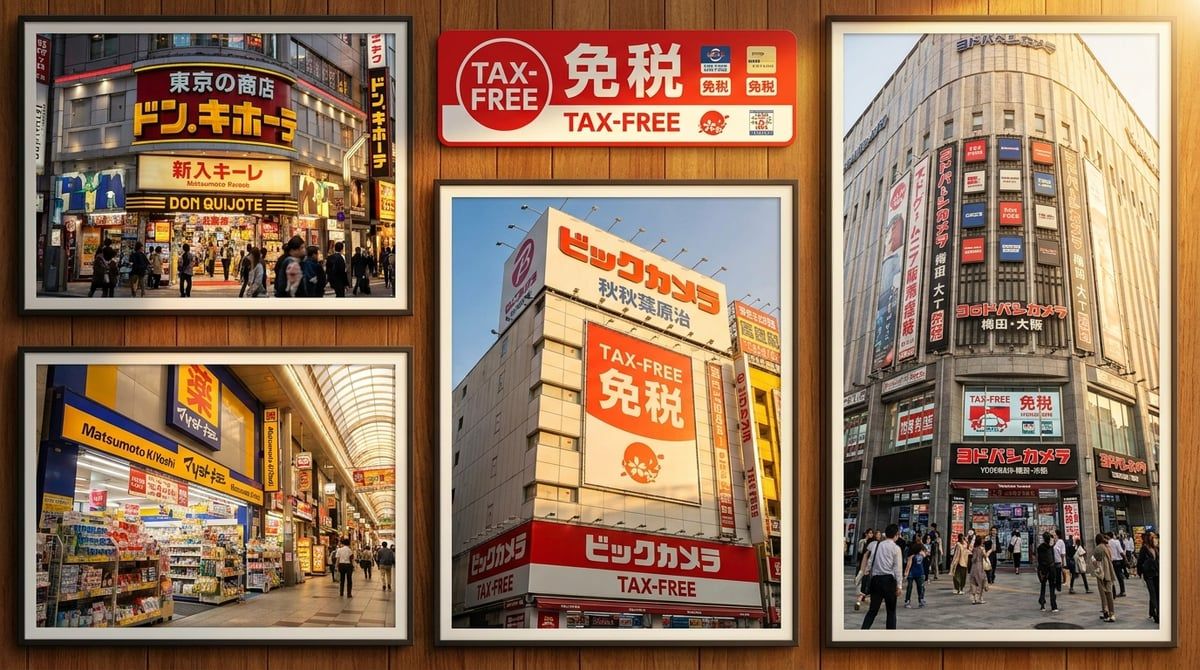 Image for illustrative purposes only.
Don Quijote — The 24/7 One-Stop
Don Quijote ("Donki") has 220+ stores nationwide, and the flagship branches in Shibuya, Shinjuku Kabukicho, and Dotonbori (Osaka) are open 24 hours — perfect for last-minute shopping the night before your flight.
The discount math here is the best in Japan. You stack:
- 10% tax-free (¥5,000+ purchase)
- 5% additional coupon (¥10,000+ purchase)
- 7% additional coupon (¥30,000+ purchase)
That's a maximum 17% off for a ¥30,000+ basket. Grab the coupon from the official Don Quijote app — but be careful: opening the coupon "just to check" marks it as used, and you can't reapply it. A trick from Korean forums: switch the app's language setting to refresh a stuck coupon.
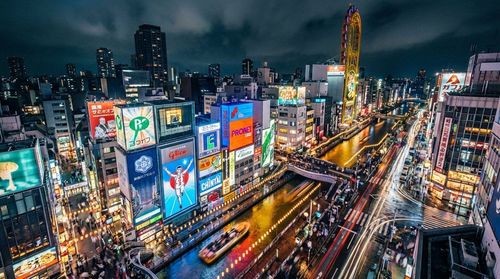
Warning about Dotonbori (Osaka): between 9 PM and 11 PM, the tax-free line alone can run over an hour. If you're shopping in Osaka, hit Donki before 8 PM or after midnight — and if you want to explore the neon-lit chaos of Dotonbori properly, plan your tax-free run for off-peak hours.
Matsumoto Kiyoshi — The Cosmetics & Drugstore Specialist
With 3,400+ locations, Matsumoto Kiyoshi (often called "Maki" by regulars) is Japan's most-recognized pink-signed drugstore chain. The selection of cosmetics, hair care, and over-the-counter medicines is stronger than Donki, and the queues move faster. Coupons typically deliver 3%, 5%, or 7% additional discount depending on basket size.
Korean shoppers report that suburban Maki stores have better stock and shorter tax-free queues than the tourist-area branches in Shinjuku or Shibuya. If you have a free afternoon, it's worth riding two stops outside the central tourist zone.
BicCamera & Yodobashi — Electronics + Multilingual Support
For cameras, gaming gear, kitchen appliances, and home electronics, BicCamera and Yodobashi Camera are unbeatable. BicCamera's Payke tablet lets you scan any barcode for product info in seven languages including Korean — you don't need to flag down an English-speaking staff member.
Yodobashi Umeda (Osaka) runs store-wide announcements in JP/EN/FR/DE/ES/ZH/KO. The cashiers at the register can process tax-free directly without sending you to a separate floor.
Department Stores (Takashimaya, Daimaru, Isetan) — The Multi-Shop Combiner
The hidden advantage of big department stores: a single tax-free counter on the top floor can combine purchases from every shop inside the building. Bought ¥2,000 in skincare on B1, ¥2,000 in clothing on 3F, ¥1,500 in tea on 7F? Bring all your receipts to the tax-free counter and they'll process it as one ¥5,500 transaction. This is the easiest way to clear ¥5,000 if you're shopping across categories.
If you're shopping around Osaka's Tennoji or Dotonbori districts in the afternoon, big department stores also make a natural rest point — and a good moment to head back to your accommodation in a quieter part of town like Tennoji to drop off bags before the next stop.
How Do You Fill ¥5,000? A Worked Example with Korean Bestsellers
This is the most-asked question on Korean forums: "What should I buy to hit ¥5,000 efficiently?" Here's a realistic basket built around items that consistently rank in Korean shopper top-10 lists:
| Item | Approx Price |
|---|---|
| Cabagin Alpha (cabbage stomach pills) | ¥1,800 |
| Biore Aqua Rich UV Sunscreen | ¥900 |
| Senka Perfect Whip face wash × 3 | ¥1,200 |
| Salonpas pain relief patches | ¥800 |
| Megrhythm steam eye masks (1 box) | ¥500 |
| Total (pre-tax) | ≈¥5,200 |
That's just over the line, all consumables, and easy to fit in a single Maki or Donki visit. Adjust quantities depending on whether you want gifts for friends or just personal stock.
How to Use the Airport Refund Kiosk (Post-November 2026)
Starting November 1, the workflow changes completely. Here's what to expect:
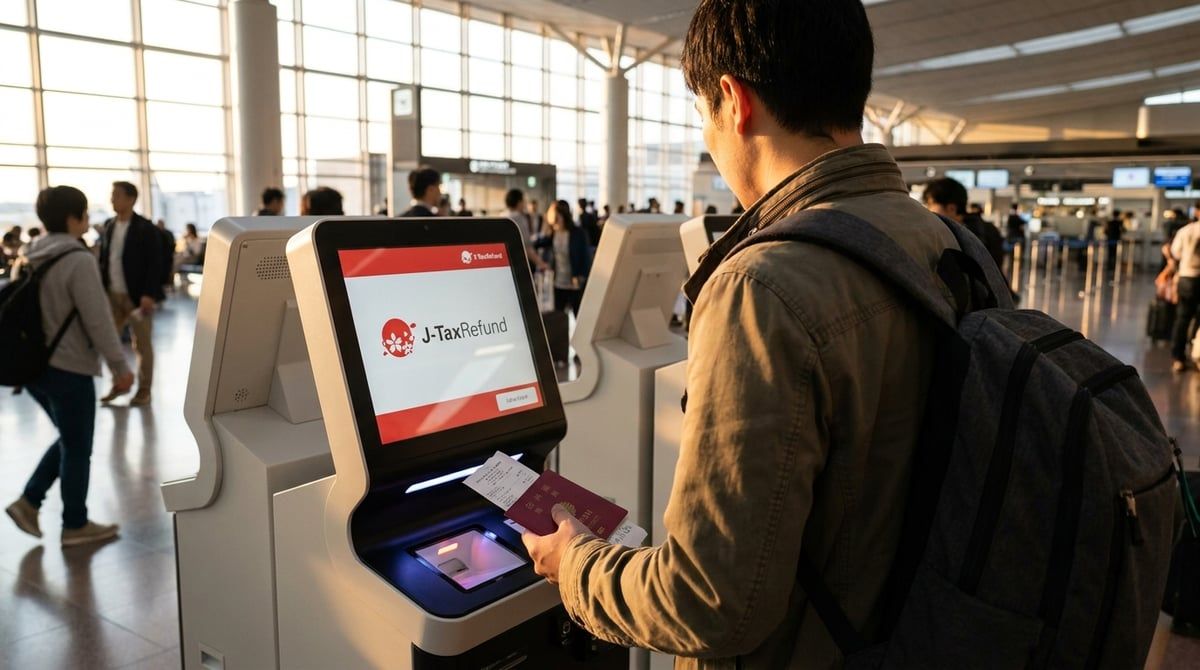 Image for illustrative purposes only.
- Shop normally. Pay the full price including 10% consumption tax. Keep every receipt — they'll be tagged digitally to your passport.
- Arrive at the airport 3–4 hours before your flight. This is non-negotiable; the kiosk plus customs inspection can easily take 60–90 minutes during peak hours.
- Find the J-TaxRefund kiosk (after check-in, before passport control). Scan your passport — the system pulls up all your tax-free purchases automatically.
- Go through customs inspection. Officers may ask to see your purchases. Keep them accessible in your carry-on, not buried in checked luggage.
- Choose your refund method: credit card (1–2 weeks to arrive) or digital wallet/bank transfer (2–4 weeks). Cash refunds will not be available.
The departure deadline extends to 90 days from purchase date, which is helpful for multi-stop travelers.
Practical Info: Japan Tax-Free Cheat Sheet
| Item | Detail |
|---|---|
| Minimum purchase | ¥5,000 (pre-tax) per store per day |
| Consumption tax rate | 10% (8% on takeaway food/drink) |
| ID required | Original passport (no photocopies, no screenshots) |
| Visa status | Temporary Visitor (under 6-month stay) |
| Current consumables cap | ¥500,000/day (removed Nov 1, 2026) |
| New system start | November 1, 2026 |
| Airport arrival (post-Nov 2026) | 3–4 hours before flight |
| Refund timing (post-Nov 2026) | 1–2 weeks (card) / 2–4 weeks (bank) |
| Don Quijote 24h flagships | Shibuya, Shinjuku Kabukicho, Dotonbori |
Re-Entering Korea: Don't Confuse the Two Allowances
Don't confuse Japan's tax-free system with Korea's customs allowance on return. Korea allows up to USD $800 per traveler, including any duty-free purchases at the departure airport. If your tax-free shopping in Japan exceeds that limit, you may owe Korean customs duty when you land at Incheon or Gimpo. The Korean Customs Service (관세청) publishes the latest thresholds — check before you fly home.
Wrapping Up
Japan's tax-free system rewards travelers who plan ahead. Before November 1, 2026, the rules favor in-store convenience — instant 10% discounts, sealed bags, no airport detour. After November 1, the system trades convenience for flexibility — bigger baskets, longer deadlines, but a cashflow hit and an extra airport hour.
For Korean tourists specifically, the wins are concentrated in three places: (1) avoid the auto-gate stamp trap on arrival, (2) stack Donki's 17% combo for any basket over ¥30,000, and (3) use department store unified counters to combine small purchases across categories. Do those three things consistently and you'll save ¥30,000–¥50,000 over a typical 4-day shopping trip — enough to cover an extra dinner or a few more boxes of Megrhythm to take home.
If your shopping circuit runs through Dotonbori, basing yourself a few stops south in Tennoji gives you a quieter neighborhood to drop bags, repack, and rest before another lap. It's a short Midosuji-line ride between the two — close enough for late-night Donki runs, far enough to actually sleep.
Save this guide before your next trip, share it with the friend you're traveling with, and check the dates one more time before you fly. The clock on the old system is ticking.
Frequently Asked Questions
What is the minimum purchase for tax-free shopping in Japan?
The minimum is ¥5,000 pre-tax at a single store on a single day. You must show your original passport at checkout (until Oct 31, 2026) or at the airport refund kiosk (from Nov 1, 2026).
Does Japan's tax-free system change in 2026?
Yes. Starting November 1, 2026, you'll pay full price including tax at the register, then claim a refund at the airport kiosk before your departure flight. The current instant-discount system stops on October 31, 2026.
What's the difference between Tax-Free and Duty-Free in Japan?
Tax-Free refers to downtown stores (Don Quijote, drugstores, department stores) where the 10% consumption tax is waived on purchases over ¥5,000 with a passport. Duty-Free refers to airport bonded-zone shops after immigration, with no minimum purchase and no passport-stamping process. They are completely separate systems.
Can I use the automated immigration gate and still shop tax-free?
Only if your passport has a physical entry stamp. Automated e-gates often skip the stamp, which makes you ineligible for tax-free. If you plan to shop, go through a manned immigration counter and request the stamp.
Can I open the sealed bag from a tax-free purchase?
No, not until you have departed Japan. Opening the sealed bag inside Japan (even at your hotel) may result in customs charging back the 10% consumption tax at the airport. This rule applies until October 31, 2026.
Are photocopies or screenshots of my passport accepted?
No. Only the original physical passport is accepted for tax-free shopping. Bring it with you on every shopping day.
How do I get the 17% discount at Don Quijote?
Stack the 10% tax-free exemption (for purchases over ¥5,000 pre-tax) with the 7% app coupon discount (for purchases over ¥30,000). The combined effective discount is approximately 17%. Open the coupon only at checkout — opening it early marks it as used.
Can I ship tax-free purchases home from Japan?
No. As of April 1, 2025, shipped goods no longer qualify for tax-free status. You must physically carry your purchases out of Japan in your luggage.
How early should I arrive at the airport after November 2026?
Plan for 3–4 hours before your flight. The new airport refund process — scanning receipts at the J-TaxRefund kiosk and undergoing customs inspection — typically takes 60–90 minutes during peak departure hours.
Can Korean tourists use Visit Japan Web for tax-free shopping?
Yes — Visit Japan Web supports a Korean-language interface and can store a tax-free QR code linked to your passport. Until October 31, 2026, participating stores can scan this QR to streamline tax-free checkout. From November 1, 2026, with the airport-refund system, the QR feature becomes largely redundant for refund processing.
Explore the Minami (Namba) Area Guide
Discover more things to do, local food spots, and insider tips for Minami (Namba).