Japan Fireworks 2026: The Definitive Hanabi Taikai Calendar (Confirmed Dates, Tickets, Access)
June 28, 2026
Every confirmed Japan fireworks date for 2026 — Sumida July 25, Nagaoka Aug 2-3, Tokyo Bay Grand's October comeback after 11 years, plus what's still bookable.
2026 is the year to plan a fireworks trip to Japan. The Tokyo Bay Grand Fireworks (東京湾大華火祭) returns on October 24 after an 11-year hiatus — the comeback story of the season. ¥30,000 lakeside pairs at Biwako Otsu sold out in May, Nagaoka's lottery is closed, and free riverside spots are vanishing fast at the headliners. But there are still tickets to grab, free-viewing classics that haven't gated up, and a sneaky autumn calendar most travel guides haven't caught up to yet.
Here's the full, source-verified 2026 calendar — what's running, what's cancelled, and what you can still book.
The 2026 Calendar at a Glance
Confirmed dates as of late June 2026, in chronological order:
| Date | Event | Region |
|---|---|---|
| Apr 11 (held) | Ryukyu Kaiensai | Okinawa |
| Apr 26, May 24 | Atami Sea Hanabi (spring) | Shizuoka |
| May 30 (held) | Adachi Fireworks | Tokyo |
| Jun 13, Jul 4, Jul 18, Aug 9, Sep 5, Sep 20 | Yokohama Night Flowers | Kanagawa |
| Jul 10 (held) | Kamakura Fireworks | Kanagawa |
| Jul 20, 26, Aug 5, 9, 18, 24 | Atami Sea Hanabi (summer) | Shizuoka |
| Jul 25 | Sumida River Fireworks | Tokyo |
| Jul 25 | Tenjin Matsuri Hono Hanabi | Osaka |
| Jul 26 | Toyota Oiden Fireworks | Aichi |
| Aug 1 | Edogawa Fireworks | Tokyo |
| Aug 1 | Itabashi Fireworks | Tokyo |
| Aug 2–3 | Nagaoka Fireworks | Niigata |
| Aug 5 | Sendai Tanabata Eve | Miyagi |
| Aug 6 | Lake Biwako Otsu | Shiga |
| Aug 7 | Aomori Nebuta Fireworks | Aomori |
| Aug 8 | Jingu Gaien Fireworks | Tokyo |
| Aug 8 | Gifu Nagaragawa | Gifu |
| Aug 13 | Kanmon Strait Fireworks | Fukuoka/Yamaguchi |
| Aug 15 | Lake Suwa Fireworks | Nagano |
| Aug 15 | Akagawa Fireworks | Yamagata |
| Aug 29 | Omagari National Competition | Akita |
| Sep 13, Oct 12, 25, Nov 8, 23 | Atami Sea Hanabi (autumn) | Shizuoka |
| Oct 17 | Naniwa Yodogawa Fireworks | Osaka |
| Oct 17 | Yatsushiro National Competition | Kumamoto |
| Oct 19–23 | Minato Kobe HANABI (5 nights) | Hyogo |
| Oct 24 | Tokyo Bay Grand Fireworks ★return | Tokyo |
| Dec 6, 25 | Atami Sea Hanabi (winter) | Shizuoka |
For background on what makes a hanabi taikai different from a Western fireworks display, see our evergreen guide to Japan's fireworks festivals.
Headline Events of 2026
Sumida River Fireworks (July 25) — the original
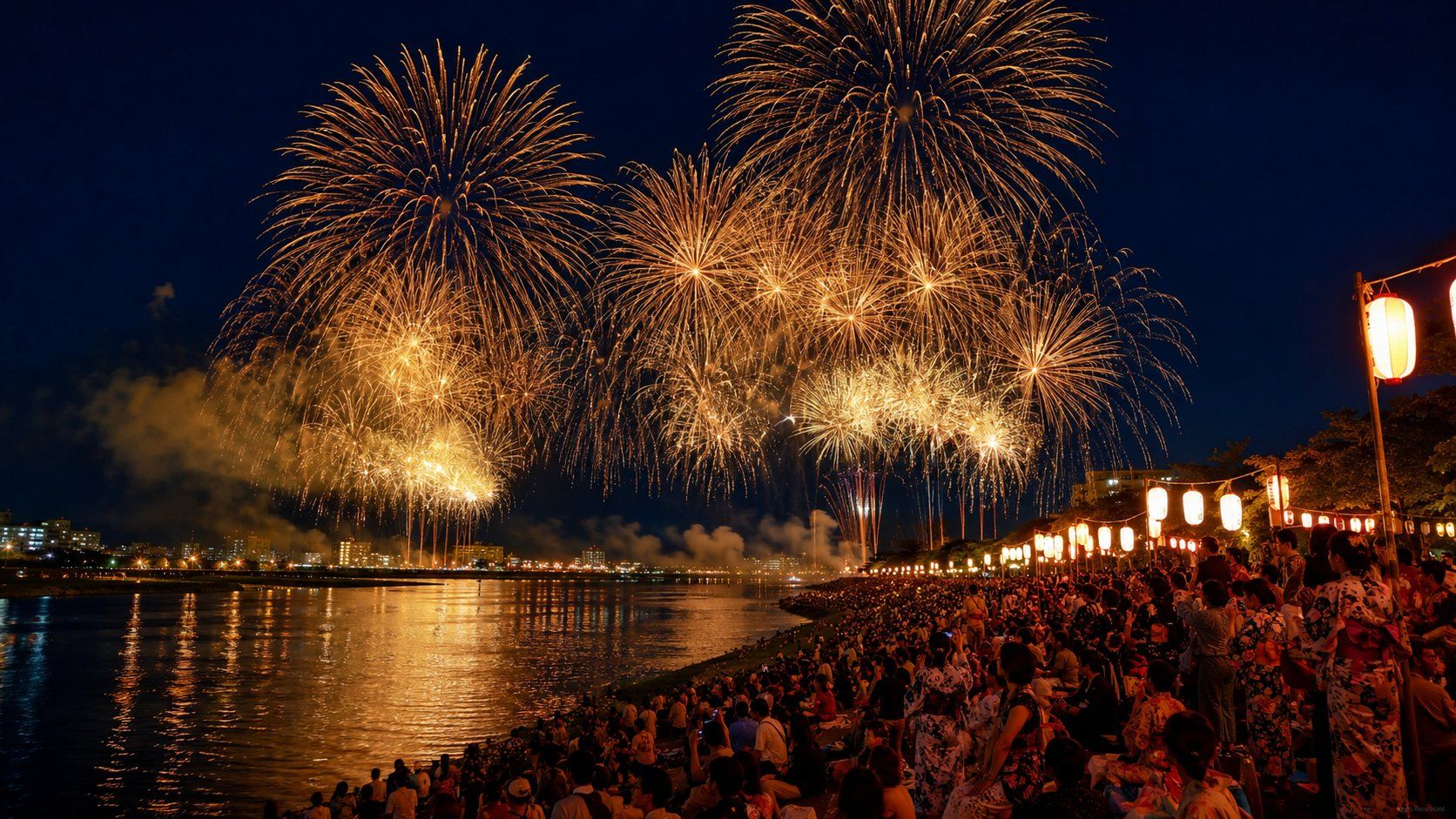
Tokyo's most iconic hanabi traces directly to the 1733 "Ryogoku Kawabiraki" — the world's longest-running urban fireworks tradition, and the source of the famous "Tamaya! Kagiya!" crowd shouts. About 20,000 shells launch from two venues along the Sumida between 19:00–20:30, drawing crowds near 1 million. Free riverbank viewing remains (Sumida Park, Asakusa side), and citizen-sponsor paid seats opened May 10 via TicketPay. Despite rumors, both venues are unchanged for 2026 — no relocation, no major format shake-up. Asakusa Station puts you 5–15 minutes from the action.
Nagaoka Fireworks (Aug 2–3) — the Phoenix returns
If you only see one out-of-Tokyo show, make it this. Born from the 1945 air-raid memorial, Nagaoka's signature Phoenix sequence (Ayaka Hirahara's "Jupiter" scored to a ~2km-wide cascade) doubles as a prayer for both the war dead and 2004 Chuetsu earthquake victims. The 2026 edition is the 120th anniversary of the city and the 100th of the Sho-Sanjakudama (90cm shell). Phoenix is confirmed both nights, now firing at 20:45 (30 minutes later than 2025 for crowd safety). Niagara Falls returns.
The bad news: Nagaoka eliminated free viewing in 2023, the 1st lottery sold out and the 2nd lottery was cancelled. The only path in is official resale via Ticket Plus Trade, July 6–20 — register your interest now. Shinkansen from Tokyo runs ~1h 40min.
Omagari National Competition (Aug 29) — the pyrotechnicians' Olympics
Japan's most prestigious fireworks competition, where pyrotechnic firms make, transport, and launch their own shells fighting for the Prime Minister's Award. Founded 1910. Four categories — daytime smoke-color (only daytime competition in Japan), 10-go warimono, 10-go jiyu-dama, and the Creative Fireworks category invented here in 1964. Day fireworks 17:10–18:00; night 19:00–21:30. The riverside is still free, but you need to be camping out by noon — most of the 600,000–800,000-strong crowd watches free.
Paid seats? First phase closed June 23; second phase TBD. The Akita Shinkansen from Tokyo runs ~3.5 hours, with late-night extras until midnight.
Tokyo Bay Grand Fireworks (Oct 24) — the 11-year return
The biggest news in Japanese hanabi this decade. Suspended after 2015 when the Harumi waterfront was rebuilt for the Olympic Athletes Village, the 28th edition finally returns as the centerpiece of Chuo-ku's 80th-anniversary celebration. About 12,000 shells (including the rare 1.5-shaku shaku-go-sun-dama) fire offshore Harumi Pier between 17:30–19:00 — note the unusual early start.
Two big shifts: it has moved from August to October to dodge summer thunderstorms, and it's 100% ticketed — all 21 viewing zones (Harumi, Toyosu, Ariake) require a seat. No sidewalk standing. Tickets ¥5,000–¥10,000 (SS ¥10,000); Chuo-ku resident priority sale starts early July, public sale opens later in July 2026. Expect an immediate sellout. Toei Oedo Line Kachidoki Station is your ~15-minute walk in.
We break this down zone-by-zone in our Tokyo fireworks 2026 deep dive.
Naniwa Yodogawa (Oct 17) — Osaka's big one, now in autumn
Osaka's signature hanabi — citizen-funded, 2,000 volunteers, ~20,000 shells, Umeda Sky Building backdrop — runs for the second straight year in October after shifting from August for Expo 2025. Bring layers. Critical 2026 warning: the north bank (Umeda/Nakatsu/Fukushima/Noda) is completely off-limits due to ongoing Hanshin Expressway reconstruction. South-bank free spots around Juso and Himejima are your only no-ticket option. Paid seats (¥5,000–¥28,000) open Aug 1 and always sell out same-day. Full Osaka strategy in our Osaka fireworks 2026 guide.
Still Gettable: Tickets Worth Pursuing Now
As of late June 2026, these are the realistic targets for travelers booking now:
- Atami Sea Hanabi — every single date, ~¥900 advance / ¥1,000 day-of at 7-Eleven multi-copy machines from June 1. The easiest entry point in Japan. Shinkansen from Tokyo, ~50 minutes.
- Edogawa Fireworks (Aug 1) — first-come general sale runs through July 28 via Rakuten Ticket. Range ¥2,000–¥26,000 across multiple zones, both Tokyo and Chiba banks.
- Aomori Nebuta Fireworks (Aug 7) — KKday offers English-language reserved seats from ¥2,600. Foreigner-friendly platform, easiest tier of any major regional event.
- Tenjin Matsuri Hono Hanabi (Jul 25) — first-come sales (j-lppf2.jp) since May 25, some zones still listed at ~¥6,000–¥25,000. New table seats added at the Sakuranomiya Floating Island Area for fireworks-only viewing.
- Yatsushiro National Competition (Oct 17) — Kyushu's "Big 3" competition. Pre-sale mid-July, general early August. New 2026 tiers include Premium SA ¥15,000 and Deluxe Table ¥35,000 (4-person).
- Lake Biwako Otsu (Aug 6) — lottery closed, but first-come premium pair plans (up to ¥120,000 at the Biwako Hotel rooftop) were still listed in late June. New for 2026: Ticplus app-only e-tickets.
The Free Viewing Reality in 2026
Here's the uncomfortable truth: the Edo-era "show up at the river" model is dying at the headliners.
Already 100% paid: Nagaoka (since 2023), Akagawa (since 2024), Kanmon Strait (since 2025), Jingu Gaien, and now Tokyo Bay Grand for its 2026 return. Naniwa Yodogawa's north-bank free zone is shuttered through construction. Itabashi's free zone moved upstream to the baseball field with capacity controls.
Where free viewing still genuinely works:
- Sumida River — Sumida Park and Asakusa banks, the iconic free-watch
- Omagari — Japan's top competition, free riverside (but camp out by noon)
- Lake Suwa (Aug 15) — ~500,000 watch from the lakeshore amphitheater free; mountain bass-shock acoustics are unmatched
- Atami — Sun Beach and the bay-shaped natural amphitheater
- Tenjin Matsuri — Okawa riverbanks with full festival atmosphere
- Edogawa — both Tokyo and Chiba (Ichikawa) banks
- Sendai Tanabata Eve (Aug 5) — rare "360-degree urban fireworks" from elevated city vantage points
- Aomori Nebuta — most of the bay outside paid sections (Aspam promenade, Aoi-Umi Park edges)
If you came to Japan for the traditional yukata-and-yatai free riverside vibe, prioritize Lake Suwa, Sumida, Tenjin Matsuri, or smaller regional events. The mega-headliners are pricing it out fast.
Regional Deep Dives
Tokyo — Sumida, Edogawa, Itabashi, Jingu Gaien, the Tokyo Bay Grand return, plus Kamakura/Yokohama day-trips. Full ticket strategy, zone-by-zone Tokyo Bay breakdown, and rooftop alternatives in our Tokyo fireworks 2026 guide.
Osaka & Kansai — Tenjin Matsuri's plum-blossom shells, Naniwa Yodogawa's autumn shift, Biwako Otsu's 40th-anniversary drone integration, the rebranded Minato Kobe HANABI 5-night October format. We cover what happened to PL Hanabi and Kyoto Hozugawa in our Osaka fireworks 2026 guide. If you're basing in Osaka, the Tennoji and Konohana neighborhoods make a quiet, affordable home base for Tenjin Matsuri (40 minutes by JR loop) and Naniwa Yodogawa alike.
For broader summer festival context, our Japan festival calendar maps fireworks alongside Obon dances, Tanabata, and Awa Odori.
What to Know If You're Going
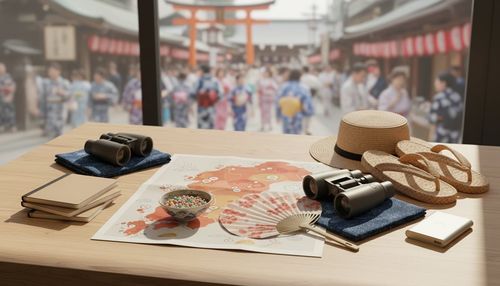
Yukata rental — most major host cities have walk-in shops (Asakusa, Shinsekai, Kawagoe). Book a morning slot — afternoon availability dies fast on festival days.
Arrival times — for the headliners, plan to be on-site 3–4 hours early. Sumida, Nagaoka, Naniwa Yodogawa free zones can fill by mid-afternoon. Omagari free riverside should be claimed by noon.
Food — yatai (food stalls) cluster at the access stations and along the river. Expect grilled squid (ikayaki), yakisoba, kakigori shaved ice, and ¥600–¥1,000 per item. Cash still rules at smaller stalls.
Post-event train chaos is the real boss fight. A 1-million-person crowd hitting one or two stations doesn't disperse for ~90 minutes. Tips: walk one or two stations away before boarding (e.g., Kuramae instead of Asakusa for Sumida; Kinomiya instead of Atami for Atami Sea Hanabi if you're heading to Ito); pre-charge your IC card; don't plan a Shinkansen connection within 90 minutes of show end unless you're at a paid premium-exit seat.
Rain policy varies wildly. Sumida cancels outright (no rain date), Nagaoka pushes ahead in light rain, Atami runs rain or shine, Gifu Nagaragawa postpones to Aug 22 if conditions are bad. Always check the morning of.
Cancellations and Format Changes to Know About
A handful of events historically on travel-guide lists are not running in 2026 — adjust expectations:
- PL Hanabi (Tondabayashi, Osaka) — likely 7th consecutive year without an event. PL Kyodan has not formally retired it but has not announced a 2026 restart. Do not plan around it.
- Kyoto Hozugawa Fireworks — officially cancelled "for various reasons." The 2025 cancellation (rain) is now a 2-year break with no replacement.
- Yokohama Sparkling Twilight — the name is retired. It's been replaced by Yokohama Night Flowers, 13 dates of brief 5-minute shows alternating between Shinko Pier and Osanbashi. The big multi-hour summer festival format is gone.
- Nagaragawa Chunichi Hanabi — merged into the Gifu Nagaragawa Hanabi Taikai (Aug 8) since 2023. No separate event exists.
- Minato Kobe Kaijo Hanabi — the legacy single-night event ended in 2023. The new "Minato Kobe HANABI" (Oct 19–23, 5 consecutive 20-minute shows from Meriken Park) is a different format.
- Adachi Fireworks — already held May 30 this year. The May shift introduced in 2024 to dodge summer storms is now permanent; pitch it for 2027.
For the broader summer matsuri picture beyond hanabi, see our summer festivals guide, and our month-specific roundups for July and August.
Japan fireworks in 2026 reward planning. The mega-events have gated up faster than most international guides have caught up to, but the calendar is rich, the autumn-shifted headliners are genuinely cooler and less crowded, and the free-viewing classics — Sumida, Lake Suwa, Omagari riverside, Atami's bay amphitheater — still deliver the experience that's been pulling visitors since the 1700s. Book early, arrive early, and don't underestimate the train ride home.