Japan Festivals in September 2026: Silver Week, Danjiri and the Harvest Moon
August 27, 2026
Japan's September 2026 festival calendar splits into three windows: a quiet start, a five-day Silver Week crush, then the moon festivals.
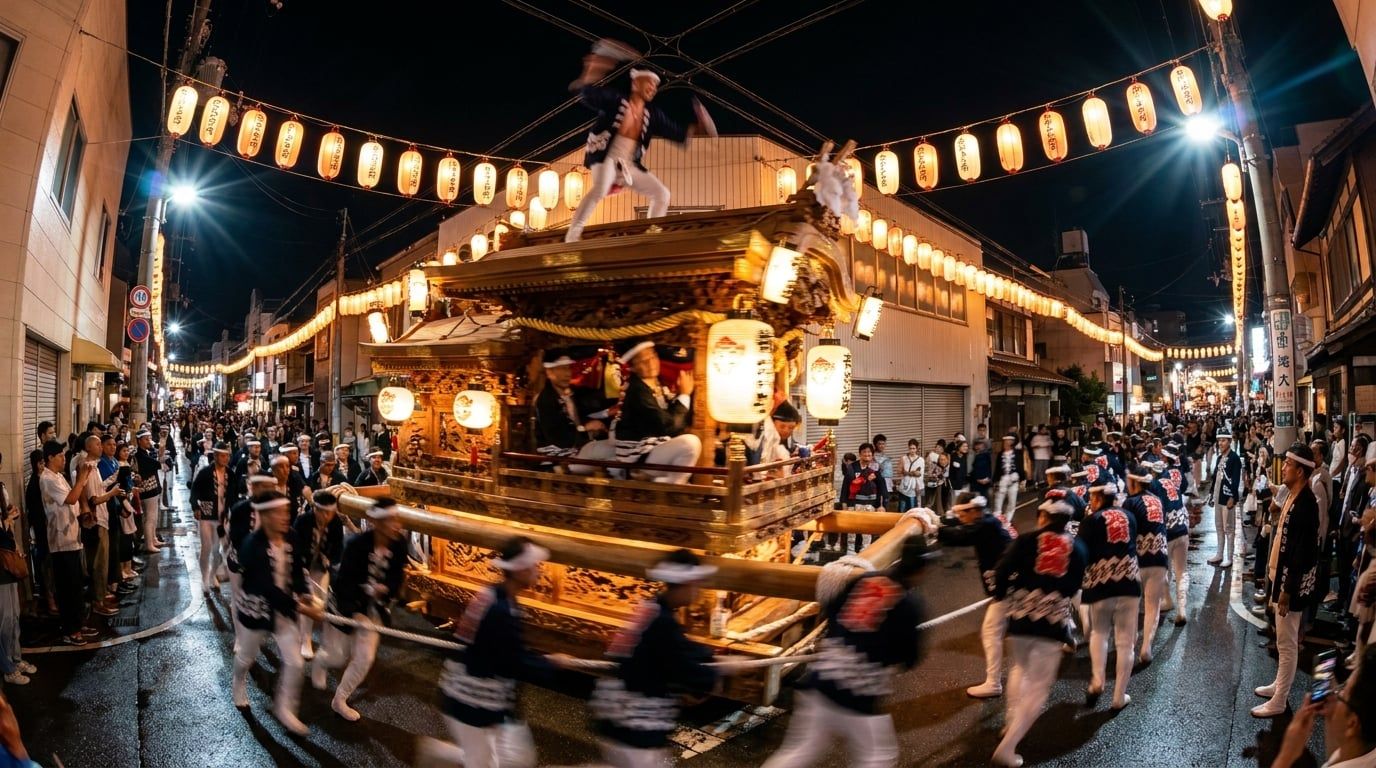 Image for illustrative purposes only.
Japan's September festivals in 2026 come with a complication. Every "best time to visit Japan" guide calls September the quiet, cheap shoulder month after August — and for 2026 that is out of date. September 19–23 is Silver Week, Japan's first five-day autumn holiday in 11 years, and the whole country moves at once. The crush is precisely dated, though, so you can plan around it.
September 2026 Festival Calendar at a Glance
| Dates | Festival | Location |
|---|---|---|
| Sept 1–3 | Owara Kaze no Bon | Yatsuo, Toyama |
| Sept 7–9 | Kakunodate Matsuri no Yama Gyōji | Akita |
| Sept 9 | Karasu Sumo (Chōyō Shinji) | Kamigamo Shrine, Kyoto |
| Sept 11 – Oct 3 | Sapporo Autumn Fest | Hokkaido |
| Sept 13–27 | Grand Sumo Autumn Basho | Ryōgoku, Tokyo |
| Sept 14–16 | Tsurugaoka Hachimangū Reitaisai | Kamakura |
| Sept 19–23 | SILVER WEEK (national holidays) | Nationwide |
| Sept 19–20 | Kishiwada Danjiri Matsuri | Osaka |
| Sept 19–21 | Aizu Matsuri | Fukushima |
| Sept 20–26 | Shitennōji Autumn Higan-e | Osaka |
| Sept 23 | Shitennōji Nissokan (17:20) | Osaka |
| Sept 25 | Chūshū no Meigetsu (harvest moon) | Nationwide |
| Sept 26–27 | Nezu Shrine Reitaisai | Tokyo |
| Sept 26–27 | Fukuro Matsuri (mikoshi) | Ikebukuro, Tokyo |
Coming from Japan festivals in August 2026? The full 2026 festival calendar has the year at a glance.
Why Does September 2026 Split Into Three Windows?
Japanese law creates a "Citizens' Holiday" for any working day sandwiched between two public holidays. With Respect for the Aged Day on Monday the 21st and the Autumnal Equinox on Wednesday the 23rd, Tuesday September 22 becomes a holiday out of thin air — five straight days off, the first such alignment since 2015.
- September 1–18 — genuinely quiet. Cheaper rooms, thinner crowds, four of the month's best festivals — the September you were promised.
- September 19–23 — Silver Week. Spectacular but expensive. Reserved seats vanish, expressways jam, and ryokan sell out months ahead.
- September 24–30 — quiet again. The crush clears Wednesday night, and the moon festivals land right after.
Owara Kaze no Bon — Toyama (September 1–3)
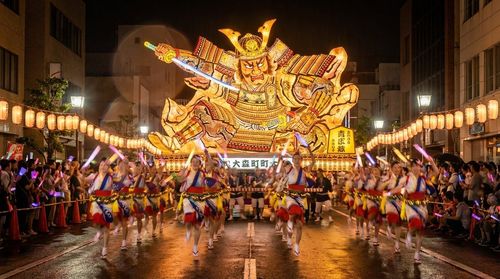
If you remember one festival from this list, make it this one. In the stone lanes of Yatsuo, dancers move in slow arcs beneath straw hats pulled so low their faces disappear, to the thin, mournful kokyū fiddle — no shouting, no taiko thunder, just lanterns and 200,000 people being unusually quiet. Dancing runs 17:00–23:00 on the 1st and 2nd, 19:00–23:00 on the 3rd; free, or ¥4,000 for a stage seat.
Getting there: Etchū-Yatsuo, 25 minutes from Toyama Station.
Kakunodate Matsuri no Yama Gyōji — Akita (September 7–9)
Eighteen neighbourhoods haul enormous wheeled floats through a preserved samurai district of streets barely wide enough for them. When two meet, representatives negotiate right of way — and when the talks fail, which is the entire point, the floats are driven into each other with a crack you feel in your chest. A version staged for visitors runs on the 8th from 18:00.
Getting there: Kakunodate, 3 hours from Tokyo on the Akita Shinkansen. Free.
Karasu Sumo — Kamigamo Shrine, Kyoto (September 9)
One of the genuinely odd ones, and all the better for it. Priests at Kyoto's oldest shrine perform a chrysanthemum rite, then hop sideways before two cones of raked white sand and caw like crows: "kā kā kā," answered by "kō kō kō." Children then wrestle sumo on a sand ring. Free, from 10:00, and a fraction of the usual Kyoto crowd.
Getting there: Kamigamo-jinja-mae bus stop.
Tsurugaoka Hachimangū Reitaisai — Kamakura (September 14–16)
Go for the final day: yabusame, horseback archery in the Kamakura style, riders in hunting dress galloping a 250-metre sand track and loosing arrows one-handed, reins dropped. Archery starts about 14:00. Unlike the spring event, the autumn yabusame has no paid grandstand — free, but confined to marked areas, so arrive early.
Getting there: Kamakura Station, 1 hour from Tokyo.
Silver Week 2026 — Nationwide (September 19–23)
Plan Silver Week 2026 like a festival, because it behaves like one: Japan's entire domestic travel system runs at capacity at once.
- Reserved shinkansen seats open exactly 30 days ahead — for September 19, around August 20. Book the minute the window opens.
- Unreserved cars are not a fallback. In a holiday of this class, unreserved means standing for hours.
- Ryokan and onsen towns sell out months ahead, especially Kyoto, Hakone, Nikkō, Hokkaido and Okinawa.
If your dates are fixed, do not fight for a seat — see the Osaka section below.
Kishiwada Danjiri Matsuri — Osaka (September 19–20)
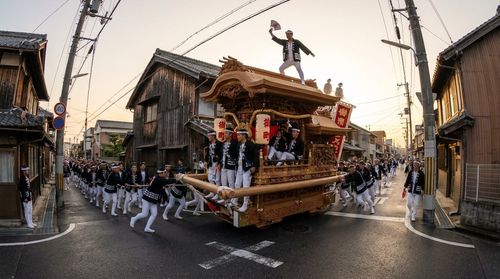
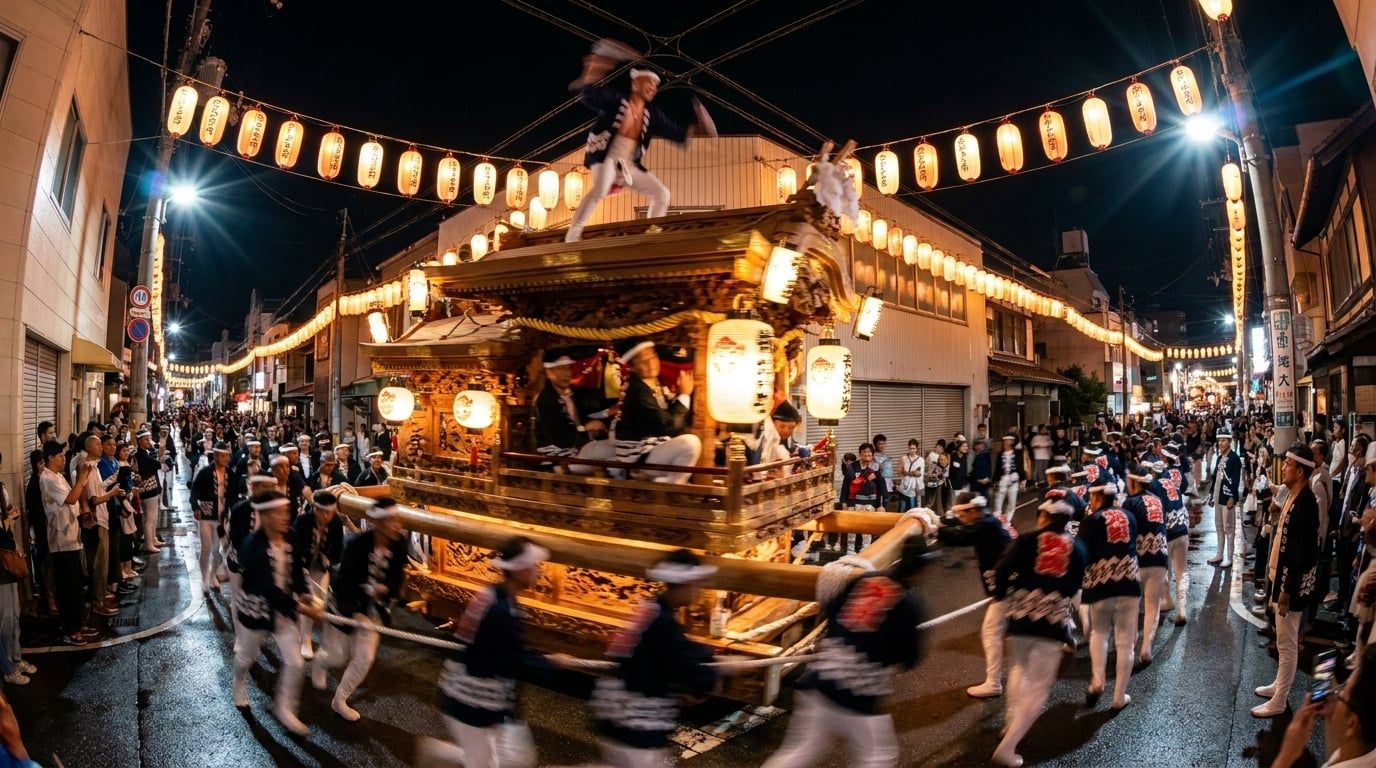
Teams of several hundred people sprint a four-ton wooden float around a 90-degree corner — no slowing, no wide arc — while a man dances on the roof. The manoeuvre is yarimawashi, and it is why Kishiwada is called Japan's most dangerous festival. Floats have overturned. The barriers are not decorative. Some 400,000–500,000 spectators pack the streets.
Yoimiya (the eve) runs 06:00–22:00, honmiya 09:00–22:00, and watching from the street costs nothing. Paid grandstand seats are usually sold for the best corners — check the official seller for what is available and what it costs. Which corner you pick and when you arrive decide whether you see anything — our Kishiwada Danjiri guide has the corner-by-corner breakdown and the timings locals use.
Getting there: Kishiwada Station, 25 minutes from Namba on the Nankai line. Missed the dates? The mountainside districts run theirs on October 10–11 — see Osaka Festivals 2026.
Aizu Matsuri — Fukushima (September 19–21)
The castle town of Aizu-Wakamatsu spends three days remembering its samurai past out loud. The centrepiece is the Aizu Hankō Gyōretsu on the middle day: some 600 costumed warriors leaving Tsuruga Castle at about 10:30 with armour, banners, matchlock guns and a slow drum.
Getting there: Aizu-Wakamatsu via Kōriyama. Free.
Shitennōji Higan-e and Nissokan — Osaka (September 20–26)
Higan is the week around each equinox when Buddhist tradition holds that this world and the Pure Land come closest, and Osaka's oldest temple opens its inner precinct and pagoda free on the 21st and 22nd.
The moment to catch is Nissokan on the 23rd at 17:20: monks and laypeople gather at the west stone torii and simply watch, because on the equinox the sun sets exactly through the gate, which faces due west toward the Pure Land. A 1,400-year-old sunset meditation that costs nothing, and almost no English guide mentions it. More in our Shitennōji guide.
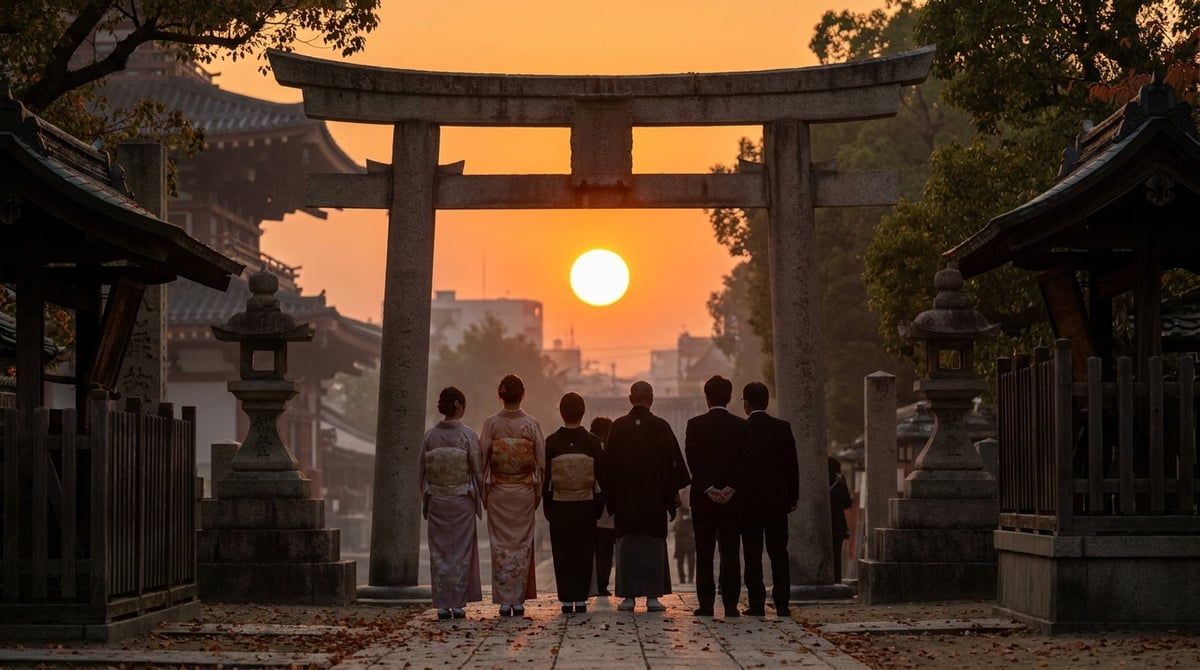 Image for illustrative purposes only.
Getting there: Shitennōji-mae Yūhigaoka Station, 5 minutes.
Chūshū no Meigetsu — Nationwide (September 25)
Here is the fact almost every travel blog gets wrong. Japan's harvest moon night falls on Friday September 25 in 2026 — but the astronomical full moon is September 27. Tsukimi follows the fifteenth day of the eighth lunar month, not the actual lunar phase, so the two drift apart most years. Nobody minds; the shrines hold their ceremonies on the 25th regardless.
- Sumiyoshi Taisha Kangetsusai (Osaka) — priests and poets chant waka verses from the arched Sorihashi bridge, followed by gagaku court music. Free; Hankai tram to Sumiyoshi-toriimae.
- Daikakuji Kangetsu no Yūbe (Kyoto, Sept 25–27) — moon-viewing boats on Ōsawa Pond in Arashiyama, gates from 17:30, queue thinning after about 19:30. Paid entry.
Also on the 25th: Shimogamo Jinja's free Kangen-sai in Kyoto, and Nara's Uneme Matsuri, where dragon- and phoenix-headed boats circle Sarusawa Pond.
Nezu Shrine Reitaisai — Tokyo (September 26–27)
Most years this is a pleasant neighbourhood festival in one of the last Edo-feeling corners of Tokyo. 2026 is not most years. The shrine has confirmed this is the once-every-four-years miya-mikoshi year — the great portable shrine itself comes out and is carried through the parish, not the district mikoshi alone. The Shinkōsai procession departs at 09:00 on the 27th, returning at 16:00 — then stay for the wooden houses and cat-heavy lanes of Yanesen.
The same weekend, Fukuro Matsuri fills Ikebukuro's west exit with mikoshi teams from across Toshima Ward — its dance half, Tokyo Yosakoi, is a separate October event.
Getting there: Nezu Station (Chiyoda Line). Both free.
September Festivals Without Confirmed 2026 Dates
Three autumn events move every year, and their 2026 dates were unpublished at the time of writing:
- Ōhara Hadaka Matsuri (Isumi, Chiba) — mikoshi carried into the sea by men in loincloths. Isumi City states only that it is typically held over two days around the autumn equinox, usually September 23–24.
- Kinchakuda Manjushage Festival (Hidaka, Saitama) — five million red spider lilies turning a river bend crimson. It typically runs from mid-September into early October.
- Shinagawa Shukuba Matsuri (Tokyo) — an Edo post-town festival with a costumed Oiran Dōchū procession, typically held on a weekend in late September.
And the yatai are cash-only. Stations and department stores take cards; festival food stalls almost never do.
Surviving September: Typhoons, Heat, and the Leaves That Haven't Turned
Typhoons are real but survivable. Two to three storms typically affect some part of Japan during the month, but each is regionally confined and disruption rarely lasts more than about three days. Build one flexible day into the itinerary, check event pages that morning, and keep a long-running event in reserve — Sapporo Autumn Fest runs 23 days.
It is still hot at the start. Tokyo, Kyoto and Osaka run 27–29°C in early September, easing to 21–25°C by month's end.
And no, the leaves have not turned. Honshu's koyo season is late October into November — September's autumn here is calendrical, not visual. Our foliage guide has the timing by region.
Planning Tips
Confirm every outdoor event within 24 hours of attending, and read our Japan festival tips for etiquette; Autumn Festivals in Japan covers October onward.
September is the month Japan changes gear: a lantern-lit lane in Toyama on the first, four tons of wood screaming around a corner in Osaka on the twentieth, the harvest moon on the twenty-fifth. Three Septembers, one month — and now you know which one you are booking.
Frequently Asked Questions
When is Silver Week 2026 in Japan?
Silver Week 2026 runs September 19–23 — Japan's first five-day Silver Week in 11 years. Respect for the Aged Day (the 21st) and the Autumnal Equinox (the 23rd) sit close enough that Tuesday the 22nd becomes an automatic "Citizens' Holiday."
What is the biggest festival in Japan in September?
Kishiwada Danjiri Matsuri in Osaka, September 19–20, 2026 — four-ton wooden floats sprinted around 90-degree corners in front of 400,000–500,000 spectators.
Is September a good time to visit Japan?
Yes, with one caveat. September 1–18 and 24–30 are quiet and well priced, with excellent festivals. September 19–23 is Silver Week, when domestic travel peaks and reserved seats and rooms sell out far ahead.
When is the Japanese moon festival in 2026?
Chūshū no Meigetsu, Japan's harvest moon night, is September 25, 2026. The astronomical full moon is actually September 27 — tsukimi follows the old lunar calendar, not the moon's true phase, so the two rarely coincide.
Where to Stay: Base Yourself in Osaka for Silver Week
Silver Week breaks long-distance travel, not local travel — so for September 19–25 the winning move is not to travel around but to pick one base and go deep. Osaka is the only city where a full Silver Week of festivals needs no long-distance transport.
From Osaka's Tennoji district: Kishiwada Danjiri is 25 minutes on the Nankai line, Shitennōji a walk from the station, Sumiyoshi Taisha a short tram ride, Nara 40 minutes, Kyoto 45. One hotel, five days, four festivals, no shinkansen. See the Tennoji Area Guide.