Autumn Festivals in Japan: Float Races, Historical Parades, and Harvest Celebrations
August 27, 2026
Autumn brings Japan's most dramatic festivals — Kishiwada's wild float races, Kyoto's historical parade, and harvest celebrations under red leaves.
Image for illustrative purposes only.
If spring in Japan is about beauty, autumn is about drama. As the heat of summer fades and fiery red and gold leaves take over the mountainsides, communities across the country stage some of their most intense and visually stunning festivals. Massive wooden floats careen around street corners at dangerous speeds, historical processions recreate a thousand years of history, and harvest celebrations fill shrine grounds with gratitude and celebration.
Here is your guide to the best autumn festivals in Japan — from September's adrenaline-charged danjiri to December's edge-of-winter night festivals.
September: The Season Opens with a Bang
Kishiwada Danjiri Matsuri — Mid-September, Osaka
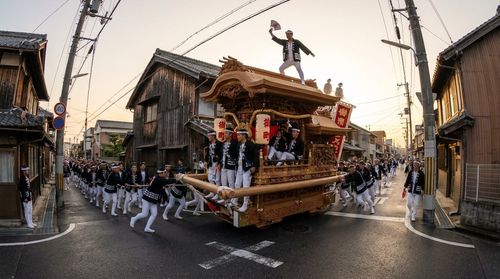
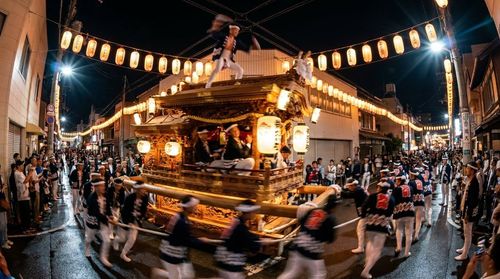
Nothing in Japan's festival calendar matches the pure adrenaline of Kishiwada's Danjiri Matsuri. Teams of hundreds of men pull massive four-ton wooden floats (danjiri) through narrow streets at full sprint. The most thrilling moment — yarimawashi — comes at each intersection, where the floats are whipped around corners at speed while a dancer balances on the roof, fanning the crowd into a frenzy. This festival has real danger and real injuries occur, which only adds to the electric atmosphere. The September festival (there is a smaller October edition too) draws over 500,000 spectators. Get to Kishiwada early and claim a corner spot for the best view. Our complete Kishiwada Danjiri guide has the 2026 dates and the corner-by-corner breakdown, and the September 2026 festival guide covers the Silver Week crowding that decides whether you can still get a room.
Kishuu Kunchi and Regional Harvest Festivals — Late September
Across the Kansai and Kyushu regions, smaller harvest festivals begin appearing at local shrines in late September. These are less famous but deeply authentic — a chance to see communities celebrating the rice harvest with kagura (sacred dance), taiko drumming, and food stalls serving freshly harvested seasonal produce.
October: The Heart of Autumn Festival Season
Takayama Autumn Festival — October 9-10, Gifu
Takayama holds two festivals each year, and the autumn edition at Sakurayama Hachimangu Shrine is every bit as spectacular as its spring counterpart. Eleven ornate yatai floats, recognized as UNESCO Intangible Cultural Heritage, are displayed in the crisp mountain air. Several feature karakuri mechanical puppet performances that have been perfected over centuries. On the evening of October 9, the floats are lit with hundreds of paper lanterns and paraded slowly through the old town — a scene of extraordinary beauty against the backdrop of autumn foliage.
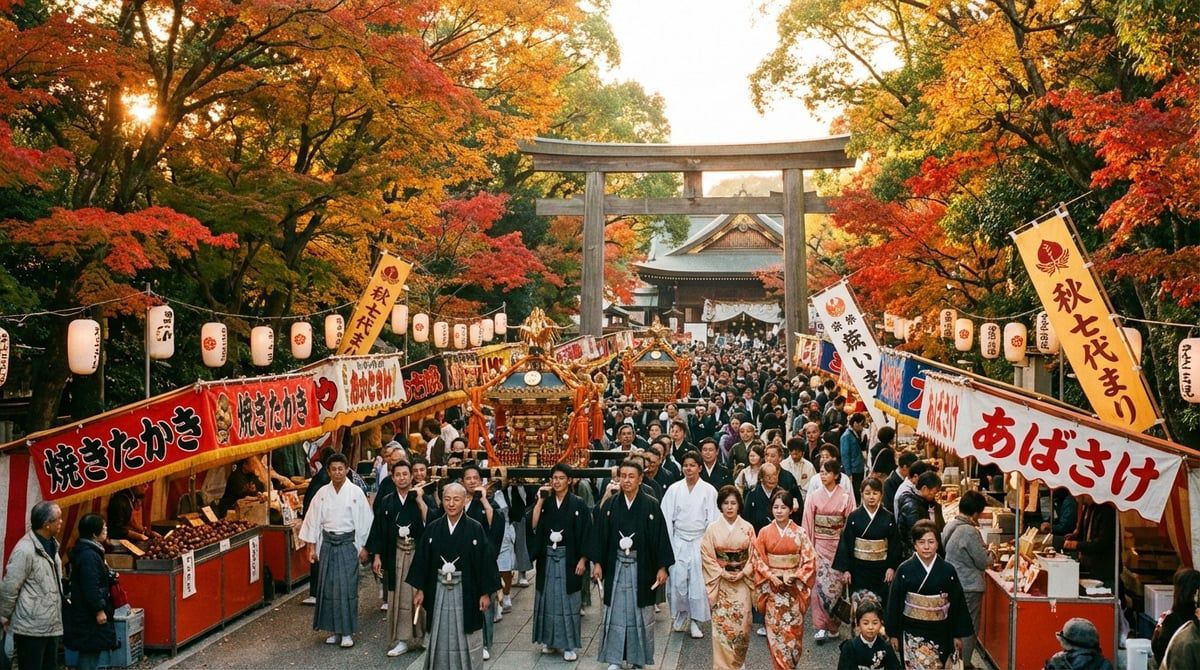 Image for illustrative purposes only.
Nagasaki Kunchi — October 7-9, Nagasaki
Nagasaki Kunchi reflects four centuries of international trade and cultural exchange. Held at Suwa Shrine, the festival features performances influenced by Chinese and Dutch culture — dragon dances, ornate boats carried through the streets, and energetic presentations by different neighborhood groups (each neighborhood performs only once every seven years, making each edition unique). The fusion of Japanese, Chinese, and Western elements makes this unlike any other matsuri in the country.
Jidai Matsuri — October 22, Kyoto
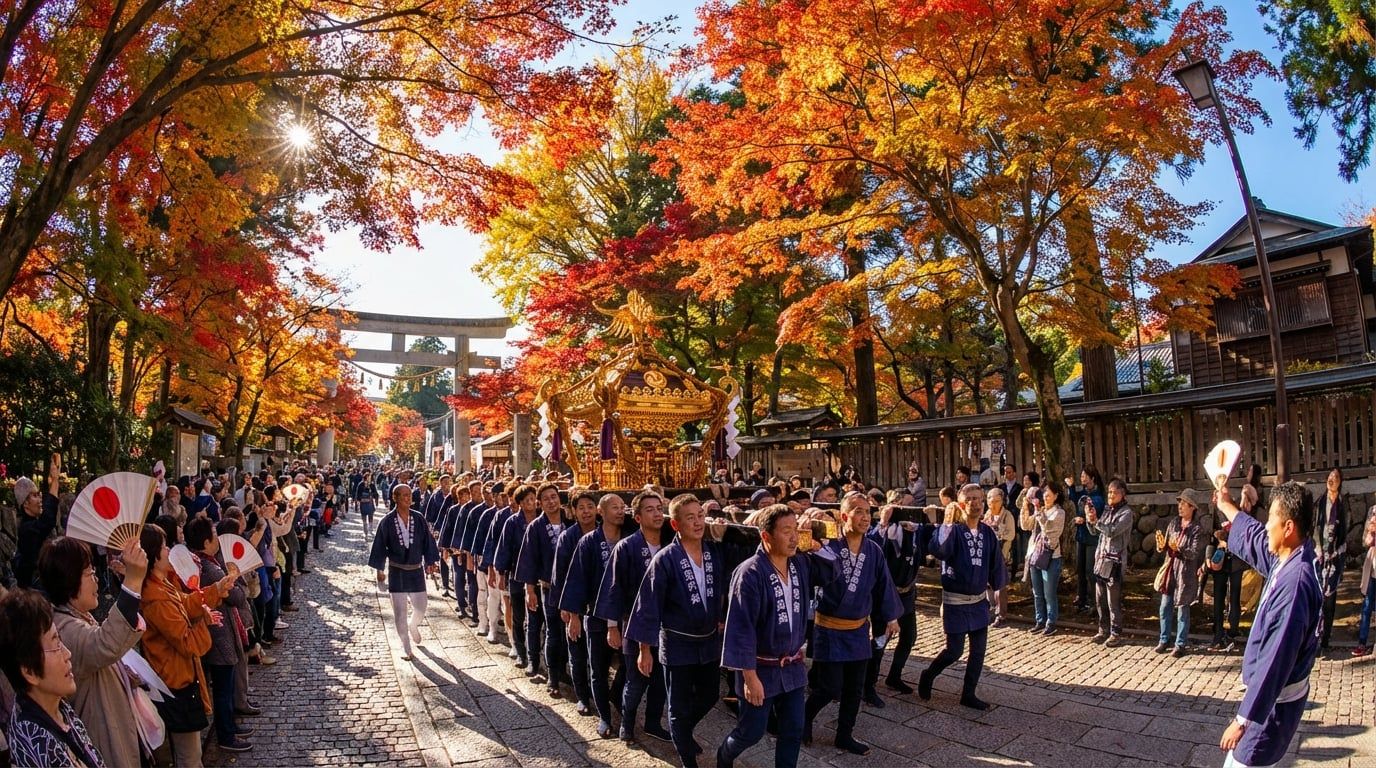
Jidai Matsuri (Festival of the Ages) is a living history textbook. A procession of roughly 2,000 participants dressed in historically accurate costumes walks from the Imperial Palace to Heian Shrine, representing every major era of Kyoto's history — from the Meiji Restoration all the way back to the Heian period (794 AD). Each group's costumes, weapons, and accessories have been painstakingly researched and recreated. It is one of Kyoto's three great festivals and falls on the anniversary of the city's founding. The procession takes about two hours to pass any given point.
Nagoya Festival — Mid-October, Aichi
Nagoya's main autumn festival features a grand parade with elaborate floats and participants dressed as the city's three great samurai heroes — Oda Nobunaga, Toyotomi Hideyoshi, and Tokugawa Ieyasu. The parade runs along a central boulevard, and the surrounding Hisaya Odori Park fills with food stalls, performance stages, and craft markets. It is a great way to experience Nagoya's pride in its warrior heritage.
November: Late Autumn Traditions
Karatsu Kunchi — November 2-4, Saga
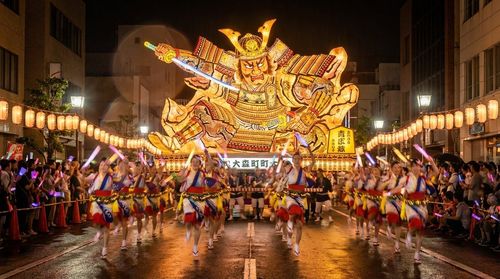
Karatsu Kunchi features 14 massive hikiyama floats shaped like samurai helmets, sea bream, lions, dragons, and other dramatic figures — each built over 100 years ago using layered lacquer and gold leaf. The floats are pulled through the streets and across the sandy beach at Nishi-no-Hama, where the contrast of brightly colored floats against sand and sea is unforgettable. This is a National Important Intangible Folk Cultural Property and draws large crowds despite Karatsu being a smaller city.
Autumn Foliage Illuminations — November, Nationwide
Throughout November, temples, gardens, and parks across Japan stage special nighttime illuminations of autumn leaves. Kyoto's Eikando and Tofuku-ji temples are legendary for their fiery maple displays. In Tokyo, Rikugien Garden and Meiji Jingu Gaien's ginkgo avenue turn brilliant gold. These are not festivals in the traditional sense, but they are essential autumn experiences that pair beautifully with daytime festival visits.
Early December: The Grand Finale
Chichibu Night Festival — December 2-3, Saitama
Technically the first days of winter, Chichibu Night Festival is the dramatic final act of the autumn festival season. Six massive floats — some weighing up to 20 tons — are hauled up a steep hill to the sound of taiko drums and festival chanting, all beneath a spectacular fireworks display. It is one of Japan's three great float festivals and a UNESCO Intangible Cultural Heritage event. The combination of fire, fireworks, and the raw effort of pulling enormous floats uphill in the cold December air creates an atmosphere unlike anything else. The festival is about two hours from Tokyo by train, making it an easy day trip.
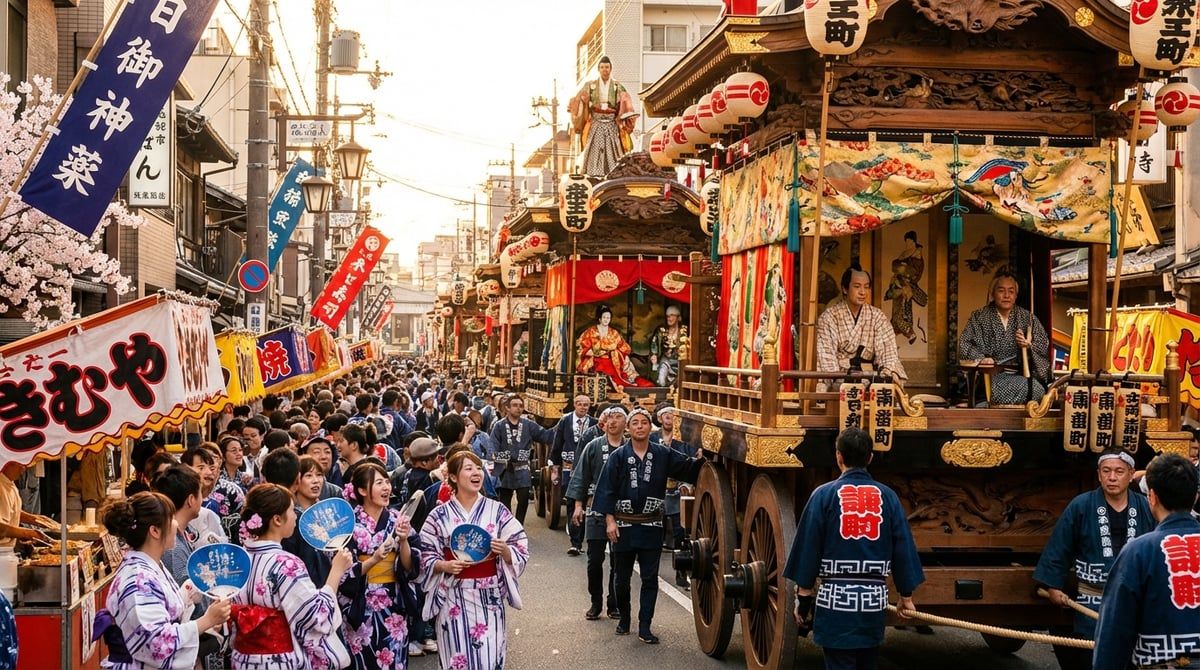 Image for illustrative purposes only.
Practical Tips for Autumn Festivals
Weather: Autumn weather is generally pleasant — warm days and cool evenings from September through November. December festivals like Chichibu require warm layers. A light jacket is essential for evening events.
Foliage timing: Peak autumn colors vary by latitude and altitude. Typically mid-October in Hokkaido, mid-November in Tokyo and Kyoto, and late November in Kyushu. Time your trip to catch both festivals and fall colors.
Crowds: October is peak tourism season. Book accommodation well in advance, especially for Kyoto around Jidai Matsuri and anywhere during autumn foliage weekends.
Getting there: Most autumn festivals are accessible by train. Kishiwada is 20 minutes from central Osaka on the Nankai line. Takayama requires a longer journey but is well worth the effort. Chichibu is reachable via the Seibu line from Ikebukuro.
Food: Autumn festival stalls feature seasonal treats — roasted sweet potatoes (yaki-imo), chestnut sweets, and mushroom dishes alongside the usual matsuri favorites.
Plan Your Autumn Festival Trip
Autumn is one of the most rewarding times to visit Japan. The combination of comfortable weather, stunning foliage, and a packed festival calendar makes September through early December ideal for cultural travel. Check our Japan festival calendar for exact dates and browse the 2026 festival schedule for this year's updates. From the raw power of Kishiwada's danjiri to the refined beauty of Kyoto's Jidai Matsuri, autumn in Japan delivers unforgettable experiences at every turn.
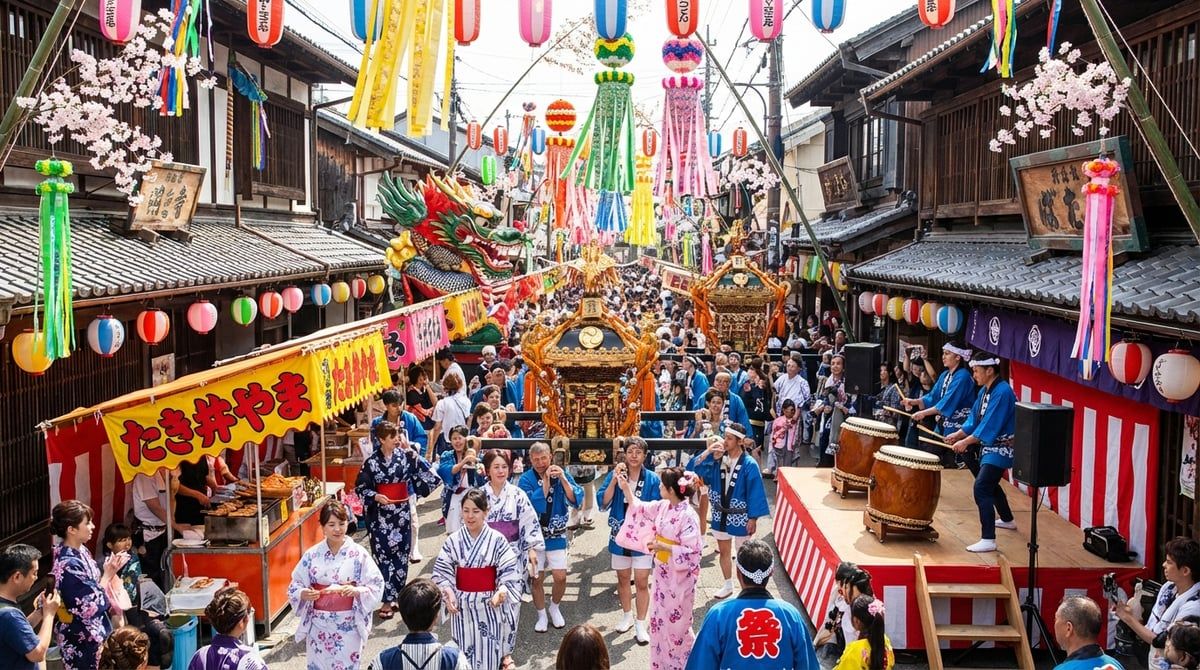 Image for illustrative purposes only.
Frequently Asked Questions
When is autumn festival season in Japan?
Autumn festival season in Japan runs from September through early December. October is considered the heart of the season, with many major festivals taking place.
What makes the Kishiwada Danjiri Matsuri unique?
The Kishiwada Danjiri Matsuri in Osaka is known for its pure adrenaline, with teams pulling massive four-ton wooden floats (danjiri) through narrow streets at full sprint. The thrilling "yarimawashi" involves whipping floats around corners at high speed while a dancer balances on the roof.
Which autumn festivals in Japan showcase historical parades?
The Jidai Matsuri in Kyoto features a living history textbook procession with 2,000 participants in historically accurate costumes representing different eras. Nagoya Festival also includes a grand parade with participants dressed as samurai heroes like Oda Nobunaga and Tokugawa Ieyasu.
Can I see autumn foliage illuminations during the festival season?
Yes, throughout November, temples, gardens, and parks across Japan stage special nighttime illuminations of autumn leaves. These are essential autumn experiences that pair beautifully with daytime festival visits.
What kind of food can I expect at autumn festivals in Japan?
Autumn festival stalls feature seasonal treats such as roasted sweet potatoes (yaki-imo), chestnut sweets, and mushroom dishes. You can also find the usual matsuri favorites.
What is the Chichibu Night Festival?
The Chichibu Night Festival, held in early December, is the dramatic final act of the autumn festival season, featuring six massive floats hauled up a steep hill. This UNESCO Intangible Cultural Heritage event is accompanied by taiko drums, chanting, and a spectacular fireworks display.
Explore More Festival Guides
Continue your Japan festival journey with these related guides: