Your complete guide to Japan's autumn foliage season — best spots, timing by region, seasonal foods, and practical tips for chasing koyo.
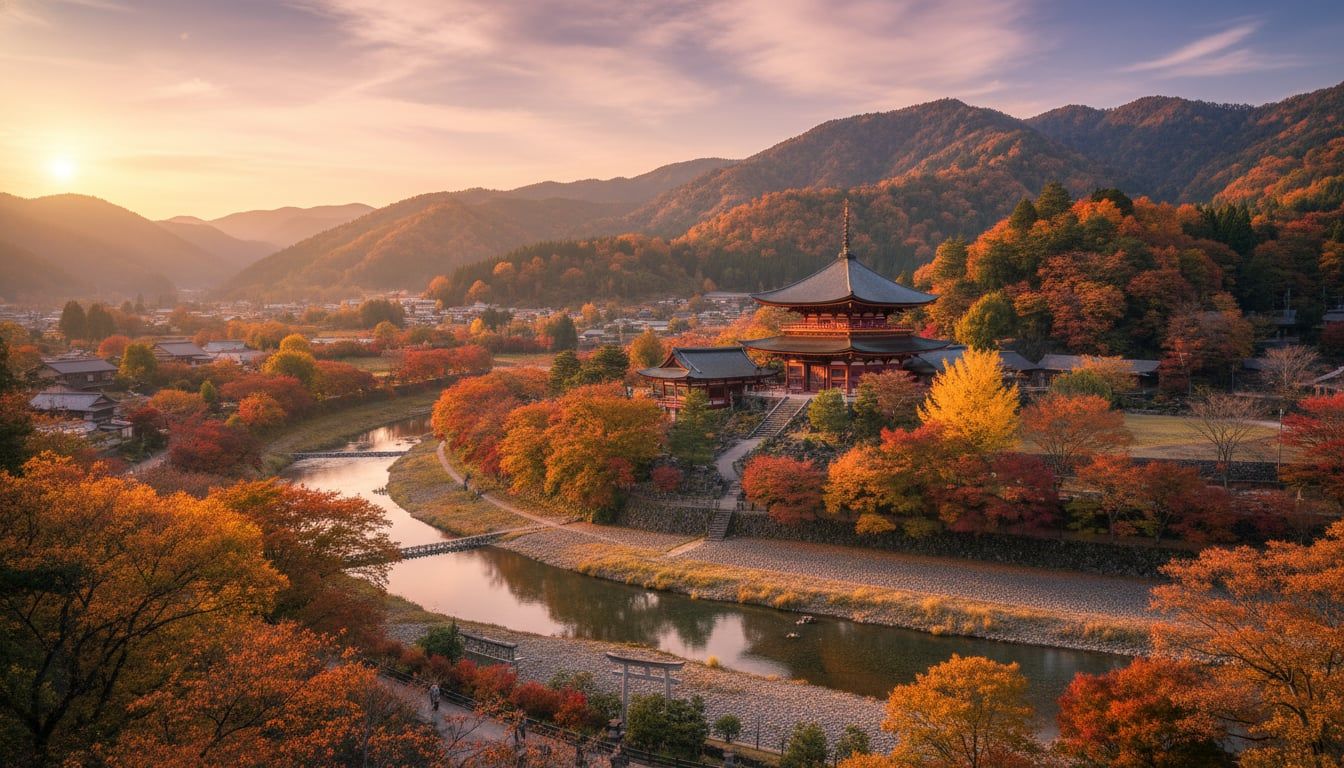
There is a particular kind of quiet excitement that settles over Japan each autumn. Temples that spend most of the year in calm obscurity suddenly become destinations. Mountain roads fill with visitors craning their necks upward. Cafe windows overflow with steam. And across the whole country, the hillsides, parks, and city streets begin to burn with shades of red, orange, and gold.
This is koyo season — Japan's autumn foliage period — and it is one of the most rewarding times of year to travel here.
What Is Koyo?
Koyo (紅葉) literally means "red leaves," and it refers to the seasonal change in leaf color that sweeps across Japan from late September through December. The word is sometimes written as momiji when referring specifically to Japanese maple trees, which produce the iconic deep crimson leaves you will see in countless temple garden photographs. Alongside the maples, the ginkgo tree — known in Japanese as icho — turns a vivid, almost electric yellow and is responsible for some of the most dramatic street-level foliage scenes in the country.
Both trees have been planted deliberately around shrines, temples, and parks for centuries, which is why so many of Japan's most beautiful historical sites also happen to be stunning autumn foliage destinations. This is not a coincidence. Japanese garden designers understood that seasonal transformation was part of the aesthetic, and they planned accordingly.
When Does Koyo Happen?
The foliage front moves from north to south and from higher elevations to lower ones, meaning the season stretches across several months nationwide. Here is a rough regional guide:
Hokkaido is first. Color changes begin in the mountains of Daisetsuzan National Park as early as late September, with lower areas like Sapporo following in mid-October. If you want to see Japan's foliage before the crowds arrive at the famous Kyoto spots, Hokkaido offers a genuinely spectacular and less-visited alternative.
Tohoku follows through October. The lake district around Towada-Hachimantai and the valleys of Yamagata and Fukushima produce some of the most dramatic foliage in the country, often with mist-shrouded mountains as a backdrop.
Tokyo and central Honshu typically peak in mid to late November. City parks, shrine precincts, and the mountains on the outskirts of the capital all put on a strong showing, and the urban context — red maples framing a skyscraper, golden ginkgo leaves carpeting a boulevard — gives the experience a different flavor from the countryside.
Osaka, Nara, and Kobe follow shortly after Tokyo, usually in the second half of November.
Kyoto tends to peak in late November, sometimes stretching into early December. This timing, combined with the city's extraordinary concentration of historic temples and gardens, makes Kyoto the most visited koyo destination in Japan — which means you need to plan carefully if you want to enjoy it.
Keep in mind that exact timing shifts by a week or two depending on the year's temperatures. A warm autumn delays the color change; an early cold snap accelerates it. Always check the latest koyo forecasts, which major Japanese weather services and tourism apps publish from September onward.
Best Spots in Osaka
Osaka is not the first city people think of for autumn foliage, but it has some genuinely excellent spots that are far less crowded than their Kyoto counterparts.
Minoo Park (Mino Park) is the standout. Located about 30 minutes north of central Osaka by train, the park follows a river gorge up to a waterfall through a dense canopy of maples. In peak season, the path from the station to the waterfall becomes a tunnel of red and orange. It is one of the most accessible and satisfying koyo walks in western Japan, and you can combine it with a visit to the small temple at the top.
Osaka Castle Park surrounds the famous donjon with a generous spread of maples and ginkgo trees. The contrast of the brilliant white-walled castle against autumn color is particularly photogenic, and because the park is large, it absorbs the crowds more comfortably than a temple garden would.
Best Spots in Kyoto
Kyoto has more world-class koyo sites than can reasonably be covered in a single visit. These three are consistently among the best.
Tofukuji is probably the most famous single koyo destination in all of Japan. The Tsuten Bridge spans a valley filled with hundreds of maple trees, and in peak season the view from the bridge is almost impossibly beautiful. Come early — the gates open at 8:30 a.m. — because the queues grow long by mid-morning.
Eikando (Zenrinji Temple) is known for its night illumination events, which transform the garden's pond and surrounding maples into something otherworldly. The reflection of crimson leaves on dark water, lit by soft lanterns, is an image that stays with you. Ticket lines can be long in the evening, so arrive before the illumination period begins.
Arashiyama is a full district rather than a single spot, and it rewards a half-day of wandering. The hillsides above Tenryuji Temple and along the approach to Jojakko-ji are richly colored in autumn, and the bamboo grove takes on a different mood when surrounded by seasonal foliage. The area is popular, but its scale means you can escape the main path and find quieter corners.
Best Spots in Tokyo
Meiji Jingu Gaien's ginkgo avenue is one of Tokyo's most famous autumn sights: a straight boulevard lined with around 150 ginkgo trees that turn brilliant yellow simultaneously, creating a golden canopy over the pedestrian path. It is worth visiting on a weekday if you can, as weekends bring significant crowds. Note that the area surrounding the avenue is under ongoing redevelopment, so confirm the viewing situation before you go.
Rikugien Garden in Bunkyo ward is a classic stroll garden with a central pond and an ancient weeping cherry tree that doubles as a spectacular autumn maple display. The garden holds ticketed night illumination events during peak season, and the atmosphere inside — lantern-lit paths, still water, rustling leaves — is very different from the daytime experience.
Night Viewing: Lightup Events
Many temples, gardens, and parks across Japan hold special lightup events during koyo season, extending viewing hours into the evening and illuminating the foliage with carefully positioned lights. Beyond Eikando and Rikugien mentioned above, notable lightup events include Kiyomizudera in Kyoto, Korankei in Aichi Prefecture, and Shinjuku Gyoen in Tokyo. These events are ticketed and sell out quickly — book online as soon as dates are announced.
Combining Koyo with Onsen
One of the most satisfying ways to experience autumn in Japan is to combine a foliage hike with a hot spring soak afterward. The mountains where koyo peaks earliest are also prime onsen country: the Tohoku region, the Japanese Alps, Nikko, and the Kiso Valley all offer ryokan and public bathhouses where you can warm up after a day in the crisp autumn air. Sitting in an outdoor rotenburo bath while watching maple leaves drift down is a distinctly Japanese pleasure that is hard to replicate anywhere else.
Autumn Foods to Try
Koyo season overlaps with some of Japan's finest seasonal ingredients.
Sanma (Pacific saury) is a long, slender fish that appears on menus from late summer through autumn and is typically grilled whole over charcoal. Its rich, slightly oily flesh is a perfect match for the cooling weather, and it is served with grated daikon and soy sauce at restaurants ranging from high-end kaiseki to neighborhood teishoku diners.
Kuri (chestnuts) appear in everything from simple roasted street snacks to elaborate wagashi sweets. Mont Blanc — a French-origin chestnut cream cake that Japan has thoroughly adopted — is everywhere in autumn, and Japanese versions tend to use domestic kuri with a purity of flavor that is quite different from the European original.
Sweet potato (satsumaimo) is another autumn staple. Roasted sweet potato vendors with their wood-burning carts still appear in some neighborhoods, and the ingredient shows up in soups, tempura, and a surprisingly wide range of desserts and pastries.
Matsutake mushrooms are the luxury item of the season — intensely aromatic, deeply seasonal, and expensive. Even a small portion of matsutake gohan (rice cooked with the mushroom) communicates the full depth of the flavor, and eating it in a mountain inn during foliage season is one of those meals you remember for years.
Practical Tips
Check forecasts regularly. Japan's meteorological agencies and major travel sites publish weekly koyo forecast maps from October onward. Timing your visit to within a few days of peak color makes an enormous difference.
Book accommodation early. Kyoto in particular fills up completely during peak koyo weekends in November. If you have flexibility, visiting during the week reduces both crowds and prices. Staying slightly outside the center — in Fushimi, Otsu, or Nara — and commuting in for the day is a practical alternative.
Go early in the morning. The first hour after opening is consistently the best time at popular sites. Light is better, air is cleaner, and you will have more space to move and to take photographs without negotiating around other people.
Layer your clothing. Autumn mornings in Japan can be cold enough for a jacket, but afternoons often warm up enough that you will want to shed a layer. Comfortable walking shoes matter — the best foliage spots often involve uneven stone paths, hillside trails, or long garden circuits.
Combine regions strategically. Because the foliage front moves gradually south, a trip that starts in Tohoku in mid-October and ends in Kyoto in late November can catch near-peak color at every stop. This kind of staged itinerary takes planning but rewards it generously.
Autumn in Japan is a season that asks for a certain attentiveness — to timing, to weather, to the specific quality of light on a particular afternoon. When it all comes together, there is nowhere quite like it.
Frequently Asked Questions
What is koyo?
Koyo (紅葉) literally means "red leaves" and refers to the seasonal change in leaf color that sweeps across Japan from late September through December. It primarily features the deep crimson leaves of Japanese maple trees (momiji) and the vivid yellow of ginkgo trees (icho).
When is the best time to see autumn foliage in Japan?
The koyo front moves from north to south and from higher to lower elevations, generally spanning from late September to early December. Hokkaido sees colors as early as late September, while Kyoto typically peaks in late November, sometimes stretching into early December. Exact timing can shift by a week or two depending on the year's temperatures.
Where are the best places to see koyo in Kyoto?
Kyoto offers numerous world-class koyo sites, including Tofukuji, famous for its valley filled with hundreds of maple trees viewed from Tsuten Bridge, and Eikando (Zenrinji Temple), known for its stunning night illumination events. The Arashiyama district also provides beautiful hillside foliage and a unique atmosphere around its bamboo grove.
Are there any good autumn foliage spots in Tokyo?
Yes, Tokyo has excellent koyo spots like Meiji Jingu Gaien's ginkgo avenue, which forms a brilliant golden canopy over the pedestrian path. Rikugien Garden is another classic stroll garden with a spectacular autumn maple display and holds ticketed night illumination events.
Can I see autumn foliage at night in Japan?
Many temples, gardens, and parks across Japan hold special lightup events during koyo season, extending viewing hours into the evening and illuminating the foliage. Notable lightup events include Eikando and Kiyomizudera in Kyoto, Rikugien Garden and Shinjuku Gyoen in Tokyo, and Korankei in Aichi Prefecture.
What are some autumn foods to try during koyo season?
Koyo season overlaps with some of Japan's finest seasonal ingredients, such as sanma (Pacific saury), a long, slender fish typically grilled whole over charcoal. Kuri (chestnuts) also appear in everything from simple roasted street snacks to elaborate wagashi sweets and Mont Blanc cakes.