Japanese Public Baths (Sento): A First-Timer's Guide to Going Naked With Strangers
June 26, 2026
Tokyo sento etiquette decoded — the ¥550 public bath ritual every traveler walks past. The 7-step playbook, tattoo policy, and 5 venues that welcome first-timers.
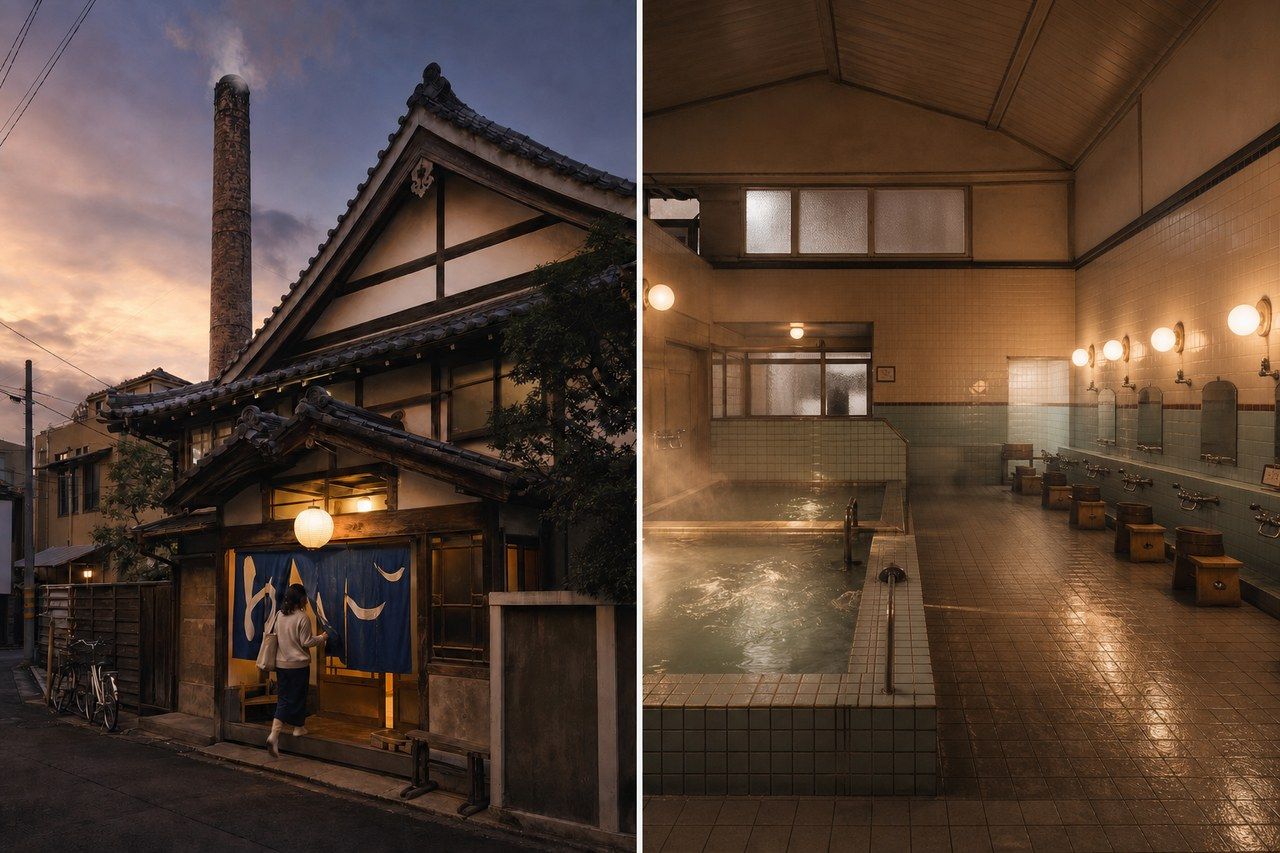 Image for illustrative purposes only.
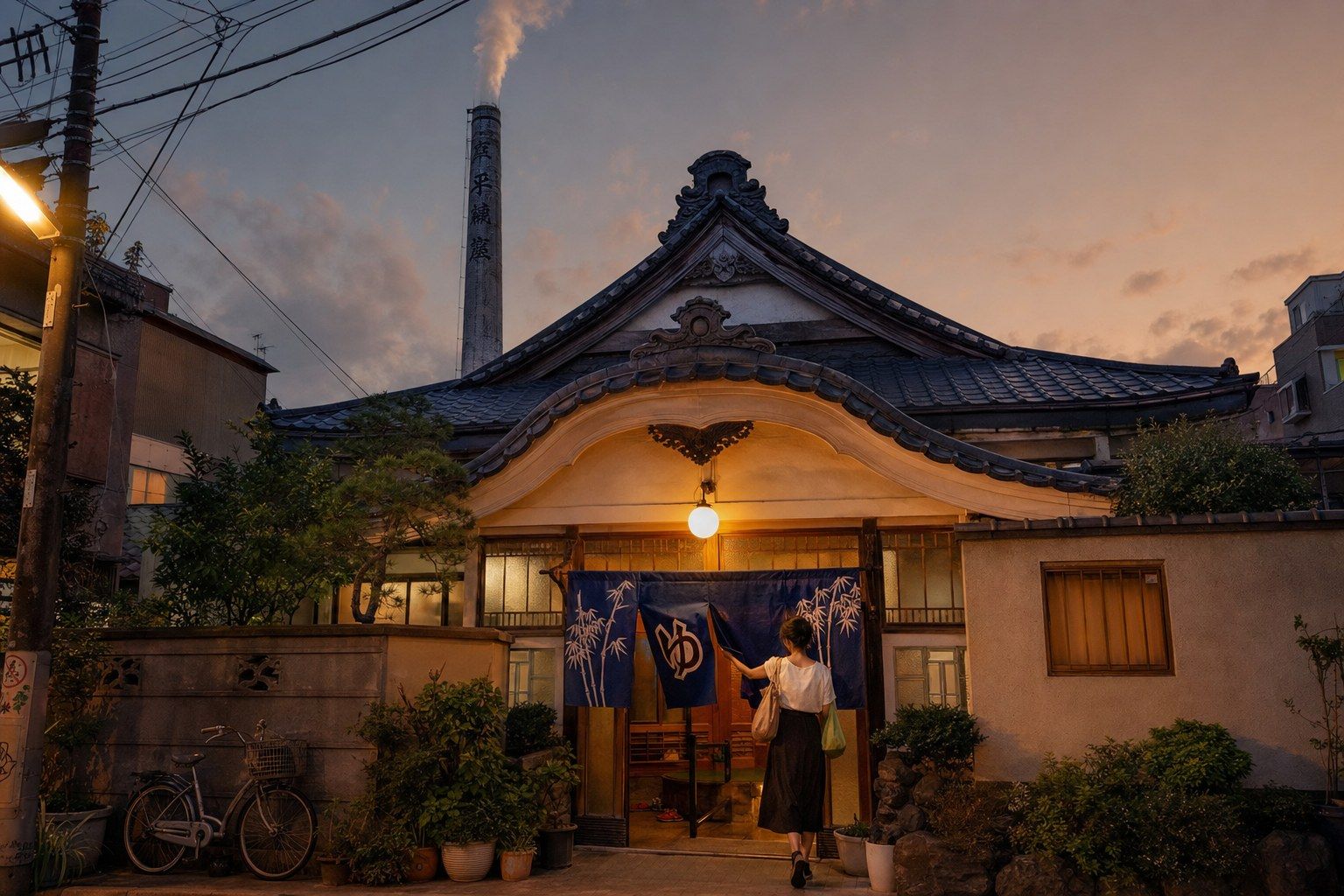
You've walked past dozens of them. Tall brick chimney. A short curtain printed with the kanji 湯 (yu, hot water). Old men in sandals coming out with damp hair and a strange calm on their faces. You've thought, "I'd love to go in… but I'd have to be completely naked, in front of strangers, in a country where I don't know the rules."
So you kept walking.
Here is the truth nobody puts on the tourism posters: a sento is the cheapest, oldest, most accidentally therapeutic thing you can do in Tokyo. It costs ¥550 (about $3.50). Almost nobody looks at you. The rules feel impenetrable from outside and turn out to be a 7-step checklist you can memorize on the train ride over. And after about ten minutes, you stop caring that you're naked, because the dizzy, salty, slightly-too-hot Japanese tap water has reset your nervous system in a way no spa membership ever has.
This is the guide we wish we'd had on our first visit.
What Exactly Is a Sento (And Why It's Not an Onsen)?
A sento (銭湯) is a neighborhood public bath. Plain, heated tap water. Regulated by Japan's Public Bath House Act, which is why the price in Tokyo is locked at ¥550 by the Tokyo Metropolitan Government (as of August 2024). Show up with a ¥1,000 bill and you get change.
An onsen (温泉) is a hot spring — naturally heated mineral water from underground, at least 25°C at the source, governed by the Hot Springs Act. Onsen are usually attached to ryokan, resorts, or destination towns. They cost ¥800–¥3,000.
A "super sento" is a hybrid leisure complex with restaurants, massage chairs, manga lounges, and 6–10 different baths. ¥2,000–¥3,500. Fun, but it's the bathhouse equivalent of an airport shopping mall. (If you're staying in Osaka instead of Tokyo, Tennoji's Spa World is the super-sento intro option — eight floors of themed baths, ten-minute walk from JR Tennoji.)
The thing locals do after work, the thing with the chimney and the murals and the ¥550 price tag — that's what we're talking about today.
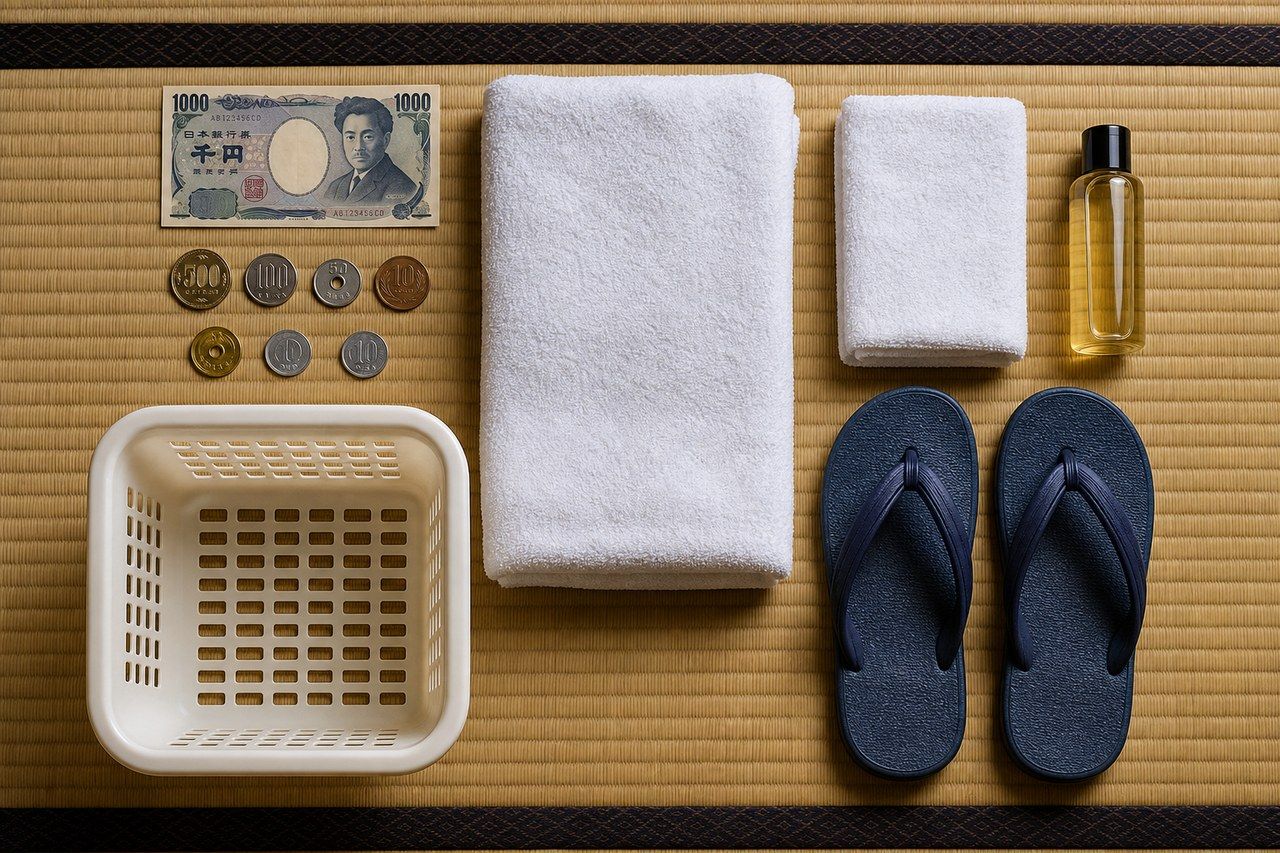 Image for illustrative purposes only.
Why Am I Going to Be Fine Being Naked?
We're going to address the elephant in the changing room. The fear is real. It's also wrong.
Here's what actually happens. You walk into the changing room. You see other people doing what you're about to do. Within sixty seconds — and we are not exaggerating — your brain reclassifies the situation. The Tokyo Weekender said it bluntly: "literally no one is looking at you… within the first ten minutes your anxiety will evaporate."
A sento is desexualized space. Mothers bring kids. Office workers come straight from the train. A grandpa is reading a paperback at the edge of the bath. It has the social temperature of a doctor's waiting room, with steam.
The one thing that would embarrass you — wearing a swimsuit "to feel safer" — is the one thing actually forbidden. Swimwear traps soap and bacteria and breaks the no-contamination rule. There's no compromise option here. You're either in, fully, or you're walking past it again.
How Do I Actually Do This? The 7-Step First-Timer Playbook
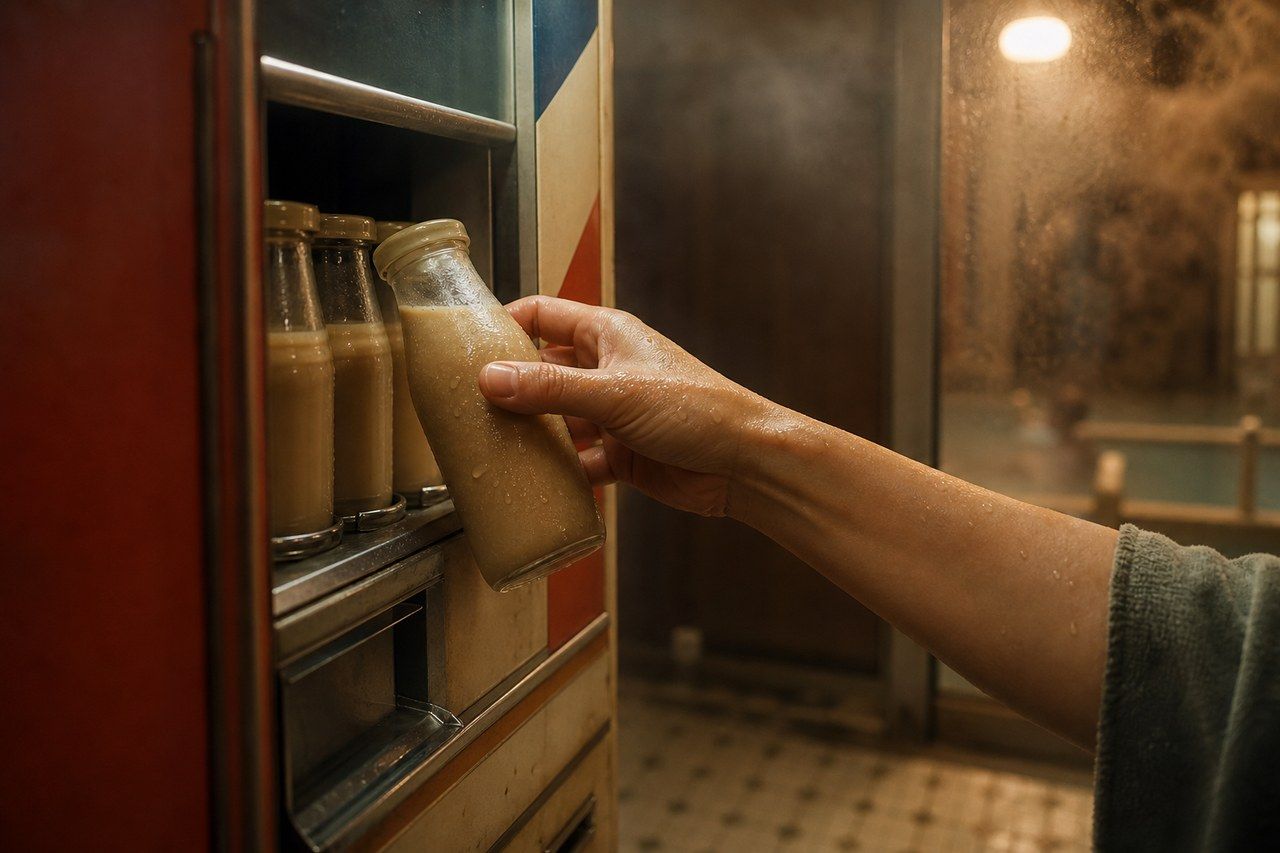 Image for illustrative purposes only.
Memorize this on the train. You won't get yelled at if you forget step 4 — but knowing them makes you walk in with shoulders down.
-
Find one. Search Google Maps for "銭湯" (sento) or "public bath" near you. Look for the tall chimney and a short fabric curtain (noren) over the entrance. Open hours are typically 15:00–23:00, often closed one weekday.
-
Shoes off at the genkan. Step into the entrance vestibule and put your shoes in a wooden locker (sometimes a fixed key, sometimes ¥10 deposit).
-
Pay at the bandai or vending machine. A staff member sits at a raised counter (the bandai) or a ticket machine handles it. ¥550 cash. Many old sento don't accept cards.
-
Read the noren color. Blue curtain with 男 = men. Red curtain with 女 = women. Pull it aside and walk through.
-
Strip completely in the changing room. Empty locker, clothes off, everything goes in. Take only your two towels and your toiletries into the bath area. The small "modesty" towel is for washing, drying, and (later) sitting on your head. It does not go in the water.
-
Sit on a stool and wash thoroughly before bathing. Find a shower station, sit on the low plastic stool, soap up everything, rinse completely. Standing creates splash zones that contaminate your neighbors. This is the most important rule. Then do kakeyu — scoop bathwater with the bucket and pour it slowly over your shoulders to acclimate to the heat.
-
Soak. Small towel on your head, never in the water. The main bath is 40–43°C (104–109°F) — hotter than almost anything Western. Five minutes in, get out if dizzy, cool down at the mizu buro (cold plunge, 17–20°C), repeat. This meditative loop is called totonou and it is the entire point.
That's it. Seven steps. The locals will not glare at you for being a foreigner — they'll glare at you for putting your towel in the water, and only if you make eye contact while doing it.
What Most Tourists Don't Know
The basics are in every guide. Here is what you only learn after a few visits.
The small towel is everything. Renting one is ~¥100 (large is ~¥200), or grab a "sento set" at any convenience store for under ¥500. Most older sento charge separately for soap and shampoo — don't assume amenities are stocked. The ones marked "WELCOME! SENTO" (a Tokyo Metropolitan Government certification, 63 venues citywide) have multilingual signage, free body wash, and cashless payment.
The water really is too hot at first. Newcomers stay in until they feel dizzy, then bail and never come back. The trick is the bucket-and-pour kakeyu, then 3–5 minutes max in the main bath, then the cold plunge, then back. By the fourth cycle your body has decided to live there.
Tattoos are usually fine at sento. This is the single most-believed myth and it is mostly wrong. The "no tattoos" rule is a yakuza-era policy that stuck hard at onsen and ryokan. Neighborhood sento in Tokyo are overwhelmingly lenient — there are 19+ verified tattoo-friendly sento in the city, and the number is climbing. We name five below.
Cash, cash, cash. WELCOME! SENTO venues take cards. Most others do not. Bring ¥1,000 bills — small denominations make the bandai exchange friction-free.
Phones in the bath area are completely banned. Not just frowned upon — banned. Leave it in your locker. Yes, you'll survive 45 minutes.
The post-bath ritual is non-negotiable. Vending machine. Coffee milk or fruit milk in a glass bottle. You drink it standing up, hand on hip, slightly dazed. This is required. We don't make the rules.
<!-- missing content_04 -->What If I Have Tattoos? Where Should I Actually Go?
The phrase to memorize: "Tattoo wa daijoubu desu ka?" (タトゥーは大丈夫ですか — "Is it okay to have tattoos?"). Say it at the bandai. They will tell you yes or no immediately, and "no" is increasingly rare.
Five Tokyo sento where the answer is reliably yes (all ¥550):
- Kosugiyu (Koenji) — 1933 vintage, milk bath, manga library. The hipster favorite. Also has a basement branch in Tokyu Plaza Harajuku, open 7 AM–11 PM, closed Thursdays.
- Daikoku-yu (Oshiage) — The rotenburo (outdoor bath) frames Tokyo Skytree. Worth the trip alone. 1949 establishment.
- Koganeyu (Kinshicho) — Renovated in 2020 by architect Jo Nagasaka. Designer interior, DJ booth, attached craft beer bar. The proof that sento aren't dying — they're evolving.
- Hisamatsu-yu (NW of Shinjuku) — Projection mapping instead of the classic Mt. Fuji mural. Quiet and modern.
- Togoshi Ginza Onsen (Togoshi) — Cypress-lined open-air bath plus actual onsen water. The upgrade option.
Why Are There So Many Closed Ones Now?
Tokyo had 2,600 sento in 1968. Today: 417 (as of 2025). A 40% drop in the last decade alone. Real estate prices, aging owners, and the simple fact that most homes now have private bathtubs are closing two or three sento a month.
There are exactly three professional Mt. Fuji mural painters left in Japan. The tradition started in 1912 at Kikai-yu in Kanda, when a single artist painted the country's first sento mural to entertain children. When those three painters retire, the murals stop being painted. The walls fade.
That said: sento aren't quietly dying everywhere. The sauna boom (totonou) has flooded young Tokyoites back into bathhouses. Koganeyu has a DJ booth. Kosugiyu hosts craft beer nights. The closures are real, and so is the revival — they're just happening to different sento.
What If I Get Confused or Do Something Wrong?
You won't get yelled at. You'll get a small head-shake from a regular, maybe a quiet correction from the bandai. The Japanese sento staff have seen every possible mistake and have institutional patience for first-timers.
If you're nervous, pick a WELCOME! SENTO-certified venue for the first visit — English/Korean/Chinese signage is standard, and the cashless payment removes the language friction. After visit one, you'll feel ready to walk into any neighborhood sento in the country.
Practical Information
| Item | Detail |
|---|---|
| Price (Tokyo, regulated) | ¥550 adult |
| Price (national range) | ¥300–¥600 by prefecture |
| Towel rental | ~¥100 small / ~¥200 large |
| Operating hours | Typically 15:00–23:00, often closed one weekday |
| Water temperature | 40–43°C main bath; 17–20°C cold plunge |
| Recommended stay | 60–90 minutes |
| Payment | Cash (WELCOME! SENTO venues also accept cards) |
| What to bring | Cash, small + large towel, toiletries (or convenience-store sento set) |
| Forbidden | Swimwear, phones in bath area, towels in water, standing while washing |
Wrapping Up
A sento is the cheapest way to feel like you live in Tokyo, even for one evening. ¥550 buys you a 1,000-year-old ritual practiced by every generation that came before you, in a room where nobody cares who you are, what you do, or what your tattoos mean. You'll leave damp, calm, and slightly smug — already planning your next visit.
The chimneys you've been walking past for days are still there. Pick one. Push the curtain aside. (If this guide flipped your fear into curiosity, our Japan maid café walkthrough delivers the same first-time-fear-into-fascination feeling for another corner of Tokyo culture.)
Frequently Asked Questions
What is the difference between a sento and an onsen?
A sento is a neighborhood public bath using heated tap water, regulated by Japan's Public Bath House Act, with prices capped at ¥550 in Tokyo. An onsen uses natural mineral water from a hot spring at least 25°C at the source, costs ¥800–¥3,000, and is usually attached to a destination resort or ryokan.
How much does a sento cost in Tokyo?
¥550 for adults — set by the Tokyo Metropolitan Government and effective since August 2024. Most prefectures fall in the ¥300–¥600 range. Towel rental adds about ¥100–¥200.
Are tattoos allowed in Japanese sento?
Most Tokyo neighborhood sento are tattoo-friendly. The "no tattoos" rule applies far more strictly to onsen and ryokan. There are 19+ verified tattoo-friendly sento in Tokyo, including Kosugiyu, Daikoku-yu, Koganeyu, Hisamatsu-yu, and Togoshi Ginza Onsen.
Do I need to be completely naked in a sento?
Yes. Swimwear is forbidden because it prevents proper washing of the body and contaminates the shared bathwater. The space is fully desexualized — within ten minutes, anxiety about nudity typically fades.
Can I bring my phone into the sento?
No. Phones are banned in both the changing area and the bath area for privacy reasons. Leave it in your locker.
What time do sento open in Tokyo?
Most sento open at 15:00 and close at 23:00, with one regular closing day per week (often a weekday). Some open earlier or stay open until 1:00 AM. Check Google Maps before you go.
Can foreigners use a sento?
Yes, absolutely. For the easiest first visit, look for a "WELCOME! SENTO"-certified venue (63 locations in Tokyo) — they have multilingual signage and accept cards. Otherwise, just follow the 7-step playbook and bring cash.