From Tenjin Matsuri's river fireworks to Kishiwada's wild float races — your complete guide to festivals in Osaka.
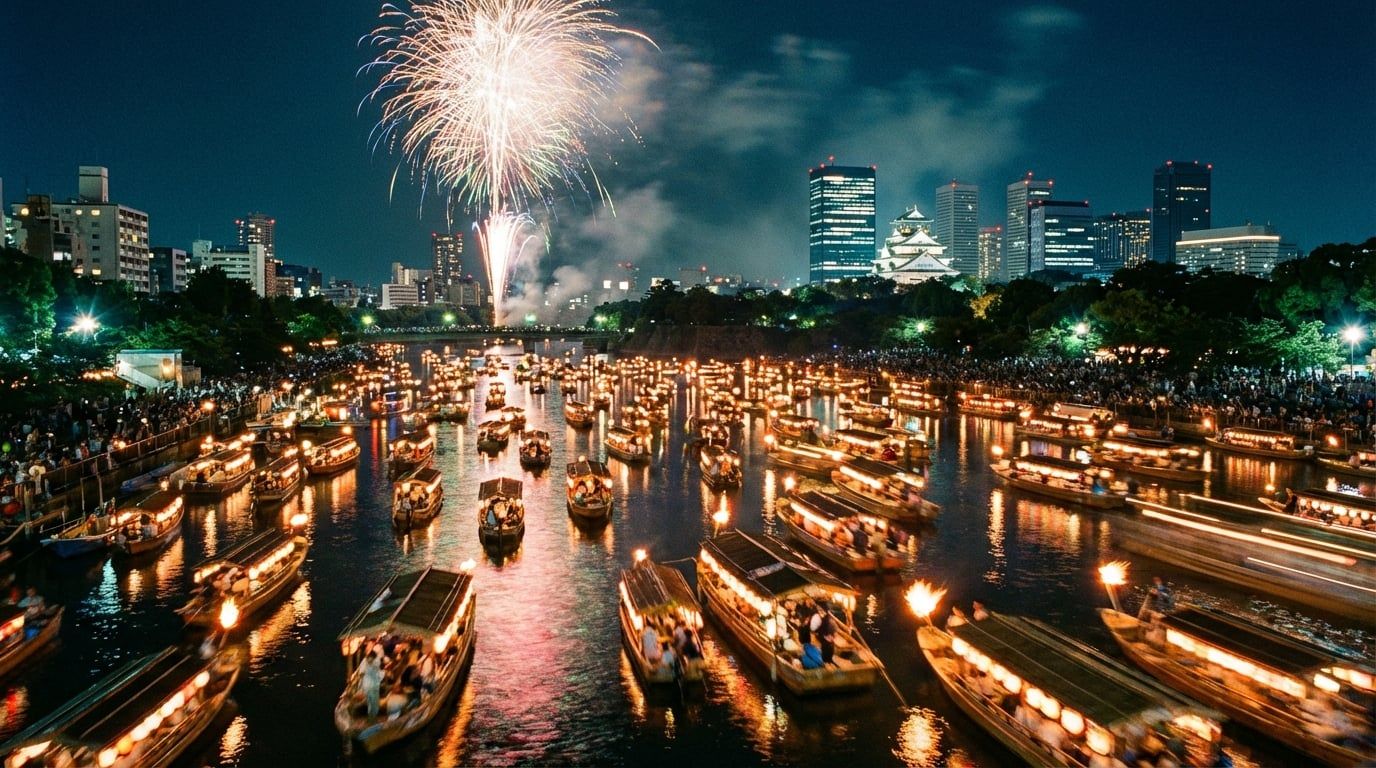 Image for illustrative purposes only.
Most cities celebrate festivals. Osaka becomes them. The second you hear taiko drums ricocheting off the concrete walls of a shopping arcade, or smell charcoal smoke rolling through a shrine precinct at dusk, you understand — this is a city that doesn't politely observe tradition. It throws itself in headfirst, drenched in sweat and festival beer, dragging you along for the ride.
Osaka's matsuri calendar runs year-round, from solemn New Year shrine visits to summer fireworks that turn the Okawa River into a sheet of gold. Whether you're chasing the adrenaline of a danjiri float tearing through narrow streets or the quieter thrill of haggling at a centuries-old flea market, this guide covers every festival worth planning a trip around. For broader context on Japan's festival traditions, see our complete guide to Japanese festivals.
The Big Three: Osaka's Unmissable Festivals
Tenjin Matsuri (July 24-25)
Ranked among Japan's top three festivals, Tenjin Matsuri is over a thousand years old and still the single most spectacular thing you can witness in Osaka. The two-day event honors Sugawara no Michizane, the deity of scholarship enshrined at Osaka Tenmangu.
Day one (Yoimiya) builds anticipation with ritual ceremonies and processions. Day two (Honmiya) is when the city erupts. A land procession of 3,000 people in Heian-period costume winds through Kita-ku before boarding more than 100 boats on the Okawa River. As darkness falls, roughly 5,000 fireworks explode overhead while the illuminated boats drift below — fire above, fire below, and a million spectators lining both banks. For a deeper dive, check our dedicated Tenjin Matsuri guide.
Insider move: Skip the Tenmabashi crowds. Head to the east bank near OAP Tower for a less-packed view where you can actually breathe between fireworks.
Kishiwada Danjiri Matsuri (Mid-September)
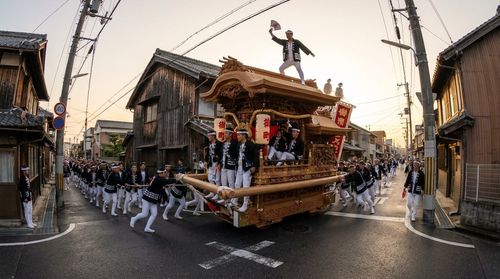
If Tenjin Matsuri is elegant chaos, Kishiwada Danjiri is just chaos — the most thrilling, dangerous, and unapologetically wild festival in the Kansai region. Teams of hundreds of men haul four-ton wooden floats (danjiri) through impossibly narrow streets at full sprint, executing sharp turns called yarimawashi that send the floats skidding around corners on pure momentum and collective willpower.
People get hurt. Floats occasionally crash into buildings. The crowd roars regardless. A young man perches on the rooftop of each float, dancing with reckless grace as the structure lurches beneath him. It is, without exaggeration, one of the most electrifying spectacles in all of Japan.
Kishiwada is about 25 minutes south of Tennoji by Nankai Line. The September honmatsuri (main festival) runs Saturday and Sunday, with a smaller trial run in the days before.
Toka Ebisu (January 9-11)
While the rest of Japan is still recovering from New Year, Osaka's business community floods Imamiya Ebisu Shrine to pray for commercial prosperity. Toka Ebisu draws over a million visitors across three days, with the shrine's miko (shrine maidens) distributing lucky bamboo branches (fukuzasa) decorated with gold coins, sea bream, and rice bales.
The atmosphere is electric — street stalls stretch for blocks, taiko performances thunder through the shrine grounds, and you'll see everyone from suited executives to ramen shop owners clutching their freshly blessed bamboo. Imamiya Ebisu is a short walk from Shinsekai, making it easy to combine with a kushikatsu crawl afterward.
Beyond the Big Three
Shitennoji Temple Events
The Tennoji area has its own quiet rhythm of recurring festivals. Shitennoji, Japan's oldest officially established temple, hosts a bustling flea market on the 21st (Kobo-san) and 22nd (Taishi-ku) of every month. Hundreds of vendors set up along the temple grounds selling antiques, kimono, ceramics, handmade crafts, and street food. It is one of the best places in Osaka to find genuine vintage items at fair prices — arrive before 9 AM for the best selection.
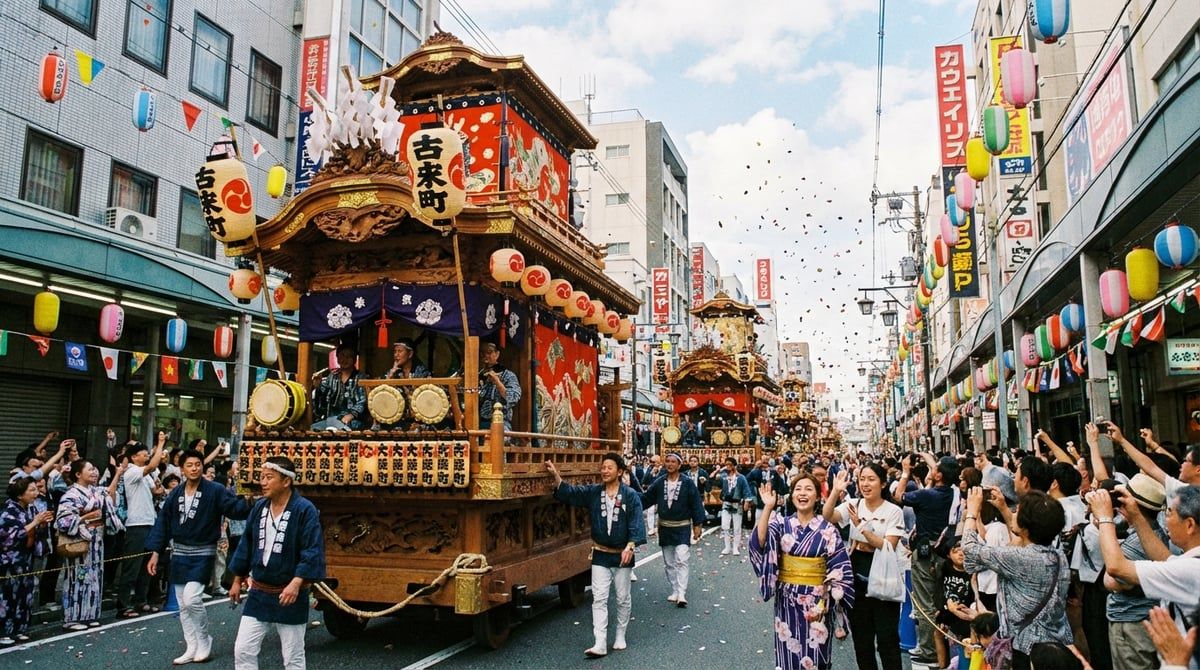 Image for illustrative purposes only.
Shitennoji also holds Shoryoe (April) to commemorate Prince Shotoku, featuring bugaku court dances that date back over a millennium.
Sumiyoshi Taisha Festivals
Osaka's oldest shrine runs its own packed calendar. The Sumiyoshi Matsuri (late July/early August) features a dramatic procession and the ritual crossing of the shrine's iconic arched bridge. Otaue Shinji, a rice-planting ceremony in June, is a UNESCO-recognized intangible cultural heritage — women in traditional dress plant rice by hand in the shrine's sacred paddy while musicians play ancient court melodies.
Osaka Castle and Seasonal Celebrations
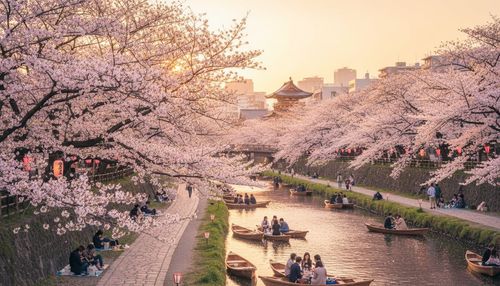
Spring brings one of the city's most beloved traditions: cherry blossom viewing in Nishinomaru Garden, where roughly 300 trees frame the castle keep in pink. The park stays open for evening illuminations, and the combination of lit-up blossoms and the white castle tower is genuinely breathtaking. Autumn delivers its own spectacle when the ginkgo-lined streets around Midosuji Boulevard turn brilliant gold. For summer festivals across Japan, Osaka is an ideal base.
Month-by-Month Festival Calendar
- January: Toka Ebisu (9-11), Shitennoji New Year ceremonies
- February: Setsubun bean-throwing at major shrines
- March: Hina Matsuri displays, plum blossom viewing at Osaka Castle
- April: Cherry blossom season, Shitennoji Shoryoe
- May: Aizen Matsuri at Aizen-do (marks start of summer festival season)
- June: Otaue Shinji at Sumiyoshi Taisha
- July: Tenjin Matsuri (24-25), Sumiyoshi Matsuri
- August: Naniwa Yodogawa Fireworks, Obon festivals
- September: Kishiwada Danjiri Matsuri
- October: Autumn shrine festivals across the city
- November: Shichi-Go-San celebrations, autumn foliage at Minoo
- December: Tenjin Christmas Market, year-end temple bells (Joya no Kane)
For a complete breakdown including exact dates for this year, see our Osaka festivals 2026 calendar.
Where to Stay for Festival Season
Location matters during matsuri. Train stations pack out, last trains fill up early, and if you're 40 minutes from the venue, you'll spend half your evening in transit. Tennoji sits at Osaka's main rail hub, putting you within 20 minutes of nearly every festival venue in the city — Tenjin Matsuri to the north, Kishiwada to the south, Sumiyoshi Taisha just down the Hankai Line.
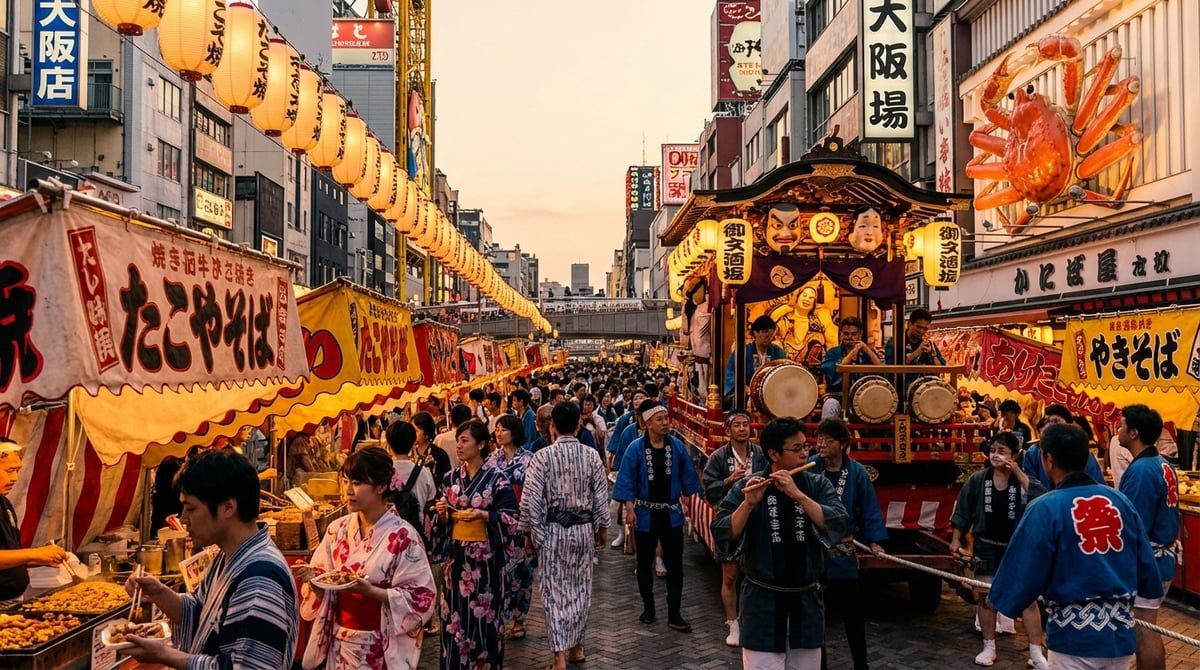 Image for illustrative purposes only.
Festival Food: Osaka's Street Stall Culture
A matsuri in Osaka without festival food is like a sentence without a verb — technically possible, but pointless. Osaka earned the title "Japan's Kitchen" (tenka no daidokoro) for good reason, and that reputation reaches its peak at festival stalls (yatai).
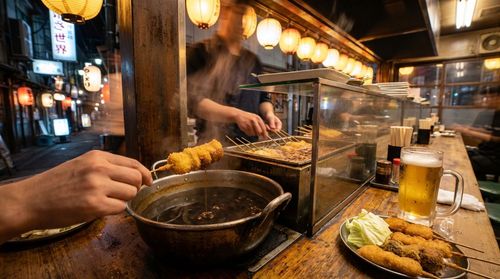
Hunt down these essentials: takoyaki (octopus balls) fresh from the griddle with crispy edges and molten centers; okonomiyaki folded into a portable half-moon at busy stalls; kushikatsu — deep-fried skewers of meat, seafood, and vegetables that you dip once (and only once) into the communal sauce; ikayaki (grilled squid) pressed flat on a hot iron; and baby castella sponge cakes for something sweet. For a deeper guide to Osaka's street food traditions, see our Osaka street food guide.
Practical Tips for Osaka Festival-Going
Book accommodation early. During Tenjin Matsuri and Kishiwada Danjiri, rooms within striking distance of the action sell out weeks in advance. Golden Week (late April/early May) and Obon (mid-August) compound the problem.
Carry cash. Festival stalls almost universally operate on cash only. ATMs at convenience stores (7-Eleven, Lawson) accept international cards. Have at least 3,000-5,000 yen in small bills.
Dress for the weather. July and August festivals mean serious heat and humidity. Bring a towel, stay hydrated, and consider buying a portable fan from any 100-yen shop. September is still warm. January's Toka Ebisu can be cold — layer up.
Arrive early, stay late. The best views and the best food go to those who show up before the main crowds. Evening processions and fireworks are worth the wait.
Use IC cards. Preload your ICOCA or Suica card to skip ticket lines at stations. Trains will be packed — budget extra time and keep belongings close.
Learn one phrase: "Wasshoi!" — the universal matsuri cheer. Shout it when the floats pass. You'll fit right in.
Osaka's festivals are not spectator events. They are invitations. Show up, eat everything, cheer loudly, and let the city pull you into its rhythm. That is the Osaka way.
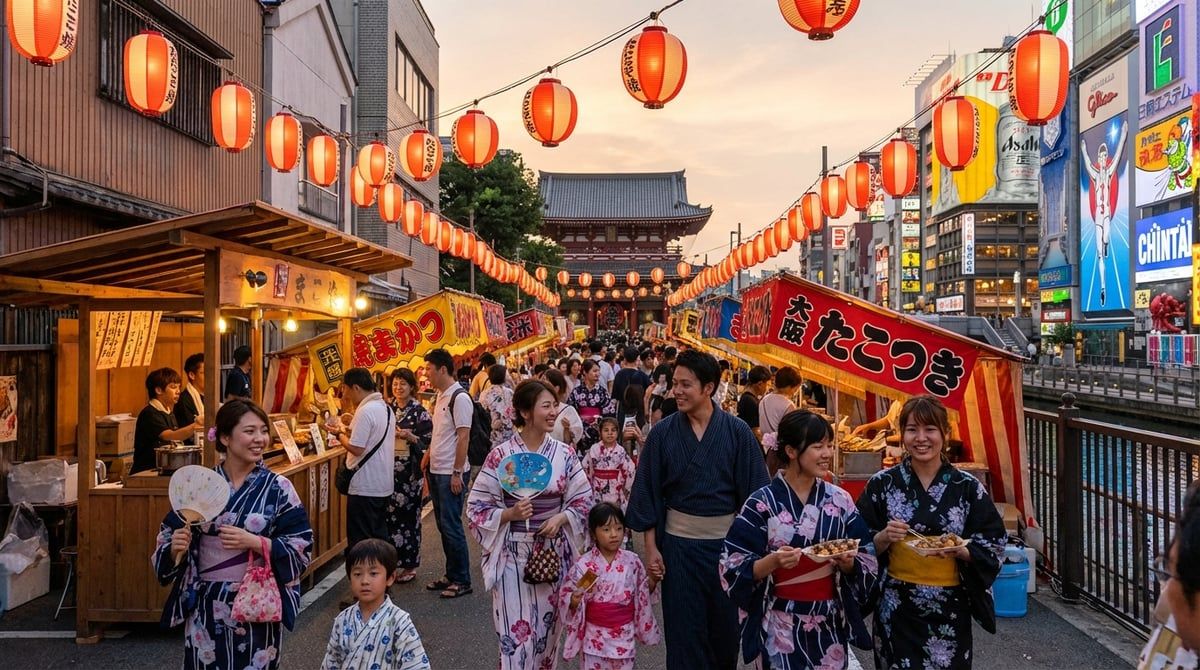 Image for illustrative purposes only.
Frequently Asked Questions
What are the biggest or most famous festivals in Osaka?
Osaka's "Big Three" unmissable festivals are Tenjin Matsuri (July 24-25), Kishiwada Danjiri Matsuri (mid-September), and Toka Ebisu (January 9-11). These events showcase the city's vibrant traditions, from ancient processions and fireworks to thrilling float races and prayers for prosperity.
When is Tenjin Matsuri held and what can I expect?
Tenjin Matsuri takes place on July 24-25 and is one of Japan's top three festivals. The second day features a grand land procession of 3,000 people, followed by over 100 boats on the Okawa River and a spectacular display of 5,000 fireworks.
What kind of street food can I find at Osaka festivals?
Osaka's festival stalls, or yatai, offer a delicious array of street food essentials. Look for takoyaki, okonomiyaki, kushikatsu, ikayaki, and sweet baby castella sponge cakes.
What is the Kishiwada Danjiri Matsuri known for?
The Kishiwada Danjiri Matsuri, held in mid-September, is famous for its thrilling and wild spectacle of teams hauling
Explore More Festival Guides
Continue your Japan festival journey with these related guides:
- Japan Festivals Guide: 10 Must-See Matsuri That Will Take Your Breath Away
- Tenjin Matsuri Guide: Osaka's Spectacular River Festival and Fireworks
- Osaka Festivals 2026: Tenjin Matsuri, Danjiri and the Complete Calendar
- Japanese Festival Food Guide: 15 Must-Try Yatai Street Foods
- Osaka Fireworks 2026: Tenjin Matsuri Hono Hanabi & Yodogawa Guide
Staying in Tennoji?
If you're planning to explore Tennoji, these neighborhood stays let you experience the area like a local.
Explore the Tennoji Area Guide
Discover more things to do, local food spots, and insider tips for Tennoji.