A walkable Osaka izakaya hopping route through Ura-Namba — five stops from tachinomi standing bars to yokocho alley gems, with budgets and phrases.
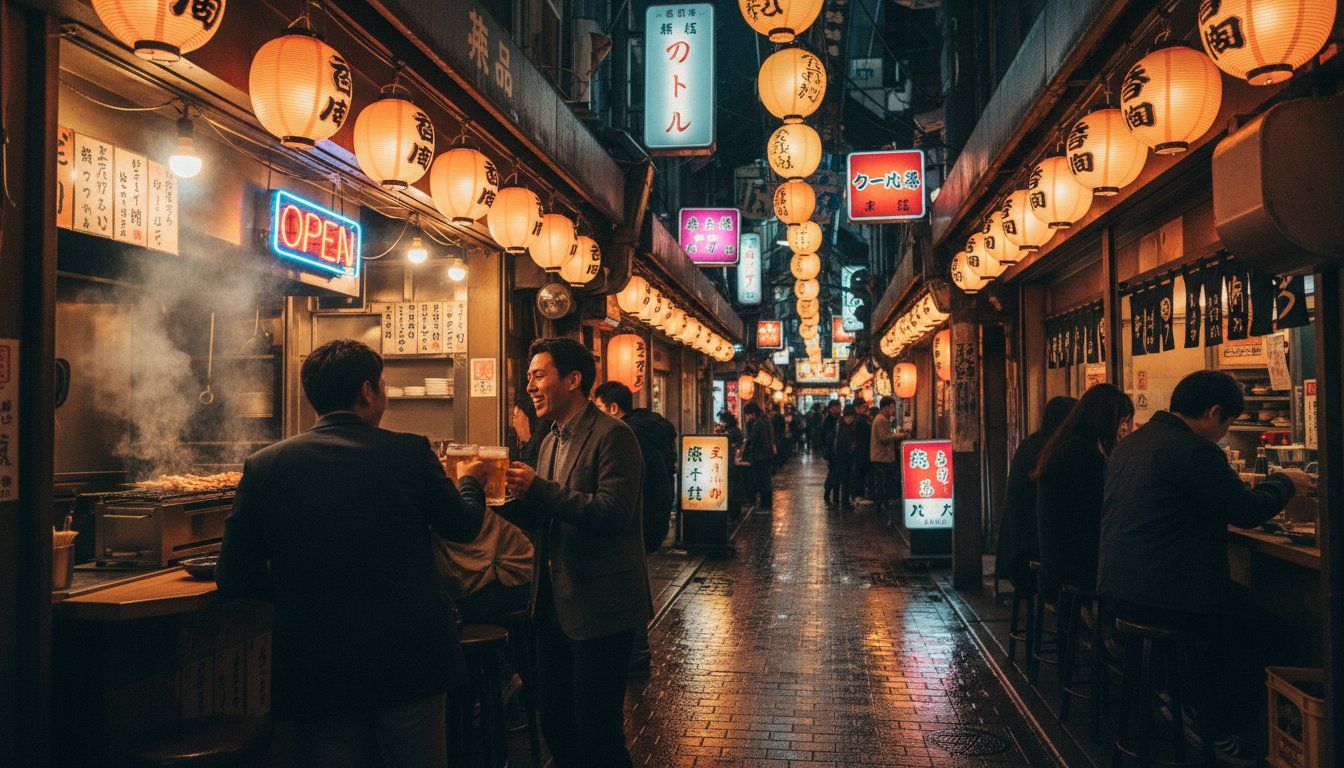 Image for illustrative purposes only.
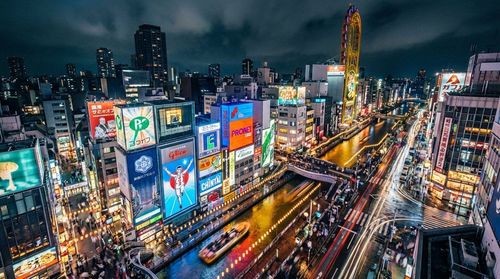
There's a moment, about five minutes south of Dotonbori's blazing neon, where the streets narrow, the crowds thin, and the smell of charcoal smoke drifts out of doorways you can barely see. The signs are handwritten in Japanese. The bars seat six people. The highball costs three hundred yen.
This is where Osaka actually drinks — and izakaya hopping is the best way to experience it.
Izakaya hopping — called hashigo-zake (はしご酒, literally "ladder drinking") — is how locals spend their evenings in Minami, Osaka's sprawling entertainment heart. But most visitors never try it. The tiny bars look intimidating. The menus are in Japanese. Nobody has explained the rules. So tourists default to chain restaurants in Dotonbori and miss what might be the best night of their trip.
This guide changes that. Five stops, one evening, all walkable. We'll start at a beginner-friendly izakaya near Namba Station, work our way through standing bars and yokocho alley gems, and finish with a steaming bowl of ramen at midnight. Along the way, you'll learn the etiquette, the ordering phrases, and the rhythm that transforms a night of eating and drinking into something genuinely unforgettable.
Stop 1: Your First Izakaya — The Warm-Up (18:00)
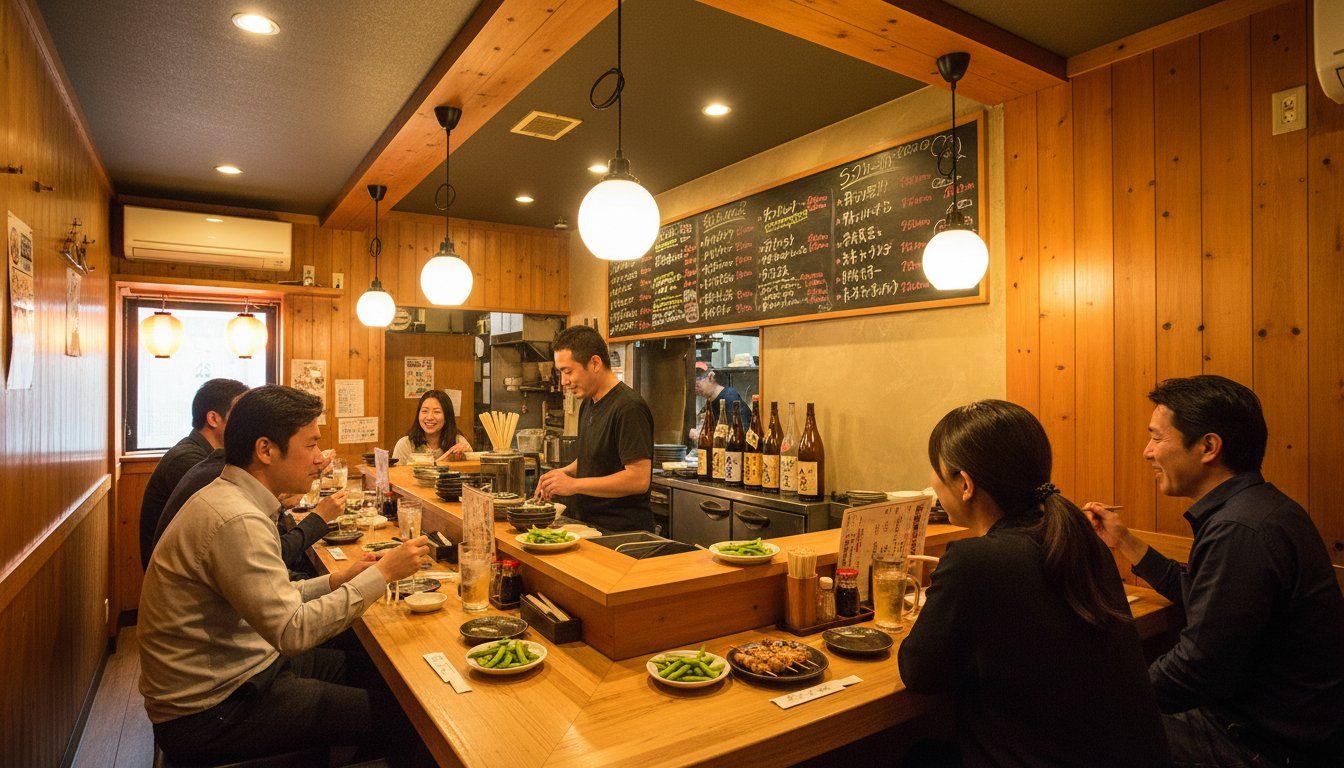 Image for illustrative purposes only.
Start easy. Your first stop is a seated izakaya within a few minutes' walk of Namba Station — the kind of place with a picture menu or at least a few English words on the wall. This is where you learn the basics before diving deeper.
Walk in and you'll hear it immediately: the chorus of irasshaimase! (いらっしゃいませ — "welcome!") from every staff member in the room. Don't be startled — it's standard. Grab a seat at the counter if you're solo (counter culture is one of Japan's great gifts to solo travelers) or slide into a booth if you're with a group.
Your first order is simple: Say toriaezu nama (とりあえず生) — "draft beer for now." This is the universal opening line at any Japanese bar. It signals that you know the drill, and it buys you time to study the menu. Within seconds, a frosty glass of draft beer will appear, condensation already running down the sides.
Before that beer arrives, a small dish will appear that you didn't order. This is otoshi (お通し) — a cover charge that comes with your table's opening snack. It costs ¥300-500 and might be edamame, pickled vegetables, a small salad, or simmered tofu. It's not a scam — think of it as a cover charge that comes with a complimentary appetizer, included with every seat.
Now order food. Izakaya dining is Japanese tapas — you order several small plates to share, not one large main. Good starters: yakitori (grilled chicken skewers, ¥100-200 each), dashimaki tamago (rolled omelette, ¥400-500), and potato salad (ポテトサラダ, ¥300-400 — trust us, Japanese potato salad is an art form). If you're stuck, say osusume wa? (おすすめは? — "what do you recommend?") and let the staff guide you.
Wait for everyone at your table to have a drink in hand. Then raise your glass and say kanpai! (乾杯 — "cheers!"). Don't drink before the kanpai. This is the one rule that matters.
Budget for Stop 1: ¥1,500-2,500 (2 drinks + 2-3 shared plates + otoshi) Time here: 45-60 minutes Non-drinkers: Oolong tea (ウーロン茶) and non-alcoholic beer are on every menu. Nobody will bat an eye.
Stop 2: The Tachinomi — Drinking on Your Feet (19:00)
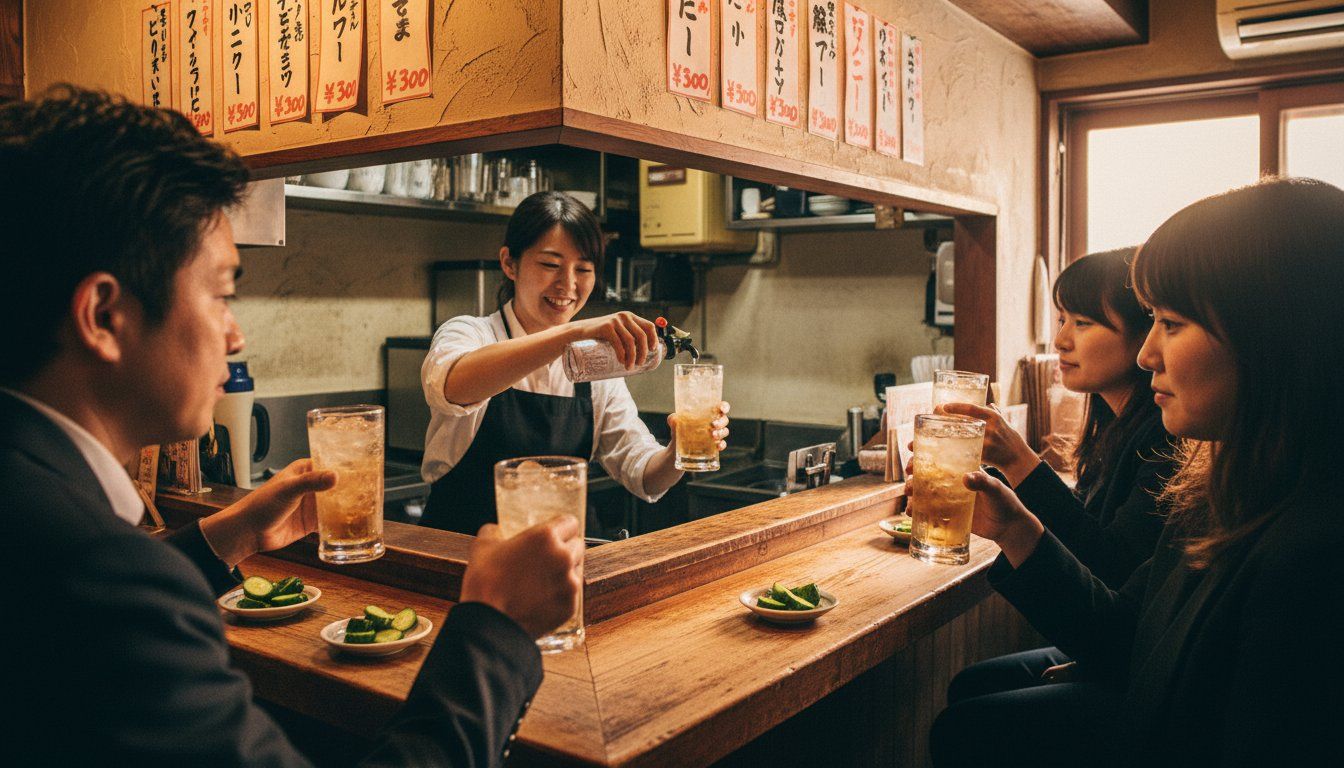 Image for illustrative purposes only.
A three-minute walk south from your first stop, and the streets get narrower. You're heading toward Ura-Namba now — the backstreet district that comes alive after dark. Look for a small storefront with no seats, a narrow counter, and people standing with drinks in hand. You've found a tachinomi (立ち飲み) — a standing bar.
This is where izakaya hopping gets real.
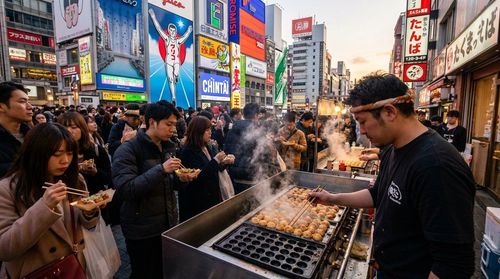
Tachinomi are the backbone of Japanese bar-hopping culture. No reservations. No seats. You walk up to the counter, order a drink and maybe one small dish, stand there for twenty to thirty minutes, and move on. The beauty is radical simplicity: a highball (ハイボール — whisky and soda) costs ¥300-400. A plate of pickled cucumber or a skewer of grilled chicken costs about the same. You're drinking the same drink as the salaryman next to you, standing at the same counter, equal in every way. There's no VIP section. There's no bottle service. There's just cold drinks, good snacks, and the buzz of conversation in a space smaller than most walk-in closets.
Tachinomi etiquette — the unwritten rules:
- Order promptly when you arrive. Don't spend ten minutes browsing.
- Keep your space tight. Bags go on the hooks or at your feet.
- One to two drinks is the norm. This isn't a place to camp for two hours.
- Pay in cash. Most tachinomi don't take cards.
- Say gochisousama deshita (ごちそうさまでした — "thank you for the meal") when you leave.
The beauty of tachinomi is that conversation happens naturally. There are no table barriers. The person next to you might offer a recommendation, or the bartender might pour you a taste of something you haven't tried. Just smile, nod, and go with it. Some of the best travel stories start at a standing counter.
Budget for Stop 2: ¥500-1,000 (1 drink + 1 small plate) Time here: 20-30 minutes
Stop 3: The Yokocho Alley Bar (19:30)
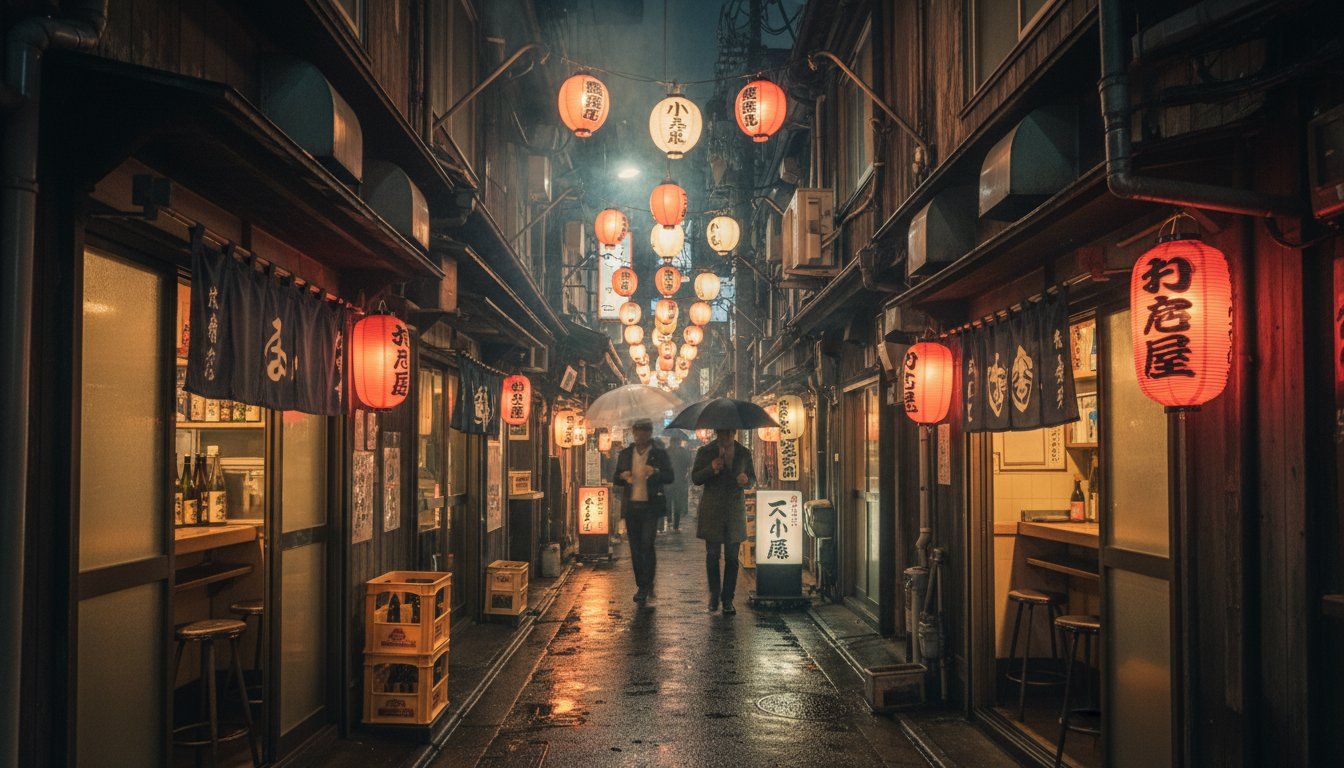 Image for illustrative purposes only.
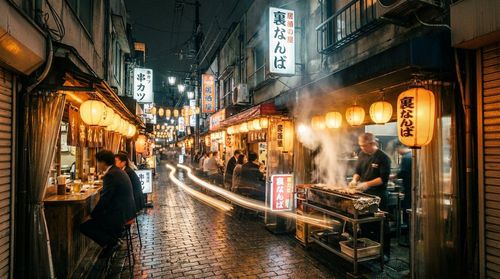
Now comes the moment. You turn off a wider street and duck into a yokocho (横丁) — a narrow alley packed with tiny bars, each one glowing behind a cloth curtain called a noren (暖簾). The air smells like grilled meat and charcoal. Lanterns cast pools of warm light across the wet pavement. Laughter echoes from somewhere you can't quite see. This is peak Osaka nightlife atmosphere, and it exists about ten minutes from Dotonbori's tourist crowds.
The hardest part of a yokocho is choosing where to go in. Here's the secret: it barely matters. Walk slowly. Peek through the curtains. If a place has one or two empty seats and the vibe looks good, push through the noren and sit down. The staff will welcome you. Osaka people — famous across Japan for their warmth and directness — are genuinely happy to see a curious foreigner walk in. That tiny 8-seat bar with no English sign is not a private club. It's a bar, and you're welcome in it.
Order whatever looks interesting. At yokocho bars, the food is often the star: skewers of kushikatsu (deep-fried cutlets), plates of nikomi (simmered beef tendon), or grilled tsukune (chicken meatball) glistening with sweet tare sauce. If you love Osaka's legendary street food, this is the sit-down version — same bold flavors, but served across a tiny counter with a cold drink in hand. The chef is working right in front of you, close enough that you can feel the heat from the grill and hear each skewer sizzle as it hits the charcoal.
A note on smoking: some small yokocho bars still allow indoor smoking. If smoke bothers you, look for a 禁煙 (kin'en, "no smoking") sign, ask kin'en seki arimasu ka? (禁煙席ありますか? — "is there non-smoking seating?"), or simply try the bar next door. Larger izakaya are generally smoke-free; the oldest, tiniest bars are the ones where smoking may still happen.
Budget for Stop 3: ¥1,500-2,500 (2 drinks + 2-3 dishes) Time here: 30-45 minutes
Stop 4: The Specialty Stop — Sake, Craft Beer, or Yakitori Counter (20:15)
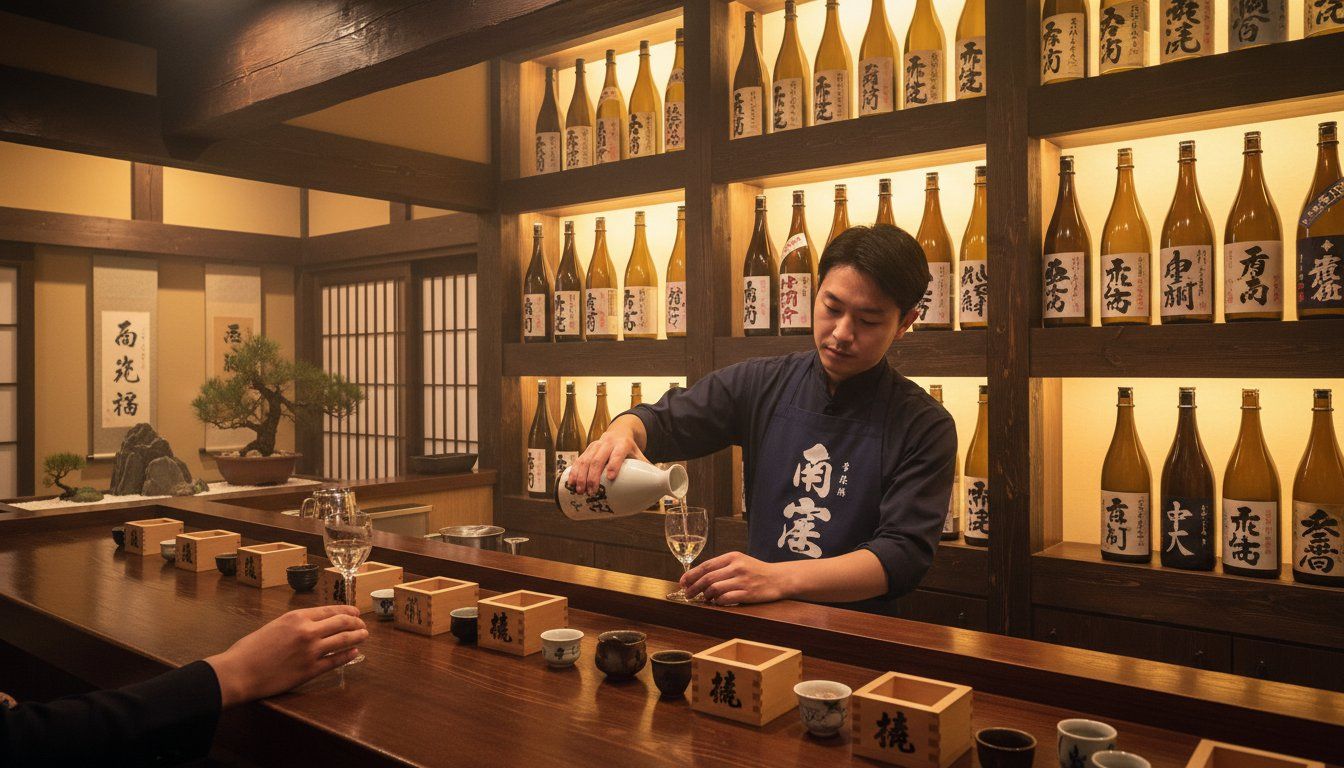 Image for illustrative purposes only.
By now you have three stops behind you and a comfortable buzz. Stop 4 is where you go deeper into Japanese drinking culture. Pick your path:
Sake bar (日本酒バー): Osaka is surrounded by great sake-producing regions — Nada (Kobe), Fushimi (Kyoto), and breweries in nearby Shiga prefecture making modern, adventurous styles. A local sake bar will pour you three or four different cups ranging from light and floral to rich and earthy, paired with small plates designed to complement each one. Tell the staff what you liked at your previous stops and they'll guide you. A junmai (純米, pure rice sake) served slightly chilled is a revelation if you've only ever tried hot sake at a sushi restaurant back home.
Craft beer bar: Osaka's craft beer scene has exploded. Spots like Minaka, Marca, and a growing number of taprooms pour local Japanese brews alongside imported selections. Expect to pay ¥800-1,200 per pint — more expensive than a tachinomi highball, but worth it for the quality. Ask for something local.
Yakitori counter (焼き鳥カウンター): A dedicated yakitori bar is a masterclass in simplicity. One chef, one charcoal grill, and a parade of chicken skewers — breast, thigh, skin, heart, gizzard, cartilage — each seasoned with either salt (shio) or sweet soy glaze (tare). The smoke hangs thick, the charcoal crackles, and each skewer arrives at the exact second it reaches perfection. Order the omakase (おまかせ, "chef's choice") set if available and let the grill master decide.
Budget for Stop 4: ¥1,000-2,000 (2 drinks + food if yakitori) Time here: 30-45 minutes
Stop 5: Shime — The Closing Ritual (21:00+)
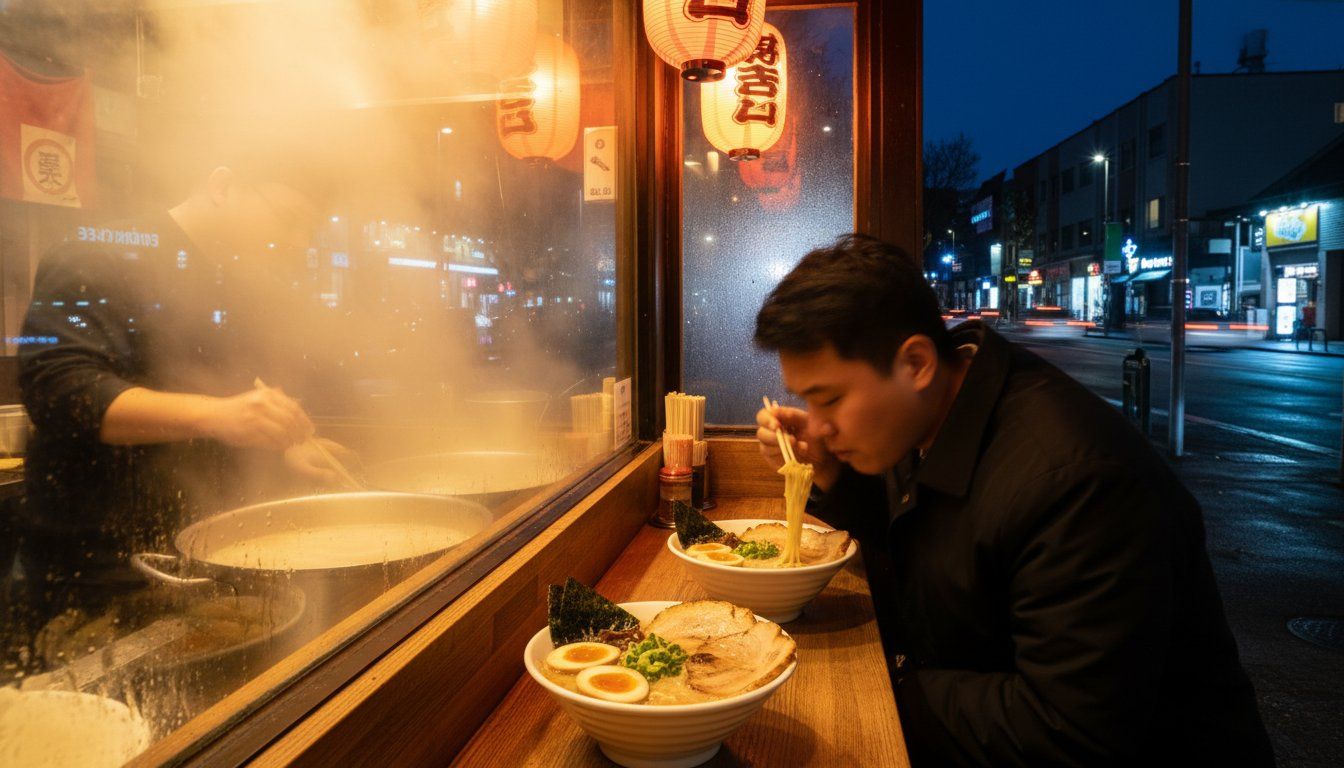 Image for illustrative purposes only.
Every proper izakaya evening ends with shime (〆/締め) — the closing meal. This is a deeply Japanese tradition: after hours of drinking and snacking, you finish with one satisfying dish that puts a period on the night. It's ritualistic. It's comforting. And it is non-negotiable.
The classic shime is ramen. A rich bowl of tonkotsu (pork bone broth) or shoyu (soy sauce) ramen at 10 or 11 pm, when the steam fogs your glasses and the first slurp of noodles feels like a warm hug from the inside. Slurping is not just acceptable — it's encouraged. It cools the noodles and shows appreciation.
Other shime options: ochazuke (茶漬け — rice with green tea poured over it, simple and restorative), yaki-onigiri (焼きおにぎり — grilled rice balls with a crispy soy-glazed crust), or kitsune udon (きつねうどん — Osaka's signature thick udon noodles in dashi broth with sweet fried tofu). Any of these will cap your evening perfectly.
Budget for Stop 5: ¥800-1,200 (one bowl of ramen or udon + water) Time here: 20-30 minutes
Osaka Izakaya Tips: What Most Tourists Don't Know
Otoshi is not a scam. The single most common complaint from foreign visitors on TripAdvisor and Reddit is the "hidden charge" for food they didn't order. Now you know: the ¥300-500 otoshi is a standard cover charge plus your first small dish. It appears at seated izakaya, not at tachinomi. Once you understand it, you'll appreciate it — it's a snack to enjoy with your first drink while you decide what to order.
The best nights happen on weekdays. Friday and Saturday evenings in Ura-Namba are packed — tiny bars fill their 6-8 seats fast, and popular spots develop queues. Tuesday through Thursday is the sweet spot: same atmosphere, less waiting, and more attention from staff. Start by 18:00 to hit the early wave.
You can absolutely do this solo. Izakaya hopping is one of the best solo travel activities in Japan. Counter seats exist specifically for solo diners. Tachinomi are designed for people who walked in alone. At yokocho bars, you'll be sitting next to strangers who might become the most memorable part of your evening. Solo bar hopping in Osaka is not lonely — it's liberating.
"If it's full, try next door" is the whole strategy. In a yokocho with twenty bars, if one is packed, the bar three doors down is probably just as good with two empty seats. Don't wait in line. The entire point of bar hopping is spontaneity.
Bring cash. The smaller the bar, the less likely it takes cards. Budget ¥8,000-10,000 in cash for a full 5-stop evening. Seven-Eleven ATMs accept international cards and are everywhere.
Practical Information for Osaka Bar Hopping
Access
| From | Route | Time |
|---|---|---|
| Namba Station (Midosuji/Yotsubashi/Sennichimae lines) | Exit 5, walk south | 5-7 min to Ura-Namba |
| Dotonbori | Walk south past Hozenji Yokocho | 5-10 min |
| Nipponbashi Station | Walk west | 5 min |
| Shinsaibashi Station | Walk south along Shinsaibashi-suji | 10-15 min |
| Tennoji Station | Midosuji Line to Namba (5 min), then walk | 15 min total |
Budget Summary
| Stop | Category | Budget |
|---|---|---|
| Stop 1 — Warm-up izakaya | 2 drinks + shared plates + otoshi | ¥1,500-2,500 |
| Stop 2 — Tachinomi | 1 drink + 1 small plate | ¥500-1,000 |
| Stop 3 — Yokocho alley bar | 2 drinks + 2-3 dishes | ¥1,500-2,500 |
| Stop 4 — Sake / craft beer / yakitori | 2 drinks + snacks | ¥1,000-2,000 |
| Stop 5 — Shime ramen or udon | 1 bowl + water | ¥800-1,200 |
| Total (moderate) | ¥5,300-8,200 | |
| Total (generous) | ¥8,000-12,000 |
Hours & Timing
| Detail | Info |
|---|---|
| Recommended start | 18:00 (arrive before peak crowds) |
| Peak hours | 20:00-22:00, busiest on Fri-Sat |
| Most izakaya close | 24:00 (last order 23:00-23:30) |
| Tachinomi hours | 15:00-23:00 (some open for afternoon drinking) |
| Yokocho bars | 18:00-01:00+ (weekends until 03:00) |
| Best days | Tue-Thu for fewer crowds |
| Last train from Namba | ~24:00 (check your line) |
Essential Phrases
| Japanese | Pronunciation | Meaning |
|---|---|---|
| とりあえず生 | toriaezu nama | "Draft beer for now" (your first order) |
| おすすめは? | osusume wa? | "What do you recommend?" |
| 乾杯! | kanpai! | "Cheers!" |
| お会計お願いします | okaikei onegaishimasu | "Check, please" |
| ごちそうさまでした | gochisousama deshita | "Thank you for the meal" |
| 禁煙席ありますか? | kin'en seki arimasu ka? | "Is there non-smoking seating?" |
Frequently Asked Questions
Is it rude to walk into a tiny Japanese bar as a tourist? Not at all. Osaka izakaya — even tiny 6-seat yokocho bars — are public businesses that welcome customers. Osaka locals are famously friendly and most bartenders and chefs are pleased to see a curious visitor. Just greet the staff, order promptly, and follow the etiquette in this guide.
How much does an izakaya hopping evening cost? A moderate 5-stop evening in Minami costs ¥5,300-8,200 (approximately $35-55 USD). A more generous night with sake tasting and extra dishes runs ¥8,000-12,000 ($55-80 USD). This includes food, drinks, and otoshi cover charges at every stop.
Can I go izakaya hopping alone? Absolutely. Solo bar hopping is one of the best ways to experience Osaka nightlife. Counter seats at izakaya and tachinomi standing bars are designed for solo visitors. You'll often end up chatting with neighbors and staff — solo hopping can actually be more social than going with a group.
What time should I start bar hopping in Osaka? Start at 18:00 to beat peak crowds and ensure seats at popular stops. Most izakaya open at 17:00, tachinomi as early as 15:00. The busiest period is 20:00-22:00 on Friday and Saturday nights. Weekday evenings (Tuesday through Thursday) offer the best experience with shorter waits.
Do I need to speak Japanese to go bar hopping? No. The five phrases in this guide will get you through an entire evening. Many izakaya near Namba have picture menus, and pointing at what others are eating or saying osusume wa? ("what do you recommend?") works everywhere. Osaka people are patient and creative communicators.
Wrapping Up
Five stops. Three hours. One of the best evenings you'll have in Japan.
Izakaya hopping in Minami is not about finding the single perfect bar. It's about the rhythm — the quick kanpai at a standing counter, the smoke and sizzle of a yokocho grill, the moment a stranger next to you recommends something and it turns out to be incredible, the warm satisfaction of a late-night ramen bowl when the evening is finally, perfectly done. It's a way of experiencing Osaka that no walking tour or restaurant reservation can replicate.
And the best part? You can do it again tomorrow night and have a completely different experience — different bars, different food, different conversations — all within the same few blocks of Minami.
Minami's vibrant tangle of izakaya, standing bars, and late-night ramen shops makes it one of Osaka's most exciting neighborhoods to explore after dark. With Namba Station as your hub, the entire district is walkable — and just a short ride from Tennoji if you're staying in southern Osaka.
For daytime food exploration, see our Ura-Namba food walk or stock up on fresh ingredients at Kuromon Market. Want to combine this with a daytime route? Try our Dotonbori-Namba-Nipponbashi food walk. Fit it all into a multi-day plan with our 3-day Osaka local living itinerary.
Explore the Minami (Namba) Area Guide
Discover more things to do, local food spots, and insider tips for Minami (Namba).
Spots in This Article
Bar Nocosarejima
4.9Bar Nocosarejima is a solo-run craft cocktail bar tucked near Tsutenkaku Tower where the owner personally curates both the drinks and atmosphere. This is the kind of place that elevates Osaka's nightlife scene—expect carefully crafted, innovative cocktails (including Japanese craft spirits and unexpected flavor combinations) in a intimate, dimly-lit setting filled with thoughtful art. The owner's exceptional English and genuine hospitality make it accessible and welcoming for foreign visitors, whether you're ending a night out or seeking a peaceful escape from the city's energy.
寺田町BAR THREE C(カラオケバー)
4.8Osake-no-bijyutsukan Kintetsu Abenobashi station
4.8This is a standing bar museum tucked inside Kintetsu Abenobashi Station that punches above its weight with an impressive whiskey selection and genuinely charismatic bartending. The bartender speaks English and actively engages with visitors, making it welcoming even for bar novices or solo travelers. What sets it apart is the ability to bring in snacks from the station convenience store, plus occasional promotional events featuring rare spirits you won't find elsewhere in Osaka.
いろ葉 IROHA 天王寺アポロビル店
4.6This all-you-can-eat izakaya in Tennoji offers exceptional value with unlimited food and drinks at budget prices, making it an attractive option for cost-conscious travelers. The venue features private booth seating and a varied menu including hot pot options, appealing to groups and casual diners. However, service quality and execution are highly inconsistent—some visits feel seamless while others encounter long wait times, staffing issues, and subpar dish presentation. Success here depends largely on timing and managing expectations about the plate-exchange system.