Namba Grand Kagetsu: Can You Enjoy Osaka's Biggest Comedy Theater Without Speaking Japanese?
May 4, 2026
Inside Japan's largest comedy theater — how manzai, slapstick shinkigeki, and 114 years of Osaka humor work even when you don't understand a word.
Image for illustrative purposes only.
Here's the honest answer: you will miss some jokes. Probably a lot of them. The rapid-fire wordplay, the local dialect gags, the punchlines that hinge on a single particle of Japanese grammar — those will fly past you. And you will still leave Namba Grand Kagetsu grinning like an idiot.
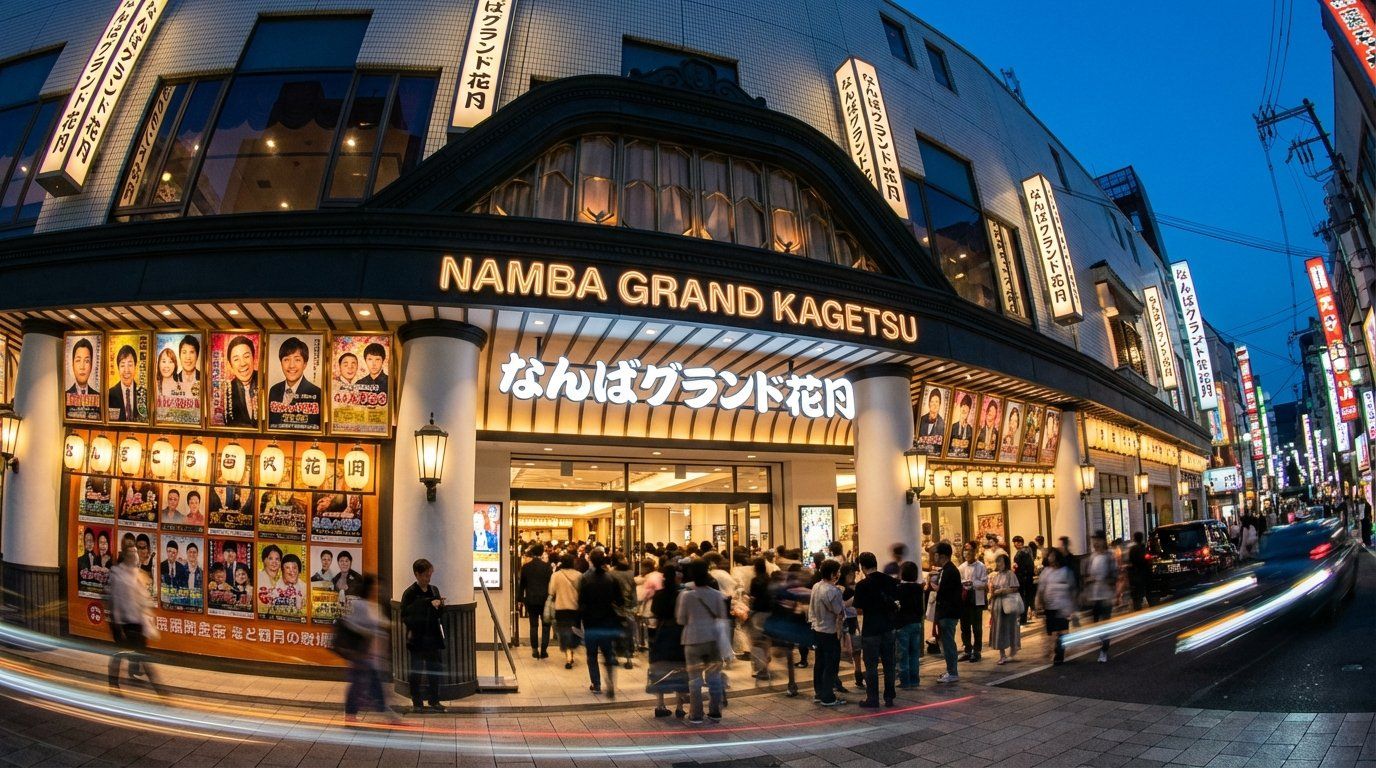
Osaka is Japan's comedy capital. This isn't a marketing slogan — it's a cultural identity. People here grow up learning comedic timing the way kids in other cities learn manners. The city's relationship with laughter runs so deep that speaking in Kansai dialect is itself considered inherently funnier than standard Japanese. And the 858-seat theater at the heart of this comedy obsession is Namba Grand Kagetsu (なんばグランド花月), known universally as NGK — the largest dedicated comedy venue in Japan and the home stage of Yoshimoto Kogyo, the entertainment company that has shaped Japanese humor since 1912.
Walking into NGK is walking into the living room of Osaka's soul. The lobby buzzes with the smell of freshly fried takoyaki drifting from the in-house shop, families debating which comedian's towel to buy from the merchandise counter, and a low-level electric anticipation that feels more like a rock concert than a theater. This is not a polite, sit-quietly-and-clap kind of venue. This is Osaka. People laugh loud, they shout at performers, and when something lands, the entire room erupts.
What Actually Happens on Stage
A typical NGK show runs about two to two and a half hours, and it's structured like a comedy variety show with three distinct formats:
Manzai (漫才) — Duo Stand-Up Comedy Two comedians stand side by side: the boke (the fool who says absurd things) and the tsukkomi (the straight man who smacks them down, often literally). The rhythm is lightning-fast — setup, absurdity, slap, laugh, repeat. This is the most language-dependent part of the show. You'll catch the physical comedy and the energy, but the wordplay will mostly be lost without Japanese. That's okay. Watching the crowd lose their minds around you is its own kind of entertainment.
Konto (コント) — Sketch Comedy Short skits with costumes, props, and scenarios. These land somewhere in between — some sketches rely on dialogue, but many use visual gags and physical comedy that translate across any language. A comedian dressed as a sushi chef chasing another around a giant tuna prop doesn't need subtitles.
Shinkigeki (新喜劇) — The Main Event for Non-Japanese Speakers This is where NGK becomes genuinely unmissable for foreign visitors. Shinkigeki is a 40-50 minute slapstick theater piece — think physical comedy, exaggerated characters, running gags, pratfalls, and absurd situations performed with the timing and precision of a Swiss watch. The plots are intentionally simple: a family argument at a ryokan, a chaotic restaurant kitchen, a neighborhood dispute that spirals into madness. Each main comedian has a signature gag — a catchphrase paired with a physical movement — that the audience anticipates and cheers for.
You don't need to understand Japanese to laugh when a man trips over the same bucket for the fourth time with increasingly elaborate setups, or when the entire cast collapses into a pile after a chain-reaction of slapstick failures. The roar of laughter from 858 people around you is infectious, and you'll find yourself laughing simply because the energy in the room is irresistible.
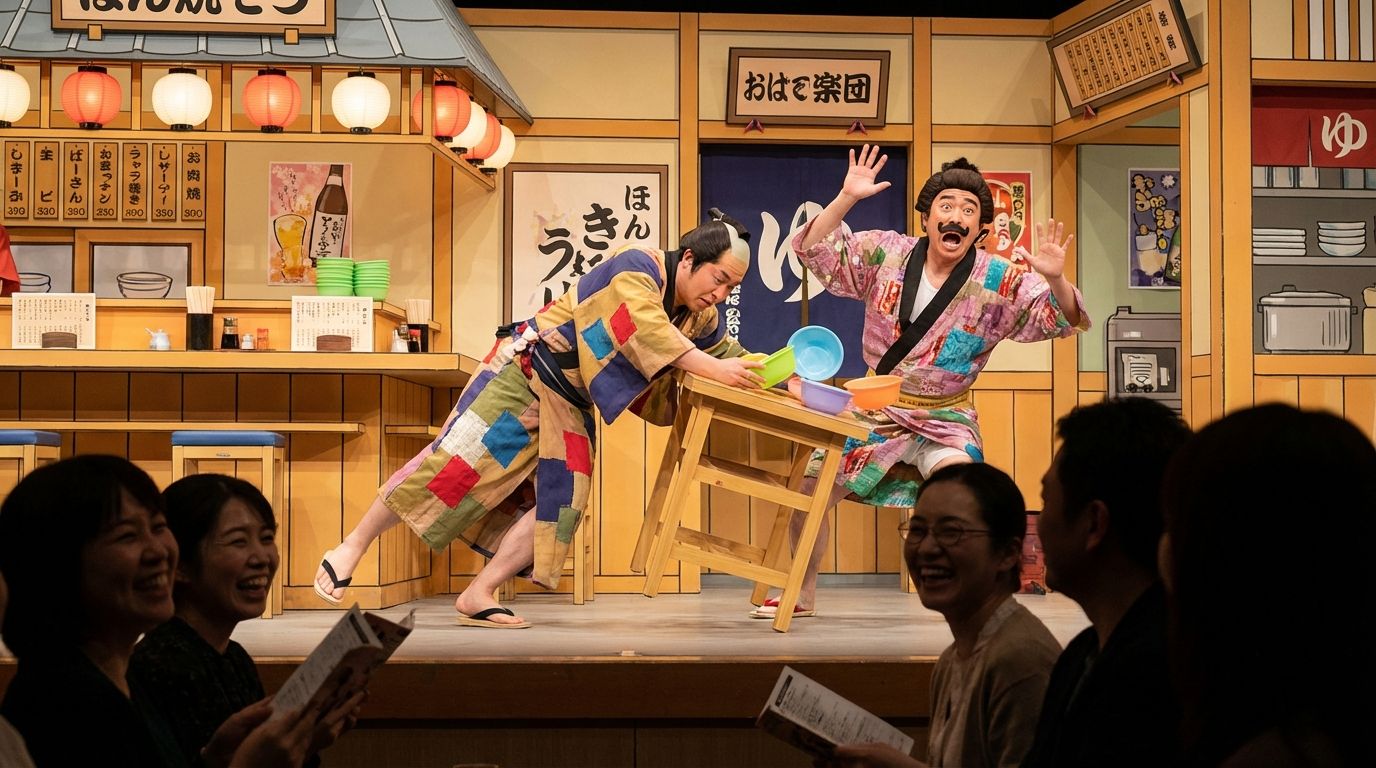 Image for illustrative purposes only.
What Most Tourists Don't Know
The show schedule isn't fixed — check before you go. Unlike a Broadway show with the same cast every night, NGK rotates its lineup constantly. Different comedians appear on different days. The Yoshimoto website (ngk.yoshimoto.co.jp) lists each day's performers, and while the names won't mean much to you, the important thing is confirming that a shinkigeki segment is included in the show you're attending — this is the segment where language matters least. Most regular daytime shows include it, but special event shows may not.
Second-floor seats are a perfectly fine deal. The price difference between first floor (¥4,800) and second floor (¥4,300) is only ¥500 (as of 2025), and the sightlines from the second floor are still excellent. The theater isn't massive — every seat feels reasonably close to the stage. If you're not sure whether you'll enjoy the full show, the second floor is a low-risk way to find out.
English subtitles exist — sometimes. NGK has experimented with English subtitle performances for foreign visitors, but these are irregular and not guaranteed. Don't plan your visit around finding one. Instead, plan your visit around the shinkigeki segment and treat any subtitled portions as a bonus.
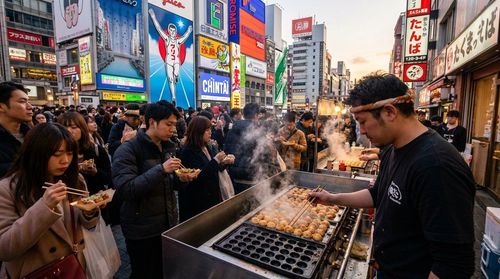
The takoyaki inside is actually good. The in-house takoyaki shop "Yoshitako" (よしたこ) serves crispy-outside, creamy-inside takoyaki that locals genuinely rate. It's not just a tourist trap capitalizing on a captive audience. Grab a box before the show and eat it in the lobby — the aroma of dashi-soaked batter and charred octopus curling through the air is its own kind of Osaka welcome. The theater also houses a Tully's Coffee collaboration cafe called "Hana no Ren" and a merchandise shop where you can pick up comedian-themed goods.
Booking Tickets and Getting There
Getting tickets is straightforward, though the process is almost entirely in Japanese:
Online (recommended): Visit ngk.yoshimoto.co.jp — the booking system is in Japanese, but the calendar layout and seat selection are visual enough to navigate with a browser translator. Book at least a few days ahead for weekend shows.
By phone: Call 0570-550-100 (Japanese only). Not practical for most foreign visitors.
Day-of tickets: Available at the box office if the show isn't sold out. Weekday matinees are your best bet for walk-up availability. Weekend and holiday shows often sell out.
Schedule:
- Weekdays: Two shows — 11:00 and 14:30
- Weekends & holidays: Three shows — 10:00, 13:30, and 17:00
The afternoon shows tend to be the most popular. If you want the best odds of walk-up availability and a more relaxed atmosphere, aim for a weekday morning show.
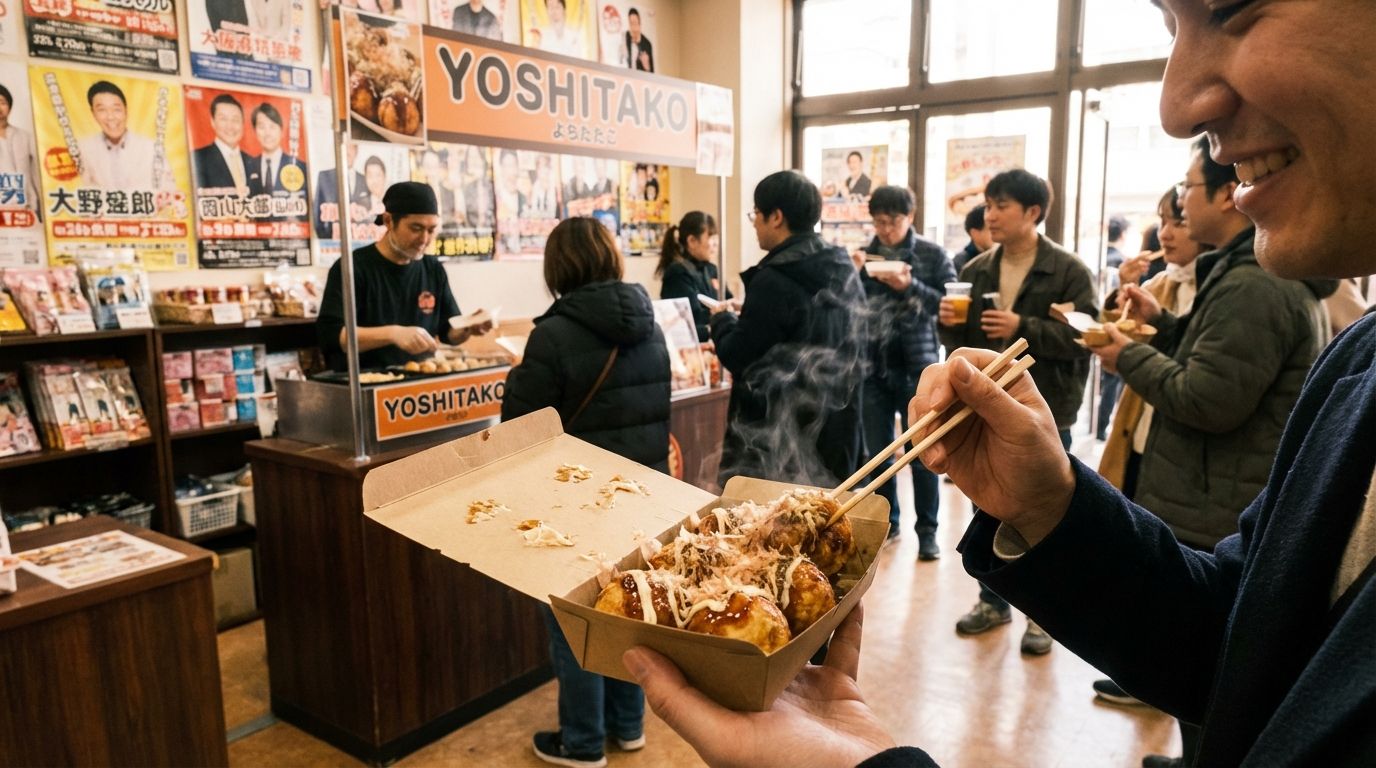 Image for illustrative purposes only.
Practical Info
| Detail | Info |
|---|---|
| Name | Namba Grand Kagetsu (なんばグランド花月 / NGK) |
| Address | 11-6 Nanba Sennichimae, Chuo-ku, Osaka |
| Access | 5-minute walk from Namba Station (all lines) |
| Show times | Weekdays: 11:00, 14:30 / Weekends: 10:00, 13:30, 17:00 |
| Duration | Approx. 2-2.5 hours |
| Tickets | 1st floor: ¥4,800 / 2nd floor: ¥4,300 (as of 2025) |
| Booking | ngk.yoshimoto.co.jp or box office (day-of) |
| Closed | Open year-round |
| Facilities | Takoyaki shop (Yoshitako), Tully's cafe, merchandise shop |
| English subtitles | Irregular — not guaranteed |
Build Your Evening: NGK + Dotonbori + Ura-Namba
NGK sits at the northern edge of the Minami entertainment district, which means you can easily build an entire evening around it. Here's a solid itinerary:
14:30 — Catch the afternoon show at NGK. Grab takoyaki at Yoshitako before the doors open.
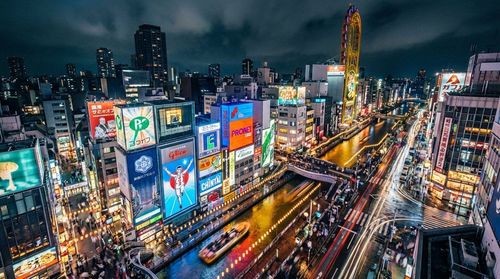
17:00 — Walk five minutes south to Dotonbori. The canal lights up at dusk, and the famous neon signs reflect off the water in a spectacle that's pure Osaka. Eat your way down the strip — kushikatsu, okonomiyaki, gyoza — or check out our Osaka street food guide for the best bites in the area.
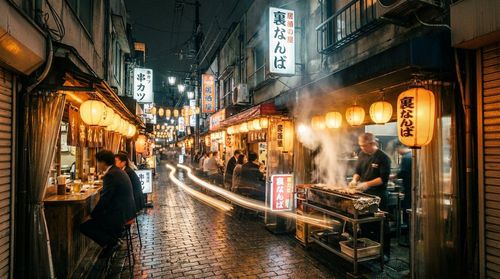
19:00 — Head east into Ura-Namba, the backstreet drinking district that most tourists never find. The tachinomi (standing bars) start filling up around this hour, and the vibe shifts from family-friendly sightseeing to authentic Osaka nightlife. Two or three stops of bar-hopping through the narrow lanes, each one a ¥300 highball and a small plate of something incredible, and you've had the kind of evening that no guided tour could replicate.
If you have a full day to explore, you could extend this into the Dotonbori-Namba-Nipponbashi food walk — a longer route that connects all three neighborhoods on foot.
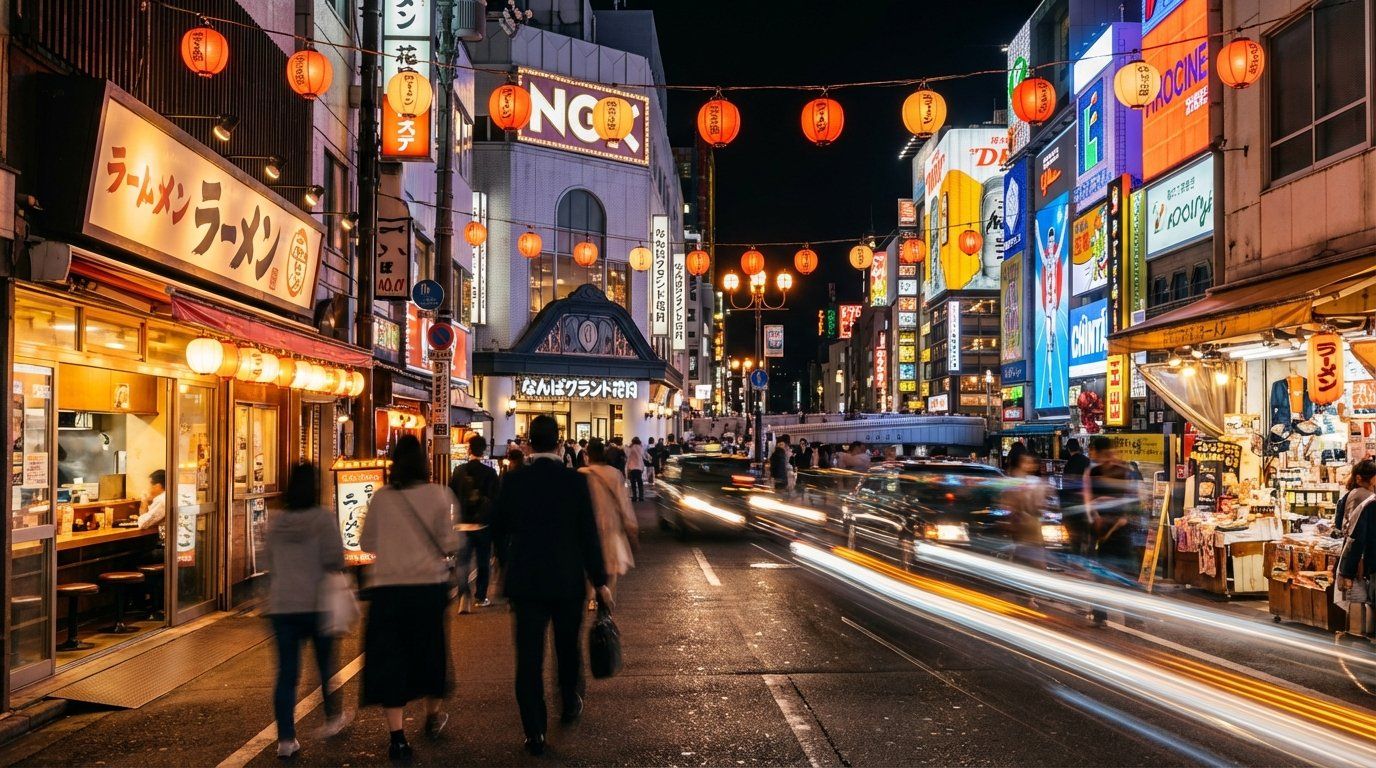 Image for illustrative purposes only.
Wrapping Up
Namba Grand Kagetsu won't give you the same experience it gives a Japanese-speaking audience. That's the honest truth. The manzai wordplay, the topical references, the dialect jokes — a significant portion of the show operates in a register that requires fluent Japanese to fully appreciate.
But comedy is older than language. The shinkigeki segment alone — 50 minutes of expertly choreographed physical comedy performed by people who have spent decades perfecting the art of making a room of 858 strangers laugh in unison — is worth the price of admission. The energy of the crowd, the skill of the performers, the entire atmosphere of a city that takes being funny more seriously than anywhere else in Japan — it all adds up to something that transcends the words you can't understand.
Minami's dense network of entertainment, food, and nightlife makes it easy to pair NGK with a full evening of exploration. Whether you're wandering the neon chaos of Dotonbori or ducking into Ura-Namba's hidden standing bars afterward, this corner of Osaka rewards visitors who are willing to dive into experiences they can't fully predict. The Namba area is well connected to the rest of Osaka — the Tennoji district, with its temples and local neighborhoods, is just a short train ride south on the Midosuji Line, making it easy to use as a base for exploring both areas.
Frequently Asked Questions
Can I enjoy Namba Grand Kagetsu if I don't speak Japanese?
Yes, you will miss some wordplay and local gags, but the physical comedy, especially during the Shinkigeki segment, and the infectious energy of the audience make it a highly enjoyable experience for non-Japanese speakers. You'll still leave grinning.
What types of comedy shows are performed at Namba Grand Kagetsu?
A typical show runs for about 2 to 2.5 hours and features three main formats: Manzai (duo stand-up comedy), Konto (sketch comedy), and Shinkigeki (a slapstick theater piece).
Which part of the show is best for non-Japanese speakers?
The Shinkigeki (新喜劇) segment is genuinely unmissable for foreign visitors, as it relies heavily on physical comedy, exaggerated characters, and visual gags that translate well across language barriers.
How do I buy tickets for Namba Grand Kagetsu?
You can book tickets online via ngk.yoshimoto.co.jp, though the system is mostly in Japanese, or purchase day-of tickets at the box office, with weekday morning shows offering the best chance for walk-up availability.
Are English subtitles available for the performances?
English subtitles are irregular and not guaranteed, so it's best not to plan your visit around finding them. Instead, focus on enjoying the visual comedy, especially the Shinkigeki segment.
Is the food sold inside Namba Grand Kagetsu good?
Yes, the in-house takoyaki shop "Yoshitako" (よしたこ) serves crispy-outside, creamy-inside takoyaki that locals genuinely rate, making it a recommended snack before the show.
Explore the Minami (Namba) Area Guide
Discover more things to do, local food spots, and insider tips for Minami (Namba).
Spots in This Article
とろ政 天王寺店
4.7とろ政 天王寺店 is an all-you-can-eat-and-drink izakaya with extremely aggressive pricing (¥3,000 for 150 items across 2 hours), but the execution consistently falls short of expectations. The plate-exchange system creates friction—you can only order when your group finishes the previous dish—combined with slow kitchen service and meager portions makes the value proposition disappear. Quality issues are widespread, from frozen-tasting proteins to presentation mismatches with menu photos.
Kichiri Tennoji
4.7Kichiri Tennoji excels as an all-you-can-drink izakaya that rewards groups and special occasions with generous all-inclusive dining packages and personalized service touches like complimentary birthday plates. The restaurant's standout strength is its staff's attentiveness—particularly when accommodating international guests with translation tools and genuine hospitality. It's ideally positioned near Tennoji Station for celebratory dinners, company gatherings, or anyone seeking Instagram-worthy plating in a refined-yet-relaxed setting.
Korean restaurant & bbq harapekosyokudou tennouji
4.7This Korean BBQ and hot pot spot in Tennoji delivers authentic dishes with standout items like nakkobjang (spicy seafood stew) and minari samgyeopsal (wild herb pork belly), prepared tableside for an interactive dining experience. Staff are genuinely attentive to dietary restrictions and foreign visitors, making it accessible even if you don't speak Japanese. The intimate, modern atmosphere appeals to younger crowds but welcomes diners of all ages—pricing skews premium given the hot pot focus, so expect to spend more than casual Korean eateries. Reservations are strongly recommended, especially for popular limited items like their herb samgyeopsal (only 3 portions daily).
いろ葉 IROHA 天王寺アポロビル店
4.6This all-you-can-eat izakaya in Tennoji offers exceptional value with unlimited food and drinks at budget prices, making it an attractive option for cost-conscious travelers. The venue features private booth seating and a varied menu including hot pot options, appealing to groups and casual diners. However, service quality and execution are highly inconsistent—some visits feel seamless while others encounter long wait times, staffing issues, and subpar dish presentation. Success here depends largely on timing and managing expectations about the plate-exchange system.