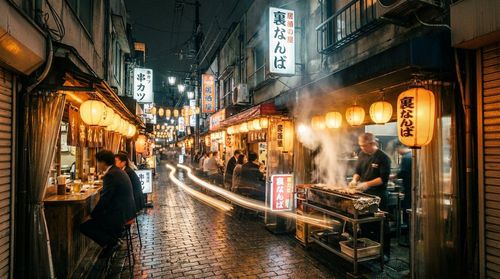
Osaka's answer to Harajuku is louder, wilder, and packed with vintage finds. Amerikamura brings 2,500+ shops, Triangle Park, and decades of street culture.
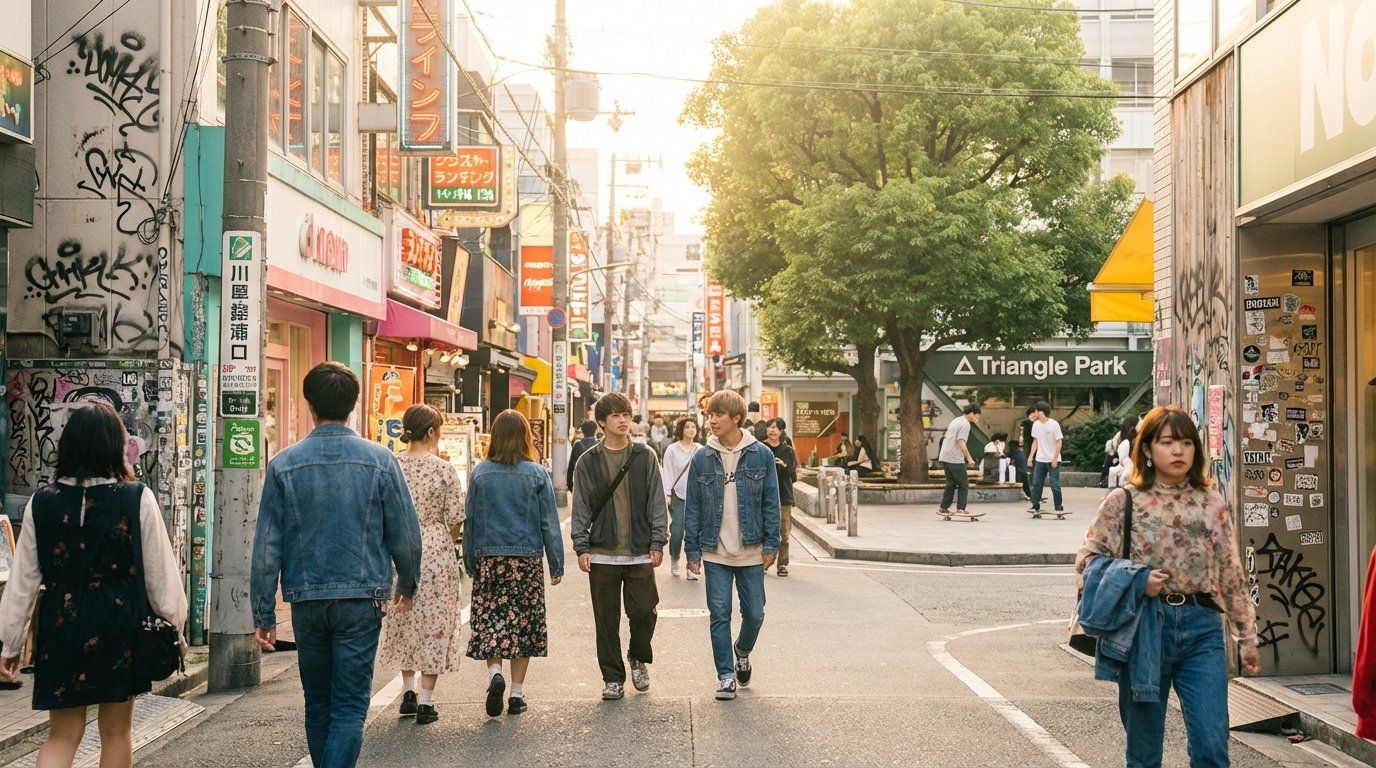 Image for illustrative purposes only.
Tokyo has Harajuku. Osaka has something wilder.
Five minutes on foot from Shinsaibashi Station, the polished department stores and luxury brand boutiques give way to narrow streets plastered with band flyers, sticker-bombed lamp posts, and the thump of hip-hop leaking out of second-floor record shops. The air smells like fresh takoyaki batter hitting a hot iron mold and old leather jackets hanging in doorways. Welcome to Amerikamura -- or as locals call it, Amemura -- Osaka's undisputed capital of youth culture and street fashion.
This is not a curated shopping district. It's a living, breathing counterculture neighborhood with over 2,500 shops crammed into a handful of city blocks, and it has been the heartbeat of Osaka's rebellious creative scene for more than fifty years.
From American Surplus to Youth Culture Holy Ground
Amerikamura's origin story starts in the early 1970s, when local entrepreneurs began importing American goods -- Levi's jeans, rock concert tees, military surplus jackets -- and selling them from small warehouses in this quiet corner of Osaka's Minami district. The "America Village" name stuck, and young Osakans flocked here to get their hands on a piece of the West that mainstream Japan wasn't offering.
By the 1980s, the surplus shops had spawned a full ecosystem: record stores, live music venues, streetwear labels, and cafes that stayed open late. The neighborhood became Osaka's answer to what was happening in Harajuku -- but while Harajuku leaned into kawaii and polished pop aesthetics, Amemura went the other direction. Think less pastel, more denim. Less curated, more chaotic. The energy here has always been rougher around the edges, and that's exactly the point.
Triangle Park: The Beating Heart
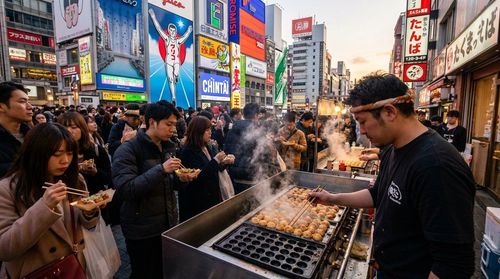
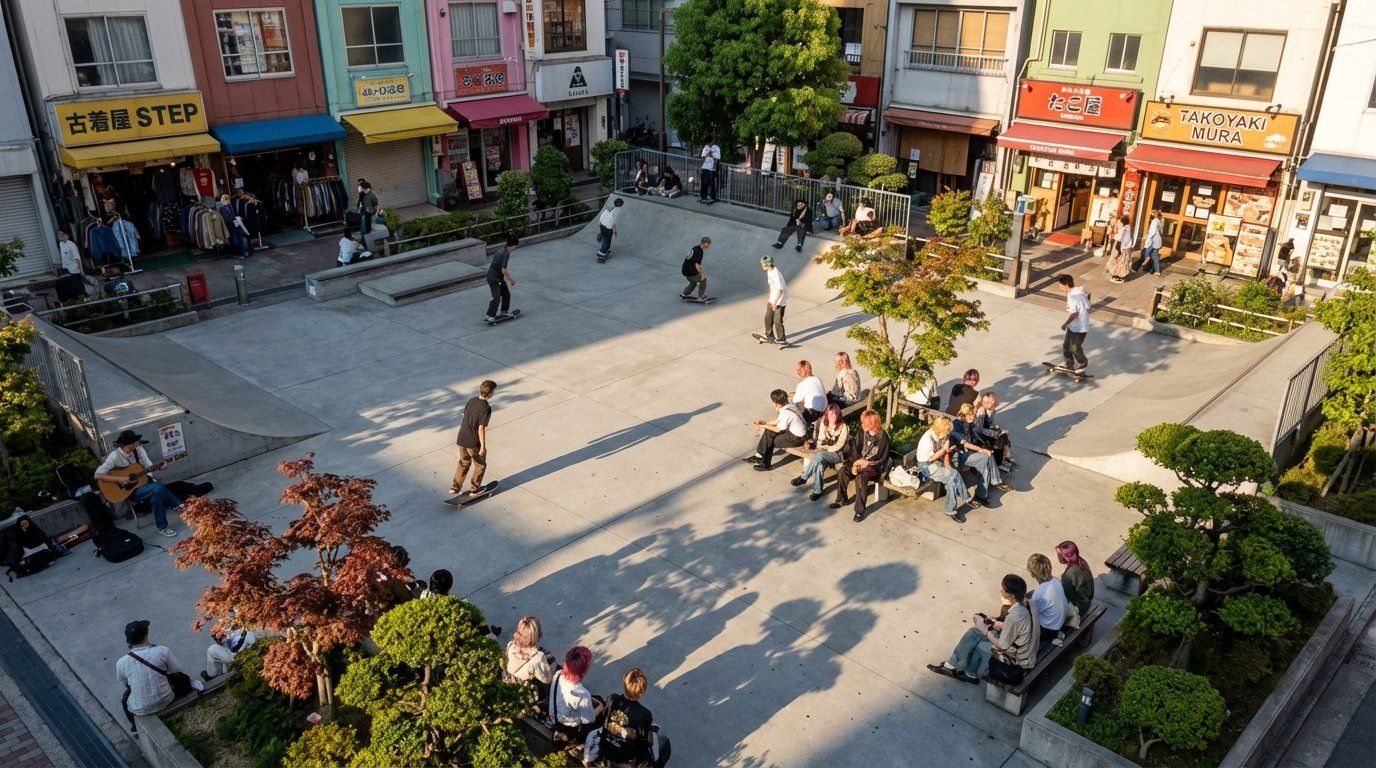 Image for illustrative purposes only.
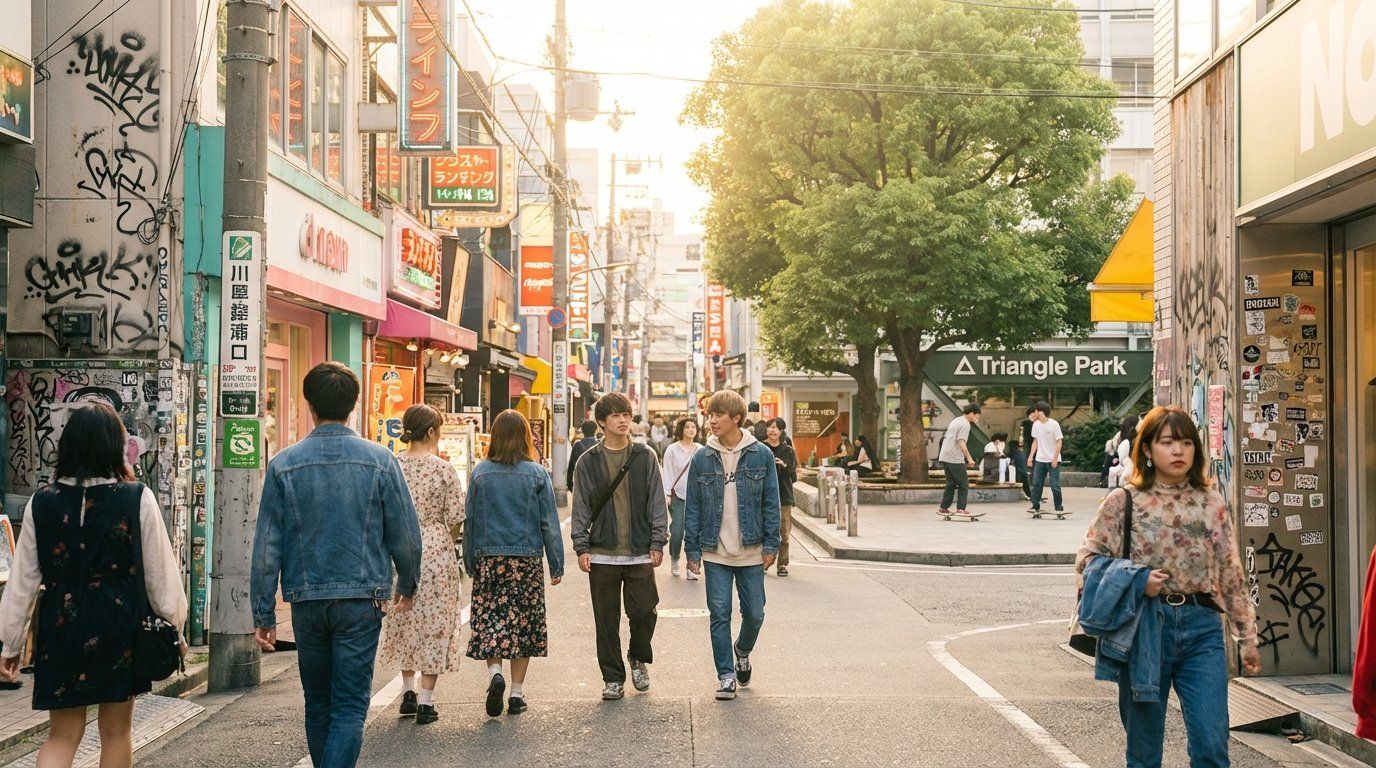
Every neighborhood needs a gathering point, and in Amemura that's Sankaku Koen (三角公園) -- Triangle Park. Its official name is Mitsu Park (御津公園), but nobody calls it that.
This small, triangular patch of concrete wedged between buildings has been the social nucleus of Amemura since the 1970s. On any given afternoon, you'll find skateboarders grinding the low walls, aspiring comedians testing material on friends, fashion students showing off their latest thrift-store assemblages, and musicians busking with battered acoustic guitars. The sound of skateboard wheels on concrete mixes with laughter and the tinny speakers of someone's phone playing City Pop.
Triangle Park is also ground zero for Amemura's street food scene. The most famous vendor here is Kogaryu (甲賀流), a takoyaki stand that has been operating since the 1970s and earned a Michelin Bib Gourmand listing. Their takoyaki uses sashimi-grade octopus, and you can taste the difference -- the outside is crisp and golden, the inside molten and intensely savory, with chunks of tender tako that snap between your teeth. At around 500 yen for a portion, it's one of the best-value meals in Osaka. Grab a tray and eat standing up in the park like a local. If you want to explore more of what makes Osaka Japan's undisputed food capital, check out our guide to Osaka's legendary street food scene.
Vintage Shopping: The Main Event
If you came to Amemura for one thing, it's probably the vintage clothing. This district is one of Japan's premier destinations for secondhand fashion, and the density of shops here is staggering.
JAM is the anchor store -- an enormous vintage warehouse stocking over 8,000 items at any given time. Racks upon racks of American band tees, Hawaiian shirts, 1990s NBA jerseys, denim jackets from every decade, and military surplus pieces. You could spend two hours here and still miss entire sections. Prices range from around 1,000 yen for basic tees to 15,000+ yen for rare collector pieces.
KINJI is the other heavyweight, a chain vintage shop with a carefully curated selection and cleaner organization. It's a good starting point if you find JAM overwhelming.
Pigsty and dozens of smaller independent shops line the side streets, each with its own specialization -- one might focus exclusively on 1950s Americana, another on 1990s streetwear, another on vintage band merchandise. The thrill is the hunt: running your fingers along a rack of leather jackets, feeling the cracked patina of decades-old cowhide, and pulling out a perfectly broken-in bomber jacket that fits like it was waiting for you.
Practical shopping tips:
- Most shops open around 11:00 and close by 20:00
- Prices are fixed -- haggling is not customary in Japan
- Japanese sizing runs smaller than Western sizing; check measurements, not labels
- Many shops accept credit cards, but smaller vendors may be cash-only
- Weekday mornings have the best selection and smallest crowds
Street Art, Murals, and Creative Chaos
Amemura's walls are an open-air gallery. The most iconic piece is the "Peace on Earth" mural, painted in 1983 and still watching over the neighborhood more than four decades later. But the real visual feast is the layer upon layer of street art, paste-ups, stickers, and graffiti that cover virtually every available surface.
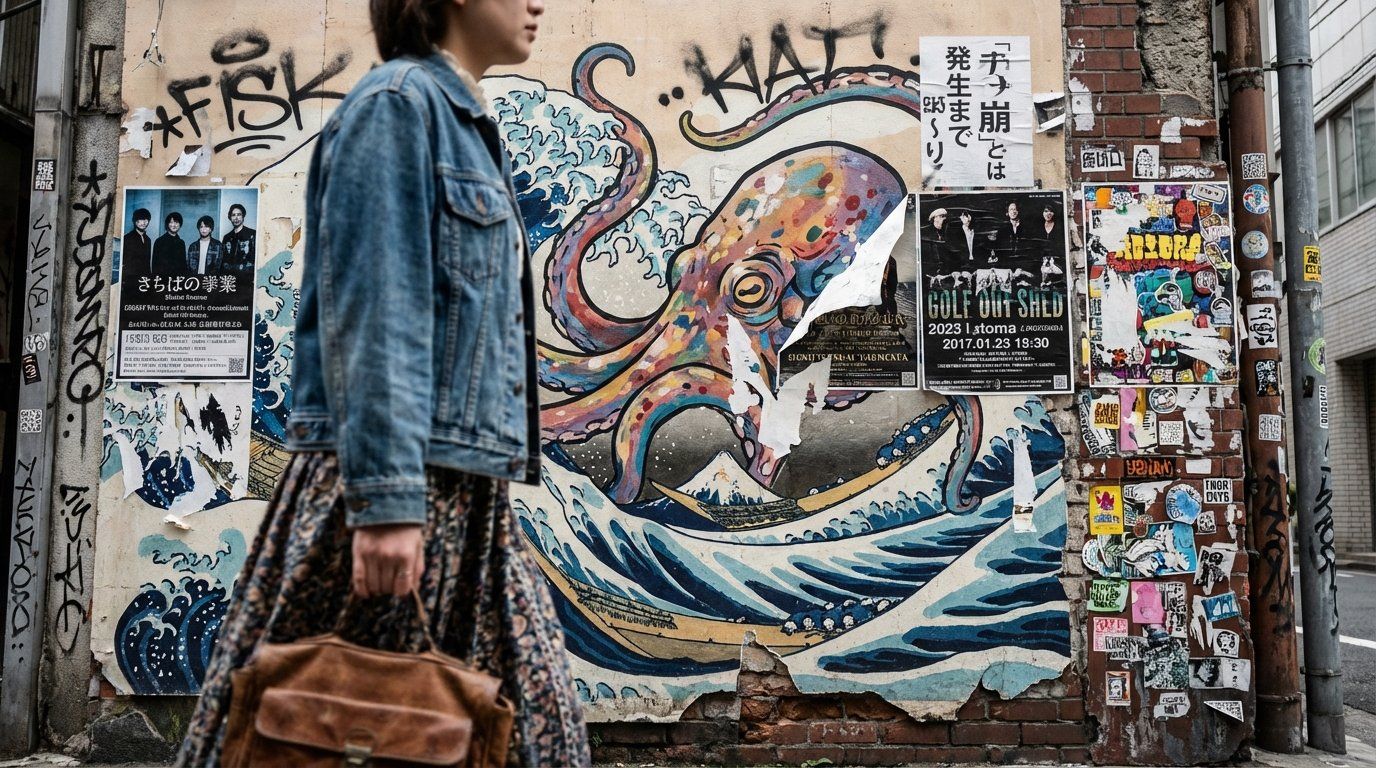 Image for illustrative purposes only.
Walk slowly and look up. Second-floor balconies are draped with hand-painted banners for underground club nights. Utility boxes are wrapped in psychedelic sticker art. Even the shutters of closed shops become temporary canvases. This visual chaos isn't vandalism to the locals -- it's the neighborhood's identity, refreshed and layered over itself season after season.
The Big Step complex (opened 1993) is another landmark worth noting. This multi-story commercial building houses shops, restaurants, and event spaces, and its exterior has become one of Amemura's most recognizable architectural features.
Music and the Underground Scene
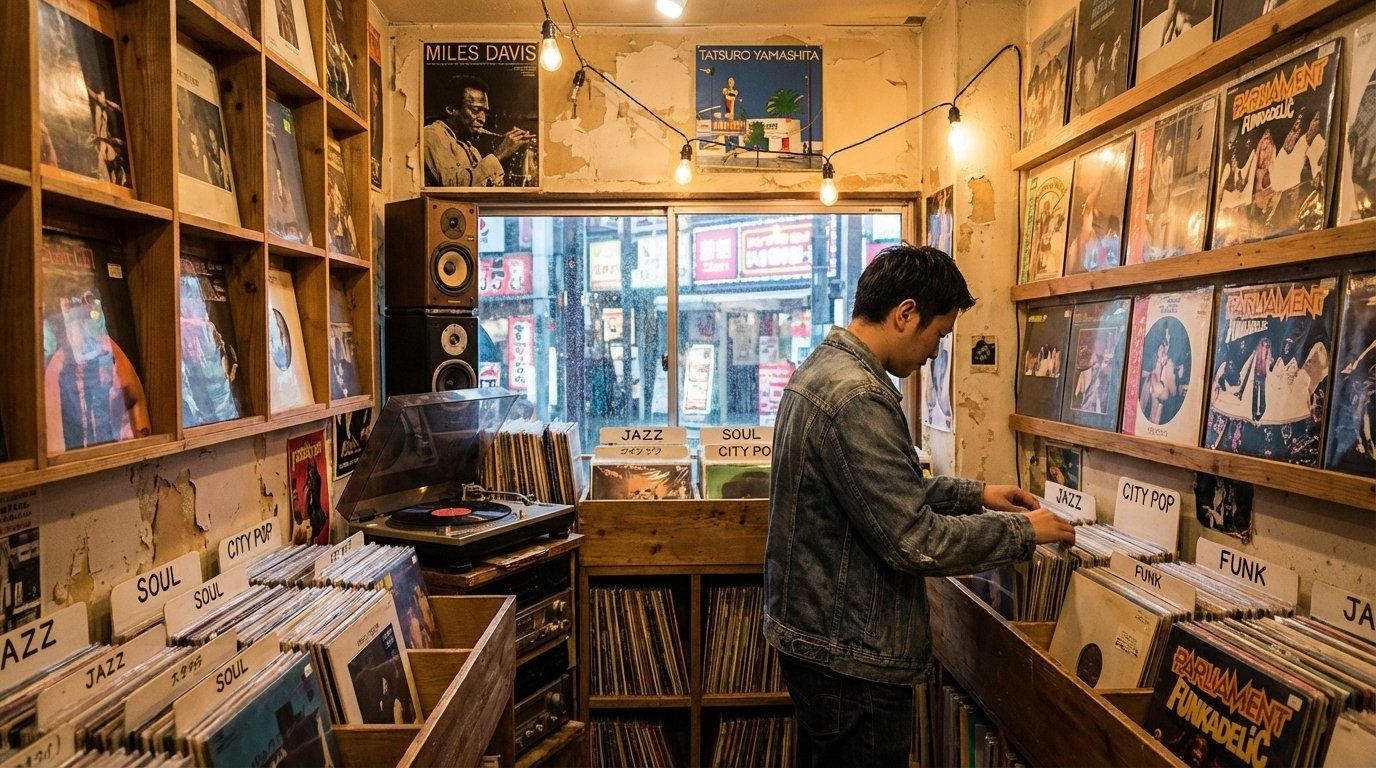 Image for illustrative purposes only.
Amemura has been Osaka's independent music nerve center for decades. If the vintage shops are the district's body, the record stores and live houses are its soul.
King Kong Records (the flagship store) is a vinyl institution -- bins of Japanese city pop, American soul, funk, jazz, and hip-hop vinyl, all organized with the kind of obsessive care that tells you the owner actually listens to every record. Groovenut specializes in soul, funk, and rare groove, and the staff will happily spend twenty minutes pulling recommendations if you tell them what you're into.
Beyond the record shops, Amemura's live houses and clubs host everything from punk to electronic to experimental noise. The scene is small enough that you might catch a band playing their third-ever show on a Tuesday night in a basement that holds forty people -- and that intimacy is what makes it special.
Amerikamura vs. Harajuku: What's the Difference?
Visitors who know Tokyo's Harajuku often ask how Amemura compares. Here's the honest answer: they share DNA but have very different personalities.
| Harajuku (Tokyo) | Amerikamura (Osaka) | |
|---|---|---|
| Vibe | Kawaii, polished, Instagram-curated | Raw, vintage, street-level chaos |
| Fashion | Avant-garde, cosplay, pop | Western vintage, streetwear, skate |
| Food | Crepes, rainbow cotton candy | Takoyaki, craft coffee, standing bars |
| Crowd | Tourists + fashion professionals | Local youth + vintage hunters |
| Origins | Post-war fashion district | 1970s American import warehouses |
Neither is "better" -- they're two sides of Japan's incredible street culture coin. But if Harajuku feels like a fashion show, Amemura feels like the afterparty.
What Most Tourists Don't Know
The afternoon sweet spot is real. Most vintage shops don't open until 11:00, and many of the best finds get snapped up by local dealers in the first hour. If you arrive between 13:00 and 16:00 on a weekday, you get restocked shelves minus the weekend crush.
Triangle Park changes personality after dark. The daytime skater-and-takoyaki scene gives way to a louder, more adult atmosphere in the evening. The park and surrounding streets become a gathering spot for Osaka's nightlife crowd. It's safe, but the energy is very different from the afternoon vibe -- worth knowing if you're visiting with young children.
The side streets matter more than the main road. Amemura's most interesting shops, cafes, and galleries are tucked into narrow alleys and upstairs floors. If you're only walking the main strip (Mitsudera-suji), you're missing about 70% of what makes this neighborhood special. Look for staircase signs pointing up -- some of the best vintage shops and record stores are on the second or third floor.
Cash is still king at the small spots. While the larger shops have modernized payment, many of the one-room vintage stores, street food vendors, and independent cafes are cash-only. Bring at least 5,000-10,000 yen in cash if you plan to shop seriously.
Connecting to Shinsaibashi and Dotonbori
One of Amemura's biggest advantages is its location. The district sits in the western part of the Minami area, sandwiched between two of Osaka's most famous destinations:
- Shinsaibashi-suji (心斎橋筋): Walk 5 minutes east and you're on Osaka's premier covered shopping arcade -- 600 meters of mainstream retail, from UNIQLO to Apple.
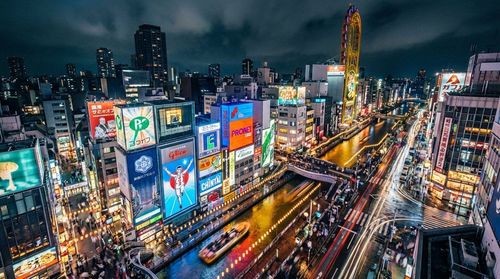
- Dotonbori (道頓堀): Continue south another 5 minutes and you hit the famous canal, the Glico running man sign, and Dotonbori's neon-lit food scene.
A perfect half-day route: Start at Shinsaibashi Station, cut west into Amemura for vintage shopping and Triangle Park takoyaki, then loop south through the backstreets to emerge at Dotonbori for the evening neon show. If you have more time, continue east to explore Nipponbashi's otaku district or duck into the hidden backstreet bars of Ura-Namba. You'll cover the full spectrum of Osaka's Minami district -- from underground culture to mainstream spectacle -- in a single walk.
Practical Info
| Detail | Info |
|---|---|
| Nearest Station | Shinsaibashi Station (Midosuji Line), Exit 7 -- 5 min walk |
| Also accessible from | Namba Station (multiple lines) -- 15 min walk |
| Shop hours | Most shops 11:00-20:00 (some cafes/bars open later) |
| Budget: Shopping | Vintage tees from ~1,000 yen; jackets 3,000-15,000+ yen |
| Budget: Food | Kogaryu takoyaki ~500 yen; cafe drinks 400-700 yen |
| Best time to visit | Weekday afternoons (13:00-16:00) for shopping; evenings for atmosphere |
| Time needed | 2-3 hours minimum; half-day if you're a serious shopper |
| Cash | Recommended -- many small shops are cash-only |
Wrapping Up
Amerikamura isn't on most first-time Osaka itineraries, and that's part of what keeps it genuine. While Dotonbori dazzles with its neon and Shinsaibashi offers polished retail therapy, Amemura gives you something neither of those places can: a raw, unfiltered look at what Osaka's creative youth have been building for over half a century.
Come for the vintage Levi's. Stay for the takoyaki, the street art, the vinyl digging, and the feeling that you've stumbled into a neighborhood that doesn't care whether you're impressed -- it's too busy being itself.
The Minami district's incredible walkability means you can experience Amemura's underground energy and Dotonbori's tourist-friendly spectacle in the same afternoon. If you're looking for a convenient base to explore the area, the neighborhoods between Tennoji and Namba put you within easy reach of both Amemura's street culture and Osaka's historic south side.
Frequently Asked Questions
What is Amerikamura?
Amerikamura, or Amemura, is Osaka's undisputed capital of youth culture and street fashion, known for its rebellious and chaotic counterculture scene. It's located five minutes on foot from Shinsaibashi Station in Osaka's Minami district.
What is Triangle Park (Sankaku Koen)?
Triangle Park (Sankaku Koen) is the social nucleus of Amemura, where you'll find skateboarders, fashion students, and musicians gathering. It's also home to Kogaryu, a Michelin Bib Gourmand takoyaki stand.
What kind of shopping can I do in Amerikamura?
Amerikamura is a premier destination for vintage clothing, with enormous stores like JAM and KINJI, as well as dozens of smaller independent shops specializing in various styles. You can find everything from American band tees to military surplus and 1990s streetwear.
Where can I find good food in Amerikamura?
Triangle Park is ground zero for Amemura's street food scene, most notably Kogaryu, a takoyaki stand operating since the 1970s and recognized with a Michelin Bib Gourmand. Their takoyaki uses sashimi-grade octopus and costs around 500 yen.
How does Amerikamura compare to Tokyo's Harajuku?
While both are youth culture hubs, Amemura is described as wilder and rougher around the edges than Harajuku. It leans more into denim and chaotic counterculture, contrasting with Harajuku's kawaii and polished pop aesthetics.
Are there any practical tips for shopping in Amerikamura?
Most shops open around 11:00 and close by 20:00; prices are fixed, and haggling is not customary. Japanese sizing runs smaller, so check measurements, and while many shops accept credit cards, smaller vendors may be cash-only.
Explore the Minami (Namba) Area Guide
Discover more things to do, local food spots, and insider tips for Minami (Namba).
Spots in This Article
MAZE CAFE SHINSEKAI
5.0Maze Cafe Shinsekai stands out as a destination-worthy breakfast spot in Tennoji that consistently impresses with thoughtfully prepared coffee and elevated cafe cuisine—think perfectly executed avocado toast and latte art that photographs beautifully. The space cultivates a genuinely welcoming atmosphere with staff who are knowledgeable about their craft and attentive without being intrusive, making it equally appealing for solo travelers seeking a calm refuge or families wanting quality time. This is the rare cafe that justifies visiting multiple times during a Osaka trip rather than being a one-off stop.
ラーメン 醤すけ心斎橋店 Ramen SHOSUKE Shinsaibashi
5.0This Shinsaibashi ramen shop delivers authentic, handcrafted bowls that consistently exceed expectations—many visitors report it rivals or surpasses Osaka's more hyped establishments. The standout draw is the silky, meticulously prepared broth paired with fresh noodles, with both shoyu and shio variations earning praise. Staff hospitality is genuinely warm and accommodating to non-Japanese speakers, making it an accessible introduction to serious ramen culture for first-time visitors.
Osaka Halal Ramen Wagyutei
4.9This newly opened halal ramen specialist in Tennoji stands out as one of Osaka's rare dedicated halal ramen destinations, offering authentic broth-based ramen without compromise on quality. The owner and staff actively engage with international visitors and speak English, making it exceptionally accessible for foreign tourists unfamiliar with Japanese dining customs. Generous portions at reasonable prices, combined with an genuinely welcoming atmosphere where staff adapt the dining experience (like adjusting air conditioning), create an experience that feels personal rather than transactional.