A Morning Walk Through Ancient Osaka: Shitennoji Temple and the Tennoji Seven Slopes
May 4, 2026
Discover Osaka's quiet side with an early morning walk through Shitennoji Temple, the Tennoji Seven Slopes, and a temple district most tourists never see.
Image for illustrative purposes only.
Most people know Osaka for its neon-drenched streets, all-night izakayas, and the raucous energy of Dotonbori. But set your alarm early — really early — and this Osaka morning walk will show you a side of the city that most visitors never see.
Before the tourist crowds arrive, before the takoyaki stalls fire up their griddles, the Tennoji district belongs to a different world entirely. The air is cool and sharp with the scent of incense and damp stone. The only sounds are birdsong, the soft crunch of gravel underfoot, and the distant clang of a temple bell.
This is a morning walk through 1,400 years of living history — and it might just be the most memorable thing you do in Osaka.
Before the Gates Open: The Outer Grounds at Dawn
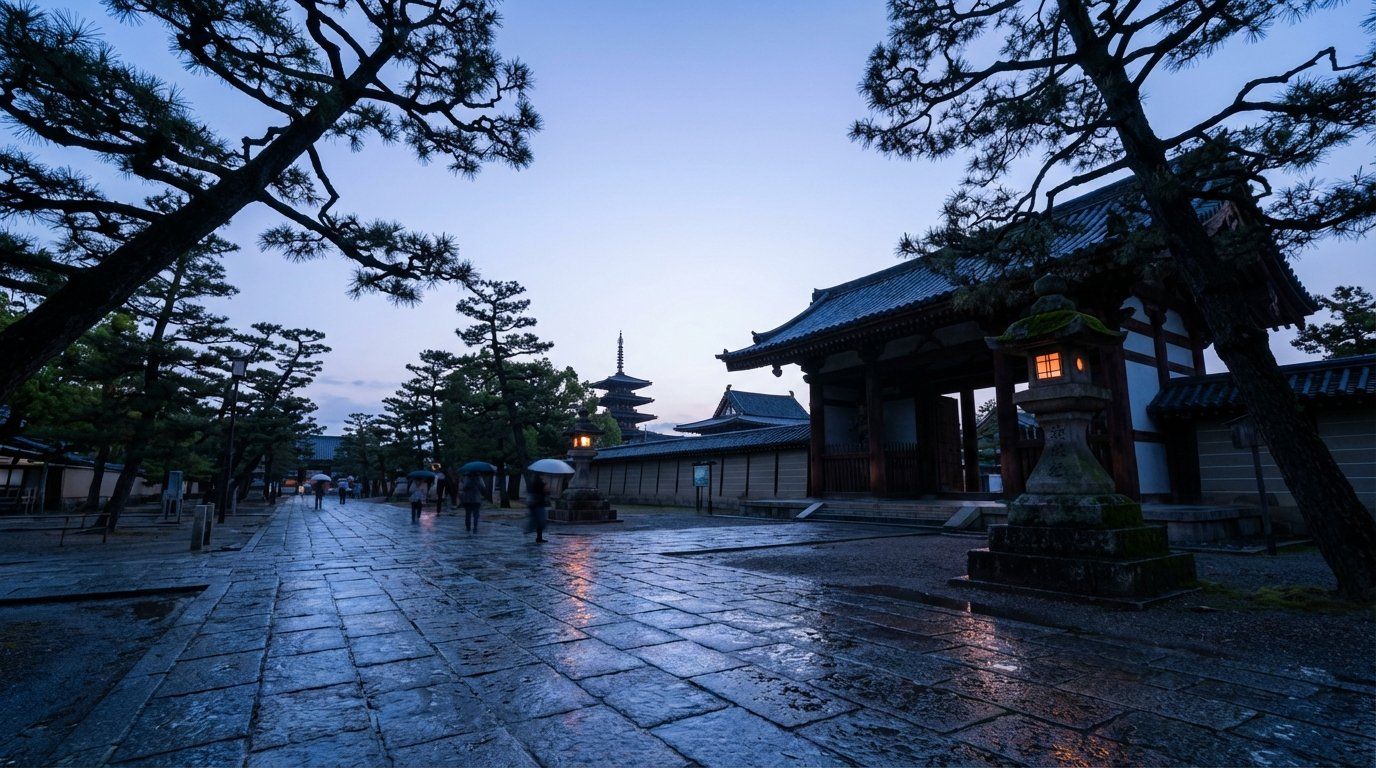 Image for illustrative purposes only.
Here's something most guidebooks don't mention: while the inner precinct of Shitennoji doesn't open until 8:30 AM, the outer temple grounds are accessible 24 hours a day — completely free.
Arrive around 6:30 or 7:00 AM, and you'll have something extraordinary: one of Japan's most historic temple complexes almost entirely to yourself.
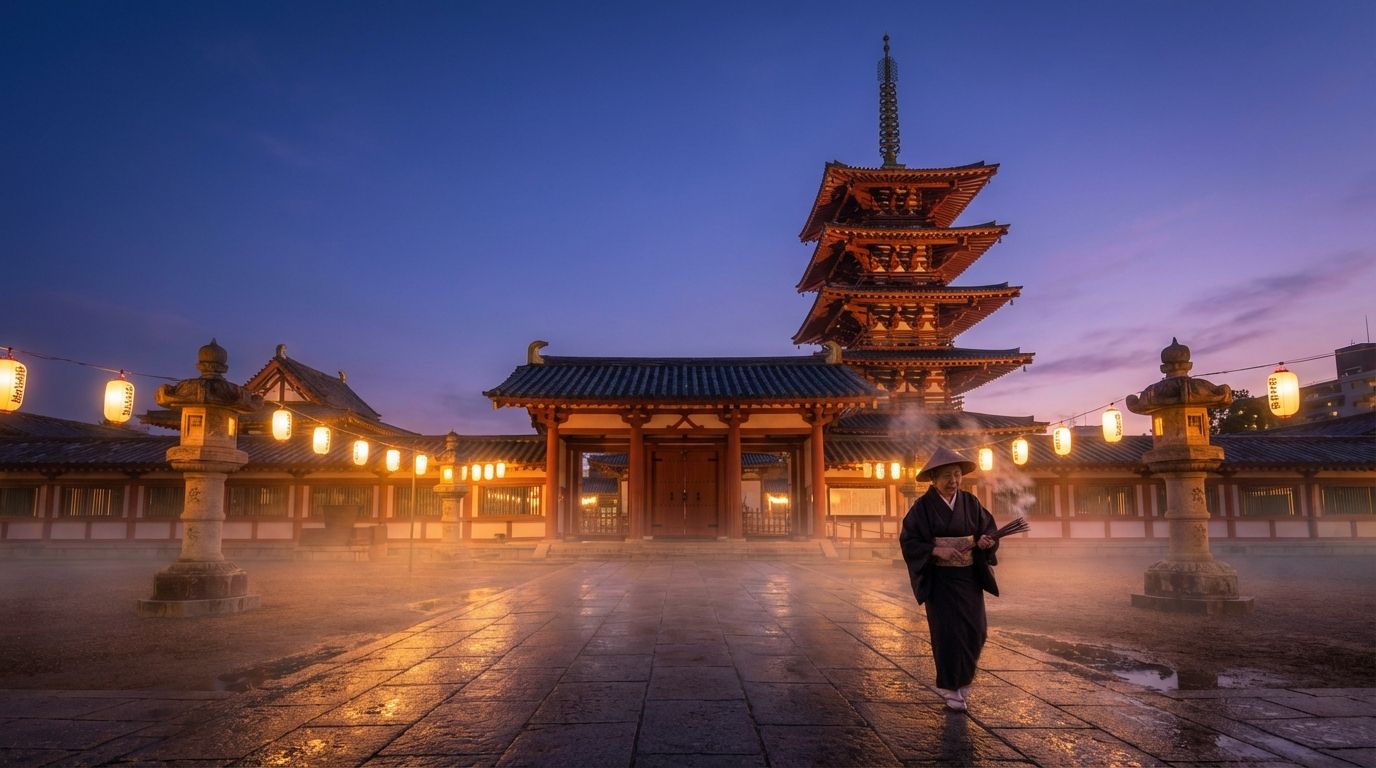
Walk through the massive South Gate and feel the cool morning air on your face. The five-story pagoda rises ahead of you, its vermillion paint glowing softly in the early light. To your left, the covered corridors stretch into shadow. There's no queue, no admission fee, no camera-wielding crowds — just you and fourteen centuries of history.
This is when the regulars come. Elderly neighbors in comfortable shoes, walking their morning route through the grounds as they've done for decades. Some pause at the main gate to bow. Others sit quietly on benches, eyes closed, breathing in the incense-tinged air. You're not watching a performance; you're glimpsing daily life in one of Osaka's oldest neighborhoods.
The Turtle Pond Awakens
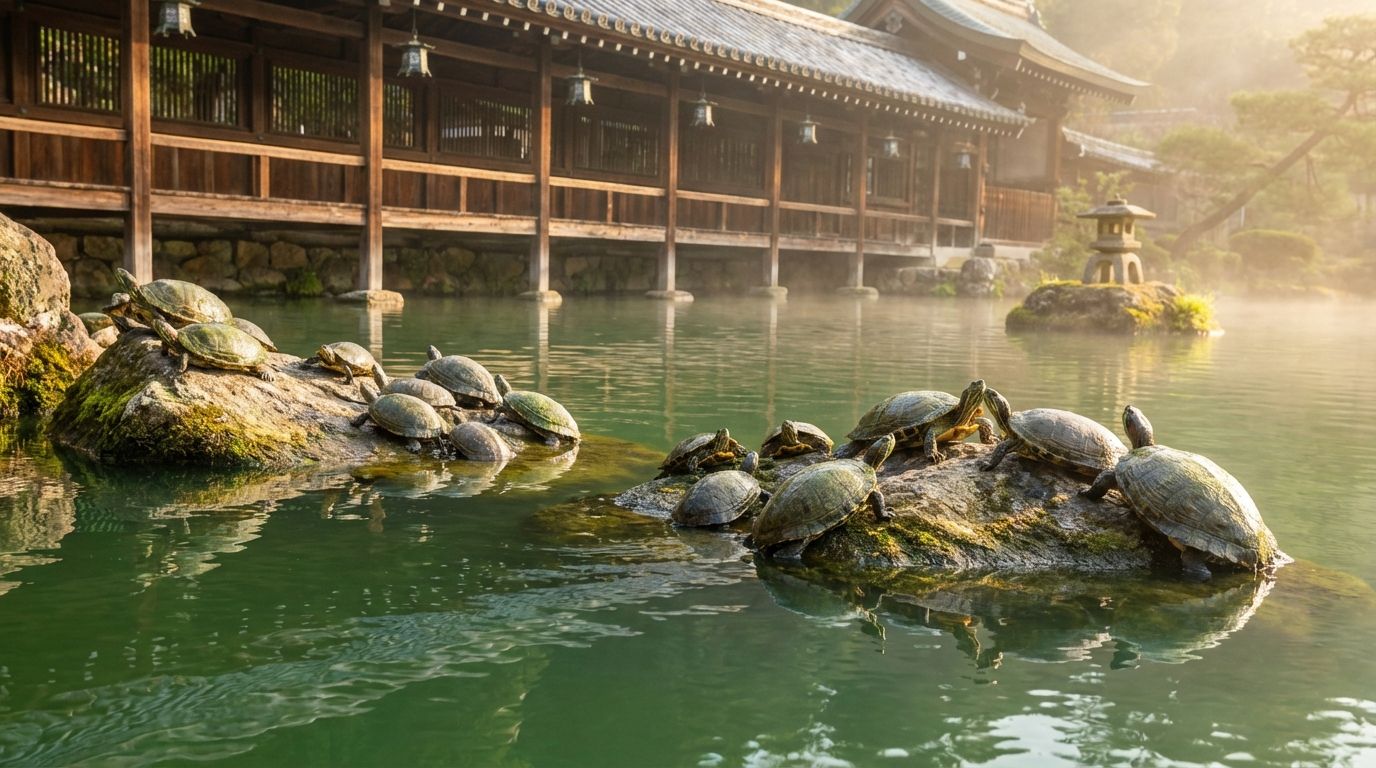 Image for illustrative purposes only.
By 7:30, the sun clears the surrounding buildings and strikes the surface of Kame-no-Ike — the Turtle Pond. What happens next is one of Shitennoji's most charming morning rituals.
Dozens of turtles begin emerging from the water, hauling themselves onto sun-warmed rocks. They stack on top of each other in improbable towers, stretching their necks toward the warmth. Within twenty minutes, nearly every flat surface in the pond is occupied by basking turtles — a scene that's equal parts adorable and absurd.
In Buddhist tradition, turtles symbolize longevity. For centuries, devotees released turtles into temple ponds as an act of compassion called hojo-e (放生会). Today, the Kame-no-Ike residents are a beloved part of the temple ecosystem — and their morning basking session is honestly better entertainment than most things you'll pay admission for.
Pull up a bench. Stay for a few minutes. There's something deeply calming about watching creatures that have been doing exactly this, in exactly this spot, for generations.
Into the Inner Precinct: 8:30 AM
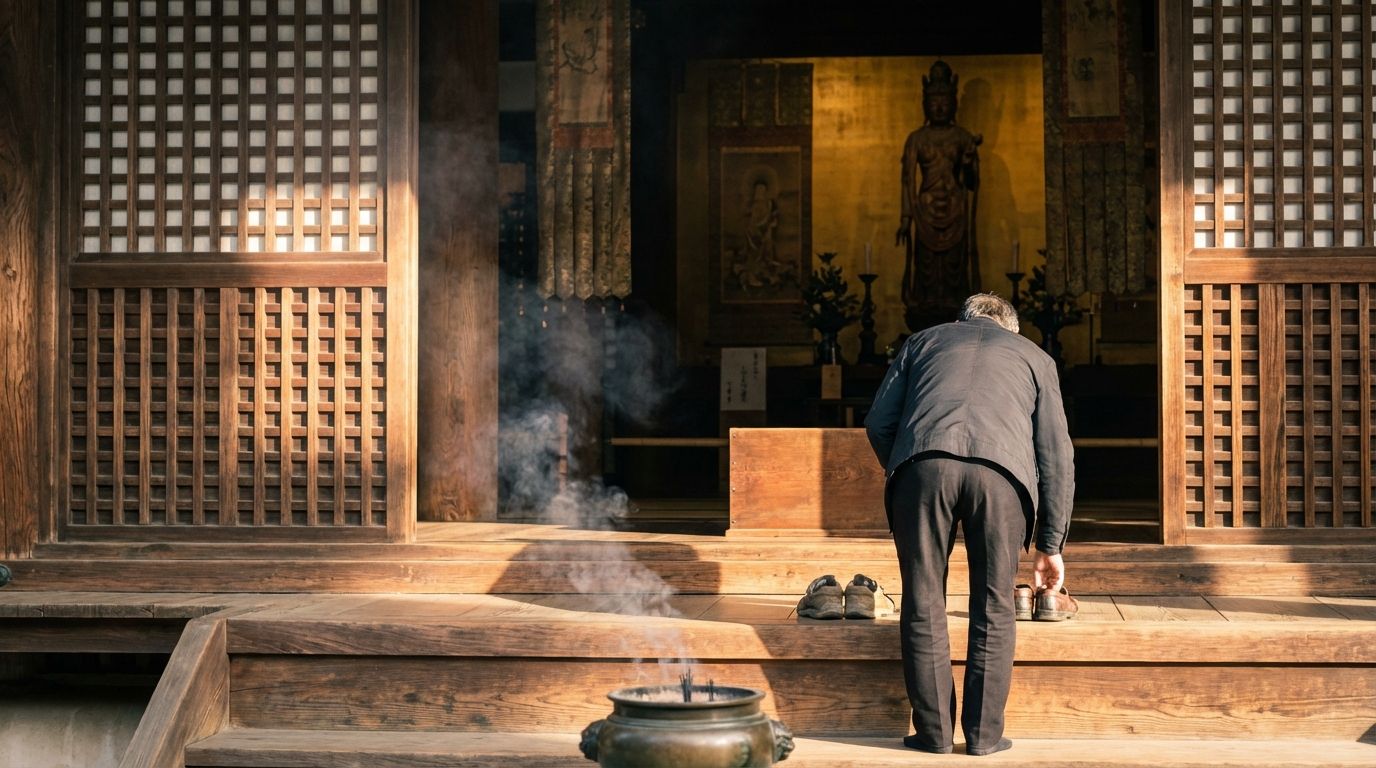 Image for illustrative purposes only.
At 8:30, the inner precinct opens its gates. If you've been wandering the outer grounds since dawn, this transition feels almost ceremonial — stepping from the free, open world into the sacred heart of the temple.
The admission is modest: ¥300 for the central precinct, another ¥300 for the Gokuraku-jodo Garden, or ¥700 for a combined ticket that includes the Treasure House. For what you get — access to structures that trace their lineage to 593 AD — it's a remarkable bargain.
Inside the Kondo (Golden Hall), the air thickens with incense. Candles flicker against golden surfaces. The Kuse Kannon statue gazes out with an expression that hasn't changed in centuries. In the early morning, you might be the only visitor. The silence feels earned — as if the building itself has been holding its breath, waiting for the day to begin.
Climb the five-story pagoda if it's open. Each level represents one of the five Buddhist elements — earth, water, fire, wind, and void — and from the top, you'll see the entire temple complex laid out below in its perfect south-to-north alignment, with the glass towers of modern Osaka rising beyond.
The Gokuraku-jodo Garden: Paradise Before Breakfast
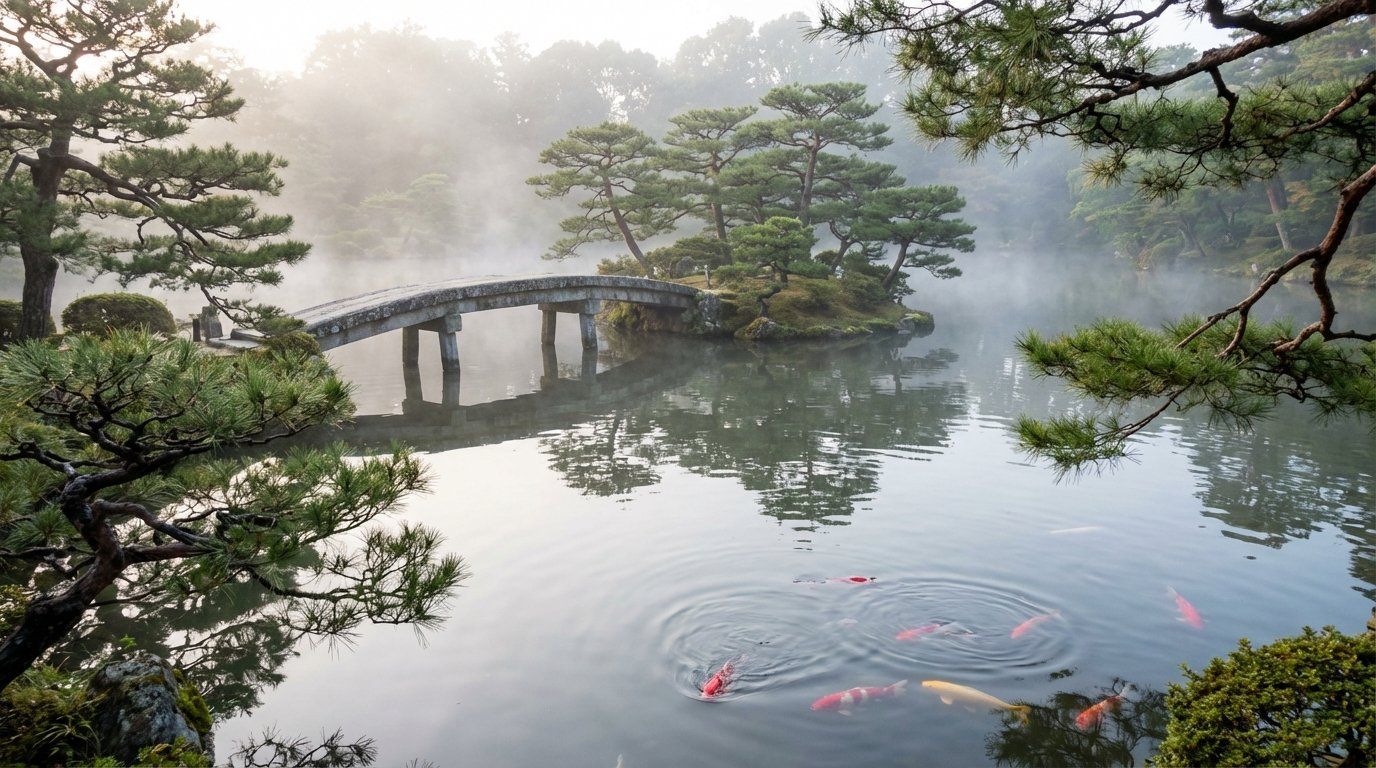 Image for illustrative purposes only.
If you have time for only one paid area, make it the Gokuraku-jodo Garden.
"Gokuraku" means "Ultimate Bliss" — this is a physical recreation of the Buddhist Pure Land paradise, where Amida Buddha welcomes the faithful after death. In the early morning, with mist rising from the pond and not another soul in sight, the name doesn't feel like an exaggeration.
Stone bridges arc over water so still it mirrors the sky perfectly. Koi fish trace slow circles beneath the surface, breaking the reflection into ripples of gold and white. The air smells of wet earth, pine needles, and the faintest trace of incense from the main hall. While Kyoto's hidden shrines are famous for their contemplative gardens, the Gokuraku-jodo offers something rarer: this level of serenity without the crowds.
Sit on one of the benches overlooking the water. Close your eyes. Listen to the water, the birds, the wind in the pines. This garden has provided exactly this kind of solace to Osaka residents through 1,400 years of wars, earthquakes, firebombs, and the relentless churn of change.
You're not just visiting a garden. You're participating in a very old tradition of finding peace.
The Tennoji Seven Slopes: Osaka's Hidden Walking Trail
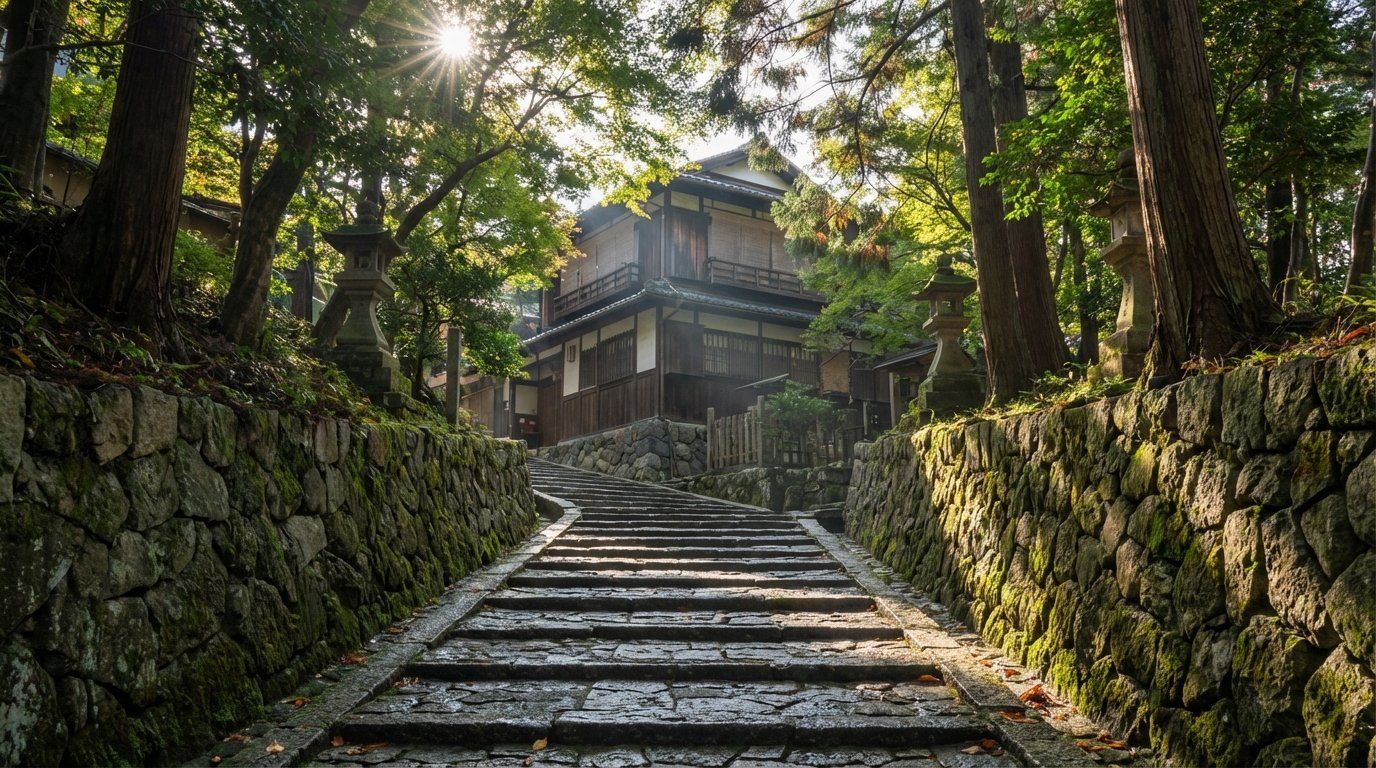 Image for illustrative purposes only.
Now for the part most tourists — even most Japanese visitors from other cities — never discover.
Stretching north from Shitennoji toward Uehommachi, seven historic slopes wind through what was once Osaka's temple district. They're called the Tennoji Seven Slopes (天王寺七坂 / Tennoji Nanasaka), and walking them feels like stepping into a completely different century.
The seven slopes are:
- Aizen-zaka (愛染坂): Named after the nearby Aizen-do temple of love. The steepest and most dramatic, with a long stone staircase flanked by trees.
- Kuchinawa-zaka (口縄坂): "Rope Slope" — named for its serpentine shape. Perhaps the most photogenic, with moss-covered walls and overhanging maples that turn spectacular in autumn.
- Genshoji-zaka (源聖寺坂): A gentle slope past a quiet Jodo Buddhist temple, with beautifully aged stone walls.
- Shingon-zaka (真言坂): The only slope with a Buddhist sect name, leading to the old Shingon temple district.
- Kiyomizu-zaka (清水坂): Named after a small Kiyomizu temple (yes, Osaka has one too). Steep with excellent views.
- Tenjin-zaka (天神坂): Named after the deity of learning. A broad slope with a shrine at the top.
- Osaka (逢坂): The "Meeting Slope" — the longest and broadest, connecting Tennoji to the temple district above.
Walking all seven takes about 90 minutes at a leisurely pace. In the early morning, you'll share these stone-paved paths with nobody but the occasional dog walker and the cats who've claimed the temple walls as their territory.
There's even a stamp rally (台紙 / daishi, ¥100) available from the participating temples and the Tennoji Ward Center — a satisfying way to track your progress through all seven.
What Most Tourists Don't Know
Here's what years of local knowledge and traveler feedback reveal about making the most of a Shitennoji morning walk:
The best station isn't Tennoji. Most visitors walk 12 minutes from Tennoji Station, but Shitennoji-mae Yuhigaoka Station on the Tanimachi Line is only 5 minutes away. Take Exit 4 and you're practically at the South Gate.
The 21st and 22nd are wildly different. These are flea market days — the temple transforms into a bustling bazaar with 300+ vendors. If you want the peaceful morning walk described in this article, avoid these dates. If you want the market chaos (which is also wonderful), come early on the 21st.
The outer grounds are your secret weapon. While most visitors arrive at 8:30 when the paid areas open, the outer grounds at 6:30-7:00 AM offer a completely different — and arguably superior — experience. No tickets needed.
Combine with Isshinji Temple. Just south of Shitennoji, Isshinji Temple (一心寺) is famous for its striking modern gate and unique Buddha statues made from cremated remains. It's free, it opens early, and it's a perfect first stop before Shitennoji.
Breakfast comes after, not before. Almost nothing is open at 6:30 AM. Plan your walk first, then reward yourself with breakfast near Tennoji Station around 9:00-9:30. The station area has excellent bakeries and morning set deals at local kissaten (classic Japanese coffee shops).
A Suggested Morning Route
Here's a 2.5-3 hour Osaka morning walk route that captures the best of the Tennoji temple district:
6:30 AM — Start at Shitennoji-mae Yuhigaoka Station (Exit 4). Walk to Isshinji Temple. Spend 15 minutes admiring the modern gate and peaceful grounds.
6:50 AM — Walk north to Shitennoji's South Gate. Enter the outer grounds. Wander the stone paths, watch the morning regulars, sit by the Turtle Pond.
7:30 AM — Head to the Tennoji Seven Slopes. Start with Aizen-zaka (closest to Shitennoji), then work northward through Kuchinawa-zaka, Genshoji-zaka, and as many others as time allows.
8:20 AM — Return to Shitennoji for the 8:30 opening. Visit the inner precinct and Gokuraku-jodo Garden.
9:15 AM — Exit via the West Gate. Walk to Tennoji Station (10 minutes) for a well-deserved breakfast.
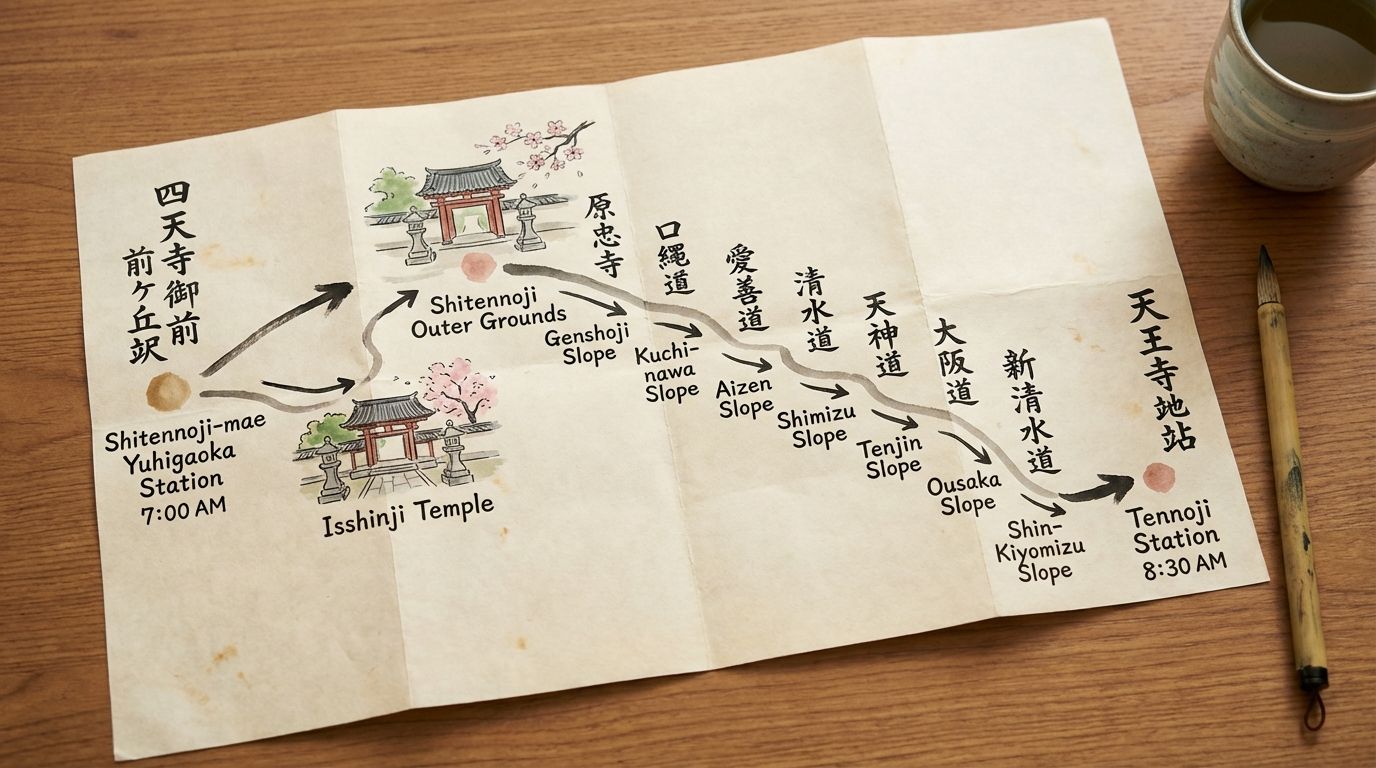 Image for illustrative purposes only.
Practical Information
Access
| Route | Details |
|---|---|
| Shitennoji-mae Yuhigaoka Station | Tanimachi Line, Exit 4 — 5 min walk (recommended) |
| Tennoji Station | JR / Midosuji Line / Tanimachi Line — 12 min walk north |
| From Namba | Midosuji Line to Tennoji (5 min), or Tanimachi Line to Shitennoji-mae (10 min) |
| From Shin-Osaka | Midosuji Line to Tennoji (20 min) |
Address: 1-11-18 Shitennoji, Tennoji-ku, Osaka 543-0051
Hours & Admission
| Area | Hours | Price |
|---|---|---|
| Outer Grounds | 24 hours | Free |
| Inner Precinct | 8:30-16:30 (Apr-Sep) / 8:30-16:00 (Oct-Mar) | ¥300 |
| Gokuraku-jodo Garden | 8:30-16:30 (Apr-Sep) / 8:30-16:00 (Oct-Mar) | ¥300 |
| Treasure House | 8:30-16:00 | ¥500 |
| Combined Ticket | — | ¥700 |
| Tennoji Seven Slopes | Always open | Free |
| Stamp Rally Sheet | Available at participating temples | ¥100 |
Best Time to Visit
| Time | Experience |
|---|---|
| 6:30-7:30 AM | Maximum tranquility, almost no visitors. Outer grounds only. |
| 7:30-8:30 AM | Gentle activity begins. Best for Seven Slopes walk. |
| 8:30-9:30 AM | Inner precinct opens. Garden at its most peaceful. |
| Avoid 21st & 22nd | Monthly flea market days — wonderful but not tranquil. |
Seasonal Notes
| Season | Highlight |
|---|---|
| Spring (Mar-Apr) | Cherry blossoms in the garden; mild morning temperatures |
| Summer (Jun-Aug) | Start earlier (6:00 AM) to beat the heat; lush greenery |
| Autumn (Oct-Nov) | Spectacular fall colors on the Seven Slopes, especially Kuchinawa-zaka |
| Winter (Dec-Feb) | Crisp air, fewest visitors; dress warmly |
Wrapping Up: A Different Osaka
There's a version of Osaka that exists only in the early morning hours — before the takoyaki smoke, before the Dotonbori crowds, before the city puts on its loud, bright, wonderful show.
In the Tennoji temple district, you'll find stone slopes that have been walked for centuries, a garden designed to recreate paradise, turtles performing their ancient sunbathing ritual, and a five-story pagoda that has risen from destruction seven times.
It's the Osaka that locals have always known — a city built not just on commerce and entertainment, but on layers and layers of faith, history, and quiet daily devotion.
Set your alarm. Lace up comfortable shoes. Walk through these ancient grounds before the world wakes up. You'll see a side of Osaka that stays with you long after the neon fades.
Tennoji's central location also makes it a natural base for exploring southern Osaka — the vibrant street food scene of Shinsekai and the towering views from Abeno Harukas are just minutes away, while the quieter rhythms of the temple district are right outside your door.
Want to explore more of the Tennoji area? Read our comprehensive guide to Shitennoji Temple or discover the broader Tennoji Area Guide for everything this neighborhood has to offer.
Frequently Asked Questions
What makes a morning walk through ancient Osaka unique?
This morning walk in the Tennoji district offers a side of Osaka most visitors miss, revealing 1,400 years of living history before the tourist crowds arrive. The air is cool and sharp with the scent of incense, accompanied only by birdsong and distant temple bells.
What are the opening hours and admission fees for Shitennoji Temple?
The outer temple grounds of Shitennoji are accessible 24 hours a day for free, while the inner precinct opens at 8:30 AM. Admission to the central precinct is ¥300, the Gokuraku-jodo Garden is ¥300, or a combined ticket including the Treasure House is ¥700.
What can I see or do at Shitennoji Temple before the inner precinct opens?
Arriving around 6:30 or 7:00 AM allows you to explore the outer grounds almost entirely alone, witnessing locals on their morning routes. By 7:30 AM, you can observe dozens of turtles emerging from Kame-no-Ike (Turtle Pond) to bask in the morning sun, a charming daily ritual.
What is the Gokuraku-jodo Garden?
The Gokuraku-jodo Garden is a physical recreation of the Buddhist Pure Land paradise, meaning "Ultimate Bliss." It features stone bridges over still water, koi fish, and carefully pruned pine trees, offering a serene and contemplative experience.
What are the Tennoji Seven Slopes?
The Tennoji Seven Slopes (Tennoji Nanasaka) are seven historic slopes stretching north from Shitennoji through Osaka's old temple district. Walking them offers a glimpse into a different century, with notable slopes like Kuchinawa-zaka, known for its serpentine shape and moss-covered walls.
Staying in Tennoji?
If you're planning to explore Tennoji, these neighborhood stays let you experience the area like a local.
Explore the Tennoji Area Guide
Discover more things to do, local food spots, and insider tips for Tennoji.
Spots in This Article
MAZE CAFE SHINSEKAI
5.0Maze Cafe Shinsekai stands out as a destination-worthy breakfast spot in Tennoji that consistently impresses with thoughtfully prepared coffee and elevated cafe cuisine—think perfectly executed avocado toast and latte art that photographs beautifully. The space cultivates a genuinely welcoming atmosphere with staff who are knowledgeable about their craft and attentive without being intrusive, making it equally appealing for solo travelers seeking a calm refuge or families wanting quality time. This is the rare cafe that justifies visiting multiple times during a Osaka trip rather than being a one-off stop.
ホルモン居酒屋 やまつ 新世界 shinsekai
4.9This newly-opened horseradish offal izakaya near Tsutenkaku delivers premium-quality grilled offal at remarkably affordable prices—a rare combination that explains its near-universal acclaim. The signature dish, kiku-abura (organ meat), showcases pristine sourcing and careful preparation that far exceeds typical izakaya standards. The no-frills Shinsekai atmosphere and personable ownership create an authentic eating experience where casual drop-ins and repeat visitors feel equally welcome.
Bakery Kitchen aioi
4.8Bakery Kitchen aioi is a small artisanal breakfast spot in Tennoji where everything is made fresh daily by the owner-baker, creating an intimate dining experience that punches well above typical breakfast venues. The menu blends Western comfort food (waffles, avocado toast) with Japanese precision and quality, making it a rare find for foreign visitors seeking authentic homestyle cooking rather than typical tourist fare. Seating is deliberately limited, which preserves the cozy, personal atmosphere but means timing your visit matters. This is ideal if you're looking for a genuine local breakfast spot where the owner-operator genuinely cares about each plate leaving the kitchen.
C.S.B in Tennouji Hookah Cafe Bar
4.8This hookah lounge in Tennoji is your best bet in Osaka for a relaxed shisha experience with genuinely welcoming staff who speak English and go out of their way to help visitors. The combination of quality flavors (including hard-to-find options like guava and raspberry), affordable pricing, and accommodating service makes it equally suitable for late-night jet lag relief or casual evening hangouts. The AC-cooled interior and chill vibe mean you can comfortably spend 2-3 hours here without feeling rushed or uncomfortable.