Tennoji late night food guide — from midnight ramen and 3am konbini feasts to standing bars where locals eat when most of Osaka sleeps.
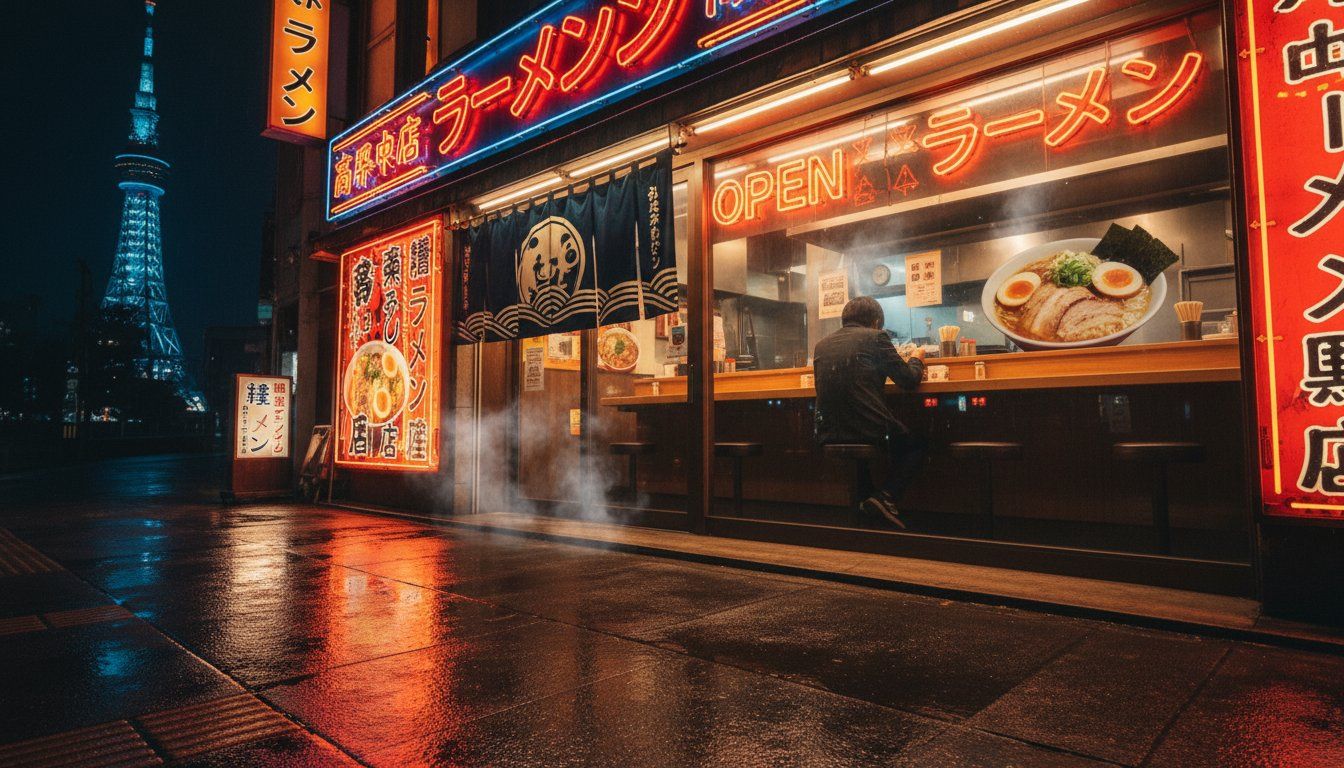 Image for illustrative purposes only.
It is 1:47am and you are standing on a side street near Tennoji Station. Your last izakaya called final orders at eleven. Your stomach, indifferent to closing times, is growling.
Here is what nobody told you before your trip: Osaka's late-night food scene does not shut down at ten. While the tourist restaurants along Dotonbori wind down, a different food world comes alive around Tennoji — one fueled by shift workers, taxi drivers, and locals who believe the best ramen hits the bowl around 2am.
This guide is organized by time, because when you are hungry after midnight, the only question that matters is: what can I eat right now?
11pm to Midnight — Late-Night Eating Begins in Tennoji
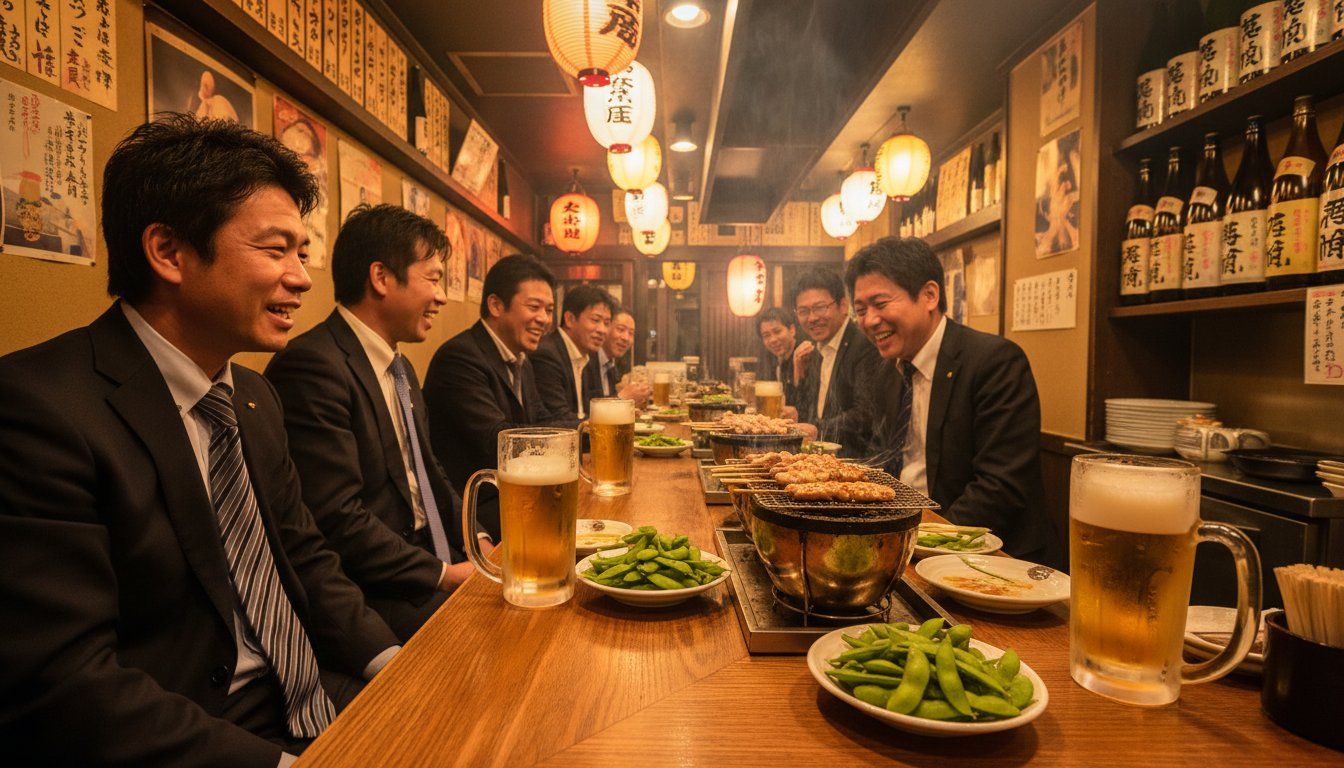 Image for illustrative purposes only.
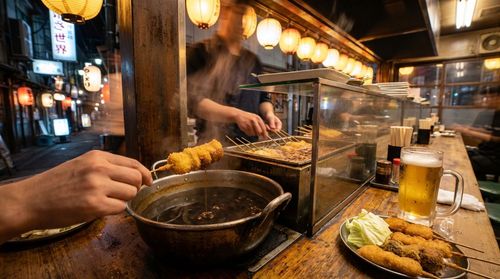
This is the golden hour for late-night eating in Tennoji. Walk south from the station's central exit and you will hit a cluster of small izakaya and tachinomi (standing bars) within two minutes — the spots where office workers stop for one more drink and a plate of yakitori before heading home. The smell of charcoal and soy-glazed chicken fat drifts out of doorways you would walk right past during the day.
Tachinomi are the hidden gem of this hour. A space barely wider than a hallway, four or five people standing at a wooden counter, a fridge of chuhai and beer behind the owner. A chuhai runs around 300 yen, a plate of oden or nikujaga maybe 400 yen. Nobody needs to speak the same language for this to work.
One thing to know: a sign might say a place closes at midnight, but the kitchen stops taking food orders at 11:00 or 11:30. If a place closes at 1am, assume last food order is at midnight. When in doubt, ask "last order nan-ji desu ka?"
Midnight to 2am — The Ramen Hour in Shinsekai and Tennoji
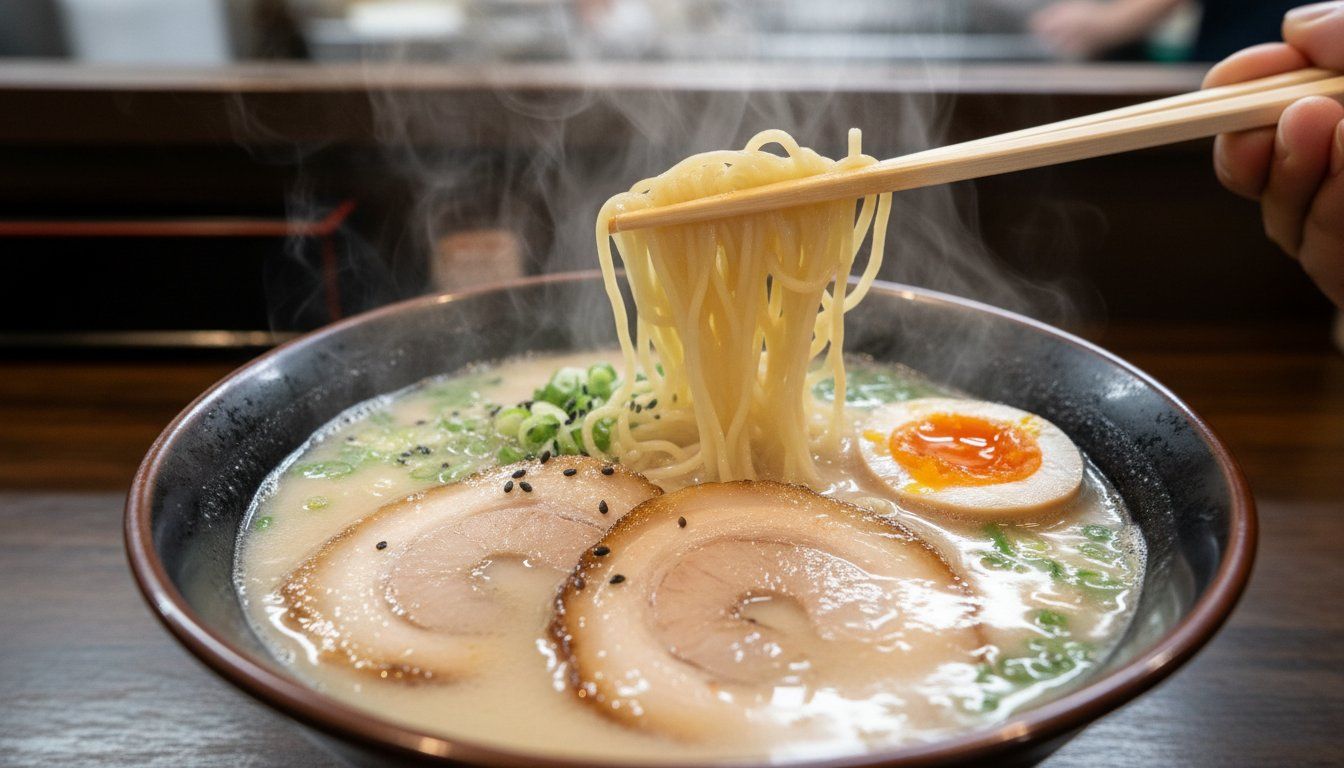 Image for illustrative purposes only.
The izakaya have locked their doors and the streets belong to a different crowd — taxi drivers between fares, nurses finishing shifts, groups of friends not ready for the night to end. This is when ramen shops come into their own.
The best bowls in Tennoji come from tiny operations — eight seats at a counter, one cook, a pot of broth that has been simmering since morning. Tonkotsu broth reaches its deepest, most concentrated flavor somewhere after midnight. That first spoonful, rich and cloudy and savory beyond words, is the kind of thing you will text someone about immediately.
Most ramen shops use a ticket vending machine (kenbaiki) instead of a waiter. Insert cash, press a button — the top-left button is almost always the house specialty at the standard price (usually 800-1,000 yen). Machines rarely accept cards, so bring cash. If the buttons are all in Japanese, open your phone camera and use Google Translate's live translation. And know this: kaedama (替え玉) gets you an extra serving of noodles for 100-150 yen once you finish the first round. The broth stays — you just get more noodles.
Late-night ramen counters are small, fast-turnover spaces. Eat at a good pace and keep conversation low — it is the social contract of a counter seat.
Walk through Shinsekai during this window and you will see Osaka at its most cinematic. The daytime tourist crowds are gone and the kushikatsu shops — the same ones that make Shinsekai famous during Osaka's street food hours — have closed, but the neon stays on. Tsutenkaku Tower glows above the narrow streets — its light reflecting off puddles when the pavement is wet, retro hand-painted signs casting warm light over empty sidewalks. A handful of ramen shops stay open until 2-3am in and around Shinsekai. Follow the light — if a noren curtain is hanging, the door is open.
2am to 4am — 24-Hour Gyudon Chains and Konbini Feasts
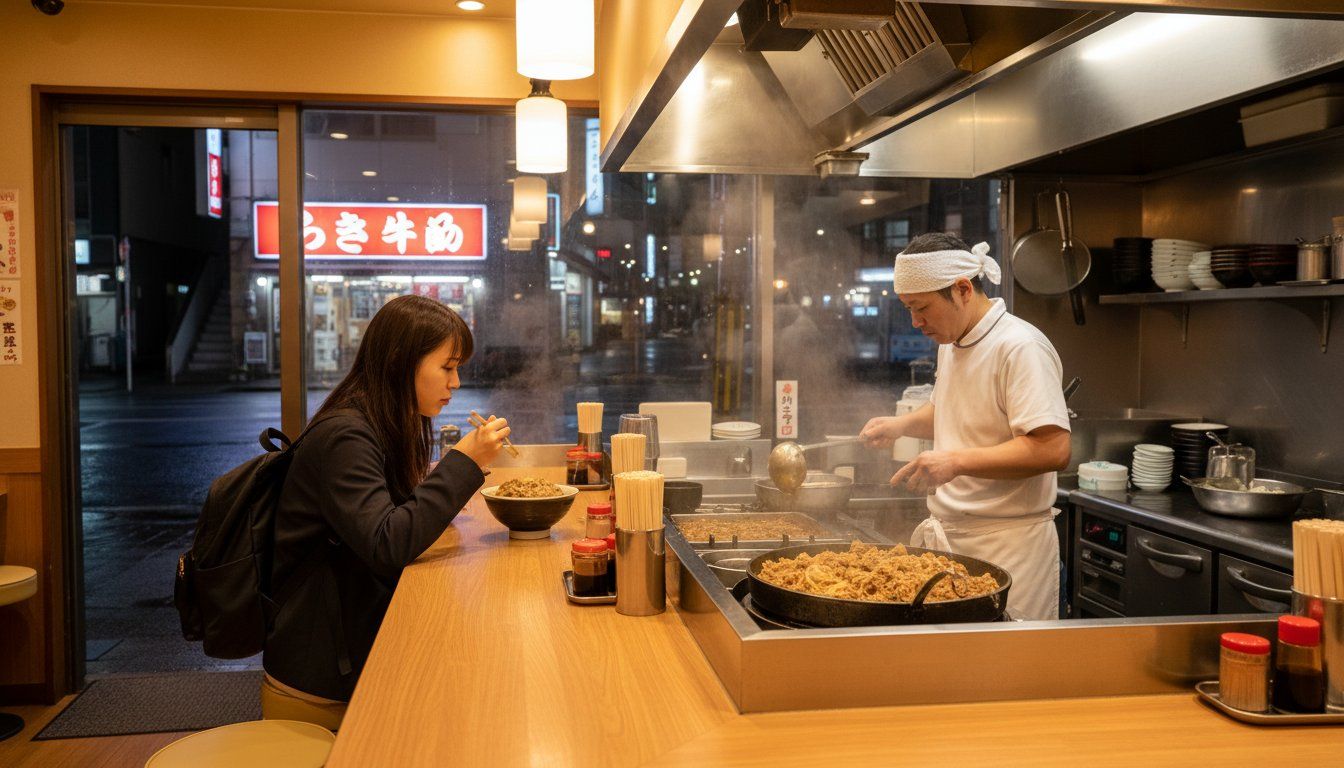 Image for illustrative purposes only.
By 2am, most independent restaurants have closed. Japan's 24-hour chain restaurants take over — and they are more than fast food.
Yoshinoya, Matsuya, and Sukiya all operate 24-hour locations within walking distance of Tennoji Station. A basic gyudon (beef bowl) starts around 468 yen — simmered beef and onions over rice, served in under three minutes. Watch what the regulars do: they crack a raw egg over the top, add shichimi pepper and pickled ginger from the counter condiments, and order a side of miso soup for 100 yen. At 2am, sitting at that counter alongside taxi drivers doing the same thing, the experience has a warmth that no fine-dining restaurant can replicate.
By 3am, the convenience stores become the de facto dining rooms of late-night Osaka. And Japanese konbini food at 3am is not a consolation prize — it is a genuine culinary experience.
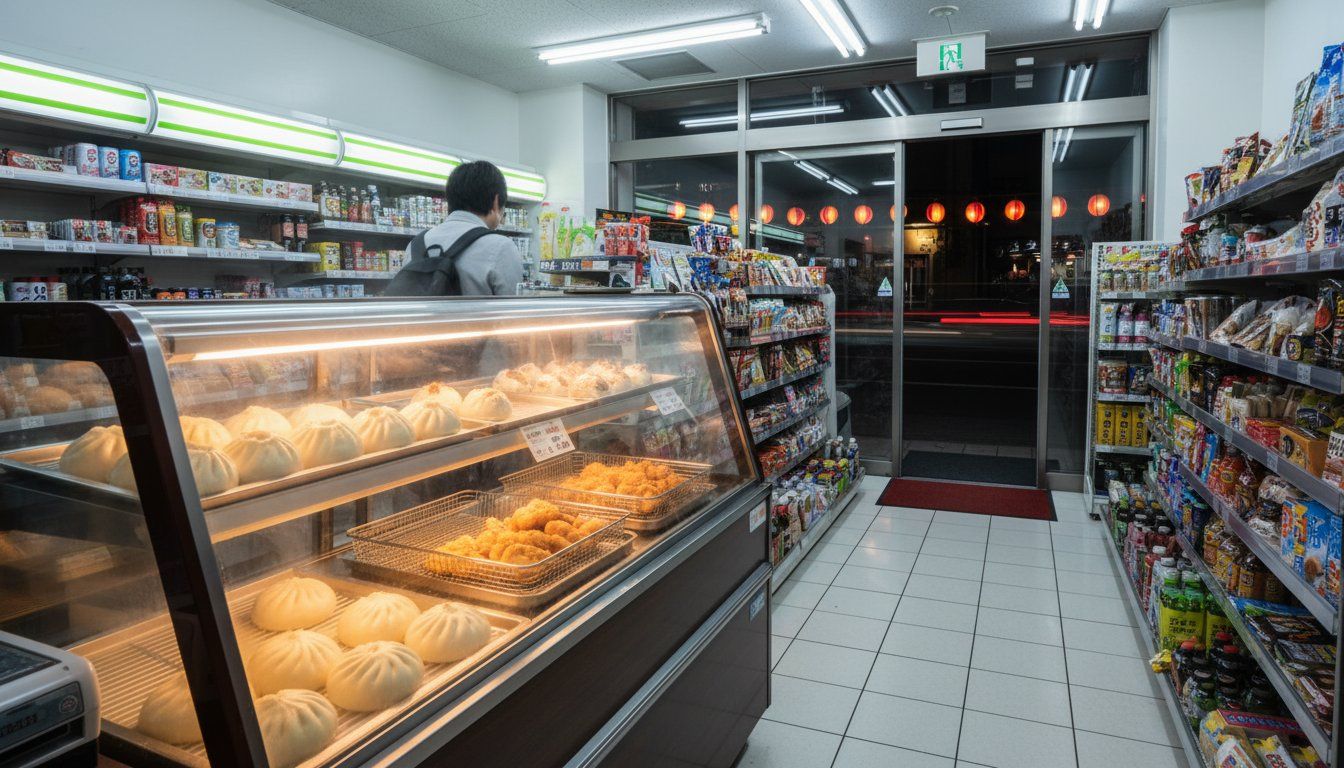 Image for illustrative purposes only.
The hot food case near the register deserves your full attention. Nikuman (steamed meat buns, 150-200 yen) come out soft and pillowy. Karaage (fried chicken, 200-300 yen) are crispy and juicy in a way that has no right being this good from a convenience store. The onigiri shelf — rice triangles with salmon, tuna mayo, or mentaiko — runs 120-200 yen each, and the wrapping keeps the nori crispy until you peel the numbered tabs in order. A few pieces of oden from the counter pot and a warm can of green tea round out the perfect 3am moment.
Tennoji Late Night Food FAQ
Are late-night restaurants in Tennoji shown correctly on Google Maps?
Google Maps hours lie — especially for small late-night shops. Many independent ramen counters in Tennoji do not update their listings. A place marked as "closes at midnight" might serve until 2am on weekends, or close at 11pm on random weekdays. The most reliable sign is the simplest: if the lights are on, the noren is out, and someone is inside — they are open.
Do I need to go to Dotonbori for late-night food in Osaka?
You do not need to go to Dotonbori. Every travel blog sends you there for late-night food. It works, but it is crowded, touristy, and marked up. Tennoji offers the same variety at lower prices, with fewer tourists, and an atmosphere that feels genuinely local.
What happens if I miss the last train at Tennoji Station?
Missing the last train is not a crisis here. The last train from Tennoji runs around 12:00-12:30am, and first trains resume by 5:00-5:30am. Most late-night food spots are within a 10-minute walk of the station. If you are staying nearby, missing the last train just means more time to eat.
Do I need cash for late-night food in Tennoji?
Yes — bring cash. Most ramen ticket machines and small late-night shops around Tennoji are cash-only. Bring at least 3,000-5,000 yen. Convenience store ATMs (7-Eleven, Lawson) accept international cards 24 hours.
Practical Info
| Detail | Info |
|---|---|
| Area | Tennoji Station / Shinsekai / Abeno — south Osaka |
| Access | JR Tennoji, Metro Midosuji/Tanimachi lines, Kintetsu Abenobashi |
| Last trains | JR/Metro: ~12:00-12:30am / Kintetsu: ~11:40pm |
| First trains | ~5:00-5:30am |
| Ramen | ¥750-1,100 per bowl (~$5-7 USD) |
| Tachinomi | ¥500-1,500 for drink + snack (~$3-10 USD) |
| Gyudon chains | ¥400-600 (~$3-4 USD) |
| Konbini meal | ¥300-600 (~$2-4 USD) |
| Cash | Many small shops are cash-only — bring ¥3,000-5,000 |
Wrapping Up
The late-night food scene around Tennoji is not a backup plan — it is a destination in its own right. Start with a tachinomi drink around 11pm. Move to ramen at midnight. Consider a gyudon at 2am. Finish with a nikuman from the konbini at 3am. By the time the first trains run at dawn, you will have experienced a side of Osaka that most guidebooks never mention — and Tennoji's central location means everything in this guide is within walking distance of the station.
If you are staying in the Tennoji area, late-night food is right outside your door — no last-train math, no taxi rides, just a short walk back after your 2am ramen.
For the daytime side of the same neighborhood, our Tennoji local food walk covers kushikatsu, hormone grills, and the standing bars of Janjan Yokocho. And if you are still in the area the next morning, a morning walk through Shitennoji is the perfect quiet counterpoint to the night before. For a bigger picture of how Tennoji fits into a full trip, see our 3-day Osaka itinerary.
Frequently Asked Questions
What kind of food can I find late at night in Tennoji?
The late-night food scene in Tennoji offers a variety of options, starting with izakaya and tachinomi for yakitori and oden. As the night progresses, you
Staying in Tennoji?
If you're planning to explore Tennoji, these neighborhood stays let you experience the area like a local.
Explore the Tennoji Area Guide
Discover more things to do, local food spots, and insider tips for Tennoji.
Spots in This Article
MAZE CAFE SHINSEKAI
5.0Maze Cafe Shinsekai stands out as a destination-worthy breakfast spot in Tennoji that consistently impresses with thoughtfully prepared coffee and elevated cafe cuisine—think perfectly executed avocado toast and latte art that photographs beautifully. The space cultivates a genuinely welcoming atmosphere with staff who are knowledgeable about their craft and attentive without being intrusive, making it equally appealing for solo travelers seeking a calm refuge or families wanting quality time. This is the rare cafe that justifies visiting multiple times during a Osaka trip rather than being a one-off stop.
ラーメン 醤すけ心斎橋店 Ramen SHOSUKE Shinsaibashi
5.0This Shinsaibashi ramen shop delivers authentic, handcrafted bowls that consistently exceed expectations—many visitors report it rivals or surpasses Osaka's more hyped establishments. The standout draw is the silky, meticulously prepared broth paired with fresh noodles, with both shoyu and shio variations earning praise. Staff hospitality is genuinely warm and accommodating to non-Japanese speakers, making it an accessible introduction to serious ramen culture for first-time visitors.
ホルモン居酒屋 やまつ 新世界 shinsekai
4.9This newly-opened horseradish offal izakaya near Tsutenkaku delivers premium-quality grilled offal at remarkably affordable prices—a rare combination that explains its near-universal acclaim. The signature dish, kiku-abura (organ meat), showcases pristine sourcing and careful preparation that far exceeds typical izakaya standards. The no-frills Shinsekai atmosphere and personable ownership create an authentic eating experience where casual drop-ins and repeat visitors feel equally welcome.
Osaka Halal Ramen Wagyutei
4.9This newly opened halal ramen specialist in Tennoji stands out as one of Osaka's rare dedicated halal ramen destinations, offering authentic broth-based ramen without compromise on quality. The owner and staff actively engage with international visitors and speak English, making it exceptionally accessible for foreign tourists unfamiliar with Japanese dining customs. Generous portions at reasonable prices, combined with an genuinely welcoming atmosphere where staff adapt the dining experience (like adjusting air conditioning), create an experience that feels personal rather than transactional.