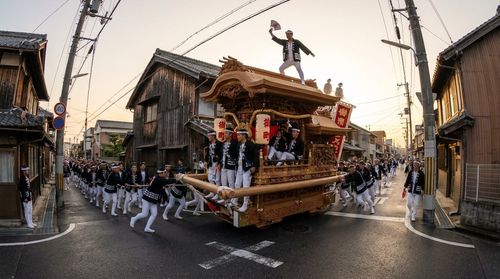
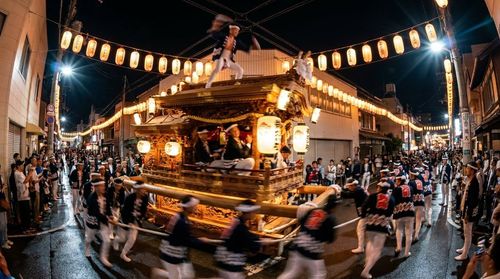
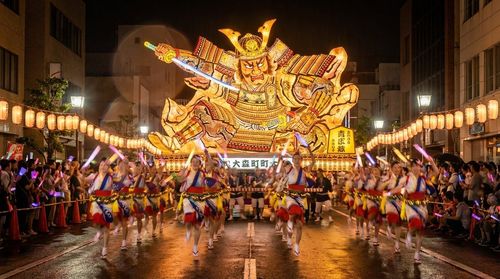
Sapporo Snow Festival 2026 complete guide — Feb dates, Odori & Susukino sites, 200+ snow sculptures, survival tips for -10°C, and free events.
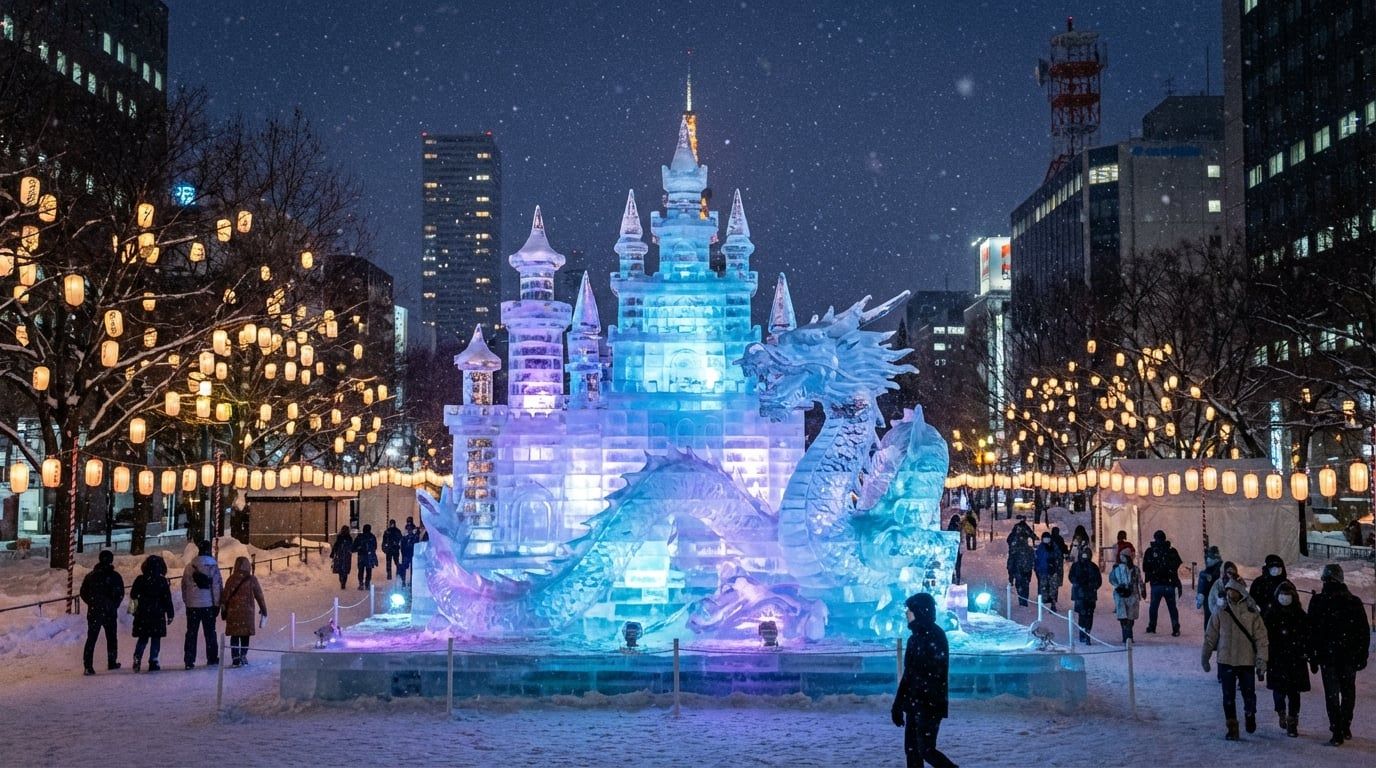 Image for illustrative purposes only.
Step off the train at Odori Station on a February evening and the cold hits you first — a sharp, clean bite that stings your cheeks and turns your breath into silver clouds. Then you look up. Stretching down the center of Sapporo's broadest boulevard, enormous sculptures carved from pure white snow rise three, four, five stories into the night sky. Colored light sweeps across their surfaces — a castle wall blazes crimson, a dragon's scales shimmer emerald, a temple gate glows soft gold. Two million visitors come to witness this every year. Once you see it, you understand why.
Welcome to the Sapporo Snow Festival, or Sapporo Yuki Matsuri — Japan's largest winter celebration and one of the most spectacular festivals on earth. This guide covers everything you need to plan a visit: when to go, which sites to prioritize, what to eat, and how to survive -10°C in style.
Quick Facts
| Dates | February 4–11, 2026 |
| Main Venue | Odori Park (1.5 km of snow sculptures) |
| Other Sites | Susukino (ice sculptures), Tsudome (snow activities) |
| Nearest Station | Odori Station (subway) |
| Admission | Free at all three sites |
| Budget | ¥0 entry + ¥830 1-day subway pass + food |
| Best Time to Visit | Weekday evenings after 6 PM for projection mapping |
| Temperature | -7°C to -1°C (bring proper layers — see Survival Guide below) |
What You'll Find in This Guide
- The history behind one of Japan's most-attended festivals
- A breakdown of all three festival sites and what makes each one worth visiting
- What to see and do (including the projection mapping schedule)
- The best Hokkaido food to try at the stalls
- A cold-weather survival checklist so you're not miserable
- Getting there from Tokyo or Osaka, plus accommodation tips
From Six Sculptures to Two Million Visitors
The story begins in 1950, when six local high school students hauled snow into Odori Park and built six modest sculptures. No grand plan, no city budget — just teenagers with shovels and imagination. The townspeople loved it. By the following year, the sculptures grew taller. Contest rules appeared. The Japan Self-Defense Forces eventually joined in, bringing heavy equipment that made building-sized creations possible. International teams started arriving in the 1970s.
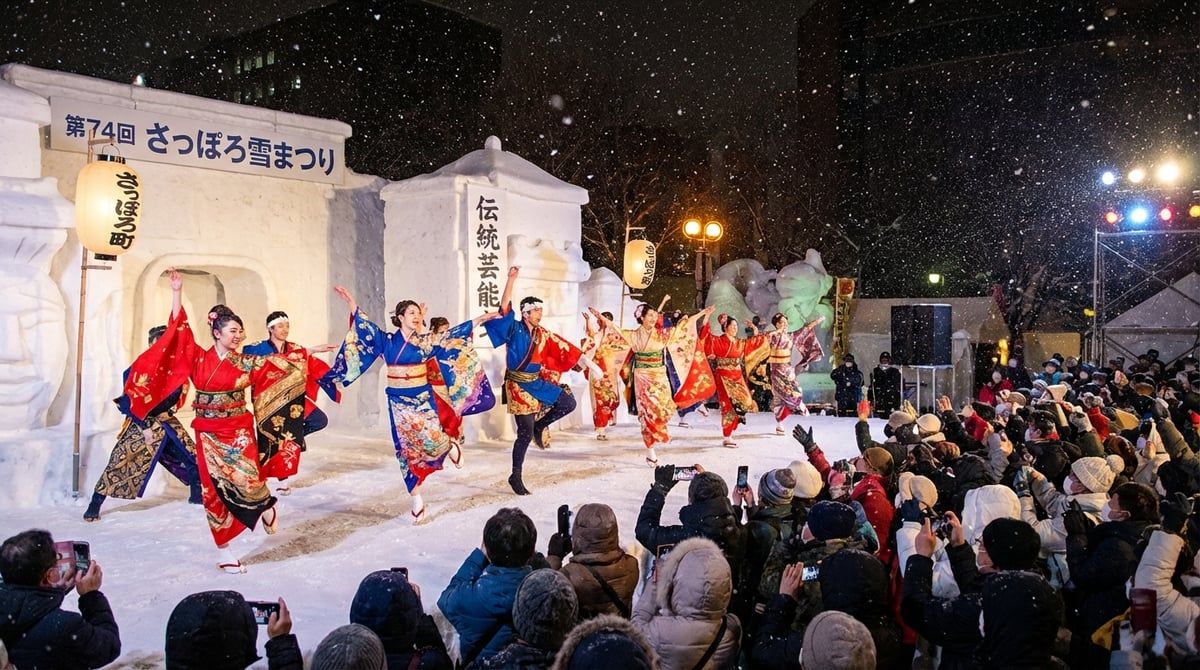 Image for illustrative purposes only.
Today the festival draws over two million visitors across a single week, and the sculptures have become engineering marvels — some reaching 15 meters tall and 25 meters wide, requiring weeks of careful construction by teams working through Hokkaido's harshest weather. What started as a handful of snow piles is now a cultural institution that defines winter in Japan.
The Three Festival Sites
The 2026 Sapporo Snow Festival runs February 4–11 across three distinct venues, each with its own character.
Odori Park — The Main Stage
Odori Park stretches 1.5 kilometers through central Sapporo, and during the festival it transforms into an open-air gallery of monumental snow art. The massive sculptures here are the festival's headline attraction — past years have featured full-scale replicas of world landmarks, characters from anime and games, and original works depicting Japanese mythology.
At night, the experience shifts entirely. Projection mapping bathes the largest sculptures in animated light shows — waves crash across snow surfaces, cherry blossoms swirl around frozen towers, and entire stories play out in light and shadow. The crowds press close, phones raised, breath rising in unison. Stand near the western end of the park where the crowd thins slightly and you can take in the full sweep of illuminated sculptures stretching toward Sapporo TV Tower, its red lattice glowing against the black sky.
Access: Odori Station (Namboku, Tozai, or Toho subway lines). The park runs from Nishi 1-chome to Nishi 12-chome — enter from any cross street.
Susukino — Ice Under Neon
Sapporo's famous entertainment district takes on a different energy during the festival. Ekimae-dori, the main boulevard through Susukino, fills with ice sculptures — crystalline, translucent works that catch the neon glow of the bars and restaurants lining every block. The effect is otherworldly: delicate ice carvings of fish, birds, and mythical creatures lit from within by colored lights, while the warm buzz of Susukino's nightlife pulses all around.
Look for the ice bar installations where you can sip drinks from glasses carved out of ice, standing at a counter made of ice, under a roof made of ice. Your fingers go numb. The whisky has never tasted better.
Access: Susukino Station (Namboku Line), one stop south of Odori.
Tsudome — Snow Playground
Located in Sapporo's eastern Higashi ward, Tsudome is the festival's family-friendly venue. Giant snow slides send kids (and plenty of adults) careening down icy chutes on inflatable tubes. Snow rafting, snowball target games, and a massive indoor warming area with food stalls make this the place to go if you're traveling with children or simply want to play in the snow rather than admire it.
Access: Free shuttle buses run from Sakaemachi Station (Toho Line) during the festival.
What to See and Do
Chase the projection mapping. The evening light shows at Odori Park typically run from 6:00 PM to 10:00 PM. Arrive before 6:00 PM to secure a good vantage point near the main sculpture stages around Nishi 4-chome and Nishi 8-chome.
Wander Susukino after dark. The ice sculptures are best experienced at night when the district's neon signs create an ever-shifting palette of reflected color. The Ice Sculpture Contest pieces near the Susukino intersection are often the most intricate.
Try the snow activities at Tsudome. Even if you don't have kids, the giant tube slides are genuinely thrilling — and free.
Join a snow sculpture contest. International and citizen categories welcome amateur teams. Check the official site for registration deadlines if you want to try building your own creation.
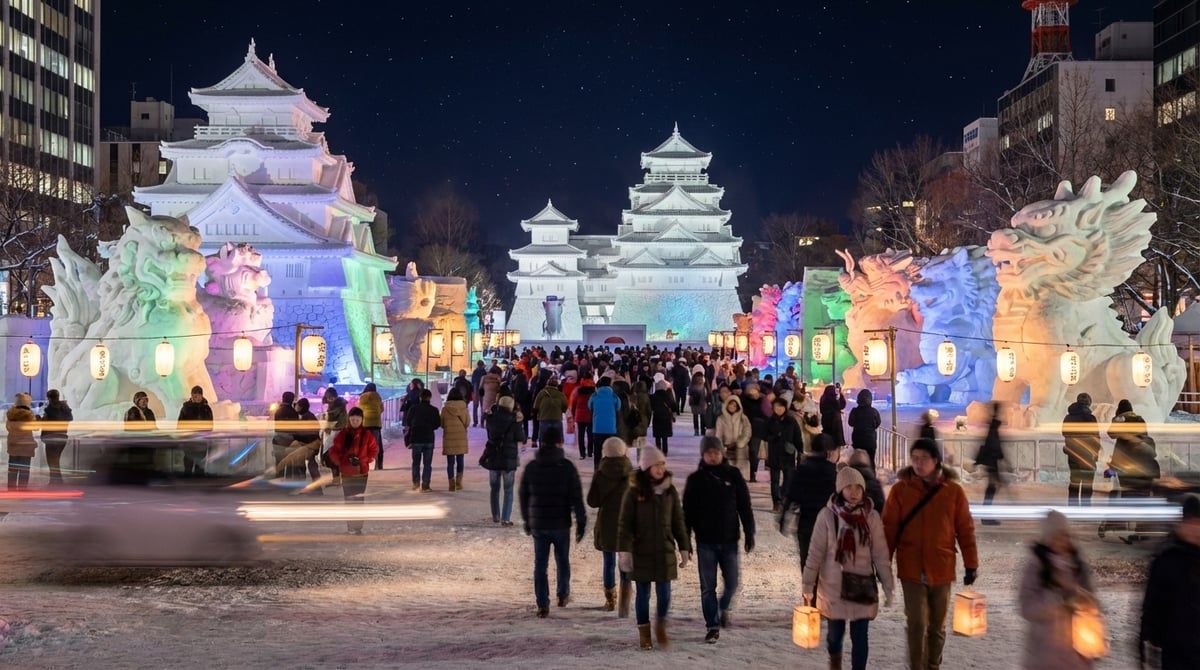 Image for illustrative purposes only.
Festival Food: Fuel for the Cold
Hokkaido's food culture is reason enough to visit Sapporo, and the festival concentrates it beautifully. Food stalls line the edges of Odori Park, steam rising from every booth.
Genghis Khan (Jingisukan) — Hokkaido's signature dish: thin-sliced lamb grilled on a dome-shaped iron plate, the fat sizzling and dripping while you dip each piece in a tangy soy-based sauce. The smoky aroma drifts across the festival grounds and pulls you in before you even see the grill.
Sapporo Miso Ramen — Rich, butter-laced miso broth with corn, bean sprouts, and ground pork. After an hour in minus-five temperatures, a bowl of this will restore feeling to your extremities and your spirit.
Soup Curry — A Sapporo original: a thin, intensely spiced curry broth loaded with large-cut vegetables, tender chicken, and served alongside a mound of rice. Warming from the inside out.
Hot drinks — Amazake (sweet fermented rice drink), hot cocoa, and warm sake flow freely from the stalls. Wrap both hands around the cup. You'll need to.
Survival Guide: Beating the Hokkaido Cold
February in Sapporo means temperatures between -7°C and -1°C (19°F to 30°F), often dropping further after dark. Snow is constant. Wind cuts through anything thin. You need to prepare.
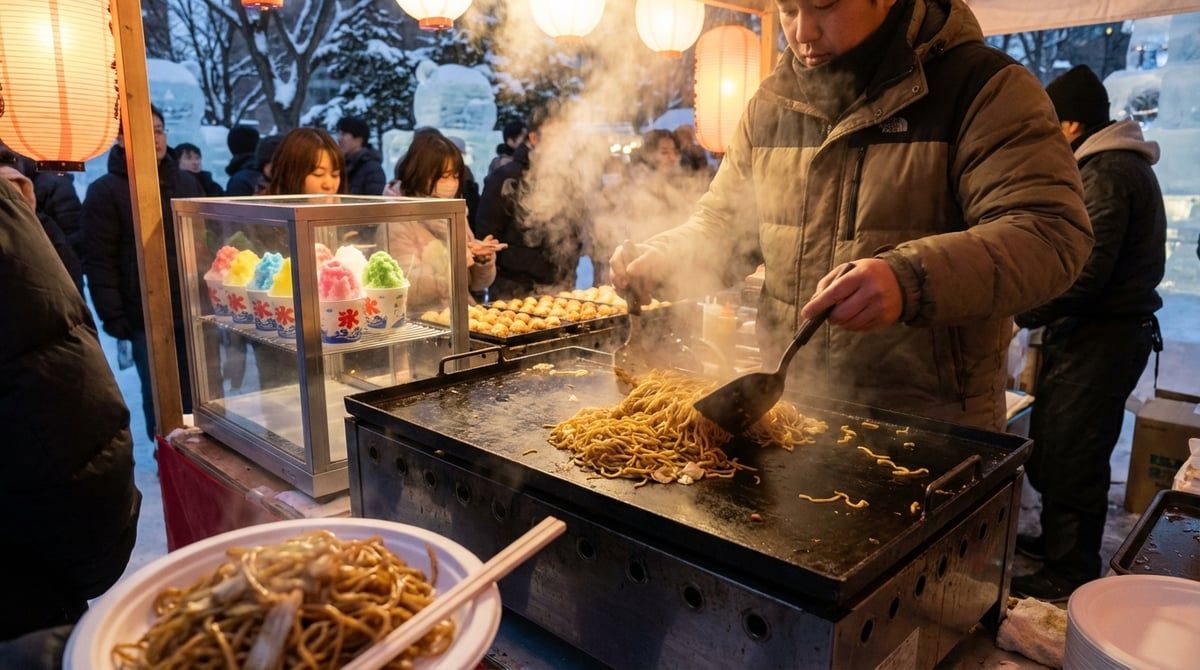 Image for illustrative purposes only.
Layer aggressively. Thermal base layer, fleece or wool mid-layer, and a windproof, waterproof outer shell. Cotton is your enemy — it absorbs moisture and freezes.
Protect your extremities. Insulated waterproof boots are essential. Bring hand warmers (disposable kairo packets sold at every convenience store in Hokkaido). Wear a warm hat that covers your ears, and don't skip the neck gaiter or scarf.
Attach shoe spikes. Sapporo's sidewalks become sheets of polished ice. Slip-on crampon attachments (sube-ranai-zo — "I won't slip!") are sold at shoe stores and convenience stores throughout the city. Buy them on arrival. They are not optional.
Keep your phone warm. Lithium batteries drain fast in extreme cold. Keep your phone in an inner pocket close to your body and pull it out only when needed.
Getting There & Staying
From Tokyo or Osaka: Fly to New Chitose Airport (1h40m from Tokyo Haneda, ~2h from Osaka Kansai). Take the JR Rapid Airport train to Sapporo Station — about 40 minutes, covered by Japan Rail Pass.
Getting around: Sapporo's subway connects all three festival sites. Buy a 1-day pass (¥830) on arrival — it pays for itself after two trips.
Accommodation: Book as early as possible. Central Sapporo hotels sell out months ahead for festival week. Otaru (30 min by JR) and Shin-Sapporo are solid backup options with easy access.
Pair it with Otaru: The Otaru Snow Light Path Festival runs around the same dates — thousands of candles and lanterns along Otaru's historic canal, just 30 minutes from Sapporo. A perfect day trip contrast to the main event.
Plan Your Festival Season
The Sapporo Snow Festival is one jewel in Japan's extraordinary winter festival calendar. For a broader look at what's happening across the country, explore our complete guide to Japanese festivals or check the 2026 festival calendar to plan around multiple events. If you're drawn to winter celebrations specifically, our winter festivals guide covers the best from Hokkaido to Kyushu.
 Image for illustrative purposes only.
For more events in the Sapporo region, see our Sapporo festivals roundup, and don't miss our festival-going tips for practical advice on navigating crowds, etiquette, and making the most of any Japanese matsuri.
The Sapporo Snow Festival runs February 4–11, 2026. Bundle up, bring your appetite, and let the snow enchant you.
Frequently Asked Questions
When is the Sapporo Snow Festival held in 2026?
The Sapporo Snow Festival in 2026 will take place from February 4th to February 11th. For the best experience, visit on weekday evenings after 6 PM to see the projection mapping.
Is there an admission fee for the Sapporo Snow Festival?
No, admission to all three festival sites (Odori Park, Susukino, and Tsudome) is free. You will only need to budget for transportation, food, and other personal expenses.
What are the main attractions at the Sapporo Snow Festival?
The festival features monumental snow sculptures and projection mapping at Odori Park, intricate ice sculptures in Susukino, and family-friendly snow activities like giant slides at Tsudome. Each site offers a unique experience.
What kind of food can I try at the Sapporo Snow Festival?
You can enjoy Hokkaido's signature dishes such as Genghis Khan (Jingisukan) lamb, Sapporo Miso Ramen, and warming Soup Curry from the numerous food stalls. Hot drinks like Amazake and sake are also available to help combat the cold.
What is the weather like during the Sapporo Snow Festival, and what should I wear?
Temperatures in February typically range from -7°C to -1°C (19°F to 30°F), often dropping lower after dark, with constant snow and wind. Proper layering and warm clothing are essential for comfort.
Explore More Festival Guides
Continue your Japan festival journey with these related guides: