From Sapporo's snow sculptures to summer lavender festivals — discover Hokkaido's best matsuri across all four seasons.
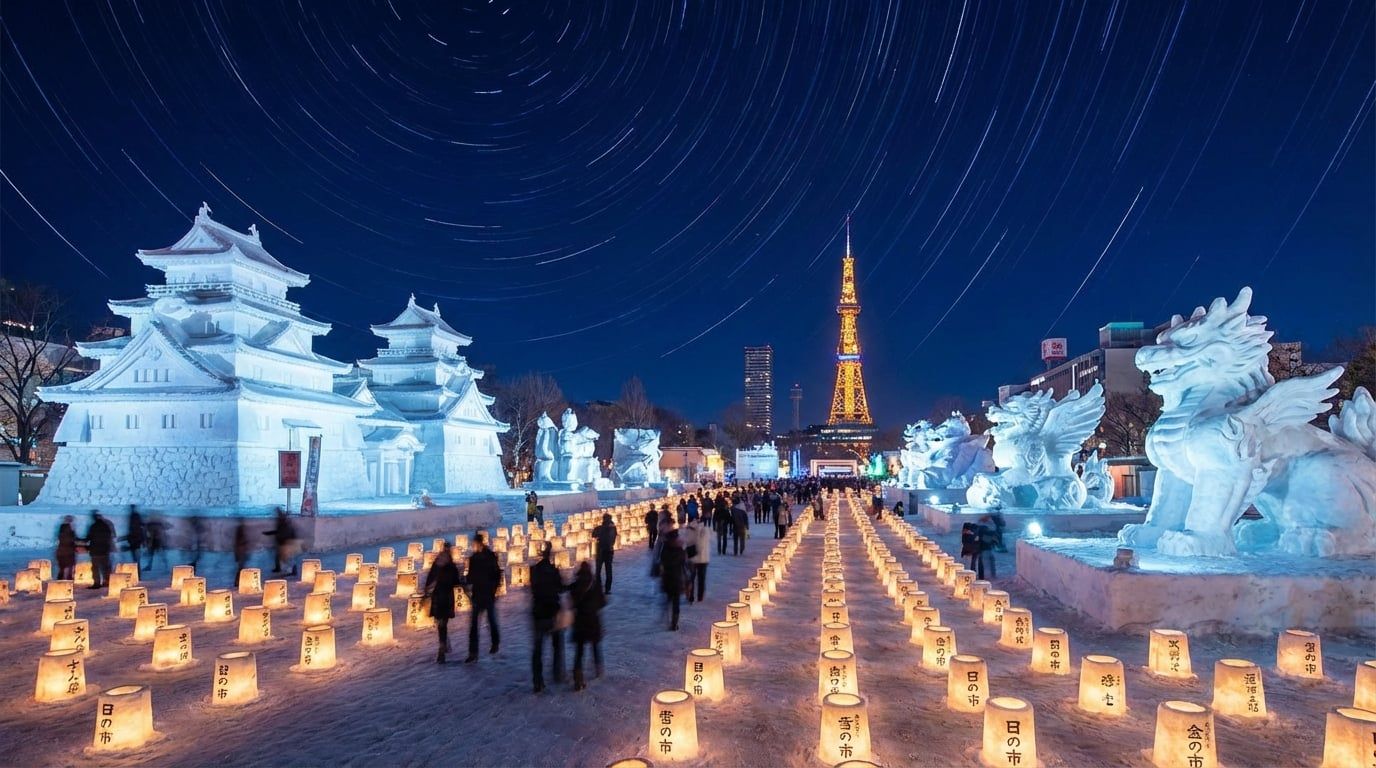 Image for illustrative purposes only.
When most travelers think of Japanese festivals, images of Kyoto's lantern-lit shrines or Tokyo's bustling summer matsuri come to mind. But Japan's northernmost island holds a festival calendar that rivals anywhere in the country — one shaped by dramatic seasons, indigenous Ainu culture, and a landscape that transforms completely four times a year. Hokkaido's festivals are bold, surprising, and unlike anything you will find on the mainland.
Whether you are chasing illuminated snow sculptures in February or fields of purple lavender in July, Hokkaido delivers festivals with a sense of scale and wildness that feels refreshingly different. Here is your guide to the best of them.
Sapporo Snow Festival (Sapporo Yuki Matsuri) — February
The crown jewel of Hokkaido's festival scene, the Sapporo Snow Festival draws over two million visitors each year across three venues. The main Odori Park site stretches for over a kilometer, lined with massive snow and ice sculptures — some reaching 15 meters tall — illuminated against the winter night sky.
The Susukino venue focuses on intricate ice sculptures, while the Tsudome site offers snow slides and family-friendly activities. The festival typically runs for about a week in early February, and evening visits are essential for seeing the sculptures dramatically lit up.
- When: Early February (usually 7 days)
- Where: Odori Park, Susukino, Tsudome — Sapporo
- Cost: Free (food stalls and some activities extra)
Otaru Snow Light Path (Otaru Yuki Akari no Michi) — February
Running concurrently with the Sapporo Snow Festival, the Otaru Snow Light Path offers an entirely different atmosphere. The historic canal district and former railway line are lined with hundreds of hand-crafted snow lanterns and candles, casting a warm amber glow across the frozen waterways.
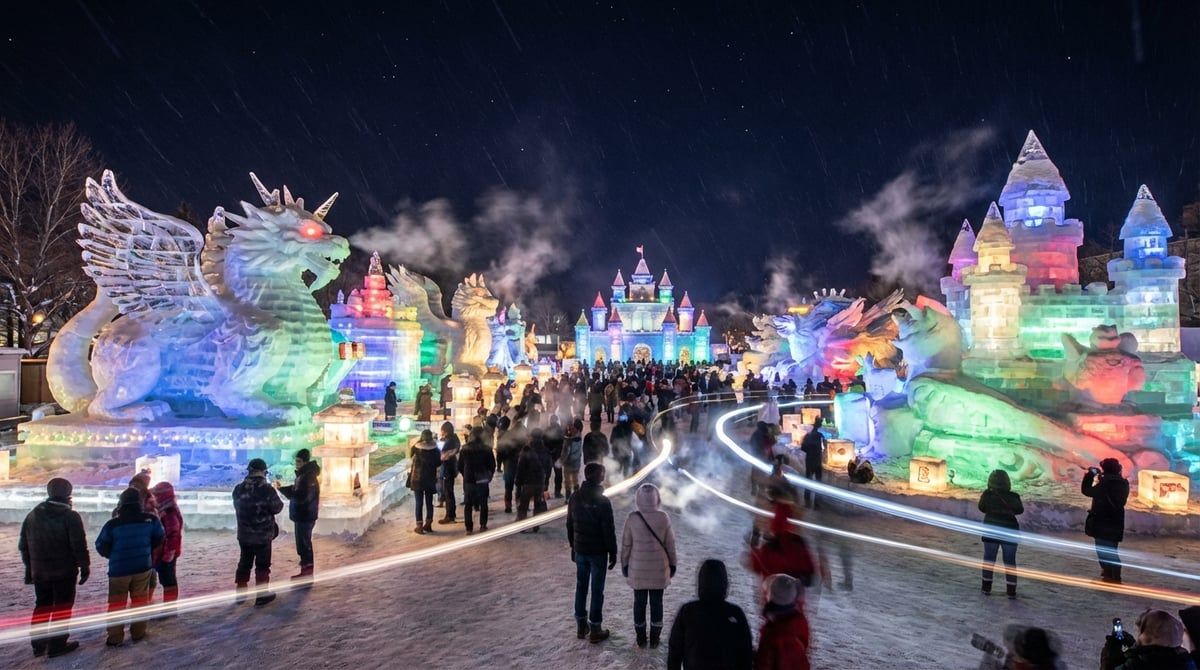 Image for illustrative purposes only.
This is one of the most romantic winter events in all of Japan. The scale is intimate rather than grand — volunteers shape each lantern by hand — and the quiet canal reflections create scenes that feel almost dreamlike. Otaru is just 40 minutes from Sapporo by train, making it easy to combine both festivals in a single trip.
- When: Mid-February (about 10 days)
- Where: Otaru Canal area and Temiya Railway site
- Cost: Free
Asahikawa Winter Festival — February
Asahikawa's winter festival competes with Sapporo for the title of Hokkaido's greatest snow event. It holds the Guinness record for the largest snow sculpture ever built, and its main stage structure is consistently jaw-dropping. The festival grounds at Asahi Bridge sit along the Ishikari River, with fireworks, live music, and ice slides adding to the spectacle.
With fewer international tourists than Sapporo, Asahikawa offers a more local-feeling experience. The city is also the gateway to Daisetsuzan National Park, giving winter travelers even more reason to venture north of Sapporo.
- When: Early to mid-February
- Where: Asahi Bridge area, Asahikawa
- Cost: Free
Yosakoi Soran Festival — June
Summer transforms Hokkaido's festival energy completely. The Yosakoi Soran Festival is Sapporo's explosive answer to the traditional Yosakoi dance of Kochi Prefecture, fused with the Soran fishing song of Hokkaido. Around 30,000 dancers in vivid costumes take over Odori Park and Sapporo's main streets for five days of high-energy choreographed performances.
Teams from across Japan (and sometimes overseas) compete with original routines that blend traditional movement with modern music, acrobatics, and theatrical flair. The atmosphere is electric, and the sheer variety of dance styles keeps things unpredictable from one performance to the next. For a deeper look at Japan's broader festival traditions, see our complete festivals guide.
- When: Early June (5 days, usually starting second Wednesday)
- Where: Odori Park and surrounding streets, Sapporo
- Cost: Free (some reserved seating available for purchase)
Lavender Festivals of Furano — July
From late June through early August, the rolling hills of Furano and Kamifurano erupt in vivid purple as lavender fields reach full bloom. Farm Tomita is the most famous spot, but smaller farms throughout the area host their own festivals with lavender-flavored soft serve, essential oil workshops, and panoramic flower viewing.
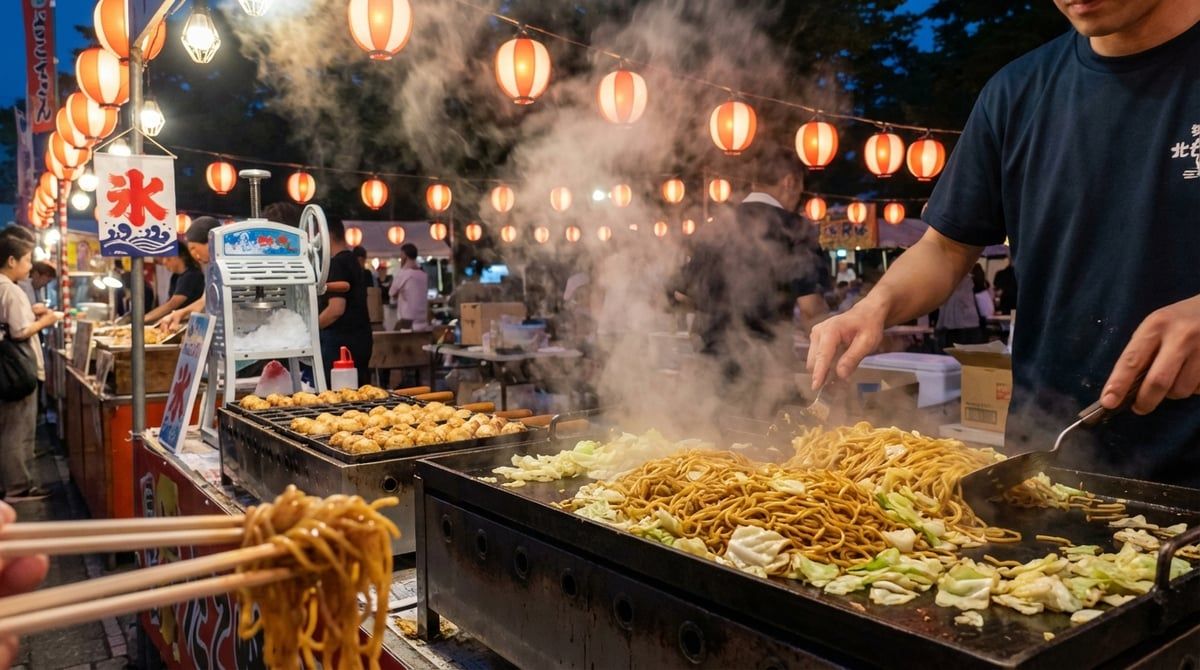 Image for illustrative purposes only.
The Nakafurano Lavender Festival in mid-July is the main event, featuring fireworks, live performances, and local food stalls surrounded by fields stretching to the mountain horizon. July is peak season, and the visual impact of endless lavender rows against Hokkaido's blue skies is extraordinary.
- When: Mid-July (lavender season: late June to early August)
- Where: Furano and Kamifurano area
- Cost: Free (most farms have no admission fee)
Sapporo Autumn Fest — September to October
Food lovers, take note. The Sapporo Autumn Fest turns Odori Park into one of Japan's largest outdoor food festivals, running for nearly a month. Over a hundred stalls serve Hokkaido's finest: fresh seafood bowls, lamb jingisukan grilled at your table, ramen from competing shops, local craft beer, and seasonal produce.
Each block of the park is organized by theme — one section for ramen, another for wine, another for grilled meats — making it easy to plan your eating strategy. The festival coincides with Hokkaido's spectacular autumn foliage, adding color to every meal.
- When: Mid-September to early October
- Where: Odori Park, Sapporo
- Cost: Free entry (food purchased individually, expect 500-1,500 yen per dish)
Marimo Festival (Lake Akan) — October
Deep in eastern Hokkaido, the Marimo Festival at Lake Akan celebrates the lake's unique marimo — spherical green algae found naturally in only a handful of lakes worldwide. This three-day event is rooted in Ainu culture and features traditional Ainu dances, torch-lit ceremonies at the lakeshore, and the symbolic return of marimo to the lake.
It is one of the few festivals in Japan where indigenous Ainu traditions take center stage, offering visitors a rare window into a culture that long predates Japanese settlement of Hokkaido. The surrounding Akan-Mashu National Park is stunning in autumn, with volcanic lakes and forests ablaze in red and gold.
- When: Early to mid-October (3 days)
- Where: Lake Akan Ainu Kotan and lakeshore, Kushiro area
- Cost: Free
Seasonal Festival Calendar at a Glance
| Season | Festival | Location | When |
|---|---|---|---|
| Winter | Sapporo Snow Festival | Sapporo | Early Feb |
| Winter | Otaru Snow Light Path | Otaru | Mid-Feb |
| Winter | Asahikawa Winter Festival | Asahikawa | Early-mid Feb |
| Summer | Yosakoi Soran Festival | Sapporo | Early Jun |
| Summer | Lavender Festivals | Furano | Mid-Jul |
| Autumn | Sapporo Autumn Fest | Sapporo | Sep-Oct |
| Autumn | Marimo Festival | Lake Akan | Early Oct |
For more winter events beyond Hokkaido, check our guide to winter festivals across Japan, and for a full calendar of what is happening this year, see Japan festivals 2026.
 Image for illustrative purposes only.
Getting to Hokkaido from Osaka
Hokkaido is more accessible from Osaka than many travelers expect. Direct flights from Kansai International Airport (KIX) or Osaka Itami (ITM) to New Chitose Airport near Sapporo take about two hours, with several airlines offering competitive fares — budget carriers like Peach Aviation often have one-way tickets under 10,000 yen if booked early.
For those who prefer the scenic route, the Hokkaido Shinkansen now connects Tokyo to Shin-Hakodate-Hokuto, and from there local trains reach Sapporo in another 3.5 hours. Combined with an overnight stay in Tokyo or Hakodate, this makes for an excellent multi-city itinerary.
Once in Sapporo, the city's efficient subway and JR train network makes festival-hopping straightforward. Otaru, Asahikawa, and Furano are all reachable by rail. For Lake Akan and eastern Hokkaido, a rental car or limited express bus is the most practical option.
Planning a broader festival trip across Japan? Hokkaido pairs naturally with stops in Osaka and Kyoto — fly north for the snow, then return south for an entirely different festival atmosphere. You can also browse our roundup of Sapporo's top festivals for a city-focused deep dive.
Hokkaido's festivals reward the traveler willing to venture beyond the well-worn Kansai-to-Tokyo corridor. With four distinct seasons and a cultural heritage shaped by both Japanese and Ainu traditions, this northern island offers a festival experience found nowhere else in the country.
Frequently Asked Questions
When is the best time to experience winter festivals in Hokkaido?
Hokkaido's major winter festivals, including the Sapporo Snow Festival, Otaru Snow Light Path, and Asahikawa Winter Festival, typically take place in early to mid-February. This period offers the best chance to see illuminated snow and ice sculptures.
What is the Sapporo Snow Festival and what can I expect?
The Sapporo Snow Festival (Sapporo Yuki Matsuri) is Hokkaido's most famous winter event, drawing over two million visitors each year. It features massive snow and ice sculptures across three venues, illuminated against the winter night sky, along with family-friendly activities.
How do the Otaru Snow Light Path and Sapporo Snow Festival differ?
While both are winter festivals in February, the Otaru Snow Light Path offers an intimate, romantic atmosphere with hand-crafted snow lanterns and candles along its historic canal. The Sapporo Snow Festival is on a grander scale, known for its massive, illuminated snow and and ice sculptures. Otaru is just 40 minutes from Sapporo by train, making them easy to combine.
Are there any summer festivals in Hokkaido?
Yes, Hokkaido hosts vibrant summer festivals like the Yosakoi Soran Festival in Sapporo in early June, featuring high-energy choreographed dance performances. Additionally, the Lavender Festivals of Furano in July showcase vast fields of purple lavender with local events and food stalls.
What kind of festival is the Sapporo Autumn Fest?
The Sapporo Autumn Fest is a large outdoor food festival held in Odori Park from mid-September to early October. It features over a hundred stalls serving Hokkaido's finest fresh seafood, lamb jingisukan, ramen, local craft beer, and seasonal produce.
Explore More Festival Guides
Continue your Japan festival journey with these related guides: