Kyoto's festival calendar spans from ancient imperial processions to mountain bonfires. Your complete 2026 guide to Japan's cultural capital.
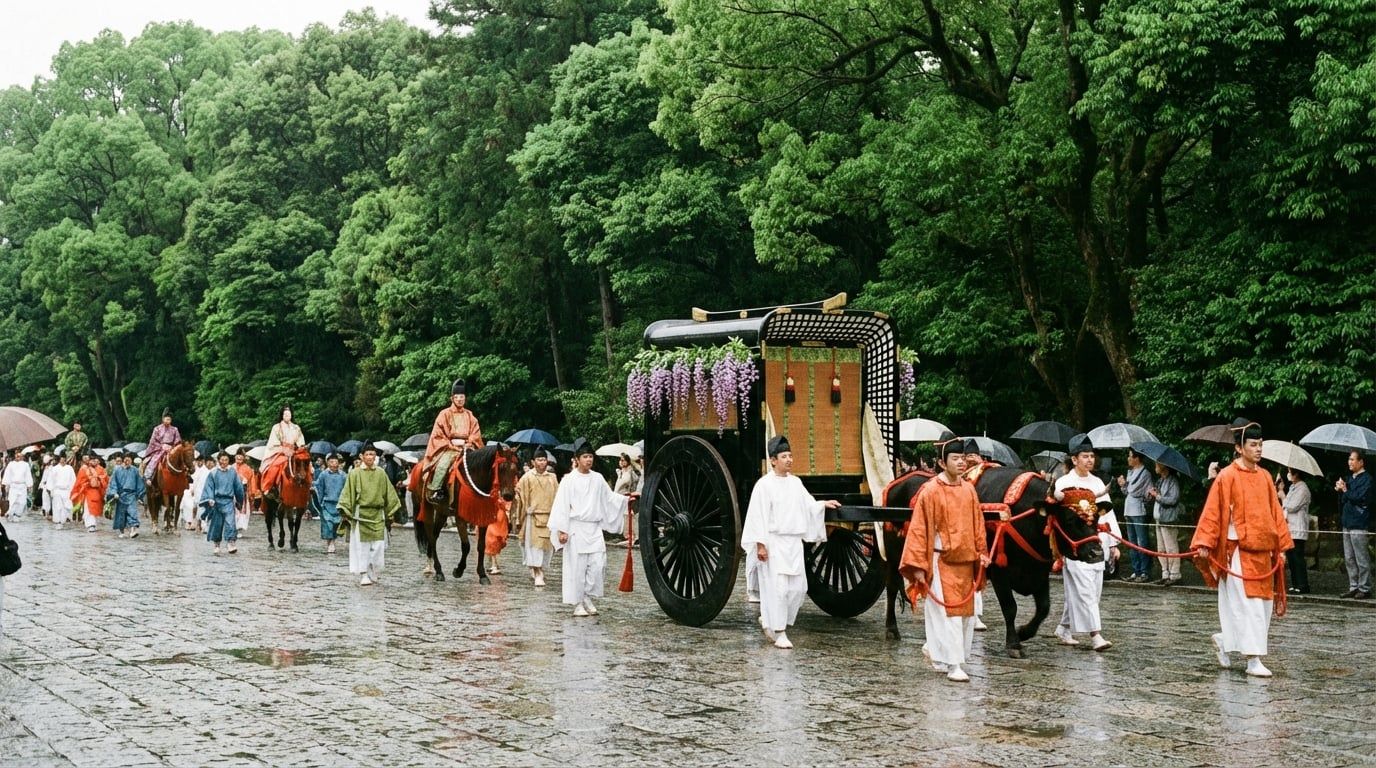 Image for illustrative purposes only.
Kyoto served as Japan's imperial capital for over a thousand years, and its festival calendar reflects every layer of that history. From Heian-era processions winding through ancient streets to massive bonfires blazing across mountain ridges, the city hosts some of the most visually stunning and culturally significant events in all of Japan. Whether you are planning a dedicated festival trip or simply want to know what is happening during your visit, this guide covers every major Kyoto festival in 2026.
For a broader look at celebrations across the country, see our complete guide to Japan's festivals and the 2026 Japan festival calendar.
Kyoto's Big Three Festivals
Three festivals have defined Kyoto's identity for centuries. Together they are known as the Kyoto San-dai Matsuri, and each one is worth building a trip around.
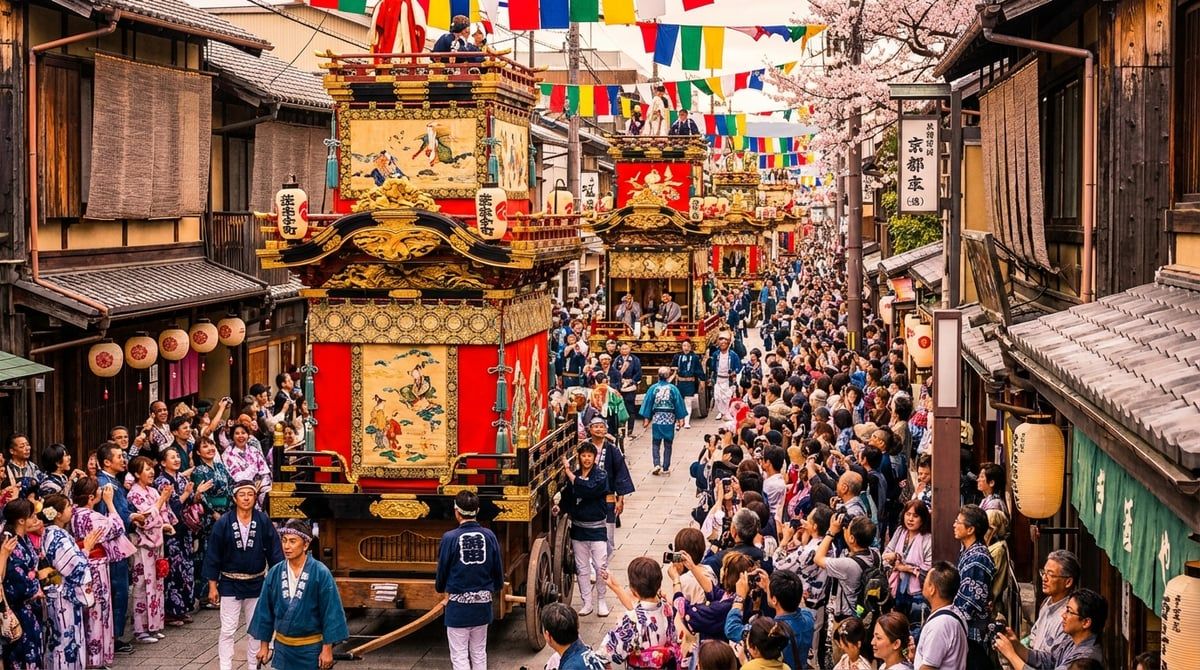 Image for illustrative purposes only.
Gion Matsuri (July)
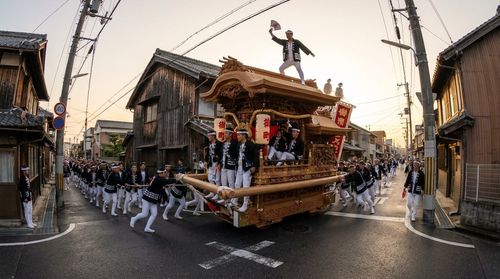
Gion Matsuri is not just Kyoto's biggest festival — it is one of the most famous festivals in the entire world. Spanning the full month of July, its origins trace back to 869 CE when the city held purification rites to ward off plague. The highlights are the Yoiyama evening festivities (July 14-16 and 21-23), when elaborately decorated floats called yamahoko line the downtown streets and the neighborhood transforms into a massive open-air celebration. The grand procession on July 17 features 23 towering floats pulled through the city by teams of men in traditional dress. A second procession follows on July 24. For a deeper dive, check out our Gion Matsuri complete guide.
Aoi Matsuri (May 15)
The Aoi Matsuri dates back to the 6th century, making it one of Japan's oldest festivals. On May 15, a procession of roughly 500 participants dressed in full Heian-period court attire walks from the Kyoto Imperial Palace to Shimogamo Shrine and onward to Kamigamo Shrine. The route stretches about eight kilometers through the heart of the city. Unlike the energetic atmosphere of Gion Matsuri, Aoi Matsuri has a stately, almost dreamlike quality — the slow pace and meticulous costumes make it feel like stepping directly into a 12th-century scroll painting.
Jidai Matsuri (October 22)
Held on the anniversary of Kyoto's founding, Jidai Matsuri is a living history textbook. Around 2,000 participants march from the Imperial Palace to Heian Shrine wearing costumes representing every era of Japanese history, from the Meiji period all the way back to the 8th century. The procession stretches for two kilometers and takes about two hours to pass. It is the newest of the Big Three, established in 1895, but the attention to historical accuracy in the costumes and props is extraordinary.
Month-by-Month Festival Calendar
February: Setsubun at Yoshida Shrine (Feb 2-3)
Yoshida Shrine's Setsubun celebration is one of the liveliest in Japan. On the evening of February 2, a massive bonfire burns thousands of old good-luck charms collected from households across the city. The next day, visitors throw roasted soybeans to drive out evil spirits in the traditional mamemaki ritual. Food stalls line the approach to the shrine, and the atmosphere is wonderfully festive despite the winter chill.
March-April: Cherry Blossom Hanami
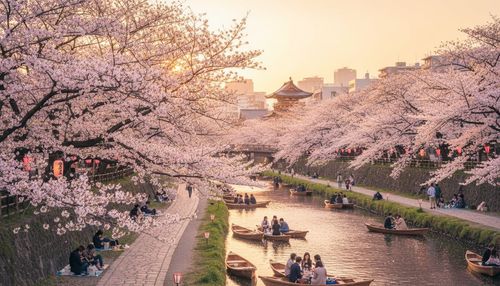
Kyoto's cherry blossom season typically peaks in late March to early April. The Philosopher's Path, Maruyama Park, and the grounds of Daigo-ji Temple are legendary hanami spots. In mid-March, the Higashiyama Hanatoro illumination lights up the streets between Shoren-in and Kiyomizu-dera with thousands of lanterns, creating an ethereal nighttime walking route through one of Kyoto's most atmospheric districts.
May: Aoi Matsuri (May 15)
See the Big Three section above. Tip: arrive early to secure a spot along Shimogamo Shrine's approach road, where the tree-lined path provides natural framing for photographs.
July: Gion Matsuri
See the Big Three section above. The Yoiyama evenings are best experienced on foot — wear comfortable shoes and be prepared for large crowds in the downtown area. For broader summer festival planning across Japan, July and August offer incredible variety.
August: Gozan Okuribi / Daimonji (August 16)
On the evening of August 16, five giant bonfires are lit on the mountains surrounding Kyoto. The most famous is the dai character on Mount Daimonji, visible from much of the city. The fires mark the end of the Obon period, guiding the spirits of ancestors back to the other world. The best public viewing spots include the banks of the Kamo River and Funaoka-yama Park. The fires are lit sequentially starting at 8:00 PM and each burns for roughly 30 minutes.
October: Jidai Matsuri (October 22)
See the Big Three section above. October also brings the beginning of autumn foliage season, making it an excellent time to combine festival viewing with visits to hidden shrines around Kyoto.
November-December: Autumn Illuminations and Arashiyama Hanatoro
Kyoto's autumn foliage is legendary, and many temples hold special nighttime illuminations (lightups) throughout November. Eikando, Tofuku-ji, and Kitano Tenmangu are standout venues where maple leaves glow under carefully placed lighting. In mid-December, the Arashiyama Hanatoro illumination transforms the bamboo grove and surrounding paths with warm lantern light — a quieter counterpart to the spring Higashiyama edition.
Hidden Gems Worth Seeking Out
Beyond the headline events, Kyoto hosts dozens of smaller festivals that offer a more intimate experience. The Kemari Hajime at Shimogamo Shrine (January 4) features courtiers in Heian dress playing an ancient form of football. The Yasurai Matsuri in April at Imamiya Shrine involves dancers in demon masks parading under a large floral umbrella. In October, the Zuiki Matsuri at Kitano Tenmangu features a portable shrine decorated entirely with vegetables and dried foods — a harvest celebration unlike anything else in Japan. These smaller events draw fewer tourists and let you experience Kyoto's living traditions up close.
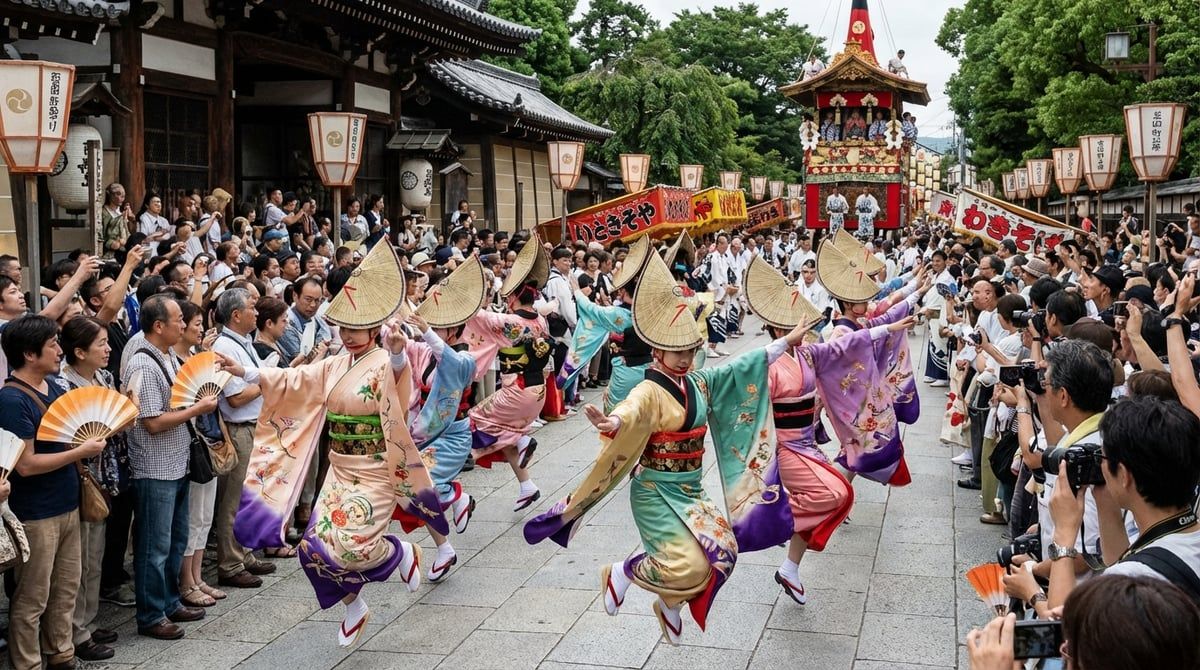 Image for illustrative purposes only.
For more off-the-beaten-path celebrations nationwide, explore our guides to autumn festivals and the full Japan festivals 2026 overview.
Practical Tips for Festival-Going in Kyoto
Getting around: Kyoto's bus system becomes extremely crowded during major festivals. Use the subway or rent a bicycle when possible. During Gion Matsuri, many downtown streets close to vehicle traffic — this is actually an advantage for pedestrians.
Accommodation: Book well in advance for Gion Matsuri (July) and peak cherry blossom or autumn foliage weekends. Prices rise significantly during these periods. Staying in nearby Osaka and taking the train in (about 30 minutes) is a practical alternative.
Viewing spots: For procession-based festivals like Aoi Matsuri and Jidai Matsuri, paid seating is available along the route. Free viewing is possible anywhere along the path, but arrive at least an hour early for a good position.
Etiquette: Festival crowds in Kyoto are generally respectful and orderly. Follow the flow of foot traffic, avoid blocking narrow streets, and ask before photographing participants up close. Many shrine festivals welcome visitor participation in rituals like mamemaki — join in.
Weather: Summer festivals (July-August) coincide with Kyoto's notoriously hot and humid season. Bring water, a hand towel, and a portable fan. Winter events like Setsubun can be quite cold, so layer up.
Kyoto's festivals are not museum pieces — they are living traditions maintained by communities who have celebrated them for generations. Whenever you visit, something remarkable is happening in this city.
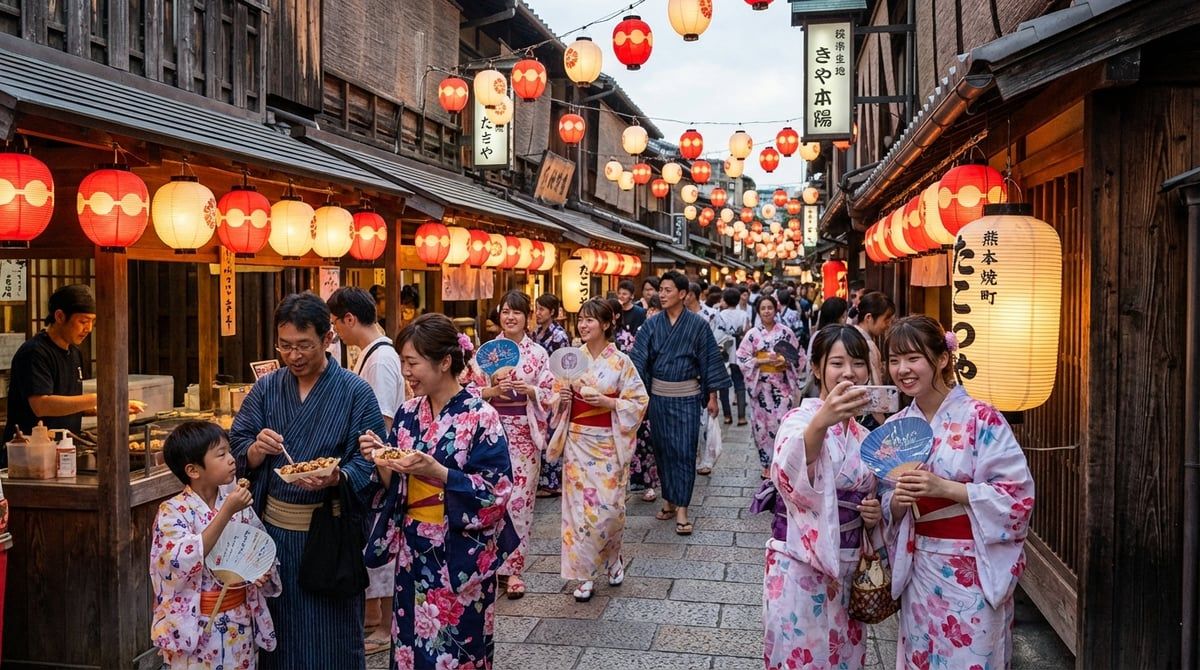 Image for illustrative purposes only.
Frequently Asked Questions
What are Kyoto's "Big Three" festivals?
Kyoto's "Big Three" festivals, known as the Kyoto San-dai Matsuri, are Gion Matsuri (July), Aoi Matsuri (May 15), and Jidai Matsuri (October 22). Each of these ancient events reflects Kyoto's long history as Japan's imperial capital and is a major cultural highlight.
When is the Gion Matsuri held and what are its main events?
Gion Matsuri spans the entire month of July. Key highlights include the Yoiyama evening festivities (July 14-16 and 21-23) when elaborately decorated yamahoko floats line the streets, and the grand processions on July 17 and July 24.
What is the Aoi Matsuri and when does it take place?
The Aoi Matsuri, one of Japan's oldest festivals, is held annually on May 15. It features a stately procession of approximately 500 participants in full Heian-period court attire, walking from the Kyoto Imperial Palace to Shimogamo Shrine and Kamigamo Shrine.
How can I view the Gozan Okuribi (Daimonji) bonfires in Kyoto?
The Gozan Okuribi bonfires are lit on the mountains surrounding Kyoto on the evening of August 16. Good public viewing spots include the banks of the Kamo River and Funaoka-yama Park, with the fires lit sequentially starting at 8:00 PM.
What are some practical tips for attending festivals in Kyoto?
During major festivals, Kyoto's bus system can be very crowded, so consider using the subway or renting a bicycle. For procession-based events, paid seating is available, or arrive at least an hour early for a good free viewing spot. It's also advisable to book accommodation well in advance, especially for Gion Matsuri and peak seasons.
Explore More Festival Guides
Continue your Japan festival journey with these related guides:
Staying in Tennoji?
If you're planning to explore Tennoji, these neighborhood stays let you experience the area like a local.
Explore the Tennoji Area Guide
Discover more things to do, local food spots, and insider tips for Tennoji.