What does ¥3,500 actually get you inside a Tokyo capsule hotel? A first-night walkthrough, chain breakdown, and the 5 unspoken pod rules.
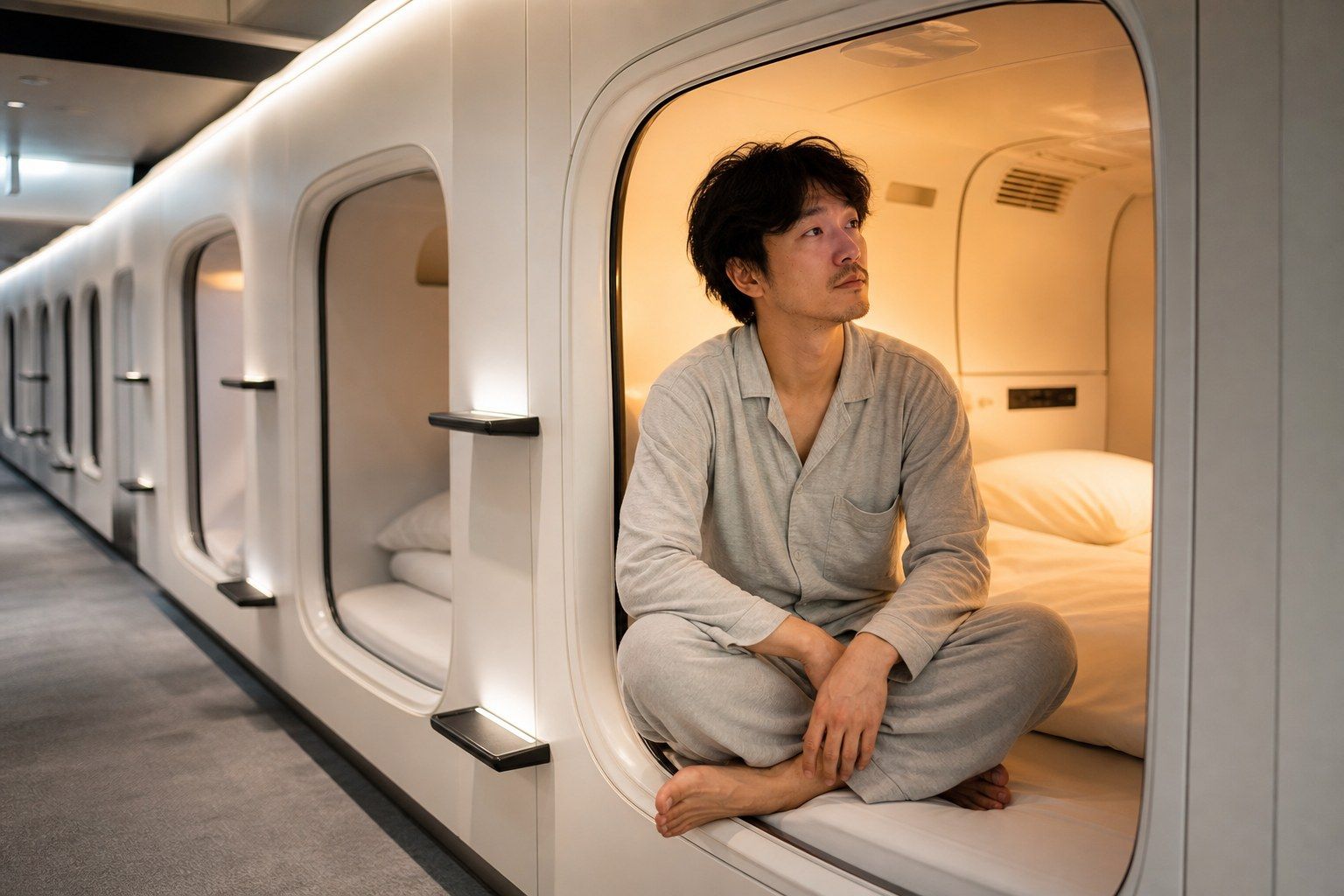 Image for illustrative purposes only.
From the street, a Tokyo capsule hotel looks like nothing. A glass door, a small sign, an elevator panel with a row of keycards. You walk past it on the way to a ramen shop and never realize that, inside, 120 people are sleeping in white fiberglass shells stacked two-high along quiet corridors lit like a hospital ward by Apple.
Then you book one for ¥3,500 — about $23 at today's yen — and the whole picture flips. The pod isn't a coffin. The bath is a real Japanese sento. The pyjamas are folded for you. And at 11pm, when the privacy screen slides shut and the indirect lighting fades to amber, you understand why TikToks of these places hit a million views.
Here's what's actually behind that little glass door, what the price gets you in 2026, and the five unspoken rules nobody tells you on Booking.com.
What Exactly Is a Capsule Hotel?
A capsule hotel is a budget accommodation built around stacked individual sleeping pods — roughly 2.0 m long × 1.0 m wide × 1.2 m high — instead of rooms. You don't get a door; you get a roll-down screen. You don't get a private bath; you share a sento-style large bath on a separate floor. You don't get space for your suitcase; you get a small valuables locker and a luggage room downstairs.
In exchange, you pay one-quarter to one-fifth of a Tokyo business-hotel rate, in some of the most expensive neighborhoods on earth.
The format was invented in Osaka in 1979, when sauna operator Yukio Nakano commissioned Metabolist architect Kisho Kurokawa (the same mind behind the Nakagin Capsule Tower) to design Capsule Inn Osaka in Umeda — 415 pods of fiberglass, originally aimed at salarymen who missed the last train home. That building still operates today. By 2011 there were around 300 capsule hotels nationwide, and the 2010s rebuilt the category around design, women-only floors, and "First Class" luxury tiers.
What Does ¥3,500 Actually Get You?
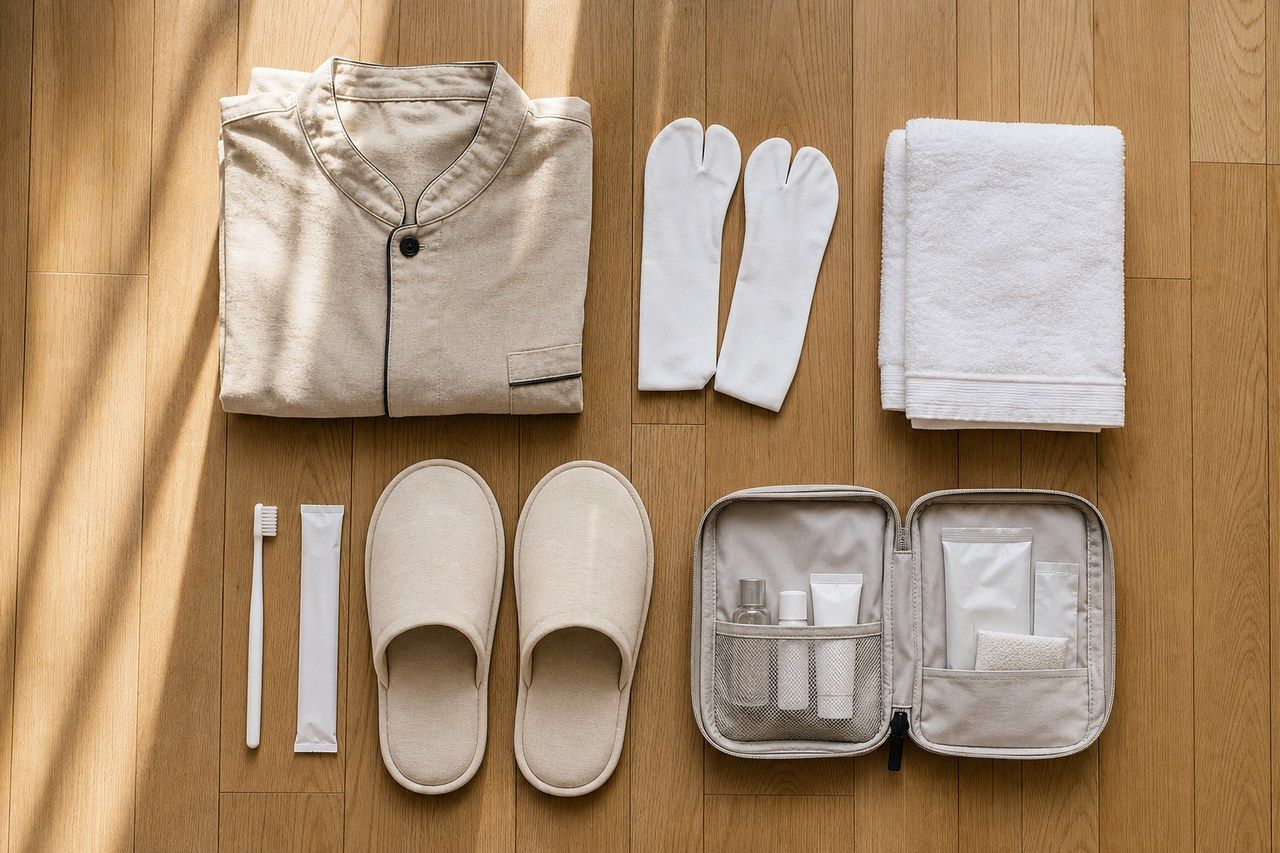 Image for illustrative purposes only.
A weeknight at 9h Nine Hours Shinjuku or Suidobashi lands in the ¥3,500–¥4,500 range. That single price tag covers a surprising amount of stuff Westerners are used to paying extra for:
- The pod — flat mattress, fitted sheet, light pillow, blackout privacy screen, AC vent you can adjust, dimmable reading light, USB outlets, alarm panel, sometimes a fold-up TV
- A full Japanese sento-style large bath — hot tubs, sauna at most branches, shampoo and body wash provided, fresh towel handed over at check-in
- A free amenity pouch — cotton pyjamas, slippers, toothbrush, razor, sometimes face wash and a hair iron in women-only chains
- Lounge / co-working area with free Wi-Fi, vending machines, often free coffee in the morning
Compare that to a Shinjuku business hotel during the 2026 summer peak — frequently ¥18,000+ per night for a single room — and the "is this actually nice?" question answers itself.
What's Actually Inside a Capsule Hotel Pod at 11pm?
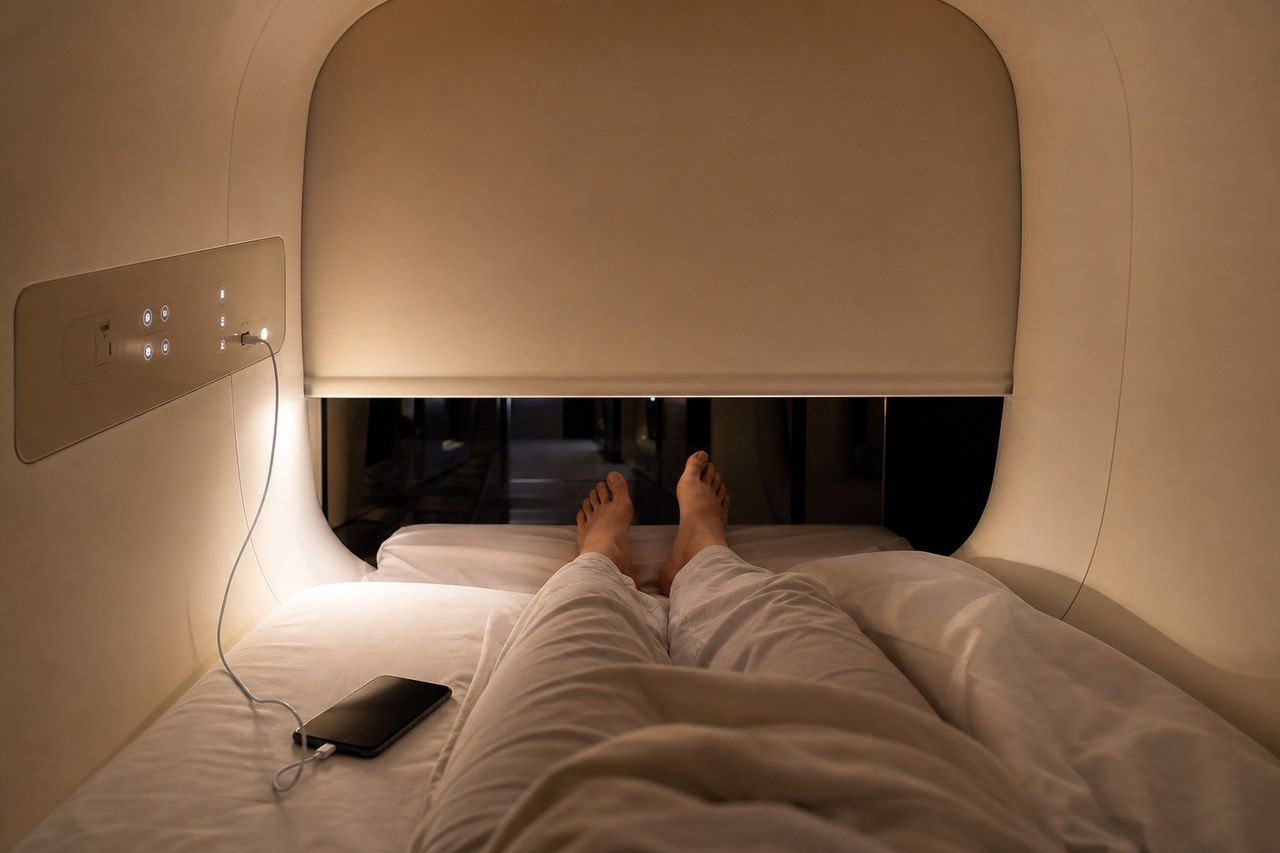 Image for illustrative purposes only.
You climb the stainless-steel ladder, slide off your slippers onto the small ledge, and crawl in feet-first. The mattress is firm — "Japanese hard," which most first-timers underestimate. The pod itself runs about 2.0 m long and 1.2 m high, so the ceiling sits about 30 cm above your face when you sit up cross-legged. The screen rolls down with a quiet plastic clack.
Then the lighting matters. Modern pods at 9h, Mado, and First Cabin use indirect cove lighting that you can dim to almost nothing. The AC vent hums on low. You hear, faintly, the person two pods over turning a page. The whole thing smells like clean fabric and the very mild astringency of the bath you took an hour ago.
There is no lock. Japanese fire law forbids locking pods from inside or out — the screen is a privacy barrier, not security. Your wallet, phone, and passport live in the keycard-controlled locker by the entrance. The first night this feels exposed; by night two, you stop thinking about it.
What's the Public Bath Really Like?
For many guests, the in-house bath is the actual highlight. Picture a small sento: a single big tiled room, low stools and showers along the wall, two or three communal tubs of different temperatures, sometimes a dry sauna. Towels, body wash, and shampoo are provided. Everyone is naked, gender-segregated, quiet.
A few things to know before you walk in:
- Wash thoroughly at the seated showers first. You enter the tubs already clean.
- No swimsuits, no underwear, no exceptions.
- Tattoos are usually still banned in the shared bath even when the pod itself is fine with them. Notable exception: the Anshin Oyado chain has tattoo-friendly branches.
- The small towel does not go in the water. Fold it on your head or set it by the side.
If sento etiquette is new to you, our sento public bath guide covers the full ritual.
Which Tokyo Capsule Hotel Chain Should You Pick?
Not all pods are the same building. Here's the 2026 landscape, head-to-head:
| Chain | Where | Vibe | Stand-Out | Weekday Price |
|---|---|---|---|---|
| 9h Nine Hours | 7+ Tokyo branches (Shinjuku, Shinagawa, Akasaka, Suidobashi…) | Minimalist white spaceship | Optional +¥500 Sleep Lab (IoT sleep-stage report emailed next day) | ¥3,500–¥6,000 |
| First Cabin | 7 Tokyo + Haneda T1 | "First-class flight" aviation theme; walk-in cabins | First Class tier with semi-double bed and small table | ¥6,000 (Business) / ¥7,500 (First) |
| Nadeshiko Shibuya | Shibuya (also Asakusa, Hamamatsucho) | Female-only, all-women staff | Yukata loan, beauty amenities, keycard-segregated elevator | from ¥6,500 |
| Mado / The Millennials | Shibuya, Kyoto, Fukuoka | Smart pods, tablet-controlled motorized "shift bed" | Tech-forward; you literally angle the mattress with an app | ¥4,500–¥7,000 |
| Anshin Oyado | Multiple Tokyo | Spa-heavy, salaryman regulars | Tattoo-friendly at select branches; massage chairs | ¥4,500–¥6,500 |
| Bay Hotel | Akihabara, Yokohama | No-frills budget | Reliable women-only floor | ¥3,000–¥4,500 |
For Osaka, the top first-timer pick is Cabin & Capsule Hotel J-SHIP Osaka Namba — a short train ride from Tennoji and consistently top-rated. The original 1979 Capsule Inn Osaka in Umeda is also still bookable, mostly as a piece of architecture history.
If you want a deeper step-by-step walkthrough of the booking process and check-in flow, our complete Japan capsule hotel guide goes wider on the practical mechanics.
What Most Tourists Don't Know
These are the things that derail first-timers and never make it onto the official site:
- Your suitcase does not come up to the sleeping floor. Most pods have a small valuables locker only. Roll-on bags go into a separate downstairs luggage room or a coin locker. Walk in with a 28" hard-shell and you will be politely redirected.
- Earplugs are non-negotiable. Every positive and every negative review in every language converges on this single point. Snoring travels through fiberglass. Bring foam earplugs or buy them at any 7-Eleven for ¥300.
- Mid-day lockouts are real. Several chains — 9h Akasaka is the most notorious — force everyone out of the sleeping floor between roughly 10 AM and 1 PM for cleaning. If you landed on a red-eye and want to nap before checkout, check the chain's policy first.
- Couples cannot share a pod, and probably cannot even share a floor. One person per pod, gender-segregated floors, keycard elevators. If you're traveling as a couple and want to sleep next to each other, this is the wrong category — book a love hotel or a business hotel instead.
- If you're over 188 cm (6'2"), book First Cabin "First Class." Standard pods will leave you diagonal or knees-bent. The First Class cabin gives you a near-full semi-double bed with vertical space to stand.
The 5 Unspoken Pod Rules
Capsule hotels run on quiet collective trust. Break these and the staff will speak to you politely; do it twice and you'll be asked to leave.
- No talking inside the pod. Including whispered FaceTime calls.
- No phone calls anywhere on the sleeping floor. Step out to the lounge.
- No food or alcohol in the pod. Eat in the dining area; sleep clean.
- No suitcases dragged onto the sleeping floor. Locker room only.
- No screen-light leaks after lights-out (~11pm). Dim your phone, point it away from the screen, or watch from the lounge.
Your First Night — A Step-by-Step Blueprint
If you're booking for the first time, this is the cleanest possible path:
- Arrive between 4 PM and 9 PM. Most chains begin check-in at 3 or 4 PM. Earlier means luggage drop only.
- Use the multilingual kiosk (English / Korean / Chinese available at 9h and First Cabin) or the front desk. You'll get a wristband or keycard tied to your locker and pod number.
- Put your suitcase in the downstairs luggage room. Only valuables and your overnight bag go upstairs.
- Change into the provided pyjamas in the locker room. Walk to the bath in pyjamas and slippers — that is normal and expected.
- Take the bath now, not at 7 AM. Mornings are crowded. Evenings are quiet.
- Back in pyjamas, go to your pod. Climb in, plug your phone into the USB port, set the alarm, slide the screen down.
- Earplugs in, lights to amber, screen off by 11 PM. Welcome to Japan.
In the morning: bath again, brush at the long communal sink, change in the locker room, drop the towel and pyjamas in the marked basket. You walk out clean, dressed, and on your way to a 7 AM train.
Who Should Skip the Capsule Hotel?
Honestly, a few groups:
- Severe claustrophobics. The screen is not a door, but the ceiling is close. Try a First Cabin "First Class" cabin first if you're unsure.
- Couples expecting to share a bed. Categorically not possible.
- Anyone needing a full 7-night base. The pod is brilliant for one or two arrival-and-departure nights. By night three, most travelers want a real room, kitchen, and washing machine.
- Light sleepers who forgot earplugs. Worth repeating: pack them, or pick them up at any konbini before check-in.
Wrapping Up
The honest pitch for a capsule hotel in 2026 isn't "stay cheap" — it's "spend one night learning what a future-Japan accommodation actually feels like." For ¥3,500 in central Shinjuku you get a designed sleeping pod, a real Japanese bath, free pyjamas, and a story you'll tell for years.
The pattern that works best for most travelers: one pod night for the experience, then a proper apartment for the rest of the trip. Capsule hotels are perfect for the night you land at Haneda at 10 PM and just need a shower and seven hours of sleep before exploring. They're not built for unpacking a suitcase or doing laundry.
For multi-night stays in Osaka, the Tennoji area makes the strongest base — five minutes from the JR loop, a short train ride from J-SHIP Namba if you want to capsule for a night, and surrounded by Shitennoji Temple, Shinsekai, and easy access to USJ and Kyoto. Pair one pod night for the novelty with a real apartment for the rest of the week, and you've got a trip that's both interesting and actually restful.
Frequently Asked Questions
How much does a capsule hotel cost in Tokyo in 2026?
Expect ¥3,500–¥6,000 per night on weekdays at mainstream chains like 9h Nine Hours, and ¥5,000–¥7,500 on weekends. Luxury tiers like First Cabin First Class run ¥7,500+, and women-only properties like Nadeshiko Shibuya start around ¥6,500.
Can couples share a capsule hotel pod?
No. One person per pod, and most capsule hotels strictly separate guests onto gender-segregated floors with keycard-controlled elevators. Couples wanting to share a bed should book a love hotel or business hotel instead.
Are capsule hotels safe for solo female travelers?
Yes, at properties with women-only floors or women-only buildings. Nadeshiko Shibuya is fully female-only with all-women staff. Major chains like 9h and First Cabin run gender-segregated floors with separate keycard elevators, so men cannot physically access the women's sleeping area.
Do capsule hotels allow tattoos?
The pod itself doesn't care, but the shared bath usually still bans visible tattoos. Notable exception: the Anshin Oyado chain has tattoo-friendly branches. Otherwise, plan to skip the bath or cover small tattoos with waterproof patches.
Can I store my suitcase in the capsule?
No. Pods only fit your body plus a small overnight bag. Large suitcases go into a separate downstairs luggage room or coin lockers. Plan for this — a 28" hard-shell will not fit in the in-pod storage.
Are capsule hotels good for tall people?
Standard pods are 2.0 m long. If you're over 188 cm (6'2"), book the First Cabin "First Class" tier, which offers a near-full semi-double bed with standing room. Resol Poshtel Asakusa also offers larger pod-style rooms that fit taller guests more comfortably. Otherwise expect to sleep diagonally or with knees bent.
What should I bring to a capsule hotel?
Earplugs (non-negotiable), an eye mask if you're light-sensitive, a phone charger, and a mask if you're prone to dry-air discomfort. Pyjamas, towels, slippers, and toiletries are provided. Leave your suitcase expectations at the door.