Your weekly-updated guide to May 2026 in Japan — Sanja Matsuri, Kanda Matsuri, Aoi Matsuri, Tokyo's spring events, and what to do this month.
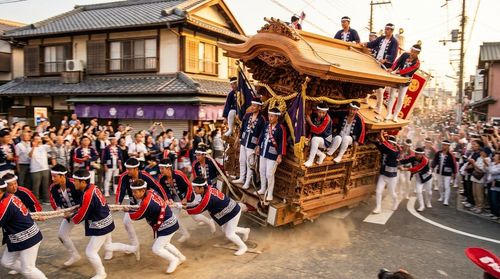
May is arguably the best month in the entire Japanese calendar to be a visitor. The cherry blossom crowds are gone. Golden Week energy crests in the first week, then the country exhales into a long, beautiful stretch of late spring — warm afternoons, clear skies, and green so deep it almost hurts to look at. The festivals this month are not the polished ceremonial kind. They are physical, loud, and visceral. You can feel the taiko drums in your chest before you even see the procession.
This guide covers every major event happening across Japan in May 2026: the exact dates, what to expect, how to get there, and which hidden details will make or break your experience.
What Is Happening in the First Week of May 2026?
The first week of May is Japan's Golden Week — a cluster of national holidays (Constitution Day on May 3, Greenery Day on May 4, Children's Day on May 5) that transforms the country into the most crowded it will be all year. Trains are packed. Theme parks have multi-hour queues. Popular viewpoints look like stadium seating.
The advice here is simple: if you are already in Japan for Golden Week, lean into it. Ueno Park, Shinjuku Gyoen, and the riverbanks along the Meguro River are all still beautiful, and the festive atmosphere is its own kind of energy. Just book restaurants in advance and expect crowds everywhere.
May 6 onwards: The change is almost instant. Hotels drop back to shoulder-season rates. The queues evaporate. The same temples and gardens you could barely see through selfie sticks on May 4 are suddenly peaceful. If you have any flexibility in your itinerary, schedule the main sightseeing from May 6 or 7.
Sanja Matsuri: Tokyo's Wildest Festival (May 15-17)
If you are anywhere near Tokyo in the third weekend of May, Sanja Matsuri is non-negotiable. It is one of Tokyo's three great festivals alongside Kanda Matsuri and Sanno Matsuri, and it is the one that holds nothing back.
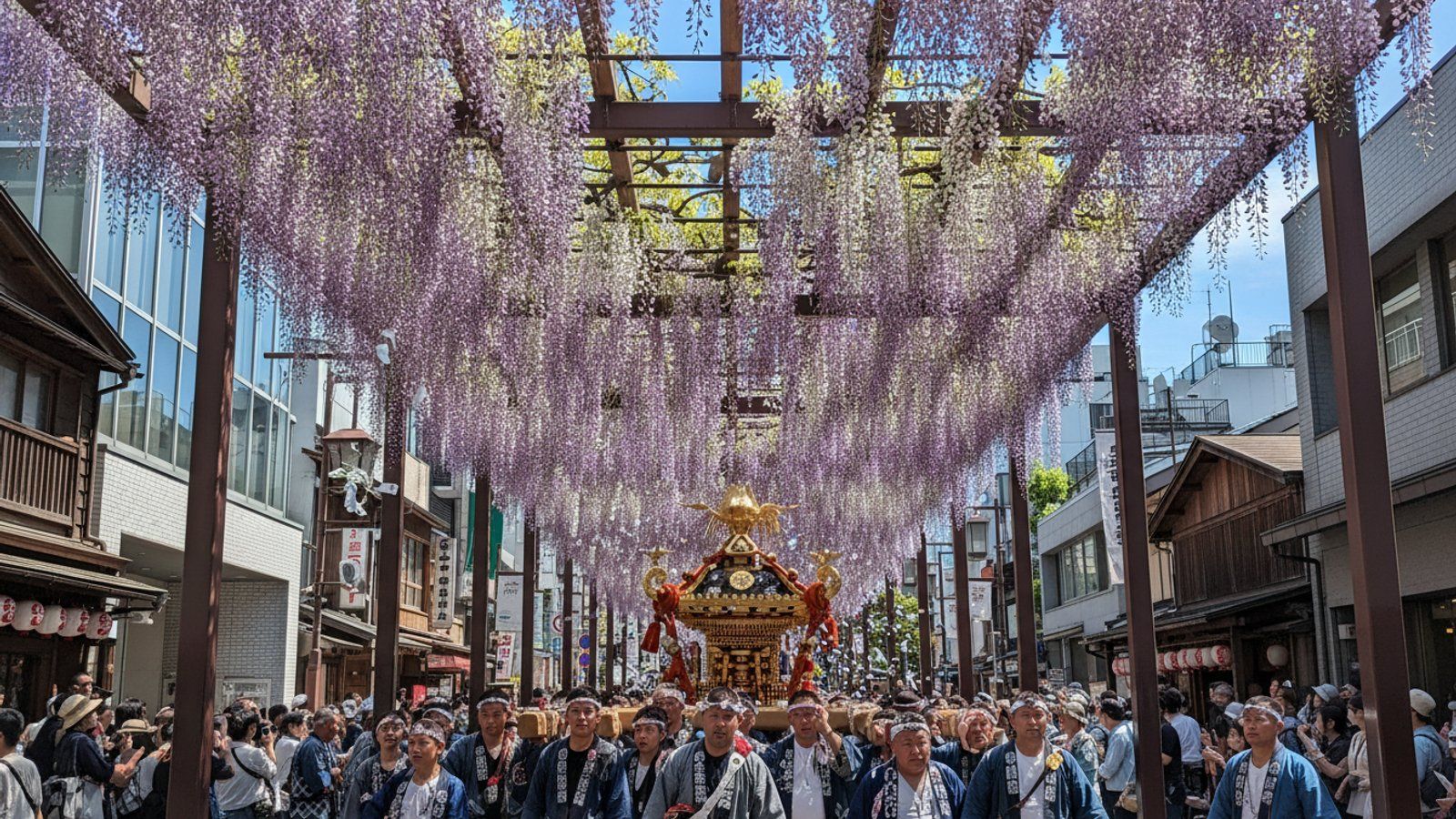
Over the three days of May 15-17, more than 100 mikoshi (portable shrines) are carried through the streets of Asakusa by competing neighborhoods. Each mikoshi weighs between 500 kilograms and one ton. The teams carrying them chant in rhythm — wasshoi, wasshoi — sweat pouring, arms straining, sometimes literally running with the thing through the crowd. The energy is raw and completely infectious. Around 1.5 million spectators pack the narrow streets around Senso-ji Temple over the weekend.
The festival is dedicated to the three men who founded Senso-ji Temple in the 7th century and is organized by Asakusa Shrine (Sanja-sama), which sits just behind the main temple.
What to watch:
- Friday May 15: Opening ceremony and neighborhood mikoshi parade (daytime, more relaxed)
- Saturday May 16: Major town association mikoshi (Cho-nai Mikoshi Rendai) — dozens of neighborhood mikoshi out simultaneously
- Sunday May 17: The grand finale — the three main portable shrines of Asakusa Shrine emerge in the morning and process through the neighborhood until evening
The Sunday morning procession of the three main shrines is the emotional climax. They emerge from Asakusa Shrine around 6 AM to enormous cheering. Get there early.
Practical Info — Sanja Matsuri:
| Item | Detail |
|---|---|
| Dates | May 15-17, 2026 |
| Location | Senso-ji Temple and Asakusa Shrine, Asakusa |
| Access | Asakusa Station (Tokyo Metro Ginza Line / Tobu Skytree Line) — 2 min walk |
| Cost | Free |
| Best time | Sunday 6 AM for shrine emergence; Saturday afternoon for full atmosphere |
| Crowds | Extreme on Sunday — arrive by 5:30 AM for a good position |
What About Kanda Matsuri in May 2026?
Here is a question that catches a lot of visitors off guard: Kanda Matsuri is a biennial festival. The grand procession — with its 300 portable shrines and elaborate floats winding through central Tokyo — only happens in odd-numbered years. 2025 was the full celebration. 2026 is the off-year.
That said, Kanda Matsuri is not completely absent in 2026. Kanda Myojin Shrine (one of Tokyo's oldest, right next to Akihabara) still holds smaller neighborhood events and shrine ceremonies in mid-May. The mikoshi blessing and some local processions take place. It is worth checking the shrine's official calendar if you are in the area — but do not rearrange your entire trip for it this year.
The next full Kanda Matsuri grand procession is May 2027.
Aoi Matsuri: Kyoto's Imperial Procession (May 15)
On the same day as Sanja Matsuri kicks off in Tokyo — May 15 — Kyoto holds one of its three great festivals, and the contrast could not be more striking. Where Sanja is noise and sweat, Aoi Matsuri (Hollyhock Festival) is silk and silence.
The procession involves roughly 500 people dressed in authentic Heian-period costumes (794-1185 AD), with an ox-drawn carriage, horses, and imperial court attendants moving at a stately pace from the Kyoto Imperial Palace through the city to Shimogamo Shrine and then on to Kamigamo Shrine. Every participant and every piece of equipment is decorated with hollyhock leaves — aoi — which give the festival its name.
The procession covers about 8 kilometers in total and takes the better part of the morning.
Aoi Matsuri Schedule:
| Time | Location |
|---|---|
| 10:30 AM | Departs Kyoto Gosho (Imperial Palace) |
| ~11:40 AM | Arrives Shimogamo Shrine |
| ~3:30 PM | Arrives Kamigamo Shrine |
- Access (start): Imadegawa Station (Karasuma Subway Line), then 10 min walk to the palace
- Access (mid-point): Demachiyanagi Station (Keihan Line) — great view as procession arrives at Shimogamo Shrine
- Paid seating: Available at the Imperial Palace and Shimogamo Shrine (reserve through Kyoto tourism sites, ¥2,000-3,000)
- Free viewing: Along the entire route — arrive 45 minutes before the procession passes
For the full picture on what Kyoto has on this month, see our Kyoto festivals 2026 guide.
Mifune Matsuri: Boats on the Oi River (May 17, Arashiyama)
Staying in Kyoto, the third Sunday of May brings Mifune Matsuri — a boat festival in Arashiyama that most visitors have never heard of and almost everyone who attends becomes obsessed with.
Held at Kurumazaki Shrine and centered on the Oi River (the section also known as the Hozu River), the festival recreates Heian-period aristocratic boat parties with musicians, dancers, and poets performed from decorated vessels on the water. It is graceful, slightly dreamlike, and nowhere near as crowded as the Asakusa festivals happening the same weekend.
Practical Info — Mifune Matsuri:
| Item | Detail |
|---|---|
| Date | Sunday, May 17, 2026 |
| Location | Kurumazaki Shrine / Oi River, Arashiyama, Kyoto |
| Access | Saga-Arashiyama Station (JR Sagano Line) or Arashiyama Station (Hankyu / Keifuku) |
| Cost | Shrine grounds free; boat-side viewing spots vary |
Wisteria Season: Where to See Fuji (Wisteria) at Its Peak
May's secret weapon — the thing that makes every Instagram feed explode — is wisteria. Fuji (wisteria) blooms in Japan from late April through mid-May, and at peak it creates curtains and tunnels of purple, pink, and white that look genuinely unreal.
Top spots for 2026:
Ashikaga Flower Park (Tochigi Prefecture) is the undisputed headliner. The park's Great Wisteria (ofuji) is over 150 years old and covers nearly 1,000 square meters. It has been named one of the "Top 10 Dream Destinations in the World" by CNN. Visit in the first two weeks of May for peak bloom.
- Access: Tomita Station (Ryomo Line from Maebashi or Oyama) — 5 min walk
- Entry: ¥300–2,000 depending on bloom season (highest charge during peak)
- Hours: 7:00 AM–9:00 PM during peak season (evening illuminations are spectacular)
Kasuga Taisha (Nara) has ancient wisteria trees in the shrine grounds that are said to be over 800 years old. Early May. Free to walk through the approach path.
Kameido Tenjin Shrine (Tokyo, Koto Ward) is a manageable half-day trip from central Tokyo. The shrine garden has wisteria trellises over the pond and usually peaks in late April to early May. Best for visitors who want great photos without a full day's travel.
What Else Is in Season in May 2026?
Iris festivals beginning: Irises start blooming in late May, and by early June you will find iris gardens in full display at Horikiri Shobuen (Tokyo), Suigo-Sawara Aquatic Botanical Garden (Chiba), and Meiji Jingu Inner Garden. A preview of what's coming in June.
Strawberry picking (ichigo gari) — last chance: Strawberry season in Japan runs roughly January to May, depending on the region. May is your final window for ichigo gari (pick-your-own strawberry) experiences in Kanto and Kansai. Farms in Tochigi (Japan's top strawberry prefecture), Chiba, and Nara offer all-you-can-eat picking sessions (typically ¥1,500–2,500 for 30-45 minutes).
Tea ceremony season: Uji (near Kyoto) is beautiful in May, with fresh green tea (shincha) harvest underway. Visiting a tea farm or ceremony studio in May means you are experiencing tea at its freshest.
Hiking season opens: The combination of comfortable temperatures (18-25°C in Tokyo, slightly cooler in the mountains), no insects yet, and lush new greenery makes May ideal for hiking. Mt. Takao near Tokyo, the Kumano Kodo in Wakayama, and the Nakasendo trail between Magome and Tsumago are all excellent. Snow on higher peaks (Fuji, Northern Alps) means high-altitude routes are still restricted — check trail status before planning.
What Is the Weather Like in Japan in May?
May is consistently one of Japan's most pleasant months. In Tokyo, expect daytime highs of 18-25°C (64-77°F), with cool evenings around 13-16°C. Osaka and Kyoto run a degree or two warmer.
Rainfall in May is moderate — not yet tsuyu (rainy season, which starts in June), but expect occasional showers, particularly in the second half of the month. A compact umbrella is worth keeping in your bag.
Humidity is low compared to summer. Sunscreen matters more than a jacket by mid-May. Layering works well — a light jacket for mornings and evenings, a t-shirt for afternoons.
What Most Tourists Don't Know About May in Japan
Golden Week hotel rates are genuinely extreme. Prices in Tokyo, Kyoto, and Osaka during May 1-5 can be 2-4x normal rates. If you are booking within a month of your trip, check carefully — you may find better availability and prices by shifting your dates just a few days later.
Sanja Matsuri and Aoi Matsuri happen on the same day (May 15). This is actually useful to know for planning: if you are doing Tokyo → Kyoto in a single trip, you cannot attend both. Tokyo's Sanja is the more visceral experience; Kyoto's Aoi is the more photogenic. Choose based on your priorities.
The Senso-ji approach (Nakamise-dori) gets completely closed to traffic during Sanja Matsuri. Some visitors arrive expecting to shop and find the stalls inaccessible or obscured by the crowds. If souvenir shopping at Nakamise is on your list, do it before May 15 or wait until after May 17.
Wisteria timing varies by location and by year. Ashikaga Flower Park publishes a bloom status page on their website updated almost daily during season. Check it before you go — arriving a week too late or too early makes an enormous difference.
Post-Golden Week is one of the best-kept secrets in Japanese tourism. May 7-14 has the spring scenery, low crowds, and a full event calendar without the holiday pricing or queues. If you are flexible, this is the sweet spot.
Practical Planning for a May 2026 Japan Trip
What to book in advance:
- Accommodation for Golden Week (May 1-6) — book immediately, prices only go up
- Paid grandstand seats for Aoi Matsuri if you want a guaranteed view (reserve via Kyoto City Tourism Association website)
- Ashikaga Flower Park tickets during peak bloom (entry fees increase and timed entry may apply)
- Strawberry picking farms — most require online reservations now
What you can figure out when you arrive:
- Sanja Matsuri viewing spots (free, first-come-first-served — just arrive early)
- Most temple and shrine visits
- Restaurant bookings for most places outside of the very top-tier dining
Packing for May:
- Light layers (t-shirt + light jacket or cardigan)
- Comfortable walking shoes — festival streets are uneven and crowds mean a lot of standing
- Compact umbrella
- Cash — food stalls at matsuri are almost entirely cash-only
- Small towel or handkerchief (a Japanese habit that makes sense in May heat)
Frequently Asked Questions
When is Sanja Matsuri 2026?
Sanja Matsuri 2026 takes place May 15-17 (Friday through Sunday) in the Asakusa neighborhood of Tokyo. The festival is centered on Asakusa Shrine and Senso-ji Temple. The most dramatic moment — the emergence of the three main portable shrines — happens Sunday morning around 6 AM.
Is Kanda Matsuri happening in May 2026?
The grand Kanda Matsuri procession only takes place in odd-numbered years. 2026 is an even year, so the full-scale event will not happen. Smaller shrine ceremonies and neighborhood events at Kanda Myojin Shrine still take place in mid-May — worth visiting if you are in the area, but not worth a special trip.
When is the best time to visit Ashikaga Flower Park for wisteria in 2026?
Wisteria at Ashikaga Flower Park typically peaks in the first two weeks of May. For 2026, target May 1-14 for the best chance of seeing the Great Wisteria in full bloom. Check the park's official bloom forecast page (updated regularly during season) before finalizing your visit date.
What is Aoi Matsuri and when does it happen?
Aoi Matsuri is one of Kyoto's three great festivals, held every year on May 15. It features a 500-person procession in Heian-period costumes traveling from the Kyoto Imperial Palace to Shimogamo Shrine and Kamigamo Shrine. The procession departs at 10:30 AM and is free to watch along the route.
Should I avoid Japan during Golden Week?
Golden Week (late April to May 6) is Japan's busiest domestic travel period. Crowds are intense and accommodation prices spike. However, the atmosphere is festive and uniquely energetic. If you are already going, embrace it — just book accommodation far in advance and expect queues. Alternatively, target May 7 onwards for a dramatically quieter and cheaper experience.
What should I wear to Sanja Matsuri?
Sanja Matsuri is an outdoor street festival with intense crowds. Wear comfortable, flat shoes — you will be on your feet for hours on uneven stone streets. Light, breathable clothing is ideal (mid-May in Tokyo can reach 23-25°C). Bring a small bag with water, cash for food stalls, and a camera. There is no dress code, but wearing a hapi coat (short traditional jacket) if you can rent or buy one adds to the experience.
Explore More
Continue planning your Japan trip with these related guides:
- Japan Festivals 2026: Complete Month-by-Month Guide
- Tokyo Festivals 2026: Every Major Matsuri in Japan's Capital
- Kyoto Festivals 2026: The Complete Guide
- Asakusa Guide: Senso-ji, Street Food & Tokyo's Old Town
- Spring Festivals in Japan: Cherry Blossoms & Shrine Parades
- Japan Festival Calendar: Dates & Schedule for Every Major Matsuri