A factual guide to Shin-Okubo, Tokyo's Korean town — the food, the K-pop shops, and how this neighborhood fits into a broader Tokyo visit.
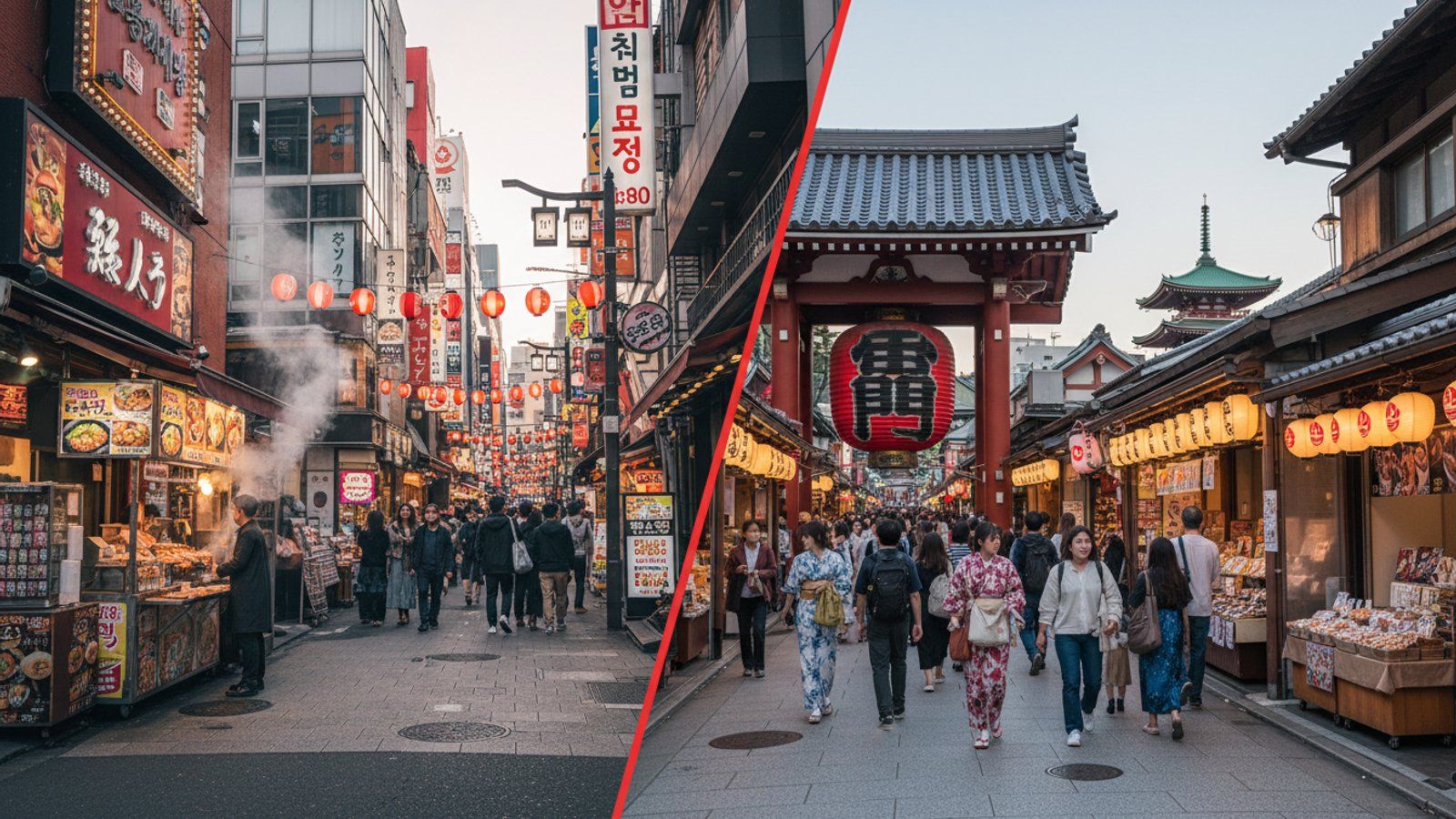
Shin-Okubo is one of Tokyo's most unexpected neighborhoods. On any given Saturday afternoon, the narrow streets around the station hum with a sound that feels simultaneously familiar and foreign — Korean pop music drifting from open storefronts, the smell of cheese dak-galbi on iron griddles, young Japanese women lining up for Korean rice cakes at a stall run by a Korean proprietor who has been there for fifteen years.
This is not Yokohama Chinatown — a curated cultural destination built for tourism. Shin-Okubo is a living neighborhood, a place where Korean immigrants settled in significant numbers beginning in the 1990s, built the infrastructure of daily life, and then watched as their neighborhood became, paradoxically, one of Tokyo's most fashionable destinations.
What Is Shin-Okubo?
Shin-Okubo (新大久保) is a neighborhood in Shinjuku Ward, centered on the JR Yamanote Line station of the same name. The Korean community established itself here through the 1990s and accelerated with the early 2000s Korean Wave — the pan-Asian spread of Korean dramas, pop music, and film that first transformed Japanese popular culture before reaching the rest of the world.
Today the neighborhood is home to Korean restaurants, K-pop merchandise shops, Korean cosmetics stores, Korean language schools, and a collection of food stalls that serve as Tokyo's most accessible portal to Korean street food culture. It is also, increasingly, a multinational neighborhood — Vietnamese restaurants, Nepali curry shops, and halal food stores have joined the Korean establishments, creating something closer to a genuinely international street than a single-ethnicity enclave.
A notable recent shift: the neighborhood's visitors are increasingly young Japanese rather than Korean. Korean Wave enthusiasts — K-drama fans, K-pop followers, people who have become interested in Korean food and beauty culture — now account for a significant share of the foot traffic. It is common to walk through Shin-Okubo and hear Japanese conversations about Korean cuisine rather than Korean conversations about anything.
The Food
What Shin-Okubo Does Best
The neighborhood's specialty is not replicating Korean cuisine faithfully — it is adapting Korean food for the Tokyo market in ways that sometimes produce something more interesting than the original.
Cheese Dak-Galbi (Cheese Spicy Chicken): The dish most worth seeking here. Dak-galbi is a spicy marinated chicken stir-fry cooked on a flat iron griddle; the Shin-Okubo version adds a molten cheese element that has no direct precedent in Korea but has become a signature of this neighborhood. The combination — spicy chicken, sweet cabbage, rice cakes, and a pull of cheese that stretches when you lift your chopsticks — is genuinely excellent. Lines form at the best spots on weekends.
Korean Rice Cake Skewers (Tteokbokki): The street food stalls along the main shopping streets sell tteokbokki in various formats — the original tube-shaped rice cakes in gochujang sauce, skewered varieties coated in different sauces, and more elaborate fusion versions. This is snacking food, not a meal, but it is a good way to eat while walking.
Samgyeopsal (Korean BBQ Pork Belly): The full Korean BBQ experience — tabletop grills, pork belly, perilla leaves, and accompanying sides — is available at multiple restaurants. Expect slightly higher prices than Seoul equivalents, but the experience is the same.
Corn dogs (Korean-style): The Instagram-era Korean corn dog — battered in rice flour, coated in potato cubes or ramen noodles, filled with cheese or sausage — arrived in Shin-Okubo before it spread across Tokyo. The stalls near the station remain the most visited.
Price Reality
Food in Shin-Okubo runs approximately 20–40% more expensive than equivalent food in Seoul or Busan. This is the Tokyo premium — rents are high, imported ingredients cost more, and the neighborhood's fashionable status has enabled prices to rise. A cheese dak-galbi for two runs approximately ¥4,000–¥6,000 (around $27–$40 USD). It is not cheap, but it is significantly more affordable than most Tokyo dining experiences in trendier neighborhoods.
K-Pop Merchandise Shopping
Shin-Okubo's K-pop merchandise scene is centered on K-BOOKS and the cluster of smaller specialty shops within two or three minutes' walk of the station. The selection here emphasizes:
- Official Japanese editions of K-pop albums — often with Japan-exclusive designs, photocards, and packaging different from the Korean original
- Used photocards — Shin-Okubo has a robust secondhand photocard market, with bins of individually priced cards at specialist shops
- Idol merchandise including towels, posters, photobooks, and branded stationery
The photocard culture in Japan mirrors Korea's — there are designated areas near K-BOOKS where fans meet to trade, and the shop itself buys and sells individual cards. If you are looking for a specific member's card from an older release, Shin-Okubo's secondhand shops are often your best source.
For new releases and more comprehensive official merchandise, compare with Tower Records Shibuya and the general Akihabara K-pop section — the inventory differs across locations.
Korean Cosmetics
Several cosmetics brands with dedicated Japan storefronts operate in Shin-Okubo — Innisfree, Missha, and Etude House among them, alongside multi-brand K-beauty stores carrying a broader selection. Prices on Korean cosmetics in Japan are typically slightly higher than purchasing directly in Korea, but the selection of recent releases and limited editions is often better here than in Korean-product sections of Japanese department stores.
How Shin-Okubo Fits Into a Tokyo Visit
The neighborhood is located on the JR Yamanote Line, one stop south of Ikebukuro and two stops north of Shinjuku — extraordinarily well-connected. It is a natural addition to any Tokyo itinerary that includes either of those major stations.
Recommended approach for a first visit:
- Arrive around 11:00–12:00 on a weekday — the weekend crowds are significant, and the cheese dak-galbi restaurants can have 30–60 minute waits by Saturday afternoon.
- Walk the main shopping streets first — the two streets running east from the station exit are the core of the neighborhood. Walk both before deciding where to eat or shop.
- Eat lunch at a full restaurant, not just food stalls — the stall food is good but not the neighborhood's strongest point.
- Explore the secondary streets — one block off the main shopping streets, the neighborhood shifts from tourist-facing establishments to the working fabric of the Korean community: Korean language bookshops, specialty importers, and the kind of small restaurant that has been serving lunch sets to the same office workers for twenty years.
Getting There
Shin-Okubo Station is on the JR Yamanote Line. One stop from Shinjuku Station (2 minutes), two stops from Ikebukuro (4 minutes). The neighborhood is walkable from Shinjuku in about 15 minutes through Okubo Street.
Hours: The neighborhood is most active from 11:00 to 21:00 daily. Some restaurants open for dinner only from 17:00. Weekends are significantly busier.
Payment: Most restaurants and shops accept card, but some food stalls are cash only. Carry ¥3,000–¥5,000 in cash.
What Most Tourists Don't Know
The best restaurants are not on the main street. The most visited cheese dak-galbi and samgyeopsal restaurants are concentrated on the two main shopping streets, where competition for tourist attention is highest and prices reflect that. Walk one block off the main strip and you will find the same quality of food at lower prices, often in restaurants that have been operating for a decade or more without needing to attract first-time visitors.
The neighborhood is most interesting on weekdays. Weekend crowds — particularly in the afternoon — pack the narrow streets uncomfortably and mean long waits at popular restaurants. A Tuesday or Wednesday lunch visit gives you the same food with a fraction of the queue.
There is more here than K-pop. Shin-Okubo's Vietnamese and Nepali restaurant clusters are genuinely underrated — Tokyo has few places to eat these cuisines with this level of authenticity. If Korean food is not your priority, the neighborhood still rewards a visit.
Frequently Asked Questions
Is Shin-Okubo the right place to buy K-pop merchandise in Tokyo?
For used photocards and older merchandise, yes — Shin-Okubo's secondhand market is the best in Tokyo. For new releases and complete official merchandise, Tower Records Shibuya and Akihabara's K-BOOKS offer complementary selection worth comparing.
Is the food in Shin-Okubo authentically Korean?
Broadly yes, with caveats. Dishes like samgyeopsal and kimchi jjigae are comparable to Korean originals, with spice levels occasionally calibrated slightly downward for the Japanese market. Cheese dak-galbi is a Shin-Okubo innovation with no direct Korean equivalent — but it is excellent in its own right.
How long should I spend in Shin-Okubo?
A focused visit — one full restaurant meal, some merchandise browsing, and a walk through both main streets — takes 2–3 hours. It pairs naturally with Shinjuku (15-minute walk) or Ikebukuro (2 stations, 4 minutes) for a full day.
Is Shin-Okubo worth visiting if I'm not a K-pop fan?
Yes. The food is the primary draw for non-K-pop visitors — particularly the cheese dak-galbi and the Korean BBQ restaurants. The neighborhood itself has a distinct, layered character that is unlike anywhere else in Tokyo.
Do I need to speak Korean to visit?
No. The main tourist-facing establishments have staff with English or Japanese ability. For the full Korean-language experience — reading the secondhand shops' Korean descriptions, ordering from handwritten Korean menus — some basic Korean is useful but not required.