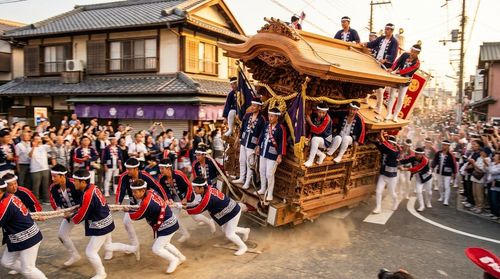
Festivals around Mount Fuji — from lakeside fireworks to the dramatic Yoshida Fire Festival and spring flower fields.
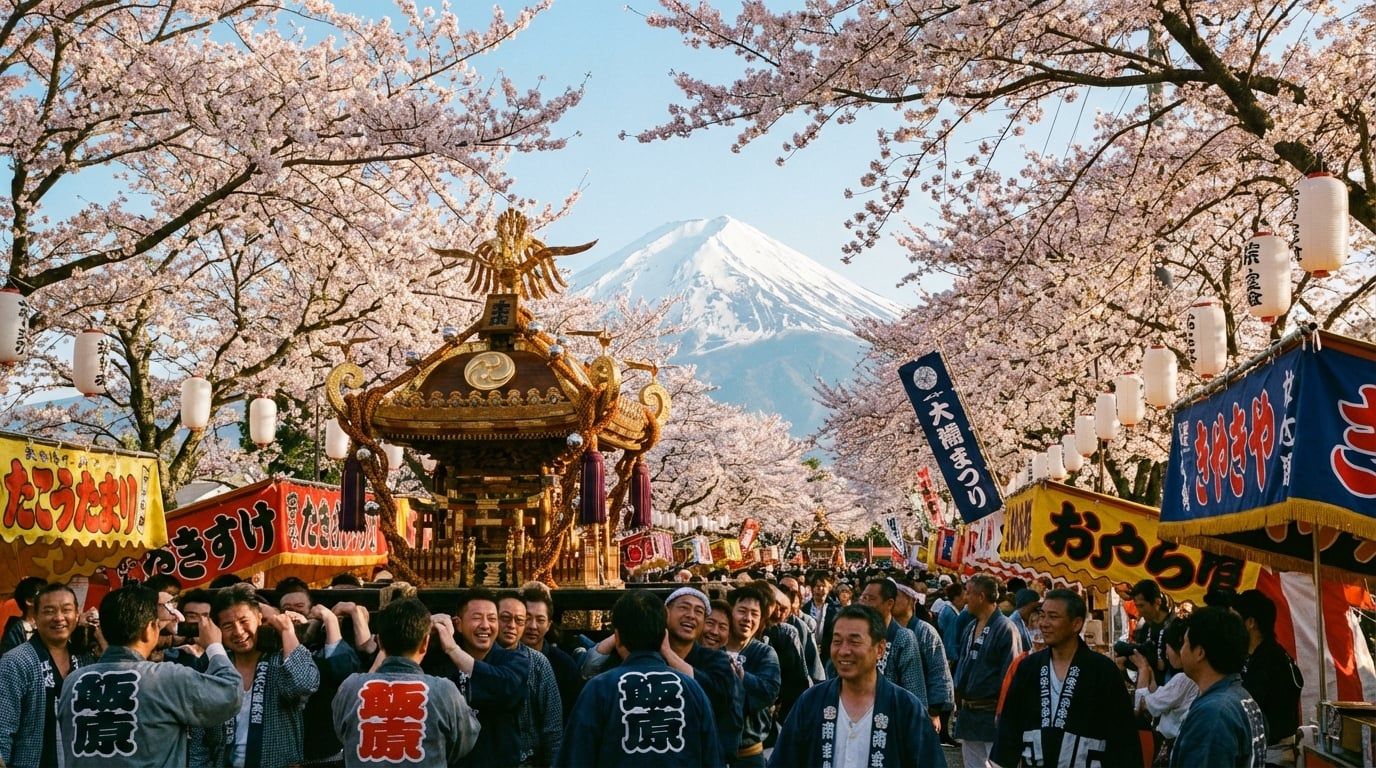 Image for illustrative purposes only.
Mount Fuji dominates every view, every photograph, and every experience in the region surrounding it. The towns and cities at the base of Japan's most iconic mountain have built their festival traditions around that presence — fire rituals to mark the end of climbing season, fireworks launched against the silhouette of the peak, and flower fields arranged so Fuji serves as the backdrop. These are festivals where the mountain is not just scenery but an active participant.
Yoshida Fire Festival (August 26–27)
The Yoshida no Hi Matsuri is one of Japan's three strangest and most spectacular fire festivals. Held on August 26–27 in Fujiyoshida City, it marks the symbolic end of the Mount Fuji climbing season and honors the deity of the mountain at Kitaguchi Hongu Fuji Sengen Shrine.
On the evening of August 26, the main street of Fujiyoshida is lined with over 70 enormous torches — wooden structures standing three meters tall, packed with fuel. At dusk, they are lit simultaneously, and the entire avenue erupts into a corridor of flame. The heat is intense. The firelight illuminates Fuji looming above the town. Portable shrines (mikoshi) are carried through the fire-lit streets, and the crowd presses in close, chanting and sweating.
The following day shifts to a more solemn tone, with shrine rituals giving thanks for a safe climbing season and asking for continued protection. The contrast between the wild energy of the fire night and the quiet reverence of the morning ceremony captures something essential about Japanese festival culture — the sacred and the spectacular existing side by side.
When: August 26–27 (fixed dates every year) Where: Fujiyoshida City, along the main approach to Fuji Sengen Shrine Access: Fujikyu Railway to Fujisan Station (2 hr from Shinjuku via direct express) Tips: The torches are lit around 6:30 PM on August 26. Arrive by 4 PM to claim a viewing spot along the main street. It gets extremely crowded and hot — wear light clothing and bring water.
Lake Kawaguchiko Fireworks (August & Winter)
Kawaguchiko is the most accessible of the Fuji Five Lakes, and its fireworks festivals exploit the geography perfectly. The lake surface reflects both the fireworks above and Mount Fuji behind, creating a doubled spectacle.
The main event is the Lake Kawaguchiko Fireworks Festival in early August, part of the broader Fuji Five Lakes fireworks series held across consecutive evenings at different lakes. Kawaguchiko's show launches approximately 10,000 fireworks over the lake, with the sound echoing off the surrounding mountains. The lakeshore fills with families on blankets, and nearby ryokan offer premium viewing from their rooms.
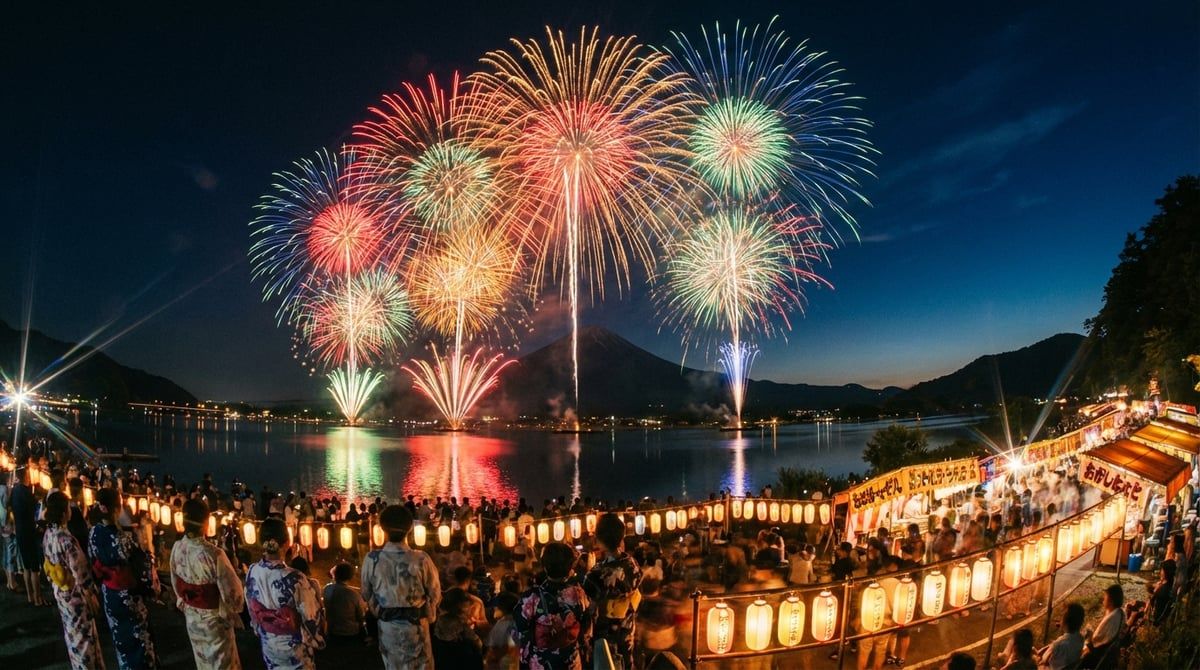 Image for illustrative purposes only.
In winter, the Kawaguchiko Winter Fireworks run on weekends from mid-January through late February. The winter version is smaller but arguably more beautiful — fireworks exploding over a frozen-still lake with snow-capped Fuji in crystal-clear winter air. The cold keeps crowds smaller, and the combination of fireworks, illuminations along the lakeshore, and steaming bowls of hoto noodles at lakeside stalls creates a perfect winter evening.
When: Early August (summer); weekends mid-January to late February (winter) Where: Northern shore of Lake Kawaguchiko Access: Fujikyu Railway to Kawaguchiko Station, then bus or 20-min walk to lakeshore Tips: For the summer festival, the northern shore near Oishi Park offers the best Fuji-and-fireworks combined view. For winter fireworks, check the schedule as they run on specific Saturday and Sunday evenings.
Fuji Shibazakura Festival (April–May)
Every spring, a field at the base of Mount Fuji explodes into color as 500,000 moss phlox (shibazakura) plants bloom in carpets of pink, white, red, and purple. The Fuji Shibazakura Festival runs from mid-April to late May at Fuji Motosuko Resort, near Lake Motosu — the same lake depicted on the back of the 1,000-yen bill.
The sight of vivid flower fields stretching toward a snow-capped Fuji is one of the most photographed spring scenes in Japan. The festival site includes food stalls serving Fuji-area specialties — Fujinomiya yakisoba (fried noodles), Shizuoka gyoza, and soft-serve ice cream in every conceivable flavor. A foot bath area lets you soak your feet in warm water while gazing at the mountain.
Peak bloom depends on the weather but typically falls in late April to mid-May. Early mornings offer the clearest Fuji views before afternoon clouds roll in.
When: Mid-April to late May (peak bloom: late April to mid-May) Where: Fuji Motosuko Resort, near Lake Motosu Access: Direct bus from Kawaguchiko Station (30 min) during festival period Tips: Arrive before 9 AM for the best light and smallest crowds. Fuji is most likely to be visible in the early morning. The parking lot fills by mid-morning on weekends.
Mt. Fuji Climbing Season Opening Ceremony (July 1)
The official opening of Mount Fuji's climbing season is marked by a Shinto ceremony at the mountain's base — a ritual that has been performed for centuries. On July 1, priests and officials gather at Fuji Sengen Shrine in Fujiyoshida for prayers and purification rites, formally declaring the mountain open to climbers.
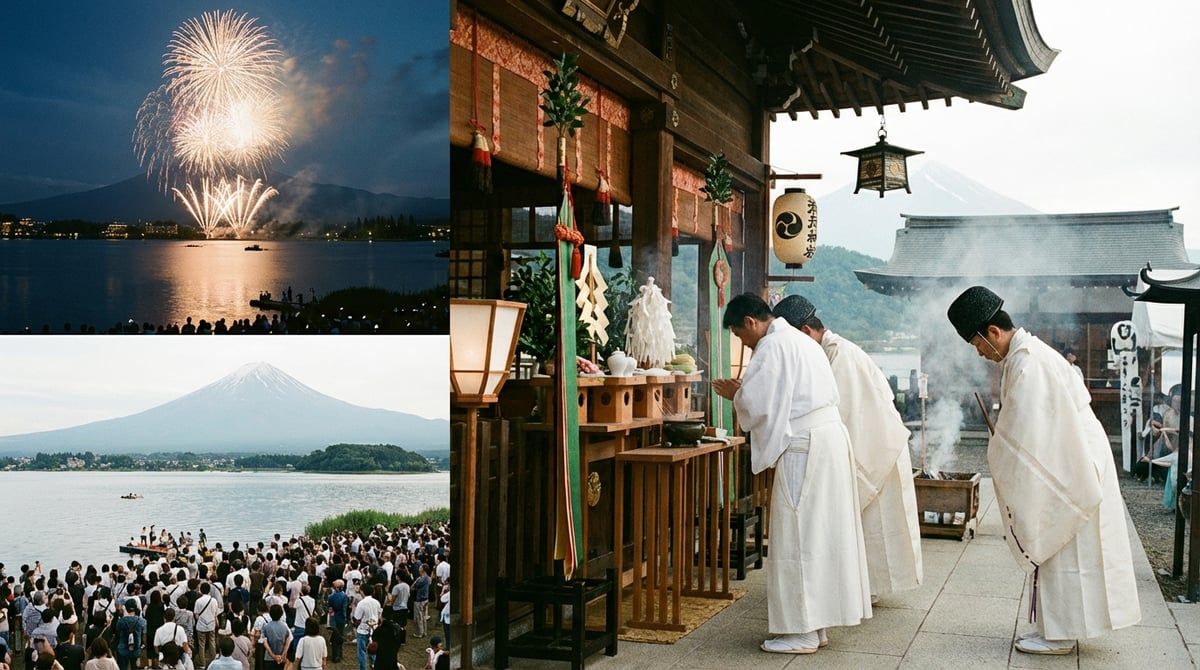 Image for illustrative purposes only.
The ceremony itself is not a large public spectacle, but its significance resonates through the entire region. In the days surrounding the opening, Fujiyoshida comes alive with related events, street markets, and an atmosphere of anticipation as the first climbers prepare their ascent. For anyone interested in the spiritual dimension of Fuji — which has been a sacred pilgrimage site for over 1,000 years — attending the opening ceremony offers a rare window into the mountain's religious heritage.
When: July 1 (fixed date) Where: Kitaguchi Hongu Fuji Sengen Shrine, Fujiyoshida Access: Fujikyu Railway to Fujisan Station Tips: The Yoshida Trail, which begins near the shrine, is the most popular climbing route. Even if you are not climbing, the shrine and its ancient cedar-lined approach are worth visiting.
Shizuoka Festivals
The city of Shizuoka, on the southern side of Mount Fuji facing Suruga Bay, hosts several notable festivals that complement a Fuji-area trip.
The Shizuoka Matsuri in early April features a parade celebrating Tokugawa Ieyasu, who retired to Shizuoka and is enshrined at Kunosan Toshogu. Floats, costumed processions, and night cherry blossom viewing along the Sumpu Castle moat draw large crowds. In November, the Daidogei World Cup transforms Shizuoka's streets into an international street performance festival, with acrobats, jugglers, musicians, and clowns from over 20 countries performing for free on outdoor stages.
When: Shizuoka Matsuri: early April; Daidogei World Cup: early November Where: Shizuoka city center and Sumpu Castle Park Access: JR Tokaido Shinkansen to Shizuoka Station (1 hr from Tokyo, 2 hr from Osaka)
Mishima Summer Festival (August)
Mishima sits at the southeastern foot of Mount Fuji, and its summer festival is a three-day celebration of traditional dance and shagiri music. The Mishima Taisha Grand Festival centers on the ancient Mishima Taisha shrine, one of the most important in the Izu region. Portable shrines are paraded through the streets, and the festival's signature shagiri floats — mobile stages carrying live musicians — fill the city with sound.
The town of Mishima itself is known for its beautiful spring-fed streams (the water flows underground from Mount Fuji) and unagi (freshwater eel) restaurants, making it an excellent lunch stop on any Fuji-area itinerary.
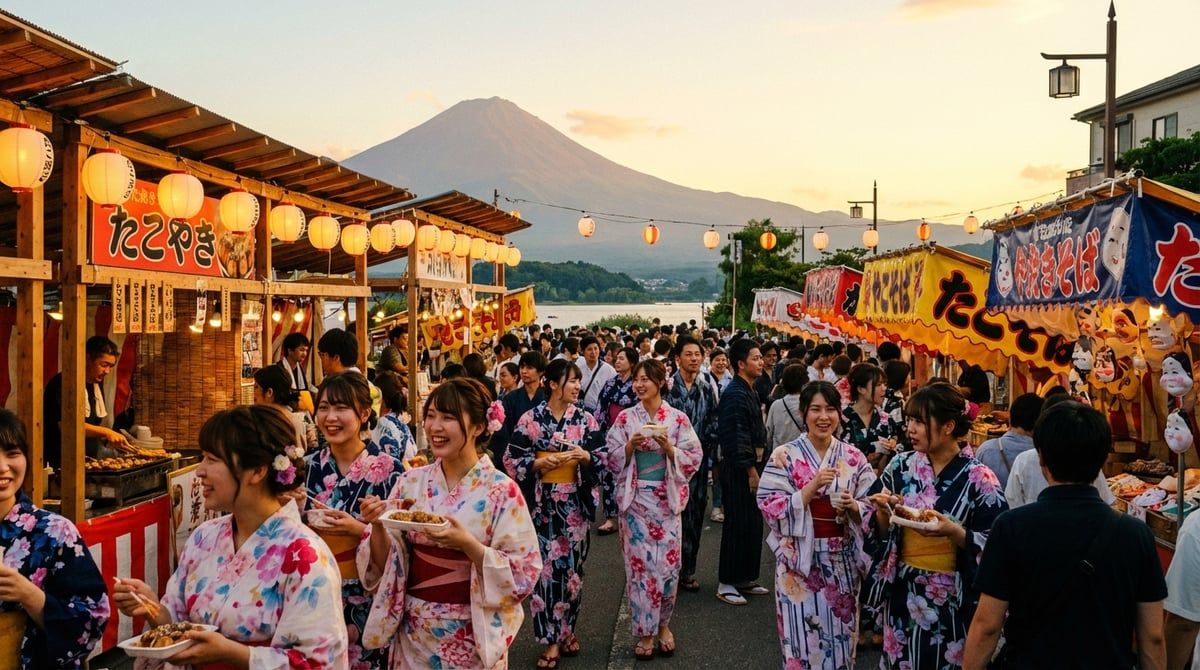 Image for illustrative purposes only.
When: August 15–17 (fixed dates) Where: Mishima Taisha Shrine and surrounding streets Access: JR Tokaido Shinkansen to Mishima Station (45 min from Tokyo)
Planning Your Fuji Festival Trip
The Mount Fuji area spans parts of both Yamanashi and Shizuoka Prefectures. From Tokyo, Kawaguchiko is reachable in about two hours by direct bus or train. Shizuoka is one hour by shinkansen. The Fuji Five Lakes area has limited public transportation between sites, so a rental car gives the most flexibility for festival-hopping.
For the Yoshida Fire Festival and summer fireworks, accommodation in Fujiyoshida and Kawaguchiko books up well in advance — plan at least a month ahead for August visits.
Discover more of Japan's festival traditions in our complete guide to Japanese festivals, plan with our month-by-month festival calendar, or explore the best festivals to experience in 2026.
What Real Travelers Say
While specific reviews for the Lake Kawaguchiko Fireworks festival itself are limited in the provided data, visitors consistently praise the Lake Kawaguchiko area for its stunning views of Mount Fuji and well-organized attractions. The region offers excellent opportunities to combine fireworks viewing with other activities like bike tours, craft workshops, and guided local experiences.
Visitor Tips:
- Arrive early to secure good viewing spots, as the festival attracts many visitors to the lake area
- Consider booking a guided tour with local experts like Johnny's Fuji Kawaguchiko Tours for insider knowledge and optimal viewing locations
- Bring comfortable clothing and consider visiting nearby craft workshops or herb studios to make a full day of your festival visit
- Explore the area by bike tour beforehand to familiarize yourself with the best vantage points around the lake
Best Moments According to Visitors:
- Fireworks reflected beautifully on the calm surface of Lake Kawaguchiko with Mount Fuji as a backdrop
- Combining the festival experience with scenic bike tours and local cultural activities in the Kawaguchiko area
Crowd Level: The Lake Kawaguchiko area attracts significant visitor numbers, particularly during festival season, so planning ahead and arriving early is recommended.
Frequently Asked Questions
When is the Yoshida Fire Festival held and what is its significance?
The Yoshida no Hi Matsuri is held annually on August 26–27 in Fujiyoshida City. It marks the symbolic end of the Mount Fuji climbing season and honors the deity of the mountain.
What can I expect at the Fuji Shibazakura Festival?
Every spring, 500,000 moss phlox (shibazakura) plants bloom in vibrant carpets of pink, white, red, and purple at Fuji Motosuko Resort. Visitors can enjoy food stalls, local specialties like Fujinomiya yakisoba, and a foot bath while gazing at Mount Fuji.
When are the Lake Kawaguchiko Fireworks held?
Lake Kawaguchiko hosts fireworks in early August for its
Explore More Festival Guides
Continue your Japan festival journey with these related guides: