From Sanja Matsuri's wild mikoshi to summer fireworks over the Sumida River — your complete guide to Tokyo's festivals in 2026.
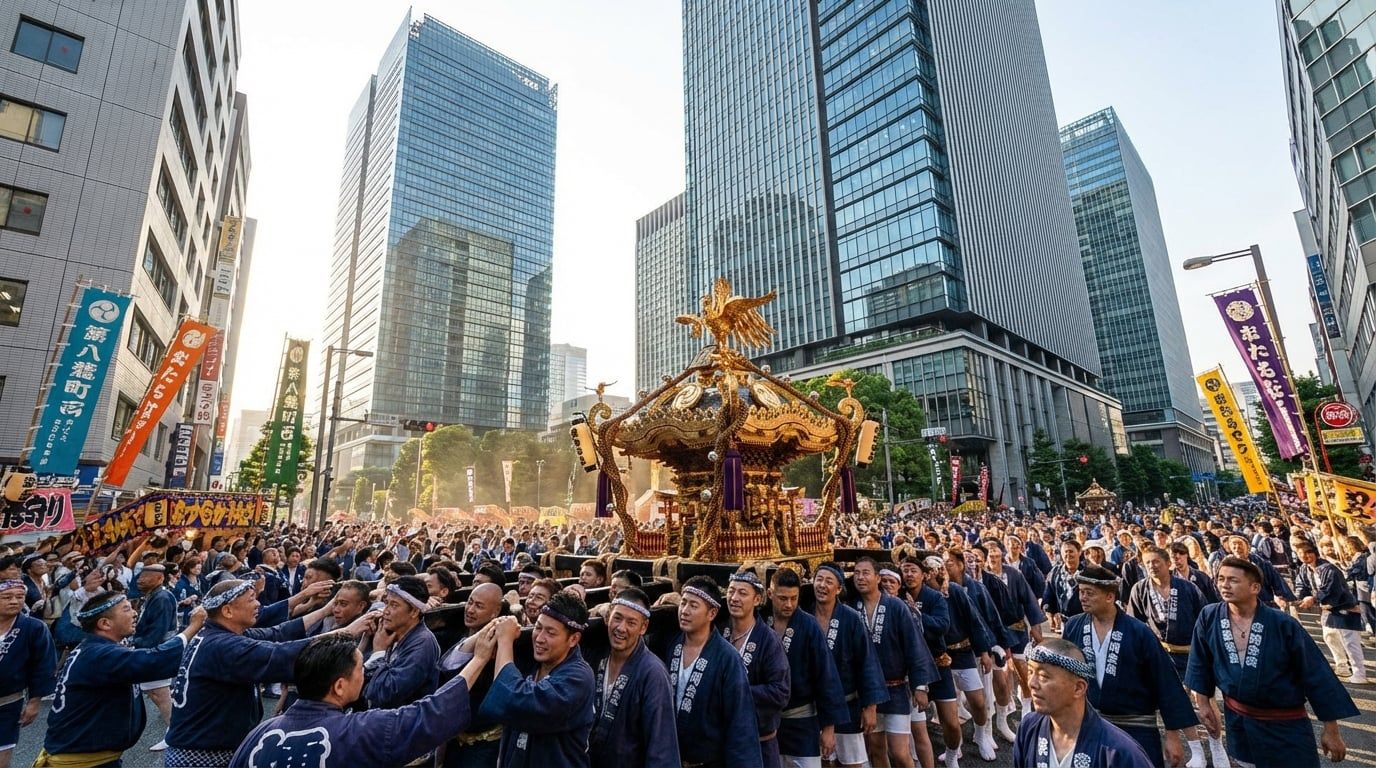 Image for illustrative purposes only.
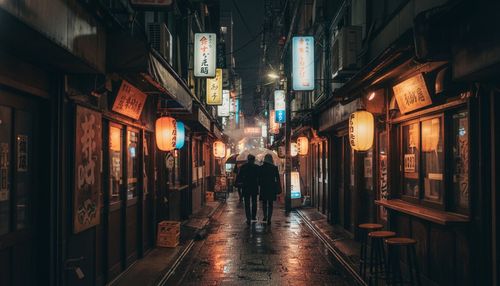
Tokyo is not just neon lights and skyscrapers. Beneath the modern surface, centuries-old festivals erupt throughout the year, flooding the streets with portable shrines, thundering drums, and thousands of lanterns. Whether you are visiting in spring or winter, there is a matsuri (festival) waiting for you. Here is your month-by-month guide to the biggest and best Tokyo festivals in 2026.
May: The Season Explodes
Sanja Matsuri — Asakusa's Wildest Weekend
When: Third weekend of May | Where: Senso-ji, Asakusa, Taito
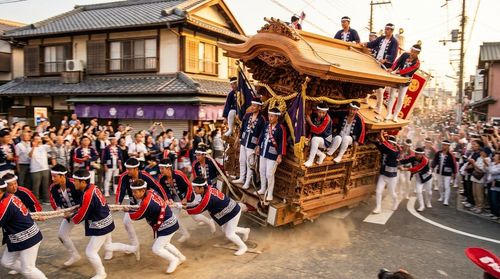
Sanja Matsuri is Tokyo's most electrifying shrine festival. Over three days, roughly 100 portable mikoshi shrines surge through the narrow streets around Senso-ji, carried by teams who rock and spin them with fierce energy. The atmosphere is raw and loud — taiko drums pound, crowds press in tight, and the excitement is contagious. Expect around 1.5 million visitors across the weekend. Arrive early on Sunday morning for the climactic "three shrine mikoshi" procession. For deeper context on how shrine festivals work across the country, see our Japan festivals guide.
Kanda Matsuri — Grand Procession on Hold
When: Mid-May | Where: Kanda Myojin Shrine, Chiyoda
Kanda Matsuri is one of Tokyo's "Big Three" festivals, but the grand procession only takes place in odd-numbered years. Since 2026 is an even year, the full-scale parade of floats and mikoshi will not happen. However, Kanda Myojin still holds smaller shrine ceremonies and events worth visiting if you are in the area. The shrine itself is a fascinating blend of tradition and pop culture — it has become a pilgrimage spot for anime fans. Plan your visit around the full Kanda Matsuri experience to know what to expect in both on and off years.
June: Sanno Matsuri — The Grand Festival Year
When: June 7-17 (approximate) | Where: Hie Shrine, Akasaka, Chiyoda
This is the big one for 2026. Sanno Matsuri holds its grand procession only in even-numbered years, making this a rare opportunity. The highlight is the Shinko-sai parade on June 15, when a magnificent procession of 500 people in Heian-period costumes, ornate floats, and sacred mikoshi winds through central Tokyo — passing right through the business districts of Nagatacho and Ginza. It is a surreal sight: ancient tradition weaving between glass office towers. Sanno Matsuri is considered one of Tokyo's three great festivals alongside Kanda Matsuri and Fukagawa Hachiman Matsuri.
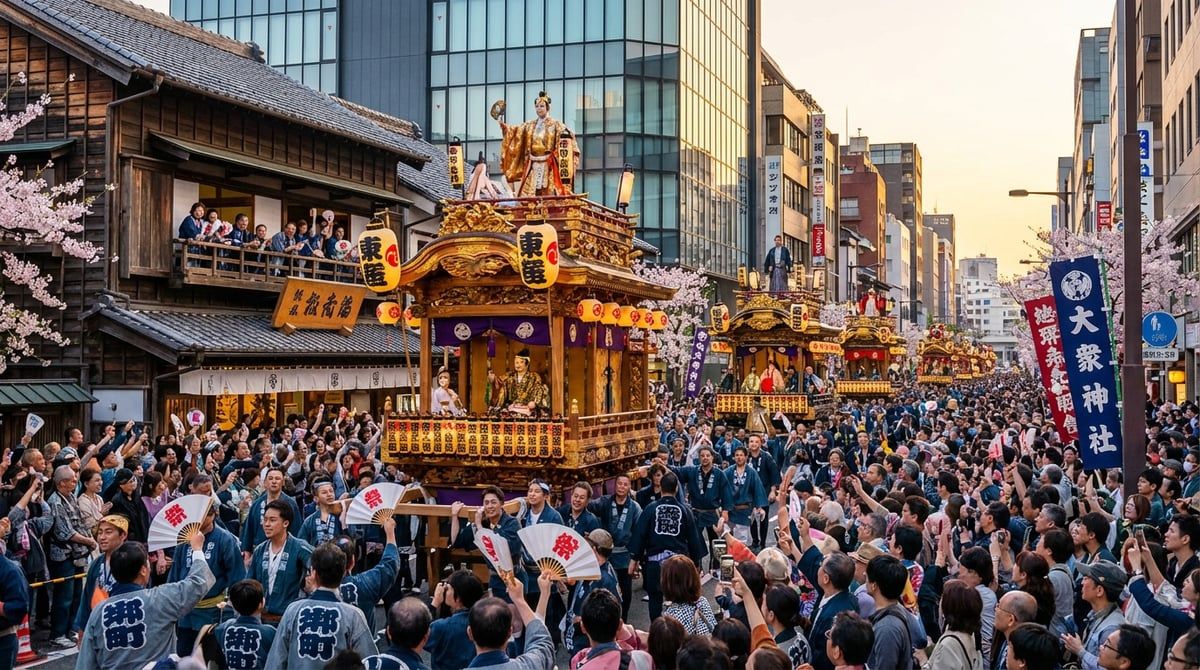 Image for illustrative purposes only.
July: Lanterns, Fireworks, and Summer Heat
Mitama Matsuri — 30,000 Lanterns at Yasukuni
When: July 13-16 | Where: Yasukuni Shrine, Chiyoda
Mitama Matsuri transforms the grounds of Yasukuni Shrine into a glowing sea of over 30,000 paper and metal lanterns. The sight after sunset is breathtaking — row upon row of golden light stretching into the distance. Festival food stalls line the approach, and traditional Bon Odori dancing adds to the atmosphere. This is one of the most photogenic July festivals in Tokyo and across all of Japan.
Sumidagawa Fireworks Festival — Tokyo's Biggest Bang
When: Last Saturday of July | Where: Sumida River, between Asakusa and Ryogoku
Nearly 20,000 fireworks light up the sky above the Sumida River in one of Japan's oldest and most famous hanabi taikai (fireworks festivals). Two launch sites compete to put on the best show, and the explosions reflect off the water and the Tokyo Skytree looming in the background. The riverbanks get extremely crowded — arrive by early afternoon to claim a spot, or book a seat at a riverside restaurant well in advance. This is summer festival season at its peak.
August: Dance Until You Drop
Koenji Awa Odori — A Million Spectators
When: Last weekend of August | Where: Koenji Station area, Suginami
Koenji Awa Odori is the largest Awa Odori dance festival outside of Tokushima. Around 10,000 dancers in colorful costumes parade through the streets of this laid-back neighborhood, performing the distinctive high-stepping Awa Odori to live shamisen and taiko music. The energy is infectious, and the famous saying applies: "It is a fool who dances and a fool who watches — so you might as well dance." This is one of the top August festivals in Japan.
Hachioji Matsuri — Western Tokyo's Hidden Gem
When: First weekend of August | Where: Hachioji city center
About 40 minutes west of Shinjuku by train, Hachioji Matsuri features 19 elaborately carved festival floats parading through the city streets. The craftsmanship on these dashi floats is remarkable, with intricate wood carvings depicting mythological scenes. On the final evening, all 19 floats gather at a single intersection for a dramatic "gathering of floats" performance, lit up against the night sky. It draws over 800,000 visitors but remains relatively unknown to international tourists.
Year-Round: Meiji Jingu Festivals
Where: Meiji Jingu Shrine, Shibuya
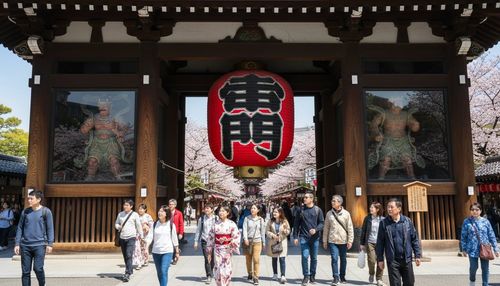
Tokyo's most famous shrine hosts several notable events throughout the year. The Grand Autumn Festival in early November features traditional Bugaku court dances and Noh performances on an outdoor stage set among towering trees. New Year's hatsumode draws millions of visitors during the first days of January. Spring and autumn see dedicated festivals with yabusame (horseback archery) demonstrations on the shrine's forested grounds. Check the Japan festival calendar for specific dates.
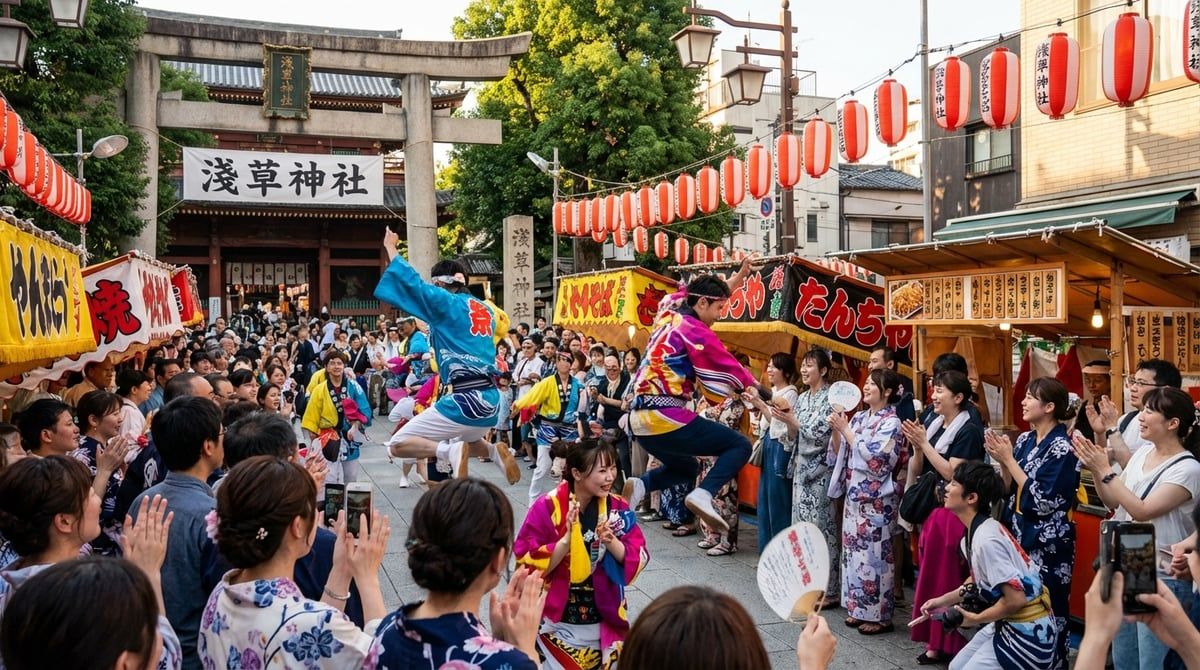 Image for illustrative purposes only.
December: Chichibu Night Festival — A Day Trip Worth Every Minute
When: December 2-3 | Where: Chichibu, Saitama (about 80 min from Ikebukuro)
Technically outside Tokyo but easily reachable, Chichibu Yomatsuri is one of Japan's three great float festivals and a UNESCO Intangible Cultural Heritage event. Massive illuminated floats weighing up to 20 tons are hauled up steep hills by teams of men, accompanied by explosive fireworks against the winter sky. The December 3 evening session is the climax. Take the Seibu Railway limited express from Ikebukuro — it is a comfortable ride, and the festival is absolutely worth the trip.
Getting Around Tokyo During Festivals
Tokyo's rail network makes festival-hopping remarkably easy. A 24-hour Tokyo Metro pass (600 yen) covers most venues. For Sanja Matsuri, take the Ginza Line to Asakusa. For Sanno Matsuri, Tameike-Sanno Station is right at Hie Shrine. Koenji is on the JR Chuo Line. During major festivals, expect packed trains on nearby lines — give yourself extra time, and avoid carrying large bags.
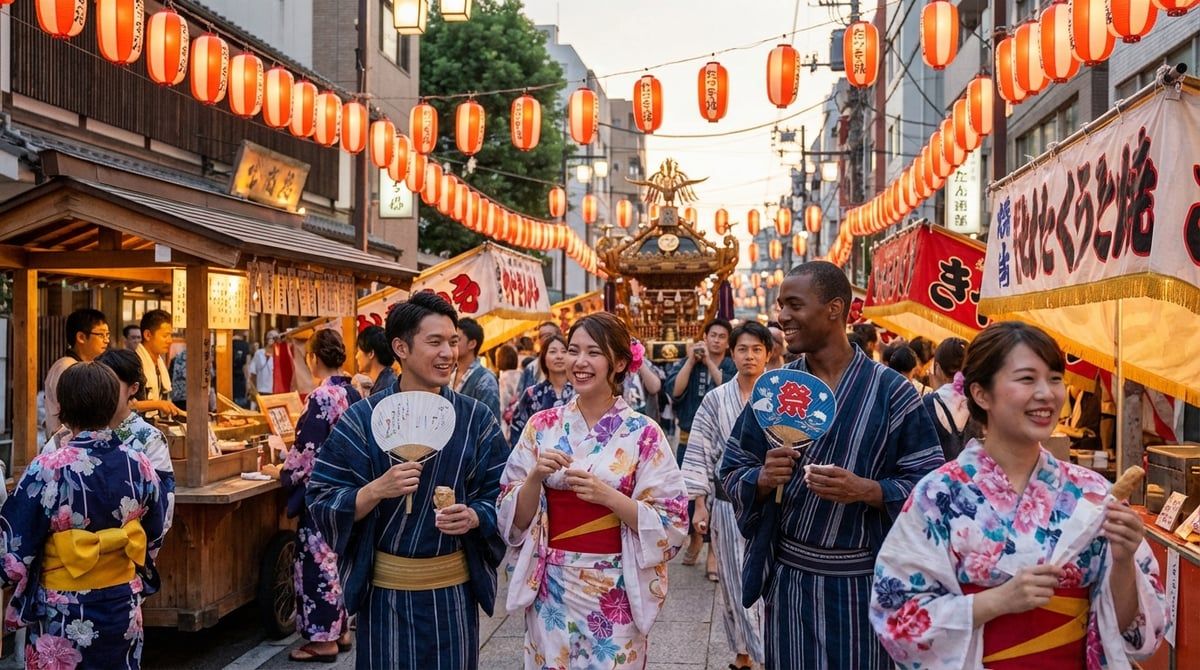 Image for illustrative purposes only.
Practical Tips for Tokyo Festivals
- Arrive early. Popular festivals get crowded fast. For fireworks and parades, being two hours early is not unusual.
- Cash is king. Most yatai (food stalls) at festivals are cash-only. Bring plenty of small bills and coins.
- Dress for the weather. Summer festivals mean heat and humidity. Bring a towel, water, and sunscreen. Many locals wear yukata — lightweight summer kimono — and rental shops near festival areas often stock them.
- Respect the mikoshi. When portable shrines pass by, make room. The carriers are often in a spiritual trance and the energy can be intense.
- Check exact dates. Some festival dates shift slightly each year. Confirm 2026 schedules on official shrine or ward websites closer to the event.
Tokyo's festival calendar is one of the richest in Japan. From the raw power of Sanja Matsuri to the golden glow of Mitama Matsuri's lanterns, each event reveals a different side of this extraordinary city. Plan around even one of these festivals, and your trip will be unforgettable.
Frequently Asked Questions
What are the best festivals in Tokyo in 2026?
The top Tokyo festivals in 2026 are Sanja Matsuri (May), Kanda Matsuri (May), Sumida River Fireworks (July), Mitama Matsuri (July), and Hachioji Matsuri (August). Sanja Matsuri is the largest with 2 million visitors over three days.
Are Tokyo festivals free?
Yes, nearly all Tokyo festivals are free to attend. Some fireworks festivals offer paid reserved seating, but free viewing spots are always available. Food and games at yatai stalls require cash.
What Tokyo festivals happen in summer 2026?
Summer 2026 highlights include Sumida River Fireworks (late July), Bon Odori dances (mid-August) throughout the city, Koenji Awa Odori (August), and dozens of neighborhood matsuri at local shrines.
Explore More Festival Guides
Continue your Japan festival journey with these related guides:
- Japan Festivals Guide: 10 Must-See Matsuri That Will Take Your Breath Away
- Japan Festivals 2026: Complete Month-by-Month Guide to the Best Matsuri
- Kanda Matsuri Guide: Tokyo's Ancient Festival Meets Akihabara
- Kyoto Festivals 2026: Gion Matsuri, Aoi Matsuri and Every Major Event
- Summer Festivals in Japan: The Ultimate Guide to Natsu Matsuri
- Fireworks Festivals in Japan: Best Hanabi Taikai