Discover Japan's J-pop and idol culture — from live idol theaters and CD shops to concert etiquette and karaoke. A practical guide for visitors.
Japan's music culture runs deeper than the catchy hooks you've heard drifting out of a convenience store. From stadium-filling pop groups to passionate underground scenes in basement live houses, the country has built an entire ecosystem around music fandom — and as a visitor, you can step right into it. This guide walks you through what idol culture actually is, where to experience it, and how to do so respectfully as an outsider.
What Is Idol Culture?
In Japan, an "idol" (アイドル, aidoru) isn't just a pop star. It's a carefully cultivated persona — youthful, relatable, and built on the idea of accessible dreams. Idols aren't distant figures on a pedestal; fans are actively invited into the journey, watching performers grow, train, and compete for center-stage positions. That sense of participation is central to the appeal.
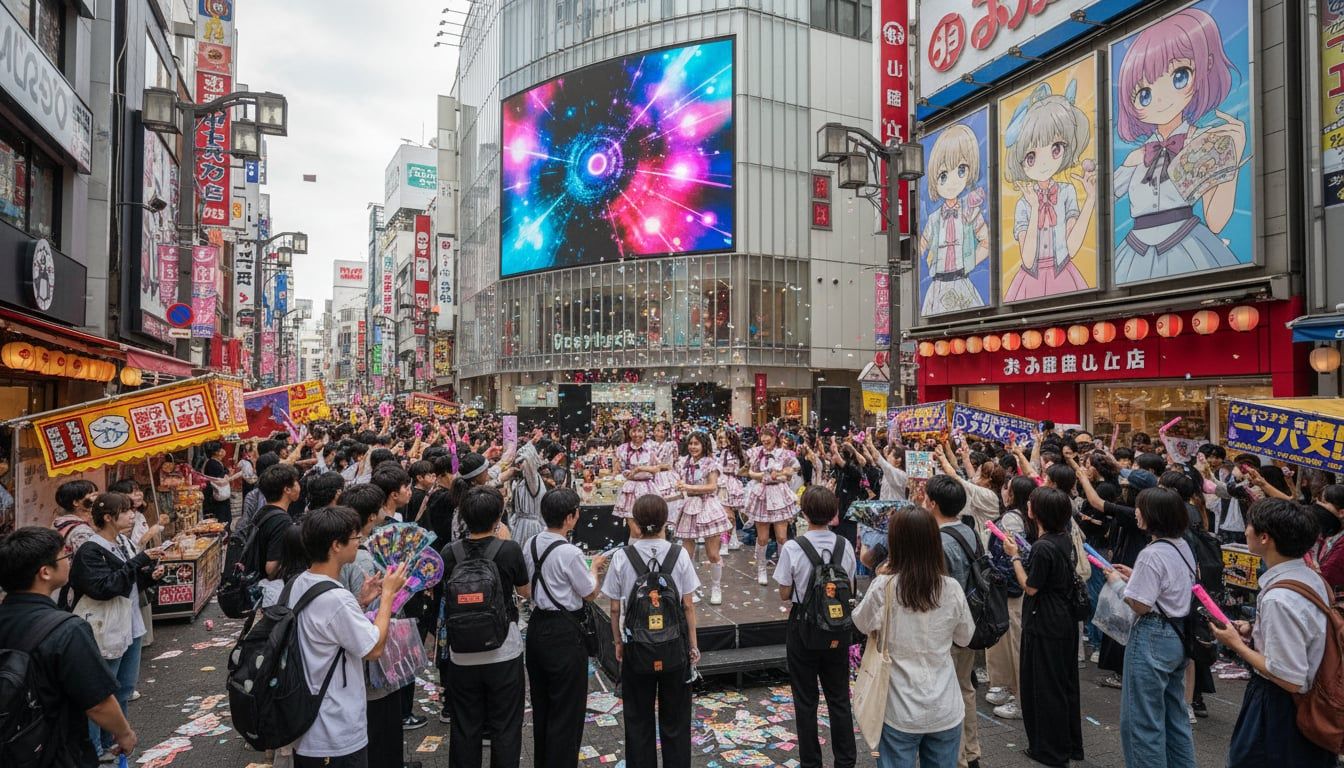
Idol groups can be massive, spanning dozens of members across multiple "sister groups" with regional branches, or tiny, consisting of three or four performers playing weekly shows at a small live house in Akihabara. Both ends of the spectrum share the same philosophy: close proximity between performer and fan.
J-pop more broadly covers everything from idol acts to solo singer-songwriters, city pop revivalists, electronic producers, and rock-pop crossovers. The genre is vast, and Japan's music industry — the second largest in the world by revenue — reflects that diversity.
Where to Experience Idol Culture Live
Idol Theaters
The most distinctive venue type in Japanese idol culture is the dedicated idol theater. These are small, purpose-built (or adapted) spaces that host daily or near-daily performances, often at surprisingly affordable prices. You'll find clusters of them in Akihabara and around the Shibuya-Harajuku corridor.
Tickets often go on sale just days in advance, sometimes at the door, which makes them far more accessible than big arena shows. Audiences are small — sometimes fewer than 100 people — which means you're genuinely close to the performers. Bring cash for merchandise and arrive a little early to get a good spot.
Live Houses in Akihabara and Shibuya
The underground and indie idol scene thrives in Tokyo's live house network. Akihabara has a high concentration of small live music venues tucked above electronics shops and alongside maid cafes. Shibuya's venues — spread across multiple basement and upper-floor spaces — host everything from debut acts to established underground favorites.
A typical show at a small live house runs two to three hours, with multiple acts on a bill. Entry fees (called sei-ryou, or set fees) are usually between ¥1,500 and ¥3,000, sometimes including a drink ticket. These shows are a genuine window into grassroots Japanese pop culture and often more memorable than a polished arena performance.
Major Music Venues
For mainstream J-pop and established idol acts, Japan has a world-class circuit of large venues:
- Nippon Budokan (Tokyo): An iconic indoor arena in Kitanomaru Park. Holding roughly 14,000 people, it carries enormous prestige — performing at Budokan is a milestone achievement in Japanese music.
- Tokyo Dome: Japan's largest indoor venue, seating up to 55,000. Big-name artists sell out multiple nights here.
- Zepp Venues: A nationwide chain of mid-sized live music halls (capacity roughly 1,000–2,800). Zepp Tokyo has been replaced by Zepp Shinjuku; other Zepps operate in Osaka, Nagoya, Fukuoka, and Sapporo. These are a sweet spot for catching acts in a real concert atmosphere without the overwhelming scale of a dome show.
- Makuhari Messe and Saitama Super Arena: Common choices for large-scale fan events and group concerts.
Buying Tickets as a Foreigner
The Lottery System
Major Japanese concerts don't sell tickets on a first-come, first-served basis. Instead, they use a lottery (koubo) system. Fans apply during an application window, then a draw determines who gets tickets. This makes lines outside venues largely irrelevant — but it also means planning ahead.
Most lottery applications require a Japanese phone number and a domestic payment method (credit card or convenience store payment). Workarounds for foreign visitors:
- eplus, Lawson Ticket (L-code), and Ticket Pia are the three main platforms. eplus has an English interface for some events.
- Klook and Voyagin occasionally list concert experiences or fan event tickets for popular acts aimed at tourists.
- Resale platforms: Ticket Camp was popular but shut down; today, Yahoo! Auctions Japan and Mercari are common resale sources. Prices spike significantly for sold-out shows. Be cautious of counterfeits for very high-demand events.
- Stay Concierge services: Some higher-end hotels can assist with ticket procurement for guests.
For smaller live houses, walk-up purchase at the door is common and foreigner-friendly.
Useful Apps
- eplus app — major concert ticketing
- Mercari — secondhand marketplace including tickets
- Yahoo! Auctions — domestic auction platform for tickets and merchandise
- LivePocket — used by many smaller independent acts
Tower Records and CD Culture
Japan is the world's last great physical music market. Walking into Tower Records Shibuya — nine floors of music in the heart of the city — is a genuine experience. The ground floor charts reflect current domestic popularity in real time, and the idol sections can occupy entire floors, organized by group with handwritten staff recommendation cards (POP) everywhere.
Other destinations worth visiting:
- HMV & Books Shibuya and the smaller HMV Record Shop in Shibuya
- Disk Union (multiple Tokyo locations) for used and specialist genres
- Recofan in Shibuya for secondhand CDs and vinyl
Buying a CD at a Tower Records or directly at an event often includes a "handshake ticket" (akushu-ken) or event participation ticket — this is a core mechanic of idol fan engagement. Even if you don't use it, owning a physical release with its full package of photos, booklets, and bonus discs is itself part of the fan experience.
Concert Etiquette
Japanese concert culture has specific unwritten (and sometimes written) rules:
- Penlights (Cyalume/Owaraki): Many idol fans bring LED penlights in the group's official colors. Color changes during songs signal emotional moments. You can purchase the correct color at the venue merchandise booth before the show.
- Call-and-response (kōru ando resupōnsu): Fans shout specific phrases or chants at designated points in songs. These aren't random — they're memorized by dedicated fans. Watching and picking up the rhythm is perfectly fine as a newcomer.
- No singing along loudly: At most J-pop and idol concerts, singing loudly over the performer is considered disrespectful, particularly during emotional ballads. Mouthing lyrics quietly is acceptable.
- No photography during most performances: Unless explicitly permitted (some small live houses allow it), photos during the show are prohibited. Pre-show or merchandise areas are usually fine.
- Merchandise queues: Lines for concert goods open hours before the show. Popular items sell out fast. If you want specific items, arrive early.
Music-Themed Cafes and Experiences
Tokyo has a vibrant culture of music-adjacent experiences:
- Artist collaboration cafes: Temporary cafes themed around current releases or anniversaries pop up regularly in Harajuku, Shibuya, and Shinjuku. Check event listings or the natalie music news site.
- Sound bars: Low-key listening bars (ongaku bar) in Shimokitazawa and Shinjuku Golden Gai where the focus is on quality audio and curated music, often jazz or city pop.
- Karaoke: Karaoke in Japan is a full leisure activity — private rooms rented by the hour, a vast song catalog including the latest releases, and drinks from a menu. Major chains include Karaoke JOYSOUND, Big Echo, and Manekineko. Many locations in tourist areas offer English interfaces. J-pop karaoke is one of the most accessible ways to engage with the music as a visitor.
FAQ
Q: Do I need to speak Japanese to attend a concert? A: For smaller live houses, basic communication is manageable with a translation app. For major arena shows, ticketing is the main hurdle — once you're inside, the music speaks for itself. Staff at larger venues often have basic English.
Q: Is it rude to attend as a casual tourist rather than a dedicated fan? A: Not at all, particularly at live houses where the culture is open and welcoming to new faces. At idol theater shows, knowing a few basics (the group's name, their colors) earns quiet appreciation.
Q: What's the best time of year for music events? A: Japan's concert calendar runs year-round, but summer (July–August) and spring (March–April) have high concentrations of outdoor festivals and dome tours. The annual NHK Kōhaku Uta Gassen on New Year's Eve is a national music event worth watching even from a TV.
Q: Where can I find out what's on? A: natalie.mu (music news in Japanese, Google Translate-friendly), e+ (eplus.jp), and Bandsintown for international act detection. Social media accounts of venues like Zepp also post lineups in advance.
Frequently Asked Questions
What is an "idol" in Japanese culture?
In Japan, an "idol" (アイドル, aidoru) is a carefully cultivated persona—youthful, relatable, and built on the idea of accessible dreams. Fans are actively invited into the performer's journey, watching them grow, train, and compete for center-stage positions.
Where can visitors experience live idol culture in Japan?
Visitors can experience live idol culture
Explore More
- Akihabara Otaku Culture Guide — Dive deeper into Tokyo's pop culture district, from electronics to anime and idol goods
- Japan Karaoke Guide — Everything you need to know about karaoke in Japan, from booking a room to song selection
- Harajuku Fashion Culture Guide — Explore the street fashion scene that overlaps with J-pop aesthetics and youth culture
- VTuber Culture in Japan: What Visitors Should Know About Virtual YouTubers — how virtual idol culture grew out of the same ecosystem as J-pop and where to experience it in person