Discover Harajuku's iconic street fashion scene — Takeshita Street, Cat Street, kawaii culture, vintage finds, and how to explore it all.
Nowhere else in the world can you walk 300 meters and witness dozens of people dressed like living works of art — purely for the joy of it. Harajuku is where Japanese youth culture turned self-expression into a global movement, and it still delivers today. Whether you have two hours or a full day, this guide tells you exactly where to go, what to expect, and how to make the most of it.
What You'll Find in This Guide
- Where to go first — Takeshita Street, Cat Street, Laforet, and Omotesando explained
- When to visit — the right times for street fashion vs. relaxed browsing
- Quick budget tips — from free experiences to affordable shopping
- Kawaii culture — what it actually means and why it matters
- Practical access info — stations, exits, and travel times
- Photography etiquette — how to interact respectfully
- Nearby attractions — Meiji Shrine and how to combine your visit
At a Glance
| Nearest stations | Harajuku (JR Yamanote Line) · Meiji-Jingumae (Tokyo Metro) |
| Best time to visit | Sat/Sun afternoon for street fashion; weekday morning for relaxed browsing |
| Estimated budget | Free to explore · ¥500–¥3,000 for Takeshita shopping · ¥1,000+ for vintage |
| Time needed | Half day (main highlights) · Full day (everything including Meiji Shrine) |
| From Shinjuku | 2 min on Yamanote Line |
| From Shibuya | 2 min on Yamanote Line |
If there's one neighborhood in Tokyo that feels like stepping into a living fashion magazine, it's Harajuku. Bold, playful, and utterly unfiltered, Harajuku has been the beating heart of Japanese youth culture and street fashion for decades. The global obsession with Japanese street style was largely born here — fueled by photographers who documented the extraordinary outfits people wore simply to walk around on a Sunday afternoon. Whether you're a style obsessive or simply curious, this neighborhood rewards every kind of visitor.
Let's walk through what makes Harajuku so special — and how to make the most of your visit.
What Makes Harajuku Unique?
Harajuku occupies a fascinating middle ground in Tokyo. On one side you have the loud, candy-colored chaos of Takeshita Street. On the other, the leafy, designer-lined boulevard of Omotesando. Sandwiched between them is Cat Street, a relaxed strip of independent boutiques and vintage stores that bridges both worlds.
What unites all of it is a spirit of self-expression without apology. Harajuku has long been a safe space for young people to experiment with identity through clothing — from gothic lolita and decora to streetwear, vintage Americana, and everything in between. The neighborhood doesn't just sell fashion; it generates it.
Takeshita Street: The Heart of Kawaii
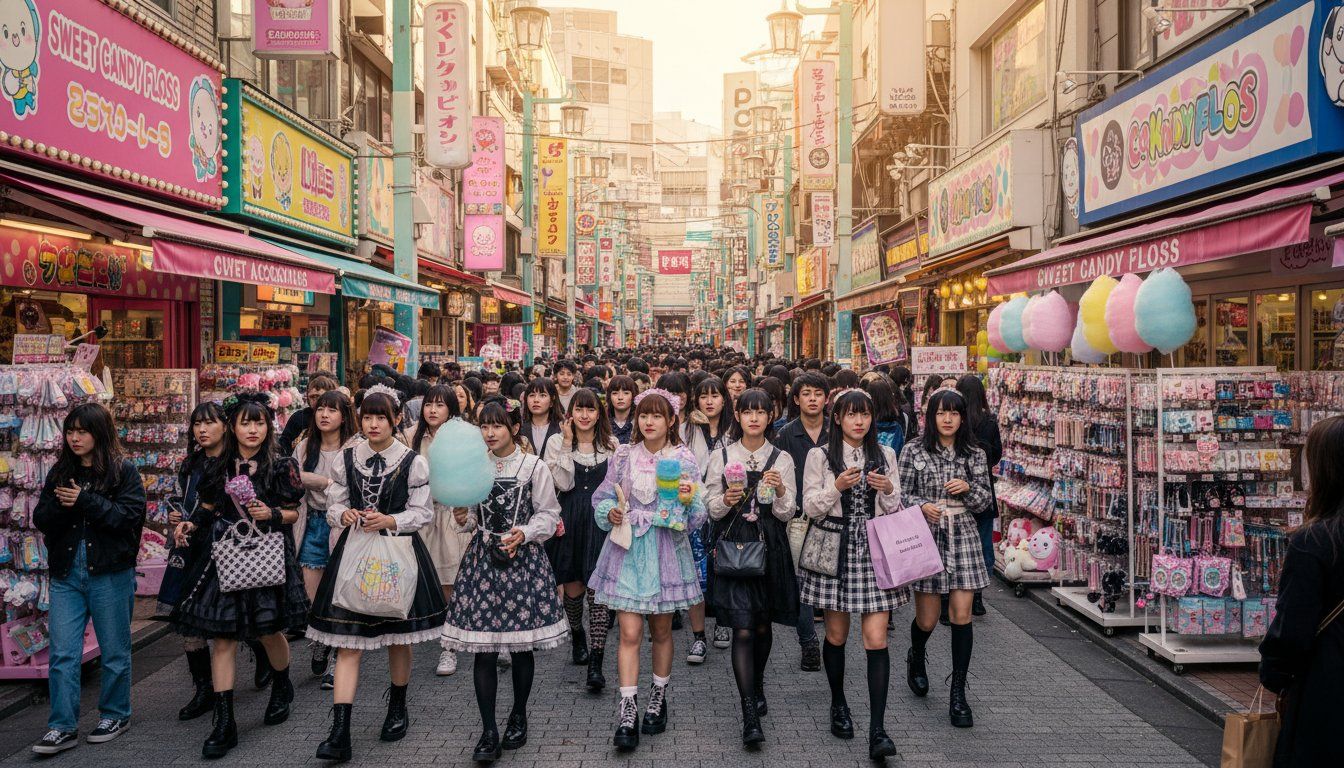
Takeshita Street (竹下通り) is probably the most photographed street in Japanese fashion culture, and for good reason. This narrow, 350-meter pedestrian alley is packed wall-to-wall with shops selling the most maximalist, joyful, rule-breaking fashion you'll find anywhere.
The styles here skew young and bold. Think pastel platforms, layered frills, oversized accessories, crepe stands, and rainbow cotton candy. Even if you're not buying, walking through Takeshita is an experience in sensory overload — in the best possible way.
Tips for Takeshita Street:
- Come on a Saturday or Sunday afternoon if you want to see the full street fashion parade. Weekday mornings are quieter and easier to browse.
- The street gets genuinely crowded on weekends, so go early (around 11am) before the peak rush.
- Prices are generally affordable, making this a great place to pick up statement pieces without breaking the bank.
- Don't just look at the shops — look at the people. The street itself is a runway.
Cat Street: Curated Cool
A few minutes' walk from Takeshita, Cat Street (キャットストリート) is Harajuku's more grown-up, design-forward sibling. This relaxed, tree-lined pedestrian path runs between Harajuku and Shibuya and is home to a mix of independent boutiques, concept stores, vintage shops, and select-style retailers.
The vibe here is more curated and less chaotic than Takeshita. You'll find people browsing rare sneakers, hunting for 90s denim, or picking up limited-edition graphic tees. Many of Japan's most interesting local designers have had their early outposts here, and the street has a long history of nurturing emerging fashion talent.
Cat Street is also just a pleasant place to walk. The architecture is varied, the crowds are manageable, and you can duck in and out of shops at your own pace.
Vintage and Thrift Shopping
Harajuku has one of the densest concentrations of vintage and secondhand clothing stores in the world. Japanese vintage culture takes quality seriously — you'll regularly find well-preserved pieces from American and European brands alongside Japanese archive fashion.
The area around Takeshita Street and the backstreets near Harajuku Station has a cluster of multi-floor vintage shops where you can spend hours digging through racks. Many stores specialize in particular eras or aesthetics: 70s workwear, 80s sportswear, Y2K accessories, and classic Japanese brands.
Budget tip: Vintage shopping in Harajuku can be surprisingly affordable, especially compared to similar finds in Western cities. Set aside a couple of hours and go in with an open mind — the best finds are rarely the ones you expected.
Laforet Harajuku
Laforet Harajuku is a landmark building on Meiji-dori that has served as a tastemaker retail space for Japanese fashion since 1978. Unlike a standard department store, Laforet functions more like a curated collection of independent boutiques stacked across multiple floors, each floor with its own distinct mood.
Lower floors tend toward avant-garde and subculture fashion — gothic lolita, decora, and dark street styles have a strong presence. Upper floors get progressively more mainstream, though always with a Tokyo edge. The building is also an event space, hosting pop-ups, art installations, and brand launches that give it a constantly changing energy.
Even if you're not shopping, spending an hour in Laforet gives you a real understanding of the full spectrum of Japanese youth fashion in a single building.
Omotesando: The High-Fashion Contrast
Just a short walk from Takeshita, Omotesando feels like a different planet. This wide, zelkova tree-lined boulevard is Tokyo's answer to the Champs-Élysées, home to flagship stores from international luxury houses as well as some of Japan's most celebrated architects (several of the buildings here are architectural landmarks in their own right).
The contrast with Takeshita is part of what makes Harajuku so interesting as a fashion destination. Within a ten-minute walk you can go from the most democratic, DIY street fashion in the world to some of the most rarefied luxury retail anywhere. Both coexist comfortably, and locals move between them without a second thought.
Omotesando is also lined with excellent cafes, making it a good place to rest your feet mid-visit.
Kawaii Culture: More Than Just "Cute"
The word kawaii (かわいい) means cute, but in Harajuku it carries a lot more weight than that. Kawaii culture here is an aesthetic philosophy, a subversive act, and in many cases a form of genuine artistic expression.
What started as a youth rebellion against formal Japanese social expectations — expressing softness, playfulness, and childlike joy in a culture that prizes conformity — has grown into a globally influential aesthetic. The ripple effects of Harajuku kawaii can be seen in fashion, music, art, and graphic design all over the world.
When you see someone in a spectacular outfit on Takeshita Street, understand that they likely spent significant time and creative energy putting it together. It's not a costume — it's craft.
Street Style Photography Etiquette
Harajuku is a popular destination for street style photographers, and the people you'll meet there are generally used to being photographed. That said, a few simple rules go a long way:
- Always ask first. A simple gesture, a friendly smile, and pointing at your camera is usually enough. If someone says no or waves you off, respect that immediately.
- Don't photograph people without consent, especially in tight spaces like Takeshita Street where people may not have noticed you.
- Be warm and genuine. People who dress boldly are usually proud of their style and happy to pose if you approach respectfully.
- No street style photography inside shops. Most boutiques don't allow it, and it's considered rude.
Meiji Shrine: A Peaceful Neighbor
Directly adjacent to Harajuku Station, Meiji Shrine (明治神宮) offers one of the most striking contrasts in Tokyo: immediately behind the fashion district lies a vast, forested Shinto shrine dedicated to Emperor Meiji and Empress Shoken. The towering wooden torii gate, the crunching gravel paths, and the towering camphor trees feel a world away from Takeshita's neon.
It's absolutely worth combining a Harajuku fashion visit with a walk through the shrine grounds. Entry is free, the forest is surprisingly expansive, and on weekends you'll often see traditional wedding ceremonies.
Getting There
Harajuku Station (Yamanote Line) is the main access point. The station has two exits:
- Takeshita Exit — opens directly onto Takeshita Street. Use this for the fashion district.
- Omotesando Exit — faces Meiji Shrine and is a short walk to Omotesando boulevard.
You can also arrive via Meiji-Jingumae Station (Tokyo Metro Chiyoda and Fukutoshin Lines), which drops you right in the middle of the shopping area.
From Shinjuku: 2 minutes on the Yamanote Line. From Shibuya: 2 minutes on the Yamanote Line.
Practical Tips
- Best time to visit: Saturday and Sunday afternoons bring out the most elaborate street fashion. If you want photos of outfits, this is when to come. If you prefer quieter browsing, weekday mornings are ideal.
- Budget: Takeshita Street and the vintage shops can be very affordable. Set a rough budget before you go — it's easy to get carried away.
- Wear comfortable shoes. You'll walk a lot, often on crowded narrow streets.
- Combine with Shibuya: Harajuku and Shibuya are two stops apart on the Yamanote Line and pair naturally as a day out.
FAQ
Is Harajuku fashion still as wild as it used to be? The extreme "Harajuku girls" style that became famous internationally in the 2000s has evolved. You'll still see bold, elaborate outfits — especially on weekends — but today's Harajuku fashion scene is broader and more diverse, incorporating streetwear, vintage, and a wider range of aesthetics alongside the more theatrical subculture styles.
Do I need to dress up to visit Harajuku? Not at all. Harajuku welcomes everyone regardless of how they're dressed. That said, if you want to participate rather than just observe, the neighborhood is a fantastic place to try something you wouldn't wear at home — nobody will blink.
Is Harajuku suitable for kids? Yes — kids often love Takeshita Street for the candy shops, crepe stands, and colorful energy. The crowds on weekends can be intense for very young children, so morning visits work better for families.
How long should I spend in Harajuku? Half a day is enough to cover the main areas comfortably. A full day lets you explore Takeshita, Cat Street, Omotesando, Laforet, and Meiji Shrine without rushing.
Frequently Asked Questions
What is Harajuku famous for?
Harajuku is renowned as the beating heart of Japanese youth culture and street fashion, where self-expression through clothing became a global movement. It's a vibrant district known for its bold, playful, and unfiltered styles, attracting visitors curious about its unique fashion scene.
What are the main areas
Explore More
Harajuku is just the start. If it sparked your interest in Japanese pop culture, these guides go deeper:
- Akihabara: Tokyo's Otaku Paradise — Anime, manga, electronics, and nerd culture in the world's most famous geek district. A natural next stop from Harajuku.
- Japan Maid Cafe Guide — One of Tokyo's most uniquely Japanese experiences. Many of the best maid cafes are a short train ride from Harajuku.
- Japan Cosplay Culture Guide — Understand the craft, community, and creativity behind Japan's thriving cosplay scene — deeply connected to Harajuku's roots.