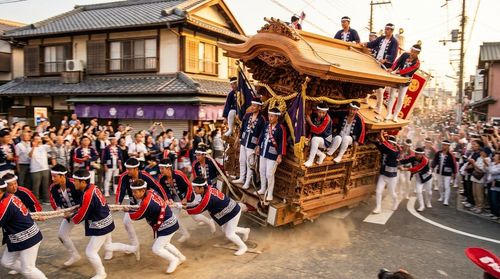
From Hakata Yamakasa's 4:59am float race to Nagasaki Kunchi's dragon dances — Kyushu's festivals burn with southern energy.
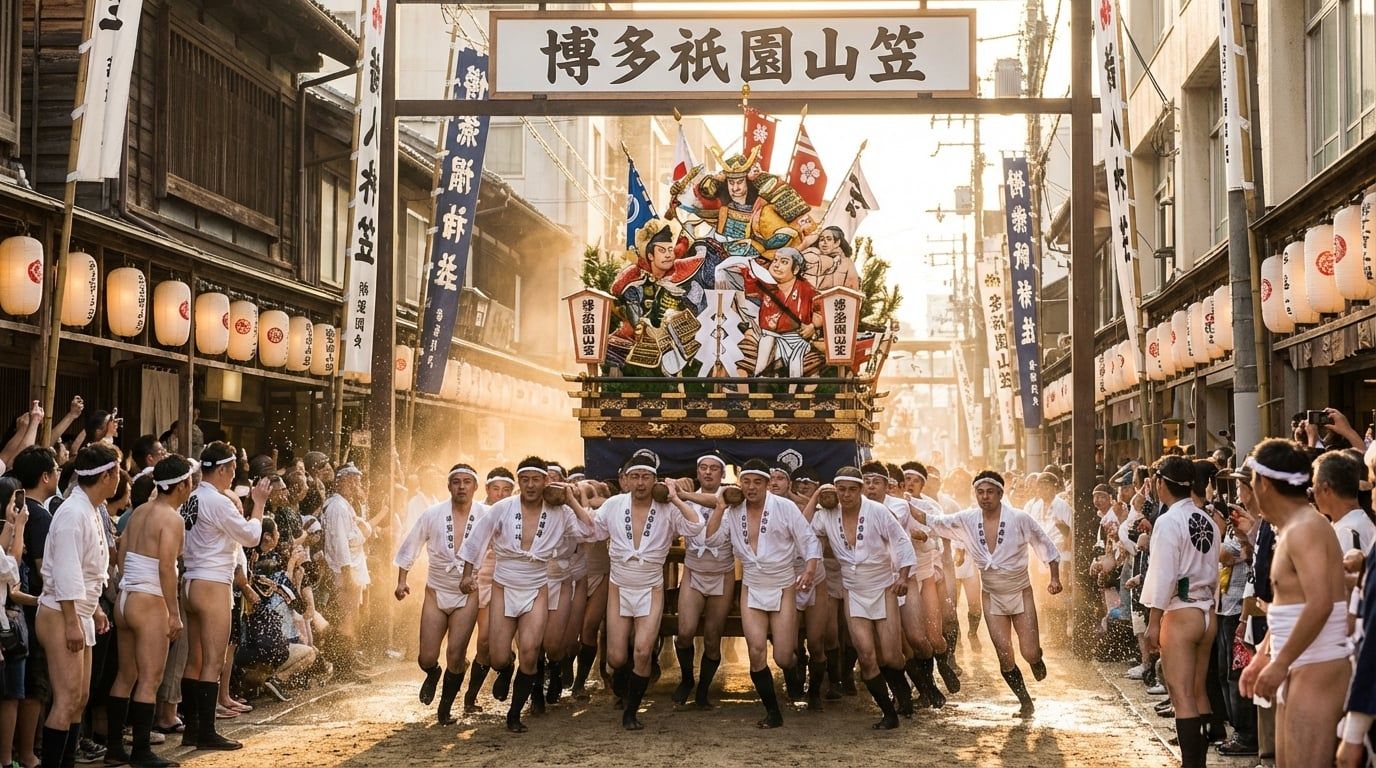 Image for illustrative purposes only.
Kyushu is Japan's southern heartland, and its festivals carry a raw intensity you won't find anywhere else in the country. Where Tokyo festivals feel polished and Kyoto's feel refined, Kyushu matsuri hit you with sweat, thunder, and pure adrenaline. Fukuoka — the region's largest city — sits at the center of this festival culture, with traditions stretching back over 700 years.
Whether you're chasing summer heat or autumn color, Kyushu's festival calendar delivers something extraordinary in nearly every month. Here's your guide to the biggest and best.
Hakata Gion Yamakasa (July 1-15)
This is Fukuoka's crown jewel and one of the most thrilling festivals in all of Japan. Hakata Gion Yamakasa has run every July since 1241, centered around Kushida Shrine in the old Hakata district.
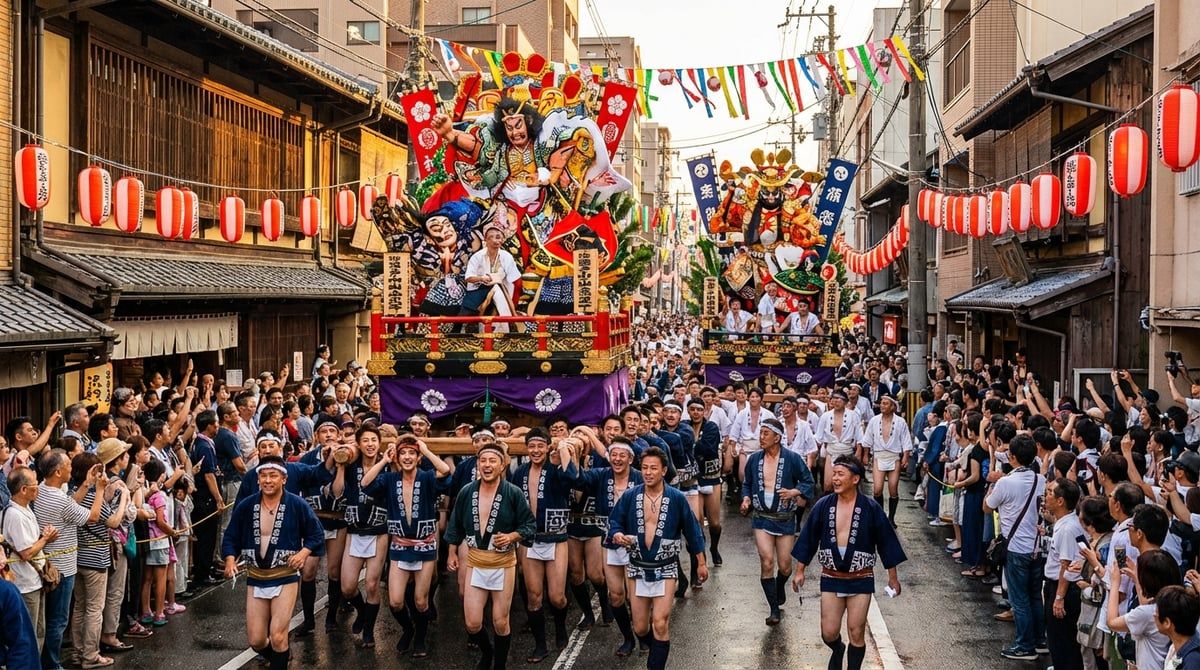 Image for illustrative purposes only.
For two weeks, seven neighborhoods compete through elaborate float displays and increasingly intense practice runs. The towering "kazari yamakasa" — decorative floats standing up to 10 meters tall — line the streets as works of art. But the real action belongs to the "kaki yamakasa," the racing floats carried by teams of men in traditional loincloths.
Everything builds toward the Oiyama on the final morning. At exactly 4:59 AM on July 15, the first team launches from Kushida Shrine, sprinting a 5-kilometer course through the streets while shouldering a one-ton float. Water is hurled from buckets to cool the runners. The shouts echo off buildings in the pre-dawn dark. Six more teams follow at five-minute intervals, and the entire city holds its breath.
Practical info: Arrive at Kushida Shrine by 3:30 AM for the Oiyama — crowds are massive. The Fukuoka City subway runs special early-morning services. Free to watch from any street along the course. If July 15 doesn't work, the "Nagarekaki" rehearsal runs on July 10-14 are nearly as exciting and far less crowded.
Hakata Dontaku (May 3-4)
Held during Golden Week, Hakata Dontaku is Japan's largest festival by attendance — over two million visitors pack Fukuoka's streets across two days. The name comes from the Dutch word "Zondag" (Sunday), reflecting Fukuoka's long history as an international trading port.
Dontaku transforms the main Meiji-dori avenue into a massive parade ground. Over 800 groups perform traditional dances, taiko drumming, and shamisen music. The signature image is performers wearing "shamoji" (rice paddles) and clapping them rhythmically while dancing. Stages pop up throughout Tenjin and Nakasu, and the entire city takes on a carnival atmosphere.
Practical info: The parade runs along Meiji-dori from Fukuoka City Hall to Canal City. Arrive early for curbside spots. Both days run roughly 10:00 AM to 9:00 PM. Free admission everywhere.
Hojoya Festival (September 12-18)
Held at Hakozaki Shrine, Hojoya is Kyushu's largest autumn festival and one of Japan's three great Hojoya events. The name means "releasing living things" — a Buddhist practice of freeing captive animals to accumulate merit. During the festival, worshippers release birds and fish at the shrine grounds.
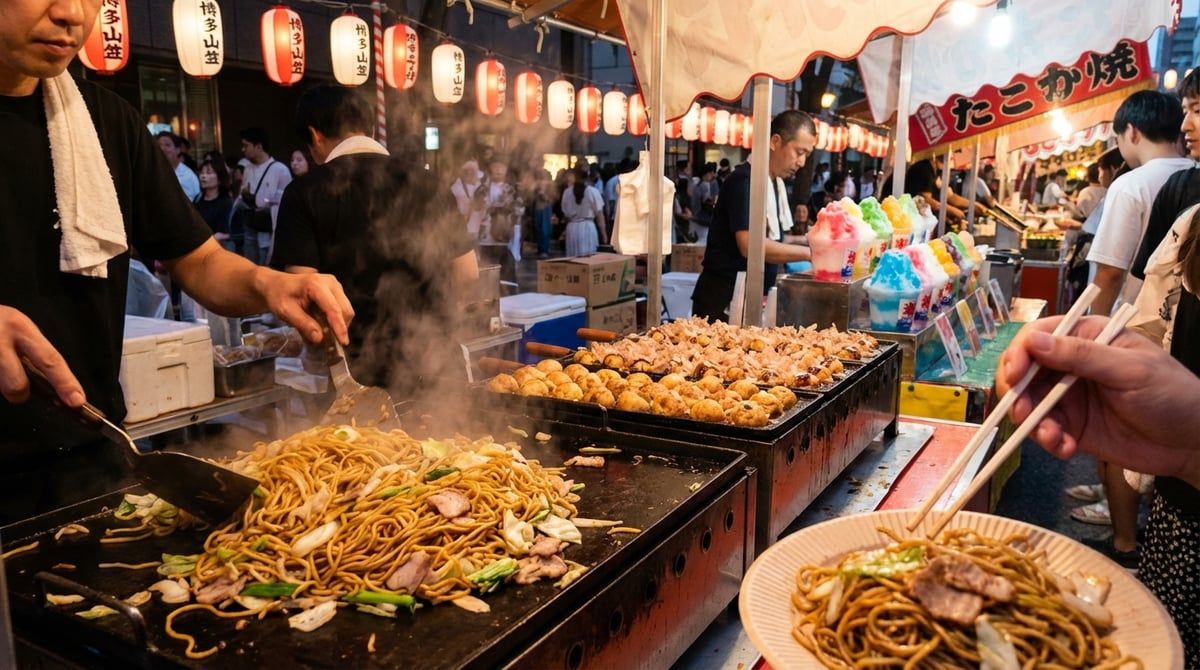 Image for illustrative purposes only.
Beyond the spiritual traditions, Hojoya is famous for its enormous night market. Over 500 food stalls line the approach to the shrine, stretching nearly a kilometer. Grilled squid, yakitori, okonomiyaki, and Hakata's own yatai-style ramen fill the air with smoke and fragrance. The atmosphere after dark is electric.
Practical info: Hakozaki Shrine is a short walk from Hakozakimiya-mae Station on the Fukuoka subway. The busiest nights are September 14-15. Go hungry — the food stalls are the main event for most visitors.
Beyond Fukuoka: Kyushu's Regional Powerhouses
Kyushu's festival energy extends far beyond Fukuoka city. Two autumn festivals in neighboring prefectures are absolutely worth the day trip.
Nagasaki Kunchi (October 7-9)
Held at Suwa Shrine in Nagasaki, this 390-year-old festival showcases the city's unique blend of Japanese, Chinese, and Dutch heritage. The star attraction is the "ja-odori" — a golden dragon dance performed by dozens of dancers manipulating a serpentine dragon through the streets. Chinese-style lion dances and ornate floats shaped like Dutch trading ships round out a festival unlike anything else in Japan.
Practical info: The main venue at Suwa Shrine sells reserved seating (around 1,500 yen), but free viewing spots exist along the parade route through central Nagasaki. About 2 hours from Fukuoka by limited express train.
Karatsu Kunchi (November 2-4)
In the coastal city of Karatsu in Saga Prefecture, 14 massive "hikiyama" floats parade through the streets. These floats — shaped like samurai helmets, sea bream, lions, and dragons — are lacquered wooden masterpieces, some over 170 years old and designated Important Intangible Folk Cultural Properties. The highlight is watching the floats being hauled across the sandy beach at Nishi-no-hama on the final day.
Practical info: Karatsu is about 80 minutes from Fukuoka's Tenjin by JR train. The beach-pulling event on November 4 draws the biggest crowds.
Planning Your Kyushu Festival Trip
Kyushu's festival season runs almost year-round, but the peak hits between May and November. Fukuoka makes the ideal base — the Hakata area has excellent hotels, the subway connects major festival venues, and the Shinkansen or limited express trains reach Nagasaki and Karatsu within two hours.
 Image for illustrative purposes only.
For a deeper dive into Japan's festival calendar across all regions, check out our complete Japan festivals guide. If you're visiting in peak summer, our summer festivals overview covers the best July and August events, and our July festivals guide has the full Yamakasa timeline. You can also browse the 2026 festival calendar to lock in exact dates.
Kyushu's festivals don't just entertain — they pull you in. The 4:59 AM sprint at Yamakasa, the thundering floats at Karatsu, the dragon snaking through Nagasaki's hills. These are festivals where the line between spectator and participant blurs, and where Japan's southern fire burns brightest.
What Real Travelers Say
Hakata Gion Yamakasa is one of Fukuoka's most celebrated summer festivals, held annually from July 1-15, with deep historical roots dating back to 1241. Visitors praise the festival's impressive floats and its significance as a signature Hakata cultural event, though detailed visitor experiences are limited in the available reviews.
Visitor Tips:
- Arrive early during the festival period (July 1-15) to secure good viewing spots for the float displays
- Visit nearby Kushida Shrine, the festival's starting point, to understand the festival's historical and spiritual significance
- Combine your festival visit with exploration of Hakata's historic temples and shrines in the surrounding area
- Check the Fukuoka City Tourist Information Center at Hakata Station for current festival schedules and updates
Best Moments According to Visitors:
- Viewing the elaborate festival floats that are central to the celebration
- Experiencing the festival's connection to Hakata's 1,000-year cultural heritage and international trading history
Crowd Level: Limited visitor data available, but as a major signature festival in Hakata, expect moderate to significant crowds during the July 1-15 period.
Frequently Asked Questions
When and where is the Hakata Gion Yamakasa festival held?
The Hakata Gion Yamakasa festival takes place from July 1-15 each year, centered around Kushida Shrine in Fukuoka's old Hakata district. Its highlight is the Oiyama on July 15, where teams race one-ton floats through the streets starting at 4:59 AM.
What makes the Hakata Dontaku festival unique?
Held during Golden Week (May 3-4), Hakata Dontaku is Japan's largest festival by attendance, transforming Fukuoka's Meiji-dori into a parade ground. It features over 800 groups performing traditional
Explore More Festival Guides
Continue your Japan festival journey with these related guides: