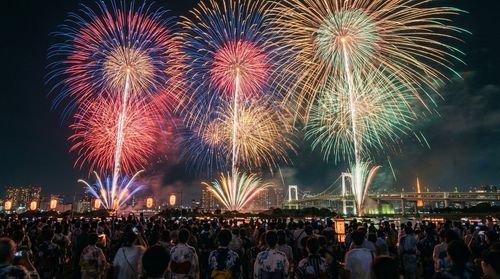
Skip the crowds and find Japan's hidden festivals — 30 nights of dancing in Gujo, fire festivals in snow country, and neighborhood matsuri where you're the only tourist.
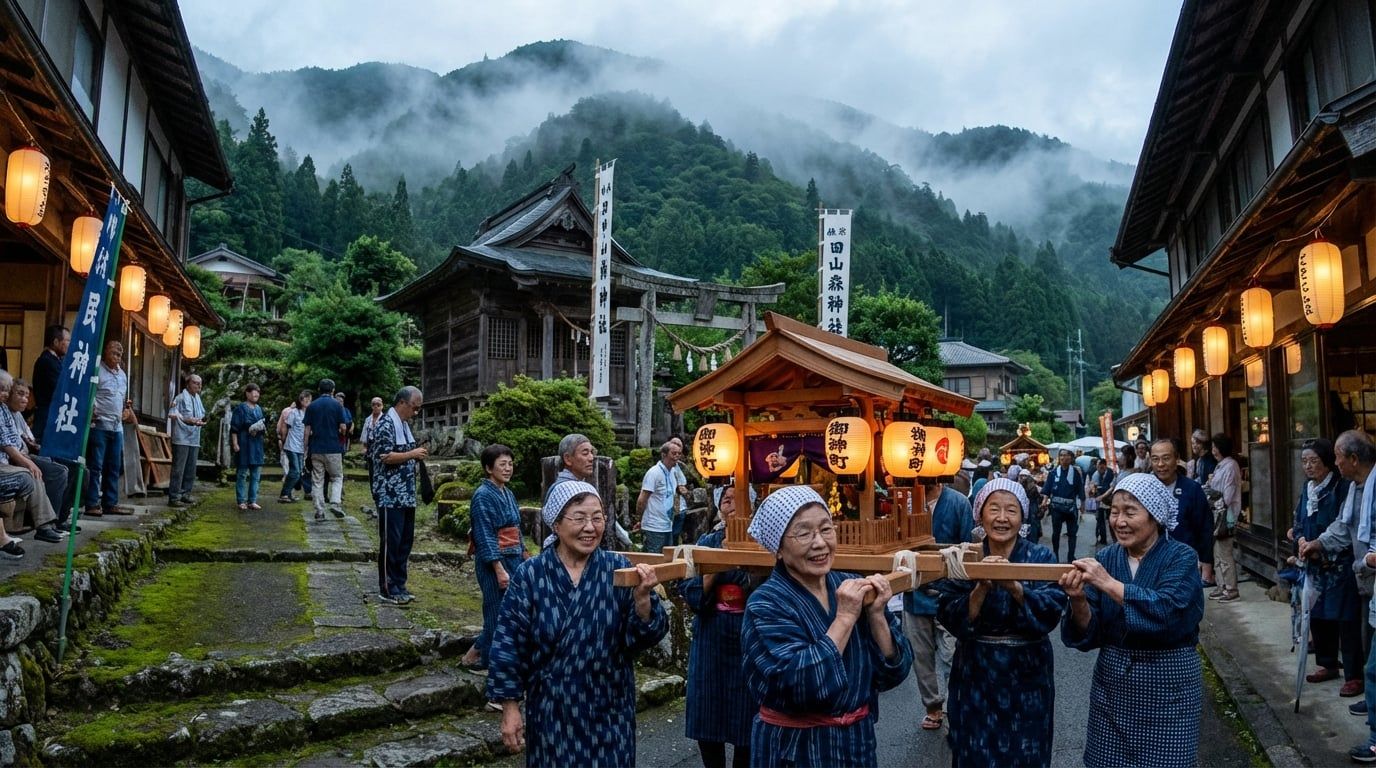 Image for illustrative purposes only.
The big festivals — Gion, Nebuta, Awa Odori — are spectacular, but they also bring massive crowds, booked-out hotels, and packed trains. Meanwhile, smaller festivals across Japan offer something the famous ones cannot: the feeling of stumbling into a celebration that was not designed for you, where the locals are genuinely surprised and delighted to see a foreign face.
Gujo Odori — Gujo, Gifu (July-September)
Gujo Odori is Japan's best-kept open secret. For 30 nights across the summer, this small mountain town holds Bon Odori dances in different locations. During the four climactic Tetsuya Odori nights in mid-August, dancing continues from 8 PM until 4 or 5 AM. The remarkable thing: everyone dances. There is no audience. Tourists, locals, grandparents, and children all form circles and dance together to live shamisen music. No experience is needed — you learn the simple steps by watching the person in front of you. By midnight, drenched in sweat, dancing with strangers who have become friends, you will understand why this is a UNESCO Intangible Cultural Heritage.
Nozawa Onsen Fire Festival — Nozawa, Nagano (January 15)
In the snow-covered hot spring village of Nozawa Onsen, 25-year-old and 42-year-old men from the community defend a large wooden shrine structure while others attack it with flaming torches. The battle between fire and defenders rages for hours in the freezing night, with sparks flying over crowds standing just meters away. There are no barriers, no safety cordons — just centuries-old tradition and controlled chaos. The festival is followed by the entire structure being set ablaze. The heat of the bonfire against the January snow is extraordinary.
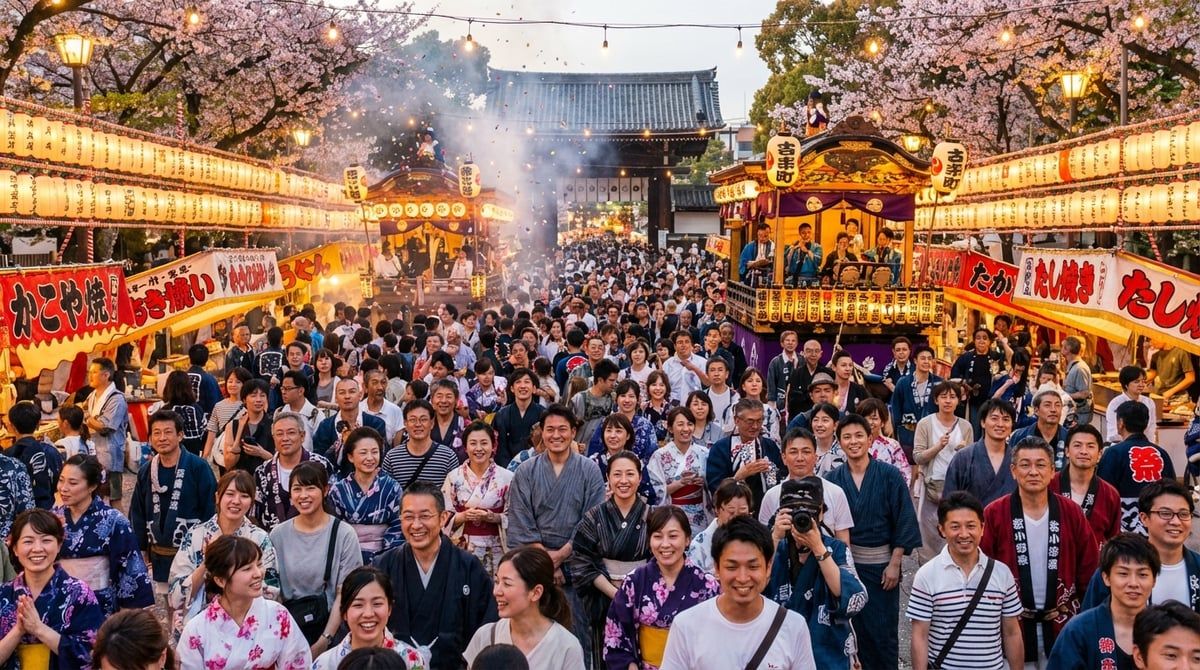 Image for illustrative purposes only.
Owase Ya-Ya Festival — Owase, Mie (February)
In this rough-and-tumble festival, groups of men charge at each other in a ritual pushing match through the narrow streets of Owase. The "ya-ya" chant builds to a roar as the groups collide. It is intense, physical, and deeply local. Very few tourists attend, which means you will likely be pulled aside by friendly locals eager to explain what is happening and share food and drinks.
Karatsu Kunchi — Karatsu, Saga (November 2-4)
Fourteen massive hikiyama floats — shaped as samurai helmets, sea bream, dragons, and lions — are hauled through the streets and across the beach by teams of chanting men. The floats, some over 200 years old and designated Important Intangible Folk Cultural Properties, are works of art. Despite its cultural significance, Karatsu Kunchi draws a fraction of the visitors that comparable festivals in Kyoto or Aomori attract. The beach-pulling scene on the final day, with floats dragged across the sand, is a highlight you will have room to actually see.
Tsuchiyu Kokeshi Festival — Fukushima (April-May)
The tiny onsen town of Tsuchiyu celebrates its kokeshi doll tradition with demonstrations by master craftsmen, doll-painting workshops, and a small parade. It is charming, quiet, and completely unhurried. You can watch artisans turn wooden dolls on a lathe, try painting your own, and soak in the town's hot springs afterward. The festival is a window into a craft tradition that is slowly disappearing.
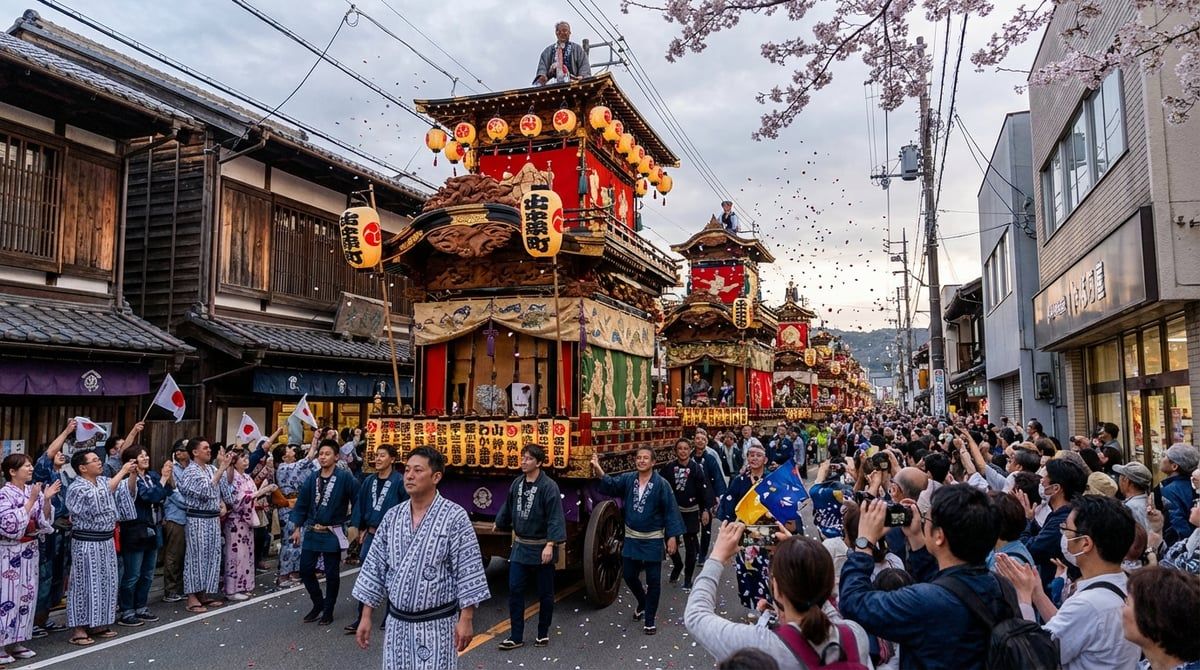 Image for illustrative purposes only.
Neighborhood Obon Bon Odori — Everywhere (August)
During Obon in mid-August, almost every neighborhood in Japan sets up a small yagura (wooden tower) in a park or school ground, strings up paper lanterns, and holds a Bon Odori dance. These are not tourist events. They are community gatherings where grandparents teach grandchildren the local dance, food stalls sell yakisoba and kakigori, and the whole neighborhood comes out in yukata. Finding one is easy — follow the sound of taiko drums on any August evening. Joining is even easier — just step into the circle.
Why Small Festivals Are Worth Seeking Out
The famous festivals are famous for good reason. But at a small matsuri, you experience something different: genuine interaction. When you are one of three foreigners at a neighborhood Bon Odori, people approach you. They offer you food, teach you the dance, and tell you about their town. The festival becomes a conversation, not a spectacle.
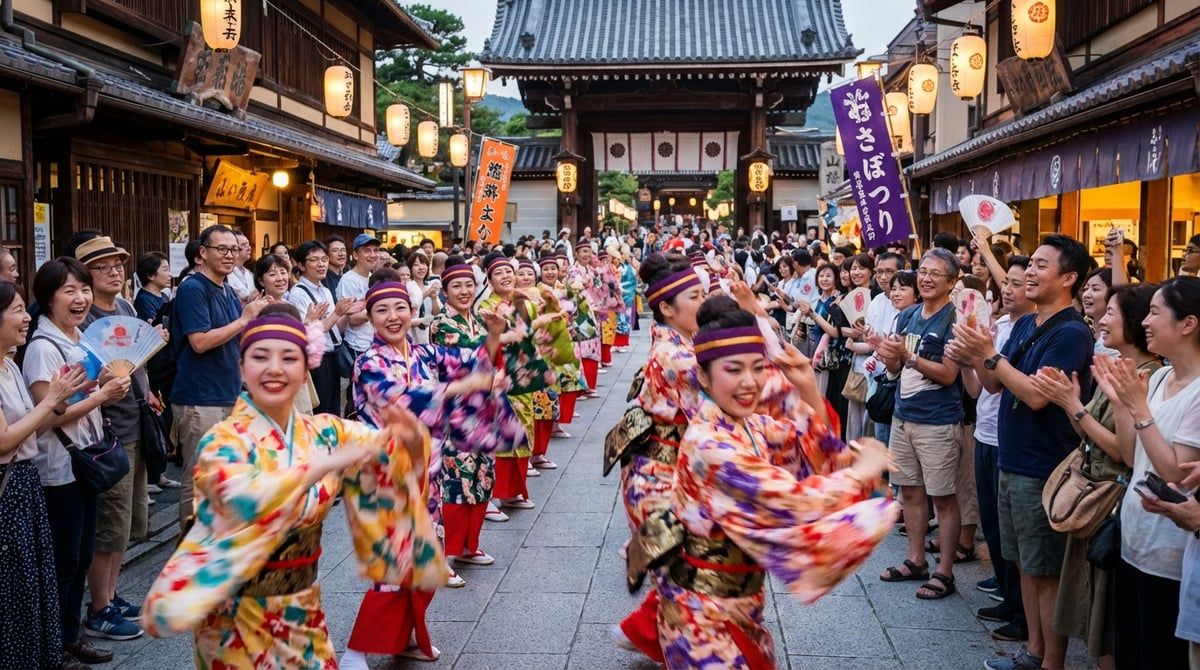 Image for illustrative purposes only.
Small matsuri also reveal how deeply festivals are woven into Japanese life. Every town, every neighborhood, every shrine has its own celebration. The country holds tens of thousands of matsuri each year, and the vast majority never appear in any guidebook.
How to Find Hidden Festivals
- Ask at your accommodation. Ryokan and guesthouse owners always know what is happening locally.
- Check municipal tourism websites. City and town tourism pages list local festivals that national guides skip.
- Wander in August. During Obon season, you can barely walk through a Japanese neighborhood without stumbling into a festival.
- Follow the drums. If you hear taiko in the distance, walk toward it.
The best festival in Japan might be the one you did not plan for.
More Festival Guides
- Complete Guide to Japanese Festivals
- Japan Festivals Calendar 2026
- Tips for Attending Japanese Festivals
- Monthly Festival Calendar
Frequently Asked Questions
What are some hidden or secret festivals in Japan?
The article highlights festivals like Gujo Odori, Nozawa Onsen Fire Festival, Owase Ya-Ya Festival, Karatsu Kunchi, and Tsuchiyu Kokeshi Festival as less-known celebrations. Neighborhood Obon Bon Odori dances also offer a widespread and genuine community experience.
Why should I attend a small or hidden festival instead of a famous one?
Small festivals offer genuine interaction with locals, turning the experience into a conversation rather than just a spectacle. You can experience celebrations not designed for tourists, where locals are often delighted to see foreign faces and share their traditions.
When do the Gujo Odori and Nozawa Onsen Fire Festival take place?
Gujo Odori takes place for 30 nights across the summer, typically from July to September, with climactic Tetsuya Odori nights in mid-August. The Nozawa Onsen Fire Festival is held annually on January 15th.
How can I find hidden or local festivals in Japan?
To find hidden festivals, you can ask at your accommodation, check municipal tourism websites, or simply wander in August during Obon season and follow the sound of taiko drums. Ryokan and guesthouse owners often have local knowledge.
What is unique about the Karatsu Kunchi festival?
Karatsu Kunchi features fourteen massive hikiyama floats, some over 200 years old and designated Important Intangible Folk Cultural Properties, hauled through streets and across the beach. Despite its cultural significance, it attracts fewer visitors than comparable large festivals.
What is the Neighborhood Obon Bon Odori?
During Obon in mid-August, almost every neighborhood in Japan holds a Bon Odori dance around a small yagura in a park or school ground. These are community gatherings where locals of all ages dance together, and food stalls sell traditional treats.