Discover why winter is the perfect season for onsen in Japan, plus tips on etiquette, top destinations, and what to expect at a ryokan.
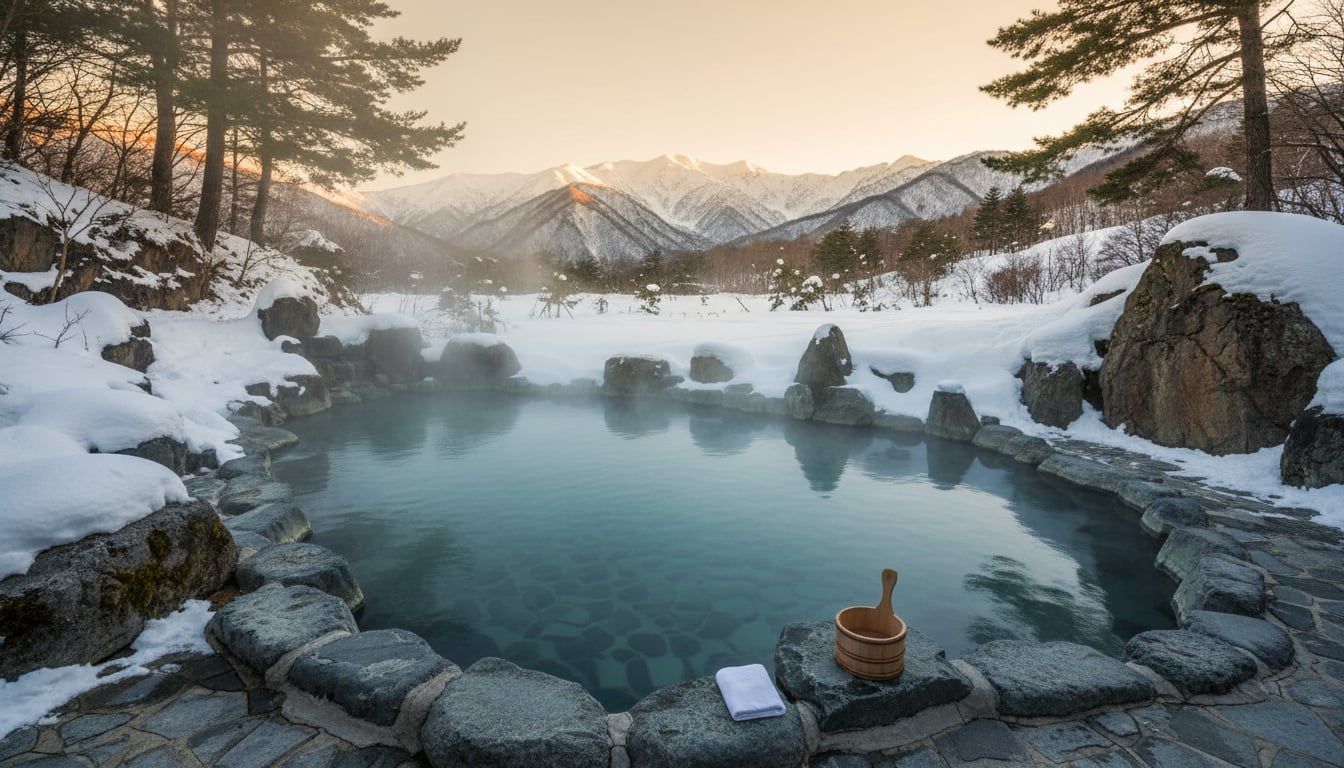
There is something almost poetic about lowering yourself into a steaming pool of mineral water while snowflakes drift down around you. Japan has thousands of onsen — natural hot spring baths — scattered across the country, but visiting them in winter transforms the experience into something unforgettable. The cold air sharpens your senses, the contrast between the freezing temperature outside and the enveloping heat of the water feels extraordinary, and the landscape around you is often blanketed in white. If you have ever considered trying an onsen, winter is the season to do it.
Why Winter is the Best Season for Onsen
The appeal of onsen exists year-round, but winter amplifies everything that makes them special. The cold gives you a reason to stay in the water longer. The steam rises in thick, dramatic clouds around you. Outdoor rotenburo (open-air baths) feel transcendent when the air is near freezing and the water is somewhere between 40 and 44 degrees Celsius.
There are also practical advantages. Winter is generally less crowded than the autumn foliage season or Golden Week, so you have a better chance of having a rotenburo largely to yourself. Ryokan rates can dip slightly in early winter before the New Year rush, and some destinations in Tohoku and Hokkaido offer the rare experience of bathing under or beside actual snowfall.
Beyond the drama, onsen water in winter simply feels more therapeutic. The minerals help with circulation, muscle soreness, and skin health — all welcome after a day of hiking in cold mountain air or exploring a city on foot in the bitter cold.
Onsen Etiquette Basics
First-time visitors often feel nervous about the rules. The good news is that etiquette is straightforward once you understand the underlying idea: onsen are shared, clean spaces, and everything follows from that.
Wash before you enter. Every bathing area has a row of low stools and shower stations near the entrance. You are expected to sit, wash your entire body thoroughly with soap, and rinse completely before stepping into any communal bath. This is not optional — it is the foundation of the whole system.
Leave your towel outside the water. You are given a small modesty towel when you enter. You can use it to walk between the shower area and the bath, but do not put it in the water. Most people fold it and set it on their head or leave it at the edge of the bath.
Tattoo policies vary. Many traditional onsen still prohibit visible tattoos, as the policy is rooted in long-standing associations with organized crime. That said, attitudes are shifting, especially in younger-oriented or tourist-facing facilities. Private baths (kashikiri) are always an option if this is a concern. When in doubt, check the facility's website before visiting.
Keep it quiet. Onsen are spaces for relaxation. Loud conversation, splashing, and phones are all frowned upon. If you want to take photos, look for facilities that explicitly permit them — most do not allow cameras in bathing areas at all.
Separate baths for men and women is the default at most public onsen. Mixed-gender (konyoku) baths do exist, particularly at older rural facilities, but they are becoming rarer.
Types of Onsen Baths
Understanding the terminology helps you pick the right experience.
Rotenburo are outdoor baths, and they are what most people picture when they think of a winter onsen. You bathe outside, exposed to the elements, which is where the snow-and-steam magic happens.
Uchiyu are indoor baths, which offer more privacy, year-round comfort, and often feature beautifully designed stone or hinoki cypress tubs. Many ryokan have both.
Kashikiri (private baths) can be booked by a group or couple for exclusive use. These are ideal for families with young children, people with tattoos, or anyone who wants a more intimate experience. Rates are usually between 1,500 and 4,000 yen for 45 to 60 minutes, on top of any admission fee.
Konyoku are mixed-gender outdoor baths. They are found at some rural resorts and tend to require wearing a bathing garment. They are not common near major cities.
Best Onsen Near Osaka
If you are based in Osaka, you have excellent options within a day-trip range.
Arima Onsen is the closest and most famous, sitting in the mountains north of Kobe. It takes about 30 minutes by direct bus from Shin-Osaka or about 40 minutes by train. Arima has two types of water: kinsen (gold spring), which is a rust-colored iron-rich water, and ginsen (silver spring), a clear, mildly radioactive water. The contrast between the two is a highlight. The streets of the old town are charming on foot, lined with shops selling traditional snacks and crafts.
Kinosaki Onsen is a classic. About two and a half hours by limited express train from Osaka on the Japan Sea coast, Kinosaki is a town built around seven public bathhouses (sotoyu) that guests hop between wearing yukata and wooden sandals. Staying overnight in a ryokan here is one of the most authentically traditional experiences available within a day's journey of Osaka. The crab season in winter adds a culinary dimension that is hard to pass up.
Shirahama Onsen is on the Kii Peninsula, about two hours from Osaka by limited express. It faces the Pacific Ocean, which means some outdoor baths have sweeping sea views. The water here is sodium chloride and said to be good for the skin.崎の湯 (Saki-no-yu) is a famously scenic public bath right on the rocky shoreline — rustic, affordable at around 500 yen, and genuinely beautiful in any season.
Best Onsen Near Tokyo
Tokyo visitors have a similarly strong lineup within reach.
Hakone is the most accessible, about 85 minutes from Shinjuku by Romance Car. The Hakone area has dozens of ryokan and public baths, many with views of Mount Fuji on clear days. Owakudani, the active volcanic zone, adds a dramatic backdrop. The range of accommodation here runs from budget guesthouses to high-end luxury ryokan, making it accessible at almost any price point.
Kusatsu Onsen is further north in Gunma Prefecture, about two and a half hours from Tokyo by bus or train. It is consistently ranked among Japan's top three onsen towns. The water is notably acidic, which gives it strong antibacterial properties — and an unforgettable tingling sensation on the skin. The yubatake (hot water field) in the center of town is a striking sight, especially when surrounded by snow. Kusatsu's water temperature is so high that bathing is preceded by a period of stirring the water to cool it slightly, a ritual called yumomi that you can watch demonstrated daily.
Nikko in Tochigi Prefecture is about two hours by train and better known for its ornate Toshogu Shrine, but the surrounding Kinugawa and Yunishigawa onsen areas make it worthwhile to combine sightseeing with a soak. Yunishigawa in particular gets heavy snowfall and has a cluster of thatched-roof ryokan along a river gorge that feel completely removed from modern life.
The Ryokan Experience
Staying overnight at a ryokan unlocks a completely different dimension of the onsen experience. A traditional inn typically includes a tatami-floored room, yukata (cotton robe) provided for your stay, multi-course kaiseki dinner, and Japanese breakfast — all included in the room rate.
The kaiseki dinner is a highlight in itself. It consists of eight to twelve small courses emphasizing seasonal ingredients — in winter, expect warming dishes like hot pot, grilled fish, and regional specialties. The pacing is slow and deliberate, and the presentation is taken seriously.
Ryokan rates vary significantly. Basic but comfortable rooms start around 15,000 yen per person (dinner and breakfast included). Mid-range places with private baths and higher-quality kaiseki typically run 25,000 to 35,000 yen. Top-tier luxury properties can exceed 50,000 yen per person per night.
Day Trip vs. Overnight Stay
If budget is a constraint, most onsen towns have public bathhouses (sento or public onsen) open to day visitors. These typically charge between 500 and 2,000 yen for entry. You will get access to the baths but not the food, the room, or the full ryokan atmosphere.
Day trips work well for Arima, Hakone (via day-trip hot spring facilities like Tenzan Tohji-kyo), and Shirahama's Saki-no-Yu. For Kinosaki and Kusatsu, where hopping between multiple bathhouses is part of the appeal, an overnight stay is strongly recommended.
What to Bring
Most ryokan and many public facilities provide towels, soap, and shampoo. However, for public bathhouses:
- A small towel and a large bath towel (or rent on-site for around 200 yen)
- Soap and shampoo if not provided (many facilities supply them)
- Your own yukata if you want to wander town in style (or rent from your ryokan)
- Cash — smaller onsen towns and bathhouses often do not accept cards
Winter-Specific Tips: Snow Onsen in Tohoku and Hokkaido
For the most dramatic winter onsen experiences in Japan, travel further north. Tohoku and Hokkaido receive heavy snowfall that turns rotenburo into scenes that feel almost mythological.
Nyuto Onsen in Akita Prefecture (Tohoku) is one of Japan's most celebrated snow onsen destinations. A cluster of seven rustic inns sits deep in the mountains, each with its own distinct water composition. The road is remote and the setting is deliberately preserved to feel unchanged. Getting there requires a bus from Tazawako Station, and the journey through snowy forest is part of the experience.
Noboribetsu Onsen in Hokkaido is larger and more accessible, about an hour from Sapporo by train. It draws its water from Jigokudani (Hell Valley), an active volcanic area that produces water in nine different types. This variety is unusual and gives you the chance to try fundamentally different waters in a single visit. The town is lively and well set up for tourists.
Zao Onsen in Yamagata (Tohoku) combines skiing with hot springs — a rare combination that makes it especially appealing in winter. After a day on the slopes, soaking in the sulfuric water with views of snow-covered peaks is hard to beat.
Getting the Most from Your Visit
Go early in the morning or late in the evening to avoid peak hours. If you are at a ryokan, you can typically use the baths from check-in through the following morning, so an early morning soak before breakfast is something not to miss — the light is good, the air is cold, and most other guests are still asleep.
Stay hydrated. The heat causes you to sweat even though you may not feel it, and staying in too long can leave you lightheaded. Fifteen to twenty minutes is a reasonable soak before getting out, cooling down, and re-entering if you want more time.
Most importantly, slow down. Onsen bathing rewards patience and stillness. Bring no agenda. Stare at the steam, listen to the silence, and let the water do its work.
Winter and onsen were made for each other. Once you experience the combination, it is difficult to visit Japan in winter without building a soak into the itinerary.