The legend of star-crossed lovers comes alive at Sendai Tanabata — 3,000 handmade decorations, fireworks, and pure summer magic.
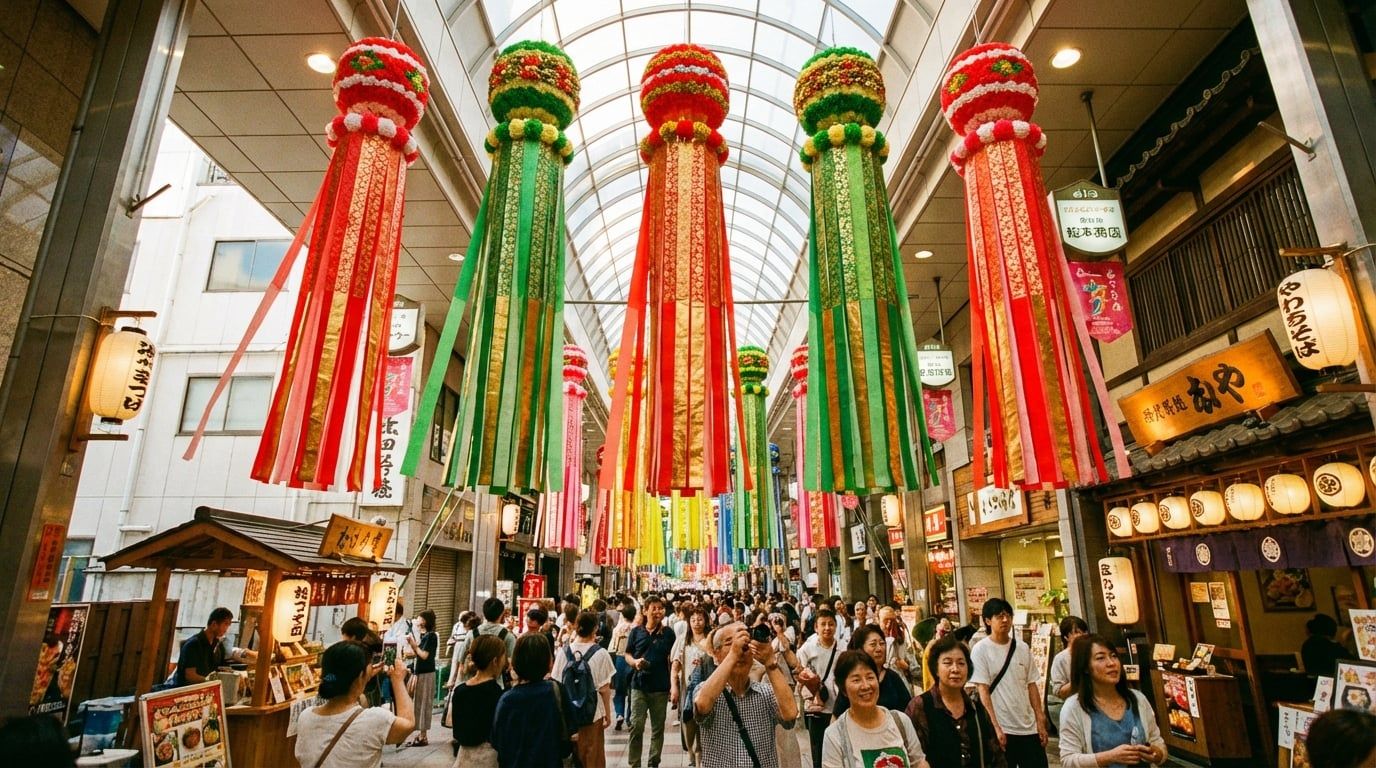 Image for illustrative purposes only.
Every August, the city of Sendai transforms into a corridor of color, paper, and longing. Thousands of handmade streamers cascade from shopping arcades, each one carrying a wish written under the summer sky. This is Tanabata — Japan's Star Festival — and it all begins with a love story told in the stars.
The Legend of Orihime and Hikoboshi
Long ago, Orihime, the weaver princess, spent her days crafting beautiful cloth along the banks of the Milky Way. Her father, the Sky King, introduced her to Hikoboshi, a hardworking cowherd from the other side of the celestial river. The two fell deeply in love and married, but their devotion to each other was so consuming that they neglected their duties. Orihime stopped weaving, and Hikoboshi let his cattle wander across the heavens.
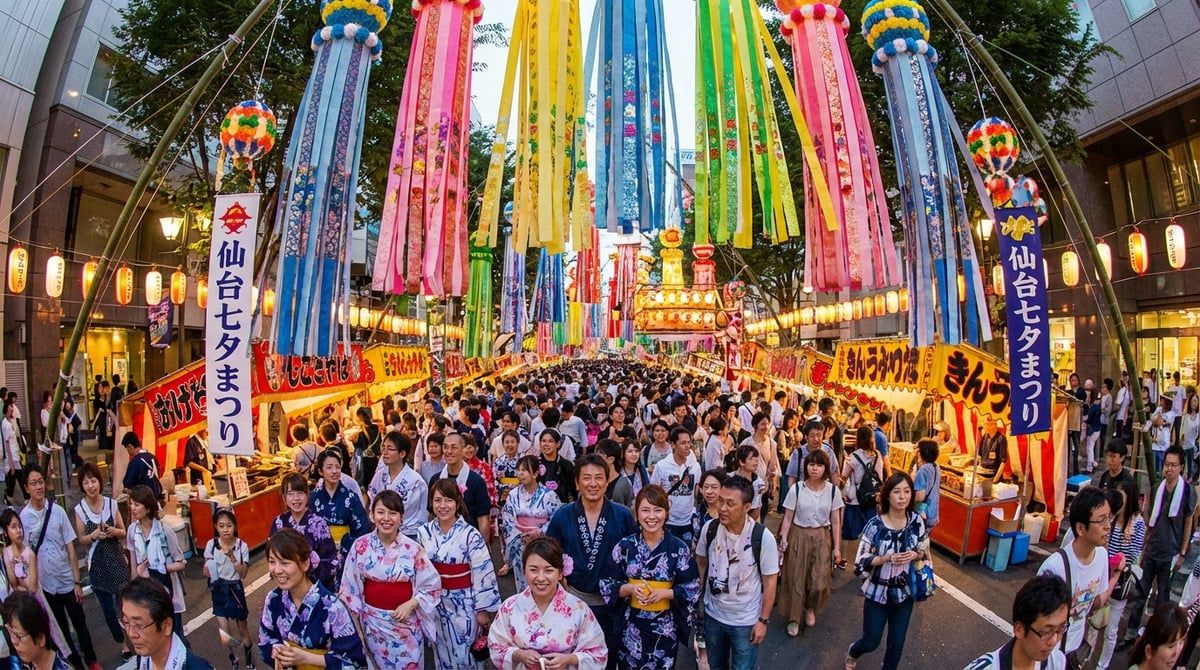 Image for illustrative purposes only.
Angered, the Sky King separated them on opposite sides of the Milky Way, forbidding them from meeting. But moved by his daughter's tears, he granted one exception: the lovers could reunite once a year, on the seventh night of the seventh month. According to the legend, if the sky is clear that evening, a bridge of magpies forms across the Milky Way so the two can cross to each other. If it rains, the lovers must wait another year.
This ancient story, rooted in the Chinese Qixi Festival, traveled to Japan over a thousand years ago and became Tanabata — literally "evening of the seventh." Today it is one of Japan's most beloved summer celebrations, blending romance, tradition, and community creativity.
Sendai Tanabata: The Grandest Celebration
While Tanabata is observed across the country on July 7, the city of Sendai in Miyagi Prefecture holds its famous festival on August 6 through 8, 2026, following the old lunar calendar. This one-month delay places Sendai Tanabata squarely in the heart of summer and makes it the largest and most spectacular Tanabata event in all of Japan.
The festival draws over two million visitors each year, and its centerpiece is breathtaking: more than 3,000 handmade streamer decorations called fukinagashi hanging from bamboo poles throughout the city's covered shopping arcades. Walking through these tunnels of color is an immersive experience — layers of washi paper, silk, and crepe in every imaginable hue brush against your shoulders as you move through the crowds.
Local businesses, schools, and community groups spend months preparing their decorations. Each creation is judged in a competition, and the craftsmanship can be astonishing. Some streamers stretch three meters long, with intricate paper folding and bold color combinations that catch every breeze. The tradition dates back to the era of Date Masamune, the legendary feudal lord who ruled Sendai in the early 1600s and actively encouraged arts and culture among his people.
The Seven Decorations: Nanatsukusari
Sendai Tanabata is not just about beauty — each of the seven traditional decoration types carries a specific wish:
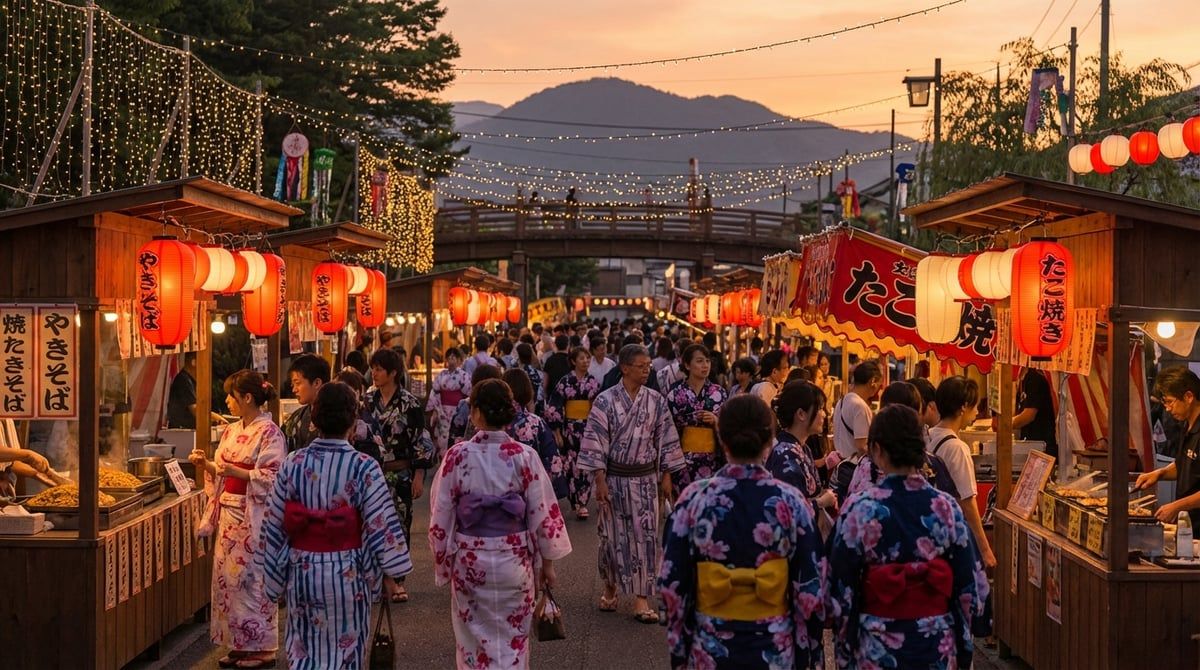 Image for illustrative purposes only.
- Tanzaku (paper strips) — improvement in writing and learning
- Kamigoromo (paper kimono) — protection from illness and skill in sewing
- Orizuru (paper cranes) — longevity and health for the family
- Kinchaku (purse) — prosperity and good fortune in business
- Toami (fishing net) — an abundant catch, symbolizing plenty
- Kuzukago (trash bag) — cleanliness and thriftiness
- Fukinagashi (streamers) — represent Orihime's weaving threads, a symbol of skill and creativity
Look carefully as you walk through the arcades and you will spot all seven woven into the larger displays. Locals take pride in including each one, honoring the full depth of the tradition rather than just its visual spectacle.
August 5: Tanabata Eve Fireworks
The festivities kick off the night before the official opening with the Sendai Tanabata Eve Fireworks on August 5. Roughly 16,000 fireworks illuminate the sky above the Hirose River, and the display is one of Tohoku's most impressive. Crowds gather along the riverbanks from late afternoon to secure the best viewing spots, so arrive early if you want a prime position.
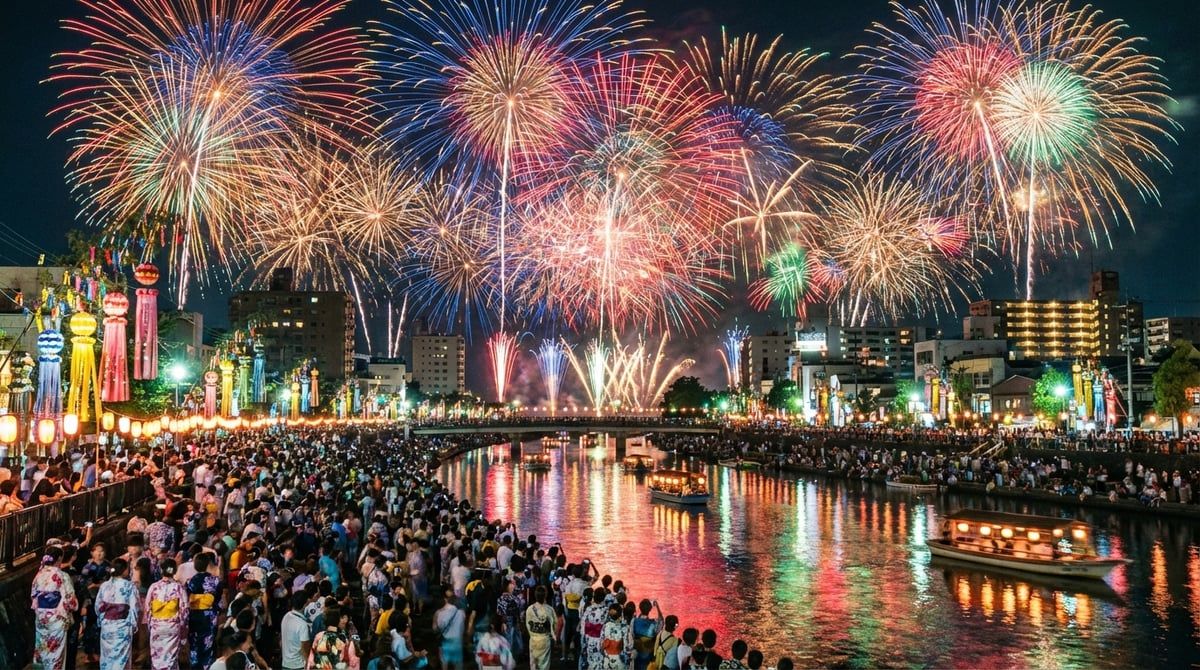 Image for illustrative purposes only.
The combination of the fireworks on August 5 and three full days of the festival proper (August 6-8) makes Sendai a compelling destination for anyone building an August festival itinerary.
Tanabata Beyond Sendai
Sendai may host the grandest celebration, but Tanabata spirit appears all over Japan:
- Hiratsuka Tanabata (Kanagawa Prefecture) — held in early July, this is one of the largest Tanabata events in the Kanto region. The decorations here tend to feature pop culture characters and bold modern designs alongside traditional motifs.
- Shonan and coastal towns — smaller, community-driven festivals along the Shonan coast offer a laid-back alternative with local food stalls and beachside atmosphere.
- Local shrine celebrations — many neighborhood shrines set up bamboo branches where visitors can tie tanzaku wish strips. These intimate gatherings are a wonderful way to experience Tanabata without the crowds.
For a broader view of how Tanabata fits into the annual rhythm of Japanese celebrations, check out the full Japan festival calendar or the 2026 festivals overview. And if you are curious about the deeper traditions behind matsuri culture, the Japan festivals guide covers everything from etiquette to what to wear.
Practical Information
Dates: August 6-8, 2026 (Fireworks: August 5)
Location: Central Sendai, Miyagi Prefecture (Tohoku region). The main decorations line the covered shopping arcades near Sendai Station, particularly along Clis Road, Marble Road Omachi, and the Ichibancho shopping street.
Access: Sendai is remarkably easy to reach. The Tohoku Shinkansen from Tokyo Station takes roughly 1.5 hours. From Osaka, connect through Tokyo for a total journey of about 4.5 hours. Sendai Station sits right in the middle of the festival zone — step outside and you are already there.
Cost: The festival itself is completely free. Budget for food, transport, and souvenirs.
Crowds: Expect serious congestion, especially in the afternoons. Over two million people visit across the three days. Morning hours (before 11 AM) are the quietest time to enjoy the decorations.
Where to eat: Sendai is the undisputed capital of gyutan (beef tongue), grilled over charcoal and served with barley rice, pickled vegetables, and tail soup. Gyutan-ya restaurants cluster around Sendai Station — Rikyu and Kisuke are popular spots, though you will find quality at nearly any dedicated shop. Festival food stalls also line the arcade streets with regional specialties.
Tips for your visit:
- Write your wish on a tanzaku strip at one of the public bamboo stands scattered throughout the festival area.
- Visit in the evening when the decorations are lit up and the atmosphere shifts from daytime bustle to something more magical.
- Bring a portable fan and stay hydrated — early August in Sendai is hot and humid.
- If you are traveling during festival season, consider combining Sendai Tanabata with other Tohoku summer festivals like Aomori Nebuta or Akita Kanto, which fall in the same week.
Tanabata is a reminder that some of the most powerful traditions begin with the simplest of stories — two people separated by circumstance, holding on to the promise of reunion. In Sendai, that story becomes something you can walk through, touch, and carry home as a wish tied to bamboo under the August sky.
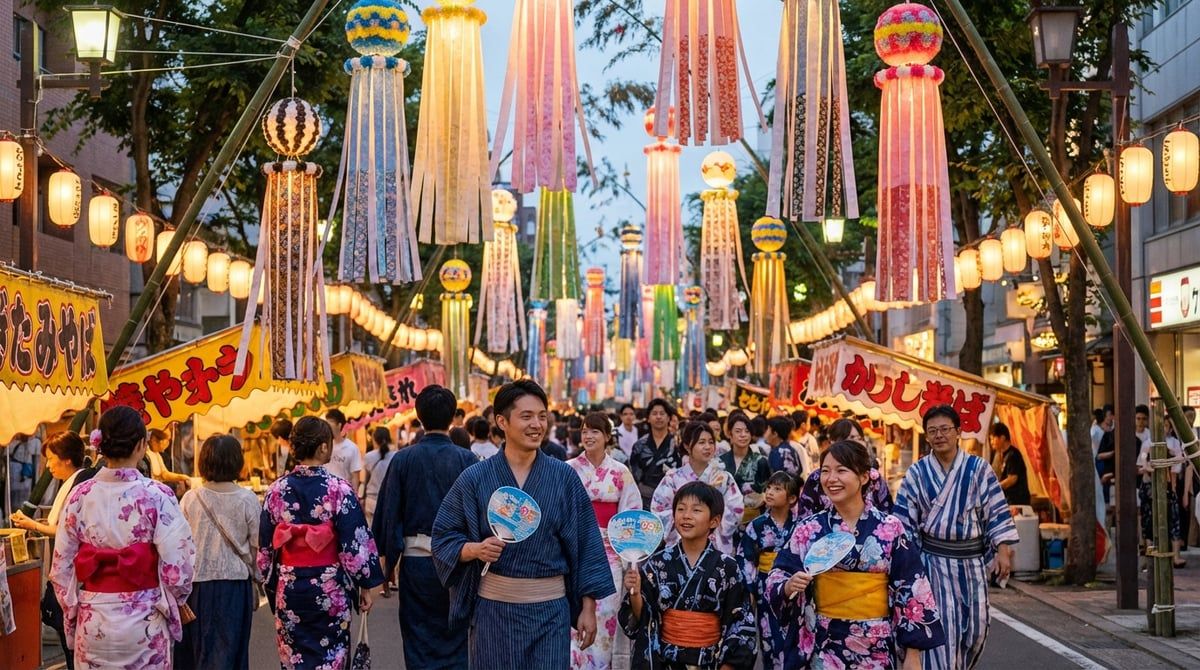 Image for illustrative purposes only.
What Real Travelers Say
Visitors praise the Sendai Tanabata Festival for its stunning handmade decorations and rich historical significance dating back to Date Masamune's era. The festival combines beautiful bamboo ornaments with spectacular fireworks, creating an unforgettable cultural experience that attracts travelers seeking authentic Japanese traditions.
Visitor Tips:
- Arrive early to secure good viewing spots along the main festival streets before crowds build up
- Attend the fireworks show on the eve of the festival at Nishi Park for the best experience with roughly 16,000 fireworks
- Explore the festival decorations along the shopping streets (Pearl Center arcade and Suzuran Shopping Street) where local artisans display award-winning handmade designs
- Use Sendai Station as your main transit hub to access the festival area via the efficient Sendai Subway system
- Bring a camera to capture the colorful, unique decorations created by local shopkeepers
Best Moments According to Visitors:
- Viewing the spectacular fireworks display featuring approximately 16,000 fireworks on the eve of the festival
- Admiring the intricate handmade Tanabata decorations created by local shopkeepers competing for awards
- Walking through historic shopping streets to experience the post-WWII revival tradition that started the Asagaya and Sendai festivals
Heads Up:
- Large crowds are expected, particularly during peak festival hours and the fireworks show
- Anticipate heavy foot traffic along main shopping streets and around Nishi Park during evening festivities
Crowd Level: The festival attracts substantial crowds, particularly for the fireworks show and along the main decorated shopping streets, requiring advance planning for optimal viewing.
Frequently Asked Questions
When is the Sendai Tanabata Festival held?
The Sendai Tanabata Festival is held annually from August 6 to 8, following the old lunar calendar. The festivities kick off the night before, on August 5, with the Sendai Tanabata Eve Fireworks.
What makes the Sendai Tanabata Festival unique?
Sendai hosts the largest and most spectacular Tanabata event in Japan, drawing over two million visitors. Its centerpiece is more than 3,000 handmade fukinagashi streamer decorations that fill the city's shopping arcades.
What are the main decorations at Sendai Tanabata and their meanings?
The festival features seven traditional decoration types, known as Nanatsukusari, each carrying a specific wish. These include Tanzaku (paper strips for writing and learning), Orizuru (paper cranes for longevity and health), and Fukinagashi (streamers representing Orihime's weaving threads, symbolizing skill and creativity).
How do I get to the Sendai Tanabata Festival?
Sendai is easily accessible via the Tohoku Shinkansen from Tokyo Station, taking roughly 1.5 hours. Sendai Station is conveniently located right in the middle of the festival zone, making it easy to step out and immediately experience the event.
Is there an entrance fee for the Sendai Tanabata Festival?
The Sendai Tanabata Festival itself is completely free to attend. Visitors only need to budget for transportation, food, and any souvenirs they wish to purchase.
Explore More Festival Guides
Continue your Japan festival journey with these related guides: