Everything you need to visit Ghibli Museum in Mitaka and Ghibli Park in Aichi — tickets, access, what to see, and insider tips.
Two of Japan's most beloved cultural destinations sit at opposite ends of the country's imagination: the intimate, storybook Ghibli Museum tucked into a quiet Mitaka park, and the sprawling, immersive Ghibli Park rising from the forests of Aichi. Both celebrate the world of Studio Ghibli's films — and both require planning before you go. This guide covers everything: tickets, access, what to expect inside, and how to make the most of your visit.
Ghibli Museum, Mitaka
What to Expect
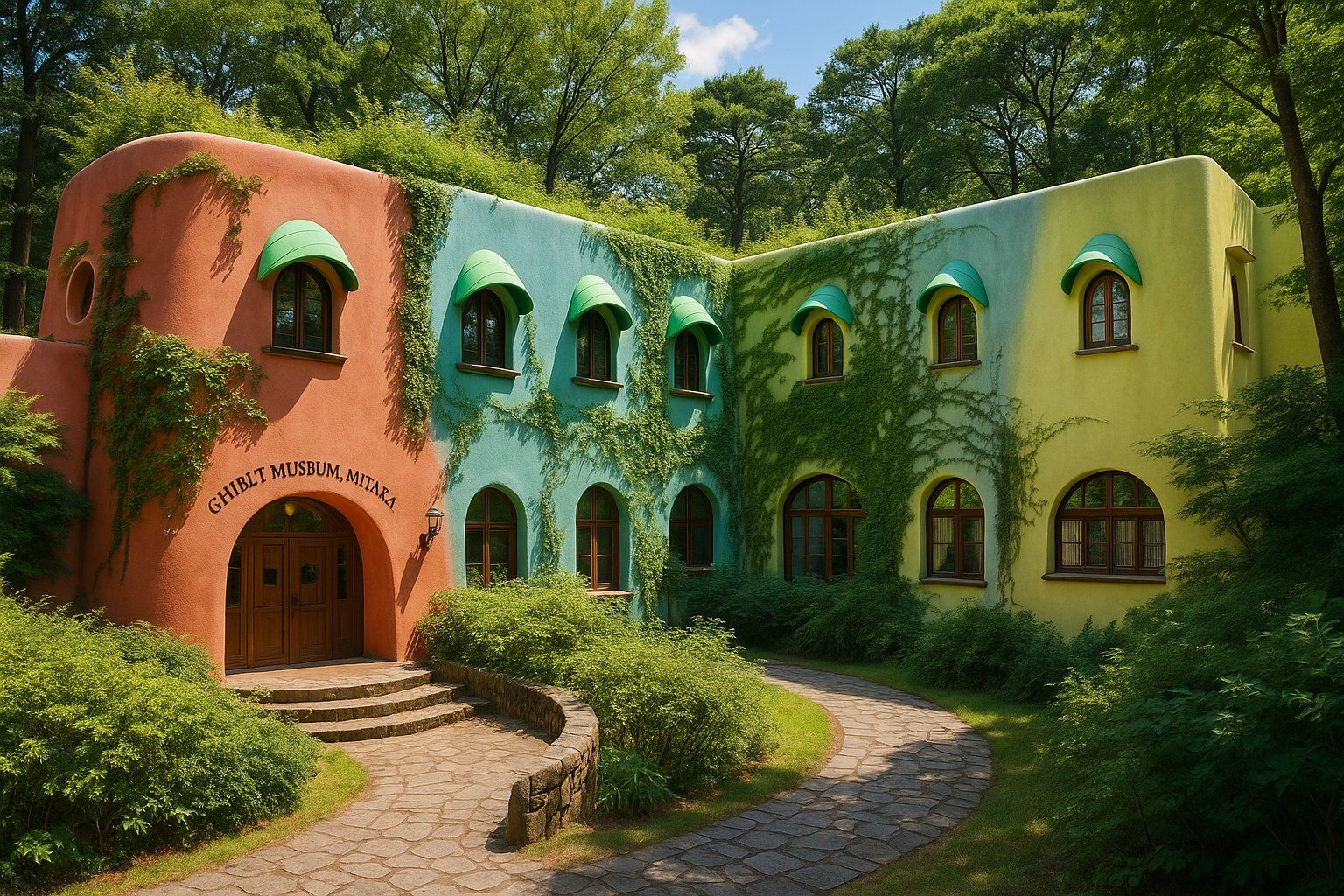
Opened in 2001, the Ghibli Museum is less a traditional museum and more an experience of wandering into the imagination of an animator's studio. The building itself was designed by Hayao Miyazaki, and that creative hand is evident at every turn — spiral staircases emerge unexpectedly, stained-glass windows filter coloured light across landings, and hand-painted tiles line the walls of narrow corridors.
The interior is deliberately maze-like. There are no signs telling you where to go next. Miyazaki intended visitors to discover the space at their own pace, doubling back and finding rooms they missed the first time. The effect is disorienting in the best possible way.
Inside the museum, you'll find:
- Permanent exhibits on the craft of animation — how individual frames become movement, how sound and image are layered together
- A recreation of an animator's working studio, cluttered with the reference books, sketches, and tools of the trade
- A rooftop garden with views over Inokashira Park
- A small exclusive cinema that screens short original films — only available to museum visitors, never released anywhere else
- A reading room stocked with picture books and illustrated volumes
The garden level and outdoor areas are among the most pleasant parts of the visit, particularly in spring when the greenery is at its most vivid.
Tickets
Admission to Ghibli Museum is by advance reservation only. Walk-up tickets are not sold, and the museum is fully booked weeks or months ahead during popular periods.
Ticket prices:
- Adults (19+): ¥1,000
- University students (13–18): ¥700
- Children (7–12): ¥400
- Young children (4–6): ¥100
- Under 4: Free
How to book:
- From Japan: Purchase via Lawson convenience store kiosks (Loppi terminals) or online at the Lawson ticketing site
- From overseas: Book through the official overseas ticket portal at ghibli-museum.jp or through authorised travel partners. Overseas tickets open on the 10th of each month for the following month's visits
- Entry is for a specific date and time slot (10:00, 12:00, 14:00, or 16:00)
- Tickets sell out extremely fast — set a reminder for the release date
Getting There
The museum is located inside Inokashira Park in Mitaka, western Tokyo.
From Shinjuku:
- Take the JR Chuo Line to Mitaka Station (approx. 25 minutes, ¥240)
- From Mitaka Station South Exit, take the direct shuttle bus to the museum (approx. 5 minutes, ¥210 each way)
- Alternatively, walk through Inokashira Park from Kichijoji Station (approx. 15 minutes on foot — a very pleasant walk)
From central Tokyo (Shibuya, Harajuku):
- Take the Keio Inokashira Line to Kichijoji, then walk through the park
Tips for Ghibli Museum
- Arrive a few minutes early. Entry is timed and the staff are attentive about the schedule.
- Photography restrictions apply inside. The permanent exhibits are largely no-photo zones. Outdoor areas and the café terrace are generally fine.
- Visit the gift shop (Mamma Aiuto!) even if you've seen similar items online — the museum sells exclusive items not available elsewhere.
- The Straw Hat Café inside the museum serves light meals and drinks. It's pleasant but not extensive; most visitors grab a snack rather than a full meal.
- Pair it with Kichijoji. The neighbourhood around Kichijoji Station is one of Tokyo's most charming — good for an afternoon of cafés, shopping, and the park itself.
Ghibli Park, Aichi
Overview
Ghibli Park opened in phases from 2022 onwards within the Expo 2005 Aichi Commemorative Park (Moricoro Park) in Nagakute, Aichi Prefecture. Unlike a traditional theme park, it has no rides or coasters. Instead, it's designed as a series of landscaped environments and architectural installations that recreate the feeling of stepping into particular worlds from the films.
The park currently comprises five areas, each with its own character and ticketing.
The Five Areas
1. Ghibli's Grand Warehouse (ジブリの大倉庫) An indoor facility housed in a repurposed exhibition hall. This is the largest of the five areas and contains permanent exhibitions, hands-on installations, a vintage-style indoor street, a small cinema screening short films, and a large retail and café space. This area is the most accessible for all ages and all weather.
2. Hill of Youth (青春の丘) An outdoor area centred on the Elevator Building from The Cat Returns and the European-influenced Clock Tower building from Whisper of the Heart. The architecture here is the draw — detailed facades, wrought-iron detailing, and a general atmosphere of a Central European town square transplanted into a Japanese hillside.
3. Dondoko Forest (どんどこ森) A wooded area with a handcrafted wooden house at its heart — a painstaking reproduction of the rustic rural home from My Neighbor Totoro. The surrounding forest is designed for children to explore freely, climbing and scrambling through the natural environment. A rooftop viewing area crowns the main structure.
4. Mononoke Village (もののけの里) Opened in 2023, this area recreates a Tatara ironworking village setting, with thatched structures, forges, and earthen paths through a cedar forest. It's quieter and more atmospheric than the other areas — less about specific film references and more about evoking the feeling of an ancient Japanese village.
5. Valley of Witches (魔女の谷) The newest area (2024), designed around a Western European village aesthetic. Cobblestone streets, a bakery, a clock tower, and a variety of craft-focused shops make this area particularly popular with adult visitors.
Tickets and Reservations
Ghibli Park operates on a partial reservation system.
Ghibli's Grand Warehouse requires a timed entry ticket. This is the most in-demand ticket and sells out quickly.
Hill of Youth and Dondoko Forest can be accessed with a general park entry ticket (Moricoro Park admission), though some sub-areas within them have capacity limits.
Mononoke Village and Valley of Witches also require separate timed entry reservations.
Ticket prices (approximate):
- Grand Warehouse (weekday): Adults ¥2,500 / Children ¥1,250
- Grand Warehouse (weekend/holiday): Adults ¥3,000 / Children ¥1,500
- Mononoke Village / Valley of Witches: Adults ¥1,500–2,000 / Children ¥750–1,000
How to book: Tickets are sold via the official Ghibli Park ticketing site and through Boo-Woo Ticket (Chunichi/Chukyo platforms). Overseas visitors can also book via authorised travel agencies. Tickets go on sale on the 10th of each month for the following month.
Getting to Ghibli Park
The park is located in Nagakute, Aichi Prefecture, approximately 30 minutes from Nagoya.
From Nagoya Station:
- Take the Higashiyama Subway Line to Fujigaoka Station (approx. 25 minutes)
- Transfer to the Linimo maglev train to Yakusa or Ai-Expo Town Station (approx. 15 minutes)
- Moricoro Park is directly accessible from Ai-Expo Town Station
From Tokyo:
- Take the Tokaido Shinkansen to Nagoya (approx. 1 hour 40 minutes, Nozomi)
- Then follow the directions above
From Osaka/Kyoto:
- Tokaido Shinkansen to Nagoya (approx. 35–50 minutes)
Tips for Ghibli Park
- Wear comfortable shoes. The park covers substantial ground and involves a lot of walking, including forest paths and hillside routes.
- Check the weather forecast. Most areas are outdoors; a rainy day significantly changes the experience. The Grand Warehouse is the only fully indoor area.
- Arrive early. Even with a timed entry ticket for Grand Warehouse, arriving at the park early gives you time to explore the free outdoor areas without crowds.
- Combine with Nagoya. Stay overnight in Nagoya to avoid a rushed day trip. Nagoya Castle, the Nishiki market neighbourhood, and excellent local food (miso katsu, hitsumabushi eel) make it very worthwhile.
- Book both tickets on the same day they open. Grand Warehouse and Mononoke Village tickets for popular dates are typically gone within hours.
Ghibli Shops in Tokyo
If a full day trip to Mitaka isn't on your itinerary, Tokyo has several official retail options:
- Donguri Kyowakoku — the official Ghibli merchandise chain has branches throughout Tokyo, including Shinjuku (Takashimaya Times Square), Shibuya (Hikarie), and Ikebukuro (Sunshine City). The range is broad but does not include museum-exclusive items.
- Virtual Donguri — the online store ships internationally.
- Character Street, Tokyo Station — a small Ghibli corner within the underground character merchandise arcade.
FAQ
Do I need to book tickets before arriving in Japan? Yes, for both Ghibli Museum and Ghibli Park's Grand Warehouse. Tickets for overseas visitors are released monthly and sell out fast. There is no on-the-day option. Book as far in advance as possible, ideally before finalising your travel dates.
Which is better for a short trip — the Museum or the Park? For most visitors spending a few days in Tokyo, the Ghibli Museum is easier to fit in and requires less travel. Ghibli Park makes more sense if you're already planning to visit Nagoya, Kyoto, or that part of Japan.
Can children enjoy both venues? Yes, though in different ways. The Museum has a dedicated children's room and a small cinema that young children enjoy. At the Park, Dondoko Forest is particularly well-designed for children to run around freely. Valley of Witches and Mononoke Village skew more towards adult visitors.
Are English-language resources available at both venues? The Ghibli Museum provides English audio guides and English-language brochures. Ghibli Park has English signage throughout and English information on the official website. Staff assistance in English is limited but available at key points.
Frequently Asked Questions
How do I get tickets for the Ghibli Museum?
Admission to the Ghibli Museum is by advance reservation only, with tickets selling out weeks or months ahead. Overseas visitors can book through the official overseas ticket portal or authorized travel partners, with tickets released on the 10th of each month for the following month's visits.
What is Ghibli Park like, and does it have rides?
Ghibli Park is designed as a series of landscaped environments and architectural installations that recreate the feeling of stepping into film worlds, rather than a traditional theme park with rides or coasters. It comprises five distinct areas within Expo 2005 Aichi Commemorative Park.
Can I take photos inside the Ghibli Museum?
Photography is largely restricted inside the Ghibli Museum, with permanent exhibits being no-photo zones. However, outdoor areas and the café terrace are generally permitted for photography.
How do I get to Ghibli Park from Nagoya?
From Nagoya Station, take the Higashiyama Subway Line to Fujigaoka Station, then transfer to the Linimo maglev train to Ai-Expo Town Station, which provides direct access to Moricoro Park.
What are the main areas to visit at Ghibli Park?
Ghibli Park features five distinct areas: Ghibli's Grand Warehouse, Hill of Youth, Dondoko Forest, Mononoke Village, and the newest, Valley of Witches. Each area offers unique architectural installations and immersive environments inspired by Studio Ghibli films.
Are Ghibli Park tickets difficult to get?
Ghibli Park operates on a partial reservation system, with Ghibli's Grand Warehouse and newer areas like Mononoke Village and Valley of Witches requiring timed entry tickets that sell out quickly. Tickets are released on the 10th of each month for the following month's visits.
Explore More
Planning your Japan trip around culture and pop culture? These guides have you covered: