Japan's most magical festivals happen after dark — 30,000 lanterns, glowing floats, fire rituals, and fireworks lighting up the night.
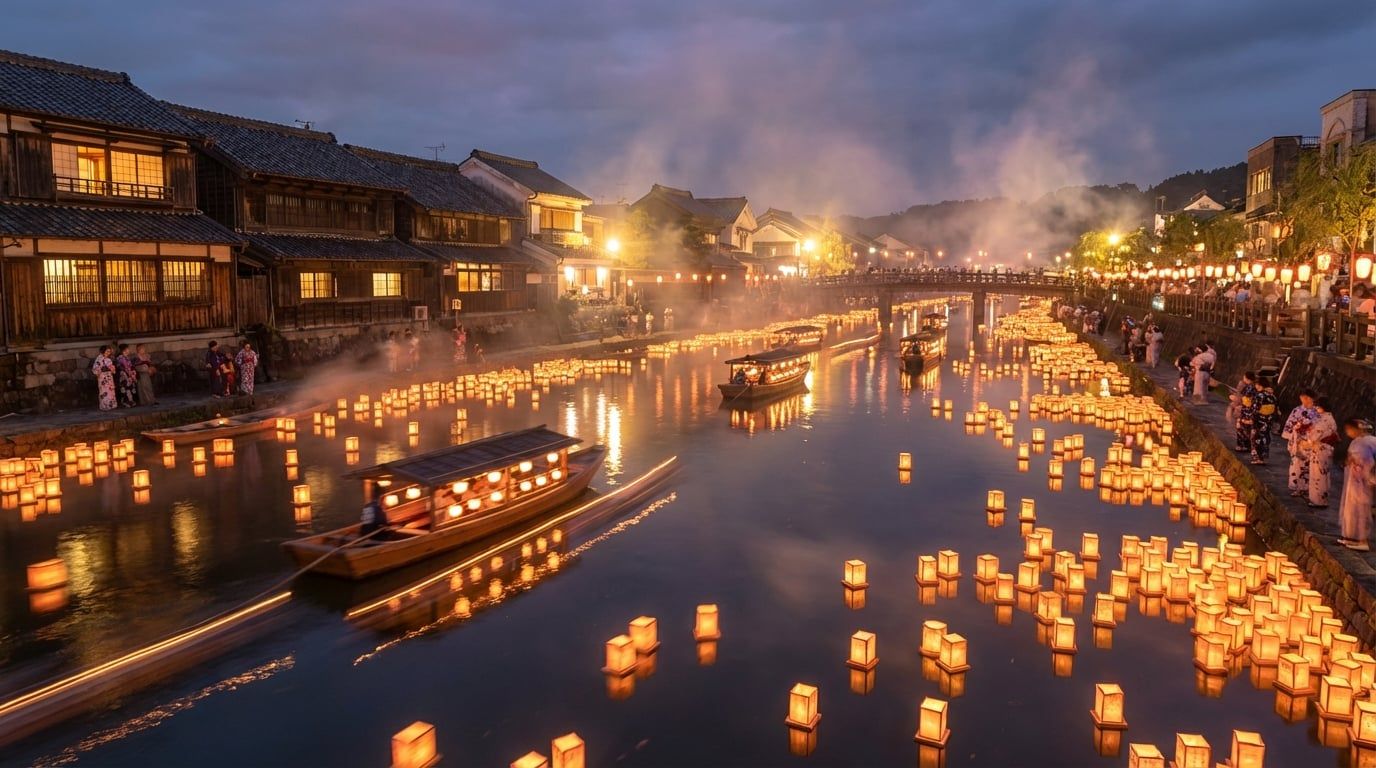 Image for illustrative purposes only.
Something changes when the sun goes down at a Japanese festival. Paper lanterns flicker to life, floats glow from within, fire illuminates ancient rituals, and the sky explodes with fireworks. Japan's nighttime matsuri are among the most atmospheric experiences the country offers.
Chichibu Night Festival — Saitama (December 2-3)
Designated a UNESCO Intangible Cultural Heritage, the Chichibu Yomatsuri is one of Japan's three great float festivals. Elaborately carved floats lit with lanterns are hauled through the streets to the sound of drums and flutes. The highlight comes when the floats are pulled up the steep slope at Dango-zaka while winter fireworks burst overhead. The contrast of fire, lanterns, and pyrotechnics against the cold December air makes this unlike any summer festival.
Gion Matsuri Yoiyama — Kyoto (July 14-16 & 21-23)
While the grand procession on July 17 gets the most attention, the Yoiyama eve nights are where Gion Matsuri becomes truly magical. The towering yamaboko floats are parked along narrow streets, each one glowing with dozens of paper lanterns. Streets are closed to traffic, food stalls line every block, and the sound of Gion-bayashi festival music fills the warm night air. Walking among the illuminated floats feels like stepping into a woodblock print.
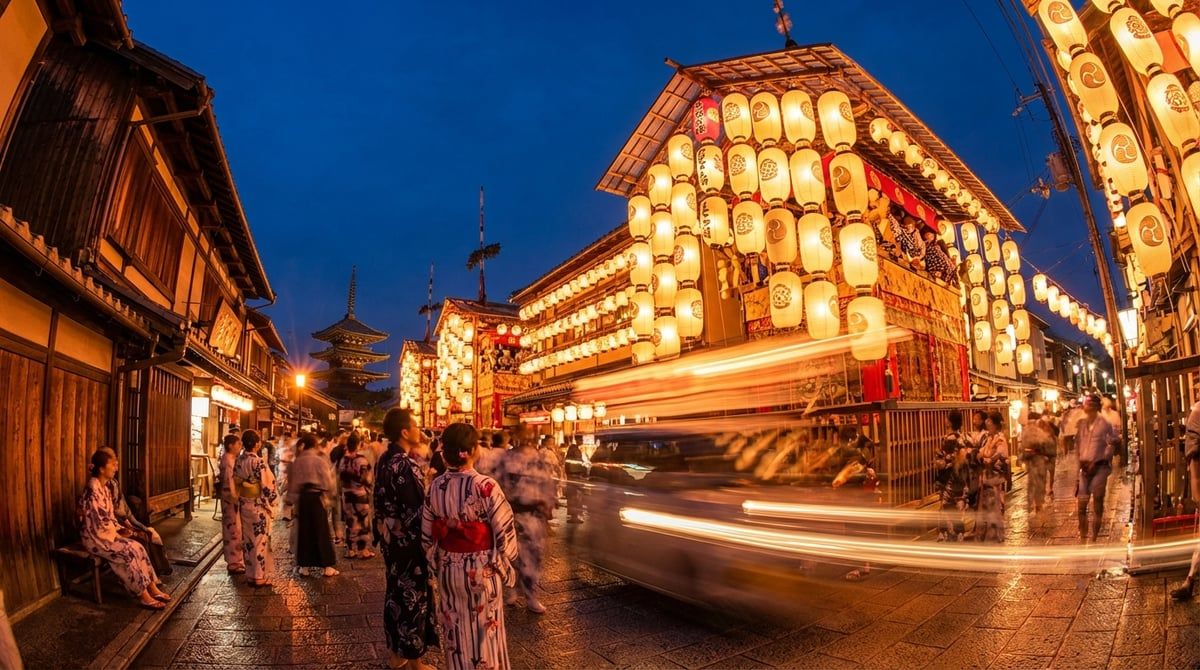 Image for illustrative purposes only.
Nebuta Matsuri — Aomori (August 2-7)
Nebuta's massive illuminated floats — some over 5 meters tall and 9 meters wide — depict fierce warriors, gods, and mythical creatures. Lit from within by hundreds of lightbulbs, they glow with intense color as they're paraded through the streets. Dancers called haneto leap and chant around the floats, and spectators can join in by renting a haneto costume. The final night features a float procession along the waterfront followed by fireworks over Aomori Bay.
Mitama Matsuri — Tokyo (July 13-16)
Over 30,000 lanterns illuminate Yasukuni Shrine during this Obon-season festival. Yellow lanterns line the main approach, while smaller lanterns create patterns and messages throughout the grounds. The effect is mesmerizing — a sea of warm light that stretches as far as you can see. Bon Odori dancing, food stalls, and traditional performances add to the atmosphere. It is one of Tokyo's most beautiful summer nights.
Nara Tokae — Nara (Early-Mid August)
For ten nights in August, over 20,000 candles are placed along the paths connecting Nara's great temples and shrines. The candles line walkways through Nara Park, around Kasuga Taisha, and along the approach to Todai-ji. The famous Nara deer wander through the candlelight, creating scenes that feel otherworldly. The entire experience is quiet and contemplative — a night festival for those who prefer stillness over spectacle.
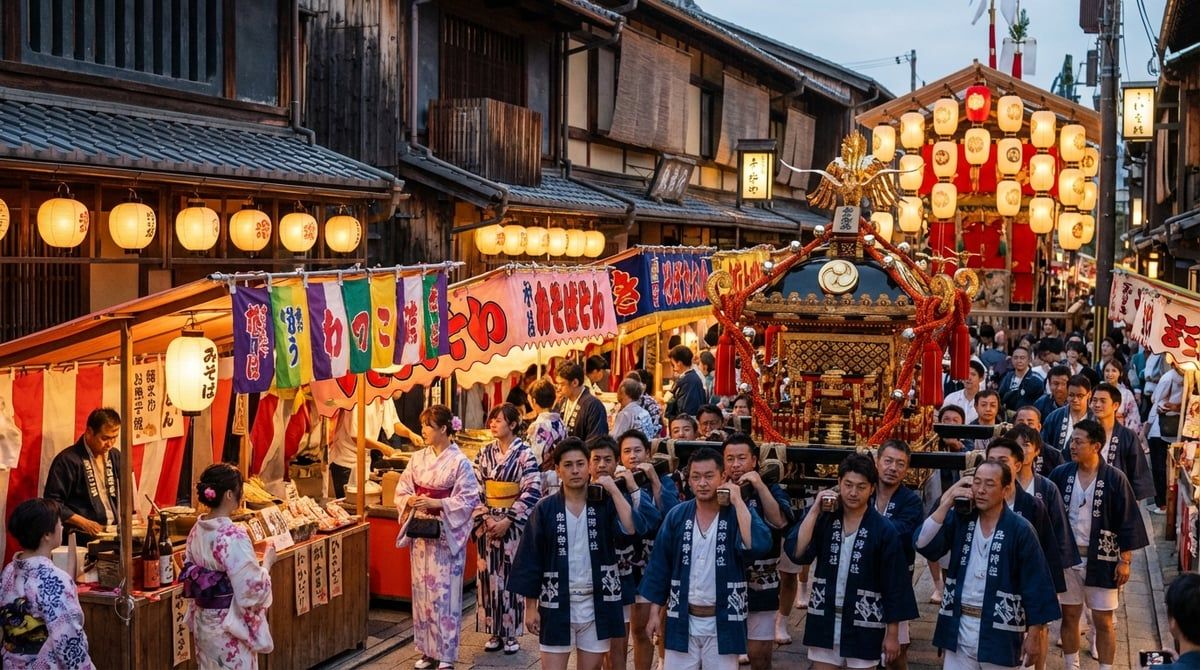 Image for illustrative purposes only.
Toro Nagashi — Various Locations (August)
During Obon, communities across Japan float paper lanterns on rivers, lakes, and the sea to guide the spirits of ancestors. Hundreds or thousands of small lanterns drift on dark water, their reflections doubling the light. Hiroshima's ceremony at the Peace Memorial is the most well-known, but toro nagashi events in Kyoto (Arashiyama), Matsushima, and smaller towns are equally moving. The sight of lanterns slowly floating downstream in silence is one of Japan's most poignant traditions.
Takayama Autumn Festival — Gifu (October 9-10)
Takayama's autumn festival features yatai floats with intricate mechanical puppets (karakuri) that perform during the day. At night, each float is hung with dozens of lanterns and paraded through the old town's narrow streets. The glow of lanterns reflected in the dark wooden buildings of Takayama's preserved Edo-period district creates an atmosphere that transports you centuries back in time.
Sumidagawa Fireworks — Tokyo (Late July)
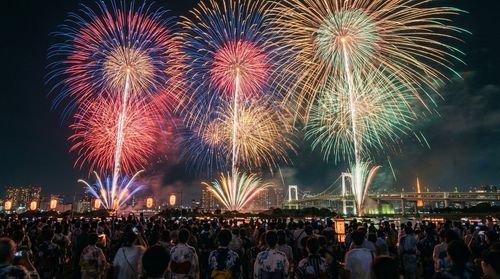
Tokyo's oldest and most beloved fireworks festival lights up the sky over the Sumida River with around 20,000 fireworks. Two launch sites compete to produce the most impressive displays. The riverbanks, bridges, and rooftops fill with spectators in yukata. The reflection of fireworks on the river surface, framed by Tokyo Skytree in the background, is one of the most iconic summer images in Japan.
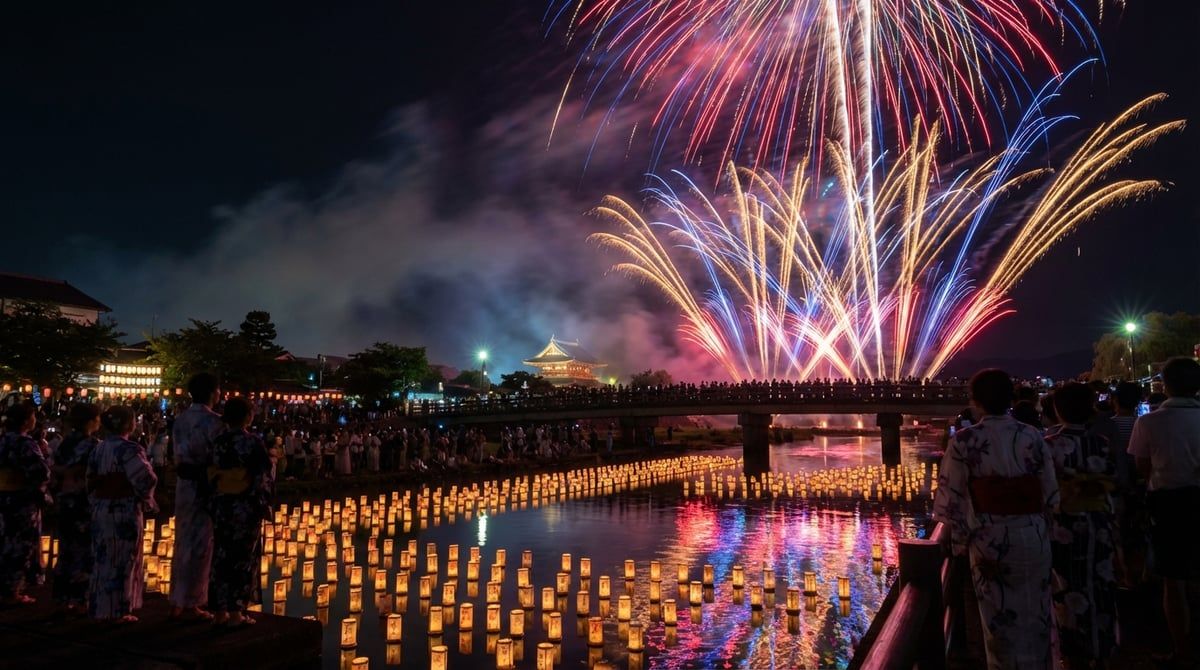 Image for illustrative purposes only.
Tips for Night Festivals
- Wear yukata. Many festivals offer rental shops nearby. Wearing one enhances the experience and earns smiles from locals.
- Bring a small towel. Summer night festivals are hot and humid. A tenugui towel is essential.
- Go early for position. Prime viewing spots for fireworks and float processions fill hours in advance.
- Enjoy the food. Festival stalls (yatai) serve yakitori, takoyaki, kakigori, and dozens of other treats that taste best under lantern light.
When the lanterns come on and the drums begin, Japan's night festivals offer something no daytime sightseeing can match — atmosphere you can feel in your chest.
More Festival Guides
- Complete Guide to Japanese Festivals
- Japan Festivals Calendar 2026
- Tips for Attending Japanese Festivals
- Monthly Festival Calendar
Frequently Asked Questions
What makes Japanese night festivals unique?
Japanese night festivals transform after dark with flickering paper lanterns, glowing floats, ancient rituals illuminated by fire, and spectacular fireworks. They offer a deeply atmospheric experience distinct from daytime sightseeing.
When do some of Japan's most famous night festivals occur?
Night festivals are held throughout the year, such as the Chichibu Night Festival in December, Gion Matsuri Yoiyama in July, Nebuta Matsuri in August, and Takayama Autumn Festival in October.
What are some popular night festivals in Tokyo?
Tokyo hosts the Mitama Matsuri in July, where Yasukuni Shrine is illuminated by over 30,000 lanterns. The Sumidagawa Fireworks festival in late July is also a major event, lighting up the sky over the Sumida River.
What are some tips for attending a night festival in Japan?
It's recommended to wear a yukata, bring a small towel for summer humidity, arrive early for good viewing spots, and enjoy the delicious festival food from the yatai stalls.
What is Toro Nagashi and when does it happen?
Toro Nagashi is a poignant tradition during Obon in August, where paper lanterns are floated on rivers, lakes, and the sea to guide the spirits of ancestors. Events occur in various locations, including Hiroshima, Kyoto (Arashiyama), and Matsushima.