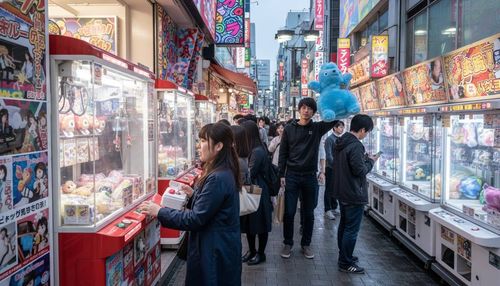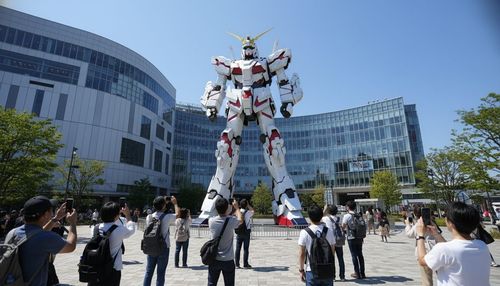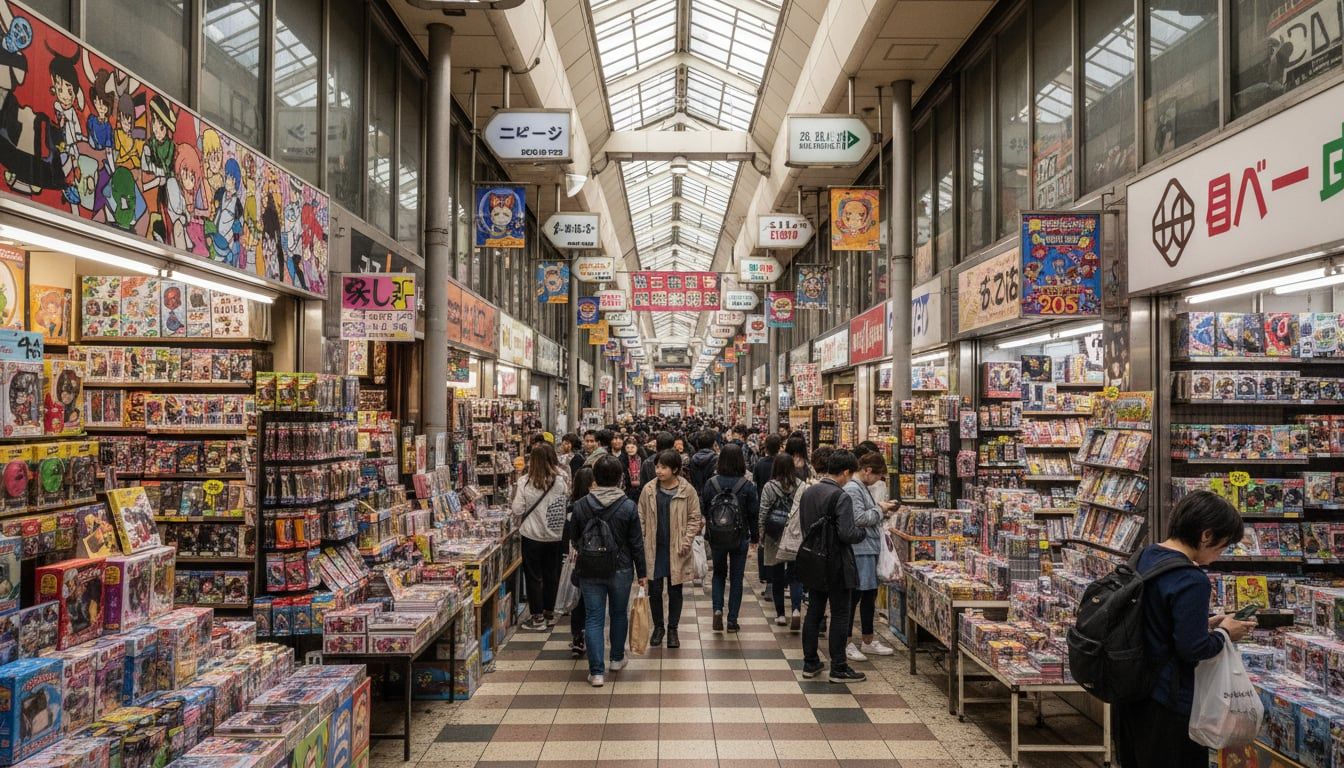
Nakano Broadway is Tokyo's best-kept otaku secret — a multi-floor maze of rare collectibles, vintage toys, and Mandarake shops.
There is a moment, somewhere between the second and third floor of Nakano Broadway, when it hits you: you are standing in a place where time moves differently. Glass cases stretch from floor to ceiling, packed with action figures still sealed in their original 1980s packaging. A retired salaryman carefully inspects a vintage Macross model kit. A teenage girl in a Harajuku outfit flips through a crate of idol photo sets. Nobody is performing for a camera. Nobody is checking Google Maps. This is the real thing.
Nakano Broadway is not on every tourist itinerary, and that is exactly what makes it worth going to.
What Is Nakano Broadway?
Nakano Broadway is a multi-story shopping complex in Nakano, a residential neighborhood in western Tokyo. Built in 1966, the building originally opened as a mixed-use development combining apartments (yes, people still live in the upper floors) with retail on the lower levels. Over the decades, the retail space was gradually colonized by secondhand and specialty shops catering to collectors, hobbyists, and enthusiasts of anime, manga, tokusatsu, and everything in between.
Today, floors 2 through 4 house the largest concentration of otaku-focused shops outside of Akihabara. The basement and ground floors contain more everyday retail — a supermarket, a pharmacy, a coin laundry — which only adds to the building's pleasantly surreal character. You might buy a rare 1970s Super Sentai figure and then pop downstairs for a carton of milk.
The Mandarake Empire
The anchor of Nakano Broadway is Mandarake, a sprawling chain of specialty secondhand shops that occupies a remarkable number of separate storefronts throughout the complex. Rather than one large store, Mandarake operates as a collection of individually themed boutiques, each focused on a different niche.
One shop deals exclusively in vintage manga volumes and art books. Another specializes in cosplay costumes and wigs. A third carries nothing but garage kits — unpainted resin model figures produced in small runs by independent sculptors. There are shops for idol goods, shops for tokusatsu collectibles, shops for vintage animation cels, and at least one that seems to specialize in items that resist easy categorization.
This fragmented structure is part of what makes browsing Nakano Broadway so engaging. Instead of one overwhelming mega-store, you move through a series of curated spaces, each with its own atmosphere and its own deep inventory. Prices are clearly marked, staff are knowledgeable, and the overall experience feels less like retail and more like visiting a series of eccentric private collections that happen to have price tags.
Floor by Floor: What to Expect
Basement and Ground Floor: Everyday retail, a grocery supermarket, a pharmacy, and a few fast food options. Good for restocking before a long browsing session.
Second Floor: A strong starting point. You will find Mandarake storefronts dealing in vintage toys, retro game software, and general anime merchandise. This floor tends to be less crowded than the floors above, making it a good place to orient yourself. Watch for the glass cases of vintage plastic model kits — some of these are priced in the tens of thousands of yen and represent genuine collector-grade items.
Third Floor: The beating heart of the complex. Multiple Mandarake shops here cover cosplay, doujinshi (self-published fan comics), idol merchandise, and rare figures. The doujinshi selection alone is extraordinary — shelves running the length of entire corridors, organized by fandom and then by creator. If you are interested in the independent creative ecosystem around anime and manga fandom, this floor is essential.
Fourth Floor: Less crowded and often overlooked by first-time visitors, which means better deals for those who make the effort. Vintage toys from the 1970s and 80s dominate here — tin robots, die-cast cars, early tokusatsu merchandise. There is also a shop specializing in antique watches that is entirely out of place and entirely worth a look.
Beyond Mandarake: Other Shops Worth Finding
Not everything in Nakano Broadway is Mandarake. Mixed in among the chain's various outposts are independent shops that deserve attention.
Several vendors specialize in retro video games, carrying cartridges and boxed software going back to the Famicom era. Prices here are generally competitive with — and sometimes better than — what you would find in Akihabara. The selection skews toward older hardware and games that the larger Akihabara chains consider too niche to stock.
There are also a few shops selling vintage cameras and photography equipment, a persistent reminder of the building's generalist origins. These sit in comfortable coexistence with a shop selling nothing but vintage plastic grocery bags featuring discontinued product mascots, which is either deeply strange or deeply charming depending on your perspective.
On the third floor, look for one of the building's small ice cream shops. A soft serve cone here, eaten while leaning against a display case of 1990s magical girl merchandise, is a genuinely Tokyo experience.
Nakano Sun Mall: The Approach
Getting to Nakano Broadway means first walking through Nakano Sun Mall, a covered shopping arcade stretching from Nakano Station's north exit to the Broadway entrance. This arcade, roughly 200 meters long, is lined with pharmacies, clothing shops, bakeries, ramen restaurants, and izakayas.
Sun Mall is not itself an otaku destination, but it functions as a useful decompression chamber between the ordinary city and the compressed strangeness of Broadway. It also has several excellent spots for a meal before or after your visit — the ramen options in particular are worth noting.
The transition from Sun Mall to Broadway is marked by a slight narrowing of the passage and a sudden increase in the density of hand-lettered sale signs. You will know when you have arrived.
Nakano Broadway vs. Akihabara: An Honest Comparison
Akihabara is larger, louder, and more comprehensively developed as a tourist destination. It has more new merchandise, more maid cafes, more English signage, and more of everything that makes it easy to visit without preparation.
Nakano Broadway is smaller, quieter, and built primarily for people who already know what they are looking for — or who are experienced enough at this kind of browsing to enjoy the hunt without a map. The secondhand and vintage focus means the inventory changes constantly. Items that were not there last month will be there today. Items that were there this morning may be gone by afternoon.
Akihabara is a destination for experiencing anime culture in a produced, accessible way. Nakano Broadway is a destination for participating in the collector ecosystem that sustains that culture from below. Both are worth visiting. They serve different purposes.
If you have already done Akihabara and want to go deeper, Nakano Broadway is the logical next step.
Practical Information
Getting There: Take the JR Chuo Line from Shinjuku to Nakano Station. The journey takes approximately 5 minutes. Exit from the north exit and follow Nakano Sun Mall straight ahead — you cannot miss it. The Broadway building is at the far end of the arcade.
Hours: Most shops open around 12:00 noon and close between 20:00 and 21:00. A small number of shops open earlier or close later; check individual store hours if you have a specific destination in mind. The building itself is accessible earlier, and the ground floor supermarket opens at standard grocery hours.
Busiest Times: Weekends, particularly Saturday afternoons, see the highest foot traffic. If you want a more relaxed experience with better access to display cases and staff attention, a weekday visit is strongly recommended.
Cash vs. Card: Cash remains king here. Most Mandarake shops accept credit cards for purchases above a certain threshold, but smaller independent vendors are often cash only. There is an ATM in the building (Japan Post and 7-Eleven ATMs are also available near Nakano Station) — withdraw before you browse.
Language: English signage is minimal. Prices are clearly marked on items, which is the most important information, but if you want to ask staff about specific items or request something from behind a counter, a translation app will be helpful.
Budget: You can spend nothing (browsing is free and the atmosphere alone is worth the trip) or you can spend a great deal, depending on what you find and what it does to your restraint. Setting a rough budget before you enter is not the worst idea.
Frequently Asked Questions
Is Nakano Broadway worth visiting if I am not a hardcore collector? Yes. Even casual visitors who have only a passing interest in anime, vintage toys, or Japanese pop culture will find the atmosphere and visual density genuinely fascinating. You do not need to be a buyer to appreciate it. That said, if secondhand goods and niche collectibles hold no interest for you at all, Akihabara's mix of new merchandise and entertainment options may be more engaging.
How long should I plan to spend there? A thorough visit to the upper floors — genuinely exploring the shops rather than just passing through — takes two to three hours. If you add a meal in Sun Mall and spend time with specific items that catch your attention, half a day is not unreasonable. First-time visitors often find they have spent more time than planned.
Are prices negotiable? At Mandarake shops, prices are fixed and non-negotiable — this is standard for the chain. At some smaller independent stalls, particularly for higher-priced items, light negotiation is occasionally possible, but it is not expected. The prices are generally fair for what is on offer; hunting for deals is better achieved through patience and repeat visits than through bargaining.
Can I find items here that I cannot find in Akihabara? Yes, frequently. The secondhand and vintage focus of Nakano Broadway means it stocks items that are simply not available as new merchandise anywhere. Older Mandarake catalogs, out-of-print doujinshi, discontinued figures, and items from defunct toy lines exist here in concentrations you will not find elsewhere. If you are looking for something specific from a decade ago, this is often the better starting point.
Explore More
If Nakano Broadway has caught your interest, these guides take the exploration further:
- Akihabara Otaku Guide: Everything You Need to Know — The definitive overview of Tokyo's electric town, from new releases to retro corners.
- Japan Retro Gaming Guide: Where to Find Classic Games — A deep dive into the best places across Japan to hunt for vintage game hardware and software.
- Japan Gacha and Capsule Toy Guide — The surprising world of Japanese capsule toy machines, from convenience store corners to specialist arcades.
- Japan Figure Collector Guide: Where to Buy Anime Figures & Nendoroids — Mandarake, Surugaya, and the best shops for scale figures and Nendoroids across Tokyo and Osaka.