Japan Karaoke Guide 2026: Chains, Prices, Tips & How to Sing Like a Local
August 26, 2026
Everything you need to know about karaoke in Japan — the best chains, how to use the machines, pricing, food and drink deals, and why it's so much more than just singing.
Step into a karaoke building in Japan and the first thing you notice is not the singing — it is the hum. A low, constant vibration rises through the floors from dozens of private rooms, each one its own little universe of music, tambourines, and enthusiasm. This is Japanese karaoke, and it is nothing like the open-mic-night embarrassment you might be imagining.
In Japan, karaoke is not a performance for strangers. It is a night out with your people, in your own room, where the drinks keep flowing and nobody judges your key changes. It is one of the most accessible, affordable, and genuinely fun experiences the country offers — and first-time visitors almost always say the same thing: why do we not do karaoke like this back home?
This guide walks you through everything: how the rooms work, which chains to visit, what to eat and drink, how to find English songs, and all the tricks locals actually use.
How Japanese Karaoke Works
Forget the pub karaoke format. In Japan, karaoke means karaoke box — a building divided into dozens of small private rooms, each rented by the hour. You and your group get the room entirely to yourselves, with a dedicated screen, microphone setup, tambourines, a tablet or controller to search songs, and a phone to order food and drinks without ever leaving.
Here is the basic flow:
-
Enter the building and check in at the reception desk. Tell the staff how many people are in your group. They will ask how long you want to stay — usually in 30-minute or 1-hour blocks, or you can choose a free-time package. No reservation is needed at most chains, though Friday and Saturday nights can mean a short wait.
-
Choose your package. The core decision is whether to add a nomihoudai (飲み放題) deal — unlimited drinks — for a set add-on fee.
-
Head to your room. Rooms range from cozy two-person booths to large party rooms that fit ten or more. You will find the song controller, microphones, and a TV or projector screen.
-
Order food and drinks via the in-room phone or tablet. Staff deliver your order directly to the room. You are not expected to leave until your time is up.
-
Extend as needed. Running low on time? Most chains let you extend from inside the room, often with a simple button press on the controller.
The whole experience is designed for maximum comfort and minimum social pressure. The room is soundproofed. Nobody outside can hear you. This is important.
Understanding Pricing
Karaoke pricing has a few moving parts, but it is more affordable than most tourists expect.
Base room rate: Usually charged per person per 30 minutes or per hour. A typical weekday daytime rate runs around 300 to 500 yen per person per 30 minutes. Weekend and late-night rates are slightly higher.
Free time (フリータイム): Many chains offer an unlimited-time package valid during specific hours — often from around 18:00 or 23:00 until closing. Free time typically costs 1,500 to 3,000 yen per person and is excellent value if you plan to stay for several hours.
Nomihoudai (飲み放題): The unlimited drink package, usually added for around 500 to 1,000 yen on top of the base rate. This grants access to a drink bar — soft drinks, tea, juice — or in some chains, a full in-room service menu with beer, cocktails, and highballs. It is almost always worth it.
Solo karaoke (一人カラオケ / hitokara): Yes, you can absolutely go alone. The practice has its own name — hitokara — and many chains have small single-person rooms priced around 100 to 200 yen per 10 minutes during off-peak hours. Popular with locals who want vocal practice or just need to belt out a few songs without an audience. There is zero judgment.
Budget ballpark: A two-to-three hour evening session with nomihoudai typically costs 2,500 to 4,500 yen per person. Add food orders and the total is still very reasonable for a night out.
The Major Karaoke Chains
Big Echo (ビッグエコー)
One of the most recognizable chains, with locations across Japan including major Shinjuku, Shibuya, and Osaka branches. Big Echo rooms tend to be well-maintained, the songbook is enormous, and English song selection is solid. They frequently run promotional packages and are a reliable default choice. The room lighting system lets you change colors mid-song — a small touch that adds a lot to the atmosphere.
Karaoke Kan (カラオケ館)
Famous internationally as the chain featured in the movie Lost in Translation, specifically the Shibuya Dogenzaka branch. Karaoke Kan has a lived-in, slightly nostalgic feel compared to shinier competitors, but the song library is extensive and the service is consistently good. The Shibuya flagship location is worth a visit just for the cultural association.
Joysound (ジョイサウンド)
One of the two dominant song machine systems in Japan (along with DAM). Joysound is known for its vast catalog — including many niche, anime, and vocaloid tracks — and for having a strong English-language library. If you are hunting for obscure English songs or deep cuts from Western artists, Joysound venues tend to have better coverage. Many standalone Joysound locations have a relaxed, music-lover atmosphere.
DAM (ダム)
The other major song machine system. DAM machines are visually polished and have excellent audio quality. DAM rooms are found in many chains rather than being a standalone brand — you will often see venues advertise both Joysound and DAM. DAM's English catalog has grown significantly in recent years.
Round1 (ラウンドワン)
Round1 is more than a karaoke chain — it is a full entertainment complex with bowling, arcades, and sports facilities under one roof. The karaoke floors at Round1 are modern, clean, and often open very late. Their spo-cha packages make it a popular choice for larger groups who want karaoke plus other activities. Found nationwide, often in suburban areas and malls.
Uta Hiroba (歌広場)
A budget-friendly chain popular in Tokyo, especially known for aggressive pricing on late-night free time packages. The rooms are functional rather than fancy, but if cost is your main concern, Uta Hiroba delivers. Particularly popular with students and younger crowds.
The Drink Bar and Nomihoudai Explained
Most karaoke buildings have a drink bar (ドリンクバー) — a self-serve station in the corridor offering soft drinks, tea, coffee, and juice. Access is often included in the base room rate or available as a small add-on.
The nomihoudai (飲み放題, literally all you can drink) upgrade adds alcohol to the mix: draft beer, highballs (whisky and soda, a Japanese bar staple), chuhai (fruit-flavored sparkling shochu), wine, and cocktails. For non-drinkers, nomihoudai still typically unlocks the full drink bar including premium soft drink options.
Some chains also offer tabehodai (食べ放題, all-you-can-eat) packages, pairing the drink bar with a rotating snack or pizza menu. These are popular for longer sessions.
Practical tip: The drink machine works by tapping a digital panel to select your drink, then placing your cup under the dispenser. Take thirty seconds to look at the full menu before pressing — there are usually far more options than the obvious ones visible at first glance, including seasonal and specialty drinks.
Finding English Songs
This is the thing first-timers worry about most, and it turns out to be mostly a non-issue.
Both Joysound and DAM machines have English-language search interfaces — look for a language toggle on the controller or tablet. You can search by:
- Artist name in romanized English (Taylor Swift, The Beatles, etc.)
- Song title typed in English
- Number code (every song has a number; look these up on the chain website before your visit)
The English catalog at major chains is genuinely substantial. Joysound has made major pushes to license Western pop, rock, and hip-hop content. Classic rock, 90s pop, and contemporary chart music are all well-represented. Very niche or very recent releases may be missing.
For K-pop fans: Japanese karaoke machines have enormous K-pop libraries. Chains have been licensing K-pop content aggressively for years, and you will find most major artists and albums without trouble.
For anime songs: The catalog is essentially unlimited. Anime songs are a core pillar of Japanese karaoke culture and titles span decades of releases. This is arguably where Japanese karaoke machines are most comprehensive in the world.
Navigation tip: Even without any Japanese reading ability, the song controller interface takes about ten minutes to learn by exploration. The main actions — search, add to queue, skip, adjust volume, echo, and key — are consistent across chains and easy to discover.
What Most Tourists Do Not Know
You can adjust the key and tempo. Every karaoke machine lets you shift the key up or down in semitone increments and slow down or speed up the track slightly. This is not cheating — locals use this constantly. The key button is usually labeled キー or shown with plus and minus symbols. If a song is just barely out of your range, drop it by two semitones.
The echo setting matters more than you think. Karaoke machines apply digital reverb and echo to the microphone signal. The default setting is usually quite heavy, which flatters most voices considerably. If you turn it all the way off, raw voice sounds surprisingly harsh. Most locals keep echo at around 60 to 80 percent of maximum.
Tambourines are non-optional. Every room has at least two tambourines. The accepted approach is to hand one to whoever is not currently singing. Rhythm is optional.
You do not have to sing to enjoy it. Groups frequently include people who just eat, drink, cheer, and operate the song controller. There is no pressure to perform. Plenty of locals spend a karaoke night as the hype person rather than the singer.
Late-night rates can be dramatically cheaper. After midnight — especially on weeknights — many chains slash prices significantly for free-time packages. Starting a session at 1am and going until 5am for 1,500 to 2,000 yen is a genuinely common thing to do. If you are a night owl, this is the best value in Tokyo nightlife.
The queue system: Songs are added to a shared queue for your room only — not a global list. If someone adds five songs in a row, everyone waits for those before the next person's song plays. It is polite not to dominate the queue when others are waiting.
Best Karaoke Areas in Japan
Shinjuku, Tokyo
Shinjuku has the highest density of karaoke venues in Japan, concentrated around the east exit and in the Kabukicho entertainment district. Big Echo, Karaoke Kan, Joysound, and Uta Hiroba all have major branches within walking distance of each other. Intense competition between chains means competitive pricing and well-maintained facilities. This is the default choice for a Tokyo karaoke night.
Shibuya, Tokyo
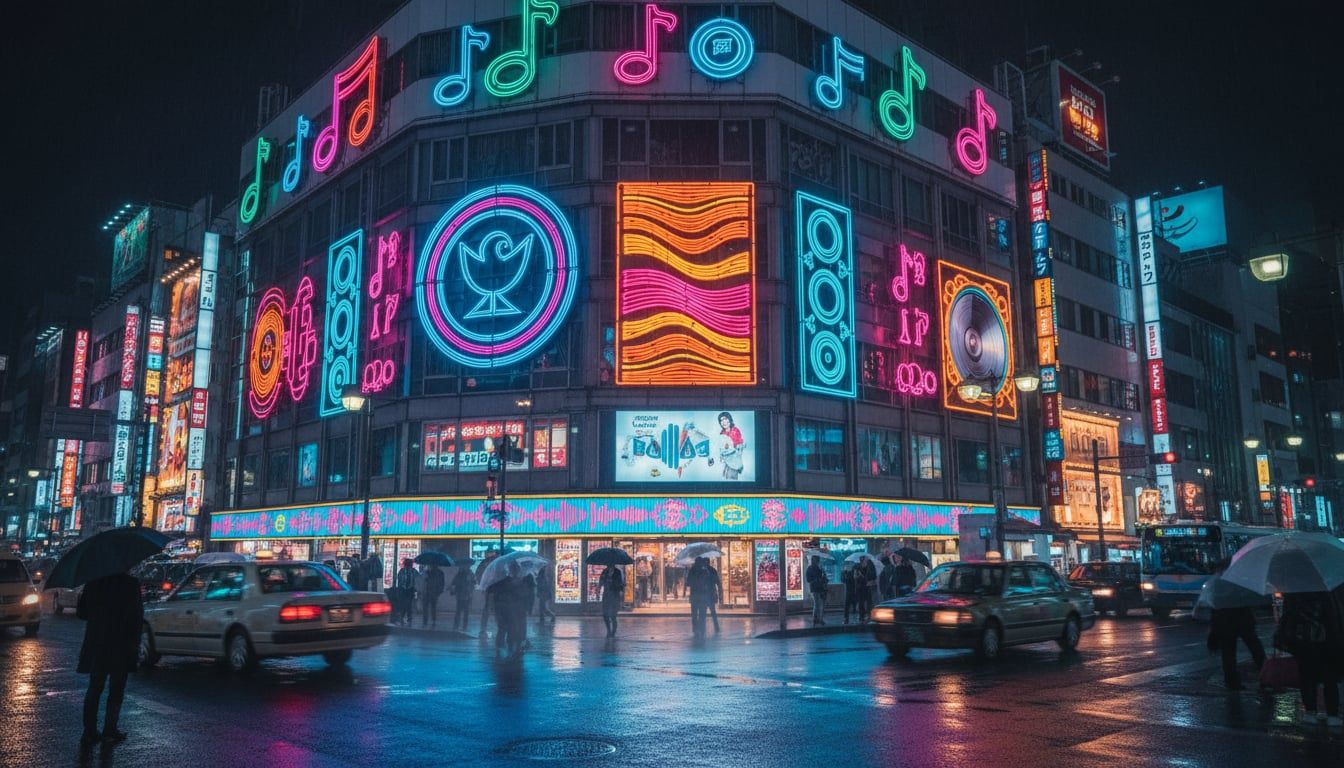
The Shibuya Dogenzaka slope is karaoke alley in miniature, stacked with venues on multiple floors above street level. Karaoke Kan's famous Lost in Translation branch is here. The crowd skews younger and more tourist-mixed than Shinjuku, and late-night options are plentiful. The walk up Dogenzaka at night, with karaoke buildings glowing above neon-lit storefronts, is a very specific kind of Tokyo experience.
Akihabara, Tokyo
Akihabara's karaoke venues lean toward the anime and J-pop crowd, with song libraries that go extremely deep on niche content. If your group wants every anime opening ever recorded available, Akihabara venues are your best bet. Also convenient if you are already spending the day exploring the gaming arcades and electronics shops in the area.
Osaka — Namba and Shinsaibashi
Osaka's entertainment districts have strong karaoke infrastructure. Round1 has a large presence in Namba. The Osaka karaoke scene has a slightly more boisterous atmosphere than Tokyo — Osaka residents are known for committing fully to their performances, for better or worse. Expect enthusiasm from everyone in the building.
Osaka — Tennoji
For those based in the Tennoji area, several karaoke chains have branches along the local entertainment strips, conveniently near the dining and nightlife around Abeno. It is a solid local option that avoids the tourist density of Namba while still offering the full karaoke experience.
Kyoto
Kyoto's karaoke scene is quieter than Osaka but well-represented near Kawaramachi and the Gion area. Options thin out late at night compared to major entertainment districts, so check closing times before settling in for a long session.
Fukuoka — Tenjin
Tenjin is Fukuoka's entertainment hub and has multiple large karaoke venues. The city has a strong nightlife culture and the karaoke scene reflects that — late-night free time packages are widely available and popular with the city's large student population.
Practical Information
| Details | |
|---|---|
| Typical hours | Most chains open from midday; many run 24 hours or close at 5 to 6am |
| Reservation | Usually not required; walk-in is standard. Busy weekends may have a short wait |
| Group size | 1 to 12+ people (book larger rooms in advance for big groups) |
| Payment | Cash and most major cards accepted; IC card payment increasingly common |
| Minimum age | Minors may be restricted after 22:00 without a guardian (varies by prefecture and chain) |
| Luggage | Most buildings have coin lockers near the entrance; bring 100 yen coins |
Booking ahead: For weekend evening sessions or large groups, some chains allow advance reservations via their website. Big Echo and Joysound both have English-capable online interfaces. For smaller groups on weeknights, just showing up is fine.
FAQ
Is Japanese karaoke expensive? For what you get — a private room, food service, and all-you-can-drink — it is genuinely good value. A three-hour evening session with nomihoudai typically runs 2,500 to 4,500 yen per person, comparable to a mid-range izakaya dinner.
Do I need to book in advance? For groups under six on weeknights, walk-in is almost always fine. For larger groups or Friday and Saturday evenings in busy areas, calling ahead or checking the chain website is a good idea.
Can I bring my own food or drinks? Most chains explicitly prohibit outside food and drinks — they rely on in-room orders for part of their revenue. The in-room menu is usually a serviceable selection of snacks, light meals, pizza, and desserts.
What if I do not speak any Japanese? You will manage fine. The check-in process involves a few gestures and numbers. Staff at major chains in tourist areas often speak some English. Inside the room, the machine interface is navigable by exploration.
Is solo karaoke weird? Not at all in Japan. Hitokara has been a completely normal practice for years. Staff will not react to a solo booking with anything other than professionalism. Solo rooms are purpose-built and often better value per person than group rooms.
Wrapping Up
Japanese karaoke is one of those experiences that sounds simple on paper — rent a room, sing songs — and turns out to be deeply, memorably fun. The combination of a private space, solid sound systems, a drink bar that never runs dry, and a catalog spanning every genre and era creates a context where inhibitions genuinely dissolve. Locals use karaoke as a bonding ritual: after dinner, after a work event, after a festival, in the small hours of the morning.
You do not need to be a good singer. You do not need to know any Japanese songs (though you might find yourself learning a few). You just need to find your room, grab a tambourine, and commit.
Frequently Asked Questions
How does Japanese karaoke work?
Japanese karaoke takes place in private "karaoke boxes" rented by the hour, where your group gets a dedicated room with a screen, microphones, and a tablet to search songs. You order food and drinks directly to your room using an in-room phone or tablet, and the experience is designed for maximum comfort and minimum social pressure.
How much does karaoke cost in Japan?
Karaoke pricing is typically per person per 30 minutes or hour, with weekday daytime rates around 300-500 yen per person per 30 minutes. Many chains offer "free time" packages for 1,500-3,000 yen, and an unlimited drink "nomihoudai" add-on usually costs 500-1,000 yen. A typical two-to-three hour evening session with nomihoudai might cost 2,500-4,500 yen per person.
Can I find English songs at Japanese karaoke?
Yes, both Joysound and DAM machines, found in major chains, have English-language search interfaces and substantial English catalogs. You can search by artist name, song title, or number code using the controller or tablet.
What are the popular karaoke chains in Japan?
Major chains include Big Echo, known for well-maintained rooms; Karaoke Kan, famous from Lost in Translation; and Joysound and DAM, which are the two dominant song machine systems. Other options are Round1 for entertainment complexes and Uta Hiroba for budget-friendly options.
What is nomihoudai?
Nomihoudai (飲み放題) is an unlimited drink package, usually an add-on fee, that grants access to a self-serve drink bar or in-room service for alcoholic beverages like draft beer, highballs, and chuhai. For non-drinkers, it typically includes premium soft drink options from the drink bar.