The Complete Guide to Izakaya: Japan's Favorite After-Work Pub Experience
May 4, 2026
Everything you need to know about izakaya — Japan's beloved casual pubs. From ordering etiquette to must-try dishes and the best spots in Osaka.
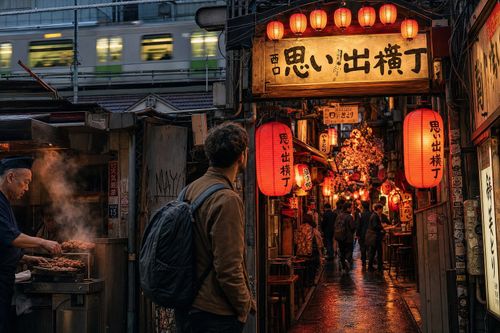
Walk through almost any Japanese city after sunset and you will find them: lanterns glowing red and orange above doorways, the sound of laughter spilling into the street, the smell of grilled chicken drifting through sliding curtains. These are izakaya, and they are one of the best places to experience everyday Japanese life.
Whether you are traveling solo or with a group, an evening at an izakaya is something every visitor to Japan should try at least once.
What Is an Izakaya?
The word "izakaya" (居酒屋) roughly translates to "stay-and-drink shop." It sits somewhere between a pub and a casual restaurant — a place where people go primarily to drink, but where food is very much part of the experience. Japanese salarypeople, students, and friends of all ages gather at izakaya to unwind after work or school, share plates of food, and enjoy long, unhurried evenings together.
Unlike a Western bar, an izakaya is designed for sitting, eating, and lingering. Most have table seating, some have traditional tatami rooms where you remove your shoes, and many offer semi-private booths separated by curtains or dividers. The atmosphere is almost always loud, warm, and welcoming.
The Ordering System: What to Expect When You Sit Down
Arriving at an izakaya for the first time can feel slightly overwhelming, but the system is straightforward once you know how it works.
Otoshi — The Table Charge
When you sit down, you will likely receive a small dish of food without ordering it. This is called "otoshi" (お通し) and it functions as a cover charge, typically 300 to 600 yen per person. Think of it as a snack to start the evening while you look at the menu. It is non-negotiable at most izakaya, so do not try to send it back.
Drinks First
Japanese izakaya culture strongly favors ordering drinks before food. When the server arrives, expect the first question to be "oshinomono wa?" (お飲み物は?) — "What would you like to drink?" Ordering a round of drinks immediately is standard practice. Food orders follow shortly after.
Shared Plates
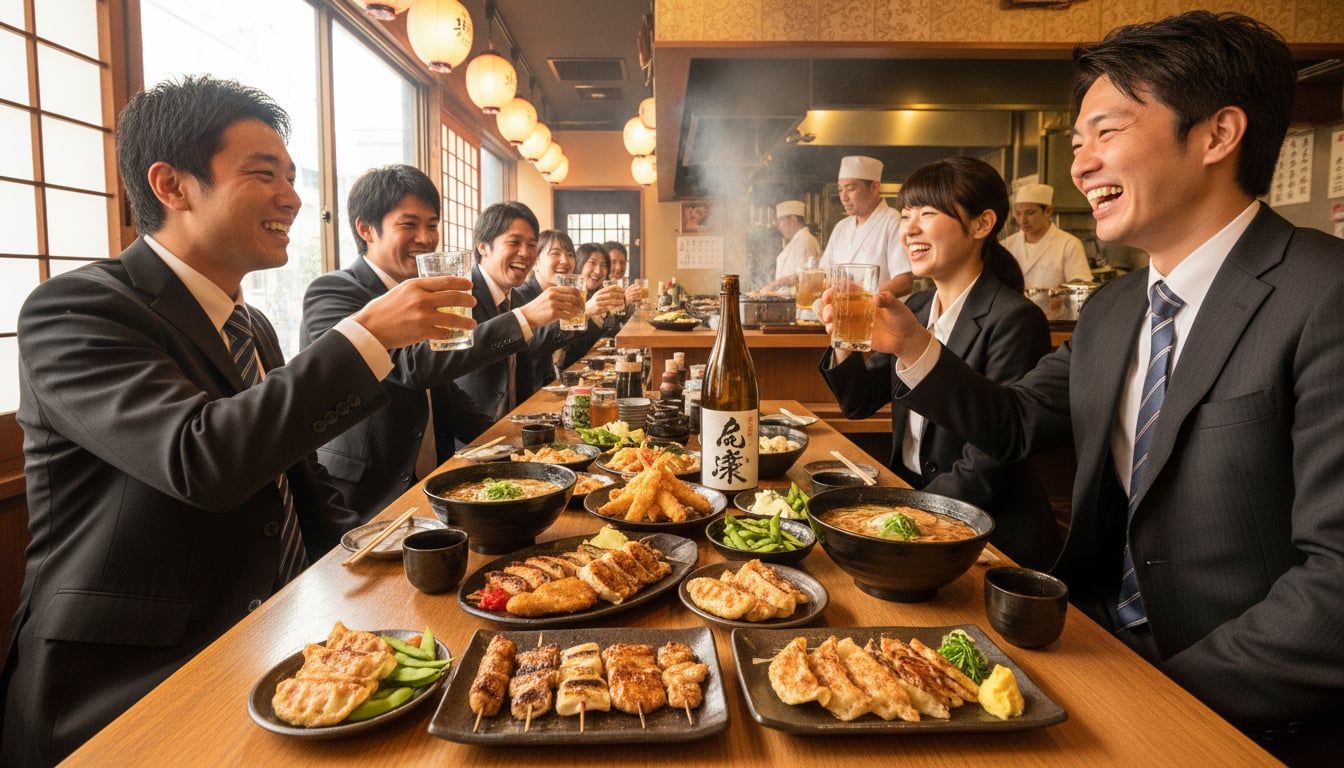
Izakaya food comes in small dishes meant for sharing. You do not order one dish each — you order several for the table and everyone picks from the same plates. This makes the experience more social, and it means you can try a wide variety of food in a single sitting.
Must-Order Dishes
The menu at most izakaya runs several pages long, but these are the staples you will almost always find and should not leave without trying.
Edamame — Steamed salted soybeans in the pod. Simple, satisfying, and perfect alongside a cold beer. Often one of the cheapest items on the menu.
Karaage — Japanese fried chicken, marinated in soy sauce, garlic, and ginger before being deep-fried until golden and crispy. Usually served with a wedge of lemon and a small dish of mayonnaise. This is arguably the most popular izakaya dish in Japan.
Yakitori — Skewers of grilled chicken cooked over charcoal. You can order parts like thigh meat (momo), breast (mune), skin (kawa), or cartilage (nankotsu), seasoned with either salt (shio) or sweet tare sauce. Yakitori-focused izakaya are a world of their own.
Sashimi — Fresh sliced raw fish, typically served with soy sauce and wasabi. The quality at a good izakaya rivals many dedicated sushi restaurants, and the price is often much lower.
Agedashi Tofu — Silken tofu lightly coated in starch and deep-fried, served in a dashi broth with grated daikon and bonito flakes. The contrast between the crispy exterior and soft interior is what makes it special.
Gyoza — Pan-fried pork and cabbage dumplings with a crispy bottom and chewy skin. Dip them in a mix of soy sauce, rice vinegar, and a drop of chili oil.
Beyond these classics, most izakaya also offer seasonal specials, grilled vegetables, simmered dishes, salads, and noodles for the end of the night.
Drink Culture at the Izakaya
Drinks are the heart of the izakaya experience. Here is what you will typically find on the drinks menu.
Nama Beer (Draft Beer) — "Nama" means fresh or draft. Ordering a nama is how most evenings begin. Lager-style beers from brands like Sapporo, Asahi, Kirin, and Suntory are the standard. A medium glass (chuu) is the most common size.
Highball — Whisky and soda water, served in a tall glass over ice. The highball became enormously popular in Japan over the past two decades and is now almost as common as beer at izakaya. Suntory Tory's and Kakubin whisky are the bases you will encounter most often.
Shochu — A distilled spirit made from sweet potato (imo), barley (mugi), or rice (kome). Shochu is lower in calories than sake and is often drunk mixed with hot water (oyuwari) or cold water (mizuwari). It is the drink of choice in Kyushu and has devoted fans across Japan.
Sake — Fermented rice wine, served either chilled (reishu) or warm (atsukan). At a good izakaya, the sake list can be extensive. Do not hesitate to ask the staff for a recommendation based on whether you prefer dry or sweet.
Chu-Hai — A canned or draft cocktail made from shochu and flavored soda — lemon, grapefruit, peach, yuzu, and many others. Light in alcohol and very refreshing. Good for those who want something lighter than beer.
Non-alcoholic options are also widely available. Oolong tea, green tea, and soft drinks are standard, and many izakaya now offer non-alcoholic beer and cocktails.
Nomihoudai: All-You-Can-Drink Plans
Many izakaya offer "nomihoudai" (飲み放題), which translates to "all you can drink." For a fixed price — usually 1,500 to 2,500 yen per person — you get unlimited drinks for a set time period, typically 90 minutes to two hours.
Nomihoudai plans usually cover draft beer, highballs, shochu, sake, and soft drinks. Premium items like craft beer or aged whisky may cost extra. If you are planning a long night with a group, nomihoudai is often excellent value. Some courses also offer "tabehoudai" (all you can eat) bundled together.
Chain Izakaya vs. Independent Izakaya
Japan has both large izakaya chains and small independent establishments, and each has its own appeal.
Chain izakaya like Torikizoku, Watami, Shirokiya, and Hanamaruken are found in virtually every city. They offer menus in English (and often Chinese and Korean), picture menus with easy tablet ordering, and consistent prices. For first-time visitors who are nervous about the language barrier, chains are a comfortable entry point. Torikizoku is particularly notable — everything on their menu costs the same low price per skewer.
Independent izakaya require more confidence with Japanese or a willingness to gesture and point, but the reward is often a much more authentic and memorable experience. Local izakaya run by long-time owners frequently have better food quality, more interesting drink selections, and the kind of character that chains simply cannot replicate. These are the places where you might end up sharing a conversation with the person at the next table.
Price Range: What to Budget
A typical evening at an izakaya — including several shared dishes and two to three drinks — costs between 2,000 and 4,000 yen per person. At chain izakaya on a nomihoudai plan, you can eat and drink well for closer to 3,000 yen. At higher-end independent izakaya with premium sake and fresh sashimi, budget 5,000 yen or more.
The otoshi cover charge is included in these estimates. Tipping is not practiced in Japan — the price on the bill is the price you pay.
Izakaya Etiquette
Izakaya are casual by nature, but a few customs will make your experience smoother and show respect for the culture.
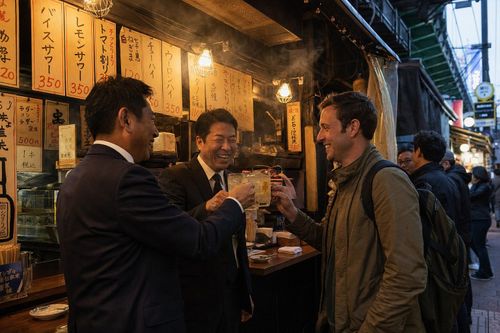
Kampai — Always wait for everyone at the table to have a drink before the first sip. Someone will raise a glass and say "kampai" (cheers) as the signal to begin. Drinking before the kampai is considered impolite.
Pouring for Others — At Japanese gatherings, it is customary to pour drinks for the people around you rather than for yourself. Keep an eye on your companions' glasses and refill them when low. If someone offers to pour for you, hold your glass with both hands as a gesture of thanks.
Oshibori Towel — When you sit down, you will receive a small rolled or folded towel, either warm or cold. This is the oshibori, used to wipe your hands before eating. Use it only for your hands, not your face, and fold it neatly when done.
Calling the Staff — Press the call button on the table or say "sumimasen" (excuse me) to get the server's attention. Snapping fingers or waving aggressively is not done.
Last Orders — Most izakaya have a set closing time, often around midnight or 1am, and the staff will announce "last orders" before then. Pay attention and make your final drink and food orders before the cutoff.
Late-Night Izakaya
One of the genuine pleasures of Japanese cities is that izakaya culture runs late. In entertainment districts, many izakaya stay open until 3am or even around the clock on weekends. If you find yourself hungry and social after midnight, finding an open izakaya in any major city is rarely difficult. Look for the lit lanterns and the sound of conversation — those are your guides.
Where to Find Izakaya in Osaka
Osaka has a reputation as Japan's food capital, and its izakaya scene lives up to that billing. Three areas in particular are worth knowing.
Tennoji is a neighborhood that combines a working-class soul with a surprisingly lively nightlife. The area around Tennoji Station and Shinsekai has a concentration of small, no-frills izakaya where locals have been drinking for decades. Prices here tend to be lower than in more tourist-heavy areas, and the atmosphere is genuinely local.
Namba is the heart of Osaka's entertainment district. The streets around Dotonbori and the covered shopping arcades are lined with izakaya ranging from tourist-friendly chains to hidden specialists. It is easy to stumble upon somewhere good, and the energy of the area makes for a lively evening.
Umeda is Osaka's business and transport hub, and the izakaya density here reflects the volume of office workers in the area. The underground warrens of bars and restaurants beneath the station — particularly around the Hep Five area and Kita Shinchi — are legendary. Kita Shinchi is one of the most concentrated nightlife areas in western Japan, ranging from budget izakaya to elegant sake bars.
How to Find a Good Izakaya
The simplest method is to walk into any busy entertainment district around 7pm on a weekday and look for places with customers already inside. A full izakaya is almost always a reliable one.
For more targeted searching, Google Maps works well — search "izakaya" near your location and filter by reviews and photos. Tabelog is the Japanese restaurant review platform with the most reliable ratings among locals. Hot Pepper Gourmet (Hot Pepper Restaurant) lists izakaya with real-time availability for table reservations.
If you are in a new city and unsure where to start, asking at your hotel or guesthouse for a staff recommendation is often the best move. Japanese hospitality staff tend to know their neighborhoods well and are usually happy to point visitors in the right direction.
An izakaya evening is not just a meal. It is a way of spending time — unhurried, communal, and deeply enjoyable. The food is honest, the drinks are plentiful, and the atmosphere is one you will find difficult to replicate anywhere else in the world. Go once and you will understand why the Japanese return again and again.
Frequently Asked Questions
What is an izakaya?
The word "izakaya" (居酒屋) roughly translates to "stay-and-drink shop," functioning as a casual restaurant and pub where people gather primarily to drink and share plates of food. It's a place for Japanese salarypeople, students, and friends to unwind and enjoy unhurried evenings.
What is otoshi at an izakaya?
Otoshi (お通し) is a small dish of food served without ordering, which functions as a non-negotiable cover charge, typically 300 to 600 yen per person. It serves as a snack to enjoy while you look at the menu.
What kind of food should I order at an izakaya?
Must-try dishes include edamame, karaage (Japanese fried chicken), yakitori (grilled chicken skewers), sashimi, agedashi tofu, and gyoza. Izakaya food comes in small dishes meant for sharing, allowing you to try a variety of items.
What drinks are popular at izakaya?
Popular drinks include nama beer (draft beer), highballs (whisky and soda), shochu (a distilled spirit), sake (rice wine served chilled or warm), and chu-hai (shochu and flavored soda cocktails). Non-alcoholic options like oolong tea and soft drinks are also widely available.
What is nomihoudai at an izakaya?
Nomihoudai (飲み放題) is an all-you-can-drink plan offered by many izakaya, typically for a fixed price (1,500 to 2,500 yen) and a set time period (90 minutes to two hours). It usually covers draft beer, highballs, shochu, sake, and soft drinks, offering excellent value for groups.
How much does an izakaya cost in Japan?
A typical evening at an izakaya, including several shared dishes and