Discover Japan's vibrant cosplay scene — from Comiket to Harajuku. Where to shop, rent costumes, and join the fun as a visitor.
Japan is the birthplace of modern cosplay culture, and nowhere else in the world does it run so deep into everyday life. What started as enthusiasts dressing up at science fiction conventions in the 1970s and 80s has grown into a full cultural ecosystem — spanning anime characters, video game heroes, visual kei musicians, lolita fashion, and even historical samurai aesthetics. Whether you are a dedicated cosplayer looking to experience Japan's legendary events, or simply curious about where all those incredible costumes come from, this guide will walk you through everything you need to know.
What Is Cosplay Culture in Japan — And It Is Bigger Than Anime
When most visitors think of Japanese cosplay, they picture elaborate anime or manga characters. That is certainly a huge part of it, but Japan's costume culture is far broader.
Anime and manga cosplay is the most visible form, with fans recreating characters from beloved series with astonishing detail and craftsmanship. But equally significant is visual kei, where fans dress in the elaborate, theatrical styles of rock bands like X Japan or The GazettE — heavy makeup, dramatic hair, and avant-garde fashion that blurs the line between costume and identity.
Lolita fashion is another major strand, rooted in Victorian and Rococo aesthetics. Sweet lolita, gothic lolita, and classic lolita each have their own communities, aesthetics, and gathering spaces. Unlike cosplay (which recreates specific characters), lolita is a genuine lifestyle fashion subculture.
Historical and samurai cosplay has also seen a boom, particularly around castle towns and historic districts. Locations like Kyoto's Gion or Nikko offer kimono rental, but dedicated historical cosplayers go much further — crafting armor replicas, court dress, and Meiji-era Western-influenced military uniforms.
All of these streams feed into Japan's broader "costume culture" (仮装文化), and as a visitor, you are welcome to participate at almost any level.
Major Cosplay Events to Put on Your Calendar
Comiket (Comic Market) — Tokyo Big Sight, Odaiba
Twice a year — in August and December — Tokyo Big Sight transforms into the world's largest fan convention, drawing over 700,000 visitors over three to four days. While Comiket is primarily a self-published manga and doujinshi (fan-made comic) market, the cosplay area outside the venue is legendary. Thousands of cosplayers gather in designated zones, and the sheer variety and quality of costumes is unmatched anywhere on Earth. Entry requires a catalog (sold at convenience stores and online), and the cosplay area has its own registration process. If you plan to photograph cosplayers here, read the etiquette section below first — the rules are strictly enforced.
World Cosplay Summit — Nagoya
Held annually in late July and early August, the World Cosplay Summit (WCS) brings competitors from over 40 countries to Nagoya to represent their nations in a cosplay championship. The parade through central Nagoya on the opening day is free to watch and is one of the most spectacular events in the cosplay calendar. The surrounding days feature photo events, stage shows, and cosplay-friendly zones throughout the city. Nagoya's Osu Kannon shopping district hosts related events and is a fantastic spot to interact with both Japanese and international cosplayers in a relaxed, street-level setting.
Cosplay Festival at TFT (Tables for Two) — Osaka
The Tokyo Fashion Town (TFT) building in Odaiba, and its equivalent large-venue cosplay festivals in Osaka and Nagoya, host dedicated cosplay events throughout the year. These are purpose-built gatherings where cosplayers book photo slots, use themed sets, and connect with photographers. For visitors who want a structured, photography-friendly environment, these events are ideal.
Osu Cosplay Parade — Nagoya
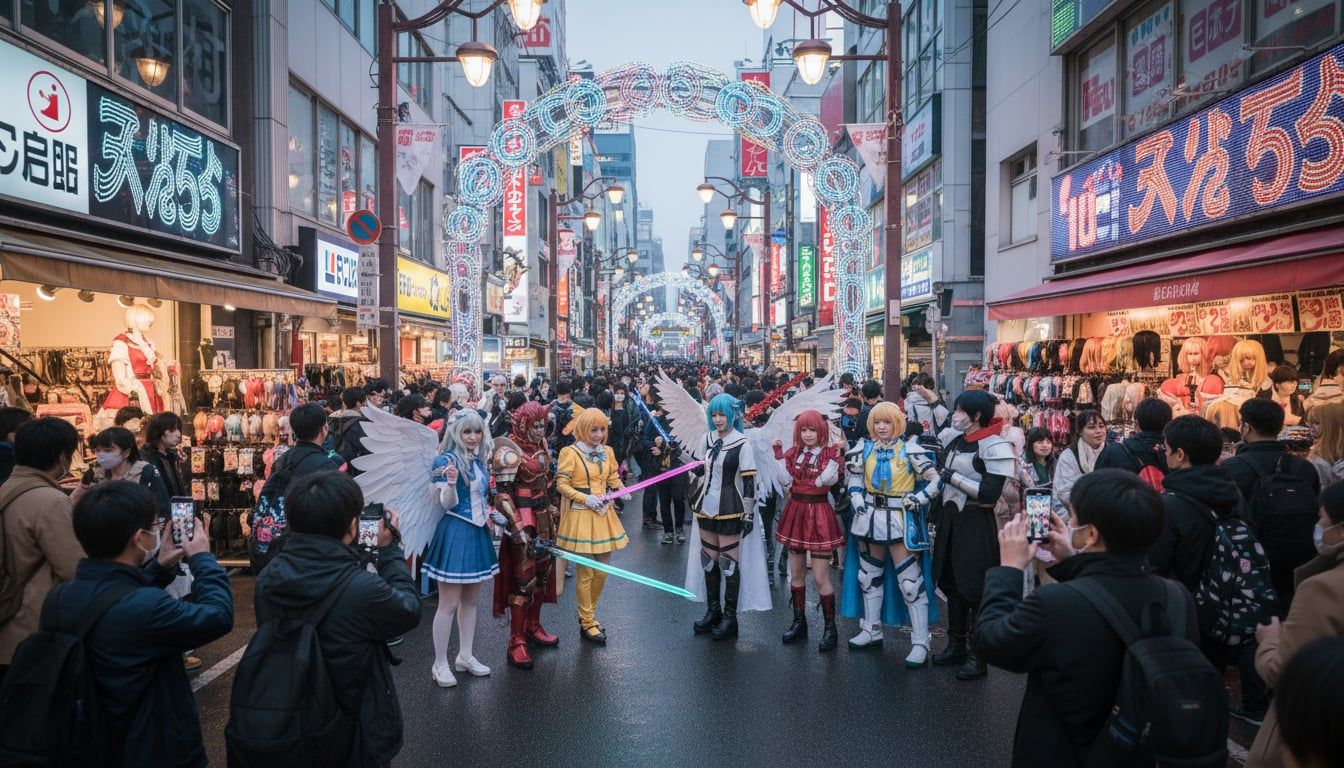
The Osu shopping arcade in Nagoya hosts a dedicated cosplay parade, typically in October, that transforms one of Japan's most characterful shopping streets into a catwalk. The parade is free to watch and the surrounding streets fill with cosplayers, street performers, and stalls. Osu Kannon is one of the most consistently cosplay-friendly neighborhoods in Japan outside Tokyo — on any weekend you are likely to encounter cosplayers shooting in the covered arcade or at the nearby temple grounds.
Best Cosplay Photo Spots in Japan
Osu Kannon, Nagoya
The covered shopping arcade radiating from Osu Kannon temple is a photographers' favorite. The mix of old-fashioned shotengai architecture, retro signage, and slightly eclectic shops provides an endlessly versatile backdrop. The temple forecourt itself is popular for traditional and historical costume shoots.
Nipponbashi (Den Den Town), Osaka
Osaka's equivalent of Akihabara, Nipponbashi is the city's electronics and anime district. The Nipponbashi Street Festa, held every spring, draws tens of thousands of cosplayers to the main street for a giant parade and photo event. Outside of this annual festival, the district remains one of the most cosplay-friendly neighborhoods in western Japan.
Harajuku, Tokyo
Takeshita Street and the surrounding lanes of Harajuku have been Japan's costume fashion hub since the 1980s. On weekends the street fills with shoppers in lolita, visual kei, decora, and various other street fashion styles. The nearby Meiji Shrine outer gardens are a popular photo shoot location, and the area around Omotesando offers elegant architectural backdrops.
Akihabara, Tokyo
Tokyo's electronics and anime district is an obvious destination — cosplay cafes, maid cafes, and costume shops line the main street. Public cosplay is less common here than in Harajuku, but during special events and weekends the streets come alive. The rooftop areas of some buildings have photo event spaces available for booking.
Odaiba, Tokyo
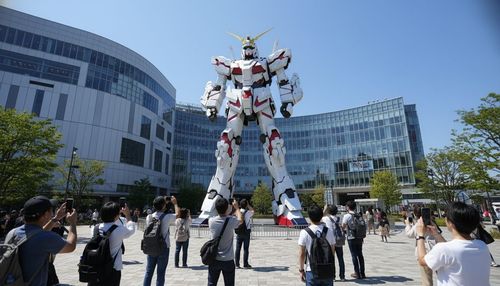
The artificial island district houses Tokyo Big Sight (Comiket venue), Diver City Tokyo (featuring the iconic life-size Gundam), and numerous cosplay event venues. The waterfront areas are popular for outdoor photo shoots with the Rainbow Bridge as backdrop.
Where to Buy and Rent Costumes
Major Costume Shops
Cospa is Japan's most prominent official character goods and costume retailer, with stores in Akihabara, Ikebukuro, and Nipponbashi. They stock licensed costumes, wigs, props, and accessories for hundreds of popular series. Prices reflect the quality — expect to pay ¥8,000–¥30,000 for a complete costume set.
Acos (Animate Costume) is Animate's dedicated cosplay brand, operating standalone shops and sections within Animate stores nationwide. Their range covers current seasonal anime and classic series. They also stock beginner-friendly items like uniform-style costumes at lower price points.
Cosmate and various specialty wig shops in Akihabara offer extensive wig selections for those building a look from scratch.
Rental Studios for Tourists
For visitors who want to experience cosplay without committing to a full purchase, rental studios are the perfect option. These businesses provide the costume, wig, makeup assistance, and a photo set in a single package.
Studio rental fees typically range from ¥3,000–¥8,000 for a two-hour session including costume rental. Many studios have English-speaking staff or English language booking systems. Look for studios in Akihabara, Harajuku, and Nipponbashi — searching "cosplay rental studio Tokyo" or "コスプレレンタル" will surface current options, as this market changes frequently.
Many studios allow outside photography, meaning you can rent a costume and then head out to nearby photo spots, though you should confirm this policy when booking.
Photography Etiquette — Always Ask First
The golden rule of cosplay photography in Japan is simple: always ask permission before taking a photo. Even in a public place, a cosplayer who has not given consent should not be photographed.
At dedicated cosplay events, there is typically a card system — cosplayers who wish to be photographed carry a card (often green) indicating they welcome photo requests. Those not wishing to be photographed may display a different card or simply wave off the camera. Respecting this system is non-negotiable.
When asking permission, a smile and a gesture toward your camera followed by a questioning look will be understood universally. Many cosplayers appreciate if you follow up by showing them the photo on your screen and, if you plan to post online, asking about their social handles to tag them properly.
At Comiket specifically, photography without registration is not permitted in the cosplay area. You must register as a photographer at the event to photograph cosplayers there.
General tips:
- Never touch a cosplayer's costume without explicit permission
- Do not block walkways or exits while shooting
- Be mindful of backgrounds — other attendees may not want to appear in your photos
- Follow all venue-specific rules, which are usually posted at entrances
Frequently Asked Questions
Can tourists participate in cosplay at Japanese events? Absolutely. Japan's cosplay community is welcoming to international visitors. Events like the World Cosplay Summit are literally designed around international participation. You do not need to be Japanese or fluent in Japanese to join in — a great costume and genuine enthusiasm go a long way.
Do I need to bring my own costume, or can I rent one in Japan? Both options work well. If you have a specific character in mind, bringing your costume from home gives you more control over the result. If you want to experience cosplay spontaneously, rental studios in every major city will outfit you with a costume, wig, and basic makeup assistance on the day.
Is it okay to wear a costume in public in Japan? In dedicated cosplay districts like Harajuku, Nipponbashi, and Akihabara, cosplay in public is normal and generally welcomed. In other areas, it draws curious looks but is rarely a problem. For transport on trains or buses, most cosplayers change at the venue rather than traveling in full costume — not because it is prohibited, but out of consideration for other passengers.
What is the difference between lolita fashion and cosplay? Cosplay involves recreating a specific character from anime, manga, games, or other media. Lolita is an independent fashion style with its own aesthetic vocabulary — a lolita is not "dressed as" anyone specific, they are expressing their own identity through a particular fashion tradition. While both are part of Japan's broader costume culture, lolita practitioners often prefer the distinction to be recognized.
Explore More
- Harajuku Fashion Culture Guide — Street fashion, vintage stores, and the culture behind Japan's most creative neighborhood
- Akihabara Otaku Guide — Navigate Tokyo's electronics and anime district like a local
- Comiket Guide for Foreign Visitors — Everything you need to know before attending the world's largest fan convention