Practical tips for navigating Comiket — Japan's massive twice-yearly doujinshi fair at Tokyo Big Sight — as a foreign visitor.
Comiket — short for Comic Market — is unlike any event you have ever attended. The world's largest self-published comic and fan-works fair draws over 500,000 visitors across three days, turning a corner of Tokyo Bay into a pilgrimage site for anime, manga, and gaming enthusiasts from across the globe. It is exhilarating, overwhelming, physically demanding, and completely unforgettable. This guide gives you the honest, practical picture so you can attend prepared rather than shell-shocked.
What Is Comiket?
Founded in 1975, Comiket (コミックマーケット) is held twice a year at Tokyo Big Sight (東京ビッグサイト) in Odaiba. Its core is the doujinshi market: tens of thousands of independent creator "circles" sell self-published comics, illustration books, music CDs, games, and other fan-made works directly to buyers. There are no retailers or middlemen — you buy straight from the person who made it.
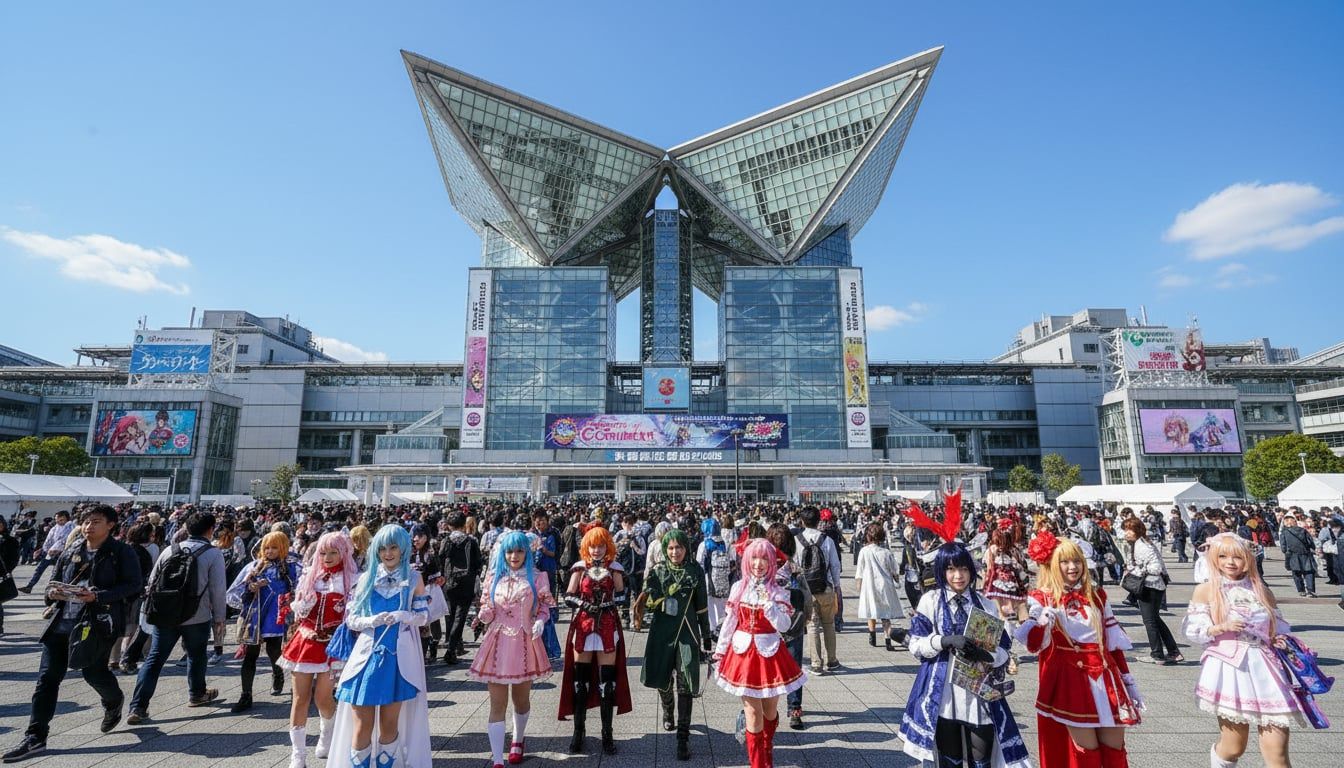
Beyond the doujinshi halls, large corporate booths represent publishers, game companies, and studios, and a dedicated outdoor plaza hosts cosplayers. The scale is genuinely staggering: roughly 35,000 circles, hundreds of corporate exhibitors, and attendance that rivals the population of a mid-sized city.
2026 Dates and Schedule
Comiket runs twice yearly:
- Summer Comiket (C104 area): typically held in mid-August over three days
- Winter Comiket: typically held in late December (27th–29th) over three days
Check the official Comiket website (comiket.co.jp) to confirm exact dates for the current edition, as summer events can shift due to venue scheduling. Each day features different circles, so many dedicated attendees come multiple days.
Opening and closing times:
- Corporate booths and main halls: 10:00 AM opening (doors may open slightly earlier for ticket holders)
- Closing time: 4:00 PM (sharp — staff begin clearing the halls)
- Outside queues for popular circles form well before 10:00 AM
Getting There: Transport and Navigation
Station: Kokusai-Tenjijo Station (国際展示場駅) on the Rinkai Line is the primary access point. From Osaki Station, the Rinkai Line runs directly to Kokusai-Tenjijo in about 20 minutes. Tatsumi Station on the Yurakucho Line is an alternative but involves more walking.
On event days, the Rinkai Line runs extra trains from early morning, but expect extremely packed carriages regardless. Trains fill up fast — arriving before 8:30 AM is strongly recommended if you want a reasonable entry queue position.
IC cards: Use your Suica or PASMO card. Buying individual tickets at a jammed ticket machine on event morning is not a good use of your time.
Return transport: Leave before 3:00 PM if possible. The post-close rush between 4:00 PM and 5:30 PM is intense. Trains back to central Tokyo can take 45–90 minutes due to queuing just to enter the station.
Entry and Tickets
Comiket is free to enter for general attendees — no ticket required for the main halls. However, a catalog (カタログ) costs around ¥2,000 and is essential if you plan to find specific circles. It maps every single circle's table location and includes their self-descriptions. Digital versions are also available via a dedicated app.
Some special early-entry tickets or day-specific badges may be offered depending on the edition. Check the official site for the current system, as access procedures are updated regularly.
Bags and luggage: Large suitcases and oversized bags are prohibited inside. A medium backpack or tote bag is fine. Coin lockers near the station fill up quickly, so pack light and plan ahead.
The Hall Layout and How to Navigate
Tokyo Big Sight's massive East and West halls house the doujinshi circles, arranged by genre and fandom. Corporate booths occupy a separate area. The catalog (or app) is your map — without it, the sheer density of tables is disorienting.
Circles are grouped into blocks by letter (e.g., East Hall A, B, C…) and each block has numbered tables. Write down the block-table codes for circles you want to visit before you arrive. The app version lets you build a personal shopping list and view your target locations on a map — worth downloading in advance.
Popular circles in high-demand blocks attract queues that snake through multiple hall sections. Staff manage these queues; follow their instructions or you will be redirected to the back of the line. Having a plan of attack — ordered by hall section, starting with your highest-priority circles — saves you hours.
Buying From Circles
This is a cash-dominant event. Most independent circles do not accept credit cards or IC card payments, though some now use QR payment apps. Bring significantly more cash than you think you will need — ¥20,000 to ¥30,000 is a reasonable starting range for a serious shopper.
Approach a table, look at what is displayed, and if you want something, hold it up or point and make eye contact with the creator. They will tell you the price (usually written on a small sign). Payment is direct. Haggling is not done. Most creators appreciate a brief, genuine reaction — a nod, a smile — but long conversations are impractical given the queue behind you.
Items can sell out within minutes of opening. If something on your list is critical, go there first.
Corporate Booth Area
The corporate section operates differently from the circle halls. Lines for popular booths can form the night before or require lottery-style tickets distributed in the morning. Exclusive merchandise — limited edition items only available at Comiket — drives intense demand.
If corporate booths are your priority, arrive as early as possible and check whether the specific booth you are targeting uses a numbered ticket system. Once you have a ticket for a time slot, you can explore other areas rather than standing in line for hours.
Cosplay Area
Comiket maintains a dedicated outdoor cosplay plaza where costume-wearing is permitted. Rules are strictly enforced:
- Costumes may only be worn in designated areas — not in trains, on public streets, or inside halls
- A changing room (有料) is available on-site for a small fee
- Props that resemble real weapons are prohibited
- Photography of cosplayers requires the subject's consent — always ask first
The outdoor area can be brutally hot in summer and cold in December. Cosplayers endure conditions that most visitors find extreme — respect that commitment.
Survival Essentials
Comiket in August is genuinely dangerous if you are unprepared. The combination of outdoor queues, packed indoor halls, and physical exertion in Tokyo summer heat sends visitors to the on-site medical tent every year.
What to bring:
- Water (at least 1.5 liters — rehydration is ongoing)
- Portable charger (your phone battery will drain from maps, app, and photos)
- Cash in mixed denominations (many transactions are ¥500–¥1,500)
- Comfortable, broken-in shoes — you will walk 10–15 km
- A compact tote bag for purchases (circles provide small bags but you accumulate volume quickly)
- Summer: cooling towel, portable fan, UV arm sleeves, sunscreen
- Winter: warm layers (outdoor queues are cold; indoor halls become warm from body heat)
- Snacks — dedicated meal breaks are a luxury
What NOT to do:
- Do not take photos inside the circle halls without explicit permission from the creator
- Do not touch items on tables without picking them up to show intent to buy
- Do not block aisles — keep moving or step aside deliberately
- Do not arrive without a plan and expect to wander efficiently
- Do not bring a rolling suitcase
- Do not skip hydration because the queues are long
Food and Nearby Facilities
Food trucks and vendors operate outside the venue, but lines grow long around noon. The venue's internal food options are limited and similarly crowded. Options in the surrounding Odaiba area (Diver City, Aqua City, DiverCity) are a 10–15 minute walk — viable only if you exit and re-enter, which you can do freely.
Practical approach: eat a proper meal before arriving or bring convenience store food. 7-Eleven and FamilyMart near Kokusai-Tenjijo Station are fully stocked in the early morning — stock up on your way.
Restrooms inside Tokyo Big Sight are plentiful but see extreme demand. Lines are part of the experience; plan time accordingly.
Language and Communication
Staff at Comiket are not generally English-speaking, though some volunteers handle international attendee questions. Circle creators vary — many will manage a transaction without language, using prices written out and point-and-pay. Google Translate's camera mode is useful for reading catalog descriptions.
The catalog and official app have Japanese interfaces. Third-party fan-translated circle guides circulate online before each event — search for them a week in advance.
Frequently Asked Questions
Do I need to speak Japanese to enjoy Comiket? Not necessarily. Transactions at most circles are point-and-pay with written prices. The experience of navigating and discovering works is largely visual. That said, being able to read katakana helps with signage, and a translation app is genuinely useful for catalog entries.
Is Comiket appropriate for children? Some hall sections contain adult content (marked and restricted to attendees 18+). Other sections are entirely family-appropriate. The event is not specifically designed for children, and the crowd density can be overwhelming for young kids, but families do attend. Exercise judgment based on which sections you plan to visit.
Can I resell items I buy at Comiket? Comiket's ethos is strongly against scalping. Buying exclusively to resell at a markup is widely condemned within the community and frowned upon by creators. Buy what you genuinely want.
What happens if it rains on a summer Comiket day? The outdoor queue areas are exposed. Bring a compact umbrella or rain poncho for summer events. Winter Comiket typically has cold, dry weather, but check the forecast. Events are not canceled for rain.
Explore More
Ready to go deeper into Japan's otaku culture? These guides have you covered:
- Japan Cosplay Culture Guide — The history, etiquette, and best spots for cosplay in Japan
- Akihabara Otaku Guide — Navigate Tokyo's ultimate electronics and anime district
- Japan Anime Pilgrimage Guide — Visit the real-world locations behind your favorite series