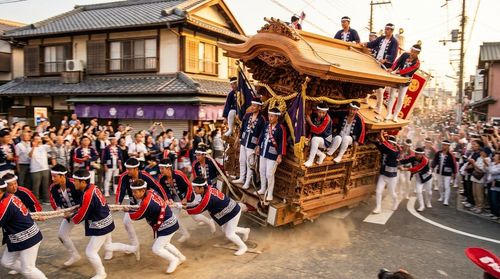
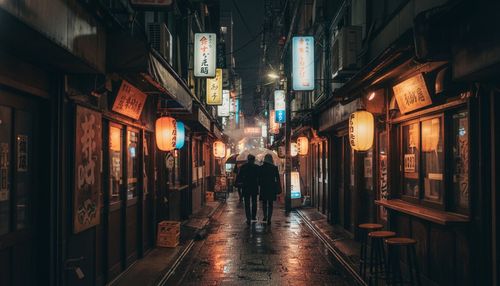
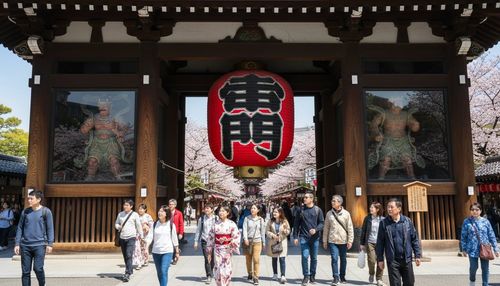
Today is June 7. Sanno Matsuri just opened at Hie Shrine, and the 500-person Heian procession is in 5 days - won't happen again until 2028.
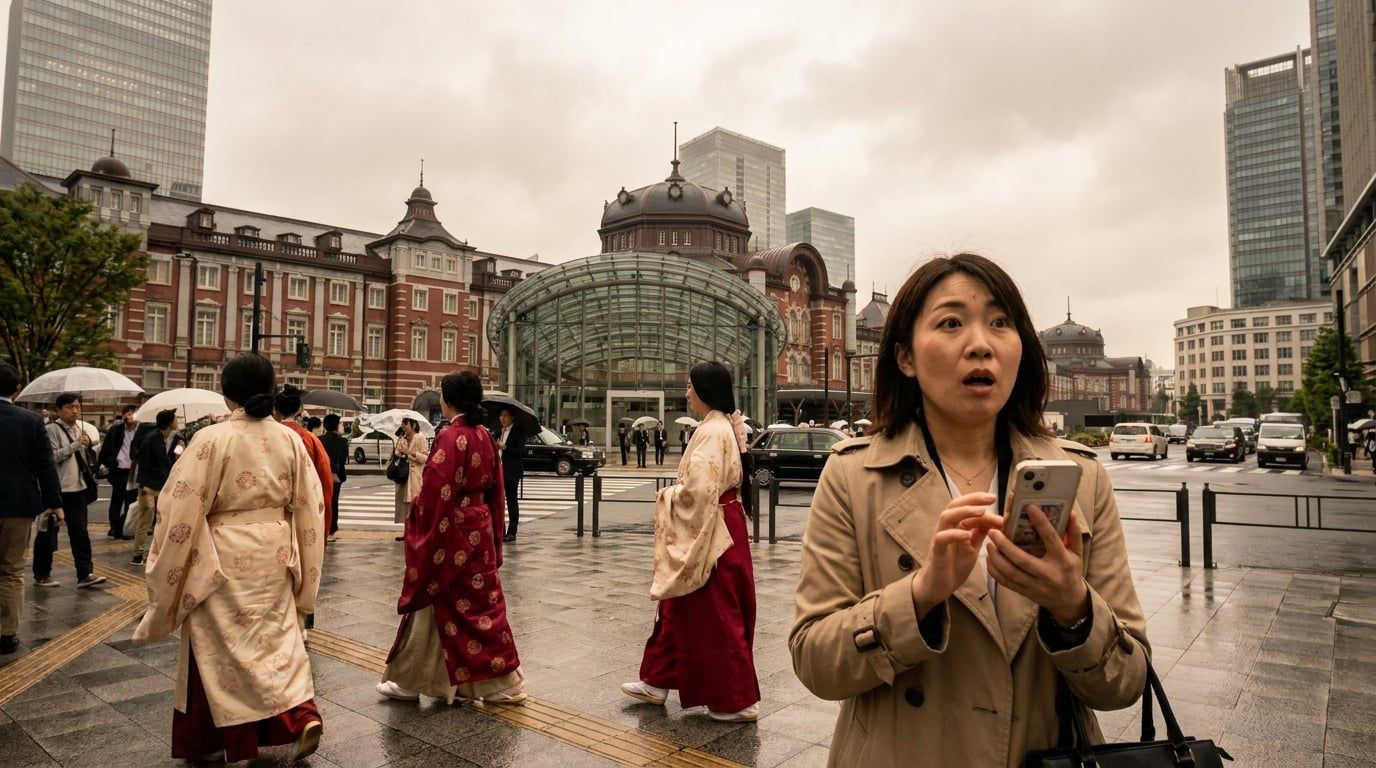 Image for illustrative purposes only.
Today is June 7, 2026. While most travel guides are still telling you "June is a dead month in Japan," locals are quietly doing what they do every year — slipping into shrine grounds before sunrise, lighting 365 paper lanterns under thousand-year-old camphor trees, and walking through 2-meter reed rings to reset their luck.
This isn't a generic festival list. Sanno Matsuri opened this morning at Hie Shrine. The grand procession — 500 people in Heian-period imperial costume — is in five days, and the next time you can see it is 2028.
Here's what's actually happening this month — and what your Japanese friends are probably already attending without telling you.
Why Are Japanese People So Quiet About June Festivals?
Because June in Japan is tsuyu — the rainy season — and most international guides spend the whole month apologizing for the weather. The truth is gentler. Tokyo gets about 15 sunny days in June, and the rain typically falls in short bursts in the morning or late evening. The real enemy isn't water — it's 70%+ humidity from 11 AM to 3 PM, which is exactly when most tourists try to sightsee.
Locals know the trick: go early, go late, go inside, or go to a festival — where the crowd energy makes the humidity irrelevant. The result is a calendar packed with rituals, processions, and flower viewings that almost no foreign visitor witnesses, simply because nobody told them.
What Is Sanno Matsuri and Why Is 2026 Special?
The Sanno Matsuri at Hie Shrine (Chiyoda, Tokyo) runs June 7 through June 17, 2026 — eleven days of rituals, dance offerings, tea ceremonies, and mikoshi processions. It's one of Edo's "three great festivals," together with Kanda and Fukagawa.
But here's the catch most travelers miss: the centerpiece — the Shinko-sai grand procession — only happens in even-numbered years (2026, 2028, 2030...). Sanno alternates with Kanda Matsuri, taking turns staging their full pageant. 2026 is a Sanno year. The next chance is 2028.
When Is the Sanno Matsuri Grand Procession in 2026?
The Shinko-sai is scheduled for Friday, June 12, 2026, departing Hie Shrine around 7:45 AM and returning by approximately 5:00 PM. About 500 participants in full Heian-period costume — court nobles, shrine maidens, mounted samurai, ox-drawn carts — walk a 2-kilometer route through some of Tokyo's most photographed streets: Yotsuya, past Yasukuni Shrine, the Imperial Palace, Tokyo Station's red-brick facade, Nihonbashi, Ginza past the Wako clock tower, then back via Shimbashi.
Verify the date the day before at tenkamatsuri.jp — a small number of English sources list June 15. The official Hie Shrine schedule is your truth.
How Do I Get to Hie Shrine?
Take the Ginza or Namboku Line to Tameike-Sanno Station, leave from Exit 7, walk three minutes. The famous tunnel of vermilion torii gates climbs the hillside to the main hall — and on a grey June morning, with mist clinging to the lacquered wood, it's one of Tokyo's quietest sacred experiences. Admission is free. There are no tickets, no reservations, and no English signage during the procession route — just stand on the curb and watch a thousand years of choreography walk past you.
We Just Missed Atsuta Matsuri — Should We Care?
Yes — for next year. Atsuta Matsuri (Shobu-sai) was held on June 5, 2026 at Atsuta Jingu in Nagoya. An imperial envoy attends on the Emperor's behalf — which alone tells you the cultural weight. About 250,000 people attended; almost none of them were foreign tourists.
What makes Atsuta worth bookmarking for 2027 is the makiwara: five towering bamboo-and-paper lantern poles, each strung with 365 lanterns — one for every day of the year — plus 12 on the central pole, one per month. They're lit at dusk, and the warm flicker against the canopy of 1,000-year-old camphor trees is unlike anything else in Japanese ritual lighting.
After the makiwara are lit, roughly 1,000 fireworks are launched from Jingu Koen at 7:50 PM, directly above the shrine's ancient tree canopy. There's no other major hanabi in Japan with this backdrop. One catch the English guides bury: Jingu Koen itself is closed during the display. Locals watch from the surrounding streets near Meitetsu Jingu-mae Station.
Mark June 5, 2027 in your calendar now. Nagoya is also a clean two-hour bullet train from Tokyo and a 50-minute ride from Kyoto, making Atsuta a natural Kansai-bound stopover — and our full Nagoya festival lineup covers the rest of the city's annual matsuri.
Where Can I See Hydrangeas Without the 60-Minute Queue?
Kita-Kamakura's Meigetsuin Temple — known affectionately as the "Hydrangea Temple" — peaks in the second and third weeks of June 2026. Around 2,500 hydrangea plants carpet the temple grounds, and here's the part most lists skip: roughly 95% of them are the same native variety, Hime Ajisai. They all bloom the same shade of cool, dusky blue at the same time, creating a uniform monochrome sea around the temple's famous round window — the Satori-no-Mado, or "Window of Enlightenment."
Locals call it Meigetsuin Blue. It exists for about three weeks a year. Then it's gone. Kita-Kamakura is an easy day trip from Tokyo — about 55 minutes on the JR Yokosuka Line.
What Time Should I Arrive at Meigetsuin?
This is the question. The temple opens at 8:30 AM in June (with extended hours; last entry 4:30 PM), and from about 10:00 AM onward the queue stretches to 60 minutes. Locals arrive at 8:00, queue lightly for 15 minutes, and are inside the gate when it opens. By 9:30 they're at a cafe sipping coffee while the tour buses are still finding parking.
Admission is ¥500, cash only. No credit cards, no Suica. Bring small notes.
A few minutes south, Hasedera runs its Hydrangea Path (June 1 – July 31, 2026) — 2,500 hydrangea plants, 40+ varieties, on a hillside trail with views over Sagami Bay. Heads-up that tourists miss: the hydrangea path requires an additional ¥500 ticket on top of regular temple admission. It's not a scam — it's just non-obvious. Locals know.
Where Do People Go When Tokyo Gets Too Humid? Hokkaido.
The single most useful thing to know about June in Japan: Hokkaido has no rainy season (no tsuyu). While Tokyo is grey and 28°C with 75% humidity, Sapporo is sunny and 20°C with clean air.
Yosakoi Soran Festival runs June 10–14, 2026 — its 35th edition. About 30,000 dancers and 2 million spectators fill Odori Park's Nishi 8-chome main stage for a fusion of Kochi's naruko hand-clappers and Hokkaido's Soran Bushi fishing song. It's a 1992 invention rooted in two ancient traditions — modern, but not shallow. The choreography is fierce, the music thumps, and the costumes alternate every year between teams. Admission is free.
The following weekend, the Hokkaido Shrine Festival (Sapporo Matsuri) runs June 14–16, 2026 — Sapporo's biggest local-only summer event, with floats, food stalls, and a procession from Hokkaido Shrine through downtown. If you're in Tokyo on a rainy week, a 90-minute flight to New Chitose is the pivot Japanese travelers quietly make — and our full Sapporo festival lineup shows what else lands during the same week.
What Other Tokyo Festival Is Happening This Weekend?
Torigoe Night Festival runs June 7–9, 2026 at Torigoe Shrine in Taito-ku, a 10-minute walk from Asakusa. About 250 yatai food stalls line the approach, and after sunset the mikoshi is paraded through the streets with illuminated paper lanterns — a moving constellation of warm light through narrow shitamachi alleys. The smell of grilling yakitori, the rasp of taiko drums, the murmur of strangers shoulder-to-shoulder under the lanterns — this is the summer matsuri Japanese people remember from childhood.
Tsukiji's Shishi Matsuri (Namiyoke Shrine) also falls in June, but 2026 is a "kage matsuri" (scaled-down) year — the full triennial Hommatsuri ran in 2025. Worth a quiet visit, not the headliner this June.
What Most Tourists Don't Know
A few practical pieces of information that locals quietly take for granted:
- Meigetsuin is cash-only and the queue starts at 9:30 AM. Bring ¥500 in cash. Arrive at 8:00 AM, not 10:00.
- Hasedera's hydrangea path needs a second ¥500 ticket on top of the temple admission. It's listed in tiny print at the gate. Budget ¥1,000 not ¥500.
- Jingu Koen is closed during the Atsuta fireworks. English guides imply you watch from the park itself. You don't — you watch from the surrounding streets.
- Sanno Matsuri's procession route is unticketed. No reserved seating, no English commentary. Find a spot on Ginza-dori near Wako department store by 11:00 AM for the iconic skyscrapers-versus-Heian-costume shot.
- Mt. Fuji is only visible from the summit area about 28% of June days. If your itinerary depends on a clear Fuji, build in a Hokkaido or Kamakura pivot day.
- Most shrines and temples in this article are cash-only. Alipay, WeChat Pay, credit cards, and mobile Suica are rare at small shrines. Carry ¥10,000 in small bills.
What Is Chinowa Kuguri and Why Do Locals Do It Every June 30?
If you can stay in Japan through the end of the month, this is the closer. Chinowa Kuguri — also called Nagoshi-no-Harae — happens on June 30, 2026 at shrines across the country. A large ring (about 2 meters across) of woven chigaya reeds is set up at the entrance to the shrine. You walk through it three times, tracing a figure-eight pattern, to wash away the misfortune accumulated in the first half of the year.
It's free, takes about 15 minutes, and most foreign visitors don't even know it exists. The photo — a single human figure stepping through a ring of reeds, framed by torii — is quietly one of the most powerful images Japan offers.
Almost every major shrine participates — Hie Shrine, Yasukuni, Meiji Jingu, Atsuta, Sumiyoshi Taisha (Osaka). It's the quietest, most universally accessible ritual in this whole article, and it's the one you'll remember in five years.
Practical Info
| Festival | Date | Station | Cost | Best Time |
|---|---|---|---|---|
| Sanno Matsuri (Hie Shrine) | Jun 7–17, 2026 | Tameike-Sanno (Exit 7) | Free | Procession: Jun 12, 7:45 AM |
| Sanno Procession (Ginza viewing) | Jun 12, 2026 | Ginza or Tokyo Station | Free | Arrive 11:00 AM on Ginza-dori |
| Torigoe Night Festival | Jun 7–9, 2026 | Kuramae (Toei Asakusa Line) | Free | Sat/Sun evening 5:00 PM+ |
| Meigetsuin Hydrangea | Best Jun 10–21 | Kita-Kamakura (JR Yokosuka) | ¥500 cash | Arrive 8:00 AM weekday |
| Hasedera Hydrangea Path | Jun 1 – Jul 31 | Hase (Enoden Line) | ¥400 + ¥500 path | Late afternoon, weekday |
| Yosakoi Soran (Sapporo) | Jun 10–14, 2026 | Odori Subway (Sapporo) | Free | Evening, Nishi 8-chome stage |
| Hokkaido Shrine Festival | Jun 14–16, 2026 | Maruyama-Koen | Free | Anytime, peak Saturday |
| Atsuta Matsuri (next year) | Jun 5, 2027 | Meitetsu Jingu-mae | Free | Fireworks 7:50 PM |
| Chinowa Kuguri | Jun 30, 2026 | Any major shrine | Free | Morning or early evening |
Wrapping Up: June Isn't a Dead Month — It's the Locals-Only Month
The reason you've never heard about most of these festivals isn't because they're obscure. It's because they happen during a month international tourism has decided to skip. Japanese people don't skip June. They take the morning train to Kita-Kamakura, walk the temple path before the queue forms, and come home with photos that don't show up on anyone else's feed.
The Sanno procession on June 12 is the single most time-sensitive item in this guide — biennial, free, and walking through some of Tokyo's most photographed streets. Yosakoi Soran on June 10–14 is the pivot for anyone tired of grey skies. Meigetsuin Blue is at its peak right now. And on June 30, every neighborhood shrine in Japan will quietly host the reed-ring ritual that resets the year.
If you're piecing together a longer route — Tokyo for Sanno, Nagoya for an Atsuta plug for next year, then Osaka — the Kansai leg of a multi-city June trip rewards travelers who use a single base and day-trip out. Southern Osaka in particular makes a quiet, well-connected anchor for exploring Nara, Kyoto, and the smaller summer rituals in the surrounding prefectures, with easy access back to Kansai International for the flight home.
If you want the year-round version of this list, our year-round hidden festivals guide is your evergreen companion. And the 2026 Japan festival calendar maps out the full twelve months.
Frequently Asked Questions
When is the Sanno Matsuri grand procession in 2026?
The Shinko-sai grand procession is scheduled for Friday, June 12, 2026, departing Hie Shrine at approximately 7:45 AM and returning by 5:00 PM. Verify the date at tenkamatsuri.jp the day before, as a small number of English sources list June 15.
Is June a good time to visit Japan?
Yes, for travelers who plan around the weather. June offers Sanno Matsuri (biennial in 2026), Atsuta Matsuri, Meigetsuin hydrangeas, Yosakoi Soran in Sapporo, and Chinowa Kuguri — plus ryokan rates 30–40% below peak. Avoid midday sightseeing in Honshu; humidity, not rain, is the real obstacle.
Are there festivals during Japan's rainy season?
Many — including some of the biggest of the year. Sanno Matsuri (Tokyo), Atsuta Matsuri (Nagoya), Yosakoi Soran (Sapporo), Torigoe Night Festival, and the nationwide Chinowa Kuguri ritual all happen during tsuyu. Hokkaido has no rainy season, making it a popular Honshu-resident escape in mid-June.
What is Meigetsuin Blue?
Meigetsuin Blue is the uniform dusky-blue color produced when the ~95% Hime Ajisai hydrangeas at Meigetsuin Temple in Kita-Kamakura bloom simultaneously. The effect peaks in the second and third weeks of June and is most photogenic on rainy days when raindrops cling to the petals.
How early should I arrive at Meigetsuin?
Arrive by 8:00 AM, when the temple opens at 8:30. By 10:00 AM the queue typically reaches 60 minutes. Admission is ¥500 cash only — credit cards and Suica are not accepted.
Does it rain every day in Japan in June?
No. Tokyo averages about 15 sunny days in June, and rain typically falls in short bursts in the morning or late evening. The 70%+ humidity from 11 AM to 3 PM is a bigger obstacle than precipitation itself.
Where can I see hydrangeas in Japan in June 2026?
Kita-Kamakura's Meigetsuin Temple (peak June 10–21) and nearby Hasedera (June 1 – July 31) are the most famous. Hasedera requires an additional ¥500 ticket on top of admission for its Hydrangea Path. Both are accessible as a Tokyo day trip from Kita-Kamakura Station on the JR Yokosuka Line.
Is Sanno Matsuri held every year?
The shrine ceremonies and dance offerings happen every year from June 7 to June 17. The full Shinko-sai grand procession with 500 costumed participants only happens in even-numbered years, alternating with Kanda Matsuri. The next is 2028.