Tokyo Fireworks 2026: Sumida, Jingu Gaien, and the Tokyo Bay Grand Comeback
June 28, 2026
Tokyo's 2026 hanabi calendar is uniquely loaded — the classic Sumida River show in July, plus Tokyo Bay Grand returning in October after an 11-year hiatus.
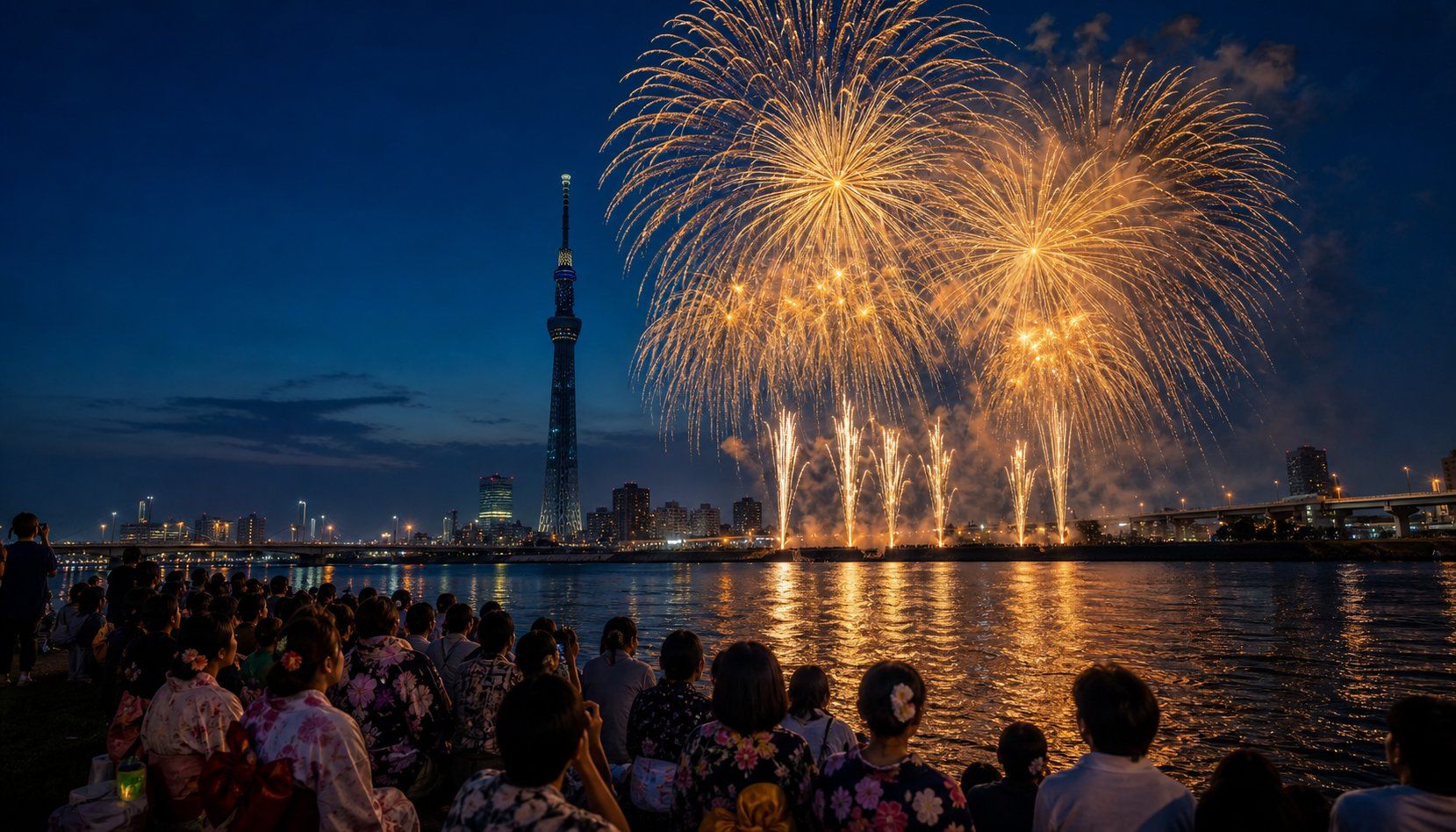
If you are spending any part of the summer or autumn of 2026 in Tokyo, this is an unusually good year to plan a night around fireworks. The classic Sumida River Fireworks (隅田川花火大会) lights up Asakusa on July 25 as it has done every year since 1733, and then — for the first time in 11 years — the Tokyo Bay Grand Fireworks (東京湾大華火祭) returns on October 24, this time as a fully ticketed offshore event off Harumi Pier. That comeback is the single biggest hanabi headline of 2026 in Japan, full stop.
Here is the practical guide to which Tokyo fireworks are worth planning a night around, what tickets actually exist, and where you can still watch for free.
The Tokyo 2026 Calendar at a Glance
| Date | Event | Free viewing? |
|---|---|---|
| Jul 25 (Sat) | Sumida River Fireworks | Yes (very crowded) |
| Aug 1 (Sat) | Edogawa Fireworks | Yes (both river banks) |
| Aug 1 (Sat) | Itabashi Fireworks | Yes (relocated upstream) |
| Aug 8 (Sat) | Jingu Gaien Fireworks | No — ticketed only |
| Oct 24 (Sat) | Tokyo Bay Grand Fireworks | No — 21 paid zones only |
Yokohama Night Flowers (the rebranded Sparkling Twilight) runs five-minute mini-shows on Jun 13, Jul 4, Jul 18, Aug 9, Sep 5, and Sep 20 — short, free, and easy day-trips.
The Big Four — Deep Dives
Sumida River Fireworks — Tokyo's original (Jul 25)
Sumida is the direct descendant of the 1733 Ryogoku Kawabiraki, Japan's oldest urban fireworks tradition, and the source of the famous "Tamaya! Kagiya!" shouts. Two venues fire roughly 20,000 shells from 19:00–20:30: Sakurabashi–Kototoibashi (Venue 1) and Komagatabashi–Umayabashi (Venue 2). Expect 950,000+ spectators and shoulder-to-shoulder crowds.
- Best access: Asakusa Station (Ginza/Asakusa/Toei Asakusa, 5–15 min walk), Tokyo Skytree, or Kuramae.
- Free viewing: Sumida Park and the Asakusa riverbanks. Stake out a spot by 16:00 at the latest.
- Paid seats: Citizen-sponsor 4-person seats on the Sumida side via TicketPay opened May 10 on a first-come basis.
- Rain rule: No rain date. Decision is made at 08:00 the morning of the show.
If you can only do one Tokyo hanabi this summer, this is it — the Senso-ji and Asakusa backdrop is unmatched.
Edogawa Fireworks — high-density, both-bank format (Aug 1)
Edogawa fires about 14,000 shells in just 65 minutes — among the densest programs in Japan. The Soke Hanabi Kagiya house (360 years old) has run it since 1976, and the 2025 edition set a Guinness record for the tallest "mountain-shaped" set piece (59.2m). The 2026 program is a themed 7-act show.
- Access: Toei Shinozaki (15 min walk, brutal congestion); JR Koiwa or Keisei Edogawa (25 min); Toei Mizue (45 min, less crowded).
- Free viewing: Extensive riverbank zones on both the Tokyo side and the Chiba (Ichikawa) side. The Chiba side is often less packed.
- Paid seats: ¥2,000–¥26,000 via Rakuten Ticket, first-come general sale Jun 13 – Jul 28. This is one of the easier major Tokyo events to ticket as a foreign visitor.
Jingu Gaien Fireworks — stadium hanabi + J-pop concert (Aug 8)
Jingu Gaien is unique: fully ticketed, no perimeter viewing, and bundled with a major J-pop concert lineup (2026: Shonan no Kaze, Matsudaira Ken, nobodyknows+, ≒JOY, T.N.T). Fireworks launch from Jingu softball stadium; you watch from Jingu Stadium or Chichibunomiya Rugby Stadium. About 10,000 shells in a tight 60-minute program.
- Access: Gaienmae, Aoyama-itchome, or Sendagaya — all 5–10 min walk.
- Tickets: General sale opens July 4 via Pia / TV Asahi Tickets. Stadium seats include the concert.
- Rain date: Aug 9.
- Why pick this: Easiest "no chance of free-spot failure" option. You will get a guaranteed seat and a concert. Sells out fast once the bundle drops.
Tokyo Bay Grand Fireworks — the 2026 comeback (Oct 24) ★
This is the headline. The Tokyo Bay Grand Fireworks (Tokyo-wan Dai Hanabi-sai) was suspended after 2015 when Harumi was converted into the Olympic Athletes' Village. It returns October 24, 2026 (17:30–19:00) as the centerpiece of Chuo-ku's 80th-anniversary celebration — and as the first Tokyo headliner deliberately scheduled in October instead of August, dodging summer thunderstorms and heat.
- Format: Roughly 12,000 shells fired offshore from Harumi Pier, including 1.5-shaku (45cm) giant shells. Expected crowd ~720,000 based on the 2015 final edition.
- Viewing: All 21 designated zones across Harumi, Toyosu, and Ariake are ticketed. No free standing, no sidewalk viewing — this is a structural change from the pre-2016 format.
- Tickets: General prices ¥5,000–¥10,000 (SS-class ¥10,000); Chuo-ku resident priority sale opens early July 2026, public sale opens July 2026. Expect immediate sellouts.
- Access: Kachidoki on the Toei Oedo Line (~15 min walk), plus Tsukishima and Toyosu approaches.
If you are in Tokyo in October, build your trip around this date. It will not happen again in 2027 — there is no annual promise yet.
Smaller but Worth-It
- Itabashi Fireworks (Aug 1) — 67th edition, synced with Toda Fireworks across the Arakawa for a combined ~15,000 shells. The free zone has moved upstream to the baseball field area for 2026 to relieve congestion, with Takashimadaira (Toei Mita Line) now the recommended station. The "Sky Niagara" finale and Tokyo's biggest shell (shaku-go-sun-dama, 45cm) make this worth the trek.
- Yokohama Night Flowers — short 5-minute shows on Jun 13, Jul 4, Jul 18, Aug 9, Sep 5, Sep 20. Easy to slot into any Yokohama day-trip; free viewing from Minato Mirai, Akarenga, and Yamashita Park. The original "Sparkling Twilight" big format is retired.
- Adachi Fireworks (already past — May 30, 2026) — Tokyo's oldest hanabi (origins 1924) has permanently shifted to late May to dodge summer storms. If you missed it in 2026, mark your calendar for late May 2027.
- Kamakura Fireworks (already past — July 10, 2026) — 78th edition ran successfully with its signature underwater fireworks (suichu hanabi) at Yuigahama and Zaimokuza beaches. Day-trip from Tokyo; pencil in for early-to-mid July 2027.
Free Viewing in Tokyo: The 2026 Reality
The "show up at the river and watch for free" model is dying for major Tokyo events. Realistic free spots in 2026:
- Sumida River: Sumida Park, Asakusa riverbanks (arrive by 16:00).
- Edogawa: Both Tokyo and Chiba banks — the Chiba (Ichikawa) side is the local hack.
- Itabashi: Upstream baseball field area, capacity-controlled entry via Takashimadaira Station.
- Yokohama Night Flowers: All Minato Mirai waterfront promenades remain free.
What you can no longer view free: Jingu Gaien (banned for crowd control) and Tokyo Bay Grand (all 21 zones ticketed). If someone tells you "just go to Toyosu and watch from the sidewalk" for October 24, ignore them — the entire perimeter is gated.
Day-Trip Options Worth the Shinkansen
- Nagaoka Fireworks (Aug 2–3, Niigata) — ~1h 40m via Joetsu Shinkansen. One of Japan's "Big 3" competitive events, with the legendary "Phoenix" sequence set to Hirahara Ayaka's "Jupiter." 100% ticketed since 2023; the 1st lottery sold out and the 2nd was cancelled — register for the official resale Jul 6–20 via Ticket Plus Trade.
- Sendai Tanabata Eve Fireworks (Aug 5, Miyagi) — ~1h 31m via Tohoku Shinkansen. ~16,000 shells over central Sendai with rare "360-degree urban fireworks" vantage points. Tickets on sale Jul 1 via Famima / 7-Eleven (tstar.jp). The eve of Sendai Tanabata Matsuri (Aug 6–8) — pair the trip.
- Atami Sea Hanabi (multiple dates) — 50 min Shinkansen from Tokyo. Summer dates Jul 20, 26, Aug 5, 9, 18, 24. Walk-up tickets ~¥900 advance at 7-Eleven multi-copy machines from Jun 1. Lowest-barrier ticketed fireworks in the country.
For broader month-by-month context see our Japan festivals — August guide.
Practical Tips
- Arrival times: For Sumida and Edogawa, 4 hours before launch is normal. For Jingu Gaien and Tokyo Bay Grand, follow ticket gate-open times exactly.
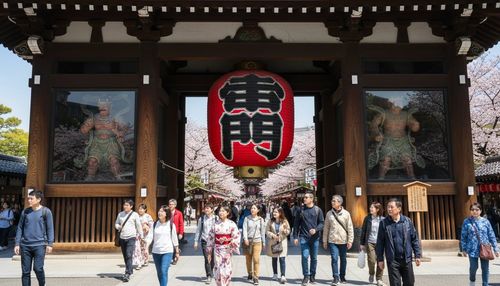
- Yukata rental: For Sumida, the Asakusa yukata shops (around Senso-ji and Kaminarimon) are the obvious move — book the morning slot so you have time to walk to the river by mid-afternoon.
- Post-event train crush: Walk one or two stations away from the main exit. After Sumida, walking to Ueno or Tokyo Skytree is faster than queueing at Asakusa. After Jingu Gaien, head to Yotsuya rather than Sendagaya.
- Rain rules: Sumida cancels with no rain date (decision 08:00 day-of). Jingu Gaien postpones to Aug 9. Tokyo Bay Grand details TBA in the ticket pack.
Stay Near the Action
If your trip combines Tokyo with Kansai, consider stacking the Sumida show (Jul 25) with Osaka's Tenjin Matsuri Hono Hanabi the same night or Naniwa Yodogawa on Oct 17 — week before Tokyo Bay Grand. Our Tennoji-area JapanNook stays put you 20 minutes from both Osaka fireworks venues; details and ticket strategy live in our Osaka fireworks 2026 guide.
Related Reading
- Japan Fireworks 2026 — see all 26 events (national pillar)
- Osaka Fireworks 2026 — the Kansai counterpart
- Tokyo Festivals 2026 — broader matsuri lineup
- Japan Festivals — August — fireworks-heavy month
- Japan Festivals — July
- Fireworks Festivals in Japan — evergreen primer
The 2026 calendar will not repeat. Sumida is the postcard, Jingu Gaien is the no-fail ticket, and Tokyo Bay Grand is the once-a-decade comeback. If your trip touches late October, build the whole itinerary around the 24th.