Can't decide between Gion Matsuri and Tenjin Matsuri? We compare dates, atmosphere, highlights, and practical tips to help you choose — or see both.
Two of Japan's greatest festivals happen within days of each other every July. Gion Matsuri dominates Kyoto from July 1-31. Tenjin Matsuri takes over Osaka on July 24-25. They are only 30 minutes apart by train, but they feel like entirely different worlds.
If you are visiting Japan in summer 2026 and can only choose one -- or want to know how to fit both into your trip -- this guide breaks down exactly how they compare.
Quick Comparison
| Gion Matsuri (Kyoto) | Tenjin Matsuri (Osaka) | |
|---|---|---|
| Dates | Jul 1-31 (main: Jul 17 + 24) | Jul 24-25 |
| Age | 1,150+ years | 1,000+ years |
| Crowd size | ~1 million over the month | ~1.3 million in 2 days |
| Highlight | Yamaboko float parade | River boat parade + fireworks |
| Atmosphere | Elegant, traditional, refined | Energetic, loud, celebratory |
| Best for | History lovers, photographers | Fireworks fans, party atmosphere |
| Fireworks | No | Yes (5,000+) |
| Free to attend | Yes (paid reserved seats available) | Yes (paid riverside seats available) |
| Can you participate? | Mostly watching | Some interactive elements |
| City vibe | Ancient capital, temple-lined streets | Street food capital, neon-lit energy |
Gion Matsuri: Kyoto's Month-Long Masterpiece
Gion Matsuri is Japan's most prestigious festival. It has been held every July since 869 AD, originally as a purification ritual to ward off plague. Today it spans the entire month, but the climax comes in two waves:
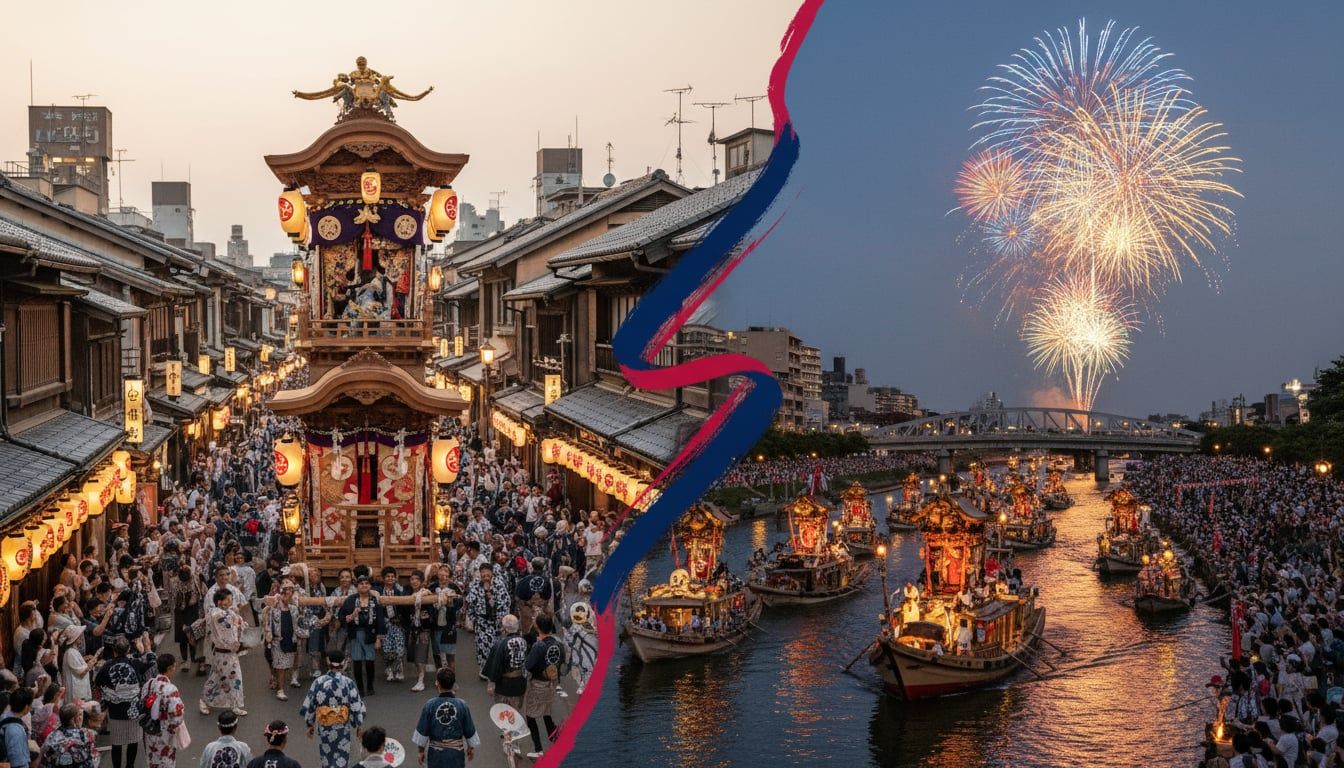
Yoiyama (Jul 14-16): Three nights of eve festivities. The Shijo-Karasuma area closes to traffic, and enormous yamaboko floats -- some over 25 meters tall -- are displayed on the streets, draped in centuries-old Gobelin tapestries (some from 16th-century Belgium). Food stalls, lanterns, and the hypnotic kon-kon-chiki-chin music of the hayashi musicians fill the warm night air.
Yamaboko Junko (Jul 17): The grand parade. 23 floats are pulled through Kyoto's streets by teams in traditional happi coats. The showstopper is the tsujimawashi -- floats weighing 12 tons are rotated 90 degrees at intersections on freshly laid bamboo rails, guided by hand.
Why choose Gion Matsuri:
- You want a deeply traditional, visually stunning experience
- You love history and cultural significance
- You prefer spreading the experience over several days
- You want to explore Kyoto's temples and gardens between festival events
- You are a photographer (the visuals are extraordinary)
Read our complete Gion Matsuri guide for detailed planning.
Tenjin Matsuri: Osaka's River Festival Spectacle
Tenjin Matsuri honors Sugawara no Michizane, the deity of learning enshrined at Osaka Tenmangu. It is one of Japan's "Big Three" festivals and the most action-packed two days you can have in Japan.
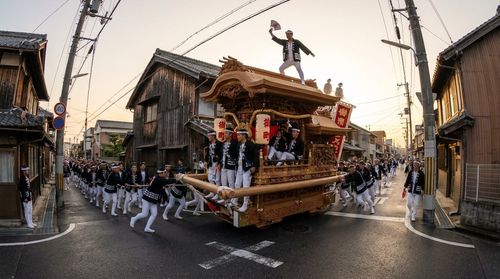
Day 1 - Rikutogyo (Jul 24): A land procession of 3,000 participants in period costumes marches from the shrine through Osaka's Kita district. Oxcarts, mikoshi (portable shrines), and musicians wind through the streets.
Day 2 - Funatogyo (Jul 25): The main event. Over 100 boats take to the Okawa River in a lit procession, culminating in a massive fireworks display of 5,000+ shells. The combination of illuminated boats, fireworks, and the river's reflections is unlike anything else in Japan.
Why choose Tenjin Matsuri:
- You want fireworks (Gion Matsuri has none)
- You love the energy of a crowd -- Tenjin is louder, more boisterous
- You want a concentrated 2-day experience rather than a month-long event
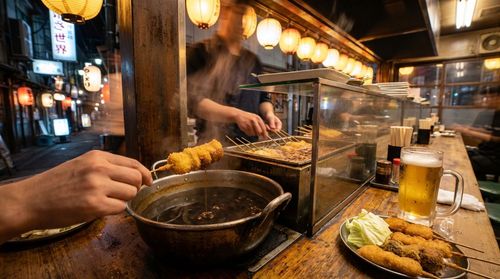
- You prefer Osaka's street food culture (takoyaki, okonomiyaki between festival events)
- You want a river and water festival atmosphere
Read our complete Tenjin Matsuri guide for detailed planning.
Can You See Both?
Yes -- and you should. The festivals overlap perfectly:
- Jul 14-17: Gion Matsuri Yoiyama + Yamaboko Junko in Kyoto
- Jul 18-23: Free days (explore Osaka, Nara, or Kobe)
- Jul 24-25: Tenjin Matsuri in Osaka
Kyoto to Osaka is just 30 minutes by JR Special Rapid (covered by JR Pass). Our 10-day Japan Festival Itinerary maps this exact route, adding Nebuta Matsuri in August.
Which One Is Right for You?
Choose Gion Matsuri if you...
- Are visiting Japan for the first time and want the quintessential cultural experience
- Prefer a refined, elegant atmosphere
- Want to combine the festival with Kyoto sightseeing (temples, geisha district, bamboo groves)
- Are traveling with older family members who prefer less intense crowds
Choose Tenjin Matsuri if you...
- Love fireworks and nighttime spectacles
- Want high energy and a party atmosphere
- Plan to explore Osaka's legendary food scene
- Are a foodie who wants street food between festival events
Choose both if you...
- Have 10+ days in Japan
- Want the ultimate summer festival experience
- Can handle July heat and big crowds (bring water, a towel, and patience)
Practical Comparison
Getting There from Tokyo
| Gion Matsuri | Tenjin Matsuri | |
|---|---|---|
| Train | Shinkansen to Kyoto (2h15min) | Shinkansen to Shin-Osaka (2h30min) |
| Cost | ~$120 / free with JR Pass | ~$125 / free with JR Pass |
| Nearest station | Shijo or Karasuma-Oike | Minami-morimachi or Tenmabashi |
Budget per Day
| Gion Matsuri | Tenjin Matsuri | |
|---|---|---|
| Budget hotel | $60-120 | $50-100 |
| Reserved seating | $30-50 | $20-40 |
| Street food dinner | $15-25 | $15-25 |
| Total per day | $105-195 | $85-165 |
Osaka is generally 10-20% cheaper than Kyoto for accommodation and dining.
Frequently Asked Questions
Which festival is bigger?
Tenjin Matsuri draws more visitors in a shorter time (~1.3 million in 2 days vs Gion's ~1 million spread over a month). But Gion Matsuri is considered more culturally significant as a UNESCO Intangible Cultural Heritage event.
Which has better food?
Tenjin Matsuri wins for volume and variety of festival food stalls. Osaka is called "Japan's Kitchen" for a reason. But Gion Matsuri's Yoiyama nights have excellent food stalls too, with some Kyoto-specific treats like chimaki.
Is one less crowded than the other?
Neither is empty. For Gion Matsuri, the Yoiyama nights (Jul 14-16) get progressively more crowded, with Jul 16 being the most packed. For Tenjin Matsuri, Jul 25 (fireworks night) is the busiest. In both cases, arriving early secures the best positions.
Can I wear a yukata to both?
Absolutely. Yukata (light cotton kimono) is the traditional summer festival outfit. Rental shops are plentiful near both festival areas ($25-40 for a full day).
Explore More Festival Guides
Staying in Tennoji?
If you're planning to explore Tennoji, these neighborhood stays let you experience the area like a local.
Explore the Tennoji Area Guide
Discover more things to do, local food spots, and insider tips for Tennoji.