A walking guide through Shinsekai Osaka's kushikatsu counters, standing bars, retro arcades, and neon alleys — the 3-hour route most tourists miss
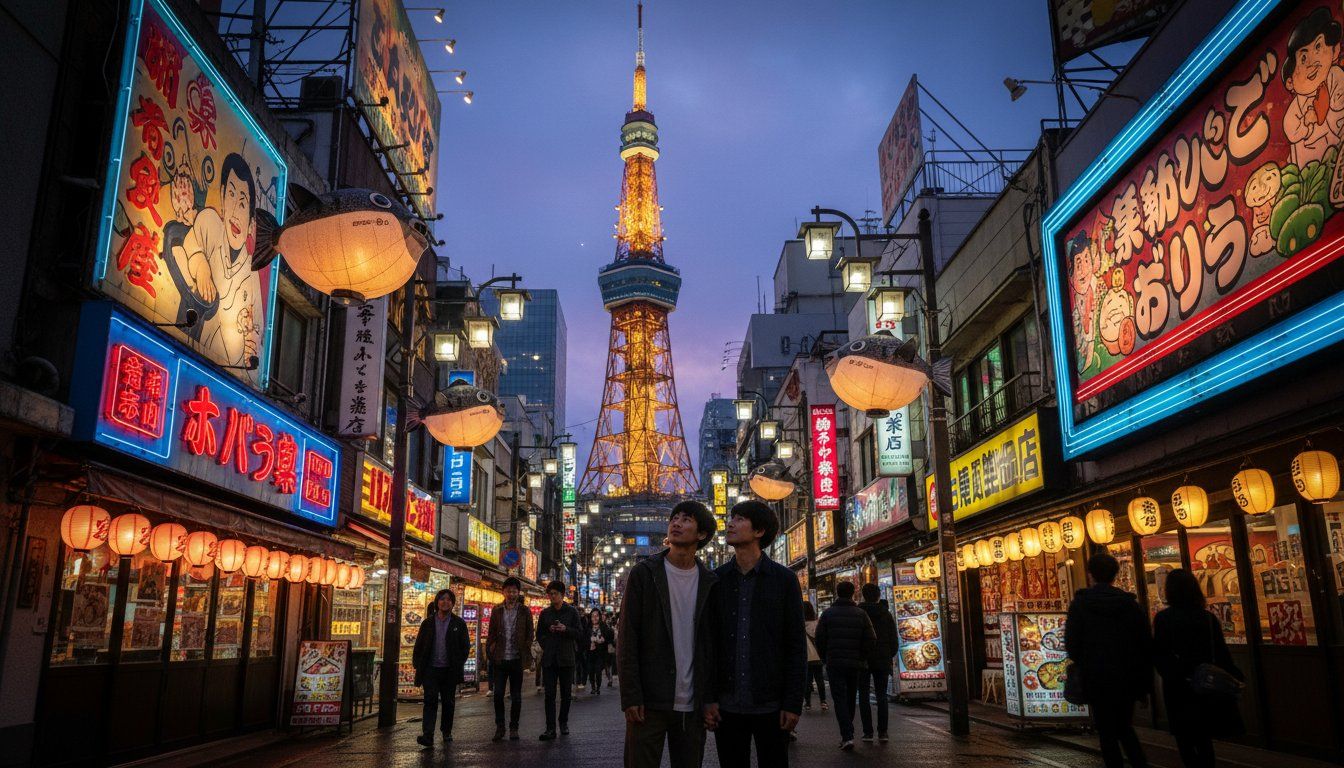 Image for illustrative purposes only.
Shinsekai was built to be a "New World." In 1912, Osaka's planners looked at Paris's Eiffel Tower and New York's Coney Island and thought: why not both? They built a tower modeled after the Eiffel, surrounded it with amusement parks and dance halls, and named the whole district Shinsekai — literally, "New World."
A century later, the amusement parks are long gone. The original tower burned down in 1943 and was rebuilt in 1956. The dance halls became pachinko parlors, then kushikatsu counters, then standing bars. And somewhere along the way, Shinsekai stopped being new and became one of the oldest-feeling places in Japan.
That's exactly why you should go.
Most Osaka guides hand you Shinsekai in a single paragraph: see the tower, eat some kushikatsu, move on. But this neighborhood has three to four hours of depth hiding behind its main street — shogi halls where old men have been playing Japanese chess since the Showa era, back alleys lined with standing bars where a highball costs less than a bottle of water at the airport, retro game arcades still running on 100-yen coins, and a dish called doteyaki that might be the best thing you eat in Osaka.
This is a walking route. Arrive mid-afternoon, watch the neighborhood transform as daylight fades and the neon switches on, and end the night at a standing bar where you might be the only tourist in the room.
Start Here: Janjan Yokocho (3:00 PM)
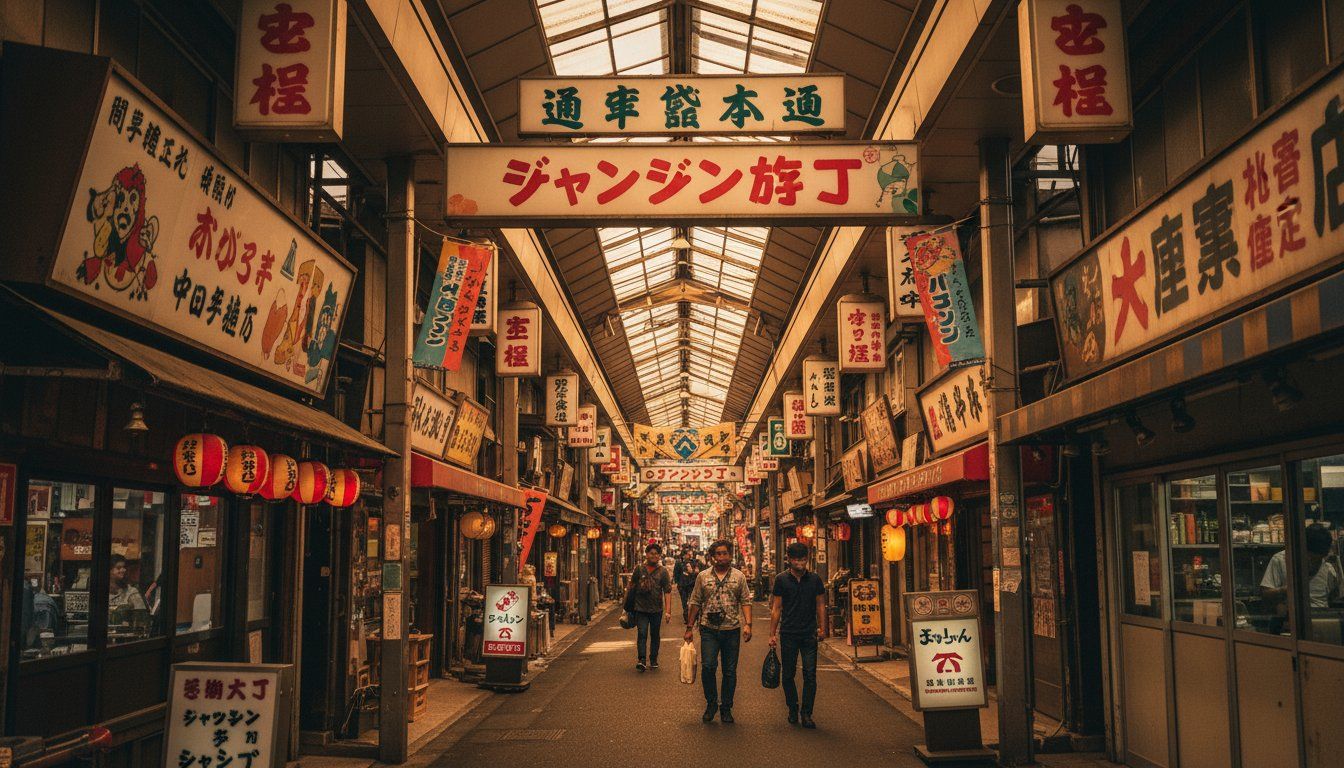 Image for illustrative purposes only.
Exit Dobutsuen-mae Station (動物園前, Midosuji or Sakaisuji Line) and you're two minutes from a covered arcade that hasn't changed its personality since the 1960s.
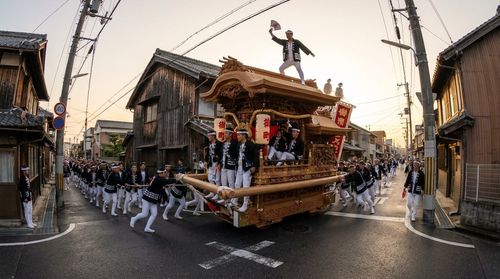
Janjan Yokocho stretches about 180 meters — short enough to walk in five minutes, deep enough to spend an hour. The clatter of shogi tiles spills out from open doorways. The smell of frying oil mixes with something sweet and savory — the sauce that seeps into everything here and probably into the walls themselves. Through a clouded glass window, you catch a glimpse of two men hunched over a shogi board, cigarette smoke curling above their heads, utterly oblivious to the century outside.
The shogi halls (将棋, Japanese chess parlors) are worth pausing for even if you don't play. Peer through the door. The interior looks like a room frozen in 1965 — wooden boards, plastic chairs, hand-lettered signs, fluorescent light yellowed with age. These spaces are as photogenic as any temple garden, just in a completely different vocabulary.
Scattered between the shogi halls are tiny bars already open and serving. A few locals perch on stools, nursing draft beers at three in the afternoon. This is normal here. This is the pace Shinsekai runs on.
Kushikatsu in Shinsekai: The Pilgrimage (3:30 PM)
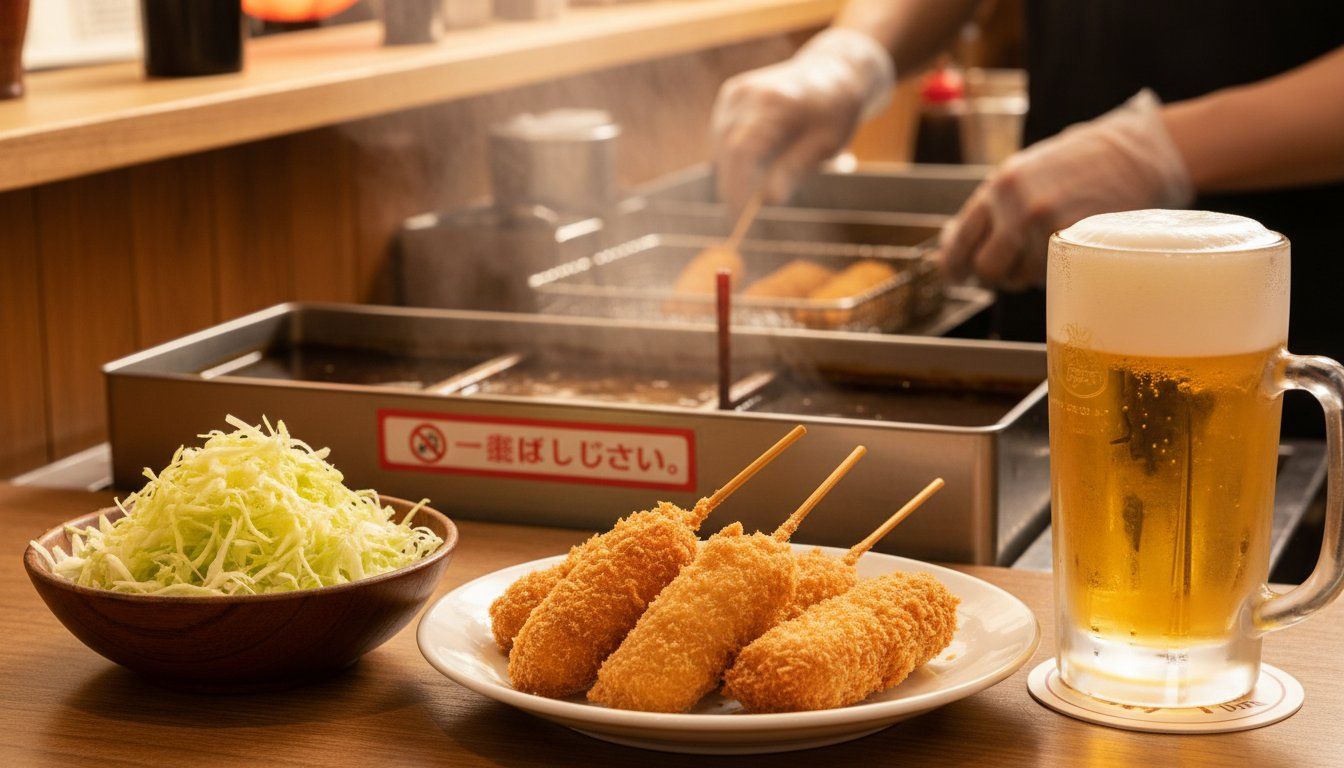 Image for illustrative purposes only.
Walk north out of Janjan Yokocho and you're in kushikatsu country. There are over 50 shops in the Shinsekai area, and the density is staggering — fried-food stalls packed shoulder to shoulder along streets barely wide enough for two people. This is the epicenter of Osaka's legendary street food scene, concentrated into a few electrifying blocks.
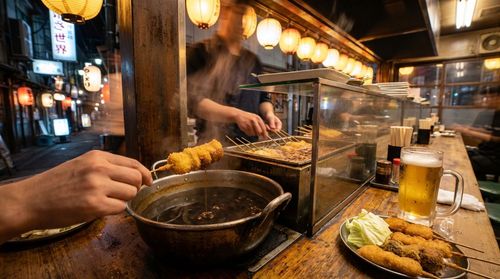
Kushikatsu (串カツ) is Shinsekai's definitive deep-fried art form: take an ingredient — pork, shrimp, lotus root, quail egg, cheese, asparagus, mochi, even Camembert — skewer it, coat it in a wispy layer of batter, and fry it until the outside shatters at first bite. At the old-school counter shops, each skewer runs 100 to 200 yen. Order ten different varieties with a draft beer, and your bill might not break 2,000 yen.
The Sacred Rule: No Double-Dipping
There is exactly one rule in kushikatsu, and it is enforced more strictly than traffic laws: 二度漬け禁止 (nido-zuke kinshi) — no double-dipping in the communal sauce.
Every counter has a long stainless-steel trough of Worcestershire-style sauce shared by all customers. You dip your skewer once. If you want more, use the free cabbage leaves as a spoon to scoop sauce back onto your plate. This is the cabbage-spoon technique — and once you learn it, you'll feel like you've been initiated into a secret society.
Why the rule? Hygiene, certainly — but also tradition. That shared sauce trough is a small act of communal trust, everyone eating elbow-to-elbow from the same pot, and it says something genuine about the culture of this neighborhood.
Where to Eat
Yaekatsu (八重勝) — In Janjan Yokocho, frying since the late 1940s. Counter seats only. The batter is impossibly thin and crisp, the oil always clean. This is also where you should try doteyaki (more on that in a moment). Expect a short queue. Worth the wait.
Daruma Honten (だるま本店) — The most famous name in Shinsekai kushikatsu, established in 1929. The original shop draws heavy tourist traffic and the queue can be long, but the quality remains honest. If the main branch has a line, check the side-street branches — same food, shorter waits.
For the deeper cut: look for the shops with no English signage, no touts outside, and a counter full of locals. Point at what the person next to you is eating. Say "osusume kudasai" (おすすめください — "chef's recommendation, please"). You'll eat well.
Avoid: the brightly lit chain shops with staff pulling you in from the sidewalk. If someone is aggressively inviting you inside, that's your cue to keep walking.
Doteyaki — Shinsekai's Best-Kept Secret (4:30 PM)
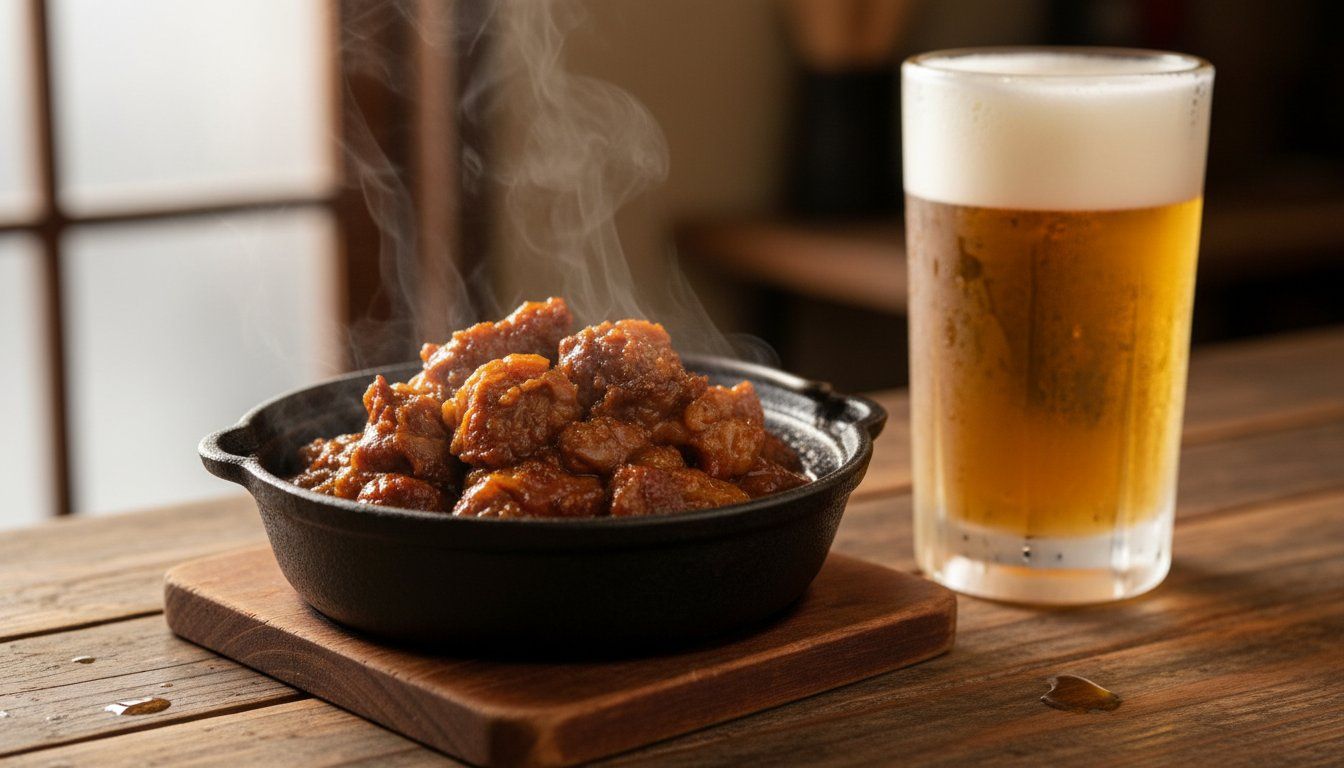 Image for illustrative purposes only.
Kushikatsu gets all the press. But ask a local what they actually crave in Shinsekai, and you'll hear one word: doteyaki (土手焼き).
It's beef tendon slow-simmered in sweet white miso until it collapses into something deeply rich — glossy, sticky, savory, with a sweetness that creeps up on you. The texture is soft and gelatinous in a way that's unfamiliar at first and addictive by the third bite. Each piece has absorbed hours of slow cooking, and you taste every one of those hours.
Most kushikatsu shops serve it as a side dish, but at the best ones it's practically the co-star. Order it alongside your skewers. It pairs devastatingly well with beer.
Tsutenkaku Tower at Dusk — Shinsekai's Golden Hour (5:00 PM)
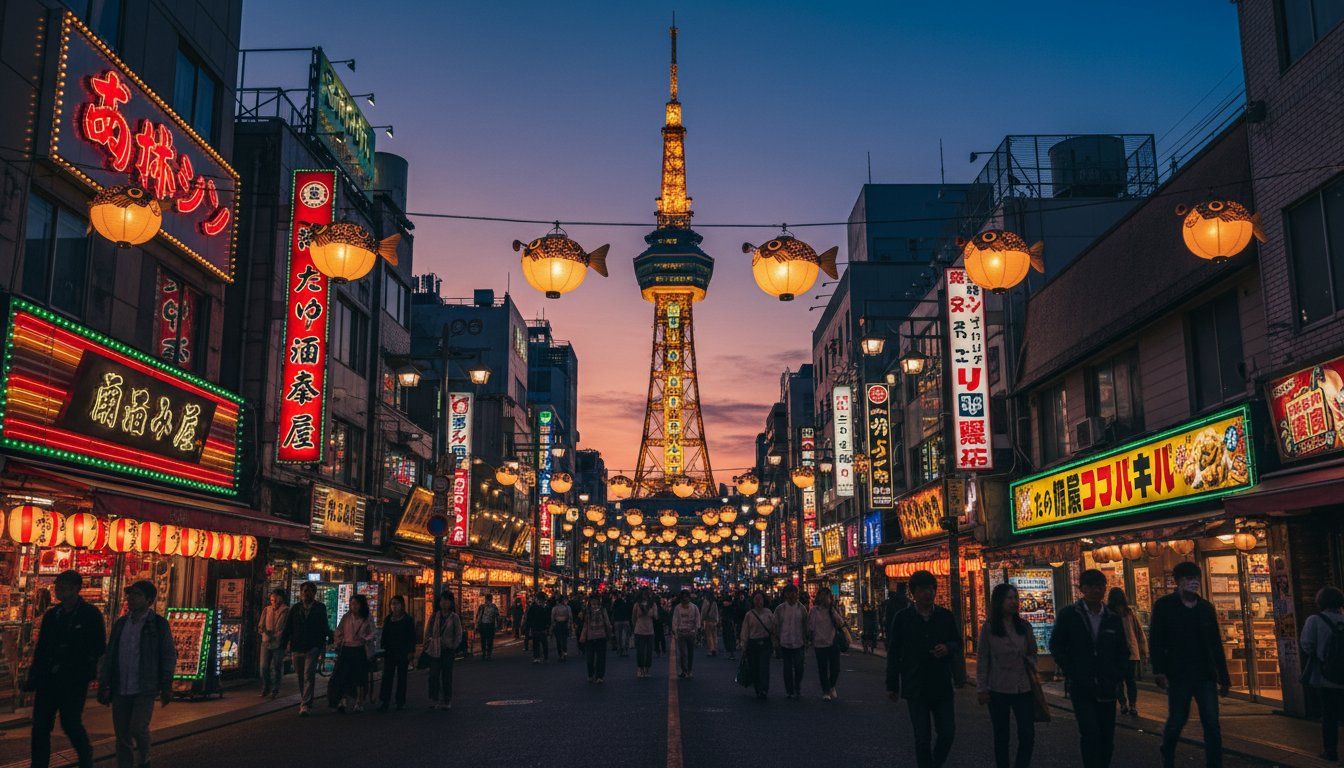 Image for illustrative purposes only.
From the kushikatsu strip, walk north toward Tsutenkaku Tower (通天閣). You'll see it long before you reach it — 103 meters of latticed steel modeled loosely after the Eiffel Tower, though built at roughly a third of the scale and decorated with far more advertising.
Let's be honest about the observation deck: at 900 yen for a view that Abeno Harukas easily outclasses from 300 meters up and a fifteen-minute walk away, the interior isn't the main attraction. What is worth your time is the exterior — especially right now, at dusk, when the tower's lights click on against a darkening sky and the entire street below erupts in neon.
This is the golden hour in Shinsekai. For about forty-five minutes, daylight and electric light coexist, and the neighborhood becomes absurdly photogenic. The puffer fish lanterns glow orange. The hand-painted signs light up one by one. Tsutenkaku shifts from a slightly odd steel tower to the glowing centerpiece of a scene that feels like a Ghibli film crossed with Blade Runner.
At the base of the tower, rub Biliken-san's feet. This grinning figure — originally created in 1908 by an American artist named Florence Pretz, adopted by Shinsekai in 1912 — is the "God of Things as They Should Be." You'll find dozens of Biliken statues throughout the neighborhood. Rub his feet for good luck, take a photo, and join the century-old tradition.
Retro Game Arcades (5:45 PM)
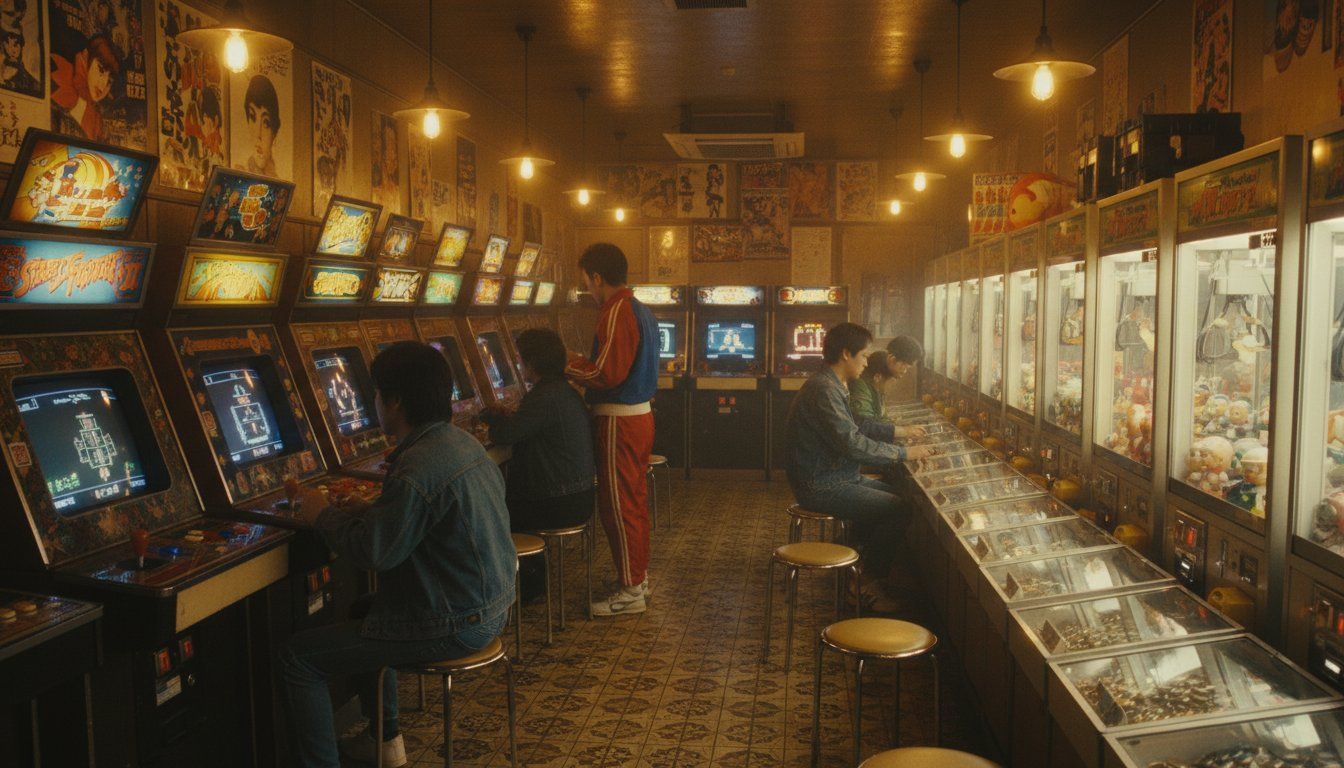 Image for illustrative purposes only.
Between the kushikatsu shops and the tower, you'll pass retro game centers that have been running since the 1980s.
These aren't the sleek, multi-floor arcades of Akihabara. These are Showa-era time capsules: medal games, crane games with prizes that haven't been updated in years, vintage fighting game cabinets with worn joysticks and buttons polished smooth by decades of palms. Everything runs on 100-yen coins. Feed a coin into a machine that's older than you are, and for a few minutes you're playing the same game that Shinsekai locals were playing when this neighborhood was the entertainment capital of southern Osaka.
It's silly. It's wonderful. It's one of the most charming things you'll do in the city.
Tachinomi Standing Bars — Where Shinsekai Really Drinks (7:00 PM)
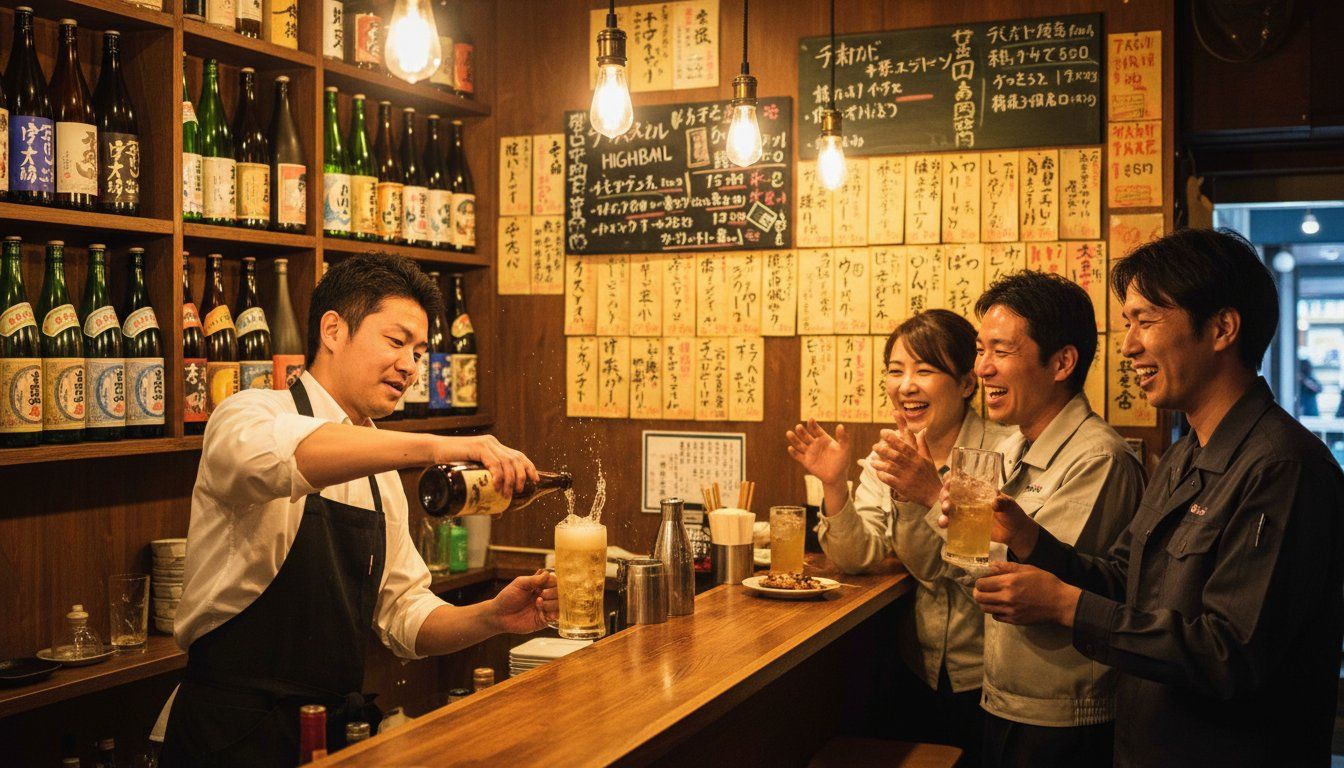 Image for illustrative purposes only.
As darkness settles, Shinsekai reveals its second personality.
Walk south from the Tsutenkaku area, past the last of the tourist-facing kushikatsu shops, and into the side streets. The signs get smaller. The English disappears. The bars get narrower — some no wider than a hallway, with room for maybe five or six people standing at a wooden counter.
Welcome to tachinomi (立ち飲み) — standing bars. This is where Shinsekai drinks.
The concept is beautifully simple: you stand, you drink, you eat small plates, you talk to whoever's standing next to you. A highball costs 200 to 350 yen. A draft beer is 300 to 450 yen. The menu is handwritten on the wall in Japanese, yellowed with oil smoke, and illegible to you — which is fine.
Here's how to navigate it: walk in, say "sumimasen" (すみません, "excuse me"), find a spot at the counter, and point at whatever the person next to you is drinking. Or say "osusume" (おすすめ, "what do you recommend"). The bartender will take care of you. After a drink or two, the regular next to you might attempt conversation in fragmentary English. These moments — halting, warm, slightly awkward, entirely genuine — are the ones you'll remember from this trip.
Most tachinomi in Shinsekai are cash-only. Carry at least 3,000 yen in small bills and coins.
Frequently Asked Questions About Shinsekai
How do I spot a tourist trap in Shinsekai? If someone is standing outside a kushikatsu shop trying to pull you in, that shop is almost certainly a tourist-trap chain. The good shops don't need to recruit — they have a line, or they're quietly full. Walk past the touts and look for counters where locals are eating.
How does the bill work at kushikatsu counters? At many old-school kushikatsu counters, your bill is tallied by counting the skewer sticks left on your plate or in a holder. Do not throw them away or you'll lose track of your tab — and so will the cook.
How do I know if a bar is open? Many tiny bars in the side streets have no obvious signage. Look for the noren (暖簾) — the short fabric curtain hanging in the doorway. Noren up means open. No noren means closed. If you can't tell whether a place is a bar or someone's living room, check for the noren.
How do I order without speaking Japanese? At any kushikatsu counter or standing bar, saying "osusume kudasai" (おすすめください — "your recommendation, please") gets you the cook's best. It signals that you trust them, which they appreciate, and it sidesteps the entire language barrier.
Is it OK to drink in the afternoon in Shinsekai? Absolutely. If you arrive at 3 PM and see bars full of people drinking beer, you haven't stumbled into some special event. This is daily life in Shinsekai. Tachinomi culture doesn't follow a clock. Join in without guilt.
What is the shredded cabbage for at kushikatsu shops? The shredded cabbage served at kushikatsu counters isn't a side dish — it's your sauce-scooping tool. Use the leaves to ladle extra sauce from the communal trough onto your skewers, since double-dipping is forbidden.
What Most Tourists Don't Know
Most visitors spend 30 minutes in Shinsekai — snap a photo of Tsutenkaku, eat one plate of kushikatsu on the main drag, and leave. Here's what they miss:
- The touts are actually useful. Those staff members calling out to you from doorways? They're stationed at tourist-heavy shops. Walk past them, turn one block off the main strip, and you'll find the quieter spots where regulars eat. The touts are your compass — move in the opposite direction.
- Your bill is on the sticks. At many kushikatsu counters, there's no paper order. Staff count the wooden skewer sticks left on your plate at the end. Don't throw them away or you'll confuse your tab.
- Afternoon drinking is normal here. Seeing people with beers at 2 PM isn't unusual in Shinsekai — it's part of the neighborhood's working-class DNA. You won't get judged for ordering a highball with your 3 PM kushikatsu.
- The cabbage is a spoon. That pile of shredded cabbage at your kushikatsu seat isn't a salad — it's your sauce delivery system. Use the leaves to scoop sauce from the communal pot onto your skewers, since dipping twice (nido-zuke) is the one rule you cannot break.
- Say "osusume" to skip the menu. If the handwritten Japanese menu is overwhelming, just say osusume onegaishimasu (おすすめお願いします) — "chef's recommendation, please." You'll get the house specialties without the stress.
Is Shinsekai Safe at Night?
This is the most-searched question about the neighborhood, so let's answer it directly.
Yes. Shinsekai is safe. The streets are well-lit and well-patrolled, police boxes (koban) are positioned throughout the area, and the neighborhood is full of people well into the evening. You're far more likely to encounter a friendly drunk local who wants to practice English than anything remotely threatening.
The area south and west borders Nishinari-ku, which has a historical reputation for roughness. That reputation is largely outdated. If you wander south past the main Shinsekai blocks, the streets get quieter and the atmosphere gets grittier — not dangerous, but noticeably different in character. Use normal common sense, stay in well-lit areas, and you'll be fine.
After midnight, Shinsekai empties out considerably. But this is true of most Osaka neighborhoods that aren't Dotonbori. The "danger" is missing your last train home — which brings us to a practical point about where to stay.
Practical Information
| Detail | Info |
|---|---|
| Getting There | Dobutsuen-mae Station (動物園前), Midosuji or Sakaisuji Line — 2 stops from Namba (3 min, 190 yen), 10 min from Umeda (280 yen). Or walk 10 min from JR Tennoji Station via Tennoji Park. Ebisucho Station (恵美須町, Sakaisuji Line) is closest to Tsutenkaku. |
| Best Time to Arrive | 3:00-4:00 PM — catch the day-to-night transition. The neon is most vivid from 5:00-9:00 PM. |
| Time Needed | 3-4 hours for the full deep walk (kushikatsu + tower + arcades + standing bars) |
| Budget | 3,000-5,000 yen per person (food, drinks, and games) |
| Kushikatsu Hours | Generally 11:00-21:00 (some close at 20:00, a few open until 22:00) |
| Tachinomi Hours | Roughly 14:00-22:00 (varies by shop) |
| Tsutenkaku Tower | 10:00-20:00 (last entry 19:30), 900 yen adults / 400 yen children |
| Retro Arcades | 10:00-23:00 (varies), 100 yen per play |
| Payment | Main tourist shops accept cards and some mobile payment. Back-alley bars and tachinomi are almost always cash-only. Bring at least 5,000 yen in cash. |
Wrapping Up
Shinsekai doesn't photograph well in guidebooks. It's too chaotic, too layered, too alive to flatten into a paragraph and a stock photo. You need to walk it — to hear the shogi tiles and the sizzle of oil, to smell the sweet sauce soaking into the walls, to stand at a counter with a 350-yen highball and watch the neon flicker on outside the window.
Start at Janjan Yokocho in the afternoon. Work your way through kushikatsu and doteyaki. Watch the tower light up at dusk. Drop a hundred yen into a game older than you are. End the night at a tachinomi where the bartender remembers faces but not languages. That's the Shinsekai deep walk — and it costs less than a single taxi ride across town.
The Tennoji area food streets wrap around Shinsekai with their own layers worth exploring — from the ancient grounds of Shitennoji Temple to a quiet morning walk through Shitennoji that pairs perfectly with the previous night's deep walk. As a base for southern Osaka, Tennoji puts you within a 10-minute walk of Shinsekai's back alleys — close enough to wander over for an evening highball without checking train schedules, and close enough to stroll home when the neon finally goes dark.
Staying in Tennoji?
If you're planning to explore Tennoji, these neighborhood stays let you experience the area like a local.
Explore the Tennoji Area Guide
Discover more things to do, local food spots, and insider tips for Tennoji.
Spots in This Article
MAZE CAFE SHINSEKAI
5.0Maze Cafe Shinsekai stands out as a destination-worthy breakfast spot in Tennoji that consistently impresses with thoughtfully prepared coffee and elevated cafe cuisine—think perfectly executed avocado toast and latte art that photographs beautifully. The space cultivates a genuinely welcoming atmosphere with staff who are knowledgeable about their craft and attentive without being intrusive, making it equally appealing for solo travelers seeking a calm refuge or families wanting quality time. This is the rare cafe that justifies visiting multiple times during a Osaka trip rather than being a one-off stop.
ホルモン居酒屋 やまつ 新世界 shinsekai
4.9This newly-opened horseradish offal izakaya near Tsutenkaku delivers premium-quality grilled offal at remarkably affordable prices—a rare combination that explains its near-universal acclaim. The signature dish, kiku-abura (organ meat), showcases pristine sourcing and careful preparation that far exceeds typical izakaya standards. The no-frills Shinsekai atmosphere and personable ownership create an authentic eating experience where casual drop-ins and repeat visitors feel equally welcome.
OKO takoyaki vegan vegetarian glutenfree
4.8OKO is a solo-run gem that transforms Osaka's beloved local dishes into fully vegan and vegetarian interpretations—takoyaki, okonomiyaki, and kushikatsu taste authentic despite the dietary restrictions. The owner Shiho's hands-on approach and rock-music-filled atmosphere across a quirky multi-level space make it feel like a local discovery rather than a tourist trap. Expect exceptional value (drinks at ¥200) and filling portions, but plan for 15-20 minute waits since everything is made fresh by one person.
自分で焼けるたこ焼き居酒屋 TAKOYAKI LAB
4.8Takoyaki Lab flips the typical Osaka street-food experience on its head by letting you chef your own takoyaki at your table with staff guidance—turning lunch into an interactive memory rather than just a meal. The novelty factor resonates strongly with first-timers and groups, though execution quality depends on your own cooking skills and staff attention. It's best approached as an experience-driven destination rather than a guaranteed culinary showcase, with pricing that sits at the premium end for casual Tennoji dining.
C.S.B in Tennouji Hookah Cafe Bar
4.8This hookah lounge in Tennoji is your best bet in Osaka for a relaxed shisha experience with genuinely welcoming staff who speak English and go out of their way to help visitors. The combination of quality flavors (including hard-to-find options like guava and raspberry), affordable pricing, and accommodating service makes it equally suitable for late-night jet lag relief or casual evening hangouts. The AC-cooled interior and chill vibe mean you can comfortably spend 2-3 hours here without feeling rushed or uncomfortable.