From Dotonbori's neon chaos to Ura-Namba's hidden bars — the real guide to every corner of Osaka's Minami district.
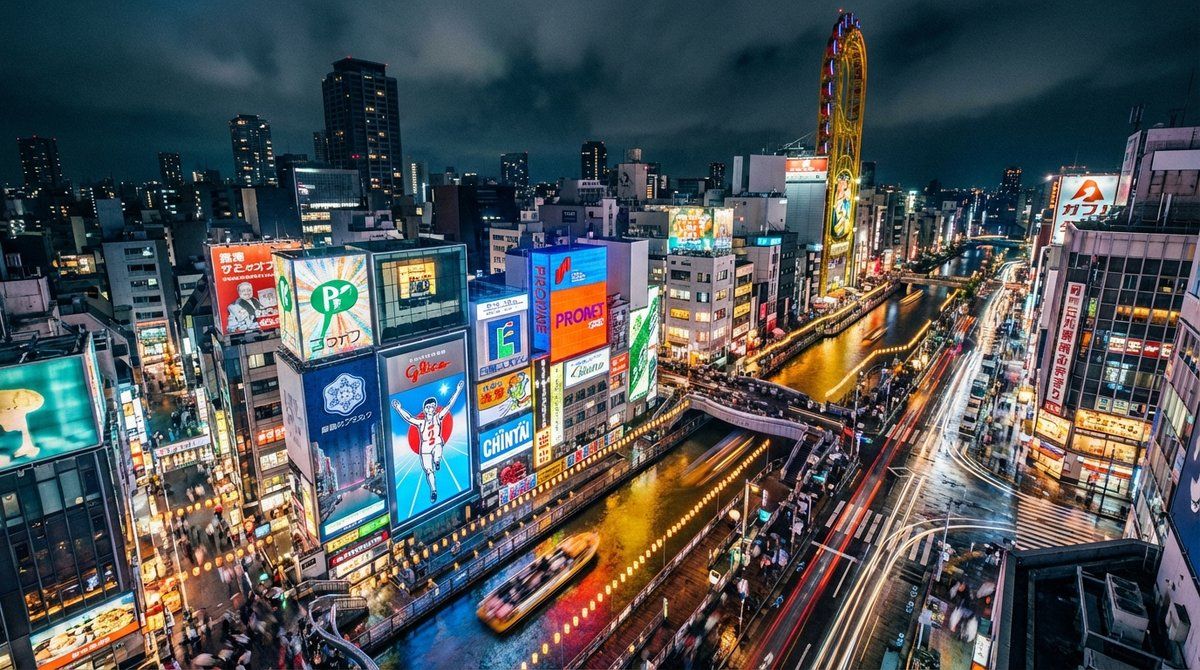 Image for illustrative purposes only.
If Tokyo is Japan's head, Osaka is its stomach and heart combined. And Minami is where that heart beats loudest.
The name simply means "south" in Japanese, but there's nothing simple about this sprawling entertainment district that stretches from Shinsaibashi down through Namba and keeps going. This is where Osaka's legendary appetite for food, fashion, and fun reaches its most concentrated, most unapologetic, most gloriously excessive form. The air itself smells different here — a rolling blend of sizzling batter from takoyaki griddles, sweet dashi steam rising from okonomiyaki restaurants, and the faint perfume of freshly opened taiyaki.
Think of Minami as a choose-your-own-adventure for the senses. Want neon-drenched food streets? Dotonbori is waiting. Prefer vintage streetwear and youth culture? Amerikamura is your destination. Craving an all-day food crawl through back alleys? Ura-Namba has you covered. Into anime, retro games, and maid cafes? Nipponbashi is an otaku paradise. And that's before we even get to Kuromon Market, Hozenji's moss-covered temple, or the comedy theater where Japan's biggest comedians got their start.
This isn't a district. It's an entire ecosystem of entertainment — and we're going to walk you through every corner of it.
Understanding Minami's Geography
Before diving in, let's get oriented. Minami isn't one place — it's a constellation of neighborhoods that blend into each other, each with its own personality:
Shinsaibashi (心斎橋) — The northern edge. Shopping heaven with Japan's most famous covered arcade and department stores.
Amerikamura (アメリカ村) — West side. Youth culture hub with vintage shops, street art, and Triangle Park. See our deep guide to Amerikamura's culture and street fashion.
Dotonbori (道頓堀) — The heart. Neon signs, the canal, and Osaka's most famous food street. We've written an entire guide to Dotonbori if you want to go deep.
Hozenji Yokocho (法善寺横丁) — Tucked beside Dotonbori. A quiet traditional alley with a moss-covered Buddha statue.
Namba (難波) — The southern anchor. Transportation hub, underground shopping, and home to Namba Grand Kagetsu, Osaka's legendary comedy theater.
Ura-Namba (裏なんば) — South and east of Namba. The backstreet food and bar district where locals actually eat. Our Ura-Namba food walk covers the best spots.
Nipponbashi (日本橋) — Southeast corner. Osaka's "Den Den Town" — the otaku district for anime, manga, and retro games. See our Nipponbashi otaku culture guide.
Kuromon Market (黒門市場) — Eastern edge. Osaka's legendary kitchen, nearly 200 years old. Our complete Kuromon Market guide has everything you need to know.
You could spend fifteen minutes walking from Shinsaibashi to Namba. Or you could spend fifteen hours, stopping every few meters for food, shopping, and photo ops. We recommend the latter.
Dotonbori: The Heart of the Heart
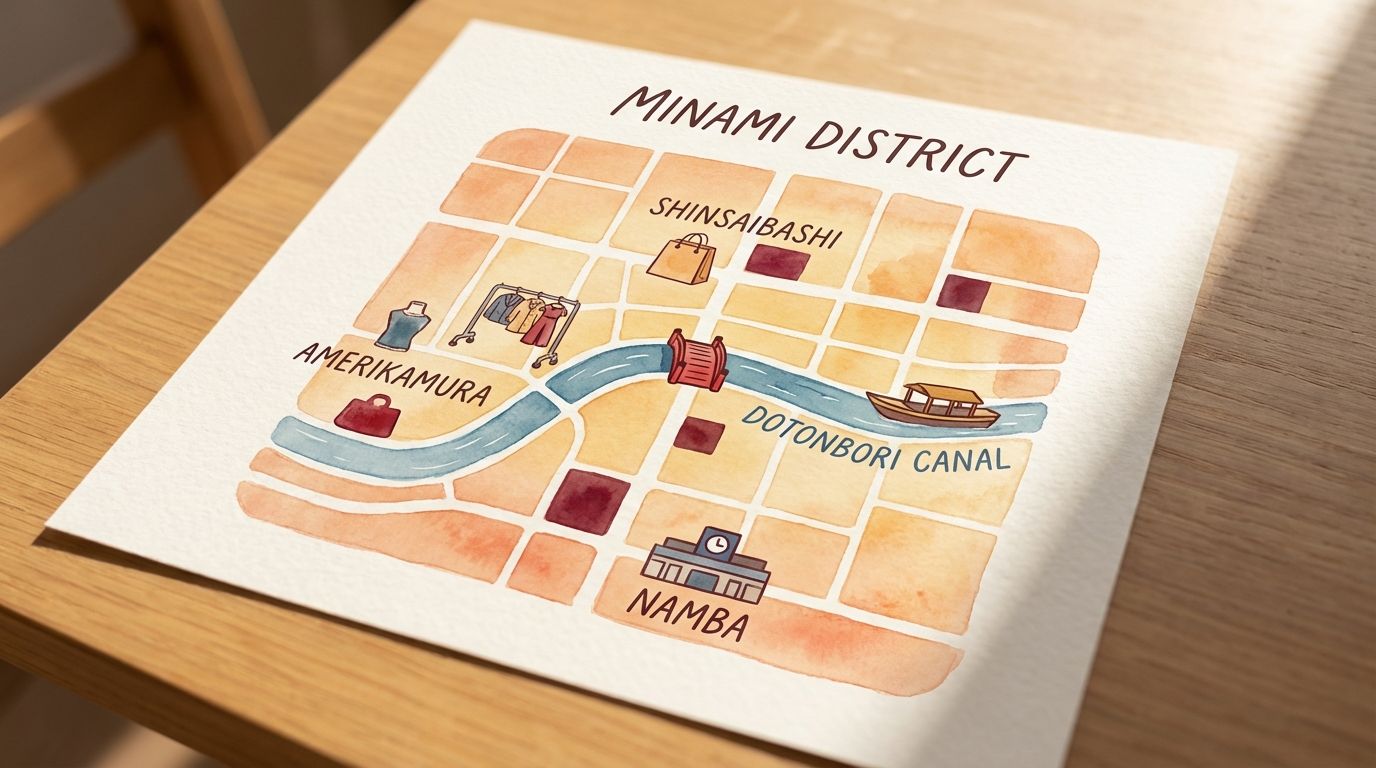 Image for illustrative purposes only.
No Minami guide would be complete without Dotonbori, the 600-meter stretch along the Dotonbori canal that is Japan's most famous entertainment district. Giant mechanical crabs, three-story pufferfish lanterns, the legendary Glico Running Man — this is Osaka at its most extra.
Quick Dotonbori Highlights
Iconic Signs
- Glico Running Man — The sixth-generation sign since 1935, now with 140,000 LEDs.
- Kani Doraku Crab — Those mechanical legs have been moving since 1960.
- Ebisu Tower Ferris Wheel — On top of Don Quijote. Because why not?
Essential Eats
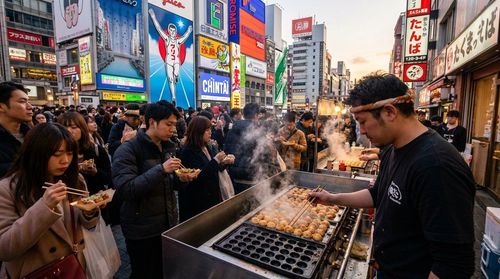
- Takoyaki — Osaka's octopus balls, first popularized here in 1935. The first bite cracks through a thin crust into a molten, creamy interior that is almost dangerously hot. For more on Osaka's street food traditions, see our Osaka street food guide.
- Okonomiyaki — The savory pancake that defines Osaka cuisine.
- Kushikatsu — Deep-fried skewers with the sacred "no double-dipping" rule.
Photo Spots
- Ebisu Bridge — The classic Glico sign photo position.
- Dotonbori Riverwalk — For reflections in the canal at night.
For a complete Dotonbori deep-dive — including restaurant picks and a walking food crawl that connects Dotonbori, Namba, and Nipponbashi — check our dedicated Dotonbori food paradise guide and the Dotonbori-Namba-Nipponbashi food walk.
Amerikamura: Osaka's Street Fashion Laboratory
In the 1970s, a few shops started selling imported American goods — Levi's jeans, vintage rock t-shirts, old vinyl records. The area earned its nickname "America Village," and a youth culture revolution was born.
Today, Amerikamura (or "Amemura" for short) is Osaka's answer to Tokyo's Harajuku, but with its own distinctive edge. Less polished, more punk, and proudly alternative.
What to Do in Amerikamura
Triangle Park — The tiny triangular plaza at Amerikamura's heart is ground zero for people-watching. On weekends, you'll find breakdancers, amateur musicians, and fashion peacocks showing off their latest finds. The bass lines from a portable speaker mix with the chatter of half a dozen languages.
Vintage Shopping — Big Step mall, Village Vanguard, and dozens of second-hand shops lining the streets. Prices are already reasonable without haggling.
Street Food — Cheap eats legendary among students. Takoyaki stands, warm crepes, and surprisingly good tacos.
Street Art — Look up. Murals cover almost every building — a rotating gallery of local and international artists in styles from classic graffiti to elaborate anime-inspired pieces.
Best time to visit: Weekends from 2pm onwards, when the youth scene comes alive. For the full story on Amerikamura's culture, vintage scene, and the best street art walking route, see our complete Amerikamura guide.
Hozenji Yokocho: Where Time Stands Still
Two minutes from Dotonbori's chaos, you step into a different century.
Hozenji Yokocho (法善寺横丁) is a narrow cobblestone alley lined with traditional restaurants, tiny bars, and one very famous moss-covered Buddha statue. The glow of paper lanterns catches on wet stone, and the distant hum of neon fades to the gentle sound of water being poured over ancient rock. The faint scent of incense mingles with charcoal smoke drifting from a nearby yakitori grill.
The Mizukake Fudo
At the center of the alley stands Hozenji Temple and its Fudo Myo-o statue. For centuries, visitors have poured water over the stone figure while making wishes — typically for love or business success. The constant water has encouraged thick emerald moss to grow over the statue, giving it an otherworldly, almost mythical appearance.
How to make a wish:
- Use the provided hishaku (bamboo ladle) to scoop water
- Pour water over the statue
- Make your wish silently
- Put your hands together in prayer
Dining in Hozenji Yokocho
The restaurants here are intimate — sometimes just a counter and a few tables. Expect kappo-style multi-course cuisine, cozy izakayas, and comforting oden hot pot. Prices are higher than the main streets, but you're paying for atmosphere and quality. A dinner here makes a perfect quiet end to a chaotic Minami day.
Ura-Namba and the Backstreet Food Scene
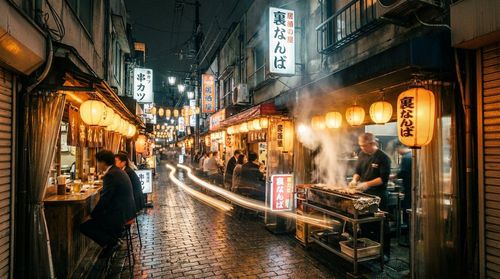
South and east of Namba's main drag, the tourist crowds thin out and the real eating begins. Ura-Namba (literally "behind Namba") is a tangle of narrow alleys lined with standing bars, tiny izakayas, and restaurants where the menu is handwritten in Japanese on the wall — and that's a good sign.
This is where off-duty chefs come to eat. Where a plate of perfectly grilled chicken skin costs 200 yen. Where the owner pours your highball from a bottle he fills himself. The fluorescent glow from a ramen shop doorway spills across the pavement, and you follow the scent of pork-bone broth almost involuntarily.
The Ura-Namba scene is growing in reputation but remains far less crowded than Dotonbori. For a curated walking route through the best backstreet bars and restaurants, see our Ura-Namba food walk.
Nipponbashi: Osaka's Otaku Kingdom
Walk ten minutes southeast from Namba and the landscape changes completely. Giant anime characters stare down from building facades. Retro arcade sounds spill from open doorways. Welcome to Nipponbashi's "Den Den Town" — Osaka's answer to Tokyo's Akihabara.
The district stretches along Sakai-suji street and its side alleys, packed with shops selling anime figures, manga, trading cards, retro video games, cosplay costumes, and electronics. Unlike Akihabara, Nipponbashi is walkable and compact, with less of the overwhelming sensory overload.
Highlights include multi-floor figure shops, maid cafes (yes, they're an experience worth trying at least once), retro game arcades with cabinets from the 1980s, and regular cosplay events on weekends.
For the full breakdown of what to see and do — including the best shops for specific hobbies and a walking route — see our Nipponbashi otaku culture guide.
Kuromon Market: Osaka's Kitchen
A ten-minute walk east from Dotonbori, Kuromon Market (黒門市場) has fed Osaka's restaurants and home cooks for nearly 200 years. Roughly 150 shops stretch along 580 meters of covered arcade, selling everything from glistening fresh sashimi sliced to order, to grilled king crab legs, to the sweetest strawberries you've ever tasted.
Kuromon is best experienced as a walking food adventure. Buy a few pieces of sashimi here, a grilled scallop there, a stick of wagyu beef sushi around the corner. Go early — arrive by 9am for the freshest selection and smallest crowds. Bring cash, as many vendors don't take cards.
For the complete vendor-by-vendor guide, seasonal specialties, and tips on avoiding tourist traps, see our full Kuromon Market guide.
Namba Grand Kagetsu: Laugh Like Osaka
Most visitors don't realize that Osaka is Japan's comedy capital. The city's manzai (stand-up comedy duo) tradition is a huge part of Japanese pop culture, and the epicenter is Namba Grand Kagetsu — the home theater of Yoshimoto Kogyo, Japan's largest entertainment agency.
Even without understanding every word of Japanese, the physical comedy, audience interaction, and sheer energy of a live show is infectious. Weekend matinees often feature Japan's biggest TV comedians in an intimate setting you'd never get in Tokyo.
For showtimes, ticket tips, and what to expect even if you don't speak Japanese, see our Namba Grand Kagetsu comedy guide.
What Most Tourists Don't Know
The backstreet rule. Dotonbori's main strip is designed to extract money from tourists. The restaurants with the biggest signs and the staff shouting in English outside? They're rarely the best. Walk one or two streets in any direction and prices drop while quality rises. Ura-Namba, one block south, is where Osaka's own chefs eat after their shifts.
Timing the crowds. Most tourists hit Dotonbori between 6-9pm, creating a human traffic jam. Come at 4pm for the golden-hour light on the canal with half the crowd. Or come at 10pm when the dinner rush fades but all the neon is still blazing. Thursday evenings are the sweet spot — good atmosphere, far fewer people than weekends.
The underground city. Namba's vast underground shopping network — Namba Walk, Namba City, Namba City South — connects multiple train stations and stretches for kilometers. On rainy days (or scorching summer afternoons), you can shop, eat, and explore for hours without ever stepping outside.
Kuromon Market's morning advantage. The market transforms after 11am when tour buses arrive. Before 9:30am, you'll share the aisles with restaurant buyers picking the best fish — and you can do the same. The quality of seafood available at opening is noticeably better than what's left by afternoon.
Free comedy exists. Yoshimoto Mugendai Hall, next to Grand Kagetsu, sometimes runs free or ultra-cheap shows featuring up-and-coming comedians. Check the board outside on the day.
Practical Information
Getting to Minami
| Route | Line | Time | Cost |
|---|---|---|---|
| From Umeda/Osaka Station | Midosuji Line to Namba | 10 min | ¥280 |
| From Shin-Osaka (Shinkansen) | Midosuji Line to Namba | 15 min | ¥330 |
| From Kansai Airport | Nankai Railway to Namba | 45 min | ¥930 (regular) / ¥1,450 (rapid) |
| From Kyoto | Hankyu Line to Shinsaibashi | 45 min | ¥400 |
| From Tennoji | Midosuji Line to Namba | 5 min | ¥190 |
Getting Around Minami
Walking is best. The entire district is easily walkable, and you'll miss things if you take transportation.
Key distances:
- Shinsaibashi to Namba: 10-15 minute walk
- Namba to Kuromon Market: 10 minute walk
- Dotonbori to Amerikamura: 5 minute walk
- Namba to Nipponbashi: 10 minute walk
Budget Planning
| Style | Daily Budget | Notes |
|---|---|---|
| Budget | ¥3,000-5,000 | Street food, standing bars, window shopping |
| Moderate | ¥8,000-12,000 | Sit-down meals, some shopping, izakaya drinks |
| Splurge | ¥20,000+ | Kuromon seafood, brand shopping, Hozenji dinner |
Essential Tips
Cash: Many small vendors and standing bars don't take cards. Carry at least ¥10,000. 7-Eleven ATMs accept international cards.
Crowds: Weekends are busiest. Thursday evenings offer good atmosphere with fewer people.
Walking and eating: Tabearuki (eating while walking) is frowned upon on main streets. Find a corner or stand by the stall where you bought the food.
Queues: Japanese lines are orderly and sacred. Never cut, and be patient — the wait usually means it's good.
The Essential Minami Walking Routes
Half Day (4 hours)
Start: Shinsaibashi Station (1pm)
→ Shopping arcade walkthrough (45 min)
→ Amerikamura and Triangle Park (45 min)
→ Dotonbori food crawl (90 min)
→ Hozenji Yokocho temple visit (20 min)
End: Namba Station (5pm)
Full Day Food Crawl
For a curated full-day route connecting Dotonbori, Namba, and Nipponbashi with specific restaurant stops, see our Dotonbori-Namba-Nipponbashi food walk. It pairs perfectly with this guide.
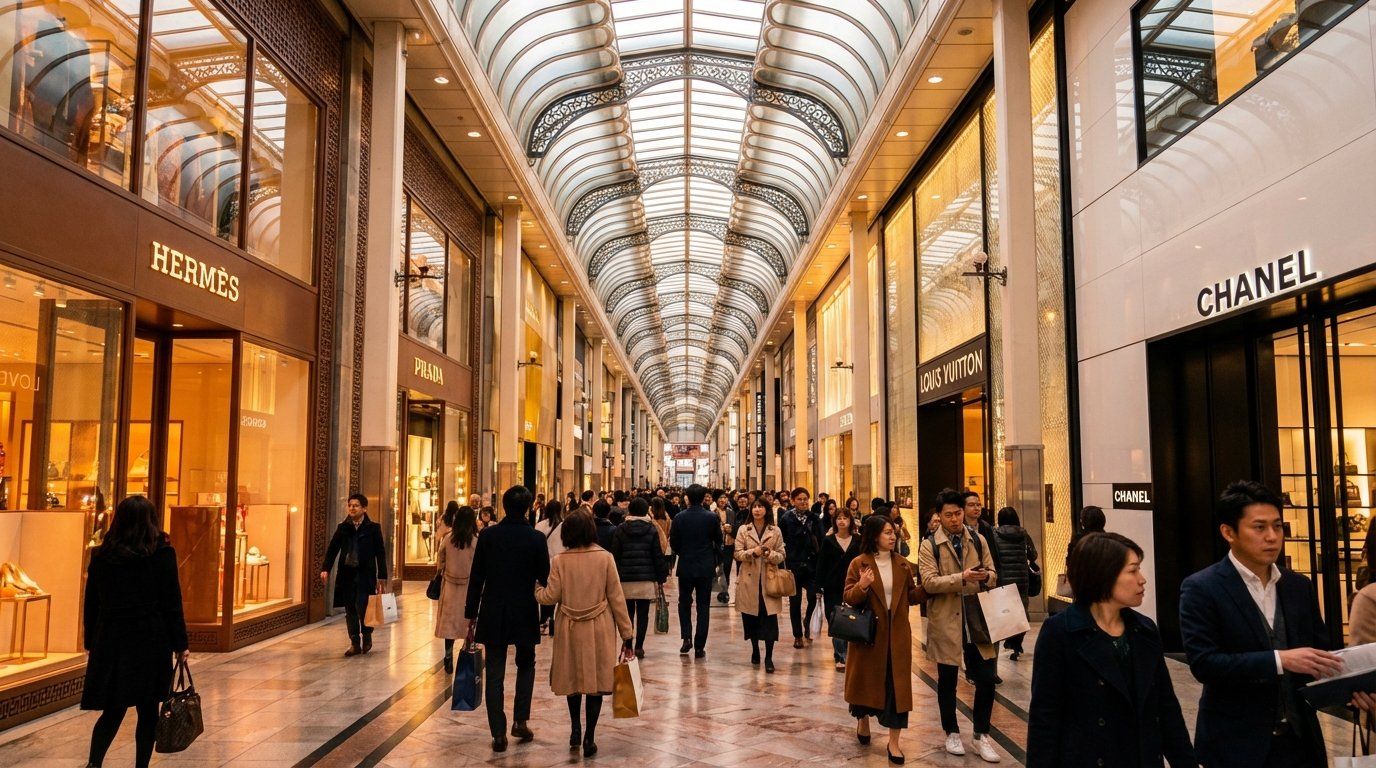 Image for illustrative purposes only.
Why Minami Captures Osaka's Soul
There's a phrase Osaka people use: "Kuidaore" (食い倒れ) — eating until you fall over. It's usually meant as a warning. In Minami, it's an aspiration.
But Minami isn't just about food. It's about Osaka's entire philosophy of life compressed into a few square kilometers. Flashy signs compete for attention because subtlety doesn't put food on tables. Vendors shout their wares because enthusiasm is a virtue. Comedy theaters stand next to ancient temples because joy and reverence aren't opposites here — they're neighbors.
This is Japan at its most honest and unpretentious. Tokyo has its sophistication. Kyoto has its refinement. But Osaka has Minami — glorious, greasy, neon-drenched Minami — where the only measure of success is whether everyone had a good time.
Minami's central location and excellent transit connections also make it a natural base for exploring the wider Osaka area. Tennoji and its temples are five minutes south by subway — and staying in the Tennoji neighborhood puts you within easy reach of Minami's nightlife while enjoying a quieter, more local atmosphere after hours. Universal Studios is a quick train ride west. And everything within Minami itself is walkable, which means more time eating and less time commuting.
Come hungry. Leave happy. Return often.
Frequently Asked Questions
What is Minami in Osaka?
Minami, meaning "south" in Japanese, is Osaka's sprawling southern entertainment district, renowned for its concentrated food, fashion, and fun. It's an entire ecosystem of entertainment that stretches from Shinsaibashi down through Namba.
What are the main neighborhoods within Minami?
Minami is a constellation of neighborhoods, each with its own personality, including Shinsaibashi (shopping), Amerikamura (youth culture), Dotonbori (neon-lit food streets), Hozenji Yokocho (traditional alley), Namba (transportation hub), Ura-Namba (local food), Nipponbashi (otaku district), and Kuromon Market (Osaka's kitchen).
What iconic sights and foods can I find in Dotonbori?
Dotonbori is famous for its iconic signs like the Glico Running Man and Kani Doraku Crab, as well as essential Osaka eats such as takoyaki (octopus balls), okonomiyaki (savory pancakes), and kushikatsu (deep-fried skewers). Ebisu Bridge is a popular photo spot for the Glico sign.
What is Amerikamura known for?
Amerikamura, or "Amemura," is Osaka's youth culture hub, known for its vintage shopping, street art, and vibrant atmosphere around Triangle Park. It's a place to see breakdancers, musicians, and fashion peacocks, often compared to Tokyo's Harajuku.
How do you make a wish at Hozenji Temple in Hozenji Yokocho?
At Hozenji Temple, visitors make wishes by using a provided hishaku (bamboo ladle) to scoop water and pour it over the moss-covered Fudo Myo-o statue. After pouring the water, one makes their wish silently with hands together in prayer, typically for love or business success.
Explore the Minami (Namba) Area Guide
Discover more things to do, local food spots, and insider tips for Minami (Namba).
Spots in This Article
MAZE CAFE SHINSEKAI
5.0Maze Cafe Shinsekai stands out as a destination-worthy breakfast spot in Tennoji that consistently impresses with thoughtfully prepared coffee and elevated cafe cuisine—think perfectly executed avocado toast and latte art that photographs beautifully. The space cultivates a genuinely welcoming atmosphere with staff who are knowledgeable about their craft and attentive without being intrusive, making it equally appealing for solo travelers seeking a calm refuge or families wanting quality time. This is the rare cafe that justifies visiting multiple times during a Osaka trip rather than being a one-off stop.
ラーメン 醤すけ心斎橋店 Ramen SHOSUKE Shinsaibashi
5.0This Shinsaibashi ramen shop delivers authentic, handcrafted bowls that consistently exceed expectations—many visitors report it rivals or surpasses Osaka's more hyped establishments. The standout draw is the silky, meticulously prepared broth paired with fresh noodles, with both shoyu and shio variations earning praise. Staff hospitality is genuinely warm and accommodating to non-Japanese speakers, making it an accessible introduction to serious ramen culture for first-time visitors.
Bar Nocosarejima
4.9Bar Nocosarejima is a solo-run craft cocktail bar tucked near Tsutenkaku Tower where the owner personally curates both the drinks and atmosphere. This is the kind of place that elevates Osaka's nightlife scene—expect carefully crafted, innovative cocktails (including Japanese craft spirits and unexpected flavor combinations) in a intimate, dimly-lit setting filled with thoughtful art. The owner's exceptional English and genuine hospitality make it accessible and welcoming for foreign visitors, whether you're ending a night out or seeking a peaceful escape from the city's energy.
Osaka Halal Ramen Wagyutei
4.9This newly opened halal ramen specialist in Tennoji stands out as one of Osaka's rare dedicated halal ramen destinations, offering authentic broth-based ramen without compromise on quality. The owner and staff actively engage with international visitors and speak English, making it exceptionally accessible for foreign tourists unfamiliar with Japanese dining customs. Generous portions at reasonable prices, combined with an genuinely welcoming atmosphere where staff adapt the dining experience (like adjusting air conditioning), create an experience that feels personal rather than transactional.
ヤキソバベイベー/オコノミヤキベイベ/道頓堀本店 yakisoba baby okonomiyaki baby
4.9This is an energetic standing-room okonomiyaki bar where the chef's infectious personality is as much part of the experience as the crispy, well-executed food. The owner actively engages with guests—from tourists to families—creating an unexpectedly social atmosphere despite the no-seating format. It's the kind of authentic Osaka spot where you'll leave smelling like grill smoke but with genuine memories, especially if you catch the hip hop soundtrack and occasional live entertainment.