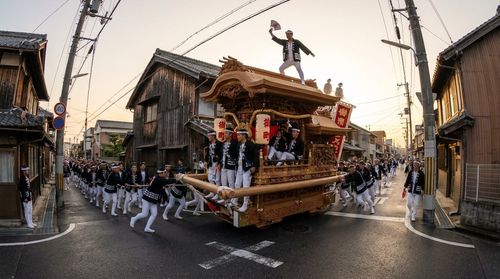
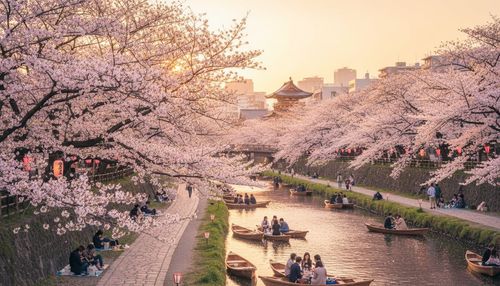
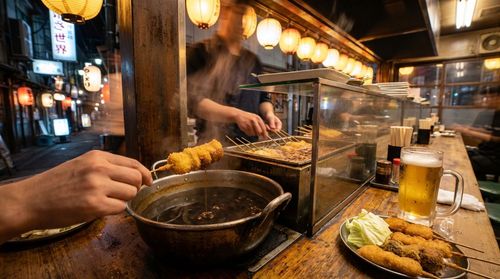
Skip the tourist hotels. This 3-day Osaka itinerary uses Tennoji as your base for cooking local meals, soaking in neighborhood baths, and discovering the city like a resident.
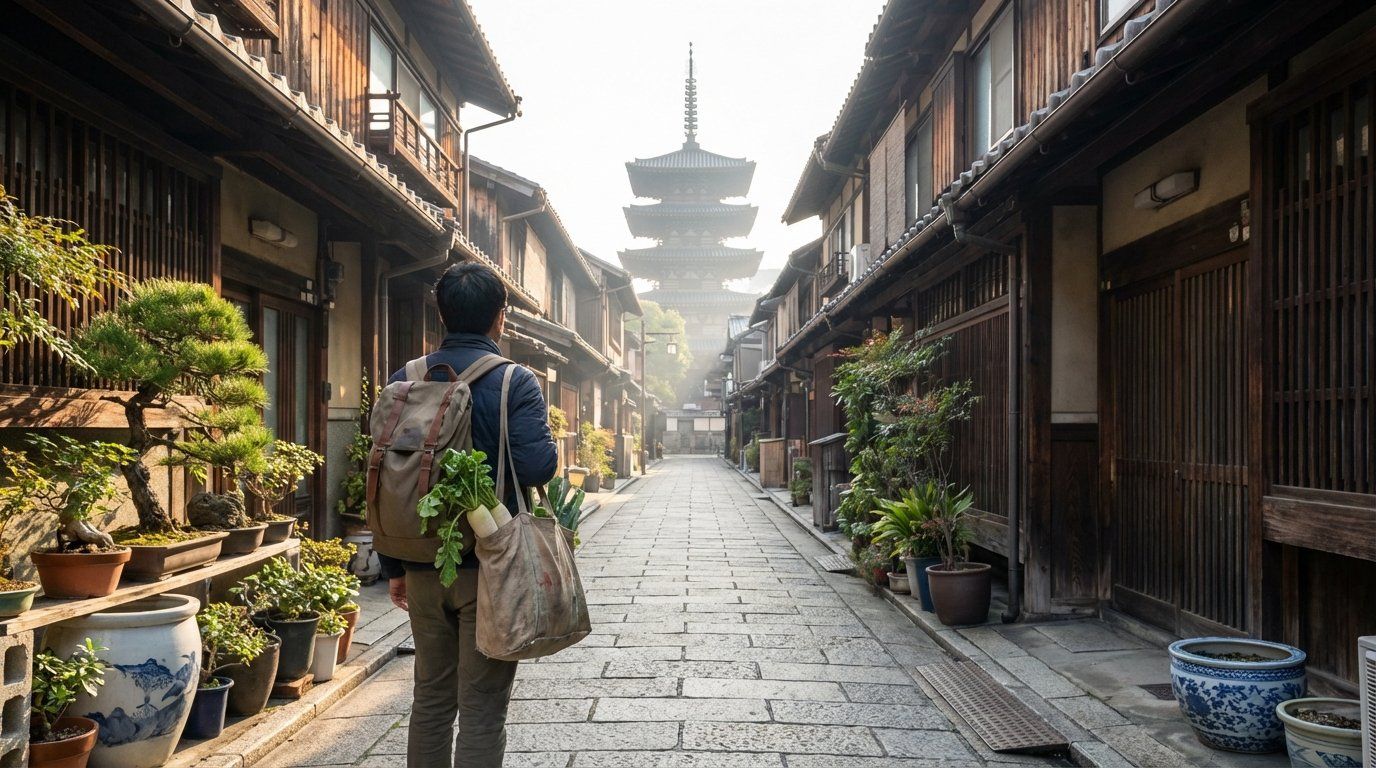 Image for illustrative purposes only.
If you're planning an osaka 3 day itinerary, forget the hotel lobby in Namba. The best way to experience this city is from a kitchen table in a real neighborhood — eating breakfast you bought at the local supermarket, watching the morning light shift across a temple you can see from your window.
This isn't a sightseeing checklist. It's three days of actually living in Osaka — buying groceries where the neighbors shop, soaking in the same neighborhood bath they've used for decades, eating at counters where nobody speaks English and nobody needs to.
We're basing this itinerary in Tennoji, one of Osaka's most character-rich neighborhoods. Here's why: it's central enough to reach everywhere by train in under 30 minutes, local enough that you won't see tour buses, and deep enough in Osaka culture that every block has a story.
Why Tennoji? Why Not Namba?
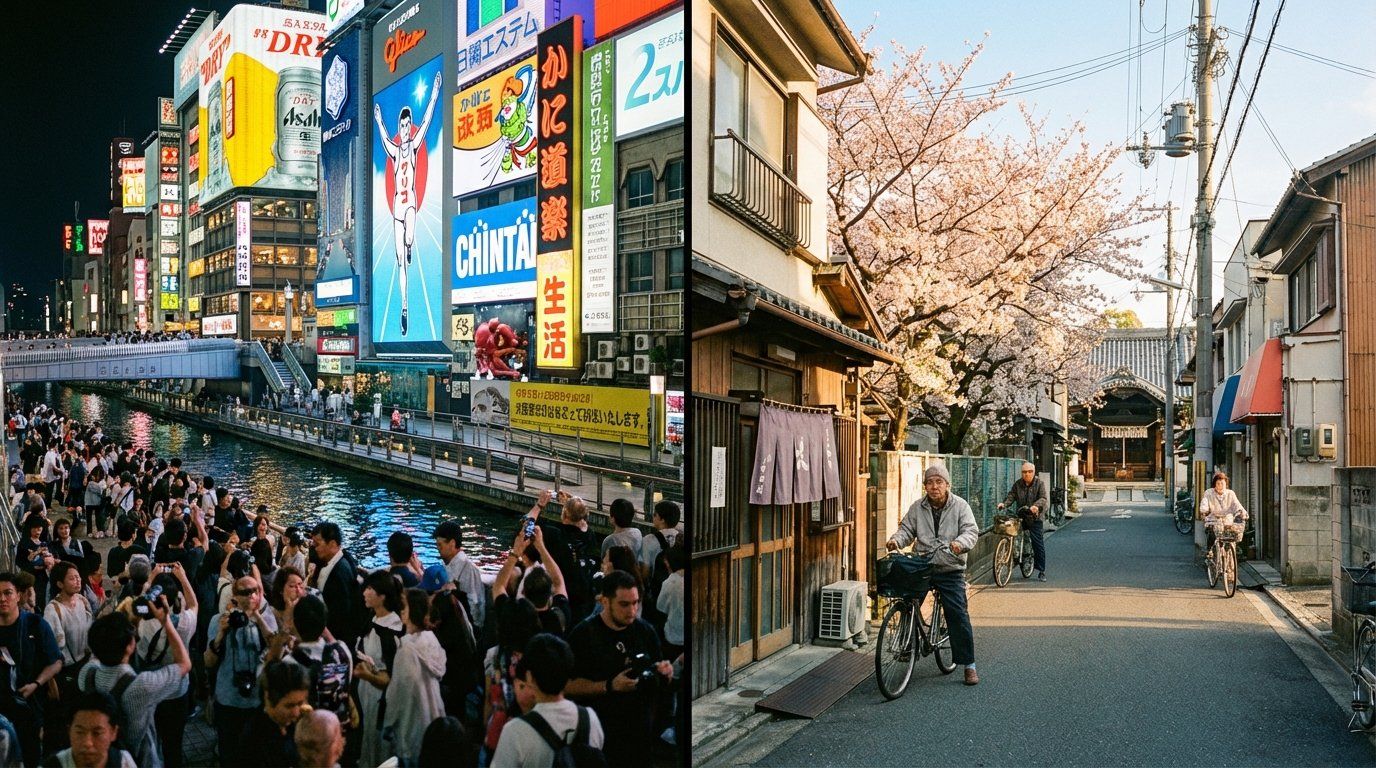 Image for illustrative purposes only.
Most Osaka itineraries assume you're staying in Namba or Umeda — the tourist centers. That works fine for sightseeing. But for a tennoji itinerary focused on local living? Tennoji wins.
Location: Tennoji Station is a major hub — JR, Midosuji Line, Tanimachi Line all converge here. You can reach Namba in 5 minutes, Umeda in 15, Shin-Osaka in 20, even Kansai Airport directly via the Haruka Express.
Cost: Apartment rentals in Tennoji are significantly cheaper than the Namba/Shinsaibashi tourist zone, while being just as well-connected.
Character: This is a real neighborhood. Shitennoji Temple has stood here for 1,400 years. Shinsekai's retro streets are a 10-minute walk. Local izakayas, kissaten, and shotengai (covered shopping streets) are everywhere.
Self-catering: Multiple supermarkets within walking distance — including the legendary Super Tamade, Osaka's most affordable and most wonderfully chaotic grocery store.
Day 1: Arrival and Neighborhood Discovery
Afternoon: Settle In and Explore
After checking into your apartment, resist the urge to rush to Dotonbori. Instead, take an hour to walk your neighborhood.
Find your nearest konbini (convenience store). Locate the closest supermarket. Discover the kissaten (classic Japanese coffee shop) on the corner that's been there since the 1970s. This is the foundation of living like a local — knowing your neighborhood.
Pick up a few essentials at Super Tamade: rice, miso paste, eggs, green onions, and a pack of local craft beer. Tonight you're cooking in.
The smell of freshly cooked rice filling a small apartment kitchen, the hiss of miso soup coming to a simmer — this is a different kind of travel memory than any restaurant can provide.
Evening: Shinsekai Initiation
Walk south to Shinsekai for your first proper meal out. The neon towers of Tsutenkaku and the golden glow of kushikatsu shops welcome you into Osaka's most unapologetically local entertainment district.
Start at a kushikatsu counter on a local food walk through Tennoji — 5-6 skewers and a draft beer. Remember: no double-dipping. Then wander the arcade, popping into a tachinomi (standing bar) for a highball. Let the evening unfold without a plan.
Budget Day 1: ¥3,000-5,000 (groceries + Shinsekai dinner + drinks)
Day 2: Temple Mornings and City Afternoons
Morning: The Tennoji Temple Walk
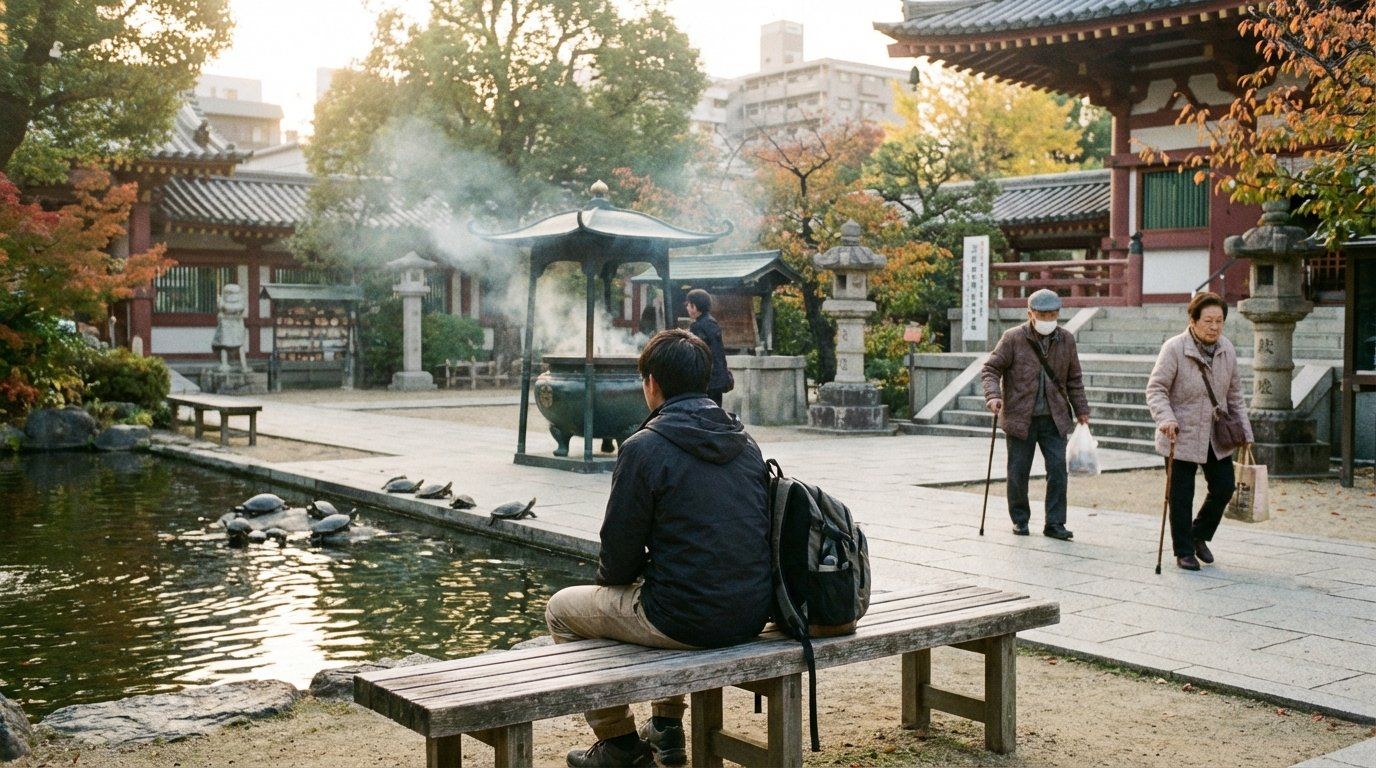 Image for illustrative purposes only.
Set your alarm for 6:30. Walk to Shitennoji Temple and experience the outer grounds in near-silence — our Shitennoji morning walk guide covers the best route through the grounds at dawn. Watch the turtles begin their morning basking ritual. Let the incense-tinged air replace your alarm clock.
After exploring the temple, find a local kissaten for the morning set — thick toast, a hard-boiled egg, and strong coffee, all for ¥500-800. These classic Osaka coffee shops are disappearing, so every visit counts.
Midday: Namba and Dotonbori (The Tourist Version)
Yes, you should see Dotonbori. Just don't eat your main meals there.
Take the Midosuji Line from Tennoji to Namba (5 minutes, ¥190). Walk the canal, photograph the Glico Man, browse the shops of Shinsaibashi. It's genuinely spectacular — just treat it as entertainment, not a dining destination.
For lunch, duck into Ura-Namba — the backstreets behind the main drag. This is where the restaurants that feed the restaurant workers are. Smaller, cheaper, better.
Afternoon: Shotengai Culture
Head to one of Osaka's legendary covered shopping streets. Tenjinbashi-suji Shopping Street is Japan's longest at 2.6 km, but the smaller local shotengai near Tennoji have more character and fewer tourists.
Walk slowly. Browse the tofu shop. The pickles vendor. The rice cracker place that's been roasting the same recipe for three generations. Buy ingredients for tonight's dinner. This is how Osaka feeds itself — not from tourist-facing restaurants, but from these corridors of small specialists that form the backbone of Osaka's street food culture.
Evening: Self-Catering Night
Tonight you cook. Lay out your shotengai purchases on the apartment counter. Fresh tofu. Local vegetables. Maybe some sashimi from the supermarket (which in Japan is genuinely excellent and a fraction of restaurant prices).
Cook a simple meal. Open the windows if it's warm. Listen to the neighborhood sounds — a distant train, someone's TV, the clatter of dishes from the apartment next door. This is ordinary life in Osaka, and it's extraordinary.
Budget Day 2: ¥4,000-6,000 (temple entry + kissaten breakfast + Namba lunch + shotengai groceries)
Day 3: Deep Local and Departure
Morning: The Sento Experience
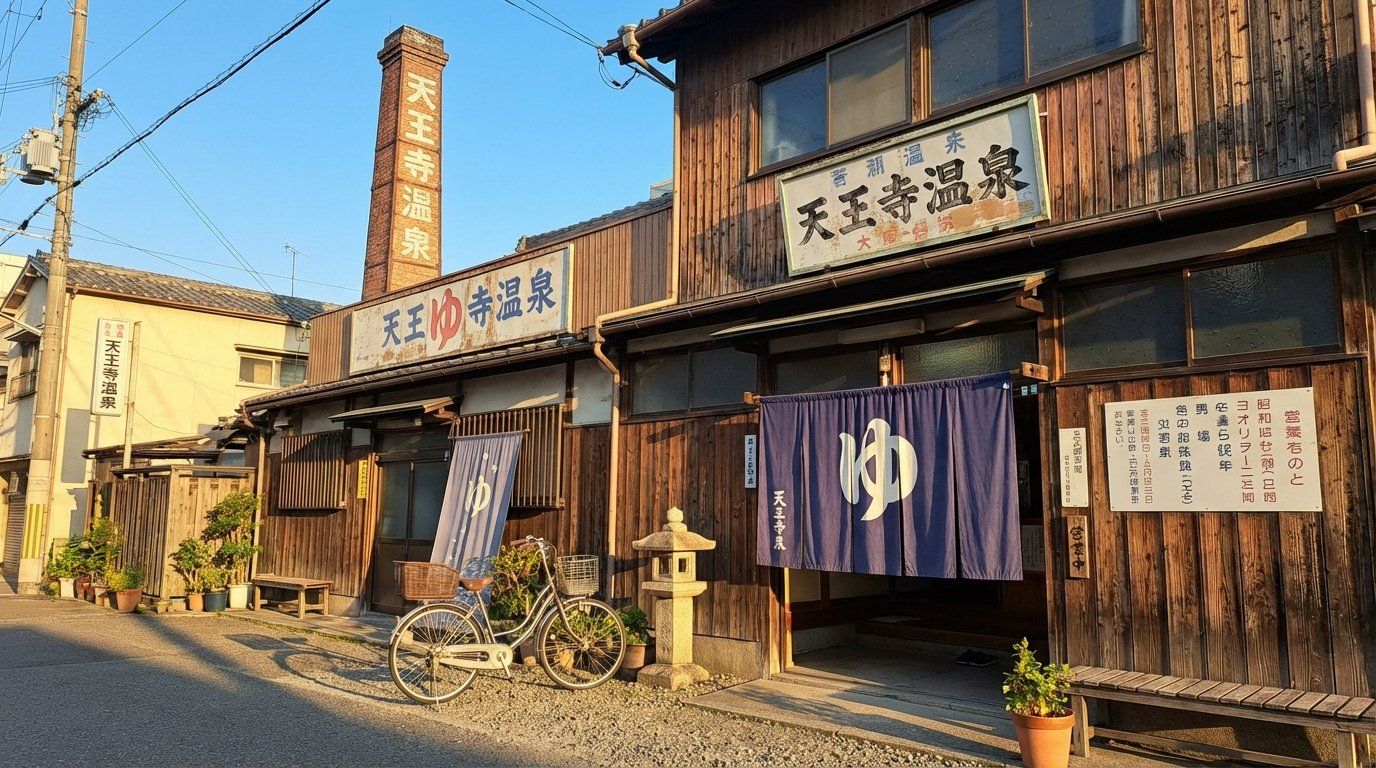 Image for illustrative purposes only.
Before you leave Osaka, do one thing most tourists never consider: visit a sento — a neighborhood public bath.
Sento aren't onsen resorts. They're functional neighborhood bathhouses where locals come to soak, relax, and gossip. The admission is a flat ¥520 across Osaka — set by the prefecture, the same price whether you visit a century-old wooden bathhouse or a modern facility.
The ritual is straightforward: shoes off, pay at the counter, undress in the changing room, wash thoroughly at the shower stations (sitting on a small stool — never standing), then sink into the hot water and let three days of walking dissolve.
It feels awkward for about thirty seconds. Then it feels like the best decision you've made all trip.
Late Morning: Final Walk
Take one last walk through your neighborhood. Return the key. Grab a coffee at the kissaten you discovered on Day 1. The owner might remember you. That tiny moment of recognition — that's what living somewhere, even for three days, feels like.
Departure Options
| Destination | Route | Time | Cost |
|---|---|---|---|
| Kansai Airport | JR Haruka Express from Tennoji | 50 min | ¥1,800 |
| Osaka/Itami Airport | Bus from Abenobashi Terminal | 30 min | ¥650 |
| Tokyo | JR to Shin-Osaka (20 min) → Shinkansen | ~3 hr total | ¥14,000 |
Budget Day 3: ¥2,000-3,000 (sento + breakfast + lunch) + transport
What Most Tourists Don't Know
Super Tamade is an experience. This 24-hour discount supermarket chain is a local legend. The exterior is covered in flashing lights like a pachinko parlor. Inside, prices are astonishingly low. It's chaotic, wonderful, and the best place to stock your apartment kitchen.
Morning sets are Osaka's secret breakfast. Kissaten (old-school coffee shops) serve thick-toast breakfast sets for ¥500-800. Often just coffee, toast, and an egg — but the atmosphere of worn wooden counters and elderly regulars reading newspapers is priceless.
Sento closes early. Most neighborhood baths close between 23:00-00:00 and some close as early as 21:00. Check hours before you go. Many are closed one day per week (often Monday or Thursday).
The apartment advantage is real. Having a washing machine, a kitchen, and a quiet room to retreat to changes the rhythm of travel. You eat when you're hungry, not when the restaurant opens. You cook when you want quiet, go out when you want noise.
Frequently Asked Questions
Is 3 days enough to see Osaka? Three days is enough to experience Osaka deeply if you focus on one neighborhood rather than rushing between highlights. This itinerary covers Tennoji, Shinsekai, Namba, and local shotengai — plus the daily rhythms of self-catering and neighborhood life that most visitors miss entirely.
Is Tennoji safe for tourists? Tennoji is a well-established residential and commercial area with a major train station, hospitals, parks, and family neighborhoods. It's as safe as any central Osaka district and considerably quieter than Namba or Dotonbori after dark.
How much does 3 days in Osaka cost? Using this live-like-a-local approach with apartment stays and self-catering, expect ¥25,000-44,000 ($165-290 USD) per person for three days including accommodation, food, transport, and activities.
3-Day Budget Overview
| Category | Low | Comfortable |
|---|---|---|
| Apartment (3 nights) | ¥15,000 | ¥25,000 |
| Food (mix of cooking + eating out) | ¥6,000 | ¥12,000 |
| Transport (IC card) | ¥2,000 | ¥3,000 |
| Activities (temples, sento) | ¥2,000 | ¥4,000 |
| Total per person | ¥25,000 | ¥44,000 |
That's roughly $165-290 USD for three days — including accommodation. Try that in a Namba hotel.
Practical Information
Getting to Tennoji
| From | Route | Time | Cost |
|---|---|---|---|
| Kansai Airport | JR Haruka Express (direct) | 50 min | ¥1,800 |
| Shin-Osaka | Midosuji Line (direct) | 20 min | ¥330 |
| Namba | Midosuji Line (direct) | 5 min | ¥190 |
| Umeda/Osaka | Midosuji Line (direct) | 15 min | ¥280 |
Essential Tennoji Resources
| What | Where | Notes |
|---|---|---|
| Supermarket | Super Tamade (multiple locations) | 24hr, cash only |
| Konbini | Lawson, FamilyMart, 7-Eleven | Throughout area |
| Sento | Various (ask your host) | ¥520, bring small towel |
| Laundromat | Coin laundry near stations | ¥200-400/load |
| ATM | 7-Eleven (international cards) | 24hr |
Wrapping Up
There's a version of travel that doesn't involve checking boxes on a sightseeing list. Where the goal isn't to see everything, but to feel something — the particular texture of daily life in a place that isn't home.
Three days in Tennoji won't make you an Osaka local. But they'll give you something most tourists never get: a sense of what it's actually like to live here. The morning temple walks. The shotengai rhythms. The sento steam. The quiet pride of cooking a simple meal in a small kitchen far from home.
That's not tourism. That's travel.
Tennoji's central location and residential character make it an ideal base for this kind of slow, immersive exploration — with everything from ancient temple walks to legendary street food just steps from your door.
Plan your Tennoji days with our Tennoji Area Guide or dive deeper into the neighborhood's food scene with our Tennoji Local Food Walk.
Staying in Tennoji?
If you're planning to explore Tennoji, these neighborhood stays let you experience the area like a local.
Explore the Tennoji Area Guide
Discover more things to do, local food spots, and insider tips for Tennoji.
Spots in This Article
MAZE CAFE SHINSEKAI
5.0Maze Cafe Shinsekai stands out as a destination-worthy breakfast spot in Tennoji that consistently impresses with thoughtfully prepared coffee and elevated cafe cuisine—think perfectly executed avocado toast and latte art that photographs beautifully. The space cultivates a genuinely welcoming atmosphere with staff who are knowledgeable about their craft and attentive without being intrusive, making it equally appealing for solo travelers seeking a calm refuge or families wanting quality time. This is the rare cafe that justifies visiting multiple times during a Osaka trip rather than being a one-off stop.
ラーメン 醤すけ心斎橋店 Ramen SHOSUKE Shinsaibashi
5.0This Shinsaibashi ramen shop delivers authentic, handcrafted bowls that consistently exceed expectations—many visitors report it rivals or surpasses Osaka's more hyped establishments. The standout draw is the silky, meticulously prepared broth paired with fresh noodles, with both shoyu and shio variations earning praise. Staff hospitality is genuinely warm and accommodating to non-Japanese speakers, making it an accessible introduction to serious ramen culture for first-time visitors.
ホルモン居酒屋 やまつ 新世界 shinsekai
4.9This newly-opened horseradish offal izakaya near Tsutenkaku delivers premium-quality grilled offal at remarkably affordable prices—a rare combination that explains its near-universal acclaim. The signature dish, kiku-abura (organ meat), showcases pristine sourcing and careful preparation that far exceeds typical izakaya standards. The no-frills Shinsekai atmosphere and personable ownership create an authentic eating experience where casual drop-ins and repeat visitors feel equally welcome.
Osaka Halal Ramen Wagyutei
4.9This newly opened halal ramen specialist in Tennoji stands out as one of Osaka's rare dedicated halal ramen destinations, offering authentic broth-based ramen without compromise on quality. The owner and staff actively engage with international visitors and speak English, making it exceptionally accessible for foreign tourists unfamiliar with Japanese dining customs. Generous portions at reasonable prices, combined with an genuinely welcoming atmosphere where staff adapt the dining experience (like adjusting air conditioning), create an experience that feels personal rather than transactional.