Kuromon Market Guide: Osaka's 200-Year-Old Kitchen (and How to Visit It Right)
May 4, 2026
Kuromon Market has fed Osaka for over 200 years. Here's how to skip the tourist traps, time your visit perfectly, and eat like the chefs do.
Image for illustrative purposes only.
Let's be honest: search "Kuromon Market" and you'll find two completely different stories. One says it's "Osaka's Kitchen" — a 200-year-old food market where Michelin-starred chefs buy their fish every morning. The other says it's a tourist trap where overpriced sea urchin gets waved in your face on a stick.
Here's the thing — both are true. And that's exactly why Kuromon is worth visiting, if you know when to go and what to look for.
This market has been feeding Osaka since 1822. It survived fires, wars, and an earthquake. What it's going through now — the push and pull between local identity and international tourism — is just its latest chapter. We walked the full 580-meter arcade at three different times of day to figure out when the magic actually happens, which stalls are worth your money, and where the locals still shop when the tour buses aren't around.
The Golden Hour: Why 8:30 AM Changes Everything
Most tourists arrive at Kuromon Market between 11:00 AM and 2:00 PM. That's when it feels like a theme park — shoulder-to-shoulder crowds, selfie sticks over the seafood, multilingual hawkers calling out prices.
But show up at 8:30 AM and it's a different world.
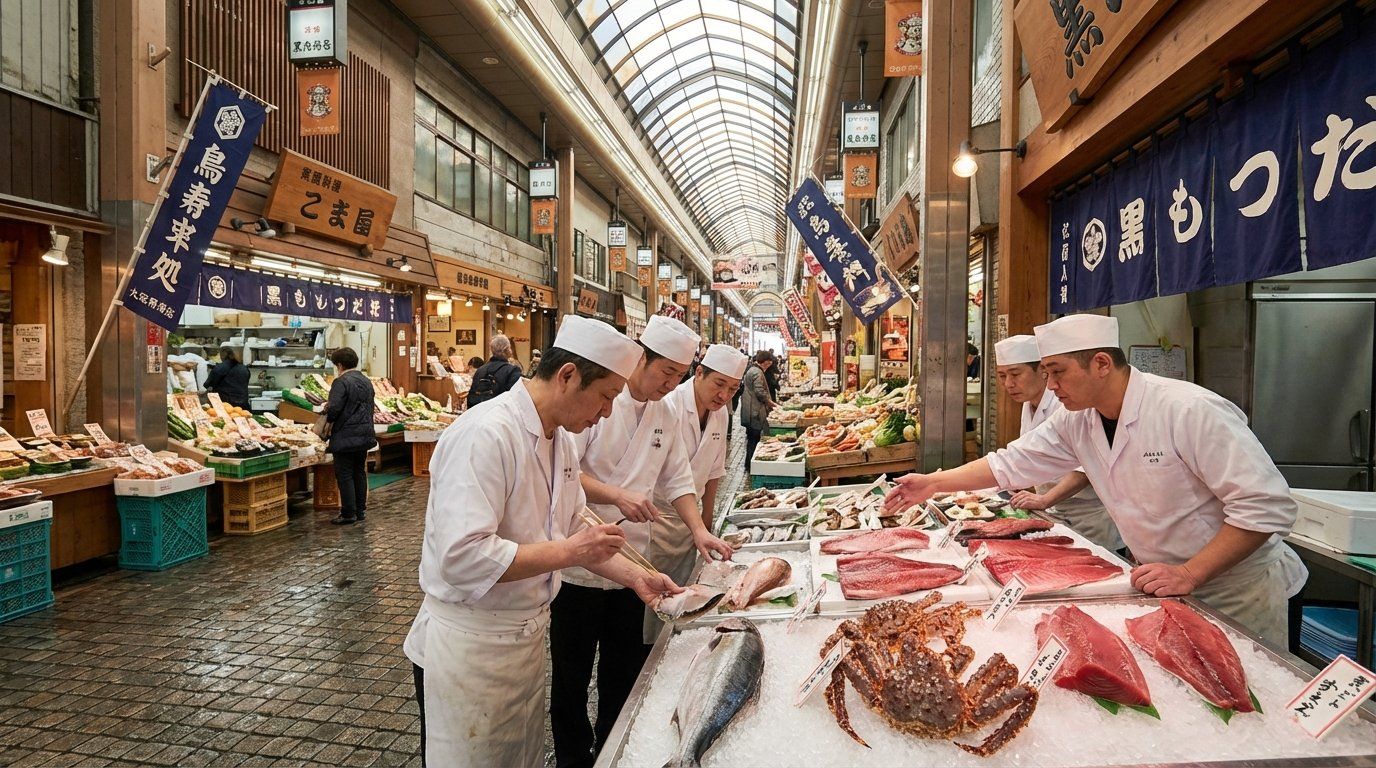
The air smells like the ocean — briny, clean, cold. You can hear the rhythmic thud of knives on cutting boards and the clatter of styrofoam boxes being stacked. This is the "golden hour," roughly 8:30 to 9:30, when professional chefs and restaurant owners do their morning purchasing. The vendors are focused, the fish is at its freshest, and you can actually stop and watch a fourth-generation fishmonger break down a whole tuna without a crowd pressing against your back.
By 10:00, the stalls start pivoting to tourist-facing mode. More items go on sticks, prices creep up for walk-and-eat portions, and English signage appears. There's nothing wrong with the late-morning market — it's lively and fun — but if you want to see why Kuromon earned its reputation, set an alarm.
Pro tip: If mornings aren't your thing, try 4:00-5:30 PM instead. The seafood stalls start discounting what they need to move before closing. You won't get the chef-shopping atmosphere, but you'll find genuinely good deals on sashimi sets and prepared items.
The Must-Eat Five: A Kuromon Food Strategy
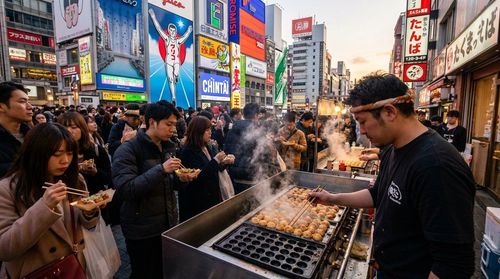
You could eat your way through every stall in Kuromon, but your stomach and your wallet have limits. Here are five things worth prioritizing — roughly in the order you'll encounter them walking from the Nipponbashi (south) entrance. If you're a fan of Osaka's legendary street food scene, Kuromon offers a more focused, seafood-forward version of the city's eat-until-you-drop philosophy.
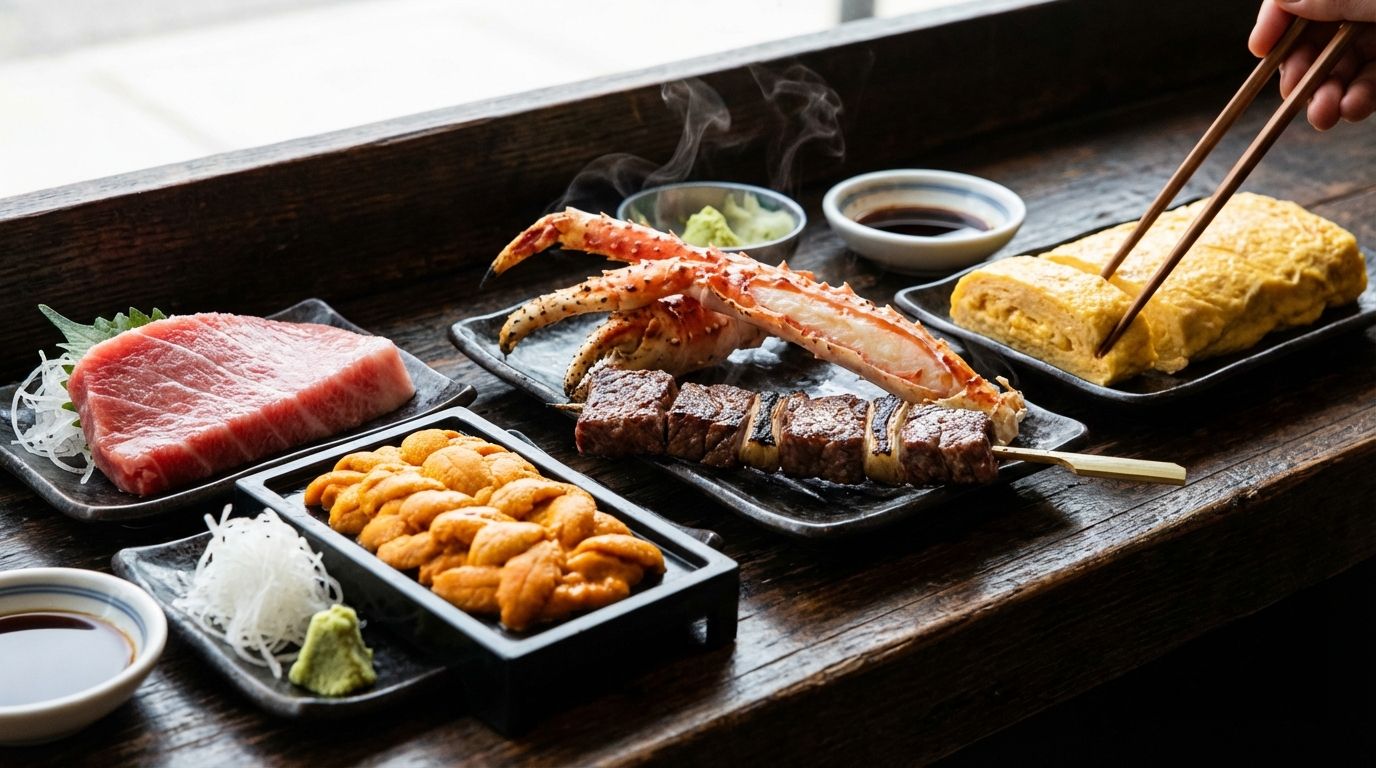 Image for illustrative purposes only.
1. Tuna Sashimi at Endo Maguro (遠藤鮪)
This shop has been selling tuna — and only tuna — since 1927. Nearly a century of specialization. The otoro (fatty tuna belly) is buttery and rich, dissolving on your tongue with a sweetness that lingers. A small sashimi plate runs around ¥1,000-1,500, which sounds expensive until you realize you're eating fish that a Michelin-starred chef was eyeing twenty minutes ago.
2. Sea Urchin (Uni)
Multiple stalls sell fresh uni in small black trays. The texture is creamy and custard-like, with an ocean-sweet flavor that makes it one of those foods people either love or deeply regret trying. A single portion typically costs ¥1,000-1,500. Look for trays where the uni pieces are intact and a bright, consistent orange — not mushy or dark at the edges.
3. King Crab Legs at Yashima (八十島)
Yashima specializes in taraba-gani (king crab), and their grilled legs are one of Kuromon's signature experiences. The shell cracks open to reveal sweet, firm white meat with a faint smokiness from the grill. Prices vary wildly by season and size — expect ¥1,500-3,000 per portion. Winter (December-February) is peak crab season, and the quality jumps noticeably.
4. A5 Wagyu on a Stick
Several stalls sell bite-sized A5 wagyu beef skewers, seared with a torch right in front of you. The fat renders instantly, leaving a rich, almost nutty flavor. Typically ¥800-1,500 per skewer. Niku Hoshi (肉星) is a reliable choice, but any stall displaying the official A5 grade mark is fair game.
5. Dashimaki Tamago (出汁巻き卵)
Don't skip the egg. Dashimaki tamago is a Japanese rolled omelet made with dashi broth, and the Kuromon version is fat, jiggly, and satisfying in a way that no egg has a right to be. It's usually ¥300-500 — the cheapest thing on this list and arguably the most distinctly Osaka flavor you'll taste here. The first bite releases a warm, savory dashi depth that catches most visitors off guard.
What Most Tourists Don't Know
This is where having walked the market at different hours really pays off. Here are things the standard guides don't mention:
The price gap is real — and it's okay. Stalls facing the main walkway charge more than stalls tucked one step back or around corners. A sashimi set at a front-facing stall might be ¥2,000; the same quality three meters away at a less visible counter could be ¥1,200. This isn't a scam — it's rent economics. The prime spots cost more to operate.
Cash is still king. Despite the growing number of cashless payment options, several of the best old-school vendors are cash-only. Bring at least ¥10,000 in cash if you plan to eat your way through. There are 7-Eleven and Lawson convenience stores with international ATMs within a two-minute walk of either entrance.
The sit-down restaurants are a different experience. Kuromon's walk-and-eat stalls get all the attention, but there are proper sit-down restaurants inside the market that serve set meals (teishoku) at reasonable prices — often ¥1,200-1,800 for a fish lunch with rice, miso soup, and pickles. These are where the market workers eat. Look for places with handwritten menus and no English photos outside.
Don't eat while walking in the main arcade. This is a common mistake. While Kuromon is more relaxed than most Japanese settings, the polite move is to eat at the counter or standing area provided by each stall. Many stalls have small eat-in spaces specifically for this. Walking and eating blocks the narrow arcade and annoys vendors.
The free tea trick. Several stalls offer free green tea or hojicha (roasted green tea with a toasty, mellow flavor) to customers who purchase food. It's not advertised — just ask if you see a pot behind the counter. It pairs perfectly with the richer seafood items and helps cleanse your palate between stops.
Seasons Change the Market
Kuromon isn't the same market in July as it is in January, and timing your visit to the season adds a whole extra layer.
Winter (December-February): This is peak season. Fugu (pufferfish) and crab dominate the displays. Whole fugu are lined up in neat rows, and the crab stalls overflow with king crab, snow crab, and horsehair crab. Prices are highest, but so is the spectacle — and the quality of the seafood.
Spring (March-May): Seasonal shellfish like hotate (scallops) and sakura-ebi (cherry blossom shrimp) appear. The crowd thins slightly after the winter tourist peak. This is arguably the best time for a relaxed visit.
Summer (June-August): Hamo (pike conger eel) is the star — a Kansai delicacy that's bone-cut into paper-thin slices and blanched. It's delicate, almost floral, and completely different from any eel you've had before. Summer also brings fresh anago (sea eel) and shaved-ice stalls.
Autumn (September-November): Matsutake mushrooms and sanma (Pacific saury) signal the season. Sanma grilled whole over charcoal, its skin crackling and its oils sizzling, is one of the great simple pleasures of Japanese food.
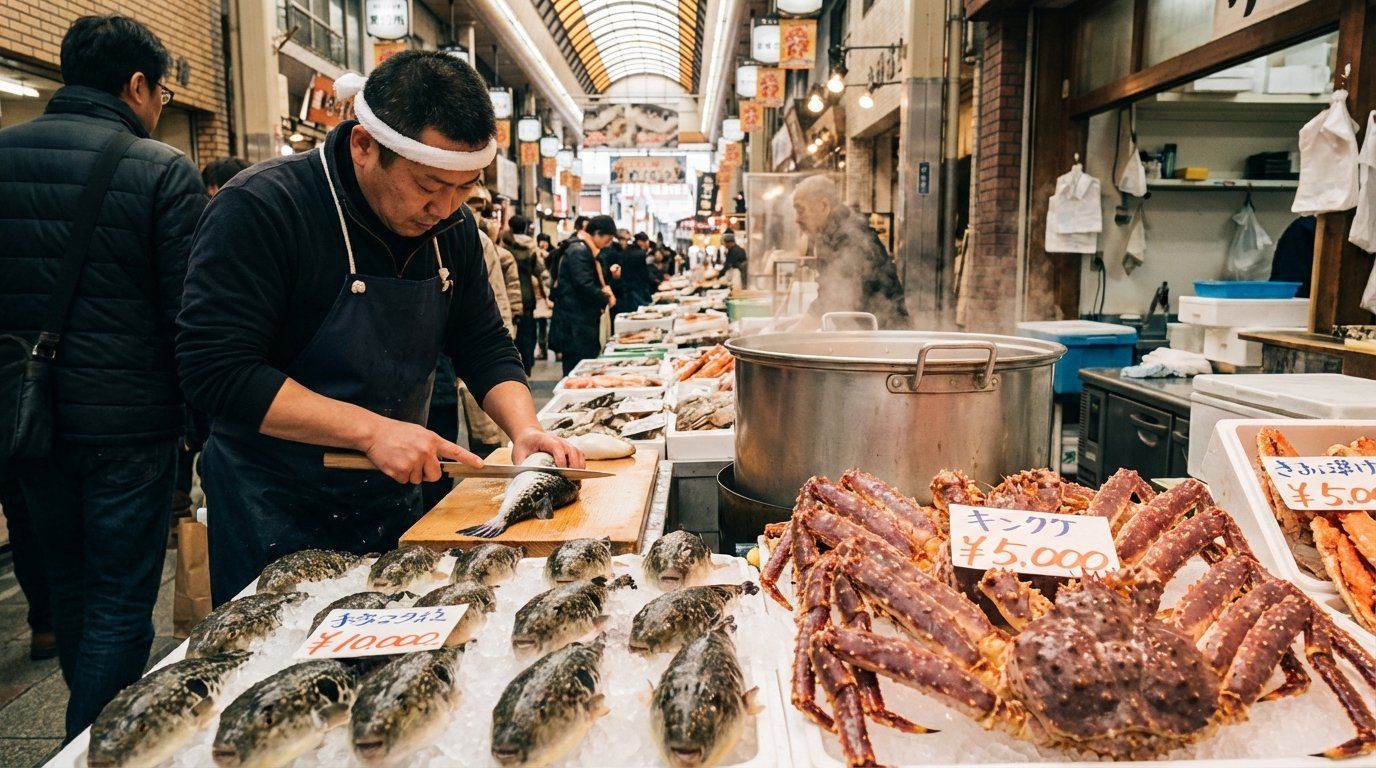 Image for illustrative purposes only.
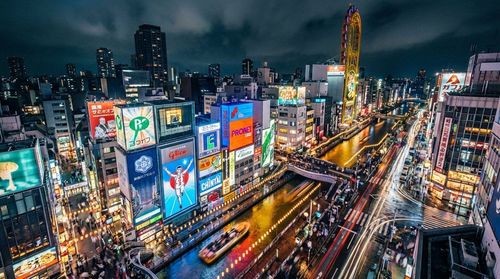
From Kuromon to Dotonbori: The Perfect Minami Day
One of Kuromon's best features is its location. The market sits right between two of Osaka's most interesting neighborhoods, making it a natural starting point (or midpoint) for a full day in the Minami district.
Morning Route (recommended):
- 8:30-10:00 — Kuromon Market (golden hour eating)
- 10:00-11:30 — Walk south to Nipponbashi / Den Den Town — Osaka's electronics and anime district (the Akihabara of the west)
- 11:30-12:30 — Loop back north toward Namba for lunch
- Afternoon — Shinsaibashi shopping arcade and Dotonbori canal walk
The walk from Kuromon's south exit to the heart of Den Den Town takes about five minutes. From the north end of Kuromon to Dotonbori is about ten minutes on foot. You're essentially in the center of everything, and you can structure the day around whatever catches your attention.
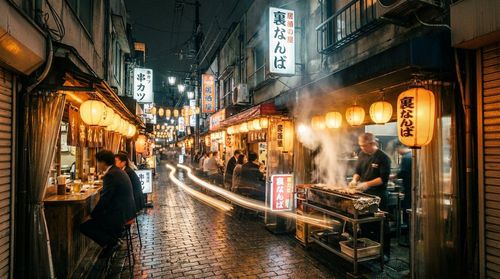
For an evening extension, consider heading to nearby Ura-Namba for standing bars and izakaya hopping — it's a ten-minute walk from Kuromon's north entrance and a completely different energy after dark.
Practical Information
| Detail | Info |
|---|---|
| Address | Kuromon Market, Nipponbashi, Chuo-ku, Osaka |
| Nearest Station | Nipponbashi Station (Sakaisuji/Sennichimae Lines) — 3 min walk |
| Also Walkable From | Namba Station (Nankai/Metro) — 10 min walk |
| Market Hours | 8:00 AM - 6:00 PM (varies by shop) |
| Seafood Stalls | ~8:00 AM - 4:30 PM |
| Restaurants | ~11:00 AM - 8:00 PM |
| Closed | Some shops close Sundays/holidays; market itself is open daily |
| Budget: Light Snack | ¥1,000-2,000 |
| Budget: Full Food Walk | ¥3,000-5,000 |
| Budget: Sit-Down Lunch | ¥1,200-1,800 |
| Payment | Cash recommended; some stalls accept IC cards/credit |
| Restrooms | Public restrooms available near both entrances |
| Total Length | ~580 meters, about 150 shops |
| Best Time | 8:30-9:30 AM (local atmosphere) or 4:00-5:30 PM (discounts) |
Wrapping Up
Kuromon Market is not a museum of how markets used to be, and it's not purely a tourist attraction. It's a working market that's adapting — sometimes awkwardly, sometimes brilliantly — to a world where visitors outnumber locals on most afternoons. The trick is knowing when to show up. Arrive in that early-morning golden hour, follow the chefs to the good stalls, eat at the counter instead of walking, and you'll understand why this place has lasted two centuries.
The Minami neighborhood surrounding Kuromon is one of Osaka's most walkable and rewarding areas to explore on foot — from the market's seafood stalls in the morning to Den Den Town's anime shops at midday to Dotonbori's neon-lit canal at night, everything connects within a few minutes' walk. Whether you're passing through for a morning food crawl or settling in for a few days of exploring, this corner of Osaka keeps surprising you.
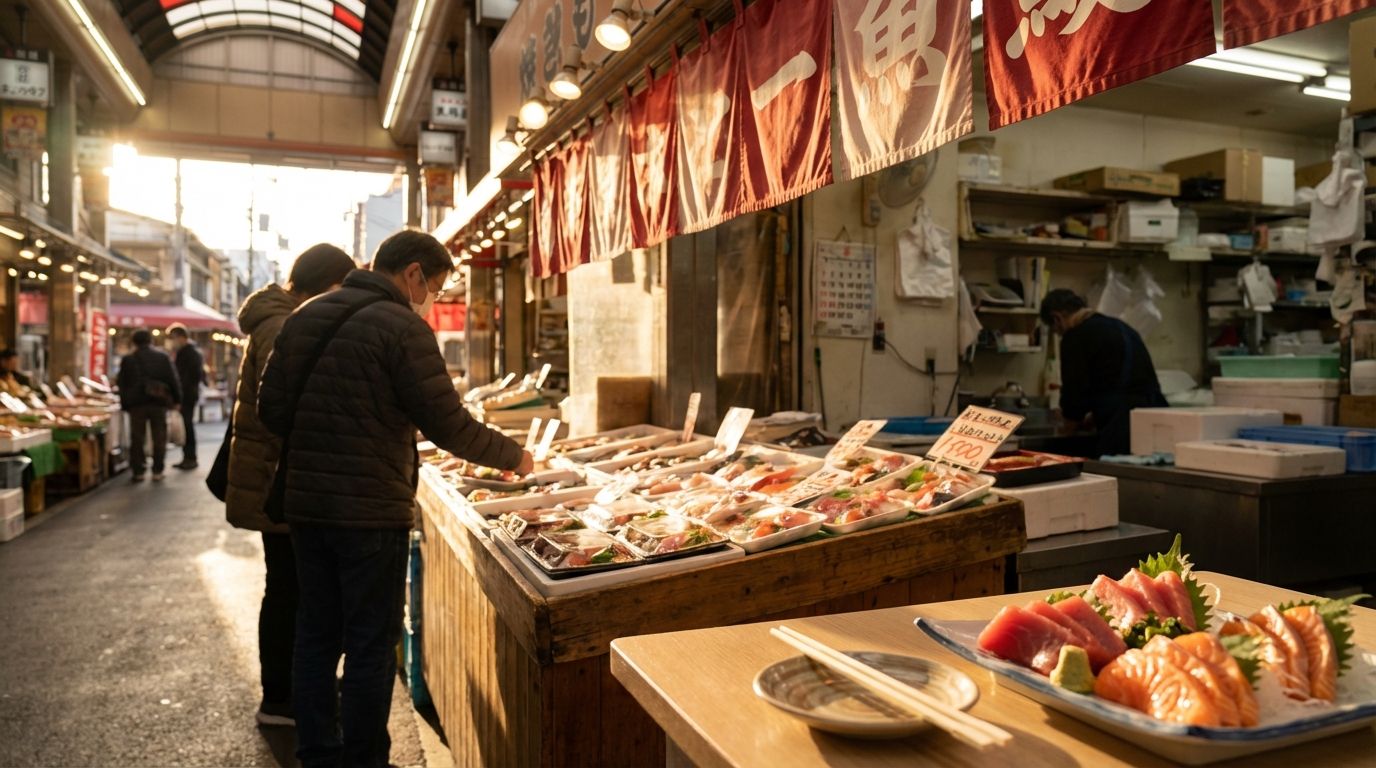 Image for illustrative purposes only.
Frequently Asked Questions
What is Kuromon Market?
Kuromon Market is a 200-year-old food market in Osaka, often called "Osaka's Kitchen," where professional chefs source their ingredients daily. It's a vibrant 580-meter arcade known for its fresh seafood and diverse food stalls.
What is the best time to visit Kuromon Market?
The "golden hour" between 8:30 AM and 9:30 AM is ideal for experiencing the market as local chefs do their morning purchasing and seeing the freshest fish. Alternatively, visiting from 4:00 PM to 5:30 PM can offer good deals on seafood as stalls discount items before closing.
What are the must-try foods at Kuromon Market?
Visitors should prioritize Tuna Sashimi at Endo Maguro, fresh Sea Urchin (Uni), grilled King Crab Legs at
Explore the Minami (Namba) Area Guide
Discover more things to do, local food spots, and insider tips for Minami (Namba).
Spots in This Article
MAZE CAFE SHINSEKAI
5.0Maze Cafe Shinsekai stands out as a destination-worthy breakfast spot in Tennoji that consistently impresses with thoughtfully prepared coffee and elevated cafe cuisine—think perfectly executed avocado toast and latte art that photographs beautifully. The space cultivates a genuinely welcoming atmosphere with staff who are knowledgeable about their craft and attentive without being intrusive, making it equally appealing for solo travelers seeking a calm refuge or families wanting quality time. This is the rare cafe that justifies visiting multiple times during a Osaka trip rather than being a one-off stop.
ラーメン 醤すけ心斎橋店 Ramen SHOSUKE Shinsaibashi
5.0This Shinsaibashi ramen shop delivers authentic, handcrafted bowls that consistently exceed expectations—many visitors report it rivals or surpasses Osaka's more hyped establishments. The standout draw is the silky, meticulously prepared broth paired with fresh noodles, with both shoyu and shio variations earning praise. Staff hospitality is genuinely warm and accommodating to non-Japanese speakers, making it an accessible introduction to serious ramen culture for first-time visitors.
Bar Nocosarejima
4.9Bar Nocosarejima is a solo-run craft cocktail bar tucked near Tsutenkaku Tower where the owner personally curates both the drinks and atmosphere. This is the kind of place that elevates Osaka's nightlife scene—expect carefully crafted, innovative cocktails (including Japanese craft spirits and unexpected flavor combinations) in a intimate, dimly-lit setting filled with thoughtful art. The owner's exceptional English and genuine hospitality make it accessible and welcoming for foreign visitors, whether you're ending a night out or seeking a peaceful escape from the city's energy.
Osaka Halal Ramen Wagyutei
4.9This newly opened halal ramen specialist in Tennoji stands out as one of Osaka's rare dedicated halal ramen destinations, offering authentic broth-based ramen without compromise on quality. The owner and staff actively engage with international visitors and speak English, making it exceptionally accessible for foreign tourists unfamiliar with Japanese dining customs. Generous portions at reasonable prices, combined with an genuinely welcoming atmosphere where staff adapt the dining experience (like adjusting air conditioning), create an experience that feels personal rather than transactional.
ヤキソバベイベー/オコノミヤキベイベ/道頓堀本店 yakisoba baby okonomiyaki baby
4.9This is an energetic standing-room okonomiyaki bar where the chef's infectious personality is as much part of the experience as the crispy, well-executed food. The owner actively engages with guests—from tourists to families—creating an unexpectedly social atmosphere despite the no-seating format. It's the kind of authentic Osaka spot where you'll leave smelling like grill smoke but with genuine memories, especially if you catch the hip hop soundtrack and occasional live entertainment.